

Interventional Neurology Procedures: Risks and How Complications Are Managed

Interventional neurology uses image-guided catheter techniques to diagnose and treat conditions affecting the brain, spine, and blood vessels. Most procedures are performed with detailed planning, real-time imaging, and close monitoring to reduce risk.
Key Takeaways
- Interventional neurology uses image-guided catheter techniques to diagnose and treat conditions affecting the brain, spine, and blood vessels.
- Most procedures are performed with detailed planning, real-time imaging, and close monitoring to reduce risk.
- Possible complications include bleeding, blood vessel injury, stroke, contrast reactions, and problems at the catheter entry site.
- Early recognition and rapid treatment of complications are central parts of safe neurointerventional care.
- Patients can support safety by sharing full medical information, following pre-procedure instructions, and attending follow-up care.
Interventional neurology procedures are minimally invasive treatments used to diagnose or treat blood vessel and nerve-related conditions in the brain and spine. Like all medical procedures, they carry some risks, but experienced teams work carefully to prevent complications and manage them promptly if they occur.
Overview
Interventional neurology, also called neurointerventional or endovascular neurology, involves minimally invasive procedures performed through small tubes called catheters. These catheters are usually inserted through an artery in the wrist or groin and guided with imaging to blood vessels in the brain, neck, or spine. Doctors use these techniques to diagnose or treat conditions such as stroke, aneurysms, vascular malformations, and narrowed blood vessels.
Compared with open surgery, interventional procedures often involve smaller incisions, shorter hospital stays, and faster recovery. Even so, they are still important medical procedures that require specialized skill, careful planning, and continuous monitoring. Understanding potential risks does not mean complications are expected. Rather, it helps patients make informed decisions and know how healthcare teams work to keep care safe.
The exact level of risk depends on the type of procedure, the condition being treated, the urgency of treatment, and the patient’s overall health. For example, emergency treatment for a severe stroke may carry different risks than a planned diagnostic angiogram. In every case, the medical team weighs the potential benefits against the possible complications before recommending treatment.
Common Interventional Neurology Procedures
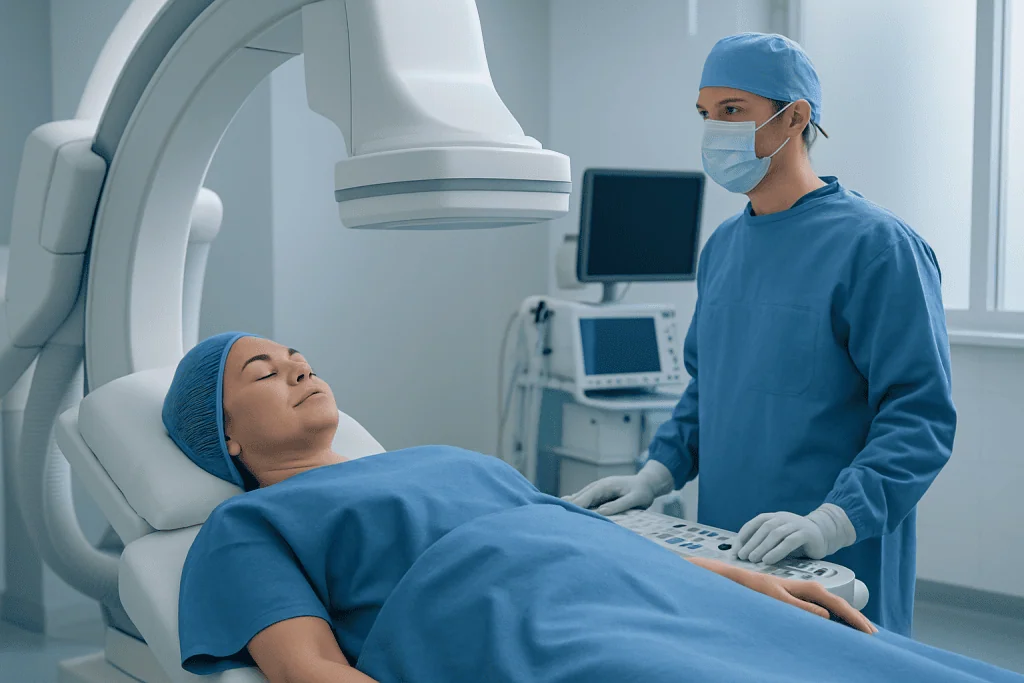
Interventional neurology includes both diagnostic and therapeutic procedures. A common diagnostic test is cerebral angiography, in which contrast dye is injected through a catheter to show blood flow in detail. This helps doctors identify aneurysms, narrowed arteries, vascular malformations, or other abnormalities that may not be fully visible on routine scans.
Treatment procedures may include mechanical clot removal for acute stroke, called stroke thrombectomy, placement of stents to support narrowed vessels, embolization to block abnormal blood flow, or treatment of brain aneurysms with coils or flow-diverting devices. Some patients may be treated for conditions related to brain aneurysm or stroke using these techniques.
Each procedure has its own safety profile. Diagnostic procedures generally have lower risk than complex therapeutic interventions, but both require precision. Before any procedure, the team reviews imaging, medications, allergies, kidney function, and bleeding risk to choose the safest approach for the individual patient.
What Risks and Complications Can Occur?

Most interventional neurology procedures are completed without major complications, but no invasive treatment is completely risk-free. Potential problems can relate to the blood vessels, the brain or spinal cord, the contrast dye, anesthesia or sedation, or the catheter entry site. Risks vary depending on the procedure and the patient’s condition.
Possible complications may include:
- Bleeding or bruising where the catheter is inserted
- Damage to a blood vessel, including dissection or perforation
- Blood clot formation or reduced blood flow causing stroke or transient neurologic symptoms
- Bleeding in or around the brain
- Allergic reaction to contrast dye or medications
- Kidney strain related to contrast dye, especially in people with existing kidney disease
- Infection, though this is uncommon
- Problems related to anesthesia or sedation, such as breathing or blood pressure changes
Some complications are minor and temporary, such as mild soreness at the access site or short-lived nausea. Others are more serious and need urgent treatment. The consent process before the procedure is designed to explain these possibilities in clear language and to answer any questions the patient or family may have.
Who May Have a Higher Risk of Complications?
Risk is not the same for every patient. Older age, complex vascular anatomy, severe blockage, active bleeding, uncontrolled high blood pressure, diabetes, kidney disease, and a history of previous stroke can all affect the likelihood of complications. The urgency of treatment also matters. Emergency procedures, especially during an acute stroke, are often performed in higher-risk situations because the underlying condition itself is dangerous and time-sensitive.
Medications can also influence risk. Blood thinners and antiplatelet drugs may be essential for some patients but can increase bleeding concerns in others. Allergies to contrast dye, prior kidney problems, or a tendency to bleed or clot easily are especially important to discuss before treatment. Patients should always tell their doctor about all prescription medicines, over-the-counter products, and supplements they use.
Procedure complexity matters as well. Treating a small, straightforward narrowing may be very different from navigating delicate vessels to manage a ruptured aneurysm or a challenging vascular malformation. This is why neurointerventional care is typically provided by highly trained specialists working with neuroradiology, neurology, neurosurgery, anesthesia, and intensive care teams.
How Doctors Prevent Complications
Preventing complications begins long before the procedure starts. Doctors review brain scans, blood tests, and the patient’s medical history to understand anatomy and identify possible concerns. They also choose the best access route, equipment, and imaging method for the planned intervention. In some cases, medications are adjusted beforehand to reduce bleeding or clotting risk.
During the procedure, the team uses continuous imaging guidance to move catheters carefully through the blood vessels. Sterile techniques help reduce infection risk, while close monitoring of blood pressure, oxygen levels, heart rhythm, and neurologic status supports patient safety. Contrast dye is used thoughtfully, especially in patients with kidney disease or a history of contrast reactions.
Specialized protocols are another important part of prevention. These may include checklists, rapid access to emergency medications, and immediate support from stroke, neurosurgery, or critical care teams if needed. In advanced centers, tools such as cerebral angiography and interventional neuroradiology are integrated into a broader system designed to improve both accuracy and safety.
How Complications Are Managed if They Happen
A key part of safe interventional neurology care is being prepared to respond quickly if a complication occurs. Minor issues at the catheter entry site, such as bleeding or bruising, are usually managed with pressure, observation, or a closure device. If blood pressure, heart rhythm, or breathing changes during sedation, the anesthesia and procedural teams act immediately to stabilize the patient.
If a blood vessel narrows, spasms, or develops a clot during the procedure, doctors may use medications or additional catheter-based techniques to restore flow. If bleeding is suspected, imaging can help identify the source quickly so the team can treat it without delay. Some situations require intensive monitoring in the hospital, while more serious complications may need neurosurgical or critical care support.
Neurologic monitoring after the procedure is especially important. Nurses and physicians check strength, speech, vision, alertness, and other neurologic functions to catch any new changes early. Prompt recognition often improves the chances of successful treatment. For international patients seeking expert evaluation and care, Acibadem International’s multidisciplinary specialists in JCI-accredited hospitals diagnose and treat these conditions with coordinated neurovascular support.
Recovery, Follow-Up, and Self-Care
After an interventional neurology procedure, patients are typically observed for several hours or longer, depending on the treatment performed. The care team monitors the catheter site, blood pressure, neurologic status, and overall recovery. Some people go home the same day after a diagnostic study, while others stay in the hospital for continued monitoring after a more complex intervention.
At home, recovery instructions usually include caring for the access site, staying hydrated if advised, avoiding heavy lifting for a period of time, and watching for warning signs. Medications may be started, stopped, or adjusted after the procedure, especially if stents or clot-related treatments were involved. Follow-up imaging or clinic visits may be needed to confirm that healing is going well and that the treated vessel remains stable.
Patients should contact their care team promptly if they notice worsening headache, weakness, numbness, confusion, speech changes, vision problems, chest pain, shortness of breath, fever, significant swelling, or ongoing bleeding from the access site. Good communication after discharge is an important part of preventing small concerns from becoming larger problems.
When to See a Doctor and Questions to Ask
Anyone considering an interventional neurology procedure should ask why it is recommended, what alternatives exist, what benefits are expected, and which risks apply to their specific case. It is also reasonable to ask how often the procedure is performed at the center, what kind of monitoring will be used, and what recovery may look like. Understanding the plan can make patients feel more prepared and confident.
Urgent medical attention is needed after a procedure if new neurologic symptoms appear, including sudden weakness, facial drooping, trouble speaking, severe headache, seizure, or loss of consciousness. Heavy bleeding from the catheter site, severe swelling, or signs of poor circulation in the arm or leg also require immediate assessment. These symptoms do not always mean a serious complication has occurred, but they should never be ignored.
Even before a procedure is scheduled, a doctor should know about pregnancy, kidney disease, previous contrast reactions, blood-thinning medicines, or implanted medical devices. Sharing complete information helps the team lower risk and choose the safest possible approach for diagnosis and treatment.
Frequently asked questions
Are interventional neurology procedures safe?
In general, these procedures are considered safe when performed by experienced specialists in appropriately equipped hospitals. However, every invasive procedure has some risk, and the exact level of risk depends on the condition being treated, the type of procedure, and the patient's overall health.
What is the most common complication after a neurointerventional procedure?
Minor bleeding, bruising, or discomfort at the catheter entry site is among the more common issues after these procedures. More serious complications, such as stroke or bleeding in the brain, are less common but are closely watched for and treated quickly if they occur.
How do doctors reduce the risk of stroke during these procedures?
Doctors reduce risk through careful imaging review, precise catheter guidance, blood-thinning strategies when appropriate, and continuous monitoring during the procedure. They also work in specialized teams that can respond immediately if blood flow changes or a clot develops.
Can contrast dye cause side effects?
Yes, contrast dye can sometimes cause nausea, warmth, allergic reactions, or kidney strain, especially in people with pre-existing kidney disease. Before the procedure, the medical team checks kidney function and allergy history to lower these risks.
How long does recovery usually take?
Recovery depends on the procedure performed and the patient's condition. Some people recover quickly after a diagnostic angiogram, while others need a longer hospital stay and closer follow-up after treatments such as stroke thrombectomy or aneurysm repair.
When should someone seek urgent help after going home?
Urgent help is needed for new weakness, trouble speaking, confusion, severe headache, loss of consciousness, heavy bleeding, or major swelling at the access site. These symptoms can signal a complication and should be evaluated without delay.
References
- World Health Organization
- American Stroke Association
- National Institute of Neurological Disorders and Stroke
- Society of NeuroInterventional Surgery
- Radiological Society of North America
This article is for general information only and is not a substitute for professional medical advice. Please consult a qualified doctor about your individual situation.
Interventional Neurology in Turkey — costs, top hospitals & a free quote
JCI-accredited · board-certified surgeons · reply within 24h
Add us as a Preferred Source to see more of our trusted health content across Google Search, AI Overviews and Discover.
Check your numbers in seconds
BMI, calories, due date, blood pressure and 30+ more clinical calculators — free, instant, doctor-reviewed ranges.

More from the Health Library



Related Specialists

Dr. Mustafa Demir
Ophthalmology
Prof. Dr. Salih Serdar Erturan
Pulmonology
Assoc. Prof. Dr. Kayahan Karaytuğ
Orthopedic Surgery & Traumatology
Assoc. Prof. Dr. Pınar Kahraman Koytak
Neurology