How Soon Can You Drive After Knee Replacement?

Driving is usually safe only when the patient can brake quickly, move the knee comfortably, and control the car without hesitation. Recovery time is often longer if the right knee was replaced, because it is used for the accelerator and brake.
Key Takeaways
- Driving is usually safe only when the patient can brake quickly, move the knee comfortably, and control the car without hesitation.
- Recovery time is often longer if the right knee was replaced, because it is used for the accelerator and brake.
- Prescription pain medicines that cause drowsiness or slower reactions can make driving unsafe.
- A surgeon or rehabilitation team should confirm that driving can resume based on the individual’s recovery.
- Short practice trips in low-traffic settings can help patients rebuild confidence before regular driving.
Driving after knee replacement depends on safe reaction time, pain control, strength, and whether the patient has stopped taking sedating medicines. Many people can return to driving within a few weeks, but timing varies based on the operated knee, recovery progress, and the surgeon’s advice.
Overview: When Can Someone Drive After Knee Replacement?
The answer to how soon someone can drive after knee replacement is not exactly the same for every patient. In general, driving can resume when the person can get in and out of the car safely, bend the knee enough to sit comfortably, move the leg quickly between pedals, and perform an emergency stop without delay. Pain should be reasonably controlled, and the patient should no longer be impaired by medicines that affect alertness.
For many people, this point comes several weeks after surgery. A left knee replacement may allow an earlier return to driving if the car has automatic transmission, because the right leg is still used for the pedals. A right knee replacement often requires more time because the operated leg must react quickly for braking. Recovery after knee replacement surgery varies, so the surgeon’s guidance is important.
Driving is not just about comfort. It is a safety issue involving strength, coordination, reaction time, and judgment. Even if the knee feels better day by day, the patient should wait until these functions have recovered well enough for real-world traffic situations.
What Determines Readiness to Drive?
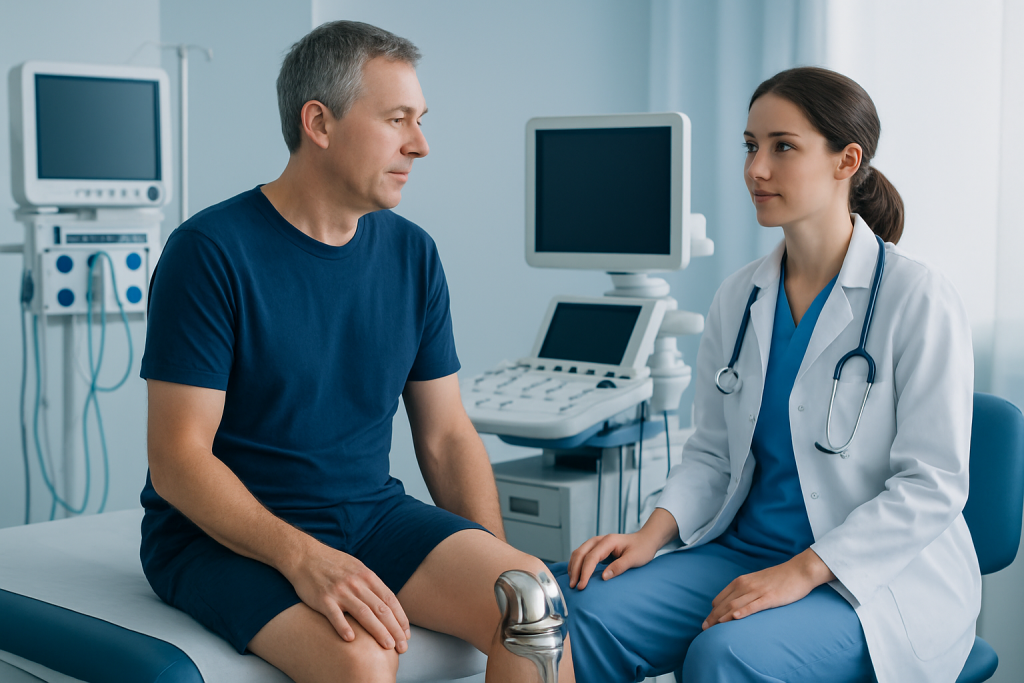
Several factors affect whether a person is ready to drive after surgery. One of the most important is braking ability. Safe driving requires the leg to move from the accelerator to the brake quickly and firmly. If swelling, pain, stiffness, or weakness slows this movement, driving may not yet be safe.
Medication use also matters. Opioid pain relievers and some other prescription medicines can cause drowsiness, slower reactions, dizziness, or reduced concentration. Even if the patient feels “mostly fine,” these effects can increase risk on the road. Patients are generally advised not to drive while taking sedating pain medication unless their doctor clearly says it is safe.
Other practical issues include the ability to:
- Enter and exit the vehicle without help
- Sit comfortably with the knee bent
- Twist enough to check mirrors and blind spots
- Tolerate the position of the leg during the trip
- Control the vehicle confidently in traffic
Age alone does not determine readiness, but overall health does play a role. Balance problems, nerve conditions, vision changes, or delayed healing can all affect when someone can safely return to driving. Patients recovering from related orthopedic procedures may also need individualized advice, especially if they have had robotic knee replacement surgery or rehabilitation plans tailored to their movement goals.
Typical Timeframes After Left or Right Knee Replacement

Although there is no single rule, many orthopedic surgeons use functional recovery rather than a fixed date to decide when driving can resume. Still, patients often want a general idea. For a left knee replacement, driving may be possible sooner if the vehicle is automatic and the patient does not need the left leg for braking or clutch use. For a right knee replacement, the return is often later because the right leg must manage both acceleration and sudden braking.
In many cases, patients are advised to wait at least a few weeks before considering driving, and some need longer. If recovery is slower because of pain, swelling, muscle weakness, or reduced knee motion, the timeline can extend further. This is common and does not necessarily mean there is a problem.
Manual transmission vehicles may require extra caution because both legs may be involved more actively. Longer waits may also be needed after more complex surgery, limited mobility before surgery, or if the patient is recovering from another issue such as osteoarthritis in the other knee or hip that affects movement and reaction time.
Signs That Driving May Still Be Too Soon
Even when the surgical wound is healing well, some signs suggest it is better to delay driving. If the patient still has marked swelling, stiffness, or difficulty lifting the foot quickly, emergency braking may not be reliable. A person who feels unsteady, tires easily, or cannot comfortably sit with the knee bent for the length of a trip may also need more time.
Another warning sign is hesitation. If the patient feels anxious about stopping suddenly, changing lanes, or driving in traffic, it may mean confidence and function have not yet fully returned. This is especially important after right knee surgery, when quick leg movements are essential.
Patients should also avoid driving if they are still taking sedating pain medication, if sleep is poor enough to affect concentration, or if they have been told to limit weight-bearing or movement. In some cases, persistent pain or stiffness may need reassessment, especially if there is concern about the progress of recovery after knee osteoarthritis treatment or surgery.
How Doctors Assess Driving Readiness
Doctors do not usually rely on one single test to decide if someone can drive after knee replacement. Instead, they look at several parts of recovery together. These may include pain level, knee range of motion, muscle strength, walking ability, swelling, balance, and how quickly the patient can move the foot and leg.
The rehabilitation team may also ask practical questions: Can the person climb into the car safely? Can they sit and rise without major discomfort? Are they walking without significant instability? If physical therapy is underway, the therapist may comment on reaction speed, leg control, and endurance. This broader functional view is often more useful than counting days since surgery.
Some patients ask whether they need formal legal clearance to drive. Rules differ by country and insurer, so it is wise to check local requirements. Even when formal approval is not required, the surgeon’s advice should be followed carefully. If there is uncertainty, a short discussion at a follow-up visit can help prevent returning too early.
Tips for Returning to Driving Safely
When the doctor agrees that driving can resume, a gradual return is usually best. The first trip should be short and simple, ideally in daylight, on familiar roads, and outside busy traffic times. This helps the patient test comfort, pedal control, and confidence without unnecessary stress.
Before driving, the seat should be adjusted so the knee is comfortable and the pedals can be reached easily. The patient should wear supportive footwear and avoid long journeys at first. If the knee becomes stiff or swollen after sitting, it may help to stop, stretch, and walk briefly during longer trips once the surgeon says this is appropriate.
Helpful steps include:
- Practice getting in and out of the car before the first drive
- Try a parked-car rehearsal of pedal movement and seating position
- Start with very short trips close to home
- Increase distance gradually as comfort and control improve
- Stop driving and seek advice if pain, swelling, or reduced control appears
For people who need more structured recovery, rehabilitation and strengthening can make a meaningful difference. Depending on the overall plan, doctors may recommend physical therapy and rehabilitation to improve movement, confidence, and safe return to everyday activities.
Self-Care to Support Recovery and a Faster Return to Driving
Good recovery habits may help the knee regain movement and strength more smoothly. Following the prescribed exercise plan is especially important, because driving depends on bending the knee, lifting the leg, and pressing firmly through the foot. Gentle, regular movement also helps reduce stiffness.
Patients are commonly advised to manage swelling with rest, elevation, and other measures recommended by their clinical team. Taking medicines only as directed and attending follow-up visits can also support recovery. If the patient notices worsening pain, increasing redness, fever, or a sudden decline in function, they should seek medical advice rather than pushing ahead with daily activities.
It is also helpful to plan transport ahead of time for the first few weeks. Family support, taxis, public transport, or ride services can reduce pressure to drive before it is safe. Near the end of recovery, patients who need specialist follow-up may be reassured to know that Acibadem International’s multidisciplinary specialists and JCI-accredited hospitals care for international patients with knee conditions and recovery needs.
When to Ask a Doctor Before Driving Again
A doctor should be asked before driving again if the patient is unsure about reaction time, still has significant pain or swelling, or is using medication that might affect alertness. Medical advice is also important if there has been a complication, slower-than-expected healing, or another condition affecting movement, balance, or concentration.
Patients should seek review sooner if they cannot bear weight as expected, if knee motion remains very limited, or if they feel the joint is unstable. Ongoing difficulty with basic activities such as walking, standing from a chair, or climbing into a car may mean more recovery time or a change in the rehabilitation plan is needed.
As a general rule, returning to driving should feel controlled rather than rushed. A safe return depends less on the calendar and more on function. When there is any doubt, the safest choice is to wait and discuss it with a qualified orthopedic specialist.
Frequently asked questions
Can someone drive 2 weeks after knee replacement?
Some people may feel much better by 2 weeks, but many are not yet ready to drive safely at that stage. The key issue is not the date alone, but whether pain is controlled, sedating medicines have stopped, and emergency braking can be done quickly and firmly.
Is driving sooner possible after left knee replacement?
Yes, it may be possible sooner if the left knee was replaced and the patient drives an automatic car. That is because the right leg still handles the pedals, but comfort, strength, and safe movement are still necessary.
Why does right knee replacement usually delay driving longer?
The right leg is responsible for using the accelerator and brake in most vehicles. After right knee replacement, the person usually needs more recovery time to make sure reaction time and braking force are safe.
Can pain medication affect driving after knee replacement?
Yes. Opioids and some other pain medicines can cause drowsiness, dizziness, slower reaction times, or reduced concentration. Patients should not drive while taking medicines that impair alertness unless their doctor confirms it is safe.
How can a patient test readiness before the first drive?
A helpful first step is to sit in a parked car and practice getting in, sitting comfortably, and moving the foot between pedals. If the doctor has approved driving, starting with a short, familiar route in light traffic is usually the safest way to test readiness.
Should someone ask their surgeon before driving again?
Yes, that is the safest approach. The surgeon or rehabilitation team can assess healing, movement, strength, medication use, and overall function to decide whether driving can resume.
References
- American Academy of Orthopaedic Surgeons
- National Institute for Health and Care Excellence
- National Health Service
- Arthritis Foundation
This article is for general information only and is not a substitute for professional medical advice. Please consult a qualified doctor about your individual situation.
Joint and spine care in Turkey — expert assessment & treatment
JCI-accredited · board-certified surgeons · reply within 24h
Add us as a Preferred Source to see more of our trusted health content across Google Search, AI Overviews and Discover.

Orthopedics & Spine
Care for bones, joints and the musculoskeletal system, including joint replacement, sports injuries and trauma.
125 specialists in this unit