Does Joe Biden Have Cancer? Facts About Public Speculation

Public speculation is not a reliable way to confirm whether someone has cancer. A cancer diagnosis can only be established through proper medical evaluation and verified reporting.
Key Takeaways
- Public speculation is not a reliable way to confirm whether someone has cancer.
- A cancer diagnosis can only be established through proper medical evaluation and verified reporting.
- People may confuse screening, past medical history, treatment, and active cancer diagnosis.
- Medical privacy laws and ethical standards limit what personal health information is shared publicly.
- When reading health news, it helps to check the source, date, and exact wording of any medical statement.
Public questions about whether Joe Biden has cancer highlight a common problem: speculation often spreads faster than verified medical information. The safest approach is to rely on official statements and understand what a cancer diagnosis does—and does not—mean.
Overview
The question, “does Joe Biden have cancer,” often arises during periods of intense media coverage, public appearances, or political debate. In situations like this, it is important to separate verified medical information from rumor, commentary, or social media speculation. Public discussion can be loud and emotional, but it does not replace a clinical diagnosis or an official health statement.
Cancer is a broad term that describes many different diseases involving abnormal cell growth. Because there are many types of cancer, it is not medically meaningful to assume that a person has cancer based only on appearance, age, voice changes, fatigue, or selective video clips. A diagnosis requires proper testing, interpretation by qualified clinicians, and accurate reporting.
In public figures, health speculation may also become mixed with discussions of previous medical conditions, routine screening, or treatment for non-cancerous problems. This can create confusion. For readers trying to understand headlines responsibly, the key point is simple: unless there is a credible, verified statement from the individual’s medical team or official office, speculation alone cannot answer whether someone has cancer.
Why Public Speculation Happens
People often speculate about the health of public figures because health can seem connected to leadership, work capacity, and long-term plans. Short video clips, photographs, facial changes, coughing, gait differences, or moments of fatigue may trigger online discussion. However, these signs are non-specific. They may reflect normal aging, temporary illness, medication effects, stress, benign conditions, or simply misleading camera angles and editing.
Cancer speculation can spread especially quickly because the word itself carries fear and urgency. In many cases, public discussion starts before any facts are verified. Once repeated often enough, an unproven claim may begin to sound true even when there is no medical confirmation behind it.
Another reason for confusion is that many people do not distinguish between different health situations. A person may have had a past cancer removed, may be undergoing routine cancer screening, may have an abnormal test that needs follow-up, or may have active cancer under treatment. These are not the same thing, and mixing them together can lead to inaccurate conclusions.
For this reason, it helps to approach high-profile cancer rumors the same way clinicians approach symptoms: carefully, step by step, and with evidence rather than assumptions.
What Counts as Verified Information
Verified medical information usually comes from official physician summaries, statements released by the person or their office, records shared with consent, or reporting from reputable news organizations that cite named and reliable sources. Anonymous posts, edited clips, partisan commentary, and reposted screenshots are not enough to confirm a diagnosis.
When evaluating claims such as “does Joe Biden have cancer,” readers should look for precise wording. For example, a statement about a skin lesion being removed in the past is not the same as a statement that someone currently has cancer. A note about screening or follow-up testing is not the same as confirmed disease. Good reporting explains the difference clearly.
It is also important to check the date. Old medical information is often recirculated as if it were new. A previous diagnosis may have been fully treated years earlier, while a recent checkup may show no evidence of active disease. Without context, readers can easily misunderstand what a headline means.
In general, a true cancer diagnosis is based on a medical workup that may include examination, imaging, laboratory tests, and often a tissue sample reviewed by pathology. Articles about cancer should make this distinction clear: speculation is not diagnosis.
How Cancer Is Actually Diagnosed
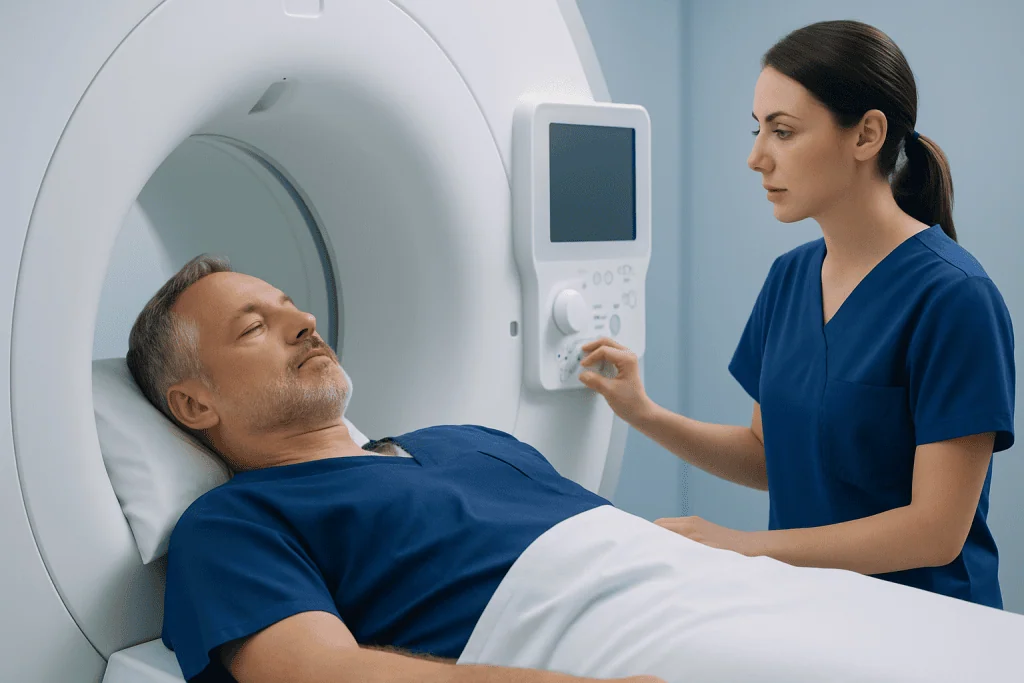
Cancer cannot be diagnosed from appearance alone. Doctors begin with a medical history and physical examination, asking about symptoms, past conditions, medications, family history, and possible risk factors. Depending on the concern, the next step may involve blood tests, imaging studies, or referral to a specialist.
Imaging tests can help identify an abnormal area, but they do not always confirm whether it is cancerous. In many cases, the most reliable way to establish a diagnosis is by examining cells or tissue under a microscope. This process is called pathology and is often based on a biopsy. That is why a rumor based on body language, speech, or photographs is medically weak.
Different suspected cancers require different diagnostic pathways. A skin change might need dermatologic assessment and removal or biopsy. A lung concern may require imaging and sometimes bronchoscopy to examine the airways. Digestive symptoms may lead to colonoscopy or endoscopy when clinically appropriate. The specific test depends on the suspected organ and symptom pattern.
Because diagnosis is so individualized, general observations from the public cannot replace professional evaluation. Even experienced doctors avoid making firm conclusions without evidence, and patients benefit most when health questions are approached with the same caution.
Common Sources of Confusion About Cancer
One common source of confusion is the difference between past cancer and active cancer. Some people have had a localized cancer removed successfully and then continue routine follow-up without signs of recurrence. Others may have a non-cancerous growth, a pre-cancerous change, or a suspicious lesion that still requires testing. These situations can sound similar in headlines but are medically different.
Another point of confusion is skin cancer. Many public figures, like many older adults, may have had skin lesions treated over time. Some skin cancers are common and highly treatable when found early, while others require closer follow-up. A past procedure does not automatically mean a person currently has serious or widespread disease.
People also tend to interpret ordinary symptoms as proof of cancer. Fatigue, weight changes, hoarseness, coughing, or stiffness can occur for many reasons, including infection, stress, sleep problems, medication effects, or other non-cancer conditions. While persistent unexplained symptoms deserve medical attention, they are not evidence on their own.
Finally, the language used in news coverage can blur important distinctions. Terms such as “lesion,” “mass,” “growth,” “tumor,” and “abnormality” do not all mean cancer. Some tumors are benign, and some abnormalities are inflammatory or infectious rather than malignant. Clear, careful wording matters.
Medical Privacy, Ethics, and Public Figures
Public interest in a leader’s health is understandable, but it does not erase the individual’s right to medical privacy. In most settings, personal health information is protected, and details are shared only with consent. Public figures may choose to disclose more than private citizens, but they are still entitled to accurate and respectful discussion.
Ethically, health reporting should avoid turning uncertain medical questions into entertainment. Guessing at a diagnosis can spread misinformation and may also reinforce stigma around cancer. A more responsible approach is to discuss confirmed facts, explain medical terms, and acknowledge uncertainty when it exists.
For readers, this means resisting pressure to draw conclusions from incomplete information. It is reasonable to want transparency, but transparency is not the same as rumor. Good public communication about health balances privacy, public interest, and medical accuracy.
When more detailed evaluation is needed for possible oncology-related conditions, care is typically coordinated across specialties such as internal medicine, radiology, pathology, surgery, and medical oncology. Near the end of a patient’s pathway, international centers such as Acibadem International may support diagnosis and treatment through multidisciplinary specialists in JCI-accredited hospitals.
How to Read Cancer News Critically
Readers can protect themselves from misinformation by using a few simple checks. First, identify the original source. Is the claim coming from an official medical update, a reputable journalist, or an unnamed social media account? Second, look for the exact wording. Does the source confirm cancer, mention only testing, or refer to a past medical issue?
Third, check whether the report includes medical context. Reliable coverage often explains what type of condition is being discussed, whether it is active or historical, and what tests were done. It may also quote doctors who clarify common misunderstandings. Vague or dramatic wording should be treated cautiously.
Fourth, be careful with recycled stories. An old health event can reappear during a new political moment and be presented as if it just happened. Dates, timelines, and follow-up details help prevent this error. If several reputable organizations report the same verified facts consistently, confidence in the information is higher.
These habits are useful not only for public figure news but also for personal health learning. They can help patients ask better questions, avoid panic, and focus on dependable information rather than speculation.
When a Cancer Concern Should Be Evaluated
Although this article focuses on public speculation, it can also serve as a reminder about personal health. Anyone with persistent or unexplained symptoms should speak with a qualified doctor rather than self-diagnosing online. Symptoms that continue, worsen, or are unusual for the person deserve medical attention.
Warning signs vary by cancer type but may include a new lump, unexplained bleeding, persistent cough, changing bowel habits, unexplained weight loss, a skin lesion that changes in size or color, difficulty swallowing, or ongoing fatigue without a clear reason. These symptoms often have non-cancer causes, but checking them early is sensible and reassuring.
Routine screening is also important because some cancers can be found before symptoms develop. Screening recommendations depend on age, sex, family history, and individual risk. A doctor can advise which tests are appropriate and how often they should be done.
If there is a confirmed concern, treatment planning may involve surgery, medicines, radiotherapy, or combined care based on the cancer type and stage. The best next step is individualized medical advice, not assumptions based on online discussions.
Frequently asked questions
Is there verified proof that Joe Biden has cancer?
Public speculation alone does not verify a cancer diagnosis. Only an official statement, confirmed medical documentation, or clearly sourced reporting can establish that information reliably.
Can someone tell if a person has cancer just by watching them?
No. Appearance, speech, fatigue, or movement changes are not enough to diagnose cancer. Many non-cancer conditions can cause similar signs, so proper medical evaluation is essential.
Does a past skin lesion or prior cancer treatment mean someone currently has cancer?
Not necessarily. A past lesion may have been benign, pre-cancerous, or fully treated. Active cancer, previous cancer, and follow-up monitoring are different medical situations.
Why do rumors about cancer spread so quickly online?
Cancer is a serious topic that attracts attention and emotion, especially when it involves a public figure. Short clips, incomplete headlines, and repeated social media posts can make unverified claims seem more certain than they are.
What is the most reliable way to confirm a cancer diagnosis?
A confirmed diagnosis usually comes from a clinical evaluation supported by tests such as imaging and, in many cases, pathology from a biopsy. The exact process depends on the organ involved and the type of cancer suspected.
How should readers respond to health rumors about public figures?
It helps to look for official, up-to-date sources and avoid drawing conclusions from commentary alone. Reading the exact wording carefully can prevent confusion between screening, past history, and active disease.
References
- World Health Organization
- National Cancer Institute
- American Cancer Society
- Centers for Disease Control and Prevention
- Mayo Clinic
This article is for general information only and is not a substitute for professional medical advice. Please consult a qualified doctor about your individual situation.
Oncology care in Turkey — second opinion and treatment plan
JCI-accredited · board-certified surgeons · reply within 24h
Add us as a Preferred Source to see more of our trusted health content across Google Search, AI Overviews and Discover.