Colon Cancer Symptoms in Women: Signs and Risk Factors

Common colon cancer symptoms in women include persistent changes in bowel habits, blood in the stool, abdominal pain, fatigue, and unexplained weight loss. Symptoms may be subtle at first and can overlap with hemorrhoids, irritable bowel syndrome, menstrual changes, or other digestive conditions.
Key Takeaways
- Common colon cancer symptoms in women include persistent changes in bowel habits, blood in the stool, abdominal pain, fatigue, and unexplained weight loss.
- Symptoms may be subtle at first and can overlap with hemorrhoids, irritable bowel syndrome, menstrual changes, or other digestive conditions.
- Risk increases with age, family history, certain inherited conditions, inflammatory bowel disease, and some lifestyle factors.
- Screening can find colon cancer early and may also detect precancerous polyps before cancer develops.
- Any persistent or unusual digestive symptom should be discussed with a qualified doctor, especially if it lasts more than a few weeks.
Colon cancer symptoms in women are often similar to those in men, but some signs can be mistaken for menstrual, hormonal, or digestive issues. Knowing the early warning signs and risk factors can help women seek timely medical evaluation and improve the chance of effective treatment.
Overview
Colon cancer begins in the large intestine, usually developing slowly from small growths called polyps. It is one of the most common cancers worldwide, and it can affect women as well as men. In many cases, early colon cancer causes no symptoms at all, which is why screening is so important.
When symptoms do appear, they are often easy to overlook. Women may attribute bloating, abdominal discomfort, fatigue, or changes in bowel habits to stress, diet, menstruation, menopause, or common digestive problems. Because of this overlap, colon cancer symptoms in women may be recognized later than they should be.
Most symptoms do not automatically mean cancer. Many noncancerous conditions can cause similar complaints. Still, symptoms that are new, persistent, worsening, or unusual for that person deserve medical attention so the cause can be identified and treated appropriately.
Symptoms of Colon Cancer in Women
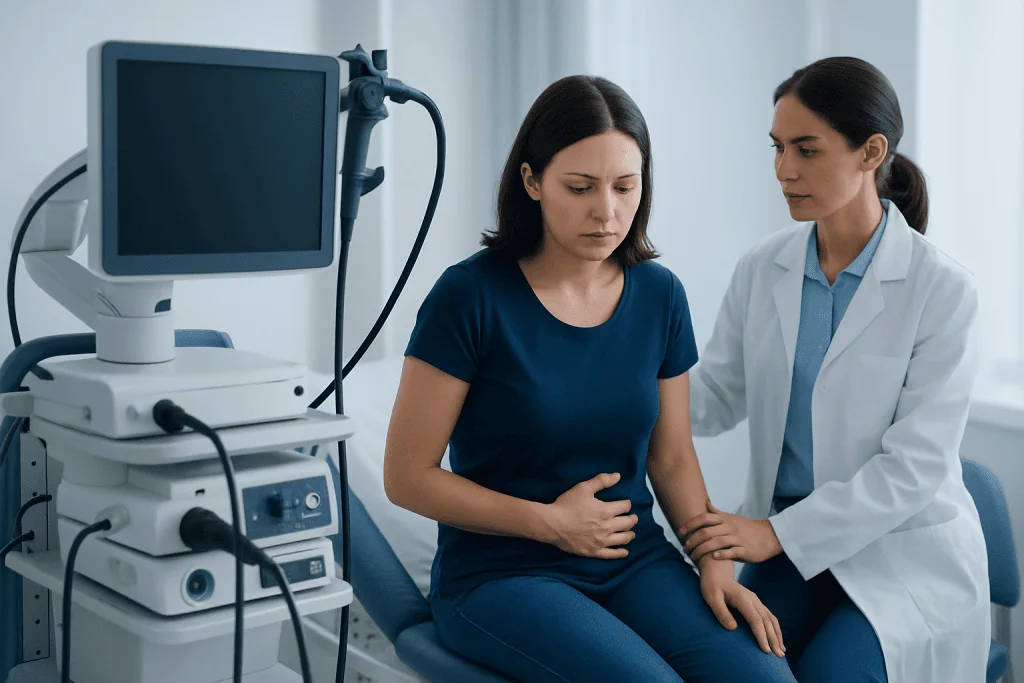
The most common colon cancer symptoms in women involve the digestive system. These may include a lasting change in bowel habits such as diarrhea, constipation, narrower stools, or a feeling that the bowel does not empty completely. Symptoms that continue for more than a short period should not be ignored, especially if they are different from a woman’s usual pattern.
Blood in the stool is another important warning sign. It may appear bright red, dark red, or make the stool look black and tarry. Some bleeding is too small to see and may only be found on testing, but over time it can contribute to iron deficiency anemia, tiredness, dizziness, and shortness of breath.
Other possible symptoms include abdominal pain, cramping, gas, bloating, nausea, unexplained weight loss, and ongoing fatigue. In some women, the symptoms can be vague rather than dramatic. This is one reason why regular screening and attention to persistent changes are so valuable.
- Persistent diarrhea or constipation
- Change in stool shape or caliber
- Blood in or on the stool
- Abdominal pain, cramps, or bloating
- Feeling that the bowel does not empty fully
- Unexplained tiredness or weakness
- Unintended weight loss
Why Symptoms May Be Missed or Misread

Some colon cancer symptoms in women can be confused with common female health concerns or benign digestive issues. For example, bloating and abdominal discomfort may be mistaken for menstrual symptoms, pelvic conditions, food intolerance, or irritable bowel syndrome. Tiredness may be blamed on a busy schedule, sleep problems, or iron deficiency without looking for the source of blood loss.
Rectal bleeding may also be assumed to come from hemorrhoids, especially after constipation. While hemorrhoids are common and often harmless, it is not safe to assume that bleeding is always caused by them. A doctor may need to rule out more serious causes, including colon cancer.
Women with anemia may sometimes be treated for low iron without enough investigation into why the iron is low. If iron deficiency develops without a clear explanation, especially after menopause, evaluation of the gastrointestinal tract is often needed. Paying attention to the full pattern of symptoms can help avoid delays in diagnosis.
Causes and Risk Factors
Colon cancer usually develops when cells in the lining of the colon grow abnormally over time. Doctors do not always know exactly why this happens in one person and not another, but several risk factors are well established. Age is one of the most important, with risk increasing as people get older, although younger adults can also develop the disease.
Family history matters. A woman may have a higher risk if a parent, sibling, or child has had colon cancer or certain types of polyps. Some inherited conditions, such as Lynch syndrome and familial adenomatous polyposis, greatly increase the lifetime risk. Personal history of colon polyps, previous colorectal cancer, or inflammatory bowel disease such as ulcerative colitis or Crohn’s disease also raises risk.
Lifestyle factors can contribute as well. These include smoking, heavy alcohol use, low physical activity, obesity, and diets high in processed or red meat and low in fiber-rich foods. Having a risk factor does not mean a person will definitely develop cancer, but it can help guide decisions about screening and follow-up.
- Increasing age
- Family history of colorectal cancer or advanced polyps
- Inherited cancer syndromes
- History of inflammatory bowel disease
- Personal history of colon polyps
- Smoking and heavy alcohol use
- Obesity and low physical activity
- Dietary patterns low in fiber and high in processed meat
How Colon Cancer Is Diagnosed
Diagnosis usually begins with a medical history and physical examination. A doctor will ask about bowel changes, bleeding, pain, fatigue, weight loss, family history, medications, and how long symptoms have been present. Blood tests may check for anemia and other clues, but they cannot confirm colon cancer on their own.
The most important test for diagnosis is usually a colonoscopy. During this procedure, a specialist examines the inside of the colon with a flexible camera and can remove suspicious polyps or take tissue samples for biopsy. Colonoscopy is used both for screening and for evaluating symptoms. In some cases, stool-based tests, CT imaging, or other investigations may also be used depending on the situation.
If cancer is found, additional imaging helps determine how far it has spread and guides treatment planning. This process is called staging. Women with symptoms should seek care promptly rather than waiting for symptoms to become severe, as early diagnosis often allows simpler and more effective treatment.
Evaluation may also include colonoscopy and biopsy when a suspicious area needs to be examined more closely.
Treatment Options
Treatment depends on the stage of the cancer, its location in the colon, the woman’s overall health, and her personal preferences. Surgery is often the main treatment for localized colon cancer and aims to remove the cancer along with nearby lymph nodes. Some very early cancers can be removed during colonoscopy, while others require an abdominal operation.
For more advanced disease, chemotherapy may be recommended before or after surgery to reduce the risk of recurrence or to treat cancer that has spread. In selected cases, targeted therapies or immunotherapy may be used, especially when the tumor has specific biological features. The best approach is usually decided by a multidisciplinary team.
Supportive care is also an important part of treatment. It may include nutritional guidance, pain control, anemia management, emotional support, and follow-up monitoring. Women who need treatment may benefit from discussing options such as colon cancer treatment and medical oncology with their care team.
Near the end of the diagnostic and treatment journey, some international patients choose centers such as Acibadem International, where multidisciplinary specialists in JCI-accredited hospitals diagnose and treat colon cancer with coordinated care.
Prevention, Screening, and Self-care
There is no guaranteed way to prevent colon cancer, but risk can often be reduced. Healthy habits such as regular physical activity, maintaining a healthy weight, eating a balanced diet rich in vegetables, fruits, legumes, and whole grains, and limiting processed meat, alcohol, and tobacco can support colon health. These steps benefit overall well-being in addition to cancer prevention.
Screening is one of the most effective ways to lower the impact of colon cancer because it can detect early cancer and remove precancerous polyps. The right screening test and starting age depend on personal risk. Women with average risk may begin screening at the age recommended in their country, while those with family history or inherited syndromes may need earlier or more frequent screening.
Self-care also means paying attention to the body’s signals. Keeping track of bowel changes, fatigue, bleeding, abdominal pain, and weight loss can help a doctor identify patterns. Even if symptoms seem mild, it is wise to seek professional advice if they persist or recur.
When to See a Doctor
A doctor should be consulted if a woman notices blood in the stool, persistent constipation or diarrhea, ongoing abdominal pain, unexplained fatigue, or unintentional weight loss. These symptoms are not always caused by cancer, but they should be assessed if they last more than a few weeks or keep coming back.
Medical advice is especially important for women with iron deficiency anemia, a strong family history of colon cancer, a history of polyps, or inflammatory bowel disease. Anyone who is overdue for screening should also speak with a healthcare professional, even if no symptoms are present.
Urgent evaluation may be needed for severe abdominal pain, vomiting, inability to pass stool or gas, heavy rectal bleeding, or symptoms of significant weakness or fainting. Prompt care can help identify the cause and guide appropriate treatment as early as possible.
Frequently asked questions
Are colon cancer symptoms in women different from those in men?
Most colon cancer symptoms are similar in women and men. However, women may be more likely to mistake symptoms such as bloating, fatigue, or abdominal discomfort for menstrual, hormonal, or common digestive problems, which can delay evaluation.
Can colon cancer cause bloating in women?
Yes, bloating can occur with colon cancer, especially when there are changes in bowel function or partial blockage in the colon. Bloating is common and often caused by less serious conditions, but persistent bloating with bowel changes, pain, or weight loss should be checked by a doctor.
Is blood in the stool always a sign of colon cancer?
No, blood in the stool can also be caused by hemorrhoids, anal fissures, infections, or inflammatory bowel disease. Still, any rectal bleeding should be evaluated, particularly if it is recurrent, unexplained, or associated with other symptoms.
At what age should women start colon cancer screening?
The starting age depends on personal risk and local screening guidelines. Many average-risk adults begin in midlife, while women with family history, inherited syndromes, or certain bowel diseases may need earlier screening and closer follow-up.
Can iron deficiency anemia be related to colon cancer?
Yes, colon cancer can cause slow, hidden bleeding that leads to iron deficiency anemia over time. If anemia has no clear explanation, especially in adults who are not menstruating, doctors often investigate the digestive tract to find the cause.
Do all women with colon cancer have symptoms?
No, early colon cancer may cause no symptoms at all. That is why regular screening is so important, because it can detect cancer or precancerous polyps before symptoms develop.
References
- World Health Organization
- American Cancer Society
- National Cancer Institute
- Centers for Disease Control and Prevention
- National Comprehensive Cancer Network
This article is for general information only and is not a substitute for professional medical advice. Please consult a qualified doctor about your individual situation.
Colon Cancer in Turkey — costs, top hospitals & a free quote
JCI-accredited · board-certified surgeons · reply within 24h
Add us as a Preferred Source to see more of our trusted health content across Google Search, AI Overviews and Discover.

Medical Oncology Department
Medical treatment of cancer with chemotherapy, immunotherapy and targeted therapies under a multidisciplinary tumor board.
60 specialists in this unit