FibroScan for Fatty Liver: How the Test Works and What Results Mean
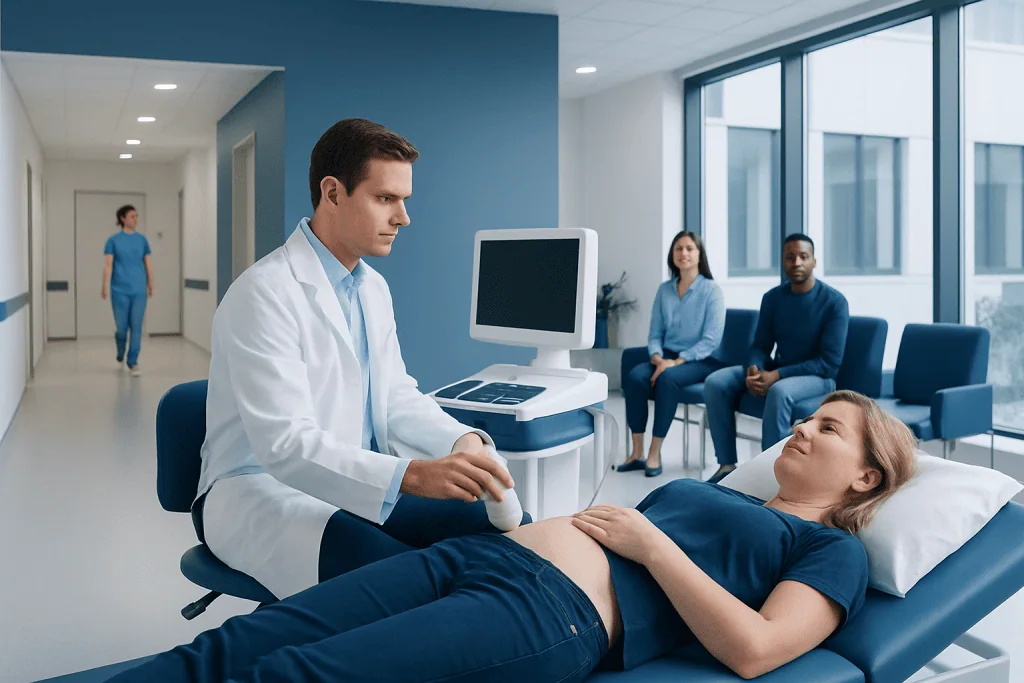
FibroScan uses ultrasound-based technology to measure liver stiffness and estimate liver fat. The test is commonly used in people with suspected or known fatty liver disease.
Key Takeaways
- FibroScan uses ultrasound-based technology to measure liver stiffness and estimate liver fat.
- The test is commonly used in people with suspected or known fatty liver disease.
- Results usually include a liver stiffness value and a CAP score, which are interpreted together with medical history, blood tests, and imaging.
- FibroScan is painless and fast, but some factors such as obesity, inflammation, or recent meals can affect readings.
- Abnormal results do not confirm a diagnosis on their own and should always be reviewed by a qualified doctor.
FibroScan for fatty liver is a non-invasive test that helps doctors estimate how much fat and scarring may be present in the liver. It is quick, painless, and often used to monitor liver health without a surgical biopsy.
Overview: What Is FibroScan for Fatty Liver?
FibroScan for fatty liver is a specialized, non-invasive liver test that helps doctors assess two important features of liver health: fat buildup and stiffness. Stiffness can be a sign of fibrosis, which means scarring in the liver. The test is commonly used when there is concern about fatty liver disease, including metabolic dysfunction-associated steatotic liver disease, previously often called non-alcoholic fatty liver disease.
FibroScan does not involve surgery, needles into the liver, or general anesthesia. Instead, it uses a probe placed on the skin over the liver, similar to an ultrasound examination. The device sends gentle vibrations and sound waves through the liver to calculate measurements that can help estimate whether there is steatosis (fat accumulation) and whether fibrosis may be present.
Because it is quick and easy to repeat, FibroScan can be useful both for initial assessment and for follow-up over time. It does not replace a full medical evaluation, but it can reduce the need for more invasive testing in many people. Doctors often use it alongside blood tests, standard ultrasound, and evaluation of risk factors such as obesity, diabetes, high cholesterol, or alcohol use.
How the Test Works
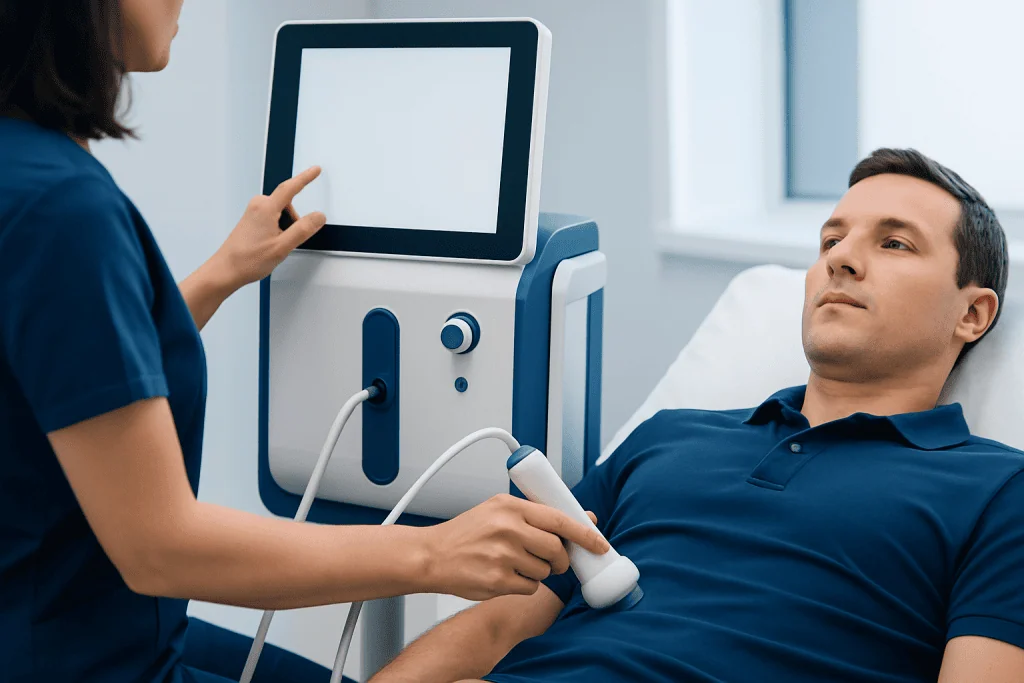
FibroScan is a type of transient elastography. During the test, a small handheld probe is placed between the ribs on the right side of the upper abdomen, where the liver is located. The probe delivers a mild mechanical pulse that creates a wave through the liver tissue. Ultrasound technology then measures how quickly that wave travels.
When liver tissue is stiffer, the wave usually travels faster. Higher stiffness can suggest more fibrosis, although stiffness may also rise for other reasons, such as active inflammation or congestion. In addition to stiffness, many FibroScan devices provide a controlled attenuation parameter, often called a CAP score. This estimates how much ultrasound signal is reduced as it passes through the liver, which can reflect the amount of fat present.
The test itself usually takes only a short time. A person typically lies on their back with the right arm raised behind the head to improve access to the liver area. Multiple measurements are taken to improve reliability, and a computer calculates the final result. The procedure is generally painless, though some people notice a light tapping sensation on the skin.
FibroScan is part of a broader approach to liver assessment. If needed, doctors may combine it with blood work or gastroenterology evaluation to better understand the cause of abnormal results and decide on follow-up.
Who May Need a FibroScan?
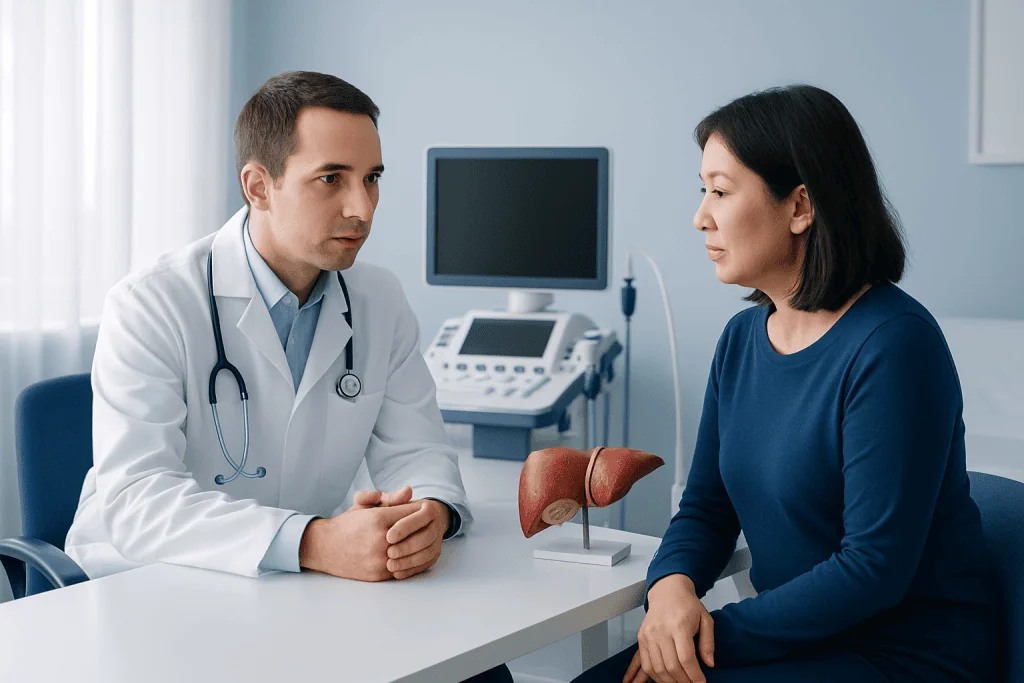
A doctor may recommend FibroScan for people who are at increased risk of fatty liver disease or liver fibrosis. This includes people with obesity, type 2 diabetes, insulin resistance, high triglycerides, high cholesterol, or metabolic syndrome. It may also be advised when liver enzyme tests are abnormal or when standard imaging suggests fat in the liver.
FibroScan can also be useful for people with known liver conditions that may cause scarring over time. Examples include viral hepatitis, alcohol-related liver disease, and certain inherited or autoimmune liver disorders. In these settings, the test may help track progression or response to treatment.
Many people with fatty liver have no obvious symptoms, especially in early stages. Sometimes the condition is discovered incidentally during routine checkups. In others, doctors may already be evaluating symptoms such as fatigue, discomfort in the upper right abdomen, or signs linked to advanced liver disease. FibroScan can help clarify the next step in assessing fatty liver disease.
Not everyone needs this test. A doctor considers the whole clinical picture, including medical history, examination findings, laboratory results, and the question that needs to be answered. In some people, other tests may be more appropriate, while in others FibroScan offers a convenient first-line tool.
What to Expect Before, During, and After the Scan
Preparation instructions can vary, but many centers ask patients not to eat for a few hours before the test. This is because food intake may temporarily affect liver blood flow and could influence the reading. Patients should follow the exact instructions given by their care team.
During the scan, the patient lies comfortably while the clinician places gel on the skin and applies the probe over the liver area. The machine takes a series of readings. The process is usually brief, and normal activities can generally be resumed soon afterward. There is no recovery period in the way there would be after sedation or a procedure involving tissue sampling.
FibroScan is considered safe for most people. It is non-invasive and does not use ionizing radiation. However, the quality of the measurement can sometimes be reduced in certain situations, such as severe obesity, limited access between the ribs, fluid in the abdomen, or an inability to stay still during the test. Some devices have special probes designed to improve accuracy in larger body types.
Results may be available right away, but interpretation is best left to the doctor who ordered the test. If more detailed assessment is needed, a clinician may recommend further tests such as blood-based fibrosis scoring, abdominal ultrasound, MRI, or in selected cases a liver biopsy.
Understanding FibroScan Results
FibroScan results usually include two main measurements. The first is liver stiffness measurement, commonly reported in kilopascals. In general, lower stiffness values are more reassuring, while higher values may suggest increasing degrees of fibrosis or cirrhosis. The second is the CAP score, which helps estimate liver fat content. Higher CAP values usually indicate more steatosis.
It is important to know that there is no single universal cutoff that applies to every patient. Interpretation depends on the condition being evaluated, the device used, the reliability of the reading, and the person’s overall clinical context. For example, a value that raises concern in one liver disease may be interpreted differently in another. Doctors also look at whether the test obtained enough valid measurements and whether those readings were consistent.
Results should never be read in isolation. Temporary liver inflammation, recent alcohol intake, congestion related to heart problems, or even a non-fasting state may affect stiffness. CAP scores can also vary, and they estimate fat rather than directly measuring it. This is why doctors combine FibroScan results with symptoms, examination findings, blood tests, and sometimes other imaging.
If FibroScan suggests more advanced fibrosis, the next steps may include further evaluation for complications of chronic liver disease and discussion of treatment priorities. If results suggest mild disease, the focus may be on lifestyle measures and repeat monitoring. Either way, the test helps guide decisions rather than provide the full answer by itself.
Benefits and Limitations of FibroScan
One of the main advantages of FibroScan is that it is non-invasive. Unlike a liver biopsy, it does not remove a tissue sample, so there is no needle inserted into the liver and no recovery from an invasive procedure. This makes it more acceptable for many patients and practical for repeat follow-up over time.
FibroScan is also quick and can often be performed in an outpatient setting. It helps doctors identify people who may have significant fibrosis and may need closer monitoring or specialist care. In many cases, it can reduce uncertainty when blood tests alone do not clearly show whether scarring is present.
At the same time, FibroScan has limitations. It estimates fibrosis and steatosis rather than diagnosing every cause of liver disease. It may be less accurate in people with obesity, marked inflammation, fluid in the abdomen, or certain anatomical challenges. A normal or mildly abnormal reading does not completely rule out disease, and a high value does not always mean permanent scarring.
For these reasons, FibroScan works best as part of a structured liver assessment. In some situations, doctors may still advise tests such as a comprehensive check-up, laboratory monitoring, or referral to specialists if the cause or severity of liver disease remains uncertain.
What Happens After an Abnormal Result?
An abnormal FibroScan result does not automatically mean severe liver damage, but it does deserve proper medical review. The doctor will consider possible explanations such as fatty liver related to metabolic health, alcohol use, viral hepatitis, medication effects, or other liver conditions. Additional tests may be needed to confirm the diagnosis and estimate how advanced the disease is.
Treatment depends on the underlying cause. For many people with fatty liver disease, the main strategies involve weight management, regular physical activity, balanced nutrition, control of diabetes, and treatment of high cholesterol or high blood pressure when present. Avoiding or limiting alcohol may also be advised. If another liver disease is identified, the treatment plan may be different.
Monitoring is often an important part of care. Some patients may need repeat FibroScan after lifestyle changes or treatment, while others may require periodic blood tests and imaging. If there is concern for advanced fibrosis or cirrhosis, doctors may recommend ongoing surveillance for complications and specialist follow-up.
Near the end of the care pathway, some patients choose treatment centers with coordinated liver services. Acibadem International’s multidisciplinary specialists and JCI-accredited hospitals diagnose and treat liver conditions for international patients when further evaluation is needed.
How to Support Liver Health and When to See a Doctor
Healthy daily habits can make a meaningful difference in fatty liver disease and overall liver health. Practical steps include maintaining a healthy weight, staying physically active, choosing a balanced eating pattern rich in vegetables, fruits, whole grains, and lean proteins, and limiting ultra-processed foods and sugary drinks. People should also take medications only as directed and discuss supplements with a clinician, since some products may affect the liver.
Managing conditions linked to fatty liver is equally important. Good control of blood sugar, cholesterol, blood pressure, and sleep-related problems such as sleep apnea may reduce ongoing liver stress. Follow-up with a doctor is especially useful for people with several metabolic risk factors even if they feel well.
Medical review is important if there are persistent abnormal liver blood tests, imaging that suggests steatosis, or symptoms such as ongoing fatigue, abdominal swelling, yellowing of the skin or eyes, easy bruising, or swelling in the legs. These symptoms can have many causes, but they should not be ignored. A timely assessment helps determine whether FibroScan or another test is appropriate.
People should also seek professional advice if they already have a known liver condition and their symptoms change. Early assessment supports better monitoring and a clearer treatment plan, whether the issue is mild fatty liver or a more complex liver disorder.
Frequently asked questions
Is FibroScan painful?
FibroScan is generally not painful. Most people feel only a light tapping sensation on the skin during the test. It does not involve needles into the liver or a recovery period afterward.
Can FibroScan diagnose fatty liver by itself?
FibroScan can strongly support the assessment of fatty liver by estimating liver fat and stiffness, but it does not usually provide the full diagnosis on its own. Doctors interpret the results together with blood tests, medical history, physical examination, and sometimes other imaging.
What do high FibroScan results mean?
Higher liver stiffness values may suggest more fibrosis or scarring, while higher CAP scores may suggest more fat in the liver. However, these results are not specific by themselves and can be influenced by other factors such as inflammation or recent food intake. A doctor should explain what the numbers mean in the individual case.
Do patients need to fast before a FibroScan?
Many centers ask patients to avoid eating for a few hours before the scan. Fasting can help improve the reliability of the measurement. Patients should follow the specific instructions provided by their healthcare team.
Is FibroScan better than liver biopsy?
FibroScan and liver biopsy serve different purposes. FibroScan is non-invasive, quick, and useful for estimating fat and fibrosis, while biopsy can provide more detailed tissue information when the diagnosis is unclear. In many cases, FibroScan helps reduce the need for biopsy, but it does not replace it in every situation.
How often should FibroScan be repeated?
The timing depends on the person’s condition, risk factors, and treatment plan. Some people need repeat testing to monitor changes after lifestyle measures or ongoing treatment, while others may not need frequent follow-up. The doctor will recommend an interval based on the overall clinical picture.
References
- World Health Organization
- American Association for the Study of Liver Diseases
- European Association for the Study of the Liver
- National Institute of Diabetes and Digestive and Kidney Diseases
- British Liver Trust
This article is for general information only and is not a substitute for professional medical advice. Please consult a qualified doctor about your individual situation.
Oncology care in Turkey — second opinion and treatment plan
JCI-accredited · board-certified surgeons · reply within 24h
Add us as a Preferred Source to see more of our trusted health content across Google Search, AI Overviews and Discover.
Check your numbers in seconds
BMI, calories, due date, blood pressure and 30+ more clinical calculators — free, instant, doctor-reviewed ranges.