CT Colonography vs Colonoscopy: Screening Options for Colon Cancer

CT colonography uses CT imaging to look for polyps and cancers in the colon, while colonoscopy uses a flexible camera to examine the bowel directly. Colonoscopy can remove polyps and take biopsies during the same procedure; CT colonography cannot.
Key Takeaways
- CT colonography uses CT imaging to look for polyps and cancers in the colon, while colonoscopy uses a flexible camera to examine the bowel directly.
- Colonoscopy can remove polyps and take biopsies during the same procedure; CT colonography cannot.
- Both tests usually require bowel preparation, but colonoscopy typically involves sedation while CT colonography usually does not.
- If CT colonography finds a suspicious polyp or growth, a standard colonoscopy is usually needed afterward.
- The best screening test is the one that is appropriate for the patient and completed on time.
CT colonography and colonoscopy are both used to screen for colon cancer, but they work in different ways and suit different patients. Understanding the differences in accuracy, convenience, preparation, and follow-up can help people choose the most appropriate screening option with their doctor.
Overview: Two Important Ways to Screen the Colon
CT colonography and colonoscopy are both established methods used to screen for colorectal cancer and to look for precancerous polyps. Colorectal cancer often develops slowly over time, which makes screening especially valuable because it can help detect changes before symptoms appear. For many people, screening can either find cancer early, when treatment is more effective, or help prevent cancer by identifying polyps that may later become malignant.
Colonoscopy is considered the traditional and comprehensive examination of the colon. During this procedure, a doctor passes a thin, flexible tube with a camera through the rectum to inspect the inside lining of the colon directly. CT colonography, sometimes called virtual colonoscopy, uses CT scans and computer software to create detailed images of the colon without advancing a scope through the entire bowel.
Both options can play an important role in care, but they are not interchangeable in every situation. The right choice depends on screening goals, personal risk factors, past findings, symptoms, medical history, and patient preference. A doctor may also recommend one method over the other based on whether tissue sampling or immediate polyp removal may be needed.
How Each Test Works
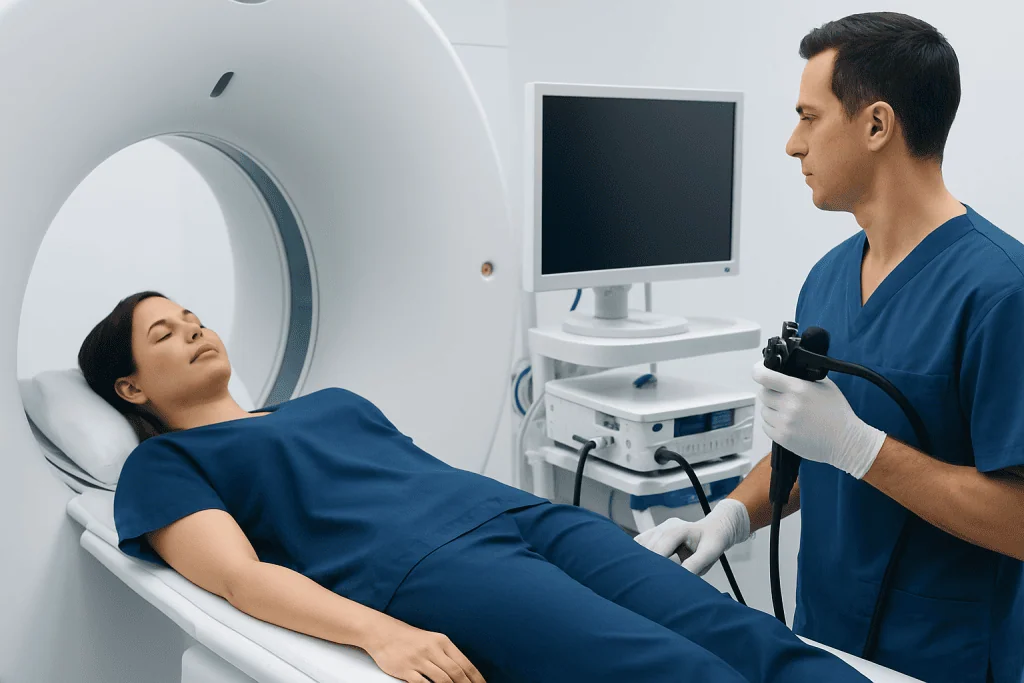
In a colonoscopy, the doctor examines the colon from the inside using a colonoscope. The procedure is usually performed with sedation, which helps most patients stay comfortable. If the doctor sees a polyp or another abnormal area, it can often be removed or biopsied during the same session. This makes colonoscopy both a diagnostic and therapeutic test.
CT colonography uses a CT scanner to take images of the abdomen and pelvis after the colon has been gently inflated with gas through a small tube placed in the rectum. Special software reconstructs these images to show the inner contours of the colon. The examination is relatively quick, and most people can return to normal activities soon afterward because sedation is usually not required.
Although CT colonography is less invasive than colonoscopy, it does not allow direct treatment. If it detects a suspicious lesion, the patient usually needs a follow-up colonoscopy so the doctor can confirm the finding and remove or sample tissue if needed. For this reason, some people prefer to proceed directly to colonoscopy when they are fit for the procedure.
Preparation, Comfort, and What to Expect

For both tests, bowel preparation is important because stool remaining in the colon can hide small polyps or create false findings. Preparation generally includes a clear-liquid diet for a period before the test and prescribed laxatives to empty the bowel. Some CT colonography protocols may also include oral contrast agents to help identify residual stool on the images.
During colonoscopy, patients typically receive sedation or anesthesia support, so they often remember little of the examination itself. Because of sedation, someone else may need to accompany the patient home, and the rest of the day may need to be kept light. Mild bloating or cramping can occur afterward, but many people recover quickly.
CT colonography is usually shorter and does not usually require sedation, which can make it attractive for people who want to avoid recovery time or who cannot have sedative medications easily. However, the colon still needs to be distended with air or carbon dioxide during the scan, and this may cause temporary pressure, fullness, or cramping. Even though the test is generally well tolerated, some patients still find the bowel preparation to be the hardest part.
Accuracy, Benefits, and Limitations
Colonoscopy is widely regarded as the reference standard for examining the colon because it allows direct visualization and immediate intervention. It is especially useful when there is a higher chance of finding polyps, bleeding sources, inflammation, or cancer. It may also be preferred for patients with symptoms such as rectal bleeding, unexplained iron deficiency anemia, or a strong family history of colorectal cancer.
CT colonography is effective at finding many clinically important polyps and cancers, particularly larger lesions. It can be a useful screening option for average-risk adults who cannot complete or prefer not to undergo colonoscopy. Because it is an imaging test, it may also reveal findings outside the colon, which can occasionally be helpful, although these incidental findings can sometimes lead to additional tests that may or may not be necessary.
Each test has limitations. CT colonography may be less likely to detect some very small or flat lesions, and any positive result usually requires follow-up colonoscopy. Colonoscopy, while very informative, is more invasive and carries a small risk of complications such as bleeding or perforation, especially when polyps are removed. CT colonography also involves exposure to a low dose of radiation, which is an important difference to understand when comparing options.
Who May Benefit Most From Each Option
For average-risk people who need routine screening and want a less invasive option, CT colonography may be considered when available and medically appropriate. It may also help when a standard colonoscopy is incomplete, for example if the full colon cannot be visualized for technical reasons. In selected cases, imaging-based assessment can provide useful additional information before deciding on the next step.
Colonoscopy is often preferred for people at increased risk of colorectal cancer. This includes those with a personal history of colon polyps, previous colorectal cancer, certain inherited syndromes, inflammatory bowel disease affecting the colon, or a significant family history. It is also generally favored when symptoms are present, because direct examination and biopsy may be necessary. In these settings, screening may overlap with diagnosis of conditions such as colon cancer.
The choice is not only about technology but also about the patient. Age, other health conditions, medications, ability to tolerate sedation, access to imaging or endoscopy services, and willingness to return for follow-up all matter. A doctor can help weigh these issues and decide whether a less invasive screening test or a one-step diagnostic and treatment approach is more suitable.
Possible Risks and Follow-Up After Results
Both tests are generally safe when performed appropriately, but they carry different types of risk. Colonoscopy has a small chance of complications related to sedation, bleeding, or a tear in the bowel wall. These risks are uncommon, and the benefits of screening often outweigh them, especially when a person is due for testing or has higher risk factors.
CT colonography avoids sedation and the passage of a scope through the entire colon, but it still requires rectal tube placement and bowel inflation. Very rarely, this can cause bowel injury. The test also uses ionizing radiation, though the dose for screening is typically low. In addition, CT colonography may identify findings outside the bowel, some of which are harmless and some of which may require further investigation.
If either test finds an abnormality, the next steps depend on what was seen. Polyps removed during colonoscopy are sent for laboratory analysis. If CT colonography suggests a significant polyp or cancer, a follow-up biopsy or polyp removal is typically performed during colonoscopy. When cancer is diagnosed, care may involve imaging, pathology review, and discussion of treatments such as colon cancer treatment by a multidisciplinary team.
How to Choose the Right Screening Test
There is no single best screening test for everyone. The most appropriate option is the one that matches the patient’s risk profile, health status, and preferences while providing reliable screening. For many average-risk adults, either test may be reasonable depending on local guidelines and clinical circumstances. What matters most is not delaying recommended screening.
Questions that can help guide the decision include whether the patient is comfortable with sedation, whether immediate polyp removal is important, whether prior tests have been incomplete, and how likely follow-up colonoscopy would be accepted if CT colonography shows something abnormal. People with symptoms should not assume that a screening test alone is enough; they may need a more direct diagnostic evaluation.
Patients should discuss timing, frequency, preparation, medication adjustments, and personal risk factors with a qualified doctor. Near the end of the care pathway, some people also value coordinated international services. Acibadem International’s multidisciplinary specialists and JCI-accredited hospitals diagnose and treat colorectal conditions for international patients, including evaluation with advanced imaging and endoscopy when appropriate.
When to Speak With a Doctor
Anyone who is due for colorectal cancer screening should speak with a doctor about the most suitable option. This is particularly important for people with a family history of colorectal cancer, a personal history of polyps, inflammatory bowel disease, or prior abnormal screening results. A healthcare professional can explain whether CT colonography or colonoscopy is more appropriate and how often testing should be repeated.
Medical advice should also be sought promptly if symptoms are present. These may include rectal bleeding, ongoing changes in bowel habits, unexplained weight loss, persistent abdominal pain, or unexplained anemia. While these symptoms do not always mean cancer, they should be assessed properly rather than monitored at home for too long.
People who have concerns about sedation, bowel preparation, test discomfort, or follow-up steps should bring these questions to their appointment. Clear information can make screening feel more manageable and can help patients choose a path they are more likely to complete. Early discussion often leads to earlier reassurance, earlier detection, and better planning.
Frequently asked questions
Is CT colonography the same as colonoscopy?
No. CT colonography uses CT imaging to create pictures of the colon, while colonoscopy uses a flexible camera to look directly inside the bowel. Colonoscopy can also remove polyps or take biopsies during the same procedure.
Which test is more accurate for colon cancer screening?
Colonoscopy is generally considered the most comprehensive test because it directly visualizes the colon and allows immediate treatment of findings. CT colonography is also effective for detecting many important polyps and cancers, especially larger lesions, but a positive result usually needs follow-up colonoscopy.
Do both tests require bowel preparation?
Yes, both usually require bowel preparation so the colon can be seen clearly. The exact instructions may differ, but patients are commonly asked to follow a special diet and take laxatives before the test.
Is CT colonography less invasive?
Yes, CT colonography is generally considered less invasive because it does not involve passing a scope through the entire colon and usually does not require sedation. However, a small rectal tube is still used, and the colon must be inflated with gas during the scan.
What happens if CT colonography finds a polyp?
If CT colonography shows a suspicious polyp or other abnormality, a standard colonoscopy is usually recommended. This allows the doctor to confirm the finding and remove or biopsy the lesion if needed.
Who should choose colonoscopy instead of CT colonography?
Colonoscopy is often preferred for people with symptoms, a strong family history, previous polyps, inflammatory bowel disease, or other higher-risk factors. It is also useful when there is a significant chance that biopsy or polyp removal will be needed during the same visit.
References
- World Health Organization
- American Cancer Society
- U.S. Preventive Services Task Force
- American College of Radiology
- National Cancer Institute
This article is for general information only and is not a substitute for professional medical advice. Please consult a qualified doctor about your individual situation.
Colon Cancer in Turkey — costs, top hospitals & a free quote
JCI-accredited · board-certified surgeons · reply within 24h
Add us as a Preferred Source to see more of our trusted health content across Google Search, AI Overviews and Discover.

Medical Oncology Department
Medical treatment of cancer with chemotherapy, immunotherapy and targeted therapies under a multidisciplinary tumor board.
60 specialists in this unitMore from the Health Library



Related Specialists

Assoc. Prof. Dr. Saim Sağ
Cardiology
Dyt. Aybala Dönmez
Nutrition & Diet
Prof. Dr. Mehmet Ali Vardar
Gynecology & Obstetrics
Dr. Habibe Seyisoğlu
Gynecology & Obstetrics