

Sending Medical Records to Turkey Securely: A Step-by-Step Patient Guide

Sending medical records to Turkey securely starts with using encrypted channels, sharing only relevant files, and confirming who will review them in Istanbul.
If you are planning treatment abroad, sending your records safely and clearly can save time and reduce stress. This guide walks you through what to send, how to protect your privacy, and how to make sure your care team in Turkey receives the right information.
At a glance
- Best for: Patients sharing reports, scans, and medical history before traveling to Turkey
- Main goal: Protect your privacy while helping specialists review your case efficiently
- What to prepare: Recent reports, imaging files, medication list, ID details, and a short medical summary
- Safest approach: Use the hospital's official international patient channels and avoid unnecessary apps or public links
- Helpful support: Interpreter, care coordination, and document guidance through international patient services
Why secure record sharing matters before you travel
When you seek treatment abroad, your medical records are often the first thing a specialist team sees. Clear, complete documents can help doctors understand your diagnosis, previous treatments, current symptoms, and whether you may need more tests after arrival. Sending the right records early can make your planning smoother and may reduce back-and-forth messages later.
Security matters just as much as completeness. Your records can include personal identifiers, scan images, test results, and sensitive health details. If they are sent through the wrong channel, shared with the wrong person, or uploaded without protection, your privacy may be at risk. That is why it is wise to use official hospital contact routes and confirm exactly where your files should go.
If you are in touch with a provider such as Acibadem International, the international patient services team can usually explain which documents are needed, which format is preferred, and how to submit them safely. This practical support is especially useful if you are coordinating care across different countries, languages, and time zones.
What records you usually need to send
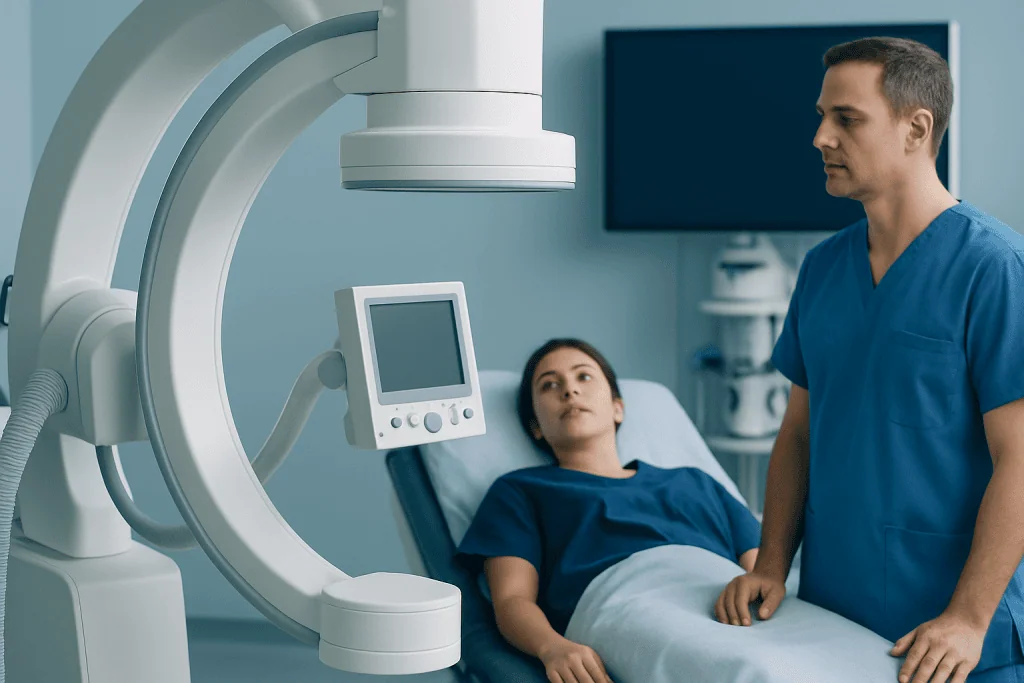
Before you upload anything, pause and ask what is actually relevant to your current medical question. In many cases, the most helpful records are recent consultation notes, pathology reports if applicable, blood test results, procedure summaries, and imaging reports. If you have had CT, MRI, PET-CT, ultrasound, or X-ray studies, the team may also need the images themselves, not just the written report.
It helps to organize your documents into a simple set. Include your full name as shown on your passport, date of birth, contact details, country of residence, and a brief timeline of your condition. A one-page summary that explains your diagnosis, major symptoms, prior treatments, allergies, and current medicines can save time for the reviewing team.
Try not to send everything you have ever received unless requested. Very old, duplicated, or unrelated records can slow down review. A focused package is easier for specialists to assess, and if more detail is needed, the hospital can ask you for additional files afterward.
- Recent specialist letters or consultation notes
- Imaging reports and original scan files when available
- Biopsy or pathology results if relevant
- Blood tests and other laboratory results
- Medication list, allergies, and important medical history
- A short summary of your current concerns and treatment goals
How to send records securely
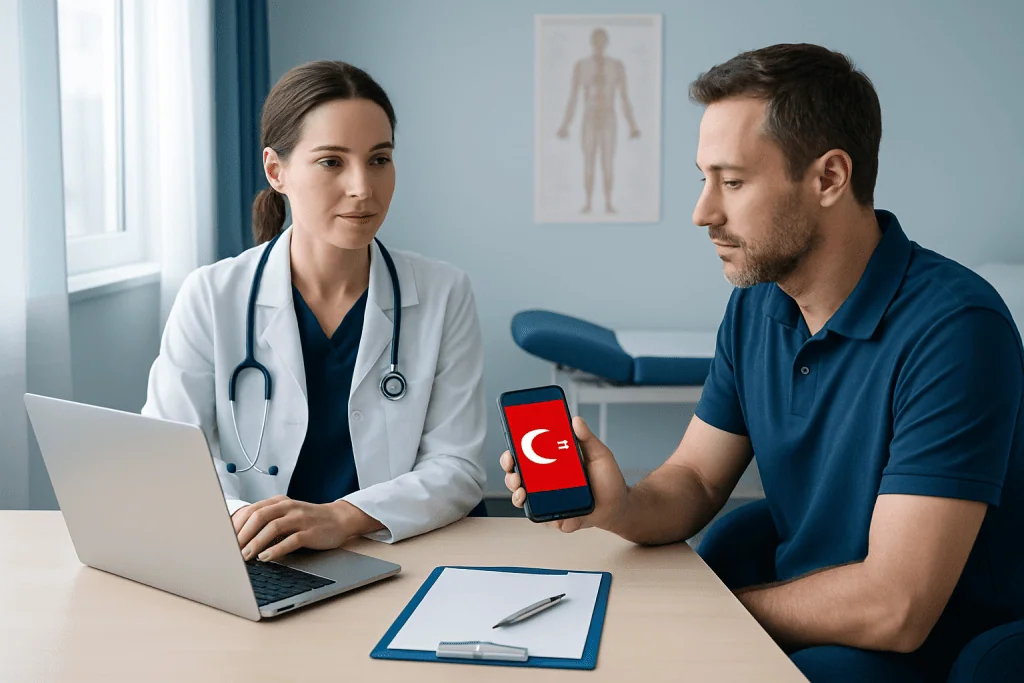
The safest first step is to ask for the hospital’s official submission method. This may be a secure upload link, a protected patient form, or an email address used specifically by the international patient department. Always verify the contact details on the hospital’s official website or through a known coordinator, rather than relying on a number or address passed to you in an informal message.
If email is used, send documents only to the confirmed official address and avoid copying many people unless necessary. For larger imaging files, hospitals may provide a secure portal or request a password-protected transfer method. If you set a password on a file, send the password in a separate message rather than in the same email thread.
Avoid public file-sharing links that anyone can open, internet cafe computers, and unsecured public Wi-Fi when uploading personal health information. Use a private internet connection, keep your own device updated, and make sure your files are clearly labeled. For example, name files by date and type, such as ‘2026-03-MRI-brain-report’ or ‘2026-03-blood-tests.’
At Acibadem International, patients commonly receive guidance from international patient coordinators on where to send reports and scans and how to package them in a usable way. This kind of coordination can be reassuring when you are sharing large files from another country and want to make sure they reach the right multidisciplinary team.
How to prepare scans, translations, and file formats
Imaging often causes the most confusion. A written radiology report is helpful, but specialists may also need the original image files. These are often provided in DICOM format on a CD, USB, or download link. If you only have photos of scan images taken on a phone, send them only as a last resort and tell the team that original files may be available.
For written records, PDF is usually the easiest format because it preserves layout and is simple to open. If a document is on paper, scan it rather than taking angled photos where text is hard to read. Keep pages in the correct order and check that names, dates, and measurements are legible before sending.
If your records are not in English or Turkish, ask whether translation is necessary before submission. In many cases, a hospital’s international patient service can advise you on which documents must be translated first and which can be reviewed later if needed. Acibadem International also supports international patients with interpretation and coordination, which can make communication easier once your records are under review.
Privacy, consent, and avoiding common mistakes
You remain responsible for what you share, so it is sensible to send only what is necessary for medical review. Double-check that your documents belong to you, that no other family member’s records are mixed in, and that your contact details are accurate. If you are sending records on behalf of a parent, child, or partner, you may be asked for proof that you are authorized to do so.
It is also worth asking how your data will be used. For example, will it be reviewed only for a preliminary opinion, or also stored in the hospital system if you proceed with care? If a consent form is provided, read it carefully so you understand what you are agreeing to and how follow-up communication will happen.
Common mistakes include sending incomplete imaging, omitting pathology reports, forgetting a medication list, and using an email subject line that gives no context. Another frequent issue is sending multiple versions of the same report without noting which is the latest. A short covering message can help: explain your diagnosis, your main question, and which attachments are most important.
What happens after you send your records
After submission, it is reasonable to expect an acknowledgment that your files were received. If you do not receive confirmation within the timeframe you were given, follow up through the same official channel instead of resending the same files repeatedly to different addresses. Duplicate submissions can create confusion and delay review.
Once your case is under review, the team may come back with practical questions. You may be asked for additional reports, clearer scan files, pathology slides, or details about your symptoms and previous treatments. This is normal and usually means the specialists are trying to build a more complete picture before discussing next steps.
If you decide to continue your care in Turkey, your records then become part of the planning process for appointments, travel timing, and any further testing needed on arrival. In a coordinated system such as Acibadem International, international patient services can often help with logistics alongside the medical review, including interpreters, scheduling, and guidance for travel and accommodation.
Step by step
- 1. Ask for the official submission channel. Contact the hospital's international patient department and request the exact email address, upload portal, or form you should use. Confirm it through the hospital's official website or a known coordinator before sending any personal health information.
- 2. Gather only the records that matter now. Prepare recent, relevant reports rather than your entire medical history unless more is requested. Include a short summary of your condition, current symptoms, previous treatments, and any specific question you want the specialist team to review.
- 3. Organize and label every file clearly. Save reports as readable PDFs and label them with dates and document type so they are easy to sort. For scans, include both the written report and the original imaging files if possible, especially for MRI, CT, and PET-CT studies.
- 4. Check language and readability. Make sure each file opens properly and that names, dates, and results are visible. If your documents are not in English or Turkish, ask whether translation is needed before sending, so you do not waste time translating unnecessary papers.
- 5. Send files using a private, secure connection. Upload from your own device on a trusted internet connection, not public Wi-Fi. If password protection is used for a file or archive, send the password separately and never place it in the same message as the attachment.
- 6. Include a concise covering message. State who you are, why you are seeking review in Turkey, and what documents are attached. Mention urgent timelines, current treatment dates, or symptoms that may affect scheduling, but keep the message simple and factual.
- 7. Confirm receipt and keep copies. Wait for acknowledgment that your records were received and are readable. Keep a backup of everything you sent, including scan files and message history, so you can resend specific items quickly if the team asks.
Your checklist
- Confirm the hospital's official international patient contact details
- Prepare your passport name, date of birth, phone number, and country
- Gather recent reports, lab results, and procedure summaries
- Include imaging reports and original scan files when available
- Add a current medication list, allergies, and major medical history
- Write a short summary of your diagnosis and main question
- Use clear file names with dates and document types
- Send records through a secure channel on a private internet connection
- Keep copies of all files and confirmation messages
Key takeaways
- Use the hospital's official secure channel instead of informal messaging apps or public links.
- Share recent and relevant records first, including reports, scan files, and a medication list.
- Label files clearly and check whether translations are needed before submitting.
- Protect your privacy by using a private connection and separating passwords from attachments.
- Follow up for receipt confirmation and keep copies of everything you send.
Frequently asked questions
Is email safe for sending medical records to Turkey?
Email can be appropriate if the hospital has specifically instructed you to use an official address and you take basic precautions. Use only the confirmed international patient contact, avoid public Wi-Fi, and consider password protection for sensitive files when advised.
Do I need to send original scan images or just the report?
In many cases, both are useful. The written report gives a summary, but the specialist may need the original imaging files to review details directly, especially for complex cases or treatment planning.
Should my records be translated before I send them?
Not always. Ask the international patient team first, because some documents may be reviewed initially without full translation, while others may need translation for a meaningful assessment. This can save you time and unnecessary expense.
What if my files are too large to email?
Large imaging studies are common and many hospitals have a secure upload method for them. If you are working with a service like Acibadem International, the coordinator can usually tell you the preferred transfer option for large files and how to label them correctly.
Can a family member send my records for me?
Often yes, but the hospital may need your consent or proof that the person is authorized to act on your behalf. This is especially important when sensitive records, passport details, or payment-related information are involved.
How soon should I send my records before traveling to Istanbul or elsewhere in Turkey?
Earlier is usually better, because specialists may need time to review your case and request additional information. Sending your records well before booking final travel details can help you avoid last-minute stress and make planning more realistic.
What happens if I accidentally send incomplete information?
Do not panic; this is common. Send a short follow-up message through the same official channel, explain what was missing, and attach only the additional files needed so the team can update your case without confusion.
Add us as a Preferred Source to see more of our trusted health content across Google Search, AI Overviews and Discover.
More Patient Guides

When Is an In-Person Evaluation Needed Before Treatment in Turkey?
In-person evaluation before treatment in Turkey is needed when exams, imaging, or specialist review must confirm the safest plan.
9 min read
How to Organize Your Medical Records for a Faster Review in Turkey
Medical records for treatment in Turkey should be clear, complete, and translated where needed to speed review in Istanbul or across Turkey.
9 min read
When You May Need Pre-Travel Tests Before Treatment in Turkey
Pre-travel tests before treatment in Turkey may include blood work, imaging, heart checks, and infection screening, depending on your treatment plan.
9 min read