Swollen Lymph Nodes in Children: What Is Common and What Needs Checking

Lymph nodes often become enlarged when a child is fighting a cold, sore throat, ear infection, or other common illness. Small, mobile, mildly tender nodes in the neck are often harmless and may take weeks to shrink.
Key Takeaways
- Lymph nodes often become enlarged when a child is fighting a cold, sore throat, ear infection, or other common illness.
- Small, mobile, mildly tender nodes in the neck are often harmless and may take weeks to shrink.
- Nodes that keep growing, feel very hard, stay fixed, or come with fever, weight loss, or tiredness need medical review.
- Doctors diagnose the cause through history, examination, and sometimes blood tests or imaging.
- Treatment depends on the cause and may range from simple observation to medicines or specialist care.
Swollen lymph nodes in children are very common and are usually the body's normal response to infection. Most cases improve as the illness settles, but persistent swelling, unusual size, or other warning signs should be assessed by a doctor.
Overview
Lymph nodes are small, bean-shaped glands that are part of the immune system. They help filter germs and support the body’s defense against infection. Children have many lymph nodes throughout the body, especially in the neck, under the jaw, behind the ears, in the armpits, and in the groin.
Because children’s immune systems are frequently responding to new viruses and bacteria, swollen lymph nodes are very common. Parents may notice them as “lumps” or “glands,” most often during or after a cold, throat infection, ear infection, or dental problem. In many cases, these enlarged nodes are a normal sign that the immune system is working.
Not every swollen lymph node is a cause for concern. Size, tenderness, location, how long the swelling has been present, and whether the child has other symptoms all help doctors decide what is common and what needs checking. A careful medical assessment can usually clarify whether the swelling is related to a minor illness or whether further evaluation is needed.
What swollen lymph nodes may feel like
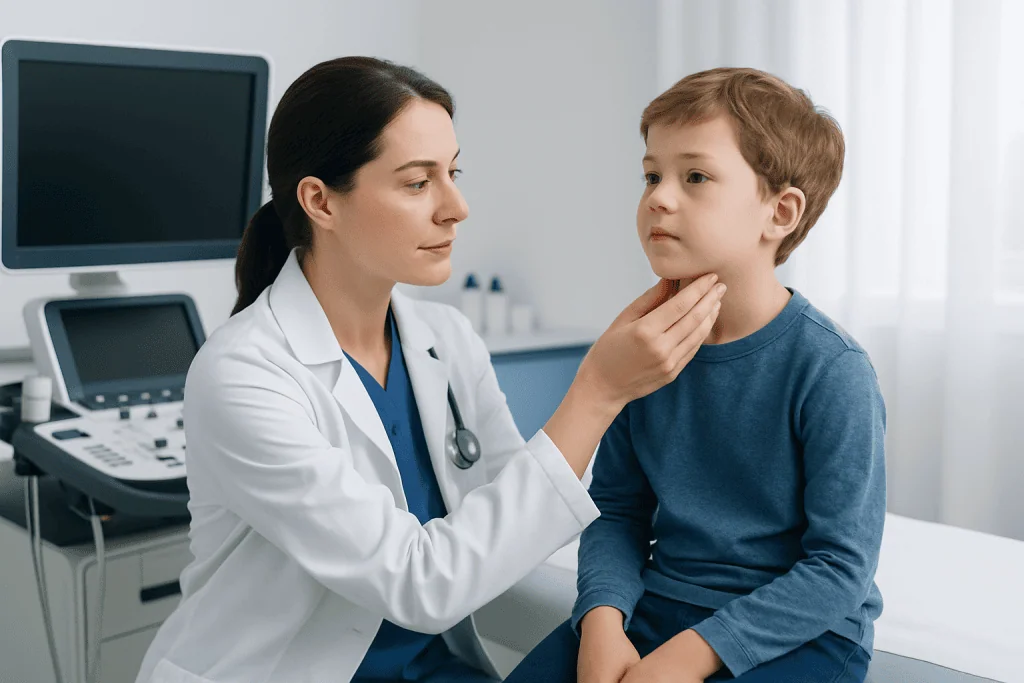
Swollen lymph nodes in children may feel like small round or oval lumps under the skin. They can be soft or rubbery, and they may move slightly when touched. Many children have small nodes in the neck that can still be felt even when they are otherwise well.
During an infection, the nodes may become larger and a little tender. For example, a sore throat may cause the glands under the jaw or along the sides of the neck to enlarge. A scalp irritation may lead to swelling behind the ears or at the back of the head, while a skin infection on the leg can cause enlarged nodes in the groin.
It is also common for lymph nodes to shrink slowly. Even after the infection has improved, some nodes remain noticeable for several weeks. This slow return to normal can be part of the usual healing process, especially in younger children.
Common causes and risk factors

The most common cause of swollen lymph nodes in children is infection. Viral illnesses such as colds, flu-like infections, and other upper respiratory infections often lead to enlarged neck nodes. Bacterial infections, including throat infections, tonsillitis, ear infections, and some skin infections, can also cause more painful or more pronounced swelling.
Dental and mouth problems are another frequent cause. Tooth decay, gum inflammation, or mouth ulcers may trigger swollen glands around the jaw. Skin conditions affecting the scalp, eczema with infection, and insect bites can also make nearby nodes react. In some children, the swelling follows a recent infection and persists for a short time even after the child seems recovered.
Less commonly, swollen lymph nodes may be linked to immune conditions, certain medicines, or more serious illnesses. Doctors pay closer attention when nodes are very large, appear in several areas of the body, or are accompanied by symptoms such as prolonged fever, night sweats, weight loss, or unusual tiredness. In rare cases, enlarged nodes need evaluation for conditions such as lymphoma.
- Recent cold, flu, or sore throat
- Ear, sinus, or dental infection
- Skin infection, scalp irritation, or insect bite
- Exposure to infections such as mononucleosis or tuberculosis
- Persistent or unexplained symptoms that do not improve
Symptoms that are common and signs that need checking
Common, usually reassuring features include a child who otherwise seems well, nodes that are small to moderately enlarged, mild tenderness, and swelling that appears during a recent infection. The child may have a runny nose, cough, sore throat, or ear pain at the same time. In these situations, observation and routine follow-up are often enough.
Certain features deserve medical review. These include a node that is growing quickly, is larger than expected, feels very hard, seems fixed in place, or is not tender at all despite continuing enlargement. Redness, warmth, and significant pain over the node may suggest an inflamed or infected lymph node that needs treatment.
Parents should also seek advice if swollen lymph nodes last for several weeks without improvement, appear in multiple body areas, or come with persistent fever, unexplained weight loss, drenching night sweats, easy bruising, paleness, breathing difficulty, or marked fatigue. These findings do not always mean something serious, but they should be checked promptly.
How doctors diagnose the cause
Diagnosis starts with a detailed history and physical examination. The doctor asks when the swelling began, whether the child has recently been ill, and whether there are symptoms such as sore throat, fever, dental pain, skin changes, or weight loss. They also examine the size, texture, tenderness, and location of the lymph nodes.
In many children, examination alone strongly suggests a harmless reaction to infection. If the picture is less clear, the doctor may recommend tests. These can include blood tests to look for signs of infection or inflammation, throat swabs, or tests for specific viral or bacterial causes. Imaging such as ultrasound can help show the node’s size and structure without radiation.
When there is concern about a deep infection, an abscess, or a less common cause, additional tests may be needed. In selected cases, doctors may request MRI or refer the child to a pediatric specialist, ENT specialist, or hematology team. Rarely, a biopsy is considered if a node remains unexplained, continues to enlarge, or has concerning features.
Treatment options
Treatment depends on the underlying cause rather than the lymph node itself. If the swelling is due to a common viral infection, the main approach is observation, rest, fluids, and time. The node often becomes smaller gradually as the child recovers.
If a bacterial infection is suspected, the doctor may prescribe antibiotics. This is more likely when there is high fever, significant pain, redness, warmth, or a clear bacterial source such as tonsillitis, an ear infection, or an infected tooth. If pus has collected, treatment may involve drainage as well as medicines.
When enlarged nodes are related to another condition, care focuses on that diagnosis. For example, management may include treatment of a dental problem, skin infection, or an underlying immune disorder. If the findings raise concern for a blood or lymphatic condition, the child may be referred for specialist assessment and tests such as biopsy.
Prevention and self-care at home
Not all swollen lymph nodes can be prevented, because they are often part of the body’s healthy response to infection. Still, reducing exposure to common infections and caring for the child’s general health can lower risk. Regular handwashing, good dental care, keeping vaccinations up to date, and prompt care of cuts or skin infections are practical steps.
At home, parents should avoid repeatedly pressing or checking the swollen area, as this can make it more irritated and keep it noticeable for longer. Gentle observation is usually enough. If the child is uncomfortable, age-appropriate supportive care recommended by a doctor may help while the underlying illness improves.
It can be helpful to note when the swelling started, whether it is getting bigger or smaller, and what other symptoms are present. This information can support the doctor’s assessment. Near the end of the care pathway, some families may seek multidisciplinary evaluation; Acibadem International’s specialists at JCI-accredited hospitals diagnose and treat children with persistent or complex lymph node problems for international patients.
When to see a doctor
A doctor should review swollen lymph nodes if the child is very unwell, has trouble breathing or swallowing, or has a rapidly enlarging neck lump. Medical advice is also important if the skin over the node becomes very red, hot, and painful, or if the child has a high or persistent fever.
Routine but timely assessment is recommended when a node stays enlarged for several weeks, keeps getting bigger, or appears without a clear infection. Parents should also arrange a check if the child has swollen nodes in several places, repeated infections, poor appetite, weight loss, unusual bruising, or ongoing tiredness.
Most swollen lymph nodes in children turn out to be related to common infections and settle with time. Even so, it is always reasonable to ask a qualified doctor for advice if parents are uncertain. Early evaluation can provide reassurance and, when needed, guide the right treatment.
Frequently asked questions
Are swollen lymph nodes in children usually serious?
Most swollen lymph nodes in children are not serious. They are commonly caused by everyday infections such as colds, sore throats, or ear infections. A doctor should assess them if they are unusual in size, keep growing, or come with other concerning symptoms.
How long can swollen lymph nodes last after an infection?
Lymph nodes often start to improve as the infection settles, but they may remain noticeable for several weeks. In some children, small nodes can be felt for quite a long time even after recovery. A medical review is sensible if the swelling does not gradually improve.
What size of lymph node is concerning in a child?
There is no single size rule that applies to every child and every body area. Doctors consider size together with location, texture, tenderness, and how long the node has been present. Nodes that are clearly enlarging, very firm, fixed, or associated with other symptoms need checking.
Should parents keep touching or measuring the swollen node?
It is better not to check it repeatedly by pressing on it. Frequent touching can irritate the area and make it seem more prominent. Simple observation and noting any general changes is usually more helpful.
Can teething cause swollen lymph nodes?
Teething itself is not a common direct cause of significant lymph node swelling. However, children who are teething may also have minor viral illnesses or mouth irritation at the same time. If there is clear swelling, especially with fever or pain, a doctor should assess the child.
Do swollen lymph nodes always need antibiotics?
No. Antibiotics only help if the cause is bacterial. Many enlarged lymph nodes are due to viral infections, and these usually improve with time and supportive care rather than antibiotics.
References
- American Academy of Pediatrics
- National Health Service
- Centers for Disease Control and Prevention
- National Institute for Health and Care Excellence
- Merck Manual
This article is for general information only and is not a substitute for professional medical advice. Please consult a qualified doctor about your individual situation.
Explore treatments in Turkey — costs, top hospitals & a free quote
JCI-accredited · board-certified surgeons · reply within 24h
Add us as a Preferred Source to see more of our trusted health content across Google Search, AI Overviews and Discover.