

Colonoscopy Near Me: How to Choose the Right Hospital or Endoscopy Team
A good colonoscopy provider offers both technical expertise and patient-centered care. Hospital safety standards, infection control, and anesthesia support are important when comparing options.
Key Takeaways
- A good colonoscopy provider offers both technical expertise and patient-centered care.
- Hospital safety standards, infection control, and anesthesia support are important when comparing options.
- The quality of bowel preparation instructions can strongly affect the success of the test.
- Patients should ask who performs the procedure, how results are explained, and what follow-up is available.
- Choosing a center with access to pathology, surgery, and digestive specialists can be helpful if polyps or other findings are discovered.
Searching for “colonoscopy near me” is not only about location. The best choice is a hospital or endoscopy team that combines experience, safety, clear communication, and reliable follow-up care.
Overview: What “Colonoscopy Near Me” Should Really Mean
Many people begin with a simple online search for “colonoscopy near me,” especially when a doctor recommends screening or when digestive symptoms need evaluation. While convenience matters, the nearest option is not always the best one. Colonoscopy is a common and important procedure, but its quality can vary depending on the skill of the team, the standards of the facility, and the support available before and after the test.
A colonoscopy allows a gastroenterologist or trained endoscopy specialist to examine the inside of the colon using a flexible camera. It may be done for routine screening, to investigate symptoms such as rectal bleeding or changes in bowel habits, or to remove polyps during the same procedure. Because it can both detect and help prevent colorectal cancer, choosing the right provider is especially important.
Patients often feel more reassured when they understand what to look for. A strong endoscopy service is not defined by advertising alone. It should offer experienced clinicians, careful preparation instructions, appropriate sedation, reliable pathology support, and a clear plan for next steps if abnormalities are found.
Why Quality Matters in Colonoscopy
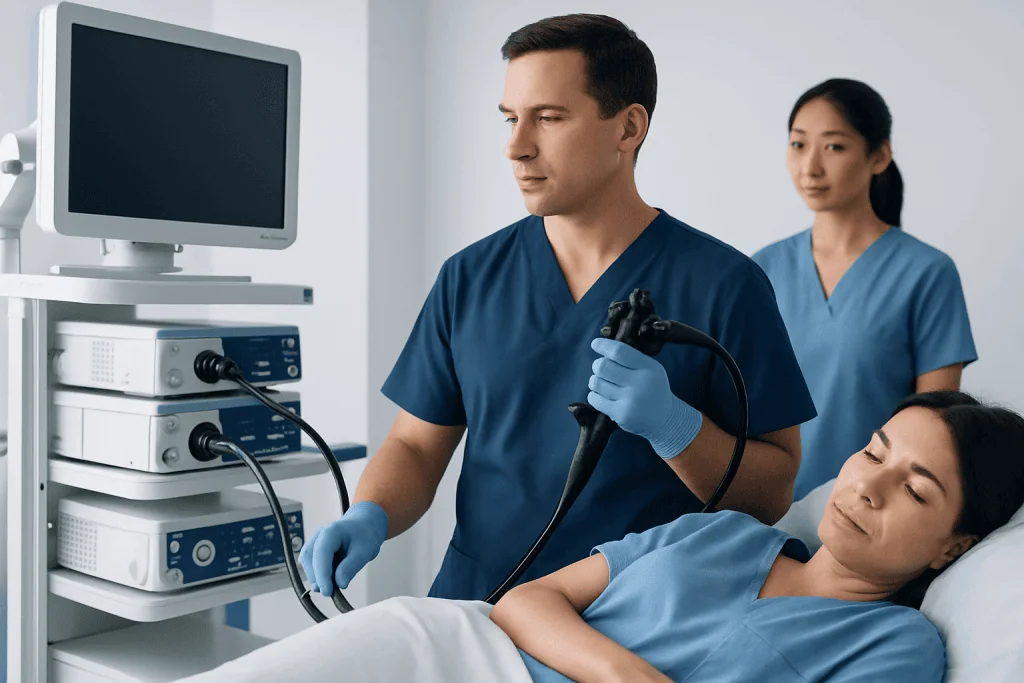
Colonoscopy is more than a routine test. Its value depends on how thoroughly the colon is examined and how effectively polyps or other abnormalities are identified. An experienced endoscopist is trained to inspect the lining carefully, recognize suspicious areas, and remove certain lesions safely when appropriate.
The quality of the bowel preparation also affects the result. If the colon is not cleaned well enough, small polyps or inflamed areas may be missed, and the procedure may need to be repeated sooner. That is why a good hospital or endoscopy unit takes time to explain diet changes, bowel-cleansing medication, and how to manage the preparation safely.
High-quality services also focus on comfort, privacy, and safety. Patients may need sedation, monitoring, and observation afterward. A center that follows well-organized protocols can reduce stress and help patients feel informed at every stage, from scheduling to recovery and results review.
How to Evaluate a Hospital or Endoscopy Team
When comparing colonoscopy providers, patients can start by asking practical questions. Who performs the procedure: a gastroenterologist, colorectal surgeon, or another trained specialist? How often does the team perform colonoscopies? Is the procedure done in an accredited hospital or a dedicated endoscopy center with emergency support if needed? These questions help patients understand whether the service is both experienced and well prepared.
Communication is another important sign of quality. The team should explain why the colonoscopy is needed, how to prepare, what type of sedation may be used, and what recovery usually involves. Written instructions should be easy to follow, and there should be a contact number for questions before the appointment. If language support is needed, interpreter services can be very valuable.
Patients may also ask about what happens if a polyp, bleeding source, or other concern is found. It is helpful when the same center can coordinate pathology review and specialist follow-up, such as colon cancer evaluation or referral for colorectal surgery if necessary. This can make care more efficient and reduce uncertainty.
- Ask about the qualifications and specialty of the doctor performing the test.
- Confirm where the procedure takes place and what safety standards are followed.
- Check whether sedation, recovery monitoring, and emergency backup are available.
- Find out how and when results are shared.
- Ask whether pathology and follow-up care are coordinated within the same system.
Questions to Ask Before Booking
A short conversation before scheduling can help patients choose with more confidence. It is reasonable to ask how long the appointment will take, whether a consultation is needed first, and how soon the test can be arranged. Patients with heart disease, diabetes, kidney disease, or those taking blood thinners may need more individualized preparation, so it is important to ask how these issues are handled.
Patients should also ask about bowel preparation instructions in detail. Different preparation regimens may be used, but the center should provide clear steps for diet, fluid intake, medication adjustments, and what to do if nausea or incomplete bowel cleansing occurs. Good preparation supports a more accurate examination and can reduce the need for repeat testing.
Other useful questions include whether tissue samples can be taken during the test, whether small polyps can be removed immediately, and how quickly biopsy results are reported. If symptoms suggest a broader digestive problem, some patients may benefit from a center that also offers gastroenterology assessment and related endoscopic services as part of one coordinated pathway.
Safety, Comfort, and Recovery Considerations
Most colonoscopies are completed safely, but every medical procedure should be approached with appropriate care. A well-run hospital or endoscopy center screens patients for allergies, medical conditions, prior reactions to anesthesia, and medicines that may increase bleeding risk. Monitoring during the procedure typically includes blood pressure, oxygen levels, and heart rate.
Comfort also matters. Many patients feel anxious about sedation, discomfort, or embarrassment. A supportive team explains what the patient may feel, how privacy is protected, and what to expect afterward. Sedation options vary by facility and by the patient’s health status, so this should be discussed in advance.
Recovery arrangements are another point to review. Patients usually need time in a recovery area before going home and may need another adult to accompany them if sedation is used. A high-quality provider gives written discharge instructions, explains warning signs such as severe abdominal pain or heavy bleeding, and provides a clear route for urgent advice after the procedure.
When a Larger Hospital May Be the Better Choice
For routine screening in a healthy person, many accredited centers can provide excellent care. However, some situations may be better managed in a full-service hospital. This can include significant medical conditions, previous abdominal surgery, suspected inflammatory bowel disease, a history of difficult colonoscopy, or concern about large or complex polyps.
Larger hospitals may offer broader support from anesthesiology, radiology, pathology, surgery, and oncology in one setting. If a lesion requires advanced removal or further evaluation, patients may benefit from access to services such as advanced endoscopy or multidisciplinary review. This can help avoid delays if additional treatment is needed.
For patients traveling internationally or seeking care away from home, coordinated services can be especially helpful. Near the end of the care journey, institutions such as Acibadem International may support international patients through multidisciplinary specialists and JCI-accredited hospitals that diagnose and treat digestive conditions in an organized setting.
Red Flags and Practical Tips for Making the Final Decision
Some signs suggest that a provider may not be the right fit. These include vague preparation instructions, difficulty reaching staff with questions, little explanation about sedation or risks, and no clear plan for how results will be delivered. Patients should also be cautious if they feel rushed into booking without having their medical history reviewed.
On the other hand, positive signs include prompt communication, written instructions, thoughtful discussion of medications, transparency about who will perform the procedure, and a clear follow-up process. Reviews may provide some insight into patient experience, but they should not replace medical credentials, accreditation, and direct answers from the care team.
To make the final choice, patients can compare a few providers side by side. Looking at experience, safety processes, convenience, language support, and access to follow-up care often gives a more useful picture than location alone. The right “colonoscopy near me” is the option that helps the patient feel informed, safe, and well supported throughout the process.
Frequently asked questions
How do patients choose the best colonoscopy provider near them?
Patients can compare providers based on specialist experience, hospital or center accreditation, preparation support, sedation options, and follow-up care. It is also helpful to ask who performs the procedure and how results and biopsy findings are communicated.
Is the nearest hospital always the best place for a colonoscopy?
Not necessarily. Convenience is important, but quality, safety standards, and the experience of the endoscopy team are usually more important than distance alone. A slightly farther center may offer better coordination and more complete digestive care.
What should patients ask before booking a colonoscopy?
Useful questions include who performs the test, how bowel preparation works, what type of sedation is available, and what happens if a polyp is found. Patients should also ask how long recovery takes and when results will be ready.
Why is bowel preparation so important?
Bowel preparation clears stool from the colon so the doctor can see the lining clearly. If preparation is incomplete, small abnormalities may be harder to detect and the examination may need to be repeated sooner.
When is a full-service hospital better than a smaller endoscopy center?
A larger hospital may be a better choice for patients with significant medical conditions, prior difficult procedures, suspected complex polyps, or symptoms that may require broader testing. Hospitals can often provide anesthesiology, pathology, surgery, and imaging in one place.
How safe is colonoscopy?
Colonoscopy is generally considered safe when performed by a trained team in an appropriate setting. As with any procedure, there are potential risks, so patients should discuss their medical history, medications, and any concerns with their doctor beforehand.
References
- World Health Organization
- American College of Gastroenterology
- American Society for Gastrointestinal Endoscopy
- National Institute of Diabetes and Digestive and Kidney Diseases
- National Cancer Institute
This article is for general information only and is not a substitute for professional medical advice. Please consult a qualified doctor about your individual situation.
Persistent digestive symptoms? Get evaluated in Turkey
JCI-accredited · board-certified surgeons · reply within 24h
Add us as a Preferred Source to see more of our trusted health content across Google Search, AI Overviews and Discover.

More from the Health Library
Related Specialists

Merve Güvendi
Physical Medicine & Rehabilitation
Dr. Münür Selçuk Kendir
Aesthetic Plastic & Reconstructive Surgery
Dr. Mehmet Çavuş
Orthopedic Surgery & Traumatology
Esra Atasu
Physical Medicine & Rehabilitation