Scoliosis Bracing: Which Curves May Benefit and What Families Should Expect
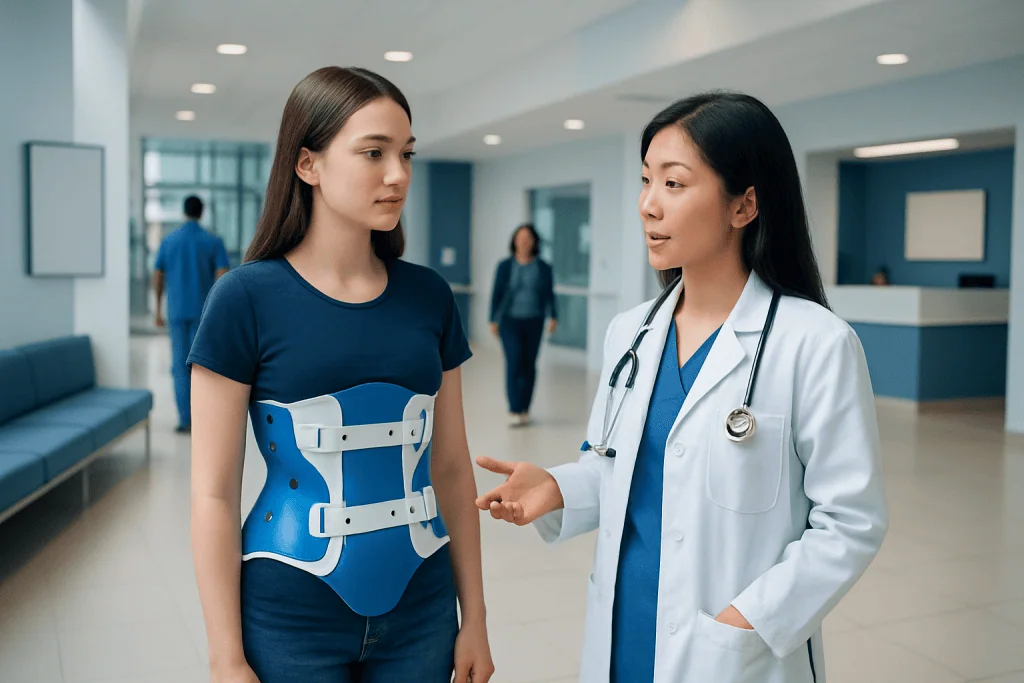
Scoliosis bracing is usually intended to slow or stop curve progression rather than fully straighten the spine. Bracing is most often considered for children and teens who are still growing and have curves within a specific treatment range.
Key Takeaways
- Scoliosis bracing is usually intended to slow or stop curve progression rather than fully straighten the spine.
- Bracing is most often considered for children and teens who are still growing and have curves within a specific treatment range.
- The benefit of a brace depends on several factors, including curve size, curve pattern, skeletal maturity, and consistent wear.
- Regular follow-up visits and imaging are important to check whether the brace is fitting well and doing its job.
- Most children can continue school, social activities, and many sports while using a scoliosis brace.
Scoliosis bracing is a non-surgical treatment used mainly to help prevent certain spinal curves from getting worse while a child or teenager is still growing. Families often benefit from understanding who is most likely to benefit, how braces are fitted and monitored, and what day-to-day life with a brace may involve.
Overview: What scoliosis bracing is meant to do
Scoliosis is a sideways curvature of the spine that may also involve some rotation of the vertebrae. In many children and teenagers, the curve is mild and only needs observation. When a curve has a meaningful chance of worsening during growth, scoliosis bracing may be recommended to help guide the spine and reduce the risk of further progression.
Bracing is most commonly used for scoliosis in growing children and adolescents, especially in cases of adolescent idiopathic scoliosis. The main goal is not to cure scoliosis or make the spine perfectly straight. Instead, the purpose is usually to keep the curve from increasing enough to require more invasive treatment later.
A brace is custom-made or selected to fit the child’s body and curve pattern. Different brace designs are used depending on where the curve is located, how flexible it is, and how much growth remains. Treatment works best when the brace plan is individualized and monitored by a team experienced in pediatric spine care.
Which curves may benefit from scoliosis bracing
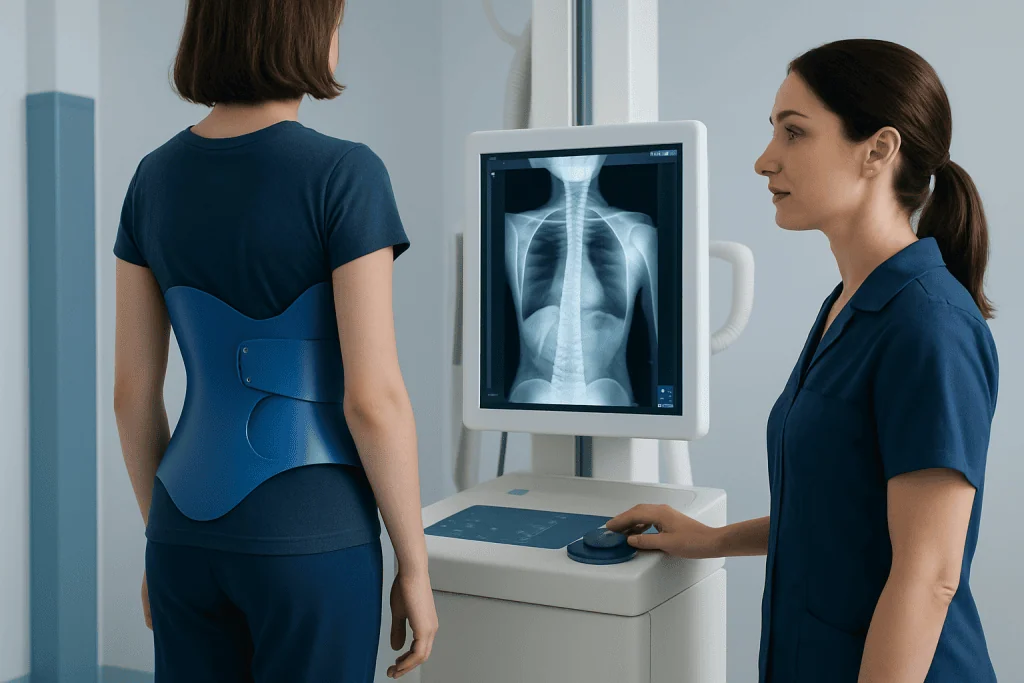
Bracing is generally considered when a child or teenager is still growing and has a spinal curve that falls within a range where progression is possible but surgery is not necessarily needed. In practice, this often means a moderate curve rather than a very small one or a very large one. Doctors usually assess the degree of curvature on X-ray, the child’s age, growth stage, and signs of skeletal maturity.
Children with adolescent idiopathic scoliosis are the group most often treated with a brace. Curves that are already severe may be less likely to respond enough to bracing alone, while very mild curves may only need regular observation. Curves in children who have nearly finished growing may also gain less benefit because there is less remaining growth during which the brace can influence progression.
Other factors can also affect expected benefit. These include curve location in the thoracic or lumbar spine, the shape and flexibility of the curve, and whether the child has one curve or more than one. A pediatric orthopedic or spine specialist may also consider whether the scoliosis is idiopathic, congenital, or related to a neuromuscular condition, since treatment goals can differ.
- Most likely to benefit: growing children or teens with moderate curves and remaining skeletal growth
- Less likely to benefit: curves that are very mild, very severe, or in patients who are nearly fully grown
- Requires careful selection: non-idiopathic scoliosis or complex curve patterns
How doctors decide whether bracing is appropriate
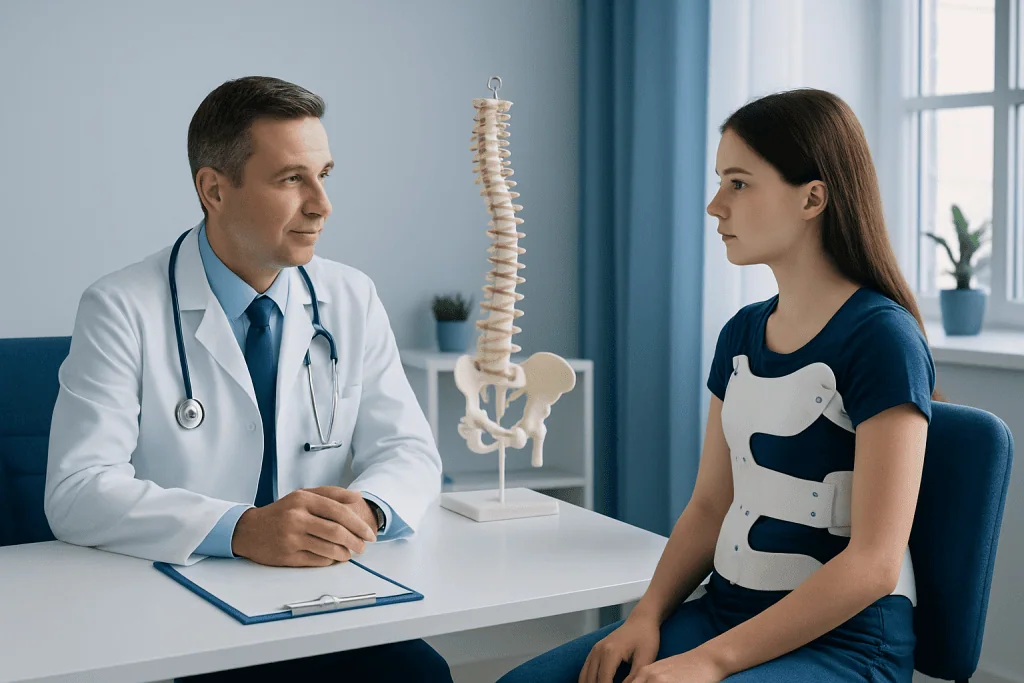
The decision to use a brace starts with a detailed clinical evaluation. The doctor reviews posture, shoulder and hip balance, trunk rotation, family history, and symptoms. Imaging helps measure the curve and compare it over time. Because scoliosis bracing is often time-sensitive, growth potential is a key part of decision-making.
Specialists commonly use skeletal maturity markers to estimate how much growth remains. These may include age, pubertal stage, changes in height, and X-ray-based assessments. The more growth that remains, the greater the concern that a curve could progress, but also the greater the opportunity for a brace to help.
The care plan is usually tailored to the individual child. Some may be advised to continue close observation, while others begin a structured bracing program. In selected cases, supervised scoliosis-specific exercises may also be discussed alongside physical therapy and rehabilitation to support posture, body awareness, and comfort, although exercises do not replace a brace when bracing is clearly indicated.
What families should expect during brace fitting and daily wear
Once bracing is recommended, the child is typically measured and fitted for a brace by an orthotist, often in coordination with the spine specialist. Some braces are rigid plastic shells worn under clothing, while others are designed for nighttime use in selected curve types. The brace is adjusted to apply pressure in specific areas and create space in others so the spine is guided into a better position.
It is normal for there to be an adjustment period. At first, children may notice pressure, warmth, or mild skin irritation. Families are often given a gradual wear-in schedule so the child can adapt. Wearing a thin, seamless shirt under the brace, checking the skin regularly, and returning for small adjustments can improve comfort.
The number of hours per day matters. Many braces are prescribed for substantial daily wear, often including school hours and sleep, though the exact schedule depends on the brace type and treatment plan. Honest, supportive conversations are important because brace success is closely linked to consistent use. Many children continue normal daily routines, including classes, friendships, and some sports, with only practical modifications.
Regular follow-up is a routine part of treatment. The team may repeat X-rays with and sometimes without the brace to see how well the curve is being controlled. If fit, comfort, or growth changes over time, the brace may need adjustment or replacement.
How effective scoliosis bracing can be
Scoliosis bracing can be effective at reducing the chance that certain curves will worsen during growth. It is best understood as a way to manage progression rather than as a permanent correction. In many patients, the most important sign of success is that the curve remains stable enough to avoid more intensive treatment.
One of the strongest predictors of benefit is adherence, meaning how closely the child follows the prescribed wear schedule. Children who wear the brace as advised tend to have better curve control than those who wear it inconsistently. Fit also matters: a well-designed, well-adjusted brace is more likely to provide effective support.
Even with excellent use, outcomes vary from one child to another. Some curves remain stable, some improve modestly, and some continue to progress despite appropriate bracing. This does not necessarily mean the brace failed; rather, scoliosis behavior can be unpredictable, which is why careful monitoring remains essential throughout growth.
Emotional adjustment, school, and physical activity
For many families, the emotional side of bracing is as important as the medical side. Children and teens may worry about comfort, appearance, privacy, or feeling different from their peers. These reactions are understandable. Clear explanations, realistic expectations, and involving the child in decisions can help them feel more in control.
School attendance and social life usually continue as usual. Choosing comfortable clothing, planning for sports or changing classes, and letting a trusted teacher or school nurse know about the brace can make daily life easier. Some families find that small routines, such as set times for brace care, reduce stress.
Physical activity is often still encouraged, depending on the doctor’s advice and the child’s overall condition. Many children can take part in exercise and non-contact sports, sometimes with the brace off for limited periods if allowed by the treatment plan. If pain, balance problems, or movement limitations are present, rehabilitation support and a tailored exercise program may be helpful.
When bracing may not be enough
Bracing is not the right answer for every spinal curve. If a curve is already too large, progresses despite good brace use, or is associated with another underlying condition, the specialist may discuss other treatment approaches. The next steps depend on the diagnosis, the degree of progression, symptoms, and remaining growth.
Some children with atypical findings, significant pain, neurological symptoms, or unusual curve patterns may need additional evaluation. In selected situations, doctors may recommend advanced imaging such as MRI to look for another cause of the spinal curve or to assess the spinal cord and surrounding structures more closely.
If surgery becomes part of the discussion, it is usually because the curve continues to progress or is expected to cause long-term problems. Families may be referred to a spine surgery team to learn about options such as scoliosis surgery and what timing may be appropriate. At Acibadem International, multidisciplinary specialists in JCI-accredited hospitals evaluate and treat scoliosis for international patients, with care plans based on the child’s age, curve pattern, and growth stage.
When to see a doctor and what follow-up involves
Families should seek medical assessment if they notice uneven shoulders, one shoulder blade appearing more prominent, asymmetry at the waist, leaning to one side, or clothing that hangs unevenly. School screening findings or a family history of scoliosis are also good reasons to arrange an evaluation. Early assessment can help determine whether simple observation, bracing, or another plan is most appropriate.
Once a brace is prescribed, follow-up visits are important even if the child seems well. Doctors check growth, comfort, skin condition, brace fit, and curve measurements over time. These visits also give families a chance to talk about wear challenges, sports, school, and emotional adjustment.
Medical advice should be sought sooner if the child develops increasing pain, numbness, weakness, new walking difficulties, breathing concerns, or problems tolerating the brace. These symptoms do not always mean a serious problem, but they should be reviewed by a qualified doctor without delay.
Frequently asked questions
Can a scoliosis brace straighten the spine completely?
A scoliosis brace is usually intended to prevent the curve from getting worse while a child is still growing. Some children may show modest improvement in curve size, but complete straightening is not the usual goal. The main aim is long-term curve control.
At what age is scoliosis bracing most often used?
Bracing is most commonly used in children and teenagers who are still growing, especially those with adolescent idiopathic scoliosis. The amount of growth remaining is often more important than age alone. Doctors use growth and maturity markers to guide timing.
How many hours a day does a scoliosis brace need to be worn?
The schedule depends on the type of brace and the individual treatment plan. Many braces are prescribed for substantial daily wear, while some are designed mainly for nighttime use in selected cases. The specialist and orthotist provide specific instructions for each child.
Will wearing a brace be painful?
A new brace can feel tight, warm, or awkward at first, but severe pain is not expected. Mild pressure and temporary skin redness can happen, especially during the adjustment period. If the brace causes significant pain, skin injury, or breathing discomfort, the doctor or orthotist should be contacted.
Can a child play sports while using scoliosis bracing?
Many children can continue sports and physical activity, depending on their doctor’s advice and the type of sport. Some treatment plans allow limited time out of the brace for exercise. Activity is often encouraged because it supports general health, confidence, and mobility.
What happens if the curve gets worse despite bracing?
If the curve progresses, the team first reviews brace fit, wear time, growth, and whether the curve type is suitable for bracing. Some children need a brace adjustment or a new brace as they grow. In other cases, additional evaluation or surgical consultation may be discussed.
References
- Scoliosis Research Society
- American Academy of Orthopaedic Surgeons
- National Institute of Arthritis and Musculoskeletal and Skin Diseases
- National Health Service
- American Academy of Pediatrics
This article is for general information only and is not a substitute for professional medical advice. Please consult a qualified doctor about your individual situation.
Joint and spine care in Turkey — expert assessment & treatment
JCI-accredited · board-certified surgeons · reply within 24h
Add us as a Preferred Source to see more of our trusted health content across Google Search, AI Overviews and Discover.