What Is a Hair Transplant and Who Is It For?

A hair transplant moves hair follicles from a donor area to thinning or bald areas. It is most often used for pattern hair loss, but it is not the right choice for every type of hair loss.
Key Takeaways
- A hair transplant moves hair follicles from a donor area to thinning or bald areas.
- It is most often used for pattern hair loss, but it is not the right choice for every type of hair loss.
- Good candidates usually have stable hair loss, adequate donor hair, and realistic expectations.
- Results develop gradually over several months as transplanted follicles begin growing new hair.
- A specialist evaluation helps determine whether surgery, medication, or another approach is most appropriate.
A hair transplant is a procedure that relocates healthy hair follicles from one part of the scalp, or sometimes the body, to areas with thinning or no hair. It may be a good option for carefully selected people with stable hair loss, realistic expectations, and enough donor hair.
Overview: what a hair transplant is
A hair transplant is a surgical hair restoration procedure. It involves taking hair follicles from an area where hair is still growing well, called the donor area, and placing them into areas that are thinning or bald. In most people, the donor area is the back or sides of the scalp because these hairs are often more resistant to the hormonal effects that cause common pattern hair loss.
The goal is to create a natural-looking improvement in hair density and hairline shape. A transplant does not create new hair; instead, it redistributes existing hair. For that reason, the quality and amount of donor hair are central to planning and to the likely outcome.
Hair transplant surgery is most commonly considered for androgenetic alopecia, also known as male or female pattern hair loss. In some cases, it may also help restore eyebrows, beard hair, or hair lost from certain scars. However, not all forms of hair loss can be treated with transplantation, so diagnosis is an important first step.
Who is a hair transplant for?
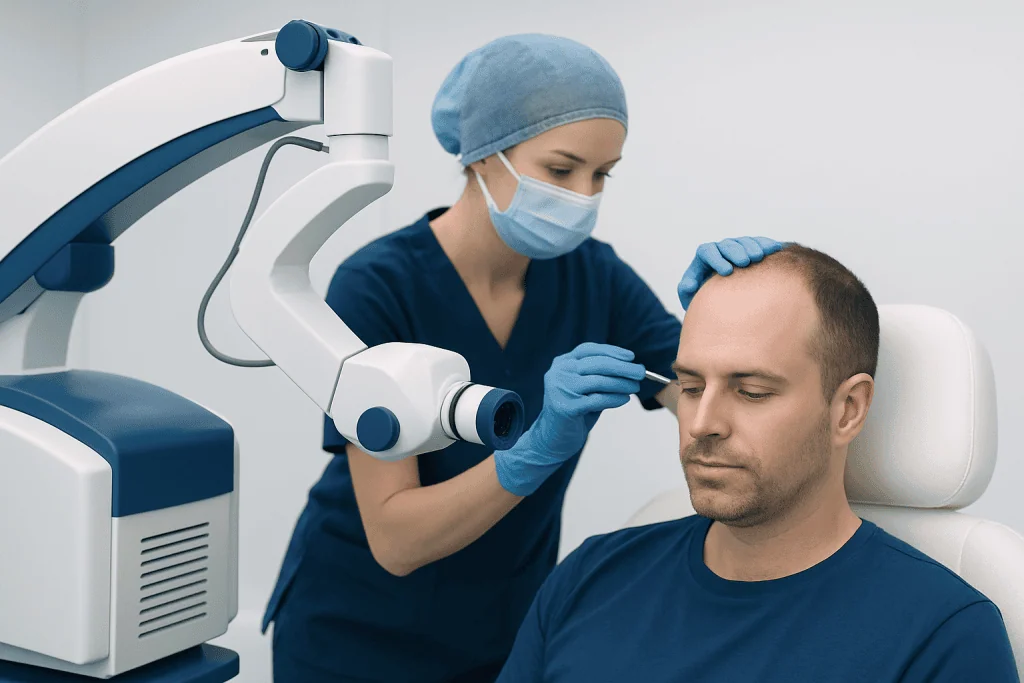
A hair transplant may suit adults with stable hair loss who have enough healthy donor hair and want a long-term cosmetic improvement. The best candidates usually have a clear pattern of thinning, such as a receding hairline, thinning at the crown, or diffuse thinning that still leaves an adequate donor zone. Age alone does not decide candidacy, but long-term hair loss patterns and likely future changes do matter.
People considering a transplant benefit from realistic expectations. Transplanted hair can improve coverage and framing of the face, but it may not restore the exact density someone had in adolescence. The surgeon must balance the available donor supply with current hair loss and the possibility of future thinning in untreated areas.
A transplant may be less suitable when hair loss is active, patchy, or caused by a medical condition that has not been addressed. Examples include some autoimmune, inflammatory, or scarring disorders, as well as shedding related to stress, illness, nutritional problems, or medications. In these situations, treating the cause of hair loss is often more important than surgery.
- Good candidates often have stable pattern baldness
- Enough donor hair on the scalp or body
- Healthy scalp skin
- Realistic goals about density and coverage
- Willingness to follow aftercare and long-term treatment advice
Common reasons for hair loss and when surgery may help

The most common reason people seek a hair transplant is androgenetic alopecia. This hereditary condition causes progressive miniaturization of hair follicles, often leading to thinning at the temples, frontal hairline, mid-scalp, or crown. Because donor hairs are typically more resistant, moving them can provide durable growth in the transplanted area.
Other causes of hair loss are more complex. Some people have temporary shedding after stress, childbirth, illness, weight loss, or nutritional deficiency. Others may have inflammatory scalp conditions, traction from tight hairstyles, or hair loss after injury or surgery. A transplant may help selected scarred areas once the condition is stable, but surgery is usually delayed until the scalp is healthy and quiet.
People with patchy autoimmune hair loss, such as alopecia areata, may not be suitable candidates while the disease is active. Similarly, if someone has significant ongoing shedding, a transplant alone may not solve the problem. A thorough assessment helps distinguish pattern hair loss from other causes and guides the most appropriate treatment plan.
How a hair transplant is planned and performed
Planning begins with a consultation, scalp examination, and discussion of medical history, family history, and treatment goals. The specialist evaluates the donor area, hair caliber, curl, color contrast, scalp laxity, and the pattern and severity of hair loss. These details affect how full the final result may appear and how the hairline should be designed.
Modern hair transplantation is usually performed using follicular unit techniques. In follicular unit extraction, individual follicular units are removed one by one from the donor area. In follicular unit transplantation, a narrow strip of scalp is removed from the donor area and dissected into follicular units under magnification. Both approaches aim to preserve natural groupings of hairs for a more natural appearance. In appropriate patients, hair transplant planning may also include discussion of hairline design, graft numbers, and whether treatment will be done in one or more sessions.
The procedure is typically done with local anesthesia. Tiny recipient sites are created in the thinning area, and grafts are placed carefully to match natural angle, direction, and density. If facial hair restoration or refinement of nearby structures is relevant, some patients may also discuss related procedures such as beard transplant or eyebrow transplant with a qualified specialist.
After the procedure, small scabs and mild tenderness are expected for a short period. The transplanted hairs often shed in the weeks after surgery, which is a normal part of the cycle. New growth usually becomes noticeable over several months, with continued maturation after that.
Benefits, limitations, and expected results
A hair transplant can provide a natural-looking and long-lasting improvement when it is performed for the right reason and planned carefully. Because the transplanted follicles keep many of the characteristics of the donor area, they often continue to grow in the new location. This can improve hairline definition, crown coverage, or the appearance of scars.
At the same time, the procedure has limits. Results depend on donor hair quality, the extent of hair loss, scalp characteristics, and whether thinning continues in non-transplanted areas. A transplant does not stop future hair loss, so some people may need medical treatment or a second procedure later to maintain a balanced appearance.
It is also important to understand that transplanted density is usually lower than the original natural density. Skilled placement can create the impression of fullness, especially at the hairline and in strategically important areas, but expectations should remain realistic. For some individuals, non-surgical PRP treatment or medical therapy may be discussed as part of a broader hair restoration plan.
Risks, recovery, and aftercare
Hair transplant surgery is generally considered safe when performed by experienced professionals, but like any procedure, it carries potential risks. These may include bleeding, swelling, infection, temporary numbness, folliculitis, scarring, shock loss of nearby hairs, or uneven growth. Most side effects are temporary and manageable with proper aftercare and follow-up.
Recovery instructions usually include gentle scalp care, avoiding rubbing or scratching the grafts, sleeping with the head elevated for a short time, and temporarily avoiding strenuous exercise or activities that increase sweating. The team may also advise when washing can begin and when hats, hair products, or haircuts are safe again.
Results require patience. It is common for transplanted hairs to shed before new growth begins. Visible improvement often starts after several months, while texture and density continue to mature over time. Regular reviews help assess progress and identify whether other measures are needed to protect existing hair.
Alternatives to surgery and when to seek specialist advice
Not everyone with hair thinning needs or wants surgery. Depending on the cause, non-surgical options may include medications, treatment of scalp inflammation, correction of nutritional deficiencies, hairstyle changes, low-level light devices, camouflage products, or simply watchful follow-up. These options can be especially important in early hair loss or when the diagnosis is still uncertain.
A specialist consultation is advisable when hair loss is sudden, rapidly progressive, patchy, associated with itching or pain, or accompanied by redness, scaling, or scarring. Medical review is also important if there are signs of hormonal, thyroid, nutritional, or autoimmune problems, or if a person is considering surgery at a young age and may continue to lose hair over time.
People seeking treatment should look for an individualized plan rather than a one-size-fits-all solution. Near the end of the evaluation process, the doctor may explain whether surgery is appropriate now, whether medical therapy should come first, or whether transplantation is unlikely to help. Acibadem International’s multidisciplinary specialists in JCI-accredited hospitals diagnose and treat hair loss and hair restoration needs for international patients.
Frequently asked questions
Is a hair transplant permanent?
Transplanted follicles are usually chosen from areas that are more resistant to common pattern hair loss, so the results can be long-lasting. However, untreated hair around the transplant can still thin over time, which is why some people also need ongoing medical management.
At what age should someone consider a hair transplant?
There is no single ideal age. Doctors usually look more closely at whether hair loss has become stable, how advanced it is, and how likely it is to progress in the future before recommending surgery.
Can women have a hair transplant?
Yes, some women are good candidates for hair transplantation, especially when they have stable pattern hair loss or localized areas of thinning with a suitable donor area. Careful diagnosis is important because diffuse shedding or certain medical causes may be better treated without surgery.
Will the procedure look natural?
A natural result depends on careful planning, appropriate graft placement, and a realistic design that matches the person’s age, facial features, and hair characteristics. The angle, direction, and distribution of the grafts are all important.
Is a hair transplant painful?
The procedure is commonly performed under local anesthesia, so discomfort during the surgery is usually limited. Mild soreness, tightness, or tenderness afterward can happen, but this often improves over the following days.
How long does it take to see results?
Transplanted hairs often shed first, which is a normal part of the process. New growth usually starts to become visible within a few months, and fuller maturation continues gradually after that.
References
- American Academy of Dermatology
- British Association of Dermatologists
- International Society of Hair Restoration Surgery
- Mayo Clinic
- National Health Service
This article is for general information only and is not a substitute for professional medical advice. Please consult a qualified doctor about your individual situation.
Hair transplant in Turkey — costs, graft counts & a free assessment
JCI-accredited · board-certified surgeons · reply within 24h
Add us as a Preferred Source to see more of our trusted health content across Google Search, AI Overviews and Discover.

More from the Health Library



Related Specialists

Assoc. Prof. Dr. Ufuk Gürkan
Cardiology
Dr. Mustafa Kartal
Pediatrics
Prof. Dr. Tayyar Sarioğlu
Cardiovascular Surgery
Assoc. Prof. Dr. Mehmet Sağır
Aesthetic Plastic & Reconstructive Surgery