Skin Care Treatments for Acne Scars: Lasers, Peels, Microneedling, and More

Different acne scars respond to different treatments, so correct scar identification is essential. Lasers, chemical peels, and microneedling can improve texture and discoloration, but they work in different ways.
Key Takeaways
- Different acne scars respond to different treatments, so correct scar identification is essential.
- Lasers, chemical peels, and microneedling can improve texture and discoloration, but they work in different ways.
- Many people benefit most from combination treatment rather than a single procedure.
- Sun protection, acne control, and proper aftercare help support safer healing and better results.
- A qualified dermatologist can tailor treatment to skin tone, scar depth, and recovery preferences.
Acne scar treatments can soften, smooth, and reduce the visibility of scars, but the best option depends on the scar type, skin tone, and severity. A dermatologist usually combines treatments such as lasers, chemical peels, microneedling, subcision, fillers, or minor procedures for the most balanced results.
Overview of Acne Scar Treatments
Acne scars form when inflammation from acne damages the deeper layers of the skin. As the skin heals, it may produce too little or too much collagen, leading to uneven texture or raised marks. Because acne scars vary widely in appearance and depth, treatment is not one-size-fits-all.
Common scar types include ice pick scars, boxcar scars, rolling scars, and raised or hypertrophic scars. Some people also have post-inflammatory marks, such as red or brown spots, which are not true scars but can still be distressing. A doctor will usually distinguish between textural scars and discoloration before recommending treatment.
Modern acne scar treatments aim to improve skin texture, reduce contrast between scarred and normal skin, and stimulate healthier collagen remodeling. Improvement is often gradual rather than immediate, and several sessions may be needed. Most treatments can make scars less noticeable, but complete removal is not always possible.
Types of Acne Scars and Why They Matter
Understanding the type of scar is one of the most important steps in choosing the right procedure. Ice pick scars are narrow and deep, boxcar scars have defined edges and a wider depressed shape, and rolling scars create a wave-like unevenness because bands of tissue pull the skin downward. Raised scars, including hypertrophic and <a href="https://acibademinternational.com/diseases/keloid-scars/”>keloid scars, involve excess scar tissue instead of tissue loss.
Treatments work differently for each pattern. For example, rolling scars may respond well to subcision, while ice pick scars may need focused procedures such as punch techniques or chemical reconstruction. Broader shallow scars may improve with resurfacing approaches such as lasers, peels, or microneedling.
Skin tone also matters. People with darker skin tones may have a higher risk of post-inflammatory hyperpigmentation after some procedures, especially if treatment is too aggressive or aftercare is poor. For this reason, careful planning, patch testing in some cases, and experienced medical guidance are important.
- Atrophic scars: ice pick, boxcar, rolling
- Raised scars: hypertrophic scars and keloids
- Color changes: red, pink, brown, or purple marks after acne
- Mixed patterns: many people have more than one scar type
Laser Treatments for Acne Scars

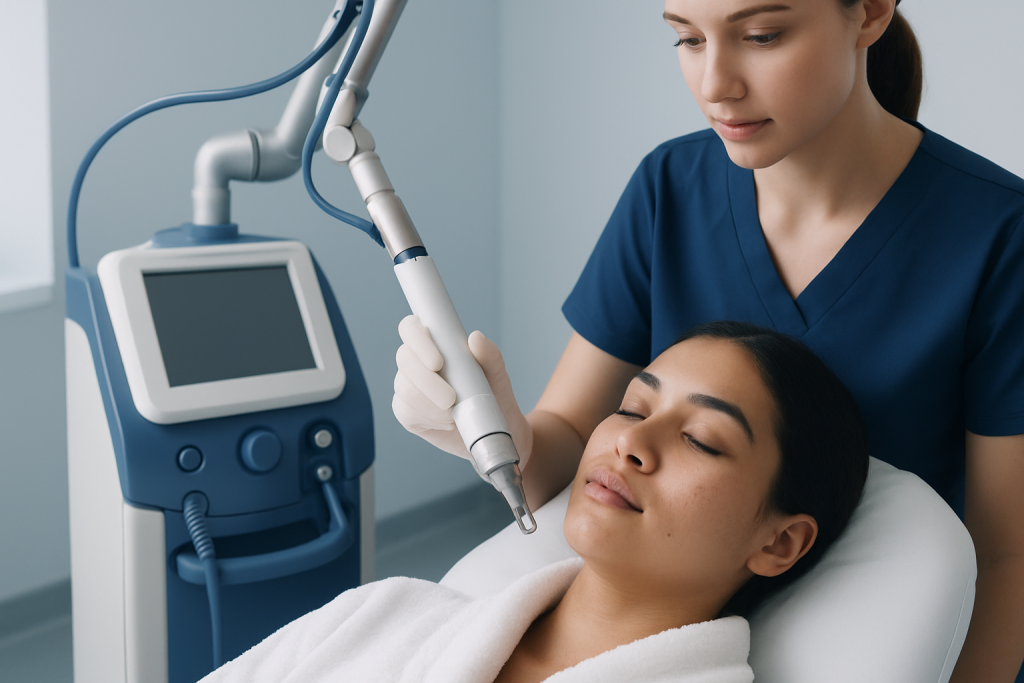
Laser treatment for acne scars can improve texture, stimulate collagen production, and reduce visible irregularities. Ablative lasers remove thin layers of skin and trigger new skin growth, while non-ablative lasers heat deeper tissue without removing the top layer. Fractional technology treats small zones of skin while leaving surrounding tissue intact, which can support healing.
Ablative resurfacing may provide stronger improvement for deeper scars, but it usually involves more downtime. Non-ablative and fractional options may require multiple sessions, yet they can be useful for people who want a shorter recovery period. Some lasers are also used to improve redness or pigmentation left behind by acne.
Laser choice depends on scar type, skin tone, current acne activity, and healing history. A doctor may discuss benefits, expected recovery, and possible side effects such as temporary redness, swelling, sensitivity, or pigment changes. In selected cases, a broader laser treatment plan may be part of a personalized scar program.
Good preparation matters. Sun exposure before and after treatment can increase the risk of complications, so strict sun protection is usually recommended. People with active acne, certain skin conditions, or a history of unusual scarring may need other approaches first.
Chemical Peels, Microneedling, and Energy-Based Options
Chemical peels use carefully selected acids to remove damaged outer skin layers and encourage renewal. Superficial peels may help with mild discoloration and fine textural changes, while medium-depth peels can target more noticeable irregularities. The exact peel used depends on skin sensitivity, tone, and the main concern.
Microneedling creates very small controlled punctures in the skin, which stimulates collagen remodeling over time. It is often used for mild to moderate atrophic acne scars and may be a good option for people seeking gradual improvement with relatively limited downtime. Some clinics combine it with radiofrequency for deeper remodeling in selected cases.
Other energy-based treatments may also be considered depending on the scar pattern and skin goals. In a clinical setting, doctors may discuss options within a wider dermatology treatment plan if a person also has active acne, pigmentation concerns, or sensitive skin. Combination care is common because no single treatment addresses every type of scar.
Several sessions are often needed for both peels and microneedling. Temporary redness, dryness, flaking, and mild swelling are common short-term effects. Following aftercare instructions carefully helps lower the risk of irritation and pigment change.
Subcision, Fillers, and Minor Surgical Procedures
Some acne scars need a more targeted approach than surface treatments alone. Subcision is a minor procedure in which a doctor uses a needle or small instrument to release the fibrous bands pulling a rolling scar downward. Once those bands are loosened, the skin may lift and look smoother over time.
Dermal fillers can sometimes be used to raise depressed scars by adding support beneath the surface. Results are often immediate, but some fillers are temporary and may require repeat treatment. Fillers can also be combined with subcision or collagen-stimulating procedures for a more balanced effect.
For certain deep scars, punch excision or punch elevation may be recommended. These are small surgical techniques used to remove or reposition individual scars, especially deep ice pick or sharply edged boxcar scars. In selected cases involving textural irregularity and skin quality, doctors may also discuss complementary skin rejuvenation options.
Raised scars are treated differently from depressed scars. A doctor may consider corticosteroid injections, silicone therapy, or other methods to flatten and soften thickened scar tissue. This is one reason professional evaluation is important before starting treatment.
How Doctors Choose the Best Treatment Plan
The best acne scar treatments are chosen after a close skin examination and a discussion of goals, lifestyle, and medical history. Doctors consider scar type, skin tone, tendency toward pigmentation, active acne, past treatments, and how much recovery time a person can manage. Realistic expectations are also part of the planning process.
Combination treatment is often the most effective strategy. For example, subcision may help rolling scars, microneedling may improve overall texture, and targeted lasers or peels may address color differences. Treating any active acne first is especially important, because new breakouts can create new scars.
Some people may also have conditions that mimic or overlap with acne scarring. A dermatologist may evaluate for related concerns such as persistent acne, rosacea, or pigment problems. If relevant, the doctor may distinguish acne scarring from acne vulgaris itself, since controlling active disease is a key part of long-term improvement.
Aftercare, Prevention, and Self-Care
Aftercare has a major effect on comfort, healing, and final results. Patients are commonly advised to keep the skin moisturized, avoid picking or rubbing, and use gentle cleansers while the skin barrier recovers. Products with strong acids, retinoids, or exfoliants may need to be paused temporarily, depending on the procedure.
Sun protection is especially important after acne scar treatment. Daily use of a broad-spectrum sunscreen and avoiding intense sun exposure can help reduce the risk of post-inflammatory hyperpigmentation and protect healing skin. Hats and shade can also be helpful after procedures.
Prevention starts with acne control. Prompt treatment of acne, avoiding squeezing spots, and using skin care suited to the skin type can lower the chance of new scars forming. A dermatologist may also review whether another skin condition is contributing to marks or redness, such as acne or lingering inflammation after breakouts.
Near the end of treatment planning, some people choose care in specialist centers. Acibadem International’s multidisciplinary specialists and JCI-accredited hospitals diagnose and treat acne scarring for international patients, with treatment plans tailored to scar type and skin needs.
When to See a Doctor
It is a good idea to see a doctor if acne scars affect confidence, do not improve with time, or appear alongside ongoing acne. Early assessment can help identify which marks are likely to fade naturally and which are true scars that may benefit from treatment. A specialist can also help avoid ineffective or overly harsh home remedies.
Medical advice is especially important before trying stronger procedures at home or booking cosmetic treatments without a diagnosis. People with darker skin tones, a history of keloids, sensitive skin, or pigment problems may need a more cautious treatment plan. A doctor can also explain what level of improvement is realistic and how many sessions might be needed.
Urgent medical review is not usually needed for acne scars themselves, but prompt care is sensible if the skin becomes very painful, infected, severely swollen, or develops unexpected reactions after treatment. Professional support helps keep treatment safer and more effective.
Frequently asked questions
What is the best treatment for acne scars?
There is no single best treatment for every person. The most effective option depends on the type of scar, skin tone, depth of scarring, and whether active acne is still present. Many people get the best results from a combination of treatments.
Do laser treatments remove acne scars completely?
Laser treatments can significantly improve the look and feel of acne scars, but complete removal is not always possible. Results are usually measured as visible improvement rather than total disappearance. Several sessions may be needed depending on the scar pattern.
Is microneedling good for acne scars?
Microneedling can be a helpful option for mild to moderate atrophic acne scars. It works by encouraging collagen remodeling and gradually smoothing texture. It is usually less effective for very deep scars unless combined with other treatments.
Are chemical peels safe for darker skin tones?
Chemical peels can be safe for darker skin tones when they are chosen carefully and performed by an experienced doctor. The strength of the peel, skin preparation, and aftercare all matter. A personalized plan helps reduce the risk of pigmentation changes.
How long does it take to see results from acne scar treatments?
Some treatments show partial improvement within weeks, while collagen-based changes often continue to develop over several months. Procedures like fillers may give faster visible results, while microneedling and some lasers improve more gradually. Patience is important because scar remodeling takes time.
Can acne scars come back after treatment?
Treated scars do not usually return in the same way, but new acne can create new scars. That is why controlling ongoing breakouts is an important part of long-term care. Maintenance skin care and follow-up visits may help protect results.
References
- American Academy of Dermatology
- National Health Service
- Mayo Clinic
- British Association of Dermatologists
- American Society for Dermatologic Surgery
This article is for general information only and is not a substitute for professional medical advice. Please consult a qualified doctor about your individual situation.
Acne in Turkey — costs, top hospitals & a free quote
JCI-accredited · board-certified surgeons · reply within 24h
Add us as a Preferred Source to see more of our trusted health content across Google Search, AI Overviews and Discover.