

How to Arrange Wheelchair-Friendly Transport and Hotels in Turkey

Wheelchair-friendly transport and hotels in Turkey can be arranged by planning airport transfers, accessible rooms, and routes in advance.
If you use a wheelchair, a little planning can make your trip to Turkey much smoother. This guide helps you organise accessible airport transfers, hotel rooms, hospital visits, and day-to-day logistics so you can travel with more confidence and less stress.
At a glance
- Best time to arrange: At least 1-2 weeks before travel, earlier for complex needs
- Most important step: Confirm accessibility details in writing, not just by phone
- Key bookings: Airport assistance, accessible transfer, adapted hotel room
- What to double-check: Door widths, roll-in shower, lift access, transfer vehicle type
- Helpful support: International patient teams, interpreters, and companion planning
Start with your real mobility needs
When arranging wheelchair-friendly transport and hotels in Turkey, the most useful first step is to define exactly what you need for your own mobility and comfort. “Accessible” can mean different things from one provider to another, so it helps to be specific about whether you use a manual wheelchair, power wheelchair, walker, or need assistance transferring in and out of vehicles or beds.
Think through your trip from door to door. Consider the airport, the transfer vehicle, hotel entrance, lift access, bathroom layout, distance to your appointment, and whether you will travel with a companion. If you are visiting for medical care, also think about fatigue, pain, swelling, or limited stamina that may affect how much walking or sitting is realistic for you.
Write down the practical details before you book anything. Useful notes include your wheelchair dimensions, whether it folds, whether you need a ramp or lift-equipped vehicle, and whether you can transfer independently. This makes it much easier for hotels, drivers, and hospital coordinators to give you accurate answers.
How to book wheelchair-friendly airport and city transport

Your transport plan should cover every stage of the journey, not only the flight. Ask your airline for airport wheelchair assistance in advance, including help from check-in to boarding and from arrival gate to baggage claim. If you use a power wheelchair, confirm the airline’s battery and equipment rules well before departure.
For ground transport in Turkey, request a vehicle that matches your needs rather than assuming a standard taxi will work. Some travellers need a larger vehicle for a folding wheelchair, while others need a ramp or lift and enough interior space to remain seated in the chair. It is also worth asking how much luggage the vehicle can take if you are carrying medical items.
If you are travelling for treatment, coordinated transfers can make the day much easier. Acibadem International supports many international patients with practical travel planning, and its international patient services teams can help align hospital appointments with transfer timing, interpreter support, and arrival logistics. This can be especially helpful if you are unfamiliar with the city or arriving after a long flight.
- Ask for the exact vehicle type and accessibility feature
- Confirm whether the driver has experience assisting wheelchair users
- Request pickup instructions for the airport terminal
- Share your flight number and expected arrival time
- Keep a local contact number with you on travel day
Choosing a genuinely accessible hotel room

When booking a hotel, do not rely only on general labels such as “accessible room” or “disabled-friendly.” Contact the hotel directly and ask for practical details. The most important points usually include step-free entrance, lift access, room door width, bathroom door width, bed height, space to turn a wheelchair, and whether the shower is roll-in or has a raised edge.
Ask for photos of the room and bathroom if possible. A few recent pictures can reveal details that descriptions often miss, such as narrow corridors, heavy bathroom doors, fixed shower screens, or furniture that limits movement around the bed. If you need grab rails, a shower chair, or a room close to the lift, mention this clearly before confirming the reservation.
Location also matters. A technically accessible room may still be inconvenient if the hotel is far from your hospital or on a steep street. If your main purpose is treatment, staying near your appointments can reduce transfer time and conserve energy. Many patients find it helpful to ask whether the hotel entrance, restaurant, reception, and common areas are also step-free, not just the bedroom.
Plan around appointments, recovery, and daily comfort
If you are coming to Turkey for medical care, your transport and hotel decisions should match your treatment schedule and physical condition. Some days may involve tests, waiting times, or follow-up visits, so a long or complicated commute can become exhausting. Choosing a practical route between the hotel and hospital is often more important than choosing a central tourist location.
It also helps to allow extra time around appointments. Traffic, weather, and airport delays can affect even well-planned journeys, and moving with mobility equipment usually takes longer than standard travel. Try not to book a flight that lands just before a consultation or a return departure immediately after a demanding appointment.
At Acibadem International, patients often benefit from a more coordinated experience because hospital teams, interpreters, and patient coordinators can help organise the logistics around care. In a JCI-accredited hospital environment, practical support matters as much as the medical schedule, especially when accessibility needs affect transport timing, rest breaks, and companion planning.
Questions to ask before you confirm anything
The safest way to avoid unpleasant surprises is to ask direct, detailed questions and get the answers in writing. This is especially important for transfer bookings and hotel reservations, where the word “accessible” may not tell you enough. Email confirmation gives you something to refer to if there is confusion on arrival.
For transport, ask whether the vehicle has a ramp, lift, low floor, or simply a large boot. Ask whether you can stay in your wheelchair during the ride or whether a transfer is required. For hotels, ask whether there are steps at the entrance, how wide the bathroom door is, and whether the shower can be used safely without stepping over a barrier.
- Is the hotel entrance fully step-free from street to reception?
- Are all lifts large enough for your wheelchair size?
- Can the bathroom be entered and used independently?
- Is there enough clearance beside the bed for transfers?
- Can the transfer provider accommodate medical equipment and a companion?
- Is there a direct contact person if plans change at short notice?
Useful backup plans for a smoother stay
Even with careful preparation, travel can be unpredictable. A flight may be delayed, a room may not match expectations, or a driver may arrive with the wrong vehicle. Having a backup plan lowers stress and helps you solve problems quickly. Save copies of all confirmations, hotel emails, transfer messages, and hospital contact details in both your phone and printed form.
It is also wise to carry essentials in your hand luggage, including medications, charger cables for mobility equipment, a small repair kit if you use one, and any important medical documents. If you need regular assistance, make sure your companion or coordinator understands the full plan, including alternative routes and contact numbers.
If you are staying in Istanbul or another large city, allow for road congestion and plan some flexibility into your day. Acibadem International’s international patient services can often help patients adjust logistics if appointment times shift or additional visits are needed. That kind of practical coordination can make a big difference when mobility needs are part of your travel planning.
Step by step
- List your accessibility requirements. Write down exactly what you need for transport, the hotel room, and hospital visits. Include wheelchair type, dimensions, transfer ability, bathroom needs, and whether you are travelling with a companion.
- Book airline assistance early. Request airport wheelchair support from your airline as soon as your flight is confirmed. If you use a power wheelchair, ask about battery handling, check-in procedures, and arrival support.
- Arrange the right transfer vehicle. Do not assume a regular taxi will be suitable. Confirm whether you need extra luggage space, a ramp, a lift, or a vehicle that allows you to remain seated in your wheelchair.
- Verify the hotel room in detail. Contact the hotel directly and ask for measurements, photos, and bathroom details. Make sure the room is not only accessible in name but practical for your daily routine.
- Coordinate hotel and hospital locations. Choose accommodation with realistic travel times to your appointments. If you are coming for treatment, shorter journeys can reduce fatigue and make the overall trip easier.
- Get written confirmation of all arrangements. Ask the hotel and transfer provider to confirm accessibility features by email or message. Written proof is useful if something is unclear when you arrive.
- Prepare a simple backup plan. Keep emergency contacts, booking references, and local support numbers easy to reach. If plans change, you will be able to adapt more calmly and quickly.
Your checklist
- Wheelchair dimensions and weight noted down
- Airline airport assistance requested
- Power wheelchair battery rules checked if relevant
- Accessible transfer vehicle confirmed in writing
- Hotel room photos or measurements reviewed
- Step-free entrance and lift access verified
- Bathroom layout confirmed, including shower access
- Hospital-to-hotel travel time checked
- Important contacts saved on phone and printed
- Medications and mobility equipment essentials packed in hand luggage
Key takeaways
- Define your exact mobility needs before booking flights, transport, or accommodation.
- Ask for detailed, written confirmation of accessibility features rather than relying on general labels.
- Match your hotel and transfer plan to your appointment schedule to reduce fatigue and stress.
- Keep backup contacts, printed confirmations, and essential mobility items with you during travel.
- International patient coordination can be especially useful when hospital visits and accessibility needs must be managed together.
Frequently asked questions
How far in advance should you arrange wheelchair-friendly transport and hotels in Turkey?
It is best to start as soon as your travel dates are reasonably clear, ideally at least one to two weeks in advance. If you use a power wheelchair, need a lift-equipped vehicle, or are travelling during a busy period, earlier planning is even better.
Can you rely on a hotel's website description of an accessible room?
It is better to treat website descriptions as a starting point only. Always contact the hotel directly and ask specific questions about entrance access, bathroom layout, bed height, and turning space for your wheelchair.
What should you tell a transfer company before arrival?
Share your wheelchair type, whether it folds, whether you can transfer independently, how much luggage you have, and whether you need a ramp or lift. Also provide your flight details and a contact method in case the pickup point changes.
Is it better to stay near the hospital rather than in a tourist area?
If your main reason for travel is medical care, staying near the hospital is often the more comfortable choice. It can reduce travel time, lower fatigue, and make it easier to return to your room between appointments if needed.
How can Acibadem International help with accessibility logistics?
Acibadem International supports international patients with practical coordination around their care, including appointment logistics, interpreter support, and travel-related planning. For many patients, this helps simplify the connection between airport arrival, hospital visits, and accommodation arrangements.
What if your accessible room or vehicle is not what was promised?
Use your written confirmation and contact the provider immediately to request a solution. If you are travelling for treatment, your hospital's international patient team may also be able to help you communicate and reorganise urgent arrangements.
Add us as a Preferred Source to see more of our trusted health content across Google Search, AI Overviews and Discover.
More Patient Guides

Traveling to Turkey with a Stoma: Supplies, Airport Screening, and Recovery Planning
Traveling to Turkey with a stoma is manageable with the right supplies, airport screening plan, and recovery support in Istanbul or Turkey.
8 min read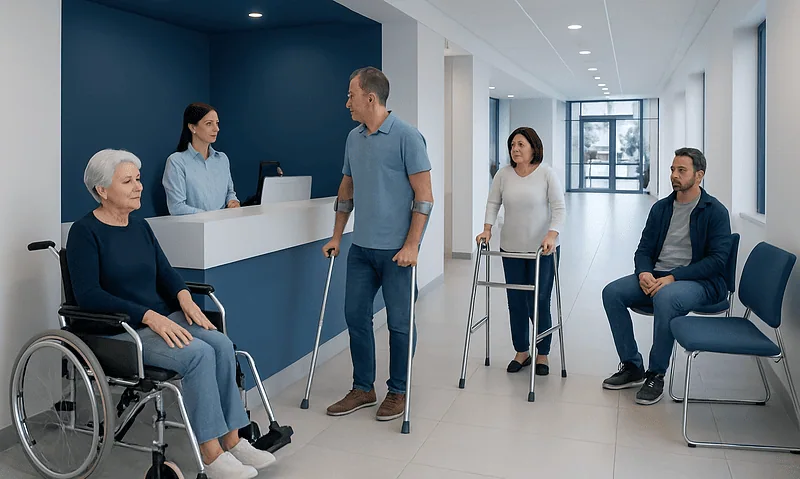
Mobility Aids in Turkey: Renting a Wheelchair, Walker, or Crutches
Mobility aids in Turkey can be rented through medical suppliers, pharmacies, and hospital-linked services in Istanbul and other cities.
9 min read
How to Handle Food Allergies and Special Diets During Treatment in Turkey
Food allergies and special diets during treatment in Turkey can be managed safely by sharing your needs early and coordinating meals with…
9 min read