

After Surgery in Turkey: Warning Signs That Need Urgent Medical Advice

After surgery in Turkey, seek urgent medical advice for fever, heavy bleeding, chest pain, breathing trouble, severe swelling, or worsening pain.
Most recovery symptoms improve day by day, but some changes should never be ignored. If you have had surgery in Turkey, this guide helps you recognize urgent warning signs, know what to do next, and get help quickly and calmly.
At a glance
- Best for: International patients recovering in Turkey after surgery
- Main goal: Spot warning signs early and know when to seek urgent help
- Urgent symptoms: Breathing trouble, chest pain, heavy bleeding, high fever, confusion, severe swelling
- First contact: Your surgeon's team or international patient services, if available
- Emergency action: Call local emergency services or go to the nearest emergency department
- Helpful to keep: Discharge papers, medication list, operation details, passport, insurance documents
What is normal recovery, and what is not?
After surgery, it is common to have some discomfort, tiredness, bruising, swelling, mild nausea, and limited movement for a period of time. Many people also notice that pain changes through the day, especially after walking, showering, or sleeping in a new position. These symptoms can be unsettling, but they are often part of expected healing when they gradually improve.
The important question is not whether you feel perfectly well right away. It is whether you are getting better overall, staying the same, or getting worse. Warning signs usually involve symptoms that are severe, sudden, clearly increasing, or different from what your surgical team told you to expect.
If you had your procedure in Turkey and you are recovering in a hotel, apartment, or with family, it can be harder to judge what is normal without your usual support network around you. That is why it helps to keep your discharge instructions close and use them as your reference point. If a symptom falls outside those instructions or worries you strongly, contact your care team promptly.
At Acibadem International hospitals, international patient services can help you communicate with the clinical team, arrange interpretation, and guide you on where to go if you need review. Even if your symptom turns out not to be urgent, asking early is usually better than waiting and hoping it will pass.
Warning signs that need urgent medical advice
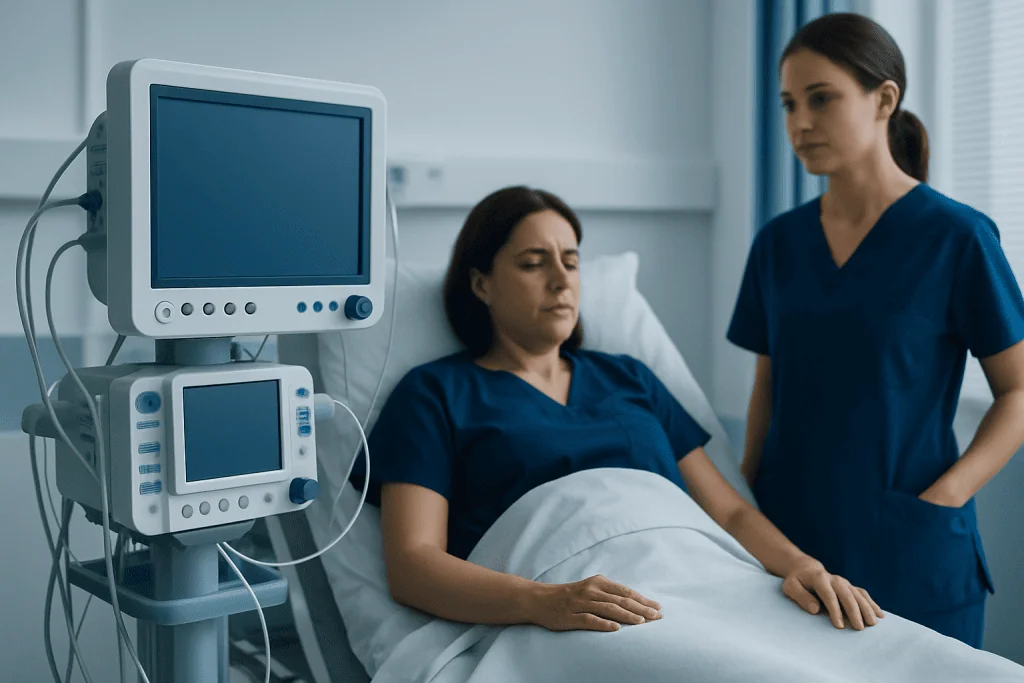
Some symptoms should trigger urgent medical advice the same day, and some need emergency attention immediately. Seek help urgently if you have a fever that is high or persistent, worsening redness around the wound, foul-smelling drainage, sudden severe pain, repeated vomiting, inability to keep fluids down, or increasing swelling that feels tense or unusual.
Get emergency help right away if you have chest pain, shortness of breath, blue lips, fainting, new confusion, seizures, coughing up blood, or one-sided leg swelling with pain and warmth. These can be signs of serious complications and should not be managed by waiting for the next routine appointment.
Heavy bleeding is another red flag. A small amount of spotting or light ooze can happen after some operations, but soaking dressings quickly, passing large clots, or seeing blood that does not slow with gentle pressure needs urgent assessment. The same is true for sudden opening of the wound, blackening skin, or severe abdominal swelling.
- Fever that is rising or not settling
- Breathing difficulty or chest pain
- Heavy bleeding or fast-growing bruising
- Severe pain not controlled by prescribed medicine
- Worsening redness, pus, or bad-smelling wound discharge
- Calf pain, one-sided leg swelling, or new numbness
How to judge symptoms when you are away from home

Recovering abroad can make symptoms feel more alarming, especially if you are tired, jet-lagged, or uncertain about local healthcare access. A practical way to assess a symptom is to look at three things: intensity, trend, and function. Ask yourself how strong the symptom is, whether it is improving or worsening, and whether it is stopping you from drinking, walking, breathing comfortably, urinating, or staying alert.
Take note of timing. Symptoms that appear suddenly after a period of stability deserve prompt attention. For example, if swelling was mild yesterday but suddenly becomes much larger and painful today, or if pain sharply increases after being manageable, that change matters even if the symptom itself seems familiar.
It also helps to document what you are seeing. Take a photo of the wound in good light, write down your temperature, and note when you last took pain relief or antibiotics. If you are speaking to a hospital team remotely, that information can help them advise you more accurately and more quickly.
If you are staying near Istanbul or another major city, your treating hospital may be able to direct you back for review. Acibadem International often supports international patients with care coordination, transfer guidance, and interpreter assistance, which can reduce stress when you are unsure what to do next.
What to do first if you think something is wrong
Start by staying calm and acting methodically. If the symptom is life-threatening, such as serious breathing trouble, collapse, or uncontrolled bleeding, go straight to the nearest emergency department or call emergency services. Do not wait for a message reply from a clinic if the situation is clearly urgent.
If the problem feels urgent but not immediately life-threatening, contact your surgeon’s office, ward contact, or international patient coordinator as soon as possible. Have your full name, procedure date, hospital name, current location, and a short description of the symptom ready. Be specific: for example, say “fever of 38.8C since this morning” rather than “I feel hot.”
Keep your discharge file close by. This usually includes the operation summary, medication list, wound care instructions, and emergency numbers. If you need to attend another hospital, bringing these documents can make assessment faster and safer.
Do not take extra medications, stop blood thinners, restart supplements, or remove dressings in a different way unless a clinician advises you to do so. Well-meant self-treatment can sometimes hide important symptoms or create new problems.
Common situations international patients ask about
Many patients worry about swelling, bruising, and uneven discomfort. Mild to moderate swelling can be expected after many operations, especially by the evening, but swelling that rapidly enlarges, becomes very hard, is associated with severe pain, or affects breathing or swallowing needs urgent review. Bruising that spreads slowly can be normal; bruising that expands quickly with pressure or dizziness is not.
Constipation, reduced appetite, and tiredness are also common after surgery and pain medication. These are usually managed with fluids, light movement if approved, and following your discharge advice. However, if you have severe abdominal pain, a swollen abdomen, no bowel activity for an unusually long time, repeated vomiting, or you cannot keep water down, contact a doctor promptly.
Wound appearance often causes confusion. A little pinkness, dryness, or mild clear fluid may be expected in some cases, but hot skin, increasing redness, pus, a strong odor, or wound edges pulling apart suggest possible infection or poor healing. If you are unsure, send a clear photo to your care team if that option is available.
Medication concerns are another common reason for calls. If you think you have taken too much medication, developed a rash, swelling of the lips, wheezing, or severe dizziness after a dose, seek urgent medical advice. Allergic reactions and medication side effects should not be ignored.
Planning for a safer recovery in Turkey and after you return home
The safest recoveries usually start with good planning. Before discharge, make sure you understand your medication schedule, activity limits, showering rules, dressing changes, warning signs, and the best number to call during working hours and out of hours. If English is not your first language, ask for written instructions you can follow easily or request interpreter support.
If you are staying in Turkey for a few days after surgery, choose accommodation that makes recovery easier. Think about elevator access, help with luggage, nearby pharmacies, and a simple route back to the hospital if needed. Avoid overloading your days with sightseeing or travel when your body needs rest and monitoring.
Before flying home, ask whether your team has any restrictions related to mobility, wound care, compression garments, or blood clot prevention. If your recovery changes before departure, do not assume you should still travel as planned. A same-day review is often wiser than trying to manage serious symptoms on a flight.
Hospitals such as Acibadem International that regularly care for international patients often combine specialist follow-up with practical support like care coordination and communication help. That can be especially useful once you return home and need to share records with your local doctor or arrange remote follow-up.
Step by step
- Check whether the symptom is immediately dangerous. If you have chest pain, severe breathing trouble, fainting, heavy bleeding, new confusion, or a seizure, treat it as an emergency. Call emergency services or go to the nearest emergency department without delay.
- Take note of the exact symptom and timing. Write down when the symptom started, how fast it changed, and any measured details such as temperature or blood pressure if available. This helps clinicians decide how urgent the situation is.
- Contact your treating team quickly. Use the discharge contact numbers for your surgeon, ward, or international patient coordinator. Share your procedure date, current location, symptoms, and any photos if they ask for them.
- Follow the safest route for assessment. If your team advises immediate review, go to the recommended hospital or emergency department. If you are near an Acibadem International facility, the international patient team may help coordinate where to go and support communication.
- Bring your documents and medicines. Take your discharge summary, medication list, allergy information, passport, and insurance or payment documents if relevant. If possible, bring the actual medicine boxes or take photos of them.
- Avoid changing treatment on your own. Do not double pain medicines, skip antibiotics, stop blood thinners, or apply creams and dressings differently unless a clinician tells you to. Small changes can affect both your safety and the accuracy of the assessment.
- Update your companion or local contact. If you are traveling alone, let someone know where you are going and keep your phone charged. Having another person aware of your situation is helpful if your symptoms worsen during transit or assessment.
Your checklist
- Keep your discharge papers and emergency numbers with you at all times
- Save your surgeon's team and hospital contact details in your phone
- Monitor your temperature if you feel feverish or unwell
- Take daily photos of the wound if your team recommends it
- Know the nearest emergency department to your hotel or apartment
- Carry a current medication list, including blood thinners and pain relief
- Do not fly, travel long distances, or sightsee heavily if symptoms are worsening
- Ask for interpreter help early if you may struggle to explain symptoms
- Tell your companion what urgent warning signs to watch for
Key takeaways
- Mild pain, bruising, and swelling can be normal, but symptoms should generally improve over time
- Chest pain, breathing trouble, heavy bleeding, fainting, and new confusion need emergency care
- Fever, worsening wound redness, pus, severe swelling, or uncontrolled pain need urgent medical advice
- Keep discharge instructions, medication details, and hospital contacts close during recovery in Turkey
- International patient services can help with communication, coordination, and follow-up when problems arise
Frequently asked questions
How do I know if my pain is normal after surgery in Turkey?
Some pain is expected after most operations, especially when moving, coughing, or changing position. The concern is pain that suddenly becomes much worse, is not relieved by prescribed medication, or comes with fever, swelling, bleeding, or a change in the wound.
Is a fever after surgery always an emergency?
Not always, but a high fever, a persistent fever, or a fever with chills, wound redness, pus, cough, or burning when urinating should be assessed quickly. If you feel very weak, confused, or short of breath with fever, seek urgent or emergency care.
Should I go back to my original hospital or the nearest emergency department?
If your symptoms are severe or life-threatening, go to the nearest emergency department or call emergency services first. If the problem is urgent but stable, contact your treating team for guidance because they may want to review you at the original hospital.
What if I am staying in Istanbul and do not speak Turkish well?
Use your hospital's international patient contact if one was provided, and ask for interpreter support early. Centers experienced with international care, including Acibadem International, can often help coordinate communication and direct you to the right service.
Can I still fly home if I have new symptoms after surgery?
Do not assume it is safe to travel if you have fever, worsening swelling, heavy bleeding, breathing trouble, or increasing pain. Speak to your surgical team before flying, because some symptoms need review and some may make air travel unsafe.
What information should I have ready when I call for help?
Prepare your full name, date of surgery, type of procedure, hospital name, current location, medications, allergies, and a clear description of the symptom. If relevant, include your temperature, photos of the wound, and when you last ate or took medication.
Is wound drainage normal after surgery?
A small amount of light or clear drainage can be expected after some procedures, depending on the operation and dressings used. Drainage that is thick, yellow, green, foul-smelling, or increasing alongside redness, pain, or fever should be checked urgently.
Add us as a Preferred Source to see more of our trusted health content across Google Search, AI Overviews and Discover.
More Patient Guides

When Can You Wear a Hat After a Hair Transplant?
You can usually wear a loose, clean hat after a hair transplant once your surgeon confirms grafts are protected—often around days 7–14.
8 min read
Flying After Knee or Hip Replacement Surgery
Flying after knee or hip replacement surgery is usually delayed until your surgeon confirms you can travel safely; plan mobility, clot prevention…
8 min read
Open vs Closed Rhinoplasty Recovery: Differences Explained
Open vs closed rhinoplasty recovery is usually similar overall, but open surgery may cause longer tip swelling. Learn timelines, travel and aftercare…
9 min read