

Flying to Turkey with Recent Test Results: Which Reports to Bring and Why

Recent test results for Turkey: bring clear copies of scans, blood tests, pathology and medication lists to help your Istanbul care team plan safely.
If you are flying to Turkey for treatment, bringing the right recent test results can save time, avoid repeat testing, and help your team plan your care safely. This guide shows you what to pack, how recent your reports should be, and how to organize them so your first appointments run smoothly.
At a glance
- Best format: Bring both printed copies and digital files
- Most useful records: Blood tests, imaging, pathology, medication and diagnosis summaries
- Language tip: English reports are easiest; translated summaries help if originals are in another language
- Why it matters: Your care team can review your history faster and reduce unnecessary repeat tests
- Do not pack in checked luggage: Keep all medical reports, discs and medicines in your hand luggage
Why your recent test results matter before you fly
When you travel for treatment, your doctors in Turkey need a clear picture of your current health status, not just your diagnosis. Recent test results help them understand what has already been done, how your condition has changed over time, and whether there are any safety issues to address before consultations, procedures, anesthesia, or surgery.
Bringing organized records can also make your first days much easier. Instead of spending extra time trying to reconstruct your history from memory, you can hand over a practical set of reports that shows your previous findings, medications, allergies, and any important changes. This can shorten the administrative side of your visit and help your appointments focus on decisions and next steps.
At Acibadem International, international patient teams often review records before or soon after arrival so specialist teams can plan efficiently. If your reports are complete and readable, it is easier for multidisciplinary teams, coordinators, and interpreters to support you without delay.
Which reports are usually most important to bring
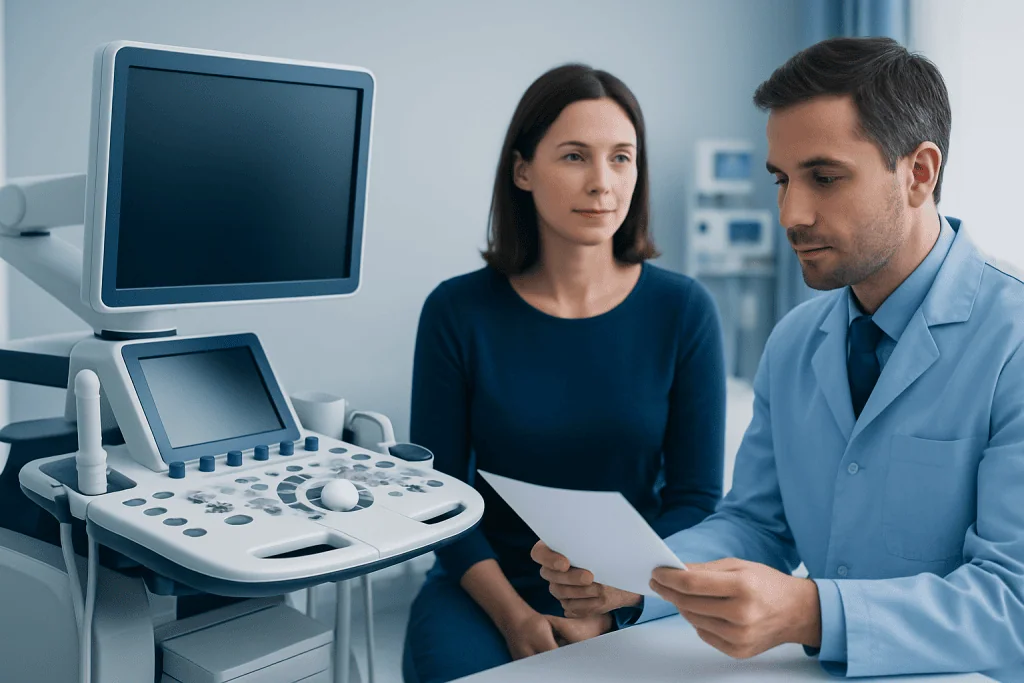
The most useful records are usually the ones that explain your diagnosis, show recent test results, and document any treatment you have already had. In many cases, that means your latest blood tests, imaging reports, pathology results if relevant, clinic notes, discharge summaries, and a current medication list.
If you have had scans, bring both the written report and the image files whenever possible. A radiology report gives the summary, but the actual images on a CD, DVD, USB drive, or secure online link may help the specialist review the findings directly. If you have had a biopsy or surgery, pathology reports are especially important because they often guide treatment planning.
A simple list can help you check you have the basics:
- Recent blood test reports
- Imaging reports and image files
- Pathology or biopsy reports, if any
- Consultation notes from your doctor
- Hospital discharge summaries from recent admissions
- Current medication list, including doses
- Allergy information
- Implant, pacemaker, or previous surgery details where relevant
If you are unsure what matters most for your case, ask your coordinator in advance. Acibadem International teams can usually tell you which documents are especially helpful for your planned department or specialist.
How recent should your reports be

There is no single rule that fits every specialty, because the value of a test depends on the condition being assessed. In general, the most recent version of any important result is the one to bring. A scan from many months ago may still be useful for comparison, but your doctors will often also want newer information if your symptoms have changed or if treatment is being planned soon.
Blood tests are especially time-sensitive. Results related to infection, kidney function, liver function, blood counts, clotting, or pregnancy status can become outdated relatively quickly, so it is helpful to carry the latest available reports. Even if repeat testing is later needed in Turkey, your previous results still provide useful context and can show trends over time.
If you have multiple versions of the same test, bring both the latest and any earlier report that shows a meaningful change. This is often helpful in oncology, cardiology, orthopedics, neurology, and many chronic conditions where progression over time matters. A short timeline written by you can also help the care team understand what happened first and what changed next.
How to organize your documents for travel
The easiest approach is to prepare one printed folder and one digital folder. Your printed folder should contain the most important reports in a clear order: identification page, referral or diagnosis summary, recent clinic notes, blood tests, imaging reports, pathology, medication list, allergies, and prior procedure summaries. Put the newest items first in each section.
Your digital folder should include scanned PDFs of the same documents, plus imaging files if available. Save everything with clear file names such as date_test_name_result. This makes it much easier if the hospital asks you to send files before you fly, or if a printed copy is misplaced during travel. Keep a backup on your phone, a secure cloud account, or a second device.
If your originals are not in English, try to bring at least a translated summary of the main diagnosis, the key findings, and your medications. Full certified translation is not always needed for every page, but the more understandable your records are, the faster your team can review them. At Acibadem International, interpreter and international patient services can help bridge communication, but having clearly labeled paperwork still saves time.
Always keep these records in your hand luggage. Do not place important reports, scan discs, prescriptions, or regular medicines in checked baggage in case your luggage is delayed or lost.
What happens if you forget something or your reports are incomplete
Do not panic if you cannot obtain every single report before departure. Many patients arrive with partial records, and hospitals can often work with what you have while arranging any necessary repeat tests. The key is to bring the most decision-relevant information you can access and to be honest about what is missing.
If a report is unavailable, try to bring an alternative. For example, if you do not have the full clinic letter, bring a discharge summary, a prescription history, a screenshot from your patient portal, or a contact card for your previous doctor or hospital. Even a brief written note from you listing dates, diagnoses, and treatments can help fill gaps until formal records are reviewed.
In some cases, repeat testing in Turkey may still be needed for safety, local protocol, image quality, or because the results are too old for treatment planning. That does not mean your old tests were useless. They may still help your doctors compare findings, avoid unnecessary duplication, and understand how your condition has evolved.
Practical travel tips for a smoother first appointment
Before you fly, send your records ahead if your hospital or coordinator offers that option. This gives the team time to review the file and let you know if anything important is missing. International patient departments, including those at Acibadem International, often help patients with pre-arrival document sharing, appointment logistics, interpreter coordination, and practical questions about travel and accommodation.
Pack your medical folder where you can reach it easily at check-in, on arrival, and at the hospital. Keep your passport, appointment details, insurance or payment paperwork if applicable, medication list, and recent reports together. If you use a device such as CPAP, a glucose monitor, hearing aids, or mobility aids, carry the relevant prescriptions or usage details too.
It is also wise to prepare a one-page personal health summary. Include your main diagnosis, symptoms, past surgeries, allergies, chronic conditions, current medications with doses, and emergency contact details. This single page can be very helpful if you are tired after travel, need to register quickly, or meet more than one specialist during your first days in Istanbul.
Step by step
- Ask which reports are most relevant to your case. Before you travel, contact your coordinator or hospital and ask which tests and reports are most useful for your specialty. This helps you focus on what really matters instead of packing large amounts of paperwork that may not help decision-making.
- Collect the newest reports first. Start with your latest blood tests, imaging reports, pathology results, clinic notes, and medication list. If you have older reports that show an important change over time, add those as supporting documents.
- Get the actual imaging files if possible. For CT, MRI, X-ray, PET-CT, ultrasound, or mammography, ask for the image files as well as the written report. Specialists often benefit from reviewing the images directly, not only the summary text.
- Prepare both paper and digital copies. Print the key reports and also save them as PDFs on your phone, laptop, USB drive, or secure cloud storage. Having both versions protects you if one format becomes inaccessible during travel.
- Add a short health summary in English. Create a one-page summary of your diagnosis, symptoms, major dates, allergies, medications, and past procedures. This is especially useful if your original records are in another language or if you need urgent review on arrival.
- Keep everything in your cabin bag. Carry your reports, image discs, prescriptions, and medicines with you, not in checked luggage. Lost baggage can delay care, while hand luggage keeps essential information available from the moment you land.
- Send records ahead when possible. If your hospital offers pre-arrival review, share your files before your trip. This can help the care team spot missing information, arrange the right appointment flow, and make your first visit more efficient.
Your checklist
- Passport and appointment confirmation
- Printed folder with recent test results
- Digital copies of all reports in PDF format
- Imaging discs, USB drive, or secure image download link
- Pathology or biopsy reports if relevant
- Current medication list with doses and timing
- Written list of allergies and previous reactions
- One-page medical summary in English if possible
- Prescriptions for regular medicines and medical devices
Key takeaways
- Recent test results help your Turkey care team plan safely and efficiently.
- The most useful records are usually blood tests, imaging reports and files, pathology, clinic notes, and medication lists.
- Bring both printed and digital copies, and keep them in your hand luggage.
- English summaries make review easier, especially when original records are in another language.
- If something is missing, bring the best alternative and let your coordinator know in advance.
Frequently asked questions
Do I need to bring original reports or are copies enough?
Copies are usually very helpful, especially if they are clear and complete. In practice, it is best to bring printed copies plus digital files, and keep the originals with you if you have them, particularly for pathology, implant information, or important imaging.
Should I bring scan images or only the radiology report?
Bring both if you can. The written report gives the conclusion, but the actual images may help the specialist review details directly and compare them with any new imaging done in Turkey.
What if my reports are not in English?
Bring them anyway, but add an English summary if possible. A short translation of the diagnosis, key findings, medications, and major procedures can save time, and international patient services at hospitals such as Acibadem International can help support communication.
Will I still need repeat tests in Turkey if I bring recent results?
Possibly, yes. Repeat testing may be needed for safety, local standards, image quality, or because a result is no longer recent enough for treatment planning, but your previous reports can still be very useful for comparison and context.
How far back should my medical records go?
Bring the latest key results first, then add older reports only if they explain your diagnosis, previous treatment, or a meaningful change over time. For long-term conditions, a brief timeline or earlier landmark reports can be more useful than a large stack of every document ever issued.
Do I need to carry my documents in checked luggage?
No, keep them in your cabin bag. Your medical records, medicines, prescriptions, and any scan discs should stay with you throughout the journey so they are available immediately on arrival and not affected by baggage delays.
Can I send my results before I travel to Istanbul?
Yes, if your hospital or coordinator provides a secure way to do so, this is often the best option. Pre-arrival review can help the team identify missing items, guide you on what to bring, and make your first appointments more organized.
Add us as a Preferred Source to see more of our trusted health content across Google Search, AI Overviews and Discover.
More Patient Guides

How to Prepare for a Biopsy in Turkey: Questions, Timing, and Recovery Basics
Biopsy in Turkey preparation starts with the right questions, timing, travel plans, and recovery basics before and after your test in Istanbul…
9 min read
Questions to Ask Before Booking Surgery in Turkey
Questions to ask before booking surgery in Turkey: check surgeon, hospital accreditation, costs, aftercare, travel timing, and support in Istanbul.
9 min read
How to Pack for Surgery in Turkey: A Practical Patient Checklist
How to pack for surgery in Turkey: bring documents, medicines, comfort items, and recovery basics for a smoother stay in Istanbul or…
8 min read