

Aftercare Abroad: How to Arrange Wound Checks and Dressing Changes in Turkey

Wound checks and dressing changes in Turkey can be arranged safely by planning follow-up visits, supplies, transport, and interpreter support before discharge.
If you need wound checks or dressing changes while recovering in Turkey, the safest approach is to plan them before you leave the hospital and keep your aftercare simple, documented, and easy to reach. With clear instructions, the right supplies, and reliable transport and language support, you can manage follow-up abroad with much less stress.
At a glance
- Best time to plan: Before discharge from hospital
- What to confirm: Appointment dates, dressing type, warning signs, and who to call
- Useful support: Interpreter help, transport planning, and written aftercare instructions
- Bring with you: Passport, discharge papers, medication list, and wound photos if advised
- Priority: Keep wound reviews close to your hotel and easy to attend
- Urgent red flags: Fever, spreading redness, heavy bleeding, worsening pain, or bad-smelling drainage
Why aftercare planning matters when you are recovering abroad
Wound checks and dressing changes are often a routine part of recovery, but they can feel more complicated when you are away from home. You may be balancing hotel stays, transport, medication timing, language differences, and a planned return flight, all while trying to rest. The good news is that most of this becomes much easier when the follow-up plan is arranged before you leave the hospital.
Your first goal is not to create a perfect schedule; it is to create a clear one. You should know when your next wound review is due, where it will happen, who will perform it, what supplies are needed, and what symptoms mean you should seek help sooner. Written instructions are especially helpful because it is easy to forget details once you are tired or moving between appointments.
If you are being treated at a large international hospital group such as Acibadem International, ask the patient services team to help coordinate these practical details before discharge. International patient teams can often support appointment scheduling, interpreters, and logistics so you are not trying to organize wound care while already in discomfort.
Arrange your wound checks before you leave the hospital

The best time to organize dressing changes is before discharge, when your care team still has your procedure details, wound plan, and medication list in front of them. Ask exactly how often your wound should be checked, whether the dressing should stay dry, whether it needs to be changed by a clinician, and whether stitches, clips, drains, or adhesive strips are in place. These details affect who should see you and how urgently.
It also helps to ask whether your wound can be reviewed at a local outpatient clinic, at the hospital where you were treated, or through a home-visit nursing service if one is available and appropriate. Some patients assume any clinic can change a dressing, but certain wounds need specific products or a surgeon-led review. Clarifying this early avoids unnecessary travel and prevents the dressing from being disturbed too often.
Before you leave, ask for your aftercare summary in writing. Ideally, it should include the procedure date, wound location, type of dressing, bathing instructions, activity limits, the date of the next review, and emergency contact numbers. If you are staying in Istanbul or another Turkish city for only a short period, ask your team to match the schedule to your hotel stay and departure date as much as safely possible.
What to keep with you during your stay
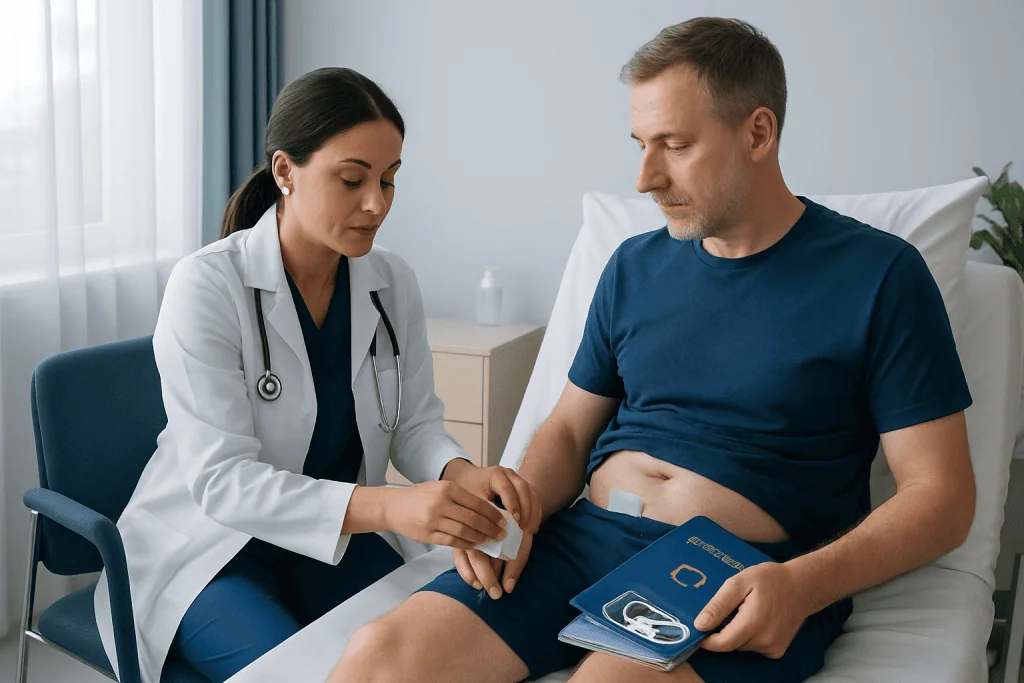
Keeping a small aftercare folder can save time and reduce confusion. You should carry your discharge summary, passport or ID, medication list, allergy information, and any written instructions about the wound. If your surgeon has advised photo monitoring, keep a simple dated record on your phone, but do not remove dressings just to take pictures unless you were told to do so.
It is also wise to check what supplies you were sent away with. Some patients need only one spare dressing, while others may need gauze, adhesive dressings, saline, skin-friendly tape, or protective coverings for showering. Use only the products recommended for your wound, because changing to a different dressing type too early can irritate the skin or interfere with healing.
A practical way to stay organized is to keep all wound-related items in one clean bag that is easy to bring to appointments. Consider including hand sanitizer, tissues, a list of your medicines, and your hospital contact number. If you are recovering with a companion, make sure they know where these items are and what the next appointment date is.
- Discharge summary and follow-up plan
- Medication and allergy list
- Spare dressings if provided
- Emergency and clinic phone numbers
- Passport or hospital ID details
How to make follow-up visits easy and low-stress
When you are healing, the easiest appointment is usually the safest appointment. Choose accommodation with a realistic travel time to the clinic or hospital, especially if you are sore, moving slowly, or unable to sit comfortably for long periods. Even a short journey can feel much longer after treatment, so ask about traffic patterns, building access, and whether a wheelchair or porter can help if needed.
Try to avoid stacking too many errands around your dressing change. Recovery visits go more smoothly when you leave enough time for registration, waiting, and rest afterwards. If your appointment is in a busy area of Istanbul, ask your hotel or patient coordinator for the most practical route rather than the fastest on a map.
Language support can make a major difference, particularly if you need to describe new symptoms. Acibadem International and similar international services often help arrange interpreters and coordinate communication between clinicians and non-Turkish-speaking patients. If you are unsure about any instruction, ask for it to be repeated slowly and written down rather than relying on memory.
What is normal during healing, and what needs urgent review
Some discomfort, mild swelling, light bruising, and small amounts of staining on a dressing can be normal, depending on the type of treatment you had. Your own surgeon’s instructions matter most, because what is expected after one procedure may be a warning sign after another. That is why comparing your wound to someone else’s recovery online is rarely helpful.
You should seek medical advice promptly if you develop fever, worsening or spreading redness, increasing pain that is not settling, significant swelling, heavy bleeding, pus-like or foul-smelling drainage, or a dressing that becomes soaked repeatedly. You should also call if the wound edges open, a drain stops working as instructed, or you suddenly feel unwell. If you are not sure whether something is urgent, it is safer to ask.
In a JCI-accredited setting such as Acibadem International, there are established safety and escalation processes for postoperative concerns. Use the contact pathway you were given at discharge rather than waiting for a planned appointment if symptoms are changing quickly. Prompt review is especially important if your travel date is approaching.
Planning around your flight home and ongoing care
Your return journey should fit around your recovery needs, not the other way around. Before you fly home, confirm whether you need another wound check in Turkey, whether the dressing should stay in place for travel, and whether your stitches or clips will be removed before departure or later in your home country. If follow-up will continue at home, ask for a summary letter that your local doctor or nurse can easily use.
It is helpful to ask for plain, practical guidance for the travel day itself. You may need to keep the wound clean and dry, move carefully, carry medication in hand luggage, or avoid lifting heavy bags. If sitting for long periods is difficult, plan extra airport assistance and leave more time for transfers.
Before you check out of your hotel, make sure you know who to contact if you have a concern after returning home. Many international patients feel reassured by having one clear point of contact for questions about recovery, records, and remote follow-up. Acibadem International’s international patient services can help patients coordinate documents and communication so home-based follow-up starts more smoothly.
Step by step
- Confirm your wound care plan before discharge. Ask your clinical team when your wound should be reviewed, who should change the dressing, and what symptoms require an earlier visit. Get these instructions in writing so you do not have to rely on memory once you are back at your hotel.
- Schedule the next appointment before you leave. If possible, book your next wound check while you are still in the hospital or clinic. Confirm the date, time, exact location, and whether you need to bring any supplies or reports.
- Keep your documents and supplies together. Carry your discharge summary, medication list, passport or ID, and any wound care products you were given. A small dedicated bag makes it easier to attend appointments without forgetting something important.
- Choose practical transport and accommodation. Stay close enough to your follow-up location that the journey does not become exhausting. If you need assistance with stairs, wheelchairs, or language support, arrange it in advance rather than on the day.
- Follow the dressing instructions exactly. Do not remove, wet, or replace a dressing unless you were specifically told to do so. If the dressing loosens, gets soaked, or starts to smell unusual, contact your care team for advice.
- Watch for red flags every day. Check for changes such as spreading redness, increasing pain, fever, heavy discharge, or bleeding. If something is getting worse rather than better, seek review promptly instead of waiting for the next routine appointment.
- Plan the handover before you fly home. Ask whether you still need wound reviews after leaving Turkey and what should happen next in your home country. A clear medical summary and contact pathway make the transition much easier.
Your checklist
- Written discharge and wound care instructions
- Date, time, and location of your next dressing change or wound check
- Medication list, allergies, and emergency contact numbers
- Spare dressings or approved wound care supplies, if provided
- Interpreter or language support arranged if needed
- Hotel-to-clinic transport plan with realistic travel time
- Questions about showering, activity, and flying answered
- Follow-up letter for your doctor or nurse at home
Key takeaways
- Plan wound checks and dressing changes before you leave the hospital, not after.
- Keep written instructions, contact numbers, and supplies together throughout your stay.
- Choose follow-up locations and transport that are easy to manage while you are recovering.
- Use interpreter and international patient support services if anything is unclear.
- Seek urgent review for fever, worsening redness, heavy bleeding, bad-smelling drainage, or increasing pain.
Frequently asked questions
Can I arrange dressing changes in Turkey even if I am staying only a few days after treatment?
Yes, in many cases you can, but it is best arranged before discharge. Your care team can advise whether you need a hospital-based review, an outpatient appointment, or instructions to continue follow-up after you return home.
Should I change my own dressing in the hotel?
Only if your clinical team specifically told you to do so and explained how. Some dressings are meant to stay in place for a set period, and removing them too early can irritate the wound or make assessment harder.
What documents should I bring to a wound check appointment?
Bring your discharge summary, identification, medication list, allergy information, and any written wound care instructions. If you were told to track the wound with photos or notes, have those ready as well.
What if I do not speak Turkish?
Ask for interpreter support or help from international patient services when the appointment is arranged. At providers experienced with international care, such as Acibadem International, coordination teams can often help with communication and practical logistics.
How do I know if my wound needs urgent attention?
Warning signs include fever, spreading redness, increasing pain, heavy bleeding, foul-smelling or pus-like drainage, or the wound opening up. If you feel significantly worse or are worried that healing is not following the expected pattern, contact your care team promptly.
Can I fly with a fresh dressing?
Often yes, but the decision depends on your procedure, the timing, and your surgeon's advice. Before traveling, confirm whether the dressing should stay on during the flight, whether it must be kept dry, and when the next review is due.
Will I need follow-up again after I return home?
Many patients do, especially if stitches, clips, scar checks, or longer wound monitoring are still needed. Ask for a clear summary letter and instructions your local doctor or nurse can follow once you are back home.
Add us as a Preferred Source to see more of our trusted health content across Google Search, AI Overviews and Discover.
More Patient Guides

What to Expect After Day Surgery in Turkey
What to expect after day surgery in Turkey: same-day discharge, recovery tips, travel timing, and follow-up planning in Istanbul.
9 min read
After Discharge in Turkey: How to Manage Wound Care, Medicines, and Rest
After discharge in Turkey, protect your wound, take medicines exactly as prescribed, rest well, and know when to contact your care team…
9 min read
After Surgery in Turkey: When Pain, Swelling, or Fever Means You Should Call the Hospital
After surgery in Turkey, call the hospital urgently for worsening pain, swelling, fever, bleeding, breathing trouble, or wound changes.
9 min read