Muscle Twitching: When It Is Benign and When It May Need Neuromuscular Testing

Most muscle twitching is benign and temporary. Common triggers include stress, lack of sleep, caffeine, exercise, and certain medicines.
Key Takeaways
- Most muscle twitching is benign and temporary.
- Common triggers include stress, lack of sleep, caffeine, exercise, and certain medicines.
- Twitching becomes more concerning when it is paired with weakness, muscle loss, numbness, or problems with swallowing or breathing.
- Doctors may use a neurological exam, blood tests, and electromyography (EMG) to look for nerve or muscle disorders.
- Self-care can help reduce benign twitching, but persistent or progressive symptoms need medical review.
Muscle twitching is common and is often linked to harmless causes such as fatigue, stress, exercise, or caffeine. However, twitching that persists or occurs with weakness, muscle wasting, cramps, numbness, or changes in speech or swallowing should be assessed by a doctor and may require neuromuscular testing.
Overview
Muscle twitching, also called fasciculations, refers to small, involuntary movements of part of a muscle. Many people notice them in the eyelid, calf, thigh, arm, or foot. They may feel like a flutter, a brief jump under the skin, or a repeated pulsing sensation. In many cases, these twitches are harmless and go away on their own.
Benign muscle twitching is often related to everyday factors such as stress, tiredness, vigorous exercise, caffeine use, or poor sleep. A person may notice twitching more when resting quietly at the end of the day. Although the sensation can be unsettling, it does not automatically mean there is a serious neurological disease.
Still, muscle twitching can sometimes be a clue to an underlying problem affecting nerves, muscles, or the body’s chemical balance. The key question is not just whether twitching is present, but whether it is accompanied by other symptoms such as weakness, muscle wasting, numbness, pain, cramping, or difficulties with speech, swallowing, or breathing.
Because the causes range from harmless to medically important, evaluation focuses on the overall pattern. A doctor considers where the twitching occurs, how long it lasts, what makes it better or worse, and whether there are any neurological changes. When needed, neuromuscular testing can help distinguish benign twitching from conditions that require treatment.
Symptoms and what muscle twitching can feel like
Muscle twitching usually appears as a brief, involuntary contraction in a small part of a muscle. It may come and go over minutes, days, or weeks. Some people notice isolated twitches, while others experience frequent episodes in several areas of the body. The movement is often visible under the skin and may not be painful, though it can happen with cramps or a feeling of tightness.
Benign twitching often occurs without loss of strength or loss of muscle bulk. A person can still walk, lift, grip, speak, and swallow normally. The twitching may become more noticeable during times of emotional stress, after a workout, after too much caffeine, or when sleep has been poor.
Certain associated symptoms are more important because they suggest that the problem may not be purely benign. These include true muscle weakness, dropping objects, tripping, shrinking of a muscle, numbness, tingling, severe cramps, balance problems, or changes in voice, swallowing, or breathing. When twitching appears together with these features, medical assessment is especially important.
- Common benign patterns: eyelid twitching, calf twitching after exercise, brief scattered twitches during stress or fatigue
- Symptoms that deserve prompt attention: progressive weakness, visible muscle wasting, trouble swallowing, shortness of breath, or rapidly worsening symptoms
- Other clues doctors ask about: recent illness, new medicines, stimulant use, alcohol intake, and family history of neurological disease
Causes and risk factors

The most common causes of muscle twitching are not dangerous. Fatigue, anxiety, emotional stress, poor sleep, strenuous physical activity, dehydration, and high caffeine intake can all irritate muscles or the nerves that supply them. Nicotine and some medications, including certain asthma medicines or stimulants, may also trigger twitching in some people.
Mineral or metabolic disturbances can play a role as well. Low levels of magnesium, calcium, or potassium may contribute to twitching or cramping. Thyroid disorders, vitamin deficiencies, and dehydration can also affect the way nerves and muscles function. In these situations, treatment focuses on correcting the underlying imbalance rather than the twitching alone.
Sometimes twitching is part of a benign neurological pattern called benign fasciculation syndrome, in which twitches are frequent but no serious nerve disease is found. In other cases, twitching may occur with peripheral nerve irritation, radiculopathy from the spine, neuropathy, or disorders that affect the connection between nerves and muscles. Some people with peripheral neuropathy may report twitching along with numbness or burning sensations.
More serious neuromuscular conditions are less common, but they are one reason persistent twitching should not be ignored if other symptoms are present. These conditions may include motor neuron disorders, inflammatory muscle disease, or other problems evaluated within neuromuscular diseases. The presence of weakness, muscle wasting, or spreading disability matters far more than twitching alone.
When twitching may need neuromuscular testing
Neuromuscular testing is considered when the clinical picture suggests that the twitching could be related to a nerve or muscle disorder rather than a temporary trigger. Doctors are more likely to recommend further testing when twitching lasts for weeks to months, becomes widespread, or is paired with weakness, muscle atrophy, repeated falls, persistent cramps, numbness, or changes in speech and swallowing.
A neurological examination is often the first step. The doctor checks muscle strength, reflexes, sensation, coordination, walking pattern, and visible muscle bulk. This exam helps show whether the nervous system is functioning normally or whether there are signs that point toward a specific region such as a peripheral nerve, spinal root, muscle, or motor neuron.
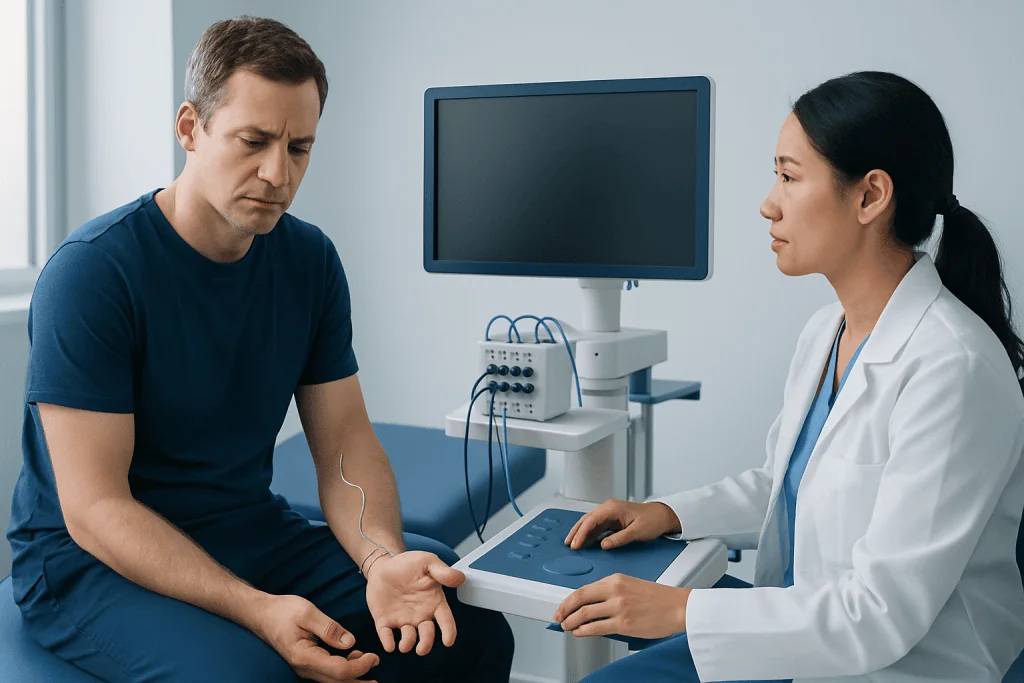
Electromyography and nerve conduction studies are common neuromuscular tests. An EMG test records electrical activity in muscles and can detect patterns suggesting denervation, muscle disease, or ongoing nerve irritation. Nerve conduction studies measure how well electrical signals travel through peripheral nerves. Together, these tests help doctors separate benign fasciculations from many clinically important disorders.
Testing does not always mean a serious disease is expected. In many people, it is done to provide clarity and reassurance, especially when symptoms are persistent or causing anxiety. The goal is to identify who needs treatment, who needs monitoring, and who can be safely reassured that the twitching is benign.
How doctors diagnose the cause
Diagnosis begins with a careful medical history. A doctor asks when the twitching started, whether it is constant or occasional, which muscles are involved, and whether there are any triggers such as exercise, stress, sleep loss, or caffeine. The doctor also reviews medications, supplements, alcohol use, recent infections, and any family history of neurological or muscle disease.
The physical and neurological examination is central. A person may be asked to walk, rise from a chair, grip with the hands, move against resistance, and perform simple coordination tasks. The doctor also looks for signs such as muscle wasting, changes in reflexes, sensory loss, or abnormal movements. These findings guide decisions about whether more testing is needed.
Blood tests may be used to look for treatable causes, including thyroid problems, electrolyte disturbances, kidney function changes, vitamin deficiencies, or markers of inflammation. If there are features suggesting a structural problem, imaging such as MRI may be recommended, especially when symptoms point to nerve compression in the spine or brain. In selected cases, additional tests such as ultrasound, genetic studies, or muscle evaluation may be needed.
When symptoms are complex or persistent, assessment by a neurologist or a neuromuscular specialist can be helpful. At centers experienced in neurology care, the diagnosis is based on the full clinical picture rather than a single symptom. This is important because muscle twitching by itself is common and often does not indicate a dangerous disease.
Treatment options
Treatment depends on the cause. If the twitching is benign and linked to lifestyle factors, management may focus on reducing triggers. Better sleep, hydration, stress management, moderation of caffeine, and recovery after intense exercise are often enough to improve symptoms. If a medication appears to be contributing, a doctor may review alternatives or adjust treatment safely.
When a deficiency or metabolic problem is found, treatment aims to correct it. For example, thyroid disease, low electrolytes, or vitamin deficiency may improve once properly treated. If nerve compression, neuropathy, or another neurological disorder is present, care is directed toward that condition. In some situations, physical therapy, rehabilitation, or medications for cramps or discomfort may be recommended.
For people with benign fasciculation syndrome, reassurance is an important part of care. Anxiety can heighten awareness of body sensations and make twitches seem more frequent. Clear evaluation and follow-up can help reduce this cycle. Doctors may suggest monitoring symptoms over time rather than repeated urgent testing if the examination is normal and no warning signs are present.
If a more serious neuromuscular disorder is identified, treatment may involve a multidisciplinary plan with neurologists, rehabilitation specialists, and other clinicians. Near the end of the evaluation pathway, patients seeking international care may also choose centers such as Acibadem International, where multidisciplinary specialists in JCI-accredited hospitals diagnose and treat neuromuscular conditions in a coordinated way.
Self-care, prevention, and when to see a doctor
There is no single way to prevent all muscle twitching, but healthy habits can reduce many common triggers. Regular sleep, balanced nutrition, hydration, and reasonable caffeine intake can help. Gradual conditioning before intense exercise and allowing time for recovery may also reduce post-exercise twitching and cramps. Stress-reduction techniques such as relaxation breathing, walking, or mindfulness may be useful for people whose symptoms worsen during stressful periods.
Keeping a symptom diary can be practical. Noting the time of day, location of the twitching, recent exercise, sleep quality, caffeine intake, and associated symptoms may help reveal patterns. This can also make a medical visit more productive. It is best to avoid self-diagnosing based on internet searches alone, because twitching is common and often has non-serious explanations.
A doctor should be consulted if twitching lasts for several weeks, is spreading, becomes bothersome, or returns repeatedly without an obvious trigger. Medical review is especially important if twitching occurs with weakness, muscle shrinking, numbness, persistent severe cramps, imbalance, speech changes, swallowing difficulty, or breathing symptoms. These signs do not confirm a serious condition, but they do mean a more complete assessment is needed.
Urgent care is appropriate when symptoms involve sudden severe weakness, trouble breathing, or difficulty swallowing. In all other situations, a planned evaluation with a primary care doctor or neurologist is usually the best next step. Early assessment can identify treatable causes and offer reassurance when the twitching is benign.
Frequently asked questions
Is muscle twitching usually serious?
No. Muscle twitching is very often benign and related to fatigue, stress, caffeine, exercise, or poor sleep. It becomes more concerning when it is persistent and occurs with weakness, muscle wasting, numbness, or swallowing or breathing problems.
What is the difference between benign twitching and a neurological problem?
Benign twitching usually happens without loss of strength or muscle bulk, and the neurological examination is normal. A neurological problem is more likely when twitching is accompanied by progressive weakness, visible muscle loss, abnormal reflexes, sensory changes, or difficulty with movement or speech.
What is an EMG and why might it be needed?
Electromyography, or EMG, is a test that measures the electrical activity of muscles. It may be recommended when a doctor wants to see whether twitching is coming from a benign cause or from a disorder affecting nerves or muscles.
Can anxiety or stress cause muscle twitching?
Yes. Stress and anxiety can make twitching more likely and can also make a person notice normal body sensations more intensely. Improving sleep, reducing caffeine, and using stress-management techniques can often help.
Should a person with muscle twitching stop exercising?
Not usually, unless a doctor advises it or exercise clearly worsens symptoms significantly. Gentle, regular activity is generally safe, but intense workouts may trigger temporary twitching in some people, so recovery, hydration, and gradual training are important.
When should someone see a doctor about muscle twitching?
A doctor should be seen if twitching lasts for weeks, spreads, keeps coming back, or causes worry. Prompt assessment is especially important if there is weakness, muscle wasting, numbness, trouble swallowing, speech changes, or shortness of breath.
This article is for general information only and is not a substitute for professional medical advice. Please consult a qualified doctor about your individual situation.
Explore treatments in Turkey — costs, top hospitals & a free quote
JCI-accredited · board-certified surgeons · reply within 24h
Add us as a Preferred Source to see more of our trusted health content across Google Search, AI Overviews and Discover.

More from the Health Library

Central Nervous System Disorders and Neuromuscular Symptoms: When They Overlap

What Is Neuromuscular Disease?

Myasthenia Gravis and the Neuromuscular Junction: Why Muscles Become Weak

Swallowing Problems in Neuromuscular Disease: Causes, Testing, and Care

Nerve Biopsy: When It Is Used in Neuromuscular Disease Diagnosis