

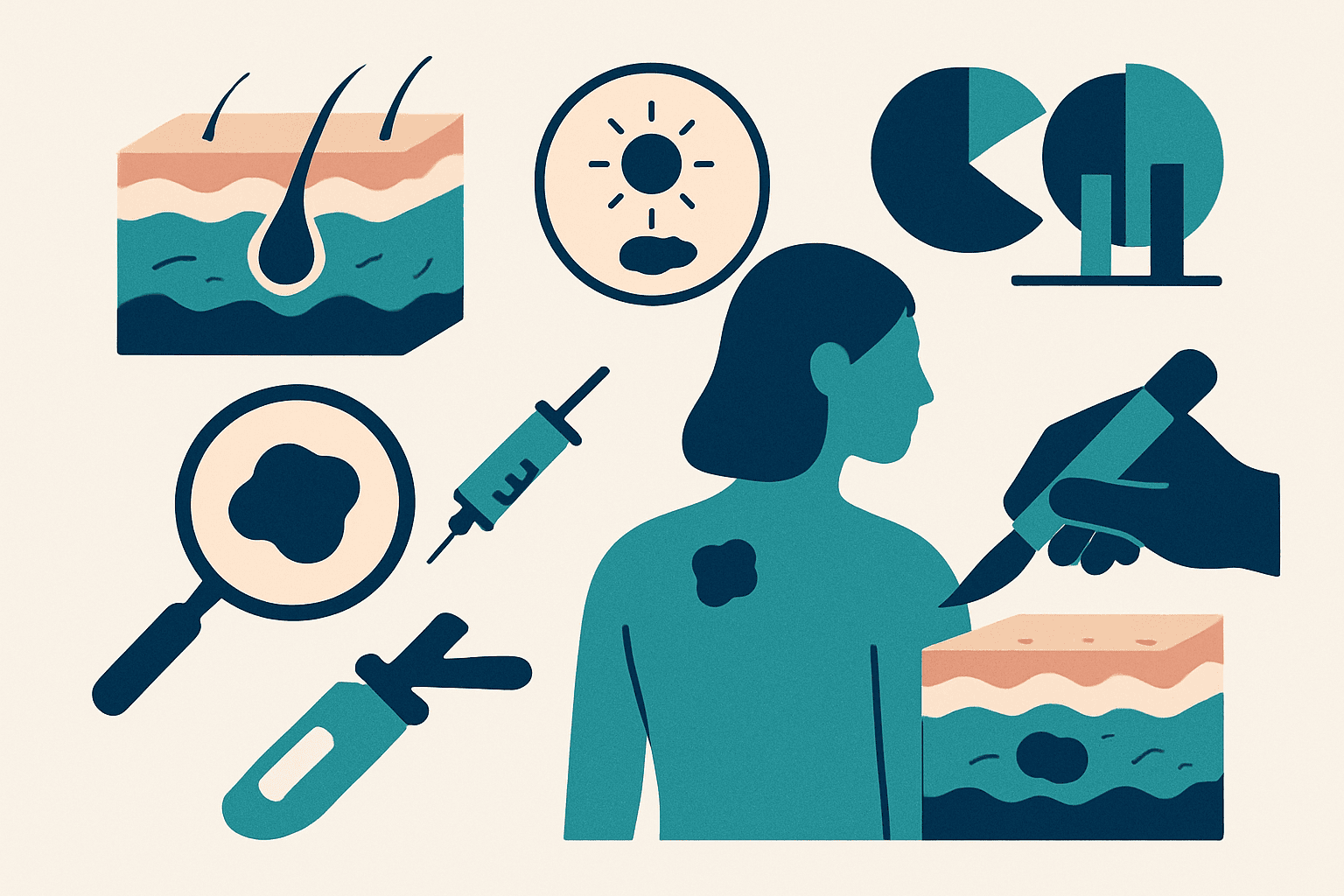
- Skin cancer includes several diseases, with basal cell carcinoma, squamous cell carcinoma, and melanoma being the main types.
- A new, changing, bleeding, or non-healing skin lesion should be medically assessed rather than self-diagnosed.
- Ultraviolet exposure from sun and tanning beds is a major preventable risk factor.
- Early detection often makes treatment simpler and may improve outcomes, especially for melanoma.
- People with a history of skin cancer usually need ongoing skin surveillance after treatment.
Celebrities with skin cancer often draw public attention not only because of their fame, but because their stories can make a common and serious disease feel more real. When well-known people speak candidly about their own diagnosis, treatment, or repeat procedures, that openness can help normalize conversations about prevention, skin checks, and seeking medical care early.
Skin cancer is often discussed in broad public-health terms, yet personal accounts can be especially powerful. Across the years, actors, television personalities, athletes, and public figures have shared their experiences with basal cell carcinoma, squamous cell carcinoma, or melanoma, often using those moments to encourage sun protection and regular dermatology visits.
This roundup focuses only on public figures who have personally and publicly spoken about their own skin cancer. The goal is not to sensationalize illness, but to highlight how openness around diagnosis and treatment can support awareness, earlier detection, and more informed health conversations.
1. Hugh Jackman
Hugh Jackman has spoken publicly for years about being treated for basal cell carcinoma on his nose after his then-wife encouraged him to get a spot checked. He has shared updates on social media about undergoing multiple procedures and has repeatedly used his platform to remind people to wear sunscreen and have suspicious lesions evaluated. His openness has mattered because he has framed skin cancer as something that can affect people who otherwise feel healthy and active. By discussing recurrent treatment in a straightforward way, he has helped keep attention on prevention and early detection.
2. Khloe Kardashian
Khloe Kardashian has publicly shared that she previously had melanoma removed from her back in her twenties and later underwent another procedure after a facial lesion was found to be skin cancer. She described her experience openly on social media, including why she temporarily wore a bandage on her face during recovery. Her public comments drew attention to the fact that skin cancer can occur at a younger age and may require prompt surgical treatment. By discussing both diagnosis and visible recovery, she helped reduce stigma around seeking care for suspicious skin changes.
3. Teddi Mellencamp
Teddi Mellencamp has spoken extensively about melanoma, including multiple surgeries after abnormal spots were identified during dermatology appointments. She has shared photos and reflections publicly while emphasizing that a friend encouraged her to get checked, which led to diagnosis. Her updates have highlighted the importance of regular skin exams, especially for people with risk factors or a history of sun exposure. The value of her openness lies in showing that melanoma often involves ongoing surveillance rather than a single moment of treatment.
4. Anderson Cooper
Anderson Cooper has publicly discussed having a skin cancer spot removed from near his eye, describing it in an on-air conversation in a matter-of-fact way. He used the moment to note that he had spent time in the sun and needed treatment for the lesion. Although he did not turn the experience into a dramatic personal story, his candor helped reinforce that skin cancer can appear on the face and in highly visible areas. That kind of brief, direct disclosure can still be meaningful for normalizing skin checks and treatment.
5. Diane Keaton
Diane Keaton has written and spoken publicly about having skin cancer, including basal cell carcinoma, and has linked her experience to a lifetime awareness of sun exposure. She has been especially vocal about hats, protective clothing, and avoiding excessive sun, often folding her personal history into broader conversations about aging and self-care. Her comments matter because they connect prevention with everyday habits rather than fear. In doing so, she has offered a practical, public-facing example of how a celebrity can turn a personal diagnosis into sustained awareness messaging.
6. Brooke Shields
Brooke Shields has publicly shared that she had a precancerous or early cancerous skin lesion removed from her face after noticing a spot and having it checked. She discussed the emotional impact of hearing the diagnosis and the relief of dealing with it promptly. Her account resonated because it highlighted how an apparently small facial mark can still warrant medical attention. By being open about the procedure and the worry that came with it, she helped underscore the value of not ignoring new or changing lesions.
7. Melanie Griffith
Melanie Griffith has publicly acknowledged having skin cancer treatment, including visible bandaging after procedures on her face that she later discussed. She has spoken about the importance of seeing a dermatologist and protecting skin from the sun. Her disclosures were significant because they made visible the reality that treatment can leave temporary marks and still be an important, necessary step. That honesty can help people feel less self-conscious about diagnosis and recovery, especially when treatment involves the face.
8. Ewan McGregor
Ewan McGregor has spoken publicly about having a cancerous mole removed from beneath his right eye after concern was raised by a doctor. He has shared that he initially thought the lesion looked like a harmless blemish, but sought evaluation and had it treated. His comments helped reinforce a core skin-cancer message: not every dangerous lesion looks dramatic at first. The public value of his disclosure lies in reminding people that subtle skin changes can still deserve prompt assessment.
9. Troy Aikman
Troy Aikman has publicly discussed having melanoma removed and has urged others to pay attention to suspicious moles and skin changes. He has connected his experience to time spent outdoors and the need for routine monitoring. As a well-known athlete associated with outdoor activity and fitness, his story broadened awareness beyond stereotypes about who develops skin cancer. His openness helped emphasize that sun damage risk can accumulate over time, including in people who appear otherwise robust and healthy.
10. Witney Carson
Witney Carson has publicly shared her experience with melanoma after changes were found in a mole and she underwent treatment. She has used her platform to encourage followers to monitor their skin and not delay dermatology visits. Her account has been particularly notable because she spoke as a younger public figure, challenging the misconception that skin cancer is only an issue later in life. By describing the diagnosis plainly, she helped make skin awareness feel relevant to younger adults as well.
What skin cancer is
Skin cancer begins when abnormal cells in the skin grow in an uncontrolled way. The main categories are basal cell carcinoma, squamous cell carcinoma, and melanoma. Basal cell carcinoma is the most common and often grows slowly, while squamous cell carcinoma can also be very treatable when found early but may behave more aggressively in some cases. Melanoma is less common than the other two, but it is generally considered the most serious because it has a greater potential to spread to other parts of the body.
Risk is influenced by a combination of factors. These include cumulative ultraviolet exposure from sunlight, indoor tanning, fair skin, a history of sunburns, many or atypical moles, family history, increasing age, and a weakened immune system. Still, skin cancer does not affect only one type of person. It can occur in younger adults, in people who do not spend all day outdoors, and on body areas that may be overlooked.
One reason awareness matters is that skin cancer may first appear as a seemingly minor spot. Warning signs can include a new growth, a sore that does not heal, a rough or scaly patch, a pearly bump, or a mole that changes in size, shape, color, or sensation. For melanoma, clinicians often teach the ABCDE rule: asymmetry, border irregularity, color variation, diameter, and evolving change over time. These features do not diagnose cancer by themselves, but they help explain why a new or changing lesion deserves professional assessment.
Diagnosis and treatment landscape
Diagnosis usually begins with a clinical skin examination. A dermatologist or other qualified clinician may inspect the lesion visually, sometimes with a dermatoscope, and decide whether a biopsy is needed. A biopsy is the key step that confirms whether the spot is cancerous and identifies the specific type. If melanoma is diagnosed, further staging may be needed to assess depth and whether there is spread to lymph nodes or other tissues.
Treatment depends on the type of skin cancer, its size and depth, where it is located, and whether it has spread. For many basal cell and squamous cell carcinomas, surgery is the main treatment and may be curative, especially when lesions are caught early. Some cases are treated with specialized techniques such as Mohs surgery, which aims to remove cancer while sparing as much healthy tissue as possible, often in cosmetically or functionally sensitive areas. Certain superficial lesions may also be managed with topical medicines, cryotherapy, or other localized approaches when appropriate.
Melanoma treatment also often starts with surgery, but more advanced disease may require additional therapies. These can include immunotherapy, targeted therapy, radiation therapy, or other oncology-based treatment plans depending on staging and tumor biology. Follow-up is an important part of care because people who have had one skin cancer may be at increased risk of developing another, and some cancers require surveillance after treatment.
From a public-health perspective, prevention and screening behavior are central to the conversation. Sun-protective clothing, shade, avoiding tanning beds, and regular use of broad-spectrum sunscreen are commonly recommended measures for reducing ultraviolet exposure. Just as important is noticing changes in the skin and getting them evaluated promptly. Education around skin cancer is not about alarm; it is about recognizing that early diagnosis can greatly improve the treatment path and, in many cases, the outcome.
Explore Cancer Screening at Acibadem →
Frequently asked questions
What are the main types of skin cancer?
The main types are basal cell carcinoma, squamous cell carcinoma, and melanoma. Basal cell carcinoma is the most common, while melanoma is generally the most serious because it is more likely to spread.
Can younger adults get skin cancer?
Yes. Although risk often rises with age and cumulative sun exposure, younger adults can also develop skin cancer, including melanoma.
How is skin cancer diagnosed?
A clinician usually starts with a skin examination and may use a dermatoscope to inspect the lesion. Diagnosis is confirmed with a biopsy, which allows the tissue to be examined under a microscope.
Is skin cancer always treated with surgery?
Not always, but surgery is a common treatment for many skin cancers. Depending on the type, size, depth, and location, treatment can also include topical therapies, cryotherapy, radiation therapy, immunotherapy, or targeted therapy.
This article is general health information inspired by publicly reported news. It is not a statement about any individual’s private medical care, nor medical advice. Always consult a qualified clinician.