Neuromyelitis Optica: Symptoms, Diagnosis, and Neuroimmunology Treatment

Neuromyelitis optica often causes optic neuritis and transverse myelitis, leading to vision changes, weakness, numbness, or bladder problems. It is different from multiple sclerosis and usually requires specific testing, including MRI and antibody blood tests.
Key Takeaways
- Neuromyelitis optica often causes optic neuritis and transverse myelitis, leading to vision changes, weakness, numbness, or bladder problems.
- It is different from multiple sclerosis and usually requires specific testing, including MRI and antibody blood tests.
- Treatment focuses on managing attacks quickly and preventing future relapses.
- Ongoing follow-up with a neuroimmunology specialist is important because relapses can cause lasting disability.
- Prompt medical attention for sudden vision loss, limb weakness, or severe sensory changes is essential.
Neuromyelitis optica is a rare autoimmune condition that mainly affects the optic nerves and spinal cord. Early recognition, accurate diagnosis, and specialist neuroimmunology care can help reduce relapses and protect long-term function.
Overview
Neuromyelitis optica, also called neuromyelitis optica spectrum disorder (NMOSD), is an autoimmune disease in which the body’s immune system mistakenly attacks parts of the central nervous system. It most often affects the optic nerves, which carry visual information from the eyes to the brain, and the spinal cord. In some people, certain areas of the brain may also be involved.
This condition can cause episodes, often called attacks or relapses, that develop over hours to days. During an attack, inflammation may damage the optic nerves or spinal cord, leading to symptoms such as eye pain, vision loss, weakness, numbness, or bladder problems. Because attacks can be severe, early diagnosis and treatment are very important.
Neuromyelitis optica was once considered a form of multiple sclerosis, but it is now recognized as a separate disease with different immune mechanisms, test findings, and treatment approaches. A blood test that detects antibodies such as aquaporin-4 (AQP4-IgG) has helped doctors identify the condition more accurately.
Care is usually guided by neurology and neuroimmunology specialists. The goals are to treat acute attacks promptly, reduce the risk of future relapses, support recovery, and monitor for complications over time.
Symptoms
The symptoms of neuromyelitis optica depend on which part of the nervous system is inflamed. Many people first notice symptoms related to optic neuritis, transverse myelitis, or both. Optic neuritis can cause eye pain, blurred vision, dim vision, reduced color vision, or partial to severe vision loss, often in one eye but sometimes in both.
When the spinal cord is affected, symptoms may include weakness in the arms or legs, heaviness when walking, numbness, tingling, tight band-like sensations, muscle stiffness, and difficulty controlling the bladder or bowel. Some people also experience severe nerve pain or spasms. These symptoms may appear suddenly or worsen over several days.
In some cases, neuromyelitis optica affects parts of the brain involved in nausea, vomiting, and hiccups. This can lead to repeated unexplained hiccups, persistent nausea, or vomiting. Less commonly, there may be dizziness, sleep-related symptoms, or other neurologic changes depending on the area involved.
- Eye pain or sudden vision changes
- Weakness or paralysis in the limbs
- Numbness, tingling, or sensory loss
- Bladder or bowel dysfunction
- Persistent hiccups, nausea, or vomiting
- Painful muscle spasms or walking difficulty
Causes and Risk Factors

Neuromyelitis optica is caused by an abnormal immune response. In many people, the immune system produces antibodies against aquaporin-4, a protein found on support cells called astrocytes in the central nervous system. These antibodies trigger inflammation that can damage the optic nerves, spinal cord, and sometimes the brain. A smaller group of patients may have antibodies against myelin oligodendrocyte glycoprotein (MOG), which is associated with a related but distinct inflammatory disorder.
The exact reason why the immune system begins this attack is not fully understood. Like many autoimmune diseases, it is likely influenced by a combination of immune, genetic, and environmental factors. Neuromyelitis optica is not generally considered a directly inherited disease, but some people may have a tendency toward autoimmune conditions.
Certain factors are seen more often in affected individuals. The condition is more common in adults than children, and in many populations it is more frequently diagnosed in women, especially in AQP4-antibody-positive disease. People with other autoimmune illnesses, such as thyroid disease, lupus, or Sjogren syndrome, may have a higher likelihood of developing it.
Neuromyelitis optica is not contagious and is not caused by anything a person did or did not do. Understanding this can help patients and families focus on treatment, symptom management, and regular specialist follow-up rather than self-blame.
How Neuromyelitis Optica Is Diagnosed
Diagnosis begins with a careful medical history and neurological examination. A doctor will ask about the timing of symptoms, whether attacks have happened before, and whether there are vision problems, walking changes, sensory symptoms, or bladder issues. Because neuromyelitis optica can resemble multiple sclerosis or other inflammatory disorders, accurate testing is essential.
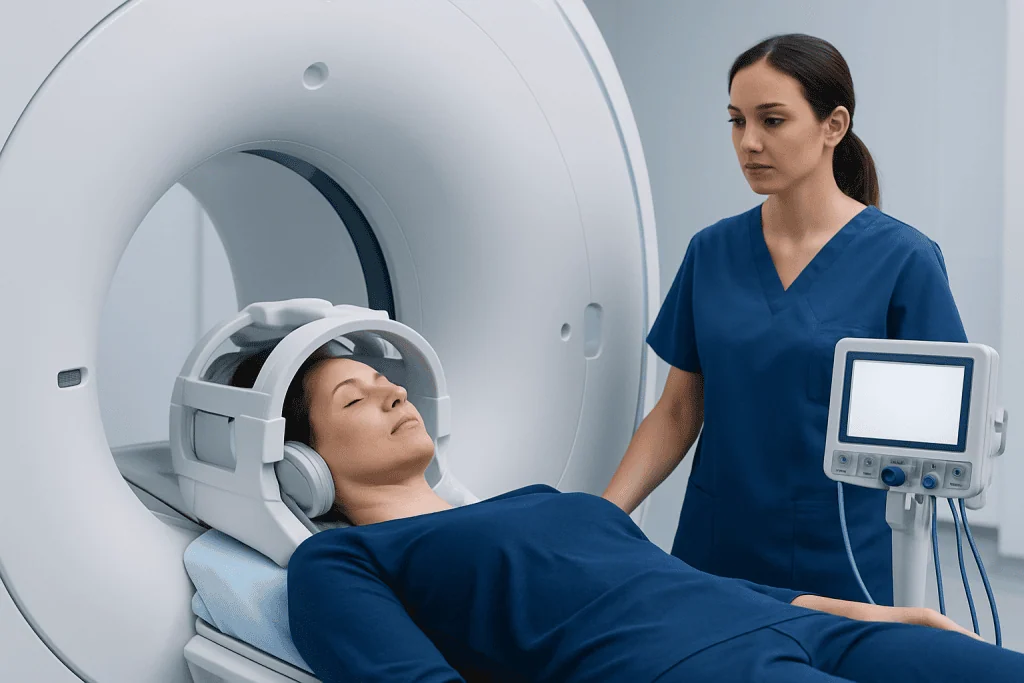
Magnetic resonance imaging (MRI) is one of the main diagnostic tools. MRI scans of the brain, spinal cord, and sometimes the optic nerves can show patterns of inflammation that help distinguish neuromyelitis optica from other diseases. Spinal cord lesions in NMOSD are often extensive, involving longer segments than those typically seen in multiple sclerosis.
Blood testing for antibodies is especially important. The aquaporin-4 antibody test strongly supports the diagnosis when positive. If AQP4-IgG is negative, doctors may consider testing for MOG antibodies and reviewing whether the person may have a related disorder such as optic neuritis linked to another immune condition. Additional tests may include eye examinations, optical coherence tomography, visual evoked potentials, and sometimes a lumbar puncture to analyze cerebrospinal fluid.
Because treatment choices differ across inflammatory neurologic diseases, diagnosis is ideally made by clinicians experienced in neuroimmunology. This helps avoid delays and reduces the chance of using therapies that may be less effective or unsuitable for NMOSD.
Treatment Options
Treatment has two main goals: managing acute attacks and preventing future relapses. Acute attacks are usually treated quickly with high-dose corticosteroids given under close medical supervision. If symptoms are severe or do not improve enough, doctors may recommend plasmapheresis to remove harmful antibodies from the blood. In selected cases, intravenous immunoglobulin may also be considered.
Long-term treatment aims to reduce new attacks, since each relapse can lead to cumulative nerve injury. Preventive therapy may involve immunosuppressive or targeted immune treatments chosen according to antibody status, medical history, attack pattern, and overall health. These treatments require ongoing monitoring for effectiveness and side effects, and they should be guided by a specialist familiar with NMOSD.
Supportive care is also an important part of treatment. Depending on symptoms, a person may benefit from physical therapy and rehabilitation, pain management, bladder care, low-vision support, or psychological support. A team approach can help improve daily function and quality of life, especially after a significant relapse.
In complex cases, care may involve neurologists, neuro-ophthalmologists, rehabilitation specialists, and immunology experts. Near the end of the care pathway, some international patients may seek evaluation at centers such as Acibadem International, where multidisciplinary specialists in JCI-accredited hospitals diagnose and treat neuroimmunologic disorders using individualized plans.
Prevention and Self-Care
There is no known way to completely prevent neuromyelitis optica from developing, but careful disease management can lower the risk of relapses and help protect function. The most important step is staying consistent with the treatment plan prescribed by the specialist. Missing follow-up visits or stopping medication without medical advice can increase the chance of new attacks.
Self-care focuses on reducing triggers for general illness, supporting recovery, and monitoring changes early. Good sleep, balanced nutrition, stress management, regular gentle activity, and infection prevention can all support overall health. Patients should also discuss vaccinations, travel planning, pregnancy, and other life events with their doctor so treatment can be adjusted safely if needed.
People who have residual symptoms after an attack may benefit from practical strategies at home. These may include energy conservation, assistive devices, fall prevention measures, bladder routines, and vision adaptations. Rehabilitation plans are often tailored to the person’s main challenges and goals.
- Take medicines exactly as prescribed
- Keep regular neurology follow-up appointments
- Report new neurologic symptoms promptly
- Use rehabilitation support if mobility or vision is affected
- Ask about healthy lifestyle measures and infection prevention
When to See a Doctor
Immediate medical attention is needed for sudden vision loss, eye pain with visual changes, new weakness, severe numbness, trouble walking, or loss of bladder control. These may be signs of an acute relapse that needs urgent evaluation and treatment. Early treatment can make an important difference in recovery.
A person should also see a doctor if they have repeated unexplained hiccups, persistent nausea and vomiting without a clear digestive cause, or new episodes of severe nerve pain or muscle spasms. Although these symptoms may not seem neurologic at first, they can occur in neuromyelitis optica.
Anyone already diagnosed with NMOSD should contact their care team if symptoms worsen, new side effects appear, or daily function declines. Regular follow-up helps doctors review response to treatment, monitor for complications, and adjust long-term care as needed.
If the diagnosis is uncertain or symptoms overlap with other inflammatory diseases such as transverse myelitis, a specialist evaluation is especially helpful. Prompt and expert assessment supports earlier diagnosis and safer treatment decisions.
Frequently asked questions
Is neuromyelitis optica the same as multiple sclerosis?
No. Neuromyelitis optica and multiple sclerosis are different inflammatory diseases of the central nervous system. They can share symptoms, but they have different immune mechanisms, test findings, and treatment strategies.
Can neuromyelitis optica be cured?
There is currently no complete cure, but the disease can often be managed with appropriate treatment and follow-up. The main aim is to control attacks, reduce relapses, and preserve vision, mobility, and quality of life.
What usually causes an attack of neuromyelitis optica?
An attack happens when the immune system causes inflammation in the optic nerves, spinal cord, or other parts of the central nervous system. The exact trigger is not always clear, which is why preventive treatment and regular monitoring are important.
Who treats neuromyelitis optica?
Neuromyelitis optica is usually treated by a neurologist, often with expertise in neuroimmunology. Depending on symptoms, care may also involve neuro-ophthalmology, rehabilitation, pain management, and other specialists.
Can vision return after optic neuritis in neuromyelitis optica?
Some people recover part or much of their vision after treatment, but recovery varies from person to person. Because attacks can cause lasting damage, urgent treatment offers the best chance of limiting long-term effects.
Is neuromyelitis optica hereditary?
It is not usually passed down directly from parent to child. However, as with many autoimmune conditions, some people may have an underlying tendency that contributes to risk.
References
- National Institute of Neurological Disorders and Stroke
- National Multiple Sclerosis Society
- Mayo Clinic
- Cleveland Clinic
- Orphanet
This article is for general information only and is not a substitute for professional medical advice. Please consult a qualified doctor about your individual situation.
Neuroimmunology in Turkey — costs, top hospitals & a free quote
JCI-accredited · board-certified surgeons · reply within 24h
Add us as a Preferred Source to see more of our trusted health content across Google Search, AI Overviews and Discover.