Brain Lobes Explained: Why Different Areas Cause Different Symptoms
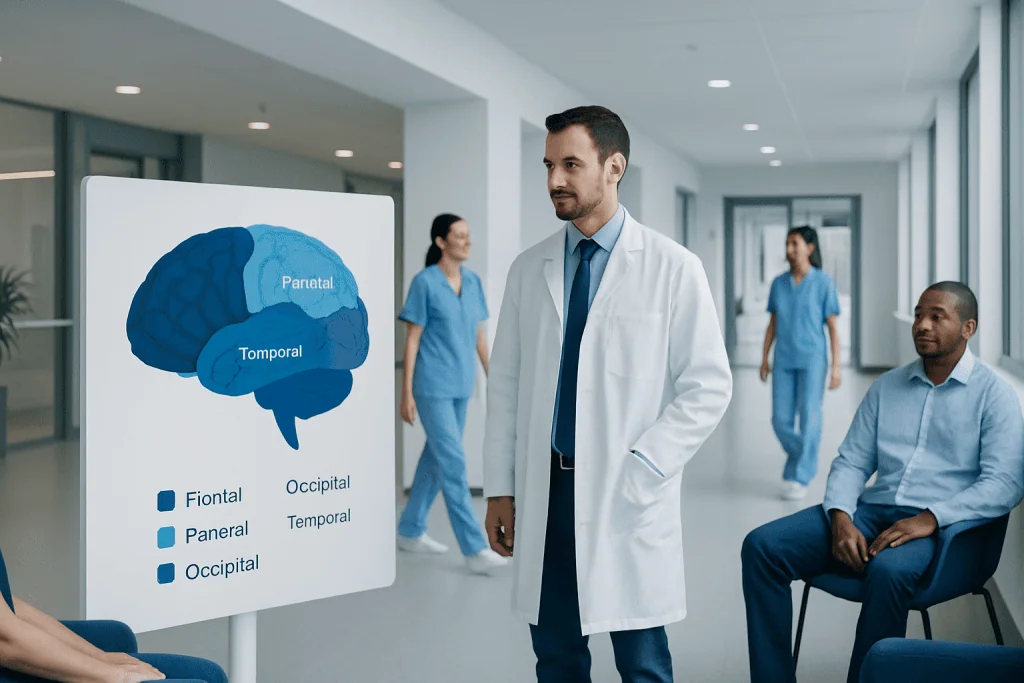
The brain’s lobes have different jobs, including movement, sensation, language, memory, behavior, and vision. Symptoms often reflect the location of a problem in the brain rather than only its cause.
Key Takeaways
- The brain’s lobes have different jobs, including movement, sensation, language, memory, behavior, and vision.
- Symptoms often reflect the location of a problem in the brain rather than only its cause.
- Frontal, parietal, temporal, and occipital lobe problems can produce distinct patterns of symptoms.
- Conditions such as stroke, tumors, injury, infection, and seizures may affect one or more brain areas.
- Brain imaging and neurological examination help doctors identify which region may be involved.
- Sudden symptoms such as weakness, speech trouble, confusion, or vision loss need urgent medical attention.
Different parts of the brain handle different tasks, which is why symptoms often depend on the area affected. Understanding the brain’s lobes can help patients and families make sense of changes in speech, movement, sensation, memory, behavior, and vision.
Overview: why brain location matters
The brain is not one uniform organ in which every area does the same job. It is made up of regions that specialize in different functions, including thinking, movement, sensation, speech, hearing, vision, emotion, and memory. Because of this organization, symptoms often provide important clues about where a problem may be located.
When people notice weakness, difficulty speaking, memory changes, personality shifts, or vision problems, the pattern can help doctors understand which part of the brain may be affected. This is why two people with the same condition, such as a stroke or tumor, may have very different symptoms if different brain regions are involved.
The four main lobes of the cerebral cortex are the frontal, parietal, temporal, and occipital lobes. They work together constantly, but each has certain key roles. Nearby structures such as the cerebellum and brainstem also influence coordination, balance, breathing, swallowing, and alertness, so symptoms are not limited to the lobes alone.
The main brain lobes and what they do
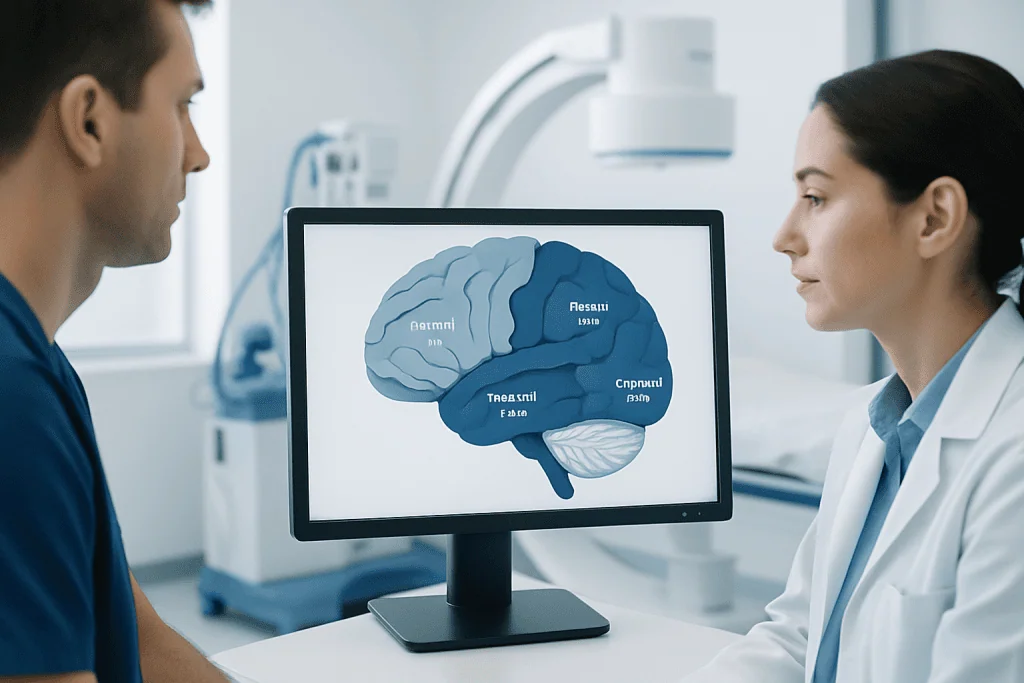
The frontal lobes, located behind the forehead, are involved in planning, decision-making, attention, judgment, behavior, emotional control, and voluntary movement. In many people, the left frontal lobe also contributes to speech production. This is one reason why damage there may affect both movement and communication.
The parietal lobes help the brain process touch, pain, temperature, and awareness of body position. They also support spatial understanding, coordination of complex tasks, reading, writing, and aspects of calculation. Problems in this region can make ordinary tasks feel confusing even when strength is preserved.
The temporal lobes, found near the ears, play an important role in hearing, language comprehension, memory, and emotional processing. The occipital lobes, at the back of the brain, are mainly responsible for vision. Although each lobe has a primary role, brain networks overlap, so symptoms may involve more than one function when neighboring or connected areas are affected.
- Frontal lobe: planning, behavior, movement, speech production
- Parietal lobe: sensation, spatial awareness, body position
- Temporal lobe: hearing, memory, language understanding
- Occipital lobe: visual processing
How symptoms differ by lobe
Frontal lobe problems may cause weakness on one side of the body, slowed thinking, poor judgment, personality change, reduced motivation, difficulty organizing tasks, or trouble producing speech. Some people appear unusually impulsive, emotionally flat, or less aware of social boundaries. Others may mainly notice problems with walking or hand coordination.
Parietal lobe disorders often affect sensation and body awareness. A person may have numbness, difficulty identifying an object by touch, trouble judging distances, or problems with reading, writing, dressing, or navigating familiar spaces. If the non-dominant parietal lobe is involved, a person may neglect one side of the body or environment.
Temporal lobe problems can lead to memory difficulties, trouble understanding spoken language, changes in emotion, unusual smells or sensations, and some types of seizures. Occipital lobe involvement may cause blurred vision, missing areas in the visual field, difficulty recognizing what is seen, or visual hallucinations. When symptoms are sudden, doctors may urgently consider causes such as stroke.
Some symptoms overlap because brain pathways are highly connected. For example, speech depends on several regions working together, and vision can be affected by problems in the eyes, optic nerves, or brain. A careful neurological assessment helps separate these possibilities.
What can affect a specific brain area?
Many conditions can disrupt one lobe or a network of brain regions. Common examples include stroke, traumatic brain injury, brain tumors, infections, inflammation, bleeding, reduced oxygen supply, and seizure disorders. The same underlying disease can look very different depending on which structures are involved.
For instance, a small lesion in a language area may cause major communication difficulties while leaving strength intact. In contrast, a problem in the motor cortex may primarily cause arm or leg weakness. A growth such as a brain tumor may produce gradual symptoms over time, while bleeding or an arterial blockage may cause sudden changes.
Risk factors depend on the cause. Vascular risk factors such as high blood pressure, diabetes, smoking, high cholesterol, and heart disease increase the risk of stroke. Falls, vehicle accidents, and sports injuries can raise the risk of head trauma. Some brain conditions are related to infection, immune disorders, or age-related changes, while others occur without a clear preventable cause.
How doctors diagnose brain-lobe related symptoms
Diagnosis begins with a detailed medical history and neurological examination. Doctors ask when symptoms started, whether they were sudden or gradual, and which abilities changed first. They also assess strength, sensation, reflexes, balance, speech, memory, coordination, and vision to identify patterns that may point to a particular lobe.
Brain imaging is often essential. A CT scan may be used quickly in emergencies, especially to look for bleeding or major structural problems. MRI gives more detailed information about brain tissue and is often helpful for tumors, smaller strokes, inflammation, or demyelinating disease. Depending on the situation, additional testing may include blood work, EEG for suspected seizures, visual testing, or neuropsychological assessment.
The goal is not only to confirm that the brain is involved, but also to find the exact cause. This matters because treatment for a seizure disorder, infection, or tumor is very different from treatment for a stroke or a traumatic injury. Timely evaluation can improve outcomes, especially when symptoms are new or worsening.
Treatment options depend on the cause and the area involved
There is no single treatment for “brain lobe symptoms” because management depends on the underlying diagnosis. A stroke may require urgent stroke treatment, while seizures may be managed with anti-seizure medicines and follow-up with a neurologist. Infections may need antimicrobial therapy, and inflammatory disorders may be treated with immune-based medicines.
If a structural problem is present, treatment may include surgery, radiation, or other targeted therapies. For example, some patients with masses or pressure effects may need brain tumor surgery or close neurosurgical monitoring. Head injuries may require observation, medication, rehabilitation, or an operation if there is swelling or bleeding.
Rehabilitation is often an important part of recovery, regardless of the cause. Speech and language therapy can help with communication problems. Physical and occupational therapy can support movement, balance, coordination, and daily function. Cognitive rehabilitation may help with attention, memory, planning, and problem-solving after brain injury or illness.
In complex cases, care is often provided by a multidisciplinary team. This may include neurology, neurosurgery, neuroradiology, rehabilitation specialists, psychologists, and speech therapists. Near the end of the care pathway, some international patients seek evaluation at centers such as Acibadem International, where multidisciplinary specialists in JCI-accredited hospitals diagnose and treat neurological conditions.
Prevention and self-care
Not every brain condition can be prevented, but some risks can be lowered. Protecting vascular health is especially important because it reduces the chance of stroke and other circulation-related brain injury. Managing blood pressure, cholesterol, and diabetes, avoiding tobacco, staying physically active, and following a balanced diet can all support brain health.
Injury prevention also matters. Wearing seat belts, using helmets when appropriate, reducing fall risk at home, and following workplace or sports safety guidance can lower the risk of head trauma. Good sleep, stress management, and regular medical follow-up may also help overall neurological well-being.
When symptoms are ongoing, self-care includes taking medicines exactly as prescribed, attending follow-up visits, and participating in rehabilitation. Families can help by keeping notes about symptom changes, triggers, or episodes such as confusion or staring spells. Sudden new symptoms should not be watched at home for too long; prompt medical advice is safer.
When to see a doctor urgently
Any sudden change in speech, facial drooping, arm or leg weakness, numbness, severe confusion, loss of balance, or sudden vision loss needs urgent medical attention. These symptoms can suggest a neurological emergency, especially stroke. Fast assessment is important because some treatments are time-sensitive.
Medical review is also important for new seizures, fainting with confusion afterward, a severe headache unlike usual headaches, persistent vomiting, progressive memory decline, or personality changes that interfere with daily life. Gradual symptoms are not always less serious; a slowly growing problem can still require timely diagnosis.
It is wise to seek medical advice whenever a new neurological symptom appears and does not quickly resolve, or when family members notice changes that the person does not recognize. Early evaluation helps identify whether symptoms are related to the brain, another medical condition, or a temporary problem that still needs attention.
Frequently asked questions
What are the four main brain lobes?
The four main lobes are the frontal, parietal, temporal, and occipital lobes. Each has different core functions, although they work together through complex brain networks.
Why do different brain areas cause different symptoms?
Different parts of the brain specialize in different tasks such as speech, movement, vision, memory, and sensation. When one area is affected, the symptoms often reflect the function of that region.
Can a frontal lobe problem change personality?
Yes, the frontal lobes help regulate judgment, behavior, emotional control, and motivation. Problems in this area may lead to impulsiveness, apathy, poor planning, or noticeable personality change.
Which lobe affects memory and language understanding?
The temporal lobe plays an important role in memory and in understanding spoken language, especially on the dominant side of the brain. Temporal lobe problems may also be linked to certain seizures or emotional changes.
Does vision always come from the eyes, or can the brain cause visual symptoms?
Vision depends on both the eyes and the brain. The occipital lobe processes visual information, so problems there can cause missing visual fields, trouble recognizing objects, or other visual disturbances even when the eyes themselves are not the main cause.
How do doctors know which brain area is affected?
Doctors combine the medical history, neurological examination, and imaging tests such as CT or MRI. The pattern of symptoms, together with test findings, helps show which region is involved and what may be causing it.
When should someone seek emergency care for possible brain symptoms?
Emergency care is needed for sudden weakness, speech difficulty, facial drooping, severe confusion, sudden vision loss, or a new seizure. These may signal a serious neurological problem that needs rapid evaluation.
References
- World Health Organization
- National Institute of Neurological Disorders and Stroke
- American Stroke Association
- National Health Service
- Mayo Clinic
This article is for general information only and is not a substitute for professional medical advice. Please consult a qualified doctor about your individual situation.
Explore treatments in Turkey — costs, top hospitals & a free quote
JCI-accredited · board-certified surgeons · reply within 24h
Add us as a Preferred Source to see more of our trusted health content across Google Search, AI Overviews and Discover.
Check your numbers in seconds
BMI, calories, due date, blood pressure and 30+ more clinical calculators — free, instant, doctor-reviewed ranges.