Wearable ECG Patch Monitors: What They Show and Who May Need One

Wearable ECG patch monitors record heart rhythm continuously while a person goes about daily life. They are often used for palpitations, dizziness, fainting, unexplained stroke evaluation, or monitoring known arrhythmias.
Key Takeaways
- Wearable ECG patch monitors record heart rhythm continuously while a person goes about daily life.
- They are often used for palpitations, dizziness, fainting, unexplained stroke evaluation, or monitoring known arrhythmias.
- Patch monitors show timing and pattern of heart rhythm changes, but results still need medical interpretation.
- Most people can wear them comfortably at home, though mild skin irritation or activity restrictions may occur.
- A normal result can also be useful because it may help rule out significant rhythm problems during symptoms.
Wearable ECG patch monitors are small adhesive devices that record the heart’s electrical activity over days or weeks. They can help doctors find intermittent rhythm problems, especially when symptoms do not happen during a standard office ECG.
Overview
Wearable ECG patch monitors are compact devices placed on the skin of the chest to record the heart’s electrical activity over a longer period than a standard electrocardiogram. Unlike a brief ECG performed in a clinic, a patch monitor can follow the heart continuously during everyday activities such as walking, sleeping, working, and resting. This longer recording window can make it easier to capture rhythm changes that happen only from time to time.
The device is usually lightweight, adhesive, and designed to be worn for several days or sometimes longer, depending on the type prescribed. It collects information about heart rate and rhythm and stores it for later review, or in some systems, transmits data for monitoring. For many people, it is a practical way to investigate symptoms that are difficult to catch during a short office visit.
Wearable ECG patch monitors are part of ambulatory heart rhythm testing. They are commonly used when a doctor suspects an arrhythmia, which means an abnormal heart rhythm, but needs more information about when it happens and how long it lasts. They may also be used after treatment for a rhythm disorder or as part of evaluation after certain events, such as unexplained fainting or stroke.
What a wearable ECG patch monitor can show
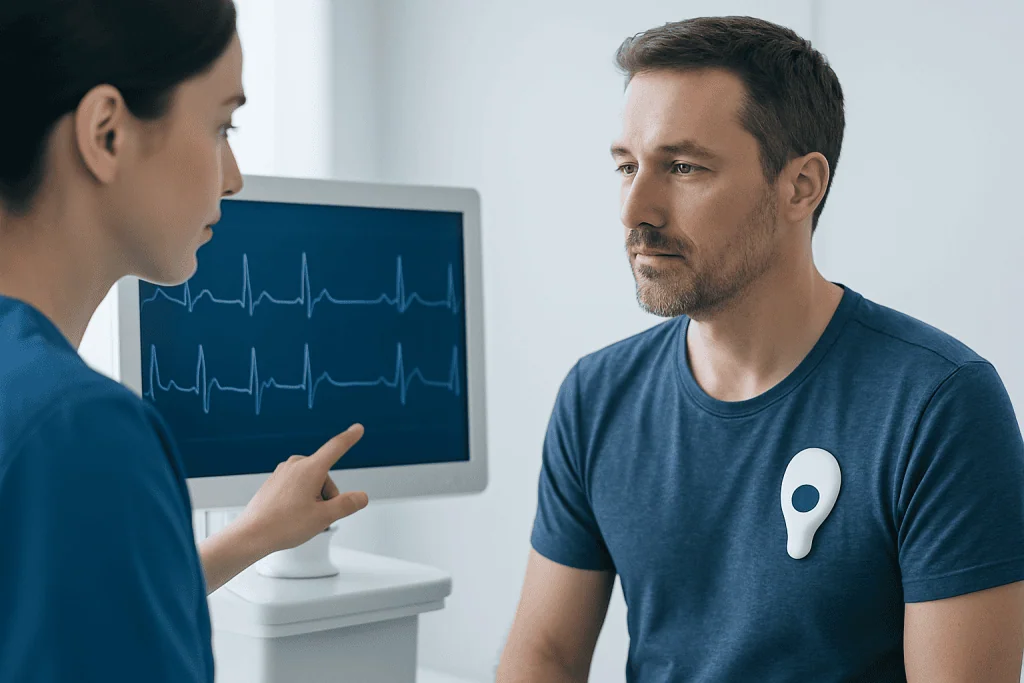
A wearable ECG patch monitor records the electrical signals that coordinate each heartbeat. From this, doctors can see whether the heart is beating too fast, too slowly, regularly, or irregularly. The monitor may reveal episodes of atrial fibrillation, extra beats, pauses, or other rhythm disturbances that might not appear during a routine clinic ECG.
These devices are especially helpful for intermittent symptoms. If a person feels palpitations one afternoon, dizziness at night, or brief lightheadedness during exercise, the timing of those symptoms can be compared with the recorded heart rhythm. This helps doctors determine whether the symptoms are linked to a rhythm problem or may have another cause.
Patch monitors generally show:
- Heart rate trends over time
- Irregular rhythms such as atrial fibrillation or flutter
- Fast rhythms from the upper or lower chambers of the heart
- Slow rhythms or pauses
- The relationship between symptoms and heart rhythm events
However, a patch monitor does not usually replace a full cardiac evaluation. It does not provide the same information as imaging tests that look at heart structure or blood flow. If needed, doctors may combine rhythm monitoring with other tests such as an echocardiogram, blood tests, or a cardiac check-up for a broader assessment.
Who may need one

A doctor may recommend a wearable ECG patch monitor for someone who has symptoms suggestive of an intermittent arrhythmia. Common reasons include palpitations, skipped beats, fluttering in the chest, dizziness, fainting, near-fainting, unexplained fatigue, or short episodes of shortness of breath. Because many rhythm problems come and go, monitoring over days can be more informative than a single ECG taken at one moment.
Patch monitoring may also be useful for people with known heart rhythm conditions who need follow-up after diagnosis or treatment. For example, it can help assess whether an arrhythmia is still occurring after medication changes or after rhythm procedures. It may also be used in selected people after a stroke when doctors want to look for episodes of atrial fibrillation that may not cause obvious symptoms.
People being evaluated for conditions such as atrial fibrillation or other rhythm disturbances may benefit most when symptoms are occasional rather than constant. If symptoms occur every day, a short-term monitor may be enough. If they happen less often, a doctor may suggest a longer monitoring option. The best choice depends on how often symptoms happen, the person’s medical history, and the urgency of the situation.
How it is used and what to expect
The patch is usually placed on clean, dry skin on the chest by a healthcare professional or with clear instructions for home application. Once attached, it begins recording automatically. Many devices are water-resistant, but not all are fully waterproof, so patients should follow the instructions carefully about showering, bathing, exercise, and skin care.
During the monitoring period, the person is usually asked to keep a symptom diary or use a button or app to mark episodes such as palpitations, dizziness, chest discomfort, or fainting. This information is valuable because it allows the doctor to compare symptoms with the ECG tracing at the same time. Daily activities are often encouraged unless a clinician advises otherwise, because the goal is to capture the heart’s usual rhythm in real life.
At the end of the wear period, the patch is returned or removed according to the device instructions. Specialists then analyze the recording for significant rhythm events, patterns, and symptom correlation. A mild rash or skin irritation can occur in some people because of the adhesive, but serious problems from wearing the patch are uncommon.
Results are typically reviewed alongside the patient’s history, physical examination, and any prior tests. If the patch shows a concerning rhythm problem, the next step may include consultation with a cardiologist, further testing, or treatment planning such as cardiology care.
How patch monitors differ from other heart rhythm tests
A standard ECG records only a few seconds of heart activity, so it is excellent for identifying rhythm problems that are present at the time of the test. Patch monitors, by contrast, are designed for longer-term recording. This makes them more useful when symptoms happen unpredictably. In many cases, they can be more convenient than traditional Holter monitors because they are smaller and do not usually have external wires.
Holter monitors also record continuously, often for 24 to 48 hours, and remain useful in many situations. Patch monitors may extend monitoring for longer periods, which can improve the chance of detecting less frequent events. Event recorders and implantable monitors are other options used when symptoms are very infrequent or when much longer observation is needed.
Wearable consumer devices such as smartwatches can sometimes alert people to possible rhythm irregularities, but they are not a substitute for medical-grade evaluation. A smartwatch rhythm alert may prompt formal testing, while a physician-prescribed patch monitor provides a more structured clinical record. If there is concern for an abnormal rhythm such as arrhythmia, a clinician can decide which monitoring method is most appropriate.
Understanding the results and possible next steps
A patch monitor result may show a clearly identifiable arrhythmia, a normal rhythm during symptoms, or only minor findings that are common and not dangerous. All of these outcomes can be useful. If a person’s symptoms occur while the monitor shows a normal rhythm, the doctor may look for other explanations such as dehydration, anxiety, blood pressure changes, medication effects, or non-cardiac causes.
If an arrhythmia is found, the significance depends on the type of rhythm, how long it lasts, how often it happens, and whether it causes symptoms or affects circulation. Some findings require only observation and follow-up. Others may lead to lifestyle advice, medication review, blood thinner assessment in atrial fibrillation, or referral for specialized treatment.
Treatment options vary widely. Some people may need only reassurance and periodic follow-up. Others may benefit from medicines, risk-factor control, or procedures such as catheter ablation if a persistent rhythm problem is confirmed. The monitor itself does not make the diagnosis in isolation; rather, it provides important evidence that helps the doctor build a safe and individualized care plan.
Self-care, limitations, and when to seek medical attention
While wearing a patch monitor, it helps to follow instructions closely and keep the device attached as recommended. People should note symptoms accurately, avoid applying lotions or oils near the adhesive unless told otherwise, and report any major skin irritation to the care team. Staying hydrated, taking regular medications as prescribed, and maintaining usual routines can improve the usefulness of the recording.
It is also important to understand the limits of the test. A patch monitor may miss a problem that does not occur during the recording period. Some rhythm findings can be difficult to interpret without other clinical information. For that reason, follow-up matters even if the result seems normal or symptoms improve.
Urgent medical care is needed for severe chest pain, persistent shortness of breath, fainting, weakness on one side, trouble speaking, or prolonged palpitations with feeling unwell. These symptoms should not wait for the monitor report. For non-urgent concerns, a doctor can advise whether another type of monitor, additional heart testing, or specialist review is needed.
For international patients who need evaluation of suspected rhythm disorders, Acibadem International’s multidisciplinary specialists in JCI-accredited hospitals diagnose and treat these conditions with coordinated cardiac care.
Frequently asked questions
Is a wearable ECG patch monitor the same as a regular ECG?
No. A regular ECG records the heart’s electrical activity for a very short time, usually during a clinic visit. A wearable ECG patch monitor records over a much longer period, which can help detect rhythm problems that happen only occasionally.
Can a patch monitor detect atrial fibrillation?
Yes, it can help detect episodes of atrial fibrillation and other irregular rhythms. Because it records continuously over days or longer, it may find episodes that do not happen during a standard office ECG.
Who is most likely to benefit from a wearable ECG patch monitor?
People with intermittent symptoms such as palpitations, dizziness, fainting, or unexplained episodes of rapid heartbeat may benefit most. It can also help monitor known arrhythmias or look for hidden rhythm problems after certain medical events, such as some strokes.
Is wearing an ECG patch monitor uncomfortable?
Most people tolerate it well because it is small and designed for daily use. The most common issue is mild skin irritation from the adhesive, and specific activity or bathing instructions may vary by device.
What happens if the monitor results are normal?
A normal result can still be very helpful. If symptoms occurred while the rhythm remained normal, the doctor may consider other causes and decide whether any further testing is needed.
Can a smartwatch replace a doctor-prescribed ECG patch monitor?
Not usually. Consumer wearable devices may provide useful alerts, but a medical patch monitor offers more structured clinical recording and interpretation. A doctor can advise which test is best for the symptoms and health history.
References
- American Heart Association
- National Heart, Lung, and Blood Institute
- European Society of Cardiology
- Centers for Disease Control and Prevention
This article is for general information only and is not a substitute for professional medical advice. Please consult a qualified doctor about your individual situation.
Explore treatments in Turkey — costs, top hospitals & a free quote
JCI-accredited · board-certified surgeons · reply within 24h
Add us as a Preferred Source to see more of our trusted health content across Google Search, AI Overviews and Discover.
Check your numbers in seconds
BMI, calories, due date, blood pressure and 30+ more clinical calculators — free, instant, doctor-reviewed ranges.

More from the Health Library



Related Specialists

Dt. Alen Palancıoğlu
Oral Dental & Maxillofacial Surgery
Prof. Dr. Coşkun Çeltik
Pediatrics
Asst. Prof. Dr. Gökhan Arslanhan
Cardiovascular Surgery
Dr. Aykut Türken
Orthopedic Surgery & Traumatology