Sharp pulling pain in belly button female: Symptoms, Causes, and Treatment — Complete Patient Guide

Pain near the belly button in women has many possible causes, including muscle strain, digestive conditions, hernia, urinary issues, and gynecologic conditions. Sudden severe pain, fever, vomiting, a painful bulge, or pain that moves or worsens needs prompt medical evaluation.
Key Takeaways
- Pain near the belly button in women has many possible causes, including muscle strain, digestive conditions, hernia, urinary issues, and gynecologic conditions.
- Sudden severe pain, fever, vomiting, a painful bulge, or pain that moves or worsens needs prompt medical evaluation.
- Diagnosis usually depends on history, a physical exam, and sometimes blood tests, urine tests, ultrasound, or CT imaging.
- Treatment depends on the cause and may range from rest and hydration to medication or surgery.
- Persistent, recurrent, or unexplained belly button pain should not be self-diagnosed.
Sharp pulling pain in belly button female may be caused by something relatively minor, such as a strained abdominal muscle or constipation, but it can also be linked to a hernia, appendix irritation, or a gynecologic problem. The pattern of pain, related symptoms, and a medical assessment help identify the cause and guide treatment.
Overview: what sharp pulling pain in the belly button area can mean
Sharp pulling pain in belly button female is a symptom rather than a diagnosis. In many cases, it comes from the abdominal wall itself, such as a strained muscle, irritated connective tissue, or a small hernia near the navel. It can also come from organs inside the abdomen, including the intestines, appendix, bladder, or reproductive organs.
The feeling is often described as pulling, tugging, stabbing, or tight pain around or just behind the belly button. Some women notice it only with movement, coughing, stretching, or exercise. Others feel it together with bloating, nausea, bowel changes, urinary symptoms, or pelvic discomfort, which can offer clues about the source.
Because several body systems meet in this area, the exact location does not always point to one single condition. Pain can begin around the belly button and later shift elsewhere, as may happen with appendicitis. For that reason, doctors look at the full picture, not just the spot where the pain is felt.
How the pain may feel and symptoms that can happen with it
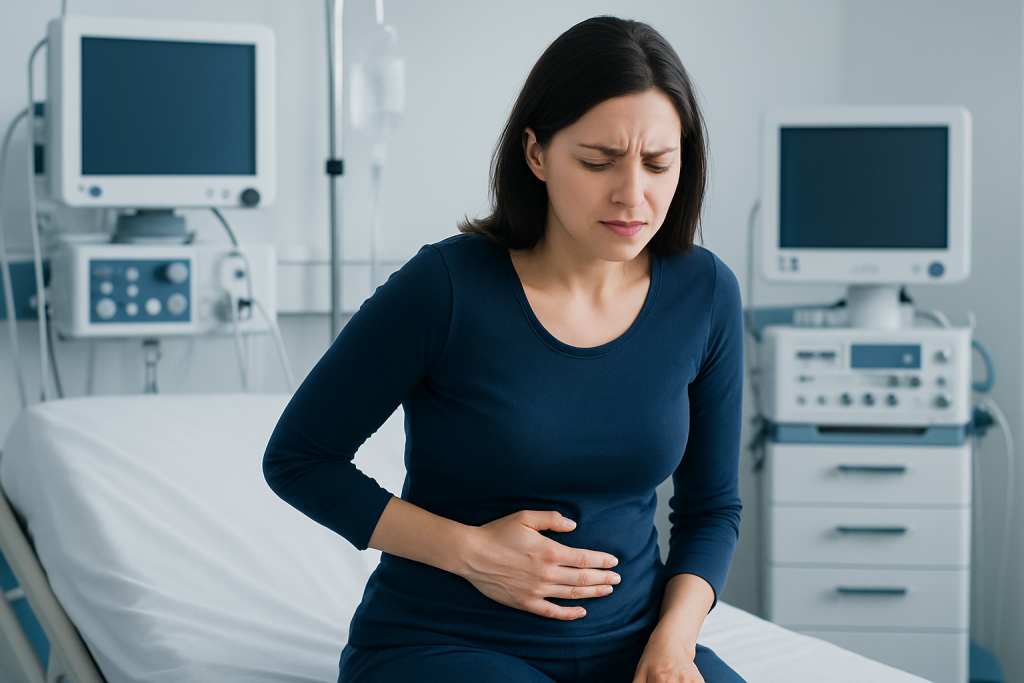
The quality and timing of pain often help narrow down possible causes. A pulling sensation that worsens when getting out of bed, lifting, twisting, or exercising may suggest an abdominal wall problem. Cramping or wave-like pain with bloating may point more toward the intestines. A tender lump at or near the belly button raises concern for an umbilical hernia.
Digestive symptoms are common companions. These may include constipation, diarrhea, nausea, vomiting, gas, loss of appetite, or pain after eating. Some women feel pressure behind the navel, while others notice pain spreading across the lower abdomen. Conditions such as appendicitis can start with vague central abdominal pain before becoming more focused.
Gynecologic or urinary symptoms can also occur. Period-related pain, unusual vaginal bleeding, pelvic pressure, painful urination, urinary urgency, or back pain may suggest that the source is not the bowel but the bladder, ovaries, uterus, or surrounding tissues. In some cases, women with endometriosis can feel abdominal or pelvic pain that seems to center near the belly button, especially around menstruation.
- Pain with movement or coughing
- Bloating or constipation
- Nausea or vomiting
- A visible or painful bulge near the navel
- Fever or feeling unwell
- Pelvic pain, menstrual changes, or urinary symptoms
Common causes in women
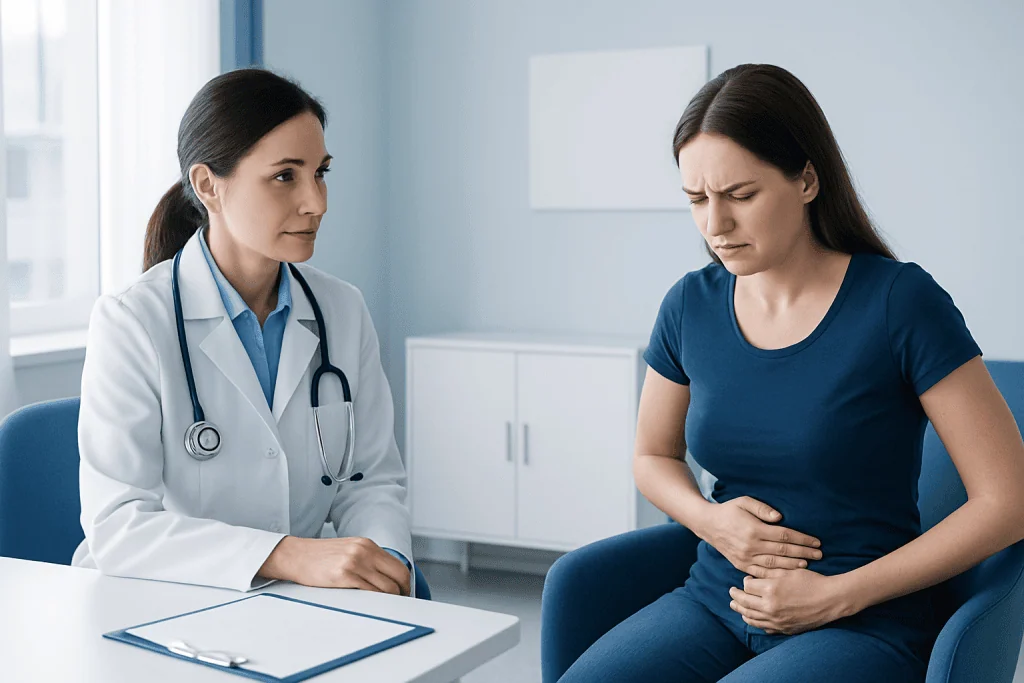
One of the most common explanations is abdominal wall strain. Exercise, heavy lifting, coughing, sudden twisting, or even repetitive daily activity can irritate muscles and connective tissue around the navel. The pain is often localized, may feel sharp or pulling, and usually becomes more noticeable when the abdominal muscles are engaged.
Digestive causes are also frequent. Constipation, trapped gas, viral stomach illness, and irritable bowel syndrome may cause central abdominal discomfort. More specific problems can include small bowel inflammation, early appendicitis, or bowel obstruction. An umbilical hernia can produce pain or a dragging feeling, especially when standing, straining, or after meals.
In women, gynecologic causes should also be considered. Ovarian cysts, ovulation pain, fibroids, pelvic inflammatory conditions, and endometriosis may cause pain that seems to come from the belly button area, especially if pelvic nerves are involved or the discomfort radiates. Pregnancy can change abdominal pressure and reveal or worsen a hernia, and a prior abdominal surgery can sometimes lead to scar-related discomfort or internal adhesions.
Less commonly, the pain may come from a urinary tract problem such as a bladder infection or kidney stone, or from skin and soft tissue around the navel if there is irritation, infection, or inflammation. Persistent or unexplained pain deserves a proper evaluation rather than assuming it is only digestive.
Risk factors and clues that help identify the source
Certain patterns make some causes more likely. Recent exercise, lifting, core workouts, chronic coughing, or constipation increase pressure inside the abdomen and can contribute to muscle strain or hernia. Prior pregnancy, weight changes, or abdominal surgery may also weaken the abdominal wall or change how tissues are supported.
Timing matters as well. Pain related to the menstrual cycle can suggest ovulation, endometriosis, or another gynecologic cause. Pain after eating may point toward digestive irritation or bowel spasm. Pain with urination or frequent urination can make urinary causes more likely. If the pain started near the belly button and then moved to the lower right abdomen, appendicitis becomes a more important concern.
Doctors also pay attention to what makes the pain better or worse. Pain triggered by movement but easing at rest often suggests the abdominal wall. Pain with fever, vomiting, or inability to pass stool or gas raises concern for a more urgent abdominal problem. A new bulge, especially one that becomes hard, tender, or difficult to push back, may mean a hernia needs rapid assessment.
How doctors diagnose belly button pain
Diagnosis starts with a careful history and physical examination. A clinician will ask where the pain began, how it feels, how long it lasts, what triggers it, and whether there are digestive, urinary, gynecologic, or systemic symptoms such as fever. Menstrual history, pregnancy possibility, recent physical activity, and prior surgeries are often important parts of the assessment.
During the exam, the doctor may gently press on the abdomen, check for guarding, tenderness, swelling, or a hernia, and assess whether pain increases when the abdominal muscles tighten. This helps distinguish pain from the abdominal wall from pain arising deeper inside the abdomen. Depending on the situation, a pelvic examination may also be considered.
Tests are chosen based on the suspected cause. These may include blood tests, a urine test, and a pregnancy test when relevant. Imaging can be especially helpful: an ultrasound may evaluate hernias, ovaries, uterus, or the gallbladder, while CT imaging may help identify appendicitis, bowel problems, or other abdominal conditions. If symptoms suggest a pelvic or gynecologic issue, ultrasound evaluation is often a first step.
Treatment options depend on the cause
There is no one treatment for sharp pulling pain in the belly button area because management depends entirely on the diagnosis. Mild abdominal wall strain may improve with rest, avoiding heavy lifting, hydration, and short-term supportive care advised by a doctor. Digestive causes such as constipation may improve with fluids, dietary adjustments, and appropriate medical guidance.
When a hernia is causing pain, treatment depends on its size, symptoms, and risk of complications. Some hernias can be monitored, but painful or enlarging hernias may need surgical repair. If appendicitis, bowel obstruction, or a gynecologic emergency is suspected, urgent treatment is needed. In selected cases, evaluation by specialists in general surgery may be appropriate.
Gynecologic causes are treated according to the condition found. For example, ovarian cysts may be monitored or treated, and endometriosis treatment may include medication or procedural options. Urinary infections are treated differently from bowel problems, which is why self-treatment without a diagnosis is not ideal if pain is persistent, recurrent, or severe.
Near the end of the care pathway, some patients may benefit from coordinated assessment by multiple specialists. Acibadem International’s multidisciplinary specialists and JCI-accredited hospitals diagnose and treat abdominal and pelvic conditions for international patients when further evaluation is needed.
Self-care and prevention
Not every episode of belly button pain can be prevented, but some steps may lower risk. Gradual exercise progression, using proper lifting technique, and avoiding sudden strain on the core muscles can help reduce abdominal wall injuries. Managing constipation with fluids, fiber, regular movement, and medical advice when needed may also reduce abdominal pressure and discomfort.
It also helps to notice symptom patterns. Keeping a brief record of when pain occurs, whether it relates to meals, bowel habits, exercise, or the menstrual cycle, can make medical visits more useful. Women who have recurrent pain around periods or repeated digestive symptoms should discuss these patterns with a clinician rather than assuming they are normal.
Self-care should stay within safe limits. Warmth, rest, and hydration may help mild discomfort, but persistent or worsening pain should not be masked or ignored. It is especially important not to delay care if there is severe tenderness, repeated vomiting, fever, faintness, or a new painful bulge.
When to seek medical care
Medical care is recommended if sharp pulling pain in the belly button area lasts more than a short time, keeps returning, interferes with daily activities, or is associated with digestive, urinary, or gynecologic symptoms. Even if the pain is not severe, recurrent episodes deserve an explanation, especially if they are new or changing.
Prompt or urgent evaluation is important if the pain is severe, rapidly worsening, or accompanied by fever, vomiting, a hard or tender abdominal lump, inability to pass stool or gas, fainting, blood in stool, unusual vaginal bleeding, or possible pregnancy-related concerns. Pain that starts around the belly button and then shifts to the lower right abdomen should also be assessed quickly.
Because the same symptom can reflect anything from muscle strain to a condition needing surgery, a qualified doctor is the safest source of diagnosis and treatment advice. Early evaluation can reduce uncertainty and help prevent complications.
Frequently asked questions
Is sharp pulling pain in the belly button area always serious?
No. It can be caused by relatively minor issues such as muscle strain, constipation, or gas. However, it can also signal a hernia, appendicitis, or a gynecologic problem, so persistent, severe, or worsening pain should be evaluated.
Can ovulation or periods cause pain near the belly button?
Yes, some women feel pain that radiates into the central abdomen during ovulation or menstruation. Conditions such as endometriosis can also cause pain that seems to involve the belly button area, especially if symptoms follow a cycle.
What does a belly button hernia feel like?
An umbilical hernia may feel like pressure, pulling, aching, or tenderness at or near the navel. Some women also notice a bulge that becomes more obvious when standing, coughing, or straining.
Should I go to the emergency department for belly button pain?
Emergency care is appropriate if the pain is severe, sudden, or associated with fever, repeated vomiting, fainting, a painful bulge, inability to pass stool or gas, or possible pregnancy complications. These features can suggest a condition that needs urgent treatment.
How is the cause of belly button pain diagnosed in women?
Doctors usually begin with a history and physical examination, then choose tests based on the likely cause. These may include blood work, urine testing, pregnancy testing, ultrasound, or CT imaging.
Can exercise cause a sharp pulling pain around the belly button?
Yes. Overuse, core workouts, twisting, lifting, or sudden movement can strain abdominal muscles or connective tissue and cause localized pulling pain. If pain is persistent, severe, or associated with a bulge, it should still be checked.
References
- National Institute of Diabetes and Digestive and Kidney Diseases
- American College of Obstetricians and Gynecologists
- MedlinePlus
- National Health Service
- Mayo Clinic
This article is for general information only and is not a substitute for professional medical advice. Please consult a qualified doctor about your individual situation.
Persistent digestive symptoms? Get evaluated in Turkey
JCI-accredited · board-certified surgeons · reply within 24h
Add us as a Preferred Source to see more of our trusted health content across Google Search, AI Overviews and Discover.
Check your numbers in seconds
BMI, calories, due date, blood pressure and 30+ more clinical calculators — free, instant, doctor-reviewed ranges.