Center head headache: A Complete Medical Guide for Patients

A center head headache is a symptom, not a diagnosis, and several different conditions can cause it. Common causes include tension-type headache, migraine, sinus problems, dehydration, stress, and eye strain.
Key Takeaways
- A center head headache is a symptom, not a diagnosis, and several different conditions can cause it.
- Common causes include tension-type headache, migraine, sinus problems, dehydration, stress, and eye strain.
- Sudden severe headache, headache with weakness or confusion, or headache after head injury needs urgent medical care.
- Diagnosis is based on headache pattern, medical history, examination, and sometimes imaging or other tests.
- Many headaches improve with hydration, sleep, posture changes, stress management, and clinician-guided treatment.
A center head headache usually refers to pain felt in the middle, top, or central area of the head. It is commonly linked to tension-type headache, migraine, sinus pressure, dehydration, eye strain, or poor sleep, but the pattern, severity, and associated symptoms help doctors identify when it needs urgent attention.
What a Center Head Headache Usually Means
A center head headache usually means pain that is felt in the middle of the head, at the top of the skull, behind the forehead, or as a pressure-like sensation that seems centrally located. This description can fit several common headache types, so the exact cause depends less on the location alone and more on how the pain feels, how long it lasts, what triggers it, and whether other symptoms happen at the same time.
In many people, this kind of headache is related to tension, muscle tightness, poor sleep, stress, dehydration, or prolonged screen use. In others, it may be part of a migraine pattern, sinus pressure, or less commonly an underlying neurological problem. Because “center head headache” is not a formal medical diagnosis, doctors use the full symptom picture to decide whether the headache is likely harmless and temporary or whether it needs further evaluation.
Most headaches are not dangerous, and many improve with rest, fluids, regular meals, and simple pain relief recommended by a clinician. Still, a new headache that is unusually severe, rapidly worsening, or paired with symptoms such as fever, weakness, confusion, fainting, or vision loss should never be ignored.
Common Symptoms and How the Pain May Feel
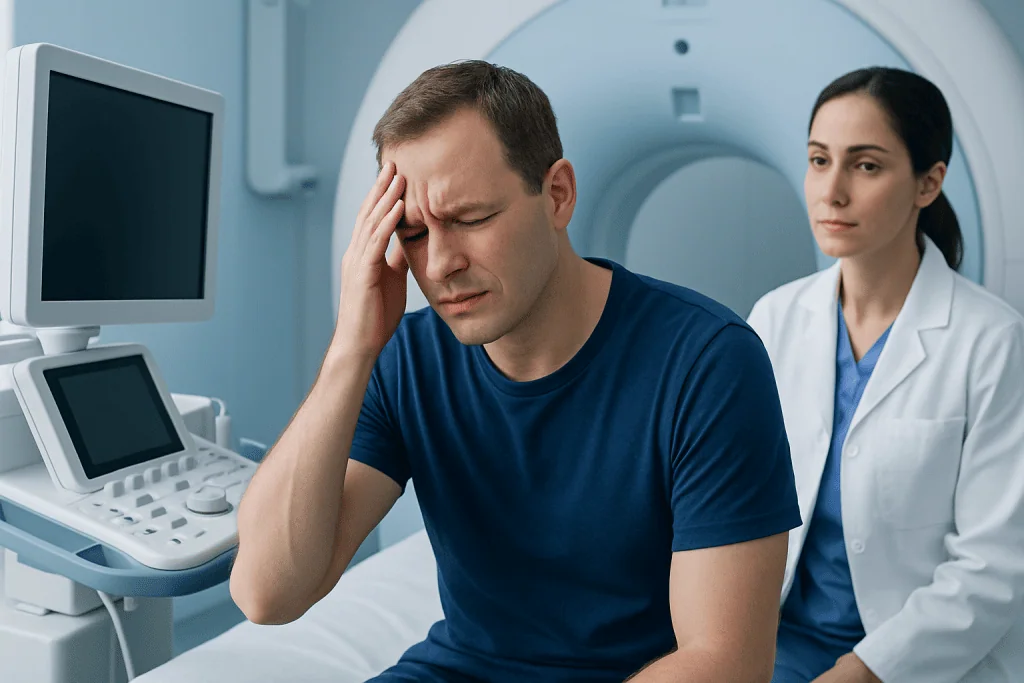
People describe a center head headache in different ways. Some feel a dull pressure or band-like tightness across the middle of the head. Others describe throbbing pain at the top or front of the head, heaviness behind the eyes, or pressure that worsens when bending forward. The quality of the pain often gives useful clues about the cause.
Tension-type headaches are often felt as steady pressure rather than pulsing pain. Migraines may feel throbbing or pounding and can come with nausea, light sensitivity, sound sensitivity, or visual changes. Sinus-related discomfort may include facial pressure, nasal congestion, and worsening pain when leaning down. Eye strain may create forehead or central head discomfort after reading or screen use.
Symptoms that can help doctors narrow the cause include:
- Whether the pain is dull, tight, throbbing, sharp, or stabbing
- How long the headache lasts and how often it returns
- Whether it starts after stress, missed meals, sleep loss, exercise, or screen time
- Associated symptoms such as nausea, congestion, fever, neck stiffness, dizziness, or visual disturbance
- Whether daily activities become difficult during the headache
Keeping track of these details can make diagnosis much easier, especially if headaches are recurring.
Possible Causes and Risk Factors

The most common cause of a center head headache is tension-type headache. This can be triggered by stress, anxiety, jaw clenching, poor posture, fatigue, or prolonged sitting at a desk. Muscles in the scalp, neck, and shoulders may become tight, creating pressure that feels central or widespread. Dehydration, hunger, and lack of sleep can make this more likely.
Migraine is another frequent cause. Even though migraines are often thought of as one-sided, they can also affect the center or entire head. Some people have warning symptoms called aura, while others do not. Hormonal changes, certain foods, bright light, strong smells, disrupted sleep, and stress are common migraine triggers. A related condition, migraine, may need medical assessment if attacks are frequent or disabling.
Sinus inflammation, allergies, and respiratory infections can also cause pain in the center of the head, especially around the forehead. In these cases, facial pressure, nasal blockage, thick discharge, cough, or fever may also be present. Less commonly, a headache can arise from high blood pressure during an acute spike, medication overuse, eye strain, temporomandibular joint problems, or issues involving the brain and nerves. Rare but serious causes include bleeding around the brain, infection, stroke, or a mass lesion, though these usually produce additional warning signs.
Risk factors for recurrent headaches include chronic stress, irregular sleep, poor hydration, long hours of screen exposure, untreated vision problems, frequent use of pain relievers, smoking, excessive alcohol intake, and a family history of migraine or other primary headache disorders.
How Doctors Diagnose the Cause
Diagnosis starts with a careful medical history. A doctor will ask when the center head headache began, how often it happens, where it is felt, how severe it is, and what makes it better or worse. They will also ask about medications, recent illnesses, head injury, sleep patterns, caffeine intake, and any history of migraines or neurological disease.
A physical and neurological examination is often the next step. This may include checking blood pressure, temperature, neck movement, vision, reflexes, muscle strength, sensation, coordination, and balance. The goal is to identify whether the headache behaves like a common primary headache or whether there are signs suggesting a secondary cause that needs more urgent investigation.
If the headache pattern is new, unusual, severe, or accompanied by warning symptoms, imaging tests may be recommended. Depending on the situation, this may involve MRI or brain CT scan to look for structural causes. Blood tests may be used if infection, inflammation, metabolic changes, or other systemic illness is suspected. If headaches seem linked to chronic sinus disease or another condition, further targeted evaluation may be advised.
For recurring but non-urgent headaches, a headache diary can be extremely helpful. Recording the date, time, triggers, food intake, sleep quality, menstrual timing, stress level, and response to treatment can help identify patterns and guide management.
Treatment Options for Relief and Long-Term Control
Treatment depends on the underlying cause. For occasional tension-type headache, many people improve with hydration, regular meals, rest, gentle stretching, stress reduction, and clinician-advised pain relief. Attention to posture, ergonomic work setup, and reducing jaw clenching can also help. If headaches are frequent, a doctor may explore whether sleep problems, anxiety, medication overuse, or another contributing issue is present.
If migraine is suspected, treatment often involves both immediate symptom relief and prevention. Acute migraine therapies aim to reduce pain and associated symptoms early in an attack, while preventive strategies are considered when headaches occur often or interfere with daily life. Patients who have persistent or severe symptoms may benefit from assessment in a dedicated headache treatment program.
When sinus disease is involved, management may focus on treating inflammation, allergy triggers, or infection when appropriate. Correcting vision problems can help if eye strain is a major factor. If a headache is linked to a structural, vascular, or neurological issue, treatment is directed at that cause. In rare cases where imaging suggests a more serious problem, specialists may recommend advanced neurological care such as neurology evaluation.
It is best not to self-medicate frequently without guidance. Overuse of pain relievers can itself lead to rebound headaches, creating a cycle of recurring pain. A doctor can help choose a safe approach based on age, health conditions, and the specific headache pattern.
Prevention and Self-Care Strategies
Many center head headaches can be reduced by addressing everyday triggers. Good hydration, regular meals, consistent sleep, and routine physical activity support the body’s normal pain-regulation systems. Taking breaks from screens, adjusting monitor height, and relaxing the shoulders and neck during desk work may lessen tension-related pain.
Stress management also matters. Techniques such as deep breathing, mindfulness, stretching, yoga, and regular downtime can reduce headache frequency in some people. People who notice headaches after certain foods, alcohol, skipped caffeine, or bright environments may benefit from identifying and limiting those triggers.
Helpful self-care habits include:
- Drinking enough fluids throughout the day
- Maintaining a regular sleep-wake schedule
- Eating balanced meals without long gaps
- Limiting excessive caffeine and alcohol
- Using screen breaks and proper posture during work
- Keeping a headache diary to track patterns
If headaches are becoming more frequent, stronger, or harder to control, self-care alone may not be enough. Professional evaluation is important to confirm the diagnosis and avoid missing a treatable cause.
When to Seek Medical Care
A center head headache should be medically assessed if it is new and severe, keeps returning, or changes from a person’s usual pattern. It is also wise to seek care if the headache interferes with work, sleep, or daily function, or if over-the-counter measures are no longer helping. Recurrent headaches deserve attention even when they are not emergencies, because effective treatment often depends on identifying the exact type.
Urgent medical care is needed if the headache starts suddenly and reaches maximum intensity within moments, follows a head injury, or comes with fainting, confusion, seizure, weakness, numbness, slurred speech, chest pain, stiff neck, persistent vomiting, fever, or significant visual change. These symptoms can point to a serious underlying problem that needs rapid evaluation.
Headaches during pregnancy, headaches in people with cancer or weakened immunity, and headaches that wake a person from sleep should also be discussed promptly with a doctor. If a clinician recommends specialist assessment, modern centers can coordinate imaging and neurological evaluation efficiently. Acibadem International’s multidisciplinary specialists and JCI-accredited hospitals diagnose and treat headache-related conditions for international patients when further evaluation is needed.
Frequently asked questions
Is a center head headache usually serious?
Most center head headaches are not caused by a dangerous condition. Common reasons include tension, migraine, dehydration, sinus pressure, and eye strain. However, sudden severe headache or headache with neurological symptoms should be assessed urgently.
Can stress cause pain in the middle of the head?
Yes, stress is a common trigger for tension-type headaches. These headaches often feel like pressure or tightness across the center, forehead, or top of the head. Poor sleep and muscle tension in the neck and shoulders can make them worse.
How can someone tell if it is migraine or a tension headache?
Migraine often causes throbbing pain and may come with nausea, sensitivity to light or sound, or visual changes. Tension headaches are more likely to cause dull, steady pressure without nausea. Because symptoms can overlap, a doctor may be needed to confirm the type.
When should a headache be checked by a doctor?
A doctor should assess headaches that are new, frequent, worsening, or different from the usual pattern. Medical review is also important if the headache affects daily life, keeps returning, or requires frequent pain medicine. Emergency care is needed for sudden severe headache or headache with weakness, confusion, fever, seizure, or vision loss.
Can dehydration cause a center head headache?
Yes, dehydration can trigger headache and may cause a dull, diffuse, or central pressure sensation. It may happen after poor fluid intake, sweating, illness, or skipping meals. Drinking fluids and correcting the underlying cause often help, but persistent symptoms should be evaluated.
What tests are used for recurring center head headaches?
Many recurring headaches can be diagnosed from the history and physical examination alone. If the pattern is unusual or warning signs are present, a doctor may recommend imaging such as MRI or CT, along with other tests based on the symptoms. A headache diary is also useful for identifying triggers and patterns.
References
- World Health Organization
- National Institute of Neurological Disorders and Stroke
- American Migraine Foundation
- Mayo Clinic
- National Health Service
This article is for general information only and is not a substitute for professional medical advice. Please consult a qualified doctor about your individual situation.
Explore treatments in Turkey — costs, top hospitals & a free quote
JCI-accredited · board-certified surgeons · reply within 24h
Add us as a Preferred Source to see more of our trusted health content across Google Search, AI Overviews and Discover.
Check your numbers in seconds
BMI, calories, due date, blood pressure and 30+ more clinical calculators — free, instant, doctor-reviewed ranges.