Normal Hemoglobin by Age: Charts, Ranges, and What Your Numbers Mean

Hemoglobin is the oxygen-carrying protein inside red blood cells, measured as part of a complete blood count. Typical hemoglobin ranges change through infancy, childhood, adulthood, and later life.
Key Takeaways
- Hemoglobin is the oxygen-carrying protein inside red blood cells, measured as part of a complete blood count.
- Typical hemoglobin ranges change through infancy, childhood, adulthood, and later life.
- A result slightly outside the reference range does not always mean disease; the trend and the person’s symptoms matter.
- Low hemoglobin may suggest anemia, while high hemoglobin can be linked to dehydration, smoking, altitude, or certain medical conditions.
- Follow-up testing may include iron studies, vitamin B12 and folate levels, kidney tests, or evaluation for blood loss.
Normal hemoglobin by age differs in infants, children, adults, and older adults, and adult ranges also vary by sex. A single result should be interpreted in context, because hydration, altitude, pregnancy, smoking, and underlying health conditions can all affect the number.
Normal hemoglobin by age: quick reference chart
Normal hemoglobin by age is best understood as a set of reference ranges rather than one universal number. Hemoglobin is the protein in red blood cells that carries oxygen through the body. Laboratories may use slightly different reference intervals, but the age- and sex-based ranges below are commonly used for general guidance.
These ranges help answer the question quickly, but they are not meant to diagnose a condition on their own. A doctor usually interprets hemoglobin together with symptoms, medical history, altitude of residence, pregnancy status, hydration, smoking history, and the rest of the complete blood count.
- Newborns: about 14 to 24 g/dL
- Infants, 1 to 2 months: about 10 to 20 g/dL
- Infants, 2 to 6 months: about 10 to 17 g/dL
- Children, 6 months to 6 years: about 11 to 14 g/dL
- Children, 6 to 18 years: about 11.5 to 15.5 g/dL
- Adult women: about 12 to 16 g/dL
- Adult men: about 13.5 to 17.5 g/dL
- Older adults, 65+: often similar to adult ranges, though some healthy older people may be near the lower end
Because ranges overlap, there is no strict cutoff that applies equally to every person in every setting. The most useful interpretation asks whether the value is appropriate for the person’s age and sex, whether it has changed over time, and whether there are symptoms such as fatigue, shortness of breath, paleness, dizziness, or headaches.
What hemoglobin means and why it changes with age
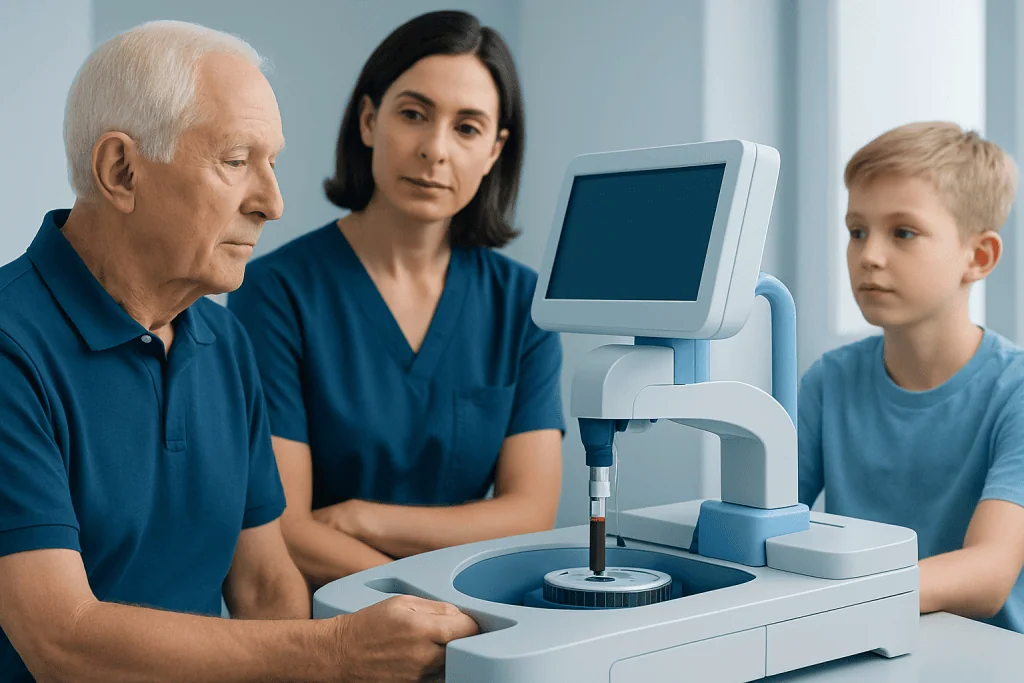
Hemoglobin is a protein rich in iron that gives red blood cells their ability to transport oxygen from the lungs to tissues and bring carbon dioxide back for removal. If hemoglobin is too low, the body may not deliver oxygen as efficiently, which can lead to tiredness, reduced exercise tolerance, weakness, or a fast heartbeat. If it is higher than expected, the blood may be more concentrated or the body may be making extra red blood cells.
Age matters because the blood system develops rapidly in early life. Newborns usually have higher hemoglobin levels than older infants because they are adapting from life in the womb to breathing air. In the first months after birth, hemoglobin normally falls as this transition settles. Childhood values then rise gradually with growth.
In adulthood, sex becomes an important factor. Men often have slightly higher hemoglobin than women because of hormonal differences and because menstruation can contribute to lower iron stores in some women. During pregnancy, hemoglobin may fall somewhat because blood plasma expands. In older age, hemoglobin does not automatically become abnormal, but chronic illness, nutritional deficiencies, kidney disease, and medication effects become more common and can influence results.
How to interpret hemoglobin by age bracket

Infants and young children: A lower hemoglobin result in infancy is not always a sign of illness, since a natural post-birth decline is expected. In toddlers and young children, however, persistently low hemoglobin may raise the possibility of iron deficiency, especially if diet is limited or growth is rapid. Doctors may also look for signs of infection, inherited blood conditions, or less commonly chronic disease.
School-age children and teens: Reference ranges widen as children grow. During adolescence, growth spurts and menstruation can influence values. If a teenager has fatigue, pale skin, headaches, poor concentration, or reduced sports performance, a doctor may evaluate for iron deficiency, nutritional issues, or blood loss. Related reading on anemia can help explain what low hemoglobin may mean.
Adults: In adults, a result slightly below range often prompts a search for iron deficiency, vitamin B12 or folate deficiency, chronic inflammation, kidney disease, or bleeding from the digestive tract or heavy menstrual periods. A higher-than-expected result may be seen with dehydration, smoking, living at high altitude, sleep-related breathing problems, or certain bone marrow disorders. A test alone cannot identify the cause.
Adults over 65: Healthy older adults may have values near the lower end of the adult range, but low hemoglobin should not automatically be dismissed as part of aging. It may reflect nutritional deficiency, chronic kidney disease, inflammation, occult blood loss, or other conditions that merit attention. Trends over time are especially useful in this age group.
Why hemoglobin can be low or high
Low hemoglobin is commonly associated with anemia, but anemia itself has many causes. Iron deficiency is one of the most frequent, often related to low iron intake, pregnancy, blood donation, heavy menstrual bleeding, or blood loss from the gastrointestinal tract. Other causes include vitamin B12 deficiency, folate deficiency, chronic kidney disease, inflammatory conditions, inherited disorders, bone marrow conditions, and some medicines.
High hemoglobin can have simpler explanations as well. Dehydration can make the blood more concentrated and temporarily raise the value. Smoking and living at higher altitude may also increase hemoglobin because the body adapts to lower oxygen availability. Less commonly, high values may be linked to lung disease, heart disease, sleep apnea, or disorders that increase red blood cell production.
Short-term factors can shift a result without indicating a serious problem. Recent fluid loss, vigorous exercise, pregnancy, recent bleeding, acute illness, and even differences between laboratories can affect interpretation. That is why doctors usually consider the full blood count, including hematocrit, mean corpuscular volume, and red cell count, rather than looking at hemoglobin in isolation.
When symptoms and blood test patterns suggest a specific issue, the next step may include targeted evaluation or treatment such as iron deficiency anemia treatment or broader assessment by a hematology team for less common blood disorders.
How hemoglobin is tested and what other results matter
Hemoglobin is usually measured as part of a complete blood count, often called a CBC. This is a routine blood test performed from a small blood sample. In many cases, no special preparation is needed, although a doctor may give instructions if other tests are being done at the same time.
The CBC provides context that helps explain whether a hemoglobin result is likely to reflect iron deficiency, blood loss, inflammation, or another process. Important companion measures include hematocrit, red blood cell count, mean corpuscular volume, mean corpuscular hemoglobin, white blood cell count, and platelet count. For example, a low hemoglobin with small red blood cells can suggest iron deficiency, while large red blood cells may point toward vitamin B12 or folate deficiency.
If a result is abnormal, doctors may order follow-up tests such as ferritin and iron studies, vitamin B12 and folate levels, kidney function tests, markers of inflammation, stool testing for hidden blood, or tests for inherited blood conditions. In selected cases, especially when symptoms are unexplained or several blood counts are abnormal, referral for hematology evaluation may be appropriate.
One result is only a snapshot. Repeating the test can be useful when dehydration, recent illness, pregnancy, menstruation, or laboratory variation may have affected the first measurement. Looking at the trend over weeks or months often gives a clearer picture than relying on one number alone.
What can help support healthy hemoglobin levels
The best approach depends on the cause of the abnormal result. For people with iron deficiency, improving iron intake may help, but the source of the deficiency should still be identified. Iron-rich foods include lean meats, legumes, lentils, beans, dark leafy greens, and iron-fortified cereals. Vitamin C-rich foods can improve iron absorption when eaten with meals.
Not every low hemoglobin result should be treated with supplements without medical advice. Iron tablets may be helpful for true iron deficiency, but they will not correct other causes such as vitamin B12 deficiency, chronic disease, or inherited blood disorders. Taking iron unnecessarily can also cause side effects and may mask the real reason for the abnormal result.
General self-care includes staying well hydrated, eating a balanced diet, discussing heavy menstrual bleeding with a doctor, and keeping chronic conditions such as kidney disease or inflammatory disorders well managed. People who follow vegetarian or vegan diets, are pregnant, have digestive disorders, or have had gastrointestinal surgery may benefit from individualized nutritional guidance.
If evaluation suggests another condition, treatment may focus on the underlying cause rather than the number itself. Depending on the situation, this may include care for iron deficiency anemia or management of chronic disease that is affecting red blood cell production.
When to seek medical care
Medical advice is important if hemoglobin is outside the laboratory range and especially if there are symptoms. A person should contact a doctor if there is persistent fatigue, shortness of breath, dizziness, palpitations, pale skin, chest discomfort, fainting, unexpected weakness, or a steady decline in exercise tolerance. Children with poor feeding, irritability, slow growth, or unusual tiredness also need assessment.
Urgent care is needed if symptoms are severe, if there is significant bleeding, black or bloody stools, vomiting blood, marked shortness of breath, or chest pain. These situations can indicate substantial blood loss or another urgent problem. Pregnancy, known kidney disease, cancer treatment, or a history of blood disorders are also good reasons to seek earlier review.
At Acibadem International, multidisciplinary specialists in JCI-accredited hospitals diagnose and treat blood-related conditions for international patients when further evaluation is needed. If low or high hemoglobin remains unexplained, doctors may recommend additional testing or consultation with specialists, including options such as blood transfusion in selected clinical situations.
Frequently asked questions
What is considered a normal hemoglobin level by age?
Normal hemoglobin by age varies across infancy, childhood, adulthood, and older age. Newborns tend to have the highest values, children have lower but gradually rising values, and adult ranges differ by sex. The exact reference range can vary slightly by laboratory.
Does hemoglobin normally decrease with age?
Not necessarily. Many older adults have hemoglobin values similar to younger adults, although some healthy people may be near the lower end of the range. A low result in an older adult should still be evaluated in context rather than assumed to be due to aging alone.
What causes low hemoglobin?
Low hemoglobin can be caused by iron deficiency, vitamin B12 or folate deficiency, blood loss, chronic kidney disease, inflammatory illnesses, inherited blood disorders, and some medications. The cause is often identified by looking at the CBC pattern and doing additional blood tests if needed.
Can dehydration affect hemoglobin results?
Yes. Dehydration can make hemoglobin appear higher because the blood becomes more concentrated. Good hydration can help produce a more accurate result, but a doctor should still interpret the value alongside symptoms and other test findings.
Is a slightly low hemoglobin level always anemia?
A slightly low hemoglobin level may fit the definition of anemia, but it does not explain the reason on its own. Some people have a borderline result without symptoms, while others need evaluation for iron deficiency, blood loss, or chronic disease. The trend over time and the rest of the CBC are important.
What tests are done after an abnormal hemoglobin result?
Doctors often review the complete blood count in detail and may order iron studies, ferritin, vitamin B12, folate, kidney function tests, or tests for blood loss. In some cases, they may also look for inherited blood conditions or signs of inflammation. The exact next step depends on age, symptoms, and medical history.
References
- World Health Organization
- Centers for Disease Control and Prevention
- National Heart, Lung, and Blood Institute
- American Society of Hematology
- MedlinePlus
This article is for general information only and is not a substitute for professional medical advice. Please consult a qualified doctor about your individual situation.
Explore treatments in Turkey — costs, top hospitals & a free quote
JCI-accredited · board-certified surgeons · reply within 24h
Add us as a Preferred Source to see more of our trusted health content across Google Search, AI Overviews and Discover.