How Much Does Eyelid Surgery (Blepharoplasty) Cost in Turkey? 2026 Prices vs USA, UK & Germany

Published market ranges suggest eyelid surgery in Turkey is often lower in cost than in the USA, UK, and Germany. The final quote depends on whether surgery involves the upper lids, lower lids, or both, as well as anesthesia, hospital setting, and aftercare.
Key Takeaways
- Published market ranges suggest eyelid surgery in Turkey is often lower in cost than in the USA, UK, and Germany.
- The final quote depends on whether surgery involves the upper lids, lower lids, or both, as well as anesthesia, hospital setting, and aftercare.
- A package price may include consultation, hospital fees, tests, and follow-up, but inclusions vary between providers.
- Quality, surgeon experience, and hospital accreditation matter as much as price when planning blepharoplasty abroad.
- Anyone considering eyelid surgery should seek an individualized medical assessment before relying on online estimates.
Eyelid surgery cost turkey is often lower than in the USA, UK, and Germany when comparing published market ranges, but the final quote depends on the type of blepharoplasty, the surgeon’s assessment, and what is included in the care package. A personal consultation is the safest way to understand whether the procedure is appropriate and what the full treatment plan may cost.
Overview: How much does eyelid surgery cost in Turkey?
Eyelid surgery cost turkey is commonly lower than in many Western countries based on published market ranges, especially when compared with the USA, UK, and Germany. However, there is no single fixed price for blepharoplasty. The amount can vary depending on whether the procedure treats the upper eyelids, lower eyelids, or both, and whether it is performed for cosmetic refinement, functional concerns, or a combination of both.
For 2026 planning, online figures should be treated as indicative only rather than definitive quotes. Publicly available market ranges may help with budgeting, but they do not replace a personal surgical assessment. Final pricing usually follows consultation, medical history review, examination of the eyelids, and confirmation of the surgical plan.
In broad terms, patients may see lower advertised starting prices for upper eyelid surgery than for combined upper-and-lower blepharoplasty. More complex cases, revision surgery, or procedures combined with other facial treatments may increase the overall cost. Travel-related expenses, the standard of hospital care, and what is bundled into the package also influence the total amount paid.
For patients exploring surgical options, it can be helpful to first understand the procedure itself on a dedicated blepharoplasty treatment page. This allows a more meaningful comparison between headline prices and the actual scope of care being offered.
Turkey vs USA, UK and Germany: indicative 2026 comparison
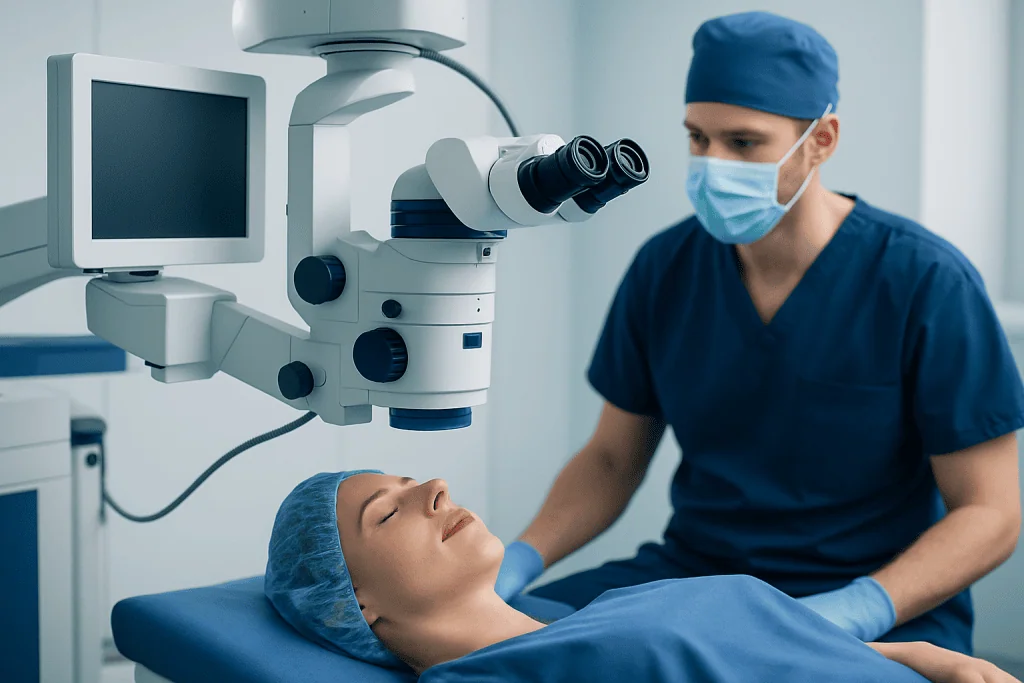
Because clinics and hospitals structure fees differently, exact side-by-side comparison is not always straightforward. Still, published market ranges can offer a broad planning framework. In many cases, Turkey appears more affordable overall than the USA, UK, and Germany, especially when hospital and perioperative costs are included in a package.
The table below uses indicative market ranges commonly seen in public sources and should not be taken as a quote from any individual provider. Exchange rates, city, surgeon seniority, and package details can change the picture. Savings percentages are approximate and intended only to show the general difference in market level.
Indicative published market ranges for blepharoplasty planning:
- Turkey: often marketed from lower-to-mid four-figure USD-equivalent ranges for upper lids, with higher ranges for combined upper and lower eyelid surgery.
- USA: commonly higher due to surgeon fees, facility fees, anesthesia charges, and regional cost differences.
- UK: often higher than Turkey, particularly in major cities and private hospital settings.
- Germany: usually also higher overall, especially when surgery is performed in established private clinics or hospitals.
Approximate comparison framework:
- Turkey vs USA: patients may see approximate savings in the range of about 40% to 70%, depending on procedure scope and package content.
- Turkey vs UK: approximate savings may fall around 30% to 60% in many public comparisons.
- Turkey vs Germany: approximate savings may be around 20% to 50%, depending on city and provider type.
These figures are best used as a starting point for research rather than a decision tool by themselves. A lower advertised price is not always the better value if important services are excluded, such as preoperative tests, hospital stay, medications, or postoperative follow-up.
What a blepharoplasty package in Turkey may include

One reason Turkey is frequently researched for medical travel is that providers may offer structured care packages. These packages can make planning easier, but they are not standardized. Two quotes that appear similar at first glance may include very different services, so careful review is essential.
A package may include the surgeon consultation, preoperative assessment, use of the operating room, hospital or day-surgery fees, anesthesia services, routine postoperative checks, and some medications or dressings. International patient coordination, interpreter support, and airport or hotel transfers may also be offered in some settings.
It is important to ask what is not included. Flights, accommodation outside the hospital, additional blood tests, management of unexpected medical issues, revision surgery, and treatment of pre-existing eye conditions may be billed separately. Patients should also confirm whether the quote covers both upper and lower eyelids, since the wording can sometimes be broad.
Anyone comparing providers should request a clear written breakdown. A useful checklist includes the type of blepharoplasty planned, anesthesia method, hospital accreditation, expected follow-up schedule, and what happens if the surgeon recommends a different approach after examination. This is especially relevant when there are underlying eyelid or ocular conditions such as ptosis (droopy eyelid), which may need a different procedure than cosmetic skin removal alone.
What changes the final price?
The biggest cost driver is usually the scope of surgery. Upper eyelid blepharoplasty alone is generally simpler than lower eyelid surgery or a combined procedure. Lower eyelid surgery may involve a more delicate approach to fat repositioning, skin tightening, or muscle support, and this can affect operative complexity and price.
Surgeon expertise and hospital standards also matter. A surgeon with extensive oculoplastic, ophthalmic plastic, or facial plastic surgery experience may charge differently from a less specialized provider. Likewise, a procedure performed in a full-service accredited hospital may cost more than one offered in a smaller outpatient setting, but the level of perioperative support may also differ.
Other factors include anesthesia type, need for overnight observation, pre-existing medical conditions, and whether the surgery is primary or revision blepharoplasty. Patients with dry eye symptoms, visual field concerns, prior eyelid surgery, or coexisting issues such as entropion may need a more tailored surgical plan.
Additional treatments can also increase cost. Some patients combine eyelid surgery with brow procedures, skin resurfacing, or facial rejuvenation. When this is appropriate, it may be discussed as part of an individualized treatment plan, but the total cost will naturally rise because operating time, recovery needs, and follow-up care become more extensive.
Quality and accreditation: why price should not be the only factor
Choosing blepharoplasty based on price alone can be misleading. Eyelid surgery is performed in a delicate area close to the eye, and the goals are both cosmetic and functional. A careful balance is needed so that the eyelids look natural while still protecting the eye surface and preserving comfortable blinking and closure.
Patients should look at the provider’s credentials, the hospital environment, and the safety processes around surgery. Questions worth asking include whether the operation is performed in an accredited hospital, whether the surgeon routinely treats eyelid conditions, and what preoperative eye assessment is carried out. If visual symptoms are present, an eye examination may be especially important before surgery.
Hospital accreditation can offer reassurance about standards of patient safety and clinical governance. In Turkey, some international patients prefer care in JCI-accredited hospitals because accreditation reflects structured quality and safety systems. Even so, accreditation should be viewed as one part of decision-making rather than a substitute for direct medical evaluation and informed consent.
Patients who want hospital-based multidisciplinary care may also review related ophthalmic services such as ophthalmology care when the eyelids, eye surface, or vision may all need attention. This can be helpful if the symptoms are not purely cosmetic or if another eye problem is suspected.
Consultation and planning before travel
A pre-travel consultation is the best way to move from a general estimate to a realistic quote. During consultation, the surgeon reviews the patient’s goals, examines eyelid anatomy, asks about dry eyes, previous surgery, medications, and general health, and explains whether upper blepharoplasty, lower blepharoplasty, or another eyelid procedure may be more suitable.
Photographs are often requested in advance for international planning, but an in-person examination is still important before final confirmation. Surgeons may need to assess skin excess, fat bulging, eyelid laxity, brow position, and whether symptoms suggest a functional problem rather than a purely aesthetic concern. This is why online prices can only ever be provisional.
Patients should ask practical questions too. These include the length of stay in Turkey, how many follow-up visits are expected, when flying home is considered appropriate, and what support is available if concerns arise after return. Understanding the recovery plan is part of understanding the true cost of care.
Near the end of the planning process, some patients choose an international center with coordinated specialties under one roof. Acibadem International’s multidisciplinary specialists and JCI-accredited hospitals diagnose and treat eyelid conditions and perform surgical care for international patients, with final treatment recommendations and quotes provided after medical assessment.
When to seek medical care
Eyelid surgery should always begin with a proper medical assessment if the eyelids are affecting comfort, vision, or eye health. Prompt review is especially important if there is drooping that blocks vision, difficulty fully closing the eyes, significant irritation, tearing, recurrent infections, or symptoms that suggest the eyelid position is abnormal.
Medical care is also advisable if the concern developed suddenly, affects only one side, follows trauma, or is associated with double vision, severe pain, or a noticeable change in eyesight. These symptoms are not typical cosmetic issues and should be evaluated by a qualified doctor or eye specialist.
Even when the main goal is aesthetic improvement, consultation matters because not every concern is best treated with standard blepharoplasty. Some people may need treatment directed at eyelid malposition, brow descent, or another condition affecting the eye area. A doctor can explain the safest and most appropriate option.
Patients should avoid making decisions based only on photographs, social media promotions, or headline prices. A careful in-person assessment helps clarify both suitability for surgery and the most accurate quote.
Frequently asked questions
Is eyelid surgery in Turkey really cheaper than in the USA or UK?
Published market ranges often show lower overall pricing in Turkey than in the USA or UK. However, the comparison is only meaningful when the same type of surgery, hospital setting, and follow-up services are included. Final quotes vary from patient to patient.
What is usually included in an eyelid surgery package in Turkey?
A package may include consultation, hospital or clinic fees, operating room costs, anesthesia, and routine follow-up visits. Some providers also include interpreter support or local transfers. Patients should always ask for a written list of inclusions and exclusions.
Why can two blepharoplasty quotes be very different?
Quotes may differ because the procedures are not identical. One may cover only upper eyelids, while another includes lower lids, more advanced techniques, or hospital-based care. Surgeon experience, accreditation, anesthesia, and recovery support also affect price.
Can I get an exact eyelid surgery price online?
An online figure is usually only an estimate. A safe and accurate quote typically requires a medical consultation, review of photographs, and an eyelid examination. The final plan may change if the surgeon identifies a functional eyelid problem or a different procedure is needed.
Does lower cost mean lower quality?
Not necessarily, but price alone should never be used as a quality measure. Patients should review surgeon qualifications, hospital standards, accreditation, and follow-up care. A clear treatment plan and informed consent process are just as important as affordability.
How do patients choose a provider for blepharoplasty in Turkey?
It helps to compare providers based on medical expertise, hospital environment, package transparency, and postoperative support rather than price alone. Patients should ask whether the surgery is performed in an accredited setting and whether any eye-related symptoms need ophthalmic assessment first.
References
- American Society of Plastic Surgeons
- American Academy of Ophthalmology
- National Health Service
- International Society of Aesthetic Plastic Surgery
- Joint Commission International
This article is for general information only and is not a substitute for professional medical advice. Please consult a qualified doctor about your individual situation.
Explore treatments in Turkey — costs, top hospitals & a free quote
JCI-accredited · board-certified surgeons · reply within 24h
Add us as a Preferred Source to see more of our trusted health content across Google Search, AI Overviews and Discover.