Can You Return to Work After a Traumatic Brain Injury? Pacing, Fatigue and Gradual Steps
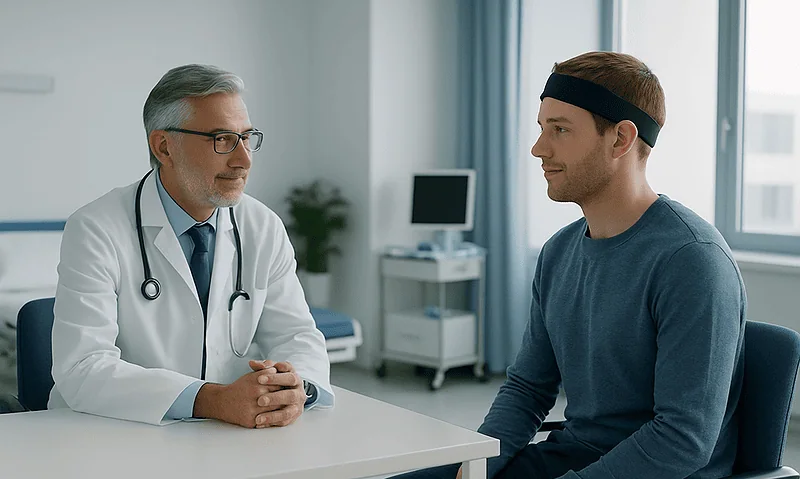
Many people do return to work after a traumatic brain injury, but the path is usually gradual rather than a single return date. Clinicians…
Read article

Articles on the brain and nervous system: headaches, dizziness, numbness, memory concerns and common neurological conditions. Every piece flags the warning signs that need urgent medical attention rather than reading.
Many people do return to work after a traumatic brain injury, but the path is usually gradual rather than a single return date. Clinicians…
Yes. Several common medicines can start a new tremor or amplify one you already have, most often by heightening the body's normal fine shake…
Thymectomy is usually recommended for anyone with myasthenia gravis who also has a thymoma, a tumor of the thymus gland, regardless of how mild…
Yes. Acute migraine treatment is taken once an attack has started and aims to stop pain and nausea within hours; preventive treatment is taken…
During a craniotomy, a surgeon makes a scalp incision, drills small holes in the skull and cuts between them to lift out a piece…
Treating an MS relapse and long-term multiple sclerosis therapy have different aims. Relapse treatment, usually a short course of high-dose corticosteroids, is meant to…
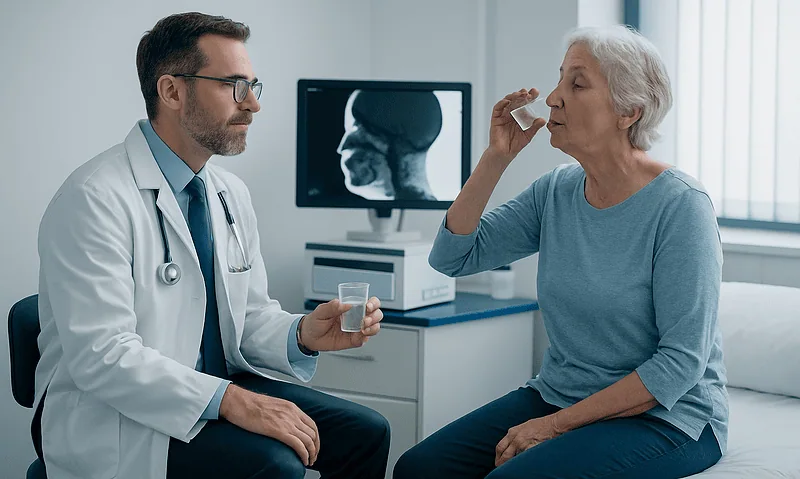
A swallowing study for dysphagia records what happens to food and liquid as you swallow, most often with a moving X-ray (videofluoroscopy) or a…
VNS recovery time is usually short compared with brain surgery. The operation typically takes one to two hours, most people go home the same…
Yes. Cerebral palsy care for adults shifts away from the growth- and milestone-focused therapy of childhood toward protecting existing function, managing pain, spasticity and…
Narcolepsy treatment usually settles in stages rather than all at once. Wake-promoting medicines are often noticeable within days, while medicines for cataplexy and night-time…
Most epilepsy myths do not survive contact with the evidence. Flashing lights trigger seizures in only a small minority of people with epilepsy, roughly…
A cognitive assessment usually begins with a conversation about what has changed, a review of medicines and mood, and a short pencil-and-paper or verbal…
In neuroinfectious disease care, a lumbar puncture samples cerebrospinal fluid, the clear liquid around the brain and spinal cord, so laboratories can count cells,…
Living with FND means treating symptoms as real but retrainable. Day-to-day care usually combines prescribed physiotherapy that redirects attention away from the affected limb,…
Recovery after neuroendoscopic surgery, most often performed through the nose to reach the pituitary gland or skull base, typically involves a hospital stay of…
Medication-overuse headache is a near-daily headache that develops when acute pain relievers are taken on many days each month for several months, so the…
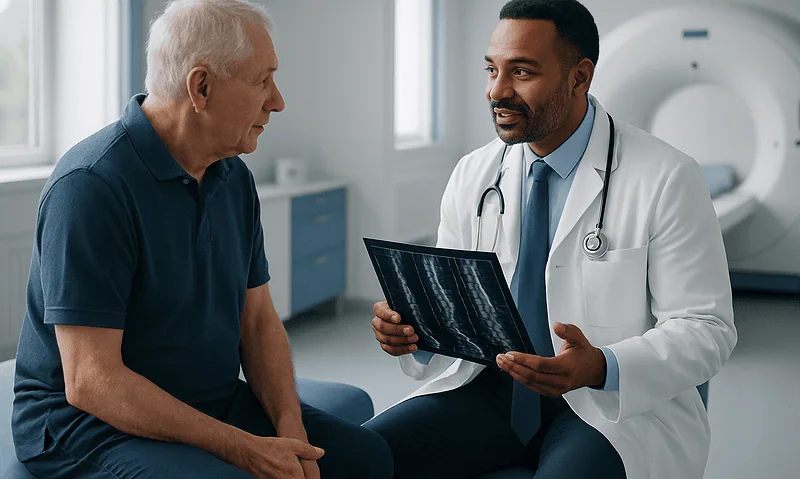
An MRI shows the spinal cord itself in fine detail: swelling, inflammation, compression from a disc or bone, tumors, bleeding, fluid-filled cavities and scarring.…
Living with peripheral neuropathy is usually a matter of protecting what you cannot fully feel and strengthening what you can still control. Daily foot…
Choose which cookies you allow. Essential cookies are always on because the site cannot work without them.