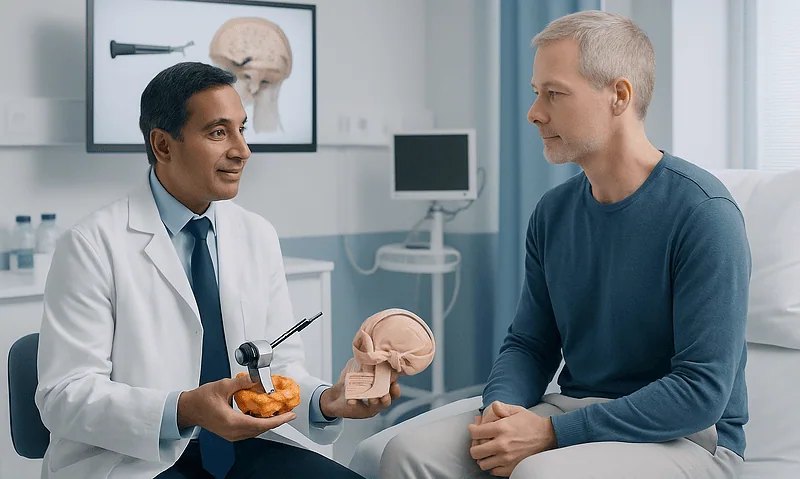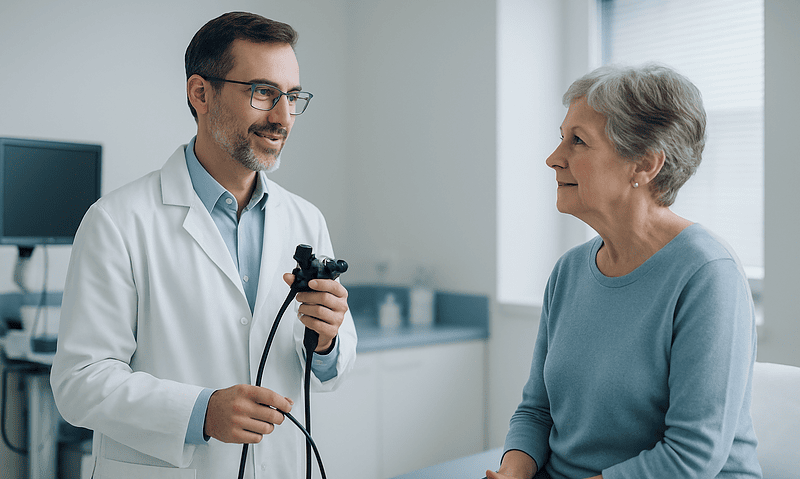
Can Home and Work Routines Be Adapted in Motor Neuron Disease? Mobility Aids, Meals and Rest
Yes. Most people with motor neuron disease can adapt home and work routines for a considerable time by pacing activity, changing how meals are…
Read article

Articles on the brain and nervous system: headaches, dizziness, numbness, memory concerns and common neurological conditions. Every piece flags the warning signs that need urgent medical attention rather than reading.
Yes. Most people with motor neuron disease can adapt home and work routines for a considerable time by pacing activity, changing how meals are…
Before agreeing to a cerebrovascular disease treatment plan, ask what the imaging showed (clot, bleed, narrowing or small vessel damage), why this option was…
Before a Tourette syndrome evaluation, keep a simple tic diary for several weeks noting each tic's type, time of day, setting and rough frequency;…
Huntington's genetic counseling is a series of conversations with a trained genetics professional before and after any decision about testing for the HTT gene…
An IVIG infusion for CIDP is a scheduled outpatient session in which pooled donor antibodies are dripped slowly into a vein over several hours.…
Spina bifida surgery closes the opening in a baby's back to protect the exposed spinal cord from infection and further injury. It cannot restore…
Dementia is an umbrella term for a decline in memory and thinking severe enough to disrupt daily life; Alzheimer's disease is its most common…
Selective dorsal rhizotomy (SDR) and an intrathecal baclofen pump both reduce spasticity but in opposite ways. SDR is a one-time spinal surgery that permanently…
Pediatric neurosurgeons choose between a shunt and endoscopic third ventriculostomy (ETV) mainly by the cause of the hydrocephalus and the child's age. ETV, which…
Epilepsy surgery outcomes are usually described in stages rather than as one verdict: an early period when the brain settles, a first-year review, and…
Ischemic and hemorrhagic strokes need different medicines because they are opposite problems in the same organ. An ischemic stroke is caused by a clot…
Endoscopic brain surgery reaches a target through a small opening, often the nostril or a coin-sized burr hole, using a thin camera, while open…
Treatment for dysphagia is chosen by cause, not by severity alone. Swallowing therapy with a speech-language pathologist is usually first when the problem sits…
Recovery after peripheral nerve surgery is slow because nerve fibers regrow from the repair site at roughly an inch a month. A splint protects…
Acute flaccid myelitis treatment centers on supportive care, because no medicine has been proven to reverse the spinal cord injury. Hospital teams protect breathing…
Tics usually need treatment when they cause pain or injury, real distress, or interfere with school, work, sleep or friendships, not simply because other…
Deep brain stimulation for movement disorders uses thin electrodes implanted in specific brain regions, wired to a small pulse generator under the skin of…
CIDP treatment can realistically improve muscle strength, walking, balance and everyday function, and it often slows or halts further nerve damage. It does not…
Choose which cookies you allow. Essential cookies are always on because the site cannot work without them.