

Are Veneers Bad for Your Teeth? What Preparation Really Involves
Key Takeaways
- Traditional porcelain veneers remove roughly 0.3 to 0.7 millimeters of enamel from the front of each tooth, a large share of the roughly one millimeter nature provides, and enamel never grows back.
- Teeth do not rot underneath an intact veneer; decay starts at the exposed margins near the gumline, which is why daily flossing matters more after veneers than before.
- Porcelain veneers last about 10 years on average, so a set placed at 30 realistically means budgeting for two to four replacement rounds over a lifetime.
- Untreated grinding (bruxism) is a leading cause of chipped and debonded veneers, and a custom night guard is the standard protective measure for grinders who get them.
- No-prep and minimal-prep veneers preserve nearly all enamel but only suit specific cases, small or worn teeth, modest gaps, and mild discoloration, not full-sized or protrusive teeth.
- Persistent sensitivity beyond a few weeks, a dark line at a veneer's gum edge, or a loose veneer are all signals to see a dentist promptly rather than wait for pain.
Veneers are not inherently bad for teeth, but traditional porcelain veneers require permanently removing a thin layer of enamel, often around half a millimeter, that never grows back. Teeth generally stay healthy under well-made, well-maintained veneers, though real risks include sensitivity, decay at the edges, chipping, and the need for replacement roughly every 10 to 15 years.
There is a moment in almost every veneer consultation when the conversation shifts. The before-and-after photos are closed, the shade guide goes back in the drawer, and the dentist says a word that lands differently than everything before it: irreversible.
That word is why this question gets typed into search engines millions of times a year. People aren’t really asking whether a thin shell of porcelain is dangerous. They’re asking whether trading a sliver of their own tooth for a manufactured surface is a deal they’ll still be happy with at 55, or 70. It’s a fair question, and the honest answer has more nuance than either the glossy marketing or the horror stories suggest.
What follows is the version of the conversation you deserve before anyone picks up a handpiece: what preparation actually removes, where the genuine risks hide, and who should walk away from the chair entirely.
Are veneers bad for your teeth? The honest short answer
A veneer itself, a wafer of porcelain or composite resin bonded to the front of a tooth, does no harm sitting there. The material is biocompatible, and the Cleveland Clinic notes that veneers, properly placed and maintained, are a safe and durable cosmetic treatment. The tooth underneath does not weaken simply because something is glued to it.
The legitimate concern lives one step earlier, in the preparation. Traditional veneers require a dentist to shave away a thin layer of enamel so the shell sits flush rather than looking bulky. Enamel contains no living cells, which means your body cannot rebuild it. Whatever comes off is gone for the rest of your life. That single fact is the hinge on which every honest veneers conversation swings.
So the accurate framing isn’t “veneers are bad” or “veneers are safe.” It’s this: veneers are a permanent commitment made in exchange for a cosmetic result, and the commitment includes maintenance, eventual replacement, and a small but real set of risks. For someone with deep intrinsic staining, a chipped front tooth, or enamel worn thin by acid, that trade can be entirely sensible. For someone whose teeth are healthy and merely a shade duller than they’d like, less invasive options usually deserve the first look, and a thoughtful dentist will say so before you do.
What does veneer preparation actually involve?
Preparation is quieter and quicker than most people imagine, which is part of what makes its permanence easy to underestimate. Here is the typical sequence for traditional porcelain veneers, usually spread over two or three visits:
- Assessment and imaging. The dentist examines the teeth and gums, takes X-rays, and rules out decay or gum disease, active disease has to be treated first.
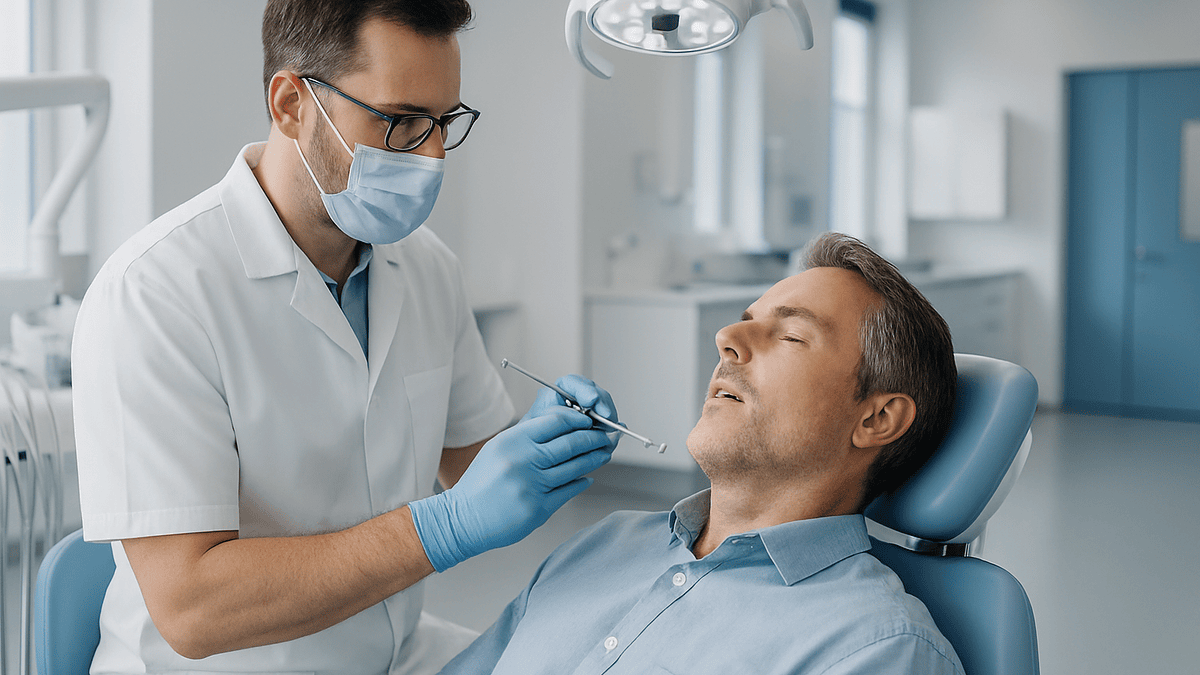
- Enamel reduction. Using a fine bur, the dentist removes a thin layer from the front surface of each tooth, commonly in the range of 0.3 to 0.7 millimeters depending on the case and material. Local anesthetic is often used, though minimal preps sometimes need none.
- Impressions or digital scans. These go to a dental lab, where the veneers are fabricated over one to two weeks.
- Temporaries. Prepared teeth are usually covered with provisional veneers, because exposed prepared enamel or dentin can be sensitive to temperature.
- Bonding. At the final visit, each veneer is checked for fit and color, the tooth surface is etched and treated with an adhesive, and the veneer is cemented and light-cured.
Notice what’s missing from that list: grinding teeth down to pegs. The alarming images that circulate online almost always show preparations for full crowns, a far more aggressive reduction, mislabeled as veneers. It’s a distinction worth understanding before the photos scare you off, or before an aggressive treatment plan quietly crosses the line from one to the other.
How much enamel do veneers remove, and why it matters
Enamel on the front surface of an incisor measures roughly one millimeter thick, tapering thinner near the gumline. A conventional porcelain veneer prep of about half a millimeter can therefore claim a substantial fraction of it, sometimes most of it near the neck of the tooth, where enamel was thin to begin with.
Why does that fraction matter? Enamel is the hardest substance in the human body, and it does three jobs at once: it insulates the sensitive dentin and nerve underneath, it resists acid attack from food and bacteria, and it provides the ideal bonding surface for dental adhesives. Veneers bonded mostly to enamel hold better and last longer than veneers bonded largely to dentin: a consistent finding in the dental literature. That’s the technical reason conservative preparation isn’t just a courtesy; it directly affects how long your investment survives.
There’s a compounding effect, too. When a veneer eventually needs replacement, and it will, removing the old one and refinishing the surface can cost a little more tooth structure each cycle. A person who gets veneers at 25 may go through three or four rounds by 75. Each round starts from a slightly smaller reserve. This is why age and enamel thickness belong in the consultation conversation, and why “how much will you remove, exactly?” is one of the most valuable questions you can ask before consenting.
Porcelain, composite, and no-prep veneers: what changes for your enamel
Not all veneers make the same demand on your teeth, and the differences are large enough to change the answer to the headline question.
Traditional porcelain veneers are lab-made ceramic shells. They’re the most stain-resistant and lifelike option and, per the Cleveland Clinic, typically last around a decade or longer. They also require the enamel reduction described above: the full, irreversible commitment.
Composite veneers are sculpted directly onto the tooth from the same resin used for tooth-colored fillings, often with little or no drilling. They cost less and can frequently be repaired chairside, but they stain more readily and generally last five to seven years before needing refreshing.
No-prep or minimal-prep veneers are ultra-thin porcelain shells, sometimes as thin as 0.2 to 0.3 millimeters, bonded with little to no enamel removal. In the right mouth, they preserve nearly everything nature provided. The catch is the phrase “the right mouth”: they suit small or worn teeth, modest gaps, and mild discoloration. Bond them onto teeth that are already full-sized or protrusive and the result looks bulky and can irritate the gums, which is exactly the outcome that fills online regret threads.
The pattern worth internalizing: the less enamel a technique removes, the more forgiving your future options remain. A composite veneer that disappoints can often be revised or removed. A full porcelain prep cannot be un-drilled. Sequence your decisions accordingly.
Why don't some dentists recommend veneers?
Search that question and you’ll find dentists on both sides, which confuses people. The hesitation among more conservative practitioners usually rests on four evidence-grounded points rather than any belief that veneers are dangerous.
First, irreversibility. Dentistry has a long-standing principle of preserving tooth structure whenever possible, because every intervention shortens the tooth’s long-term runway. A dentist who declines to veneer healthy, well-shaped teeth is applying that principle, not being obstinate.
Second, the replacement cycle. Veneers are not a one-time purchase; they’re a subscription measured in decades. A 25-year-old choosing porcelain veneers is realistically signing up for several replacement rounds, each with cost, chair time, and some biological toll.
Third, case selection. Much of what patients want veneers for, mild yellowing, a small chip, one slightly rotated tooth, can be handled with whitening, bonding, enamel recontouring, or short-course orthodontics, all of which are gentler. When those options would work, recommending veneers first is hard to defend clinically.
Fourth, bruxism. People who grind or clench their teeth, a condition the Cleveland Clinic estimates affects a meaningful share of adults, put porcelain under forces it wasn’t designed to absorb. Chips and debonded veneers follow. Some dentists have simply seen too many fractured cases to recommend veneers without a grinding assessment and a protective night guard plan.
None of this means veneers are a mistake. It means the dentists most worth trusting are often the ones who try to talk you into less.
Are teeth rotting under veneers?
This fear deserves a precise answer, because it’s half myth and half genuine risk. The myth: a bonded veneer does not suffocate or rot the tooth beneath it. When the adhesive seal is intact, bacteria can’t reach the covered surface at all. Teeth do not decay from being covered any more than a sealed jar spoils from having a lid.
The genuine risk lives at the marginsthe microscopic seam where porcelain ends and natural tooth begins, usually near the gumline and along the edges. Plaque accumulates there just as it does on any tooth. If hygiene slips, or if the margin was poorly fitted from the start, acid-producing bacteria can work under the edge and start decay in the natural tooth structure. Because the veneer hides the front surface, this decay can progress quietly until it shows up as sensitivity, a dark line at the gum, or a loosening veneer.
Mayo Clinic’s guidance on cavities applies with full force here: decay needs three ingredients, bacteria, fermentable sugars, and time. Veneers change none of that equation. They don’t cause decay, and they don’t prevent it.
The practical upshot: the “rotting teeth under veneers” stories you read almost always trace back to one of three things, margins left unsealed by rushed work, years of neglected flossing, or pre-existing decay that was veneered over instead of treated. All three are avoidable, and none is an inherent property of veneers themselves.
Will veneers make my teeth sensitive?
Some sensitivity after veneer preparation is common, and understanding why makes it less alarming. Enamel is the tooth’s insulation. Beneath it lies dentin, a living tissue threaded with microscopic tubules that connect to the nerve. Remove enamel and you move the outside world half a millimeter closer to that nerve, so cold water, hot coffee, and even a sharp breath of winter air can register more vividly for a while.
For most people the timeline looks like this:
- During the temporary phase, sensitivity is at its peak, because provisional veneers seal less completely than the final ones.
- In the first two to three weeks after bonding, mild temperature sensitivity is common and typically fades as the tooth settles.
- Beyond a month or two, lingering or worsening sensitivity is not normal and deserves a follow-up visit. It can signal a gap in the bond, a bite that’s hitting too hard on one veneer, or, rarely, an inflamed nerve.
Two factors raise the odds of longer-term sensitivity: deeper preparations that exposed significant dentin, and teeth that already had large fillings or previous trauma. This is another argument for conservative prepping and for choosing candidates carefully: a theme you’ll notice runs through every genuine risk on this list. Sensitivity isn’t a reason to fear veneers, but it is a reason to report symptoms promptly rather than toughing them out.
Do people regret veneers?
Some do, and their reasons are instructive because they cluster tightly. Read through patient forums and published patient-satisfaction research and the same handful of themes surface again and again.
Regret over the commitment itself. The most common refrain isn’t “my veneers look bad”: it’s “I didn’t fully grasp that this was forever.” People who felt rushed through consent, or who chose veneers at a young age for a minor cosmetic issue, are overrepresented among the regretful.
Regret over aesthetics. Veneers that are too white, too uniform, or too bulky read as artificial. Natural teeth have subtle translucency at the edges and slight variations in shade; skilled lab work reproduces that, and cheaper or hurried work often doesn’t.
Regret over maintenance surprises. Chipped porcelain from an olive pit, a veneer that popped off on vacation, the discovery that replacement costs arrive on a schedule: these hit hardest when nobody set expectations up front.
Equally telling is who doesn’t regret veneers: people who had a clear clinical reason (tetracycline staining, fractured incisors, worn or malformed enamel), who exhausted simpler options first, and who understood the maintenance bargain before consenting. Satisfaction studies in cosmetic dentistry consistently show high contentment in well-selected cases.
The lesson isn’t that regret is rare or common. It’s that regret is largely predictable, and therefore largely preventable, at the consultation stage, before a single micron of enamel is touched.
How long do veneers last, and what happens when they fail?
Porcelain veneers last about 10 years on average, according to the Cleveland Clinic, with well-made, well-maintained sets frequently reaching 15 to 20. Composite versions run shorter, typically five to seven years before staining or wear calls for repair. Those numbers sound reassuring until you run the arithmetic across a lifetime: veneers placed at 30 may need attention at 40, 52, and 65. Budgeting for one round is budgeting for a third of the story.
Failure rarely arrives as a dramatic shatter. More often it’s one of these:
- Chipping or fracture, usually at the biting edge, grinding, nail-biting, and using teeth as tools are the classic culprits.
- Debonding, where the veneer detaches intact. Sometimes it can be re-cemented; sometimes the bond surface is compromised and a new veneer is needed.
- Marginal staining or decay, a dark line or shadow at the gum edge signaling that the seal has aged.
- Gum recession, which doesn’t damage the veneer but exposes a strip of natural root above it, creating a visible color mismatch over the years.
When a veneer fails, the tooth underneath usually remains restorable: that’s the good news. The replacement, however, may require slightly deeper preparation, and a tooth that has lost too much structure over successive cycles may eventually graduate to a crown. Understanding that trajectory at the start is the difference between an informed decision and an expensive surprise.
Who should not get veneers?
Veneers fail predictably in certain mouths, and a candid dentist screens for every item on this list before quoting a price.
- Active tooth decay or gum disease. Bonding porcelain over an unhealthy foundation guarantees early failure. Disease gets treated first, always.
- Untreated heavy grinding or clenching. Porcelain resists compression well but fractures under the shearing forces of bruxism. Grinders can still get veneers, but only alongside a plan, usually a custom night guard, to protect the investment.
- Insufficient enamel. Teeth already stripped by acid erosion, aggressive brushing, or previous dental work may lack the enamel needed for a reliable bond. Crowns or other restorations may serve better.
- Large existing fillings or weakened teeth. A veneer covers only the front face; a structurally compromised tooth often needs the 360-degree support of a crown.
- Significant bite problems. An edge-to-edge or deep bite can hammer veneers with every meal. Orthodontic correction first often makes the difference between a 5-year result and a 15-year one.
- Purely mild discoloration. If whitening could plausibly achieve the goal, it should be tried first: it’s reversible, gentler, and dramatically cheaper.
One more category deserves mention: anyone who feels pressured. Cosmetic dentistry done well is elective, unhurried, and preceded by a mock-up or digital preview. If a consultation feels like a sales close, the appropriate response is to keep your enamel and find a second opinion.
Veneers vs. bonding vs. whitening vs. crowns: which is least invasive?
Cosmetic options sit on a spectrum from fully reversible to fully committed, and the wisest treatment plans start at the gentle end and stop as soon as the goal is met. Here’s how the main options compare on the measures that matter for long-term tooth health:
| Option | Enamel removed | Reversible? | Typical lifespan | Best suited for |
|---|---|---|---|---|
| Professional whitening | None | Yes, effects fade naturally | Months to a few years | Surface and mild internal staining |
| Composite bonding | None to minimal | Largely, resin can be removed or revised | 5–7 years | Small chips, gaps, minor shape fixes |
| No-prep veneers | Minimal (often none) | Sometimes, case-dependent | ~10 years | Small or worn teeth, mild issues |
| Traditional porcelain veneers | ~0.3–0.7 mm from the front surface | No | 10–15+ years | Deep staining, worn or malformed enamel, multiple front-tooth flaws |
| Crowns | Substantial, all surfaces | No | 10–15+ years | Structurally weakened or heavily filled teeth |
The table makes the strategic point visible: a crown is not a bigger veneer, and a veneer is not fancy bonding. Each step rightward costs more tooth and closes more doors. NHS guidance on dental treatments makes a similar point, restorative choices should match the clinical problem, not the marketing category. Ask your dentist to justify why the plan can’t sit one column to the left.
How to keep teeth healthy under veneers
Veneered teeth don’t ask for exotic care: they ask for boringly consistent care, with a few adjustments aimed at the vulnerable seam where porcelain meets tooth.
- Brush twice daily with a soft brush and fluoride toothpaste. The natural tooth at the margins still needs fluoride’s protection; the veneer doesn’t mind it. Skip abrasive whitening pastes, which can dull porcelain glaze over time.
- Floss every day, without exception. The gumline margins are where decay and gum inflammation begin. Flossing is the single highest-leverage habit a veneer owner has.
- Keep professional cleanings on schedule. A hygienist can spot marginal staining or a failing seal years before you’d notice it, when the fix is small.
- Wear the night guard if one was prescribed. A custom guard costs a fraction of a single replacement veneer and can double the working life of a full set for a grinder.
- Retire your teeth from tool duty. Opening packages, tearing tape, cracking nuts, and chewing ice are the leading causes of chipped porcelain edges.
- Mind staining and acid. Porcelain resists stains, but the bonding resin at the edges and any exposed natural tooth do not. Frequent acidic drinks also erode the natural enamel that remains: the reserve you want to protect most.
MedlinePlus’s dental health guidance applies unchanged: the fundamentals that protect natural teeth are the same ones that protect restored teeth. Veneers raise the stakes on those fundamentals; they don’t change the playbook.
Questions to ask before anyone touches your enamel
Consent means more than signing a form. These questions, asked out loud at the consultation, will tell you nearly everything about whether you’re in careful hands, and the answers are worth writing down.
- “Could whitening, bonding, or orthodontics get me most of the way there?” A good clinician will engage seriously with this. Dismissiveness is a warning sign.
- “Exactly how much enamel will you remove, and will any dentin be exposed?” You want a number, in fractions of a millimeter, and a tooth-by-tooth answer.
- “Am I a candidate for minimal-prep or no-prep veneers?” Even a “no” is useful, because the reasoning reveals how the dentist thinks about preservation.
- “Do I show signs of grinding, and what’s the protection plan?” Wear facets on your teeth are visible on examination; this shouldn’t be guesswork.
- “Can I see a wax-up or digital mock-up before we commit?” Previewing the result before preparation is standard in careful cosmetic practice.
- “What will replacement involve in 10 to 15 years, and what does a failed veneer look like on my timeline?” The answer should acknowledge the full lifecycle, not just the reveal appointment.
- “What happens if I chip one, repair, re-bond, or remake?” Knowing the maintenance pathway up front prevents both panic and overtreatment later.
Notice that none of these questions is adversarial. They’re the questions a well-informed colleague would ask, and clinicians who do meticulous work tend to welcome them, meticulous work is easiest to defend.
When to see a dentist
Whether you’re considering veneers or already living with them, certain situations call for a professional exam rather than watchful waiting.
Before getting veneers, see a dentist promptly if you have bleeding gums, visible decay, persistent bad breath, or teeth that ache with temperature: these signal underlying disease that must be resolved first, and veneering over it compounds the problem. Anyone with jaw soreness on waking, flattened tooth edges, or a partner’s reports of nighttime grinding should raise bruxism explicitly, because it changes the treatment plan.
After getting veneers, book a visit, sooner rather than later, for any of the following:
- Sensitivity that persists beyond a few weeks or worsens instead of fading
- A dark line, shadow, or soft spot appearing at the gumline edge of a veneer
- A veneer that feels loose, moves when you press it, or comes off entirely (keep the piece; it can sometimes be re-bonded)
- Gums around a veneered tooth that stay red, swollen, or bleed with gentle flossing
- A new chip or crack, even a small one, margins of a fracture trap plaque
- Any spontaneous throbbing or pain in a veneered tooth, which can indicate the nerve is inflamed
And regardless of symptoms, keep routine checkups every six months or on the schedule your dentist recommends. Most veneer complications are inexpensive to fix when caught at a cleaning and expensive to fix when caught by pain. The people who get 20 years from a set of veneers are, almost without exception, the people who never skip the boring appointments.
The bottom line: a fair trade, but only when it's actually a trade
Strip away both the marketing gloss and the online alarm, and the evidence supports a calm middle position. Veneers do not rot teeth, poison mouths, or doom anyone to dentures. Placed on well-chosen teeth by careful hands and maintained with ordinary diligence, they are among the most reliable and natural-looking treatments cosmetic dentistry offers, with a track record spanning decades.
But they are a trade, and the currency is enamel: a finite, non-renewable material your body issued exactly once. The strongest opinion this article will offer is this: that trade only makes sense when you’re getting something whitening, bonding, or orthodontics genuinely cannot deliver. Deep intrinsic staining, fractured or malformed front teeth, enamel worn thin by years of acid: these are problems veneers solve elegantly. A smile that’s one shade off ideal is not.
If you’re weighing the decision now, the path is straightforward. Get the disease-free foundation confirmed first. Ask the uncomfortable questions about millimeters and mock-ups. Try the reversible options before the permanent one. And choose a clinician who seems slightly reluctant to drill, in cosmetic dentistry, that reluctance is usually the best credential on the wall. Done in that order, veneers aren’t bad for your teeth. Done in reverse, almost anything is.
Frequently asked questions
Why don't dentists recommend veneers?
Conservative dentists hesitate because traditional veneers permanently remove enamel, commit patients to a lifelong replacement cycle, and are often requested for problems that whitening, bonding, or orthodontics could solve more gently. They also fail predictably in people with untreated grinding or gum disease. It isn’t that veneers are unsafe: it’s that dentistry’s guiding principle is to preserve tooth structure, so careful clinicians reserve veneers for cases where less invasive options genuinely can’t deliver the result.
Are teeth rotting under veneers?
No: an intact, well-bonded veneer seals the covered surface so bacteria can’t reach it, and the tooth beneath does not rot. The real risk sits at the margins where veneer meets tooth, usually near the gumline. Plaque collecting there can cause decay in the natural tooth if flossing lapses or the fit was poor. The horror stories online almost always trace to neglected hygiene, badly fitted margins, or decay that existed before the veneers were placed.
Do people regret veneers?
Some do, and the reasons cluster: not fully grasping that enamel removal is permanent, veneers that look too white or too bulky, and surprise at maintenance and replacement costs. Regret is markedly less common among people who had a clear clinical reason, deep staining, fractured or worn teeth, who tried reversible options first, and who saw a mock-up before committing. In well-selected cases, patient satisfaction with veneers is consistently high in the dental literature.
What are the negatives of veneers?
The main drawbacks are permanent enamel loss during preparation, temporary or occasionally lasting temperature sensitivity, the possibility of chipping or debonding, decay risk at the margins if hygiene slips, and a replacement cycle of roughly every 10 to 15 years for porcelain. Cost compounds across those cycles. Veneers also can’t be whitened later, so surrounding natural teeth may eventually mismatch. None of these is inevitable, but all belong in an honest consent conversation.
Do veneers ruin your natural teeth?
They don’t ruin teeth, but traditional veneers do permanently alter them by removing a thin layer of enamel, typically around half a millimeter, that the body cannot regrow. The tooth remains alive, functional, and restorable underneath. What changes is your future flexibility: a prepared tooth will always need a veneer or similar restoration covering it. Minimal-prep and no-prep techniques reduce or eliminate this alteration for suitable candidates.
Can you go back to normal teeth after veneers?
Not after traditional veneers. Once enamel is removed for preparation, the tooth needs a restoration covering that surface permanently, removing a veneer means replacing it, not restoring the original tooth. Genuinely no-prep veneers and some composite bonding can sometimes be removed with the tooth left essentially as it was, which is a key reason to ask exactly how much enamel your plan involves before consenting.
Do veneers hurt or cause sensitivity?
The procedure itself is usually done with local anesthetic and isn’t painful. Afterward, mild temperature sensitivity is common, removing enamel brings hot and cold slightly closer to the tooth’s nerve, and it typically peaks during the temporary phase and fades within two to three weeks of final bonding. Sensitivity that persists beyond a month, worsens, or becomes a spontaneous ache is not normal and warrants a dental visit to check the bond, bite, or nerve.
How long do veneers last?
Porcelain veneers last about 10 years on average, with well-made and well-maintained sets often reaching 15 to 20, while composite veneers typically need refreshing after five to seven years. Lifespan depends heavily on habits: grinding without a night guard, chewing ice, nail-biting, and skipped flossing all shorten it considerably. Because replacement is expected, it’s wise to view the quoted price as one installment rather than the total lifetime cost.
Can veneers get cavities?
The porcelain or composite itself cannot decay, but the natural tooth around and beneath the veneer’s edges absolutely can. Cavities in veneered teeth almost always start at the margins near the gumline, where plaque collects at the seam between restoration and tooth. Daily flossing, fluoride toothpaste, and regular professional cleanings protect those margins. Caught early at a checkup, marginal decay is usually a small repair; caught late, it can mean losing the veneer.
Are no-prep veneers better?
They’re better at one crucial thing, preserving enamel, but only for the right candidates. No-prep veneers are ultra-thin shells bonded with little or no drilling, which keeps future options open and can sometimes even be reversed. They work well on small, worn, or gapped teeth with mild discoloration. On teeth that are already full-sized or protrusive, adding thickness without removing any looks bulky and can irritate gums, so a candid candidacy assessment matters more than the label.
References
- Dental Veneers: Cleveland Clinic
- Teeth Grinding (Bruxism): Cleveland Clinic
- Dental Health: MedlinePlus
This article is for general information only and is not a substitute for professional medical advice. Please consult a qualified doctor about your individual situation.

More from the Blog

Veneers vs Implants: Two Very Different Problems, Two Very Different Fixes
Veneers and dental implants solve different problems, so one is not simply better than the other. Veneers are thin porcelain or composite shells bonded…

Composite Veneers Cost: How They Compare to Porcelain on Price and Lifespan
Composite veneers cost EUR 130-300 per tooth in our guide range, compared with EUR 250-500 for a porcelain or E-max veneer, and the gap…

No-Prep Veneers: Who Qualifies for Veneers Without Drilling
No-prep veneers are ultra-thin porcelain shells, often 0.2 to 0.5 millimeters, bonded to teeth with little or no enamel removal. Good candidates typically have…

Snap-On Veneers: What Removable Veneers Can and Cannot Do: an Honest Look
Snap-on veneers are removable resin covers that clip over natural teeth to temporarily mask stains, chips, gaps, or a missing tooth. They can improve…

Can You Whiten Veneers? What Works, What Does Not, and What to Do Instead
No, porcelain veneers cannot be whitened with bleaching products, because the glazed ceramic is nonporous and does not respond to peroxide the way…
Veneers Cost: Porcelain and Composite Pricing, Explained Per Tooth and Per Smile
Porcelain or E-max veneers fall in our guide range of EUR 250-500 per tooth for international patients, compared with roughly GBP 900-1,500 per tooth…