

DHI Hair Transplant Recovery: When Scabs Lift, When Hats Are Allowed and When Sport Returns
Key Takeaways
- Crusts around DHI grafts typically lift within one to two weeks, and gentle washing rather than picking is what releases them safely.
- The NHS puts return to desk work at around three days and advises avoiding strenuous exercise for about a month after a hair transplant.
- Transplanted hairs commonly shed between weeks two and eight; the follicles remain and regrow, with new hair usually visible by around six months.
- There is no single guideline day for hats, so most teams allow a loose clean cap once grafts are anchored and a normal hat after crusts clear, on their own schedule.
- DHI and FUE share the same punch extraction and the same wound biology, so their recovery timelines are broadly the same despite marketing claims.
- Spreading redness, thick discharge, fever or worsening pain after day three are red flags for infection and warrant a same-day call to the surgical team.
After a DHI hair transplant, the tiny crusts around each graft usually loosen and lift over roughly one to two weeks, helped by the gentle washing your team shows you. A loose, clean hat is commonly allowed once grafts are firmly anchored, often in the second week, while sweaty sport is typically paused for about a month. Your surgical team sets your exact dates.
The morning after, the bathroom light feels unkind. Hundreds of pinpoint red dots sit in neat rows across the hairline, the forehead is a little puffy, and a wedding invitation is stuck to the fridge for three weeks from now. Somewhere between the mirror and the coffee, the questions arrive all at once: when will these crusts go, can a hat hide them, and is the Saturday run off the table?
DHI hair transplant recovery has a rhythm that is surprisingly predictable, even though it never feels that way on day two. Skin closes, crusts lift, transplanted hairs shed, and months later new shafts push through. Knowing the order of events, and the reasons behind each restriction, turns anxious waiting into informed waiting.
What follows is the evidence-based version: what mainstream sources actually say about healing after a hair transplant, where DHI differs from other techniques, and where it simply does not.
What actually happens in a DHI hair transplant, and why recovery follows from it
DHI stands for direct hair implantation. It is a variant of follicular unit extraction, or FUE, the method in which individual hair follicles are removed one at a time from the back and sides of the scalp with a small round punch. What makes DHI distinct is the placement step: instead of first cutting a slit and then inserting a graft with forceps, the surgeon loads each graft into a hollow implanter pen that makes the opening and delivers the follicle in a single motion.
That detail matters for recovery because the wounds are what heal, not the technique name. Every graft leaves a small puncture in the donor zone and a small entry point in the recipient zone. A session of a few thousand grafts therefore means several thousand tiny wounds, each sealing with a plug of clotted blood and protein that we see as a crust. According to Cleveland Clinic, the scalp closes these openings within days, while the transplanted follicles anchor into surrounding tissue and the surface skin heals over the following week or two.
Claims that DHI heals faster than standard FUE rest largely on surgeon experience rather than randomized comparison. The honest position is that both create comparable micro-wounds and both follow the same biological timetable: inflammation for the first few days, new skin cells migrating across each opening, and gradual remodeling underneath. Where DHI may reduce handling time for each graft outside the body, the main beneficiary is graft health rather than a noticeably shorter recovery. Treat any promise of a dramatically different timeline with polite skepticism and ask your own team what they observe in their patients.
Who a DHI transplant is usually for, and who is usually asked to wait
Most people who have a hair transplant of any kind have pattern hair loss, which Mayo Clinic describes as the hereditary, hormone-influenced thinning that follows a recognizable shape in men and a diffuse widening of the parting in women. The procedure moves follicles that are genetically resistant to that process into areas that have thinned, so it needs two things: a stable, dense donor supply and a pattern that has settled enough to plan around.
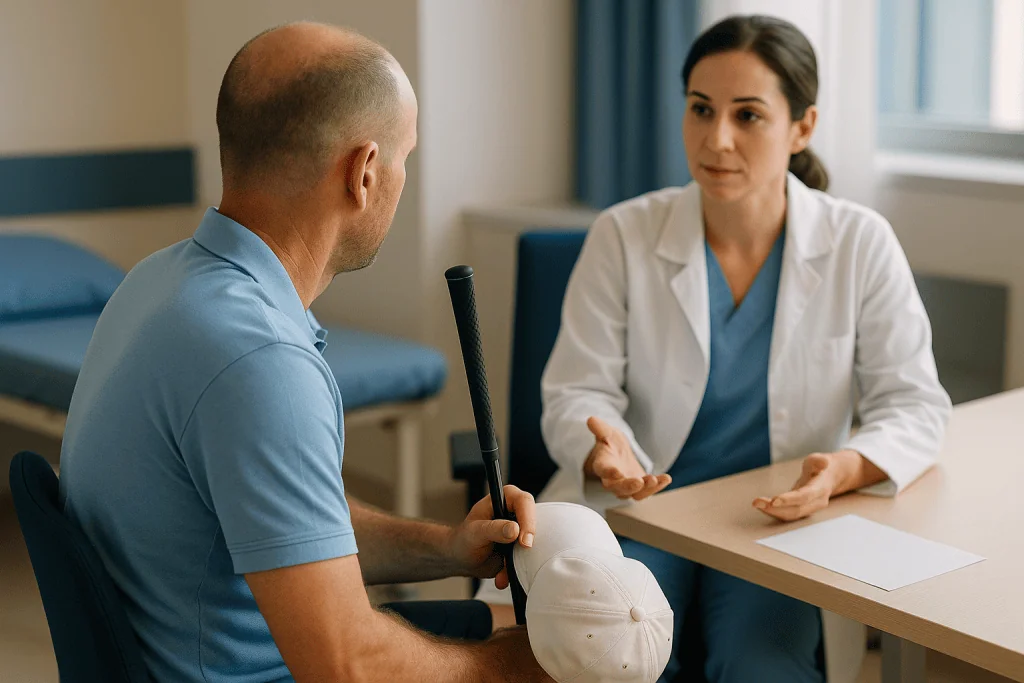
Surgeons commonly ask certain people to wait. Someone in their early twenties whose recession is still moving may be advised to hold off, because grafts placed today could end up as an island once surrounding hair recedes. People with scarring forms of alopecia, where inflammation destroys follicles, are usually asked to have the condition controlled first, since active disease can destroy transplanted hair too. Hair loss from a recent illness, rapid weight change, thyroid disease or a medicine side effect often regrows on its own, so testing and time come before surgery.
General surgical fitness also applies. Poorly controlled diabetes slows wound healing, a bleeding disorder or blood-thinning medicine raises the risk of oozing that can lift grafts, and smoking narrows the small vessels that feed each follicle. None of these are automatic refusals; they are conversations. The treating team weighs the pattern, the donor area, medical history and expectations, and only they can say whether now is the right time or whether waiting protects the result. If your surgeon recommends a delay, it is worth asking what specifically they want to see change first.
The first 72 hours: swelling, oozing and how to sleep
The first three days are about protecting grafts that are not yet anchored. Straight after the procedure each follicle sits in its channel held only by a small clot and the friction of surrounding tissue. Brushing the area against a pillow or picking at it can dislodge a graft entirely, which is why teams are so insistent about hands off.
Expect some pinkness and a sensation of tightness across the recipient area, plus mild soreness in the donor zone, which has often been numbed for hours. MedlinePlus notes that pain after a hair transplant is usually manageable with ordinary pain relief chosen by the surgeon; how much and how often is a decision for the prescribing clinician, not something to improvise at home.
Swelling is the surprise for many. The local anesthetic fluid and the inflammatory response drift downward with gravity, so the forehead and sometimes the eyelids can puff up around day two to four before settling. Sleeping with the head elevated on two or three pillows, or in a recliner, uses gravity in your favor and reduces the chance of rolling onto the grafts. Some teams provide a neck pillow so the back of the head does not touch anything.
A little spotting of blood from the donor area on the first night is common; a soaked dressing is not, and is covered in the red-flag section below. The NHS advises that any bandage can usually be removed after two to five days and that many people return to desk work within about three days, though a job involving dust, heat or helmets may warrant longer. Ask specifically about your workplace.
DHI hair transplant recovery timeline at a glance
Timelines vary with graft count, individual healing and the surgeon’s protocol, so treat the ranges below as typical, not as promises. Each figure is drawn from the NHS and Cleveland Clinic patient guidance cited at the end of this article.
| Stage | Typical window | What is usually happening |
|---|---|---|
| Immediate | Days 0 to 3 | Grafts anchoring; pinpoint crusts form; swelling may migrate to forehead |
| Early healing | Days 3 to 7 | First gentle washes; redness fading; donor punctures closing |
| Crust clearance | Days 7 to 14 | Scabs soften and lift with washing; skin surface closed |
| Shock loss | Weeks 2 to 8 | Transplanted hairs shed; follicles remain and enter a resting phase |
| Quiet phase | Months 2 to 4 | Little visible change; underlying follicles recover |
| Early growth | Around months 3 to 6 | Fine new hairs appear, often thin at first |
| Maturing result | Months 12 to 18 | Hair thickens and settles into its final texture |
The NHS puts return to work at roughly three days for many people, notes that transplanted hair commonly falls out a few weeks after surgery, and describes new growth usually appearing by about six months with fuller results between twelve and eighteen months. Cleveland Clinic gives a similar arc, describing shedding of the transplanted hair in the first weeks as an expected part of the cycle.
Two practical anchors stand out. The two-week mark is when most surface healing is complete and cosmetic questions about hats and haircuts become easier. The one-month mark is when the NHS suggests strenuous exercise can usually be reconsidered. Everything else, especially the growth phase, is measured in months and rewards patience more than action.
When do scabs lift after a DHI hair transplant?
The crusts are the visible signature of the first fortnight, and the question of when they go is really a question about wound biology. Each implanter puncture fills with a small clot that dries into a scab the width of a pinhead. Beneath it, skin cells migrate inward from the edges to close the opening. Once that new surface is complete, the scab has nothing to hold onto and it lifts.
For clean, shallow wounds this typically takes a week or two. The NHS describes scabs around transplanted hair as normal, noting that they fall off after a week or so, and Cleveland Clinic gives a similar early window. A DHI recipient area often looks noticeably clearer by day ten and largely crust-free by day fourteen, though a handful of stubborn spots along the hairline can linger a few days longer.
The trick is to let the scabs leave rather than making them leave. Picking or scratching in the first week risks pulling out a graft that has not yet anchored, and even later it can leave a small pit or a patch of prolonged redness. What helps is moisture and time: the gentle soaking and washing technique your team demonstrates softens the crusts so they release on their own, usually taking the short hair shaft embedded in them with them. Seeing hairs in the scab is expected; the follicle below is what matters, and it stays.
If crusting seems to thicken rather than thin after the first week, becomes yellow and moist, or is surrounded by spreading redness, that pattern points toward infection rather than healing and belongs in a call to the team.
Washing the scalp after DHI: what changes week by week
Washing is the single daily act that most shapes how the recipient area looks and heals, and it is also the one people fear most. The anxiety is understandable: water, pressure and a scalp full of fresh grafts feel like a poor combination. The evidence-based reassurance is that washing, done as instructed, speeds crust clearance and lowers the risk of infection rather than raising it.
Most teams delay the first wash for around two days, which matches NHS guidance on hair transplant aftercare. The technique for the first week is closer to bathing a newborn than shampooing: a mild product diluted in a cup or a soft foam, pressed onto the area with fingertips or poured over without rubbing, then rinsed with low-pressure lukewarm water from a cup or a very gentle shower head. No fingernails, no circular scrubbing, no direct jet.
Around the end of the first week, once grafts are firmly anchored, many surgeons allow the pads of the fingers to glide over the area with light pressure, which is exactly when the softened crusts begin to slide off. By the second week the recipient area can usually be washed almost normally, though a hot, hard shower stream is worth avoiding for a little longer while the skin remains pink and sensitive.
The donor zone follows a gentler-than-normal but less restricted path, because its punctures are covered by surrounding hair and are not carrying transplanted follicles. Products matter less than technique; a plain, fragrance-free shampoo is generally preferred to medicated or heavily scented ones in the first weeks. Ask the team to demonstrate rather than describe, and record the demonstration on your phone.
When can I wear a hat after a hair transplant?
The hat question is usually about hiding, and it deserves a straight answer: yes, eventually, and probably sooner than you fear. The reasoning follows the same anchoring principle as everything else. In the first days a graft can be lifted by friction, and a hat that rubs, presses or is pulled on and off repeatedly is precisely that kind of friction. Once the grafts are secured by healing tissue, the risk falls sharply.
Mainstream patient sources do not publish a single guideline day for hats, so protocols vary by surgeon. Many teams allow a very loose, clean, freshly laundered cap or a wide-brimmed hat that does not touch the recipient area from about the end of the first week, and a normal-fitting hat once crusts have cleared, which for most people means the second week. Some surgeons are more cautious and ask for two full weeks before any headwear. Your written aftercare sheet overrides anything written here.
There are practical rules worth following regardless of the exact date. Choose fabric that breathes, because a hot, sweaty scalp is a friendlier place for bacteria. Put the hat on by lowering it straight down and lift it straight off; do not slide it across the hairline. Avoid tight bands, helmets and anything with a hard rim in the first weeks. A hat is also a sensible sun shield, and the NHS advises keeping a fresh transplant out of direct sunlight, which gives the hat a medical purpose as well as a cosmetic one.
Wigs and hairpieces sit in the same category as hats, but with more contact and adhesive, so they typically wait longer. Raise it explicitly with your team.
Exercise after hair transplant: when sport returns and why the wait exists
Few restrictions frustrate active people more than being told to stop training, so it helps to know the three reasons behind it. First, exertion raises blood pressure and heart rate, which in the first days can push out grafts or restart oozing from the donor area. Second, sweat is salty and slightly acidic and sits in the crusts, irritating healing skin and softening the seal around each graft. Third, gyms, pools and contact sports carry bacteria and physical knocks that a healing scalp does not need.
The NHS advises avoiding strenuous exercise for around a month after a hair transplant. In practice most surgeons stage the return rather than flipping a switch. Gentle walking is usually fine from the first days and helps circulation. Light stationary cycling or easy weights that do not produce heavy sweating are commonly reintroduced after the second week, once crusts have lifted. Running, high-intensity classes, heavy lifting with breath-holding, and sports where the head is likely to be touched typically wait until around the four-week mark.
Swimming deserves its own line. Chlorinated pools irritate the skin and can lift crusts prematurely; open water carries a higher infection load. Many teams ask people to stay out of pools for about a month and out of lakes and the sea a little longer. Saunas and steam rooms combine heat, sweat and dilated blood vessels and are usually grouped with the same waiting period.
Listen to the donor area too. If it feels tight or aches during a workout, back off; that skin was also wounded and is often the last part to feel normal. Reintroduce intensity over days, not in one heroic session.
Why transplanted hair falls out, and why that is not failure
Somewhere between week two and week eight, the hairs that emerged from the grafts begin to shed, sometimes in alarming numbers on the pillow or in the shower. Cleveland Clinic and the NHS both describe this as an expected stage, and it has a name: shock loss.
The mechanism is a defensive reflex. A hair follicle that is cut from its blood supply, kept outside the body for a period and then replanted interprets the ordeal as a stressor. Its response is to drop the hair shaft it was growing and enter telogen, the resting phase of the hair cycle. The follicle itself remains in place, anchored by the tissue that healed around it in the first fortnight. What is lost is a hair; what is kept is the factory that makes hair.
Rest usually lasts around two to three months, which explains the quiet phase in the timeline where nothing seems to be happening. Then the follicle re-enters anagen, the growth phase, and a new shaft pushes through. The NHS describes new hair usually starting to appear by around six months, with the fuller result maturing between twelve and eighteen months as shafts thicken and pigment.
Shock loss can also affect existing, non-transplanted hairs around the recipient area. Small vessels are disturbed during surgery, and the surrounding native follicles may briefly drop into telogen too. This surrounding shedding is usually temporary in healthy follicles, though hairs that were already miniaturizing from pattern loss may not all return. Your surgeon should have discussed this possibility beforehand; if it is happening and worries you, it is a reasonable reason for a review appointment rather than a reason to panic.
DHI vs FUE recovery: does the donor area heal differently?
Because DHI uses the same punch extraction as FUE, the donor area experiences essentially the same wounds and the same healing. The back and sides of the scalp end up with hundreds of tiny circular openings, each about the width of a pen tip, scattered between untouched follicles. These close within days and, according to Cleveland Clinic, leave small dot-like scars that are usually hidden by surrounding hair once it regrows.
For the first week the donor zone can feel like mild sunburn: tight, tender to the touch, sometimes itchy as nerves recover. It typically looks worse than it feels, with a speckled red appearance that fades to pink over two to three weeks. Because there is no long incision, there are no stitches to remove, which is one real practical difference from the older strip method, in which a ribbon of scalp is removed and the wound closed with sutures that the NHS notes are usually taken out at ten to fourteen days.
The comparison people actually search for is DHI against conventional FUE, and here the honest answer is that recovery is broadly similar. The recipient area in DHI may show slightly less visible slit marking because the implanter creates a smaller opening for each graft, but the crusting, shedding and growth phases run on the same schedule. Any difference in downtime is measured in hours of comfort, not weeks. Choosing between techniques is a conversation about the surgeon’s experience, the characteristics of your hair and the plan for your hairline, and it is one the treating team should lead. Neither method is inherently superior for everyone, and neither shortens the months of waiting for growth.
Sun, smoking, alcohol and medicines: what the evidence says about healing
Aftercare sheets are full of prohibitions, and each has a mechanism worth understanding rather than simply obeying.
Sunlight is the clearest. Freshly healed skin lacks its normal protective pigment and burns easily, and ultraviolet exposure can darken healing marks for months. The NHS advises keeping the scalp out of direct sun after a transplant. A wide hat once permitted, shade and avoiding midday exposure do the job; sunscreen on the recipient area is usually reserved until the skin has fully closed, and your team will say when.
Smoking constricts the tiny blood vessels that deliver oxygen and nutrients to each graft in the critical first weeks, and it impairs wound healing generally. Most surgeons ask patients to stop for a period before and after surgery; how long is an individual conversation, but the principle is that a follicle fighting for a blood supply does not need an additional obstacle.
Alcohol thins the blood mildly, dilates vessels and disturbs sleep, all of which are unhelpful in the days when oozing and swelling are the concern. It also interacts with several pain relievers and with any antibiotic a surgeon may prescribe, which is why a temporary pause is a routine request.
Medicines deserve the most careful handling. Some surgeons prescribe a short antibiotic course to reduce infection risk, an anti-inflammatory to limit swelling, or, longer term, a medicine that slows the hormonal process behind pattern loss so that native hair around the grafts is protected. Each is a clinical decision with its own timeline and trade-offs. Take exactly what your prescribing clinician recommends, raise questions before changing anything, and never adopt a regimen described in an online forum without discussing it with your team.
What people often get wrong about DHI recovery
Recovery myths spread fast because they sound plausible and because waiting is hard. A few deserve direct correction.
The first is that crusts should be removed to let grafts breathe. Follicles do not breathe through the surface; they draw oxygen from blood vessels below. Scabs are a natural dressing, and pulling them off early is one of the few ways a patient can genuinely harm a result.
The second is that shedding at week three means the transplant failed. The NHS and Cleveland Clinic both describe this loss as an expected phase. The follicle stays; the hair is replaced months later.
The third is that faster visible healing means a better outcome. A recipient area that looks clean at day ten says the skin has closed. It says nothing about how many follicles survived, which cannot be judged before growth arrives many months later. Equally, lingering pinkness at week three is common in fair skin and is not a sign of trouble on its own.
The fourth is that DHI needs no aftercare because the technique is gentler. The wounds are smaller than in strip surgery, but the number of them is the same, and the biology of anchoring and crusting is identical to FUE.
The fifth is that gripping a supplement or oil regimen will accelerate growth. Nutritional deficiency can cause hair loss, and correcting a proven deficiency helps, but there is no strong evidence that adding supplements to a normal diet speeds transplanted hair through its resting phase. Applying oils to a fresh recipient area can, however, trap bacteria and soften the seal around grafts.
The last is that results can be judged at six months. Fine early hairs at that point are the beginning, not the verdict; the maturing runs to twelve to eighteen months.
Risks during recovery and the alternatives worth knowing about
Hair transplantation is elective surgery on healthy tissue, and its risks are mostly those of any minor skin procedure, described neutrally by MedlinePlus and Cleveland Clinic. Bleeding and infection are uncommon with careful technique and aftercare. Folliculitis, an inflammation of follicles that shows as small pimple-like bumps in the recipient or donor area, can appear in the first weeks or as new hairs push through, and usually settles with the surgeon’s guidance. Temporary numbness or altered sensation over the scalp is common as small nerves recover and typically improves over months.
Less common problems include cysts where a graft was buried too deep, an unnatural direction or density of growth, visible donor thinning if too many follicles were taken from one area, and lower graft survival than hoped. Scarring is small and dot-like with punch extraction but is permanent. None of these should be minimized, and a good pre-operative consultation covers them without prompting.
Alternatives exist and are not a consolation prize. Mayo Clinic describes medicines that slow pattern hair loss and can partially regrow miniaturized hair, used long term under a clinician’s supervision. Low-level light devices have some supporting evidence for pattern loss, though studies are small. Scalp micropigmentation creates the appearance of density with tattooed dots and involves no follicles. Hairpieces and styling remain valid choices. Many people combine surgery with a medical treatment to protect native hair; whether that suits you is a decision for the treating team based on your pattern, health and preferences, never a default.
Questions to ask your care team before and after DHI
The best recovery conversations happen before the procedure, when there is time to write answers down. Bring a list. These are the questions that matter most for the weeks that follow.
- How many grafts are planned, and how does that number affect my swelling, crusting and downtime?
- Exactly when and how should I do the first wash, and can someone demonstrate the technique?
- On what day may I wear a loose hat, and when a normal-fitting one? Are helmets or headphones different?
- When can I walk briskly, when can I lift weights, and when can I run, swim or play contact sport?
- What sleeping position do you want for the first nights, and for how many nights?
- Which medicines will you prescribe, what does each one do, and how long will I take it?
- Are there any of my current medicines or supplements you want paused, and who should approve restarting them?
- When should I expect shock loss, and how much shedding around the transplanted area would be unusual?
- What does infection look like on a scalp, and what is your out-of-hours contact route?
- When are my follow-up visits, and what will you be checking at each one?
- If I live far away, how will remote follow-up work, and what photographs do you want me to send?
- At what point will you assess the result, and what would prompt a discussion of a further session?
Record the answers in the same place as your aftercare sheet. Recovery decisions made at midnight by searching a forum are rarely better than the ones your surgeon already wrote down for you, and a team that welcomes these questions is telling you something reassuring about how it handles the weeks ahead.
When to call your doctor: red flags after a DHI hair transplant
Most recoveries are uneventful, and most worries are about appearance rather than danger. A few signs, however, mean the difference between normal healing and a problem that needs prompt attention. MedlinePlus guidance on surgical wound care and the NHS hair transplant page describe the pattern to watch for.
Contact your surgical team the same day if you notice any of the following:
- Bleeding that soaks through a dressing or does not stop with ten minutes of firm, gentle pressure on the donor area.
- Redness that spreads outward from the transplanted or donor area rather than fading, or skin that becomes hot, shiny and increasingly painful.
- Thick yellow or green discharge, a foul smell, or crusts that turn moist and enlarge after the first week.
- Fever, chills or feeling generally unwell in the first two weeks.
- Pain that escalates after day three instead of easing, or pain not controlled by the medicine your surgeon prescribed.
- Swelling that closes an eye, is markedly one-sided, or is accompanied by difficulty breathing or a rash, which could signal an allergic reaction.
- Multiple pus-filled bumps clustering in one area, suggesting folliculitis that may need treatment.
- A graft area that appears to have lost many follicles after a knock or fall.
Seek emergency care immediately for chest pain, shortness of breath, facial swelling with difficulty swallowing, or a rapidly spreading rash, whatever the time of day. These are rare after scalp surgery but are never something to wait on.
For everything else, including shedding, pinkness, itching, numbness and small pimples, a message or photograph to the team is the right first step. They know your scalp, your graft count and your medicines, and every decision about what to do next sits with them.
Frequently asked questions
What is the typical hair transplant recovery timeline after DHI?
Surface healing takes about two weeks, while the full result takes over a year. Crusts lift by roughly day fourteen, transplanted hairs shed between weeks two and eight, a quiet phase follows, and the NHS describes new growth usually appearing by around six months with maturing results between twelve and eighteen months. Individual timing varies with graft count and healing, so treat these as typical windows rather than guarantees.
When can I wear a hat after a hair transplant done with DHI?
Usually once the grafts are firmly anchored, which for many surgeons means a loose, clean hat after about a week and a normal-fitting one in the second week after crusts have cleared. Mainstream sources do not fix a single day, so your surgeon’s written instructions take precedence. Lower the hat straight down rather than sliding it, choose breathable fabric, and avoid tight bands and helmets in the early weeks.
How soon can I return to exercise after hair transplant surgery?
Walking is usually fine within days, but the NHS advises avoiding strenuous exercise for around a month. Most teams stage the return: light, low-sweat activity after the second week, then running, heavy lifting and contact sport at about four weeks. Swimming pools, saunas and steam rooms are commonly grouped with the same waiting period because of chlorine, heat and infection risk. Confirm the exact plan with your surgeon.
Is DHI vs FUE recovery really different?
Not meaningfully, according to the biology involved. DHI uses the same punch extraction as FUE, so the donor area heals identically, and the recipient area follows the same crusting, shedding and growth schedule. The implanter pen may leave slightly smaller entry points, but any difference in downtime is measured in comfort over a few days rather than in weeks. Choice of technique is best guided by your surgeon’s experience and your hair characteristics.
Why are the transplanted hairs falling out three weeks after my DHI procedure?
This is shock loss, an expected phase described by the NHS and Cleveland Clinic. The follicle reacts to being moved by dropping its hair shaft and entering a resting phase for two to three months. The follicle itself stays anchored in the scalp and later produces a new hair. Shedding of some surrounding native hairs can also occur temporarily. Persistent worry or unusually heavy loss is a reasonable reason to request a review.
Can I pick off the scabs after a DHI hair transplant?
No. Scabs are a natural dressing over each graft, and removing them early risks pulling out follicles that have not yet anchored or leaving small pits and prolonged redness. They loosen on their own as new skin closes each opening, typically within one to two weeks, and the gentle soaking and washing routine your team demonstrates helps them release. Seeing a short hair inside a lifted scab is normal; the follicle remains below.
How should I sleep during the first week of DHI recovery?
With your head elevated on two or three pillows or in a recliner, and on your back, so the recipient area touches nothing. Elevation reduces the forehead swelling that tends to appear around days two to four, and avoiding contact protects grafts during the days before they anchor. Some teams supply a travel-style neck pillow to keep the donor area off the bed. Ask how many nights they want you to continue.
When can I go back to work after a DHI hair transplant?
The NHS suggests many people return to work after about three days, with bandages typically removed between days two and five. Desk-based jobs fit that window well. Work involving dust, heat, helmets, heavy lifting or frequent contact with the head may need a longer break or temporary adjustments, because sweat, friction and contamination all affect healing grafts. Discuss your specific role with your surgeon before booking time off.
Do I need to stop smoking or drinking alcohol during recovery?
Most surgeons ask for a pause in both. Smoking constricts the small blood vessels that supply oxygen to each graft and slows wound healing generally, while alcohol thins the blood slightly, dilates vessels, disturbs sleep and can interact with prescribed pain relievers or antibiotics. The length of the pause is an individual decision for your treating team, but the mechanism behind the request is the same for everyone.
What signs of infection should I watch for after a DHI transplant?
Redness that spreads rather than fades, skin that feels hot and increasingly painful, thick yellow or green discharge, a foul smell, moist enlarging crusts after the first week, or fever and chills. Pain that worsens after day three rather than easing is also a warning sign. Any of these warrant a same-day call to your surgical team, who can assess whether treatment is needed.
References
This article is for general information only and is not a substitute for professional medical advice. Please consult a qualified doctor about your individual situation.

More from the Blog
Who Is a Good Candidate for DHI Hair Transplant? Hairline Refinement and Small-Area Density
A good DHI hair transplant candidate usually has stable pattern hair loss, a healthy donor area at the back and sides of the scalp,…
Hair Operations After 60: How Age, Scalp Laxity and Health Conditions Change the Plan
People over 60 can often have hair transplant surgery, because age alone is not the deciding factor. Surgeons weigh scalp laxity, how much stable…
Hair Transplant Cost: Turkey vs USA vs UK: the Honest Comparison Table
A hair transplant in Turkey typically costs a fraction of the same procedure in the USA or UK. Our guide range for an all-inclusive…
Which Female Hair Transplant Side Effects Are Normal? Redness, Scabbing and Swelling Explained
After a female hair transplant, a tight or achy scalp, pinkness, small scabs around each graft, mild forehead swelling and temporary shedding of the…
Second Hair Transplants: When a Touch-Up Makes Sense and How Many You Can Have
A second hair transplant can make sense when hair loss has progressed around a first procedure, when you want more density, or when an…
PRP for Hair Loss Myths: One Session, Instant Regrowth and Other Misconceptions Corrected
PRP for hair loss is a series of scalp injections using a concentrate of a person's own platelets, not a single-visit fix. Published protocols…