

Endocarditis Recovery Week by Week: Finishing Antibiotics and Regaining Your Energy

Key Takeaways
- NHS guidance puts the usual endocarditis antibiotic course at two to six weeks, given into a vein and often finished at home through a long line.
- Bacteria hide inside valve vegetations of fibrin and platelets, which is why treatment must be prolonged and bactericidal rather than a short tablet course.
- Staphylococci and streptococci are the leading causes, with the mouth, skin, and intravenous lines the most common entry routes.
- Surgery is chosen for mechanical reasons such as a leaking valve or abscess, not because antibiotics have failed, and it adds a separate healing timeline.
- Fatigue after the last dose is driven by inflammation, anemia, and lost muscle, and it improves fastest with frequent short walks rather than rest.
- A previous episode of endocarditis raises the risk of another, so daily dental hygiene and a written prophylaxis plan from your cardiologist become permanent habits.
Endocarditis recovery time usually spans several weeks to a few months. Most people receive intravenous antibiotics for roughly two to six weeks, often starting in hospital and finishing at home, and tiredness commonly lingers for weeks after the course ends. Heart valve surgery, when it is needed, adds a longer recovery. The exact timeline depends on the organism, valve damage, and any complications, and is set by the treating team.
Day nine. The fever broke two days ago, the drip stand has become a familiar roommate, and a slim line now runs from the inside of one arm toward the heart. The consultant said the word “weeks” more than once this morning. The question that surfaces once the ward goes quiet is not really about bacteria. It is: when do I get my life back?
Endocarditis recovery time is one of the most searched and least clearly answered questions in cardiology, partly because the honest answer runs on two clocks. One measures the antibiotic course. The other, slower one measures the return of stamina, appetite, and confidence in your own heartbeat. They rarely finish together.
This explainer walks through both, week by week, using what mainstream guidelines actually say, so you can recognize where you are on the map and know what to ask the people holding the pen on your treatment plan.
How long does endocarditis recovery time really take?
People tend to want one number. What they get from a careful clinician is a range with conditions attached, and the conditions matter more than the number.
The first clock is the antibiotic course. The NHS describes treatment as antibiotics given directly into a vein, usually for two to six weeks, beginning in hospital and sometimes finishing at home. Mayo Clinic gives a similar span. That range is wide for good reason: a straightforward infection of a native valve with a sensitive organism sits at the shorter end, while an infection involving an artificial valve, an abscess, or a harder-to-clear bacterium sits at the longer end.
The second clock is recovery of the whole person. Infective endocarditis, an infection of the heart’s inner lining and valves, is a systemic illness. It raises inflammatory chemicals for weeks, often causes anemia, and confines people to bed at exactly the time muscle is being lost. Feeling washed out for weeks after the last dose is common and does not, on its own, mean the infection is back.
A third clock starts if surgery is needed to repair or replace a damaged valve. Open-heart surgery adds its own healing timeline for the breastbone and chest muscles, and the two recoveries overlap.
What shifts a person along these ranges? Guidelines and patient resources consistently point to the same variables: which organism is growing, whether the valve is native or prosthetic, whether pieces of infected material have traveled to the brain, spleen, or kidneys, and how quickly treatment started. Age and pre-existing heart or kidney disease lengthen the tail.
If one idea should anchor your expectations, it is this: finishing antibiotics is a milestone worth marking, but it is the midpoint of recovery, not the end.
What actually happens inside the heart during infective endocarditis
Picture the inside of a heart valve as smooth, wet, and constantly moving, opening and closing roughly 100,000 times a day. Bacteria passing through the bloodstream normally slide past it. Endocarditis begins when they do not.

Usually there is a foothold first. A valve roughened by age, rheumatic disease, or a congenital quirk, or an artificial valve or pacemaker lead, gives bacteria a surface to grip. Once attached, they recruit platelets and strands of fibrin, the mesh protein of blood clots, and build a small, cauliflower-like clump called a vegetation. Inside that clump the bacteria are shielded from immune cells and, to a degree, from antibiotics. This is why endocarditis is not a routine infection and why treatment is prolonged.
Mayo Clinic and Cleveland Clinic both identify bacteria as the overwhelming cause, with staphylococci and streptococci at the top of the list and enterococci close behind. Fungi cause a small minority of cases, mostly in people with weakened immunity or long-term intravenous lines.
The harm comes in three ways. The vegetation can erode the valve, so it leaks and the heart works harder, eventually tipping toward heart failure. Fragments can break off and lodge in the brain, causing a stroke, or in the spleen, kidneys, or limbs. And the ongoing infection keeps the immune system on high alert, producing fever, night sweats, weight loss, and the deep fatigue that patients describe as the worst part.
Where bacteria enter varies. The mouth is a common gateway, which is why dental health features so heavily in prevention advice. Skin infections, intravenous drug use, long-term catheters, and some medical procedures are other recognized routes.
Understanding this mechanism explains almost everything that follows: why antibiotics run for weeks, why imaging is repeated, why surgery is sometimes unavoidable, and why the tiredness lingers.
How long is endocarditis treatment, and why do antibiotics take weeks rather than days?
A chest infection often clears with a short course. Endocarditis does not, and the reason is physical rather than pharmacological stubbornness.
Inside a vegetation, bacteria are packed densely and grow slowly, surrounded by fibrin and platelets. Antibiotics diffuse into that clump poorly, and slow-growing bacteria are less susceptible to drugs that work by disrupting cell division. Clearing every last organism therefore requires sustained, high blood levels of a bactericidal antibiotic, meaning one that kills bacteria outright rather than merely stopping their growth. That is why treatment is intravenous, at least at the start, and why it runs for weeks.
The NHS puts the usual course at two to six weeks. The precise length is not chosen at random. It depends on the organism identified from blood cultures, laboratory tests showing which antibiotics that organism responds to, whether the valve is native or artificial, and whether there are complications such as an abscess. Infection specialists and cardiologists usually decide together, and the plan can change if cultures grow something unexpected or if fevers persist.
Which antibiotic is used is a decision for that team. Explaining classes here would not help you; what helps is knowing that the choice is driven by the culture result, and that changing agents partway through is common and not a sign of failure.
Two practical points follow. First, the first day of effective treatment, rather than the day you were admitted, is often taken as the starting point, because sterile blood cultures mark the moment the drug is winning. Second, missing or shortening the course risks leaving a reservoir of bacteria behind, so the finish date is not negotiable in the way a course of tablets for a sore throat might feel.
Some centers, in selected stable patients, allow part of the course to be completed by mouth after an intravenous start. Whether that applies to you is entirely a question for your prescribers.
Week by week: what the first two weeks in hospital usually look like
The opening days are busy in a way that can feel disorienting, so it helps to know what the flurry is for.

Diagnosis rests on two pillars, according to Mayo Clinic. Blood cultures, drawn several times from different sites, identify the organism and guide antibiotic choice. An echocardiogram, an ultrasound of the heart, looks for vegetations and measures how well the valves are working. A transthoracic echo is done through the chest wall; if the picture is unclear, a transesophageal echo passes a small probe down the throat to view the valves from behind, giving sharper images. An electrocardiogram, chest X-ray, and blood tests for kidney function, blood counts, and inflammation markers round out the picture.
Antibiotics usually begin before the culture result is back, through a standard cannula in the arm. Once the organism is known and the plan is set for weeks of intravenous therapy, most people have a longer line placed. A PICC line is a thin catheter inserted in the upper arm and threaded so its tip sits near the heart, allowing weeks of treatment without repeated needles.
By the end of the first week, the team is watching for three things: falling fever, blood cultures that stop growing bacteria, and stable heart function. Repeat echocardiograms may be arranged if there is concern about the valve.
Week two is often when the mood shifts. Fever has usually settled, appetite creeps back, and the question of going home is raised. It is also the week when complications, if they are going to appear, tend to declare themselves: new breathlessness from a leaking valve, a new heart block on the monitor, or symptoms suggesting an embolus. This is why discharge is deliberately not rushed, even in people who feel dramatically better.
Weeks two to six: finishing antibiotics at home through a long line
Many people complete the second half of their course outside hospital, an arrangement often called outpatient parenteral antibiotic therapy. The NHS notes that you may be able to go home to continue antibiotics once your condition is stable. The medicine, the line, and the monitoring stay the same; the setting changes.
The daily rhythm usually involves either a visiting nurse, a clinic visit, or self-administration after training, with the drug infused through the PICC line. Weekly blood tests check that the kidneys and blood counts are tolerating the antibiotic and that inflammation markers are falling. Dressings are changed on a schedule, and the line is flushed to keep it open.
Caring for the line is where recovery becomes a hands-on job. Keep the dressing dry and intact, avoid heavy lifting with that arm, and never let anyone draw blood from or inject into the line unless they are part of the team managing it. Watch the insertion site for redness, swelling, or leaking, and take any new fever seriously; a line infection is a real risk and can seed the very valve you are trying to protect.
Energy at this stage is patchy. A good morning followed by a flattening afternoon is typical, and it is worth planning around rather than fighting. Short walks several times a day rebuild muscle more safely than one heroic effort.
Appointments cluster toward the end of the course. Expect a review with the infection team, often a repeat echocardiogram to check the valve, and a discussion about whether the finish date holds. If fevers have recurred or cultures grew a second organism, the course may be extended.
Removing the PICC line is usually quick and painless, and most people describe it as the first moment recovery felt real.
Who usually goes home early, and who is usually asked to wait
Two people can arrive with the same diagnosis and leave hospital weeks apart. The difference is rarely about how brave or motivated they are; it is about risk.
Those who typically move to home-based antibiotics sooner share a profile: fever and blood cultures have cleared, the organism is a sensitive streptococcus or similar, the affected valve is native and functioning acceptably, there are no signs of heart failure or emboli, and there is a safe home setup with someone able to help and a way to reach care quickly. The team also weighs kidney function, since some antibiotics require close monitoring.
People usually asked to remain in hospital longer include those with infection on an artificial valve or pacemaker lead, those growing an aggressive organism such as a staphylococcus that has not yet cleared from the blood, anyone with a leaking valve causing breathlessness, anyone who has had a stroke or other embolic event, and those with an abscess seen on imaging. Surgery may be on the table for this group, and being nearby makes that decision safer.
Other factors are social rather than cardiac. Someone who lives alone far from a hospital, or who would struggle to manage a line safely, may be kept in for the whole course. None of this is a judgment; it is a practical calculation about where a sudden deterioration could be handled fastest.
If you feel ready and the team disagrees, ask what specific marker they are waiting for. A clear answer, such as two consecutive sets of negative cultures or a stable repeat echo, turns a frustrating delay into a countdown you can follow.
The decision always belongs to the treating team, but understanding their criteria is your right.
When surgery joins the plan, and how it changes endocarditis recovery time
Surgery is not a sign that antibiotics have failed. It is a recognition that some problems are mechanical, and no drug repairs a torn valve.
Mayo Clinic lists the usual reasons: a valve so damaged that it leaks badly and strains the heart, infection that persists despite appropriate antibiotics, large vegetations that threaten to break off, an abscess around the valve, or infection of an artificial valve or device. In many cases the goal is removing infected tissue and either repairing the person’s own valve or replacing it with a mechanical or tissue valve. Infected pacemaker leads are usually removed.
Timing is individualized. Some operations happen within days, when heart failure or embolic risk is pressing; others wait until the infection is better controlled. The cardiology, cardiac surgery, and infection teams weigh this together, and the reasoning should be explained to you plainly.
Surgery reshapes the recovery timeline in three ways. The antibiotic course may be recalculated from the operation date, particularly if cultures from the removed valve still show live bacteria. The breastbone, divided to reach the heart, needs weeks to knit, which limits lifting, driving, and some exercise. And the body is now recovering from two insults at once, so fatigue is deeper and longer.
A replacement valve also brings new long-term considerations. Mechanical valves require lifelong anticoagulant medication, a blood thinner that reduces clotting on the valve surface, with regular blood monitoring. Tissue valves usually do not, but may wear over years. Either type carries a higher risk of endocarditis in future, which is why dental and skin care become permanent habits.
Alternatives are limited when the indication is mechanical. Continuing antibiotics alone is sometimes reasonable for frail patients where surgical risk is very high; that conversation belongs to the treating team and the person in the bed.
Endocarditis recovery timeline at a glance
Timelines vary widely, and yours may not follow this pattern. The table gathers typical phases described in NHS and Mayo Clinic patient resources so you can place yourself roughly on the map. Treat it as orientation, not a schedule.
| Phase | Typical timing | What usually happens | What you may notice |
|---|---|---|---|
| Diagnosis and first days | First week | Repeated blood cultures, echocardiogram, intravenous antibiotics begin, long line placed | Fever settling, exhaustion, frequent tests |
| Early treatment | Weeks 1 to 2 | Organism identified, antibiotic plan finalized, watch for complications, surgical review if needed | Appetite returning, still very tired |
| Completing antibiotics | Weeks 2 to 6 (NHS range) | Often continued at home via PICC line, weekly blood tests, repeat echo near the end | Energy improving in patches, line care routine |
| After the last dose | Weeks to a few months | Line removed, follow-up cultures or echo as arranged, gradual return to activity | Fatigue fades slowly, stamina rebuilds |
| If valve surgery is needed | Adds weeks to months | Repair or replacement, chest wound healing, possible anticoagulation, cardiac rehabilitation | Deeper fatigue early, lifting restrictions |
Two observations stand out. The antibiotic phase occupies the middle of the story, not the end, and the post-antibiotic phase is where most people feel unsupported because the visible treatment has stopped. Knowing that this tail is expected helps.
The other observation is that surgery does not simply add time at the end; it overlaps and reshapes everything from the point it happens. Someone operated on in week two is recovering from surgery while still finishing antibiotics, and their week six looks very different from that of someone treated medically.
Your team may give you a personalized version of this table. Ask for one.
Regaining your energy: why fatigue outlasts the infection
The infection is gone. The cultures are clear. And yet a flight of stairs feels like a hill. This gap between a clean scan and a tired body is the most common complaint after endocarditis, and it has physiological explanations rather than psychological ones.
Start with inflammation. Weeks of bacteria in the bloodstream drive a cascade of chemical messengers that raise body temperature, suppress appetite, and signal muscles to break down protein for immune fuel. Those signals fade slowly once the trigger is removed. Anemia is frequent in prolonged infection because inflammation blocks the body’s use of iron; fewer red cells means less oxygen delivered per heartbeat, so ordinary tasks feel harder. Blood counts usually recover over weeks, and your team will check them.
Then there is deconditioning. Bed rest strips muscle quickly, and people often eat little for the first week or two. Rebuilding that muscle is the single most effective thing you can do for energy, and it happens through frequent, modest activity rather than rest.
A damaged valve adds its own drag. If the valve leaks, the heart moves blood less efficiently, and breathlessness on exertion may persist until the valve is repaired or the heart adapts. Report this rather than assuming it is deconditioning.
Practical steps that mainstream resources support: eat regular protein-containing meals even when appetite is low, walk several times daily and extend the distance slowly, protect sleep, and rehydrate. Cardiac rehabilitation, a supervised exercise and education program, is offered after many heart procedures and is worth asking about after surgery.
What should prompt a call rather than patience? Fatigue that suddenly worsens rather than slowly improving, or fatigue accompanied by fever, night sweats, or breathlessness at rest. Those combinations belong to your doctor, not to your recliner.
Life after endocarditis: work, exercise, and travel
Can you live a normal life after endocarditis? For most people who recover, the honest answer from clinicians is yes, with a few permanent habits attached. The shape of that return is gradual and individual.
Work usually comes back in stages. Desk-based roles are often manageable, at reduced hours, while antibiotics are still running through a line, provided there is somewhere clean for dressing changes and a plan for fatigue. Physical jobs wait longer, especially after surgery, when lifting restrictions protect a healing breastbone. Ask your team for a written note describing what you can and cannot do; it spares awkward negotiations with employers.
Exercise follows the same logic. Walking is encouraged early. Running, swimming, and resistance training return when the line is out, the valve is judged stable, and, if you have had surgery, the chest has healed. Swimming in particular waits until the PICC line is removed and the site has closed, to avoid infection.
Travel raises two considerations. Long journeys during the antibiotic phase are generally discouraged because line care, weekly blood tests, and rapid access to a hospital are harder to arrange away from home. After treatment, the usual clot-prevention advice for anyone on a long flight applies: move regularly, stay hydrated, and follow your team’s advice if you take an anticoagulant. Carry a summary of your diagnosis, your valve status, and any prophylaxis recommendation, so a dentist or doctor elsewhere understands your history.
Driving depends on local rules, your energy, and whether you have had surgery or a stroke; ask rather than assume.
Emotionally, a brush with a serious heart infection leaves a mark. Anxiety about every twinge is common in the first months. Naming it to your doctor or nurse is not weakness; it is part of recovery.
Can endocarditis come back? Lowering the risk of a second episode
It can. Having had endocarditis once is itself a risk factor for having it again, because the valve that was infected is rarely as smooth afterward, and a replacement valve is a foreign surface. That is why prevention becomes a lifelong project rather than a discharge leaflet.
The mouth comes first. Mayo Clinic’s prevention advice centers on teeth and gums: brush and floss daily, see a dentist regularly, and treat gum disease promptly, because inflamed gums leak bacteria into the bloodstream with every meal. This matters more than any single dental procedure.
Skin is second. Treat cuts and infections early, avoid tattoos and piercings in unhygienic settings, and never inject drugs; intravenous drug use is a recognized route for bacteria to reach the heart repeatedly.
Then there is antibiotic prophylaxis, meaning a preventive antibiotic taken before certain dental work. Guidance differs between countries. The American Heart Association recommends prophylaxis before dental procedures involving gum tissue for specific high-risk groups, including people with a previous episode of endocarditis, an artificial valve, or certain congenital heart conditions. UK guidance is more restrictive and does not recommend it routinely, while allowing individualized decisions. Whether and when you take it is a decision for your cardiologist, who should give you a card or letter to show dentists.
Know your own early warning pattern. Many people can describe, in retrospect, the weeks of low-grade fever and sweats that preceded diagnosis. A new unexplained fever lasting more than a few days, especially with sweats or weight loss, deserves blood cultures before any antibiotic is started, because antibiotics taken beforehand can mask the organism.
Finally, keep every follow-up appointment. Repeat echocardiograms in the first year catch slow valve deterioration long before it causes symptoms.
What people often get wrong about endocarditis recovery
Myths cluster around any illness that is serious but unfamiliar. These are the ones cardiology nurses hear most.
“Once I feel better, the infection is gone.” Fever often settles within days of the right antibiotic, long before the vegetation is sterile. Feeling well in week two is expected and welcome, but it says nothing about whether stopping early would be safe. The finish date is set by microbiology, not by mood.
“A PICC line means I’m still very sick.” The opposite is usually true. A long line is placed because you are stable enough to receive weeks of treatment safely, often at home. It is a tool of recovery, not a badge of severity.
“Surgery means the antibiotics didn’t work.” Surgery is chosen for mechanical reasons: a leaking valve, an abscess, a large vegetation. Antibiotics cannot stitch tissue. Many people have both, and the combination is standard care rather than a rescue.
“Tiredness months later means it’s back.” Fatigue after a prolonged infection and hospital stay is normal and slow to fade. The pattern that matters is direction. Slowly improving fatigue is recovery; fatigue that suddenly worsens, especially with fever or sweats, needs assessment.
“I only need to worry about the dentist.” Daily oral hygiene lowers bacterial load far more than a single pre-appointment antibiotic. Skin infections and injection sites matter just as much.
“Endocarditis only happens to people with known heart problems.” Pre-existing valve disease raises risk, but a substantial share of cases occur in people with no known heart condition, often through skin, dental, or intravenous routes. Cleveland Clinic and Mayo Clinic both list this among the risk patterns.
“Rest is the best medicine.” Early on, yes. After the acute phase, gentle daily movement rebuilds the muscle and stamina that rest quietly erodes.
Questions to ask your care team
Ward rounds move fast, and the questions you meant to ask surface at midnight. Writing them down turns a passive stay into a partnership. These are the ones that most change how a person understands their own recovery.
- Which organism grew in my blood cultures, and how does it affect the length of my treatment?
- What is the planned finish date for antibiotics, and what would make you extend it?
- Is my valve native or artificial, and how well is it working on the latest echocardiogram?
- Am I a candidate to finish antibiotics at home, and what would need to be true first?
- Is surgery being considered? If so, why, and what is the timing rationale?
- What symptoms should make me call, and which should make me go to an emergency department?
- Who do I contact if the line site looks red or I develop a fever at home?
- When will I have follow-up blood tests and echocardiograms, and for how long?
- Do I need antibiotic prophylaxis before dental work, and can I have a written card explaining that?
- When can I drive, return to work, exercise, swim, and travel?
- Will I need any long-term medication, such as an anticoagulant, and what monitoring does it require?
- Is cardiac rehabilitation available to me?
Bring someone with you if you can. A second set of ears catches what fatigue makes you miss, and a written summary of the answers becomes the document you hand to a dentist or a doctor in another town years from now.
One more question is worth asking directly: what is the single most important thing I can do to avoid this happening again? The answer is usually simple, and hearing it from your own team makes it stick.
When to call your doctor: signs infective endocarditis is getting worse
Recovery from endocarditis rewards vigilance without panic. Most days will be uneventful. The skill is recognizing the small set of changes that need a phone call today and the smaller set that need an ambulance.
Call your care team the same day if you develop a new fever or chills after the initial fever settled, night sweats return, you notice redness, swelling, pain, or discharge at the PICC line site, you feel more breathless than yesterday when walking or lying flat, your ankles swell, you lose appetite or weight unexpectedly, or your fatigue suddenly worsens rather than slowly improving. Blood in the urine or new pain in the left upper abdomen, which can signal emboli to the kidney or spleen, also belong on this list.
Seek emergency care immediately for sudden weakness or numbness on one side of the body, facial drooping, trouble speaking, sudden loss of vision, or sudden severe headache, all of which can indicate a stroke from an embolus. The same applies to chest pain, fainting, a racing or very slow heartbeat, severe breathlessness at rest, coughing up blood, or a limb that suddenly becomes cold, pale, and painful.
After surgery, add any wound that gapes, leaks, or becomes hot and red, and any clicking or instability in the breastbone.
The NHS describes endocarditis as a serious condition that needs prompt hospital treatment, and recurrence or complication follows the same rule: earlier is safer. Do not start leftover antibiotics on your own; doing so can hide the organism from blood cultures and delay correct treatment.
Keep the phone number of your infection or cardiology team somewhere visible, and if you are ever unsure whether something counts, call. The people managing your recovery would far rather hear about a false alarm than a late one.
Frequently asked questions
What are the signs that infective endocarditis is getting worse?
Returning fever, new night sweats, worsening breathlessness, ankle swelling, or a sudden drop in energy after initial improvement are the signals clinicians most want to hear about. Sudden weakness, speech difficulty, vision loss, or severe headache can indicate an embolus to the brain and need emergency care. Redness or discharge at a PICC line site also warrants a same-day call to your team.
Can you live a normal life after endocarditis?
Most people who recover return to work, exercise, and travel, though the timeline is gradual and individual. The permanent changes are habits rather than restrictions: meticulous dental care, prompt treatment of skin infections, regular follow-up echocardiograms, and possibly antibiotic prophylaxis before dental work. People with a replacement valve may also need long-term anticoagulation with monitoring, which their cardiology team will explain.
What is the number one cause of endocarditis?
Bacteria, and among them staphylococci and streptococci lead, according to Mayo Clinic and Cleveland Clinic. Staphylococcus aureus is frequently cited as the single most common organism, often entering through skin, intravenous lines, or injection sites. Streptococci from the mouth are the other major group. Fungi cause a small minority of cases, mostly in people with weakened immunity or long-term catheters.
What are the chances of surviving endocarditis?
Mainstream sources such as the NHS describe endocarditis as a serious, potentially life-threatening condition that needs prompt hospital treatment, but published survival figures vary widely by organism, valve type, complications, and how early treatment began. Rather than quoting a single percentage, ask your treating team about your own situation; they can explain which factors in your case point toward a better or more guarded outlook.
How long is endocarditis treatment, and what decides endocarditis antibiotic duration?
The NHS gives a usual range of two to six weeks of intravenous antibiotics. The exact duration is set by the organism grown from blood cultures, its antibiotic sensitivities, whether the valve is native or artificial, and whether complications such as an abscess are present. Infection specialists and cardiologists decide together, and the course may be extended if fevers persist or cultures change.
Can endocarditis come back after treatment?
Yes. A previous episode is itself a recognized risk factor for another, because the affected valve is rarely as smooth afterward and any replacement valve is a foreign surface. Prevention focuses on daily oral hygiene, regular dental visits, early treatment of skin infections, avoiding injection drug use, and, for some people, antibiotic prophylaxis before dental procedures as advised by their cardiologist.
Why am I still tired weeks after finishing antibiotics for endocarditis?
Prolonged infection leaves inflammation, anemia, and lost muscle behind, and each fades slowly. Fewer red blood cells means less oxygen per heartbeat, and weeks in bed strip strength quickly. Gradually improving fatigue is expected recovery. Fatigue that suddenly worsens, or comes with fever, sweats, or breathlessness at rest, should be reported to your care team promptly.
Will I need antibiotics before the dentist for the rest of my life?
Possibly. The American Heart Association recommends antibiotic prophylaxis before certain dental procedures for high-risk groups, including people with prior endocarditis or an artificial valve. UK guidance is more restrictive and individualized. Your cardiologist will decide what applies to you and should give you a written card to show dentists. Daily brushing and flossing remain the most important protection.
Can I exercise while I am still on intravenous antibiotics?
Gentle walking is usually encouraged and helps rebuild muscle and energy. Vigorous activity, swimming, and heavy lifting typically wait until the PICC line is removed, the valve is judged stable on echocardiogram, and, after surgery, the chest has healed. Ask your team for specific limits, since a leaking valve or recent surgery changes what is safe.
How do I care for a PICC line at home during endocarditis treatment?
Keep the dressing clean, dry, and intact, avoid heavy lifting with that arm, and let only your treating team use the line. Check the site daily for redness, swelling, pain, or leaking, and report any new fever immediately, since a line infection can seed the heart valve. Dressings and flushes follow a schedule set by your nursing team.
References
This article is for general information only and is not a substitute for professional medical advice. Please consult a qualified doctor about your individual situation.

More from the Blog

Hypertension and Your Other Medicines: What the Doctor Reviews Before Adjusting Treatment
Before adjusting blood pressure treatment, doctors review every medicine and supplement a person takes, because several common ones can raise blood pressure or blunt…

Palpitations After Eating: Why It Happens, Common Triggers and How to Stop Them
Palpitations after eating are usually harmless and often settle within minutes. To calm them, sit upright, breathe slowly with a longer exhale than inhale,…

Reading Your Heart Failure Treatment Plan: Questions to Ask at Every Cardiology Visit
The most useful questions to ask about heart failure treatment cover five areas: what your ejection fraction and heart failure type are, which medicine…

Living With Angina: Exercise, Travel, Work and the Habits Cardiologists Ask You to Keep
Most people with stable angina can work, exercise, travel and enjoy a full life once the condition is treated and their triggers are understood.…

Why Are Hypertension Targets and Medicines Adjusted for Older Adults?
Blood pressure targets and medicines are adjusted for older adults because arteries stiffen with age, the body's reflexes that steady pressure on standing weaken,…
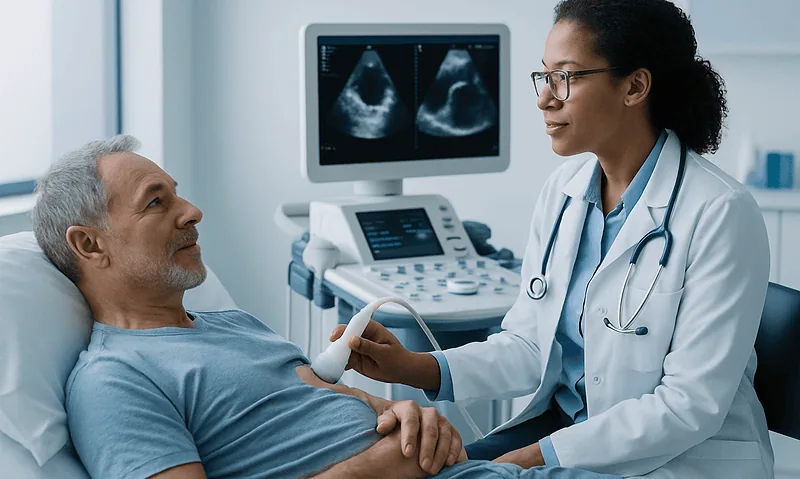
Transthoracic vs Transesophageal Echocardiogram: When the Probe Approach Is Chosen
A transthoracic echocardiogram (TTE) images the heart with an ultrasound wand on the chest and is the standard first test. A transesophageal echocardiogram (TEE)…