

Heart Valve Surgery in Turkey: Treatment Guide

Yes, much of heart valve surgery in Turkey can be planned before you travel. A preliminary online review of your echocardiography, imaging and medication records helps the cardiac team propose a provisional pathway. The final decision on repair, replacement or a catheter-based option is only made after in-person examination and hospital-based testing, and travel clearance home comes only when your surgeons consider it safe.
Can you plan major cardiac surgery from another country? More of it than you might expect. This guide explains what heart valve surgery in Turkey involves for an international patient: the online evaluation before you travel, what happens in hospital, how recovery unfolds, and what follow-up looks like once you are home. It also explains what cannot be settled remotely, because knowing the limits of long-distance planning is part of planning well.
The aim is practical: to help you prepare with realistic expectations, supported by Acibadem International at each step.
At a glance
- Procedure type: Major cardiac surgery, valve repair, valve replacement or a selected catheter-based intervention, depending on your diagnosis
- Purpose: To restore safer blood flow through the heart by treating a narrowed, leaking or damaged valve
- Anaesthesia: Usually general anaesthesia for surgery; the approach is decided by the cardiac and anaesthesia teams
- Hospital stay: Typically several days, beginning with intensive care monitoring; the exact duration depends on your procedure and condition
- Estimated recovery: Early recovery takes weeks; healing and stamina continue to improve over several months
- Return to daily life: Gradual, planned with your surgeon and cardiologist, usually starting with light walking
- Final result timeline: Valve function, energy and exercise tolerance are assessed over weeks to months with follow-up imaging and clinical review
- Suitable departments: Cardiovascular Surgery, Cardiology, Anaesthesiology and Intensive Care
- International patient support: Medical coordination, interpreters, airport transfers, accommodation guidance and remote follow-up assistance
What is this treatment?
Heart valve surgery treats one or more of the heart’s four valves, aortic, mitral, tricuspid or pulmonary, when they no longer open or close properly. A valve that has narrowed is described as stenotic; a valve that leaks is described as regurgitant. Either problem forces the heart to work harder to move blood, and over time that extra workload can enlarge or weaken the heart chambers.
The purpose of surgery is to reduce that strain and relieve symptoms such as breathlessness, fatigue, chest discomfort, dizziness or swelling. Depending on the diagnosis, the surgeon may repair your own valve or replace it with a mechanical or biological prosthesis. In carefully selected patients, particularly some with aortic valve disease, a catheter-based procedure may be considered instead of open surgery. You can read more about the underlying conditions on our heart valve diseases page.
Patients considering heart valve surgery in Turkey through Acibadem International are evaluated jointly by cardiovascular surgery and cardiology teams. The plan is built on imaging, heart function, symptoms, medical history and your overall health, because the point is not simply to perform a procedure, but to choose the most appropriate one for you.
When is it recommended?

Surgery may be recommended when valve disease is severe, progressive or interfering with daily life. Common reasons include severe aortic stenosis, significant mitral regurgitation, rheumatic valve disease, congenital valve abnormalities, damage from infection, or valve disease that is causing the heart chambers to enlarge or weaken.
Treatment is sometimes recommended even when symptoms are mild, if tests show the heart is under measurable strain. Echocardiography, electrocardiography, blood tests, CT imaging and coronary angiography are used to understand how the valve problem is affecting the heart as a whole. Timing matters: operating too early exposes a patient to surgical risk without clear benefit, while waiting too long can allow heart muscle changes that surgery cannot fully undo.
For international patients, an online pre-evaluation clarifies whether travelling to Turkey for valve treatment is a reasonable plan. The final decision, however, is always made after in-person examination and hospital-based testing. Your specialist will explain why treatment is recommended, what the alternatives are, and what monitoring instead of surgery would involve.
Who is a good candidate?
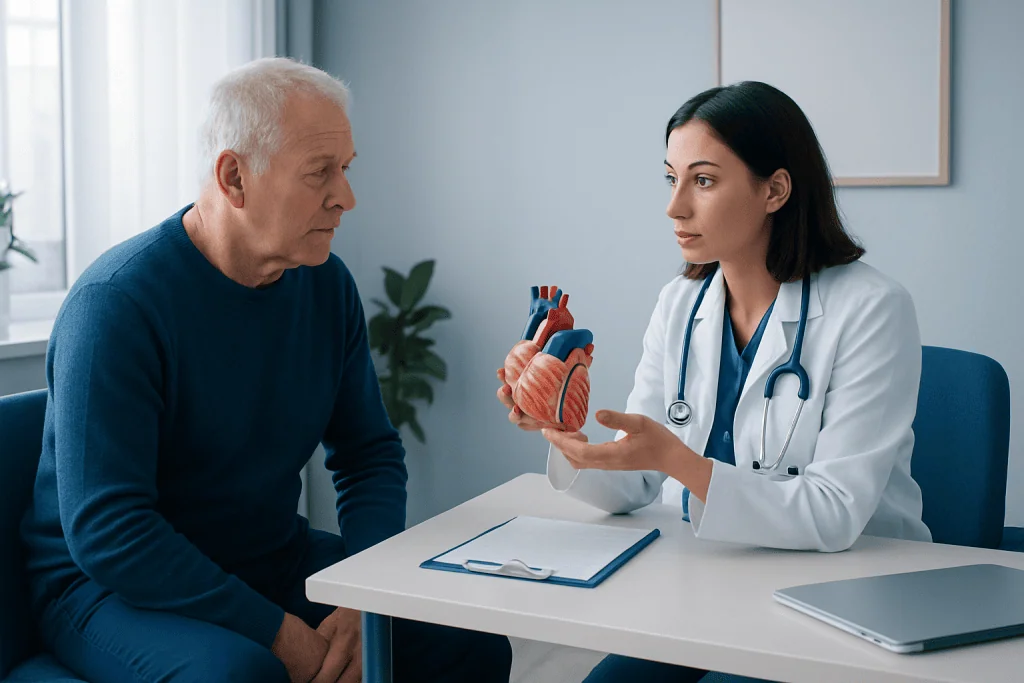
Candidacy starts with the imaging: significant valve narrowing or leakage confirmed by cardiac studies, together with symptoms, heart function findings or a risk profile that supports intervention. Patients often describe shortness of breath, reduced exercise capacity, palpitations, chest discomfort, fainting episodes or leg swelling, though some people with significant valve disease notice very little.
Candidacy also depends on much more than the valve. The team weighs age, lung and kidney function, diabetes, previous heart surgery, coronary artery disease, rhythm problems, infection risk, anticoagulation needs and your capacity to recover from major surgery. These details shape whether repair, replacement, a minimally invasive approach or a catheter-based option is the safer route.
Complex medical conditions do not automatically rule out treatment, but they may require additional specialists. Acibadem International coordinates multidisciplinary review when needed, drawing in cardiology, cardiovascular surgery, anaesthesiology, intensive care and other relevant departments. Suitability can only be confirmed after physician evaluation, no online review replaces that step.
Treatment options
Valve repair preserves your own valve. The surgeon may reshape leaflets, repair the supporting structures, remove excess tissue or place a supportive ring. Repair is most often considered for selected mitral and tricuspid valve problems, and where it is feasible and durable it avoids some of the long-term considerations of a prosthesis. It is not possible for every valve or every pattern of damage.
Valve replacement removes the diseased valve and secures a prosthesis in its place. Mechanical valves are highly durable but usually require lifelong blood-thinning medication with regular monitoring. Biological valves, made from animal or donated human tissue, may not need the same long-term anticoagulation approach in every patient, but they can wear over the years and may eventually need further treatment. The choice depends on your age, lifestyle, medical history and the realistic follow-up available to you at home: a conversation to have in detail with your surgeon.
Surgical access varies. Traditional open surgery through the breastbone gives the surgeon full visibility and remains the standard for complex work, including operations combined with coronary bypass. In selected cases, minimally invasive approaches through smaller incisions are possible. The safest access route depends on the valve involved, your anatomy, previous operations and coronary artery status, not on preference alone.
Catheter-based treatment. For some patients with aortic valve disease, transcatheter aortic valve implantation (TAVI, also called TAVR) may be considered. It is not the same as open surgery and is selected according to age, anatomy, surgical risk and valve characteristics. Your team will explain which pathway the evidence supports in your case. An overview of the surgical procedures themselves is available on our valve surgery page.
Online evaluation before travel
Before travel, Acibadem International arranges an online medical review. The cardiac team typically works from recent echocardiography reports, angiography results, CT or MRI images, blood tests, ECG findings, a current medication list and a written summary of your symptoms. Reports translated into English or Turkish speed the process considerably.
This preliminary review lets the team understand your diagnosis, estimate which tests will need repeating or completing after arrival, and flag anything, advanced symptoms, possible infection, an unstable rhythm, that should be addressed with your local doctor before any travel is considered. The review is genuinely useful, but it has a hard limit: it cannot replace an in-person examination, and every proposed pathway remains provisional until the physicians in Turkey have examined you and confirmed that surgery is appropriate. That caution is deliberate. It protects your safety and avoids unnecessary travel.
Before the treatment
After arrival, the team completes a detailed assessment: physical examination, echocardiography, ECG, chest imaging, blood and urine tests, an anaesthesia consultation, and coronary evaluation if required. Some patients also need dental assessment or infection screening before valve surgery, because a hidden source of infection raises the risk of prosthetic valve infection later.
Tell your doctors about every medication, supplement and blood thinner you take. Some medicines may need adjusting before surgery, but any change is the treating doctor’s decision, never stop or alter a medication on your own. If you smoke, the team will advise stopping as early as possible, since smoking affects breathing, healing and anaesthesia safety.
You will receive clear instructions on fasting, showering, personal items, consent forms and what the intensive care unit will be like. Feeling anxious before heart surgery is normal. Asking questions, travelling with a companion where possible and using interpreter support all help. For the practical side of the journey itself, see our guide on how to prepare for travel before heart valve surgery.
What happens during the treatment
Surgical valve procedures are performed under general anaesthesia. The team accesses the heart through the planned incision, and a heart-lung machine takes over circulation for most open valve operations while the valve is repaired or replaced. Throughout, the anaesthesia, perfusion and surgical teams continuously monitor heart rhythm, blood pressure, oxygenation and other vital functions.
If the valve is repaired, the surgeon corrects the structures causing the leak or obstruction. If replacement is needed, the diseased valve is removed and the prosthesis secured. Additional planned procedures, coronary bypass, treatment of a rhythm problem, repair of a second valve, may be performed in the same operation if they were discussed and consented to beforehand.
Before closing, the team checks valve function, bleeding control and heart performance, often with echocardiography in the operating theatre. You are then transferred to intensive care to wake from anaesthesia under close monitoring. The precise details of your operation depend on the valve involved, the access route and your anatomy.
Hospital stay and discharge
The first stage of recovery happens in intensive care, where the team monitors breathing, rhythm, blood pressure, drainage tubes, urine output and pain control. Breathing support and monitoring lines are reduced step by step as you stabilise. Feeling tired or briefly disoriented at this stage is common after major surgery and anaesthesia.
Once stable, you move to the cardiac ward. Nurses and physiotherapists help you sit, stand and walk progressively. Breathing exercises, supported coughing, wound care, nutrition and medication education fill this stage. If you have received a mechanical valve, anticoagulation education and blood test planning are a central part of ward teaching: this knowledge travels home with you.
Discharge comes when your surgeon and cardiologist are satisfied with your recovery, wound, test results and mobility. For international patients, clearance to fly is a separate, later decision made only when the team considers it safe. You leave with written instructions covering medications, wound care, activity and follow-up.
Recovery timeline
Recovery is gradual and personal. Age, heart function before surgery, the procedure performed, the incision used and your other medical conditions all shape it. The table below is a general orientation, not a schedule.
| Timeframe | What to expect |
|---|---|
| First 24 hours | Intensive care monitoring, breathing support as needed, pain control, rhythm observation and gradual waking from anaesthesia. |
| First week | Transfer to the ward when stable, early walking, breathing exercises, wound checks, medication adjustment and discharge education. |
| Weeks 2–4 | Increasing light activity, improving appetite and sleep, continued fatigue, incision healing, and strict avoidance of heavy lifting or strain. |
| Months 1–3 | Progressive stamina, follow-up echocardiography or blood tests as needed, possible cardiac rehabilitation, and a staged return to daily routines with medical approval. |
| Ongoing | Valve performance, symptoms and heart function are assessed over months. Improvement can be marked or gradual, depending on how the heart had changed before surgery. |
Walking is encouraged early, but intensity increases carefully. Your team advises when you can shower, climb stairs, resume work, drive, fly and exercise. If you take blood-thinning medication, regular monitoring and clear communication with your local doctor after returning home are essential.
What to avoid after treatment
Avoid heavy lifting, pushing, pulling and sudden upper-body strain until your surgeon confirms it is safe. If your breastbone was opened, it needs steady, protected time to knit. Driving, intense exercise, swimming and soaking the wound also wait for explicit medical clearance.
Medication decisions belong to your treating doctors. This matters most for blood thinners, rhythm medications, blood pressure treatment and any antibiotics prescribed for a specific reason. Patients with a mechanical valve follow their anticoagulation plan precisely, with consistent monitoring.
Avoid smoking, and reduce exposure to respiratory infections where you can, since coughing and chest infections make early recovery harder. Finally, avoid skipping follow-up appointments. Valve surgery is not just an operation; it is an operation plus structured aftercare, and the aftercare is where the long-term result is protected.
Follow-up after you return home
Long-term follow-up is part of the treatment, not an optional extra. Depending on your procedure, it may include periodic echocardiography to confirm the repaired or replaced valve is working, ECG checks, blood tests, and, for many patients with prosthetic valves, ongoing anticoagulation monitoring managed locally.
Before you leave Turkey, the team prepares medical documentation for your local cardiologist: the operation record, discharge summary, medication plan and recommended follow-up schedule. Having a named cardiologist or family doctor at home who receives these documents is one of the most valuable things you can organise in advance. Acibadem International can support remote follow-up coordination between the treating team and your local physicians, so that the two ends of your care stay connected rather than working in isolation.
Risks and possible complications
Every heart valve operation carries risk, and honest planning means saying so plainly. Possible complications include bleeding, infection, heart rhythm disturbances, stroke, kidney strain, lung complications, blood clots, valve-related problems, wound healing difficulties and reactions to anaesthesia. How likely any of these are depends on your overall condition, the complexity of the surgery and other individual factors, which is why no general figure would be honest here.
Some patients need a pacemaker after certain valve procedures; some need longer intensive care. Mechanical valves require lifelong anticoagulation with its own bleeding considerations; biological valves can degenerate over time and may need future intervention.
Your medical team discusses your personal risk profile before treatment as part of informed consent. It is a serious conversation, and it is meant to be, understanding the risks is part of choosing surgery well, not an obstacle to it.
Results and expectations
The intended result is improved valve function and safer blood flow. Many patients notice easier breathing, better energy and greater capacity for daily activity, though the pace and extent of improvement vary. If the heart was already weakened or enlarged before surgery, recovery tends to be slower and some symptoms may not resolve completely, treating the valve does not always fully reverse the changes the valve disease caused.
Follow-up testing confirms how the valve is performing over time. Patients with prosthetic valves need long-term surveillance, anticoagulation management where relevant, and advice on preventing valve infection, including dental care.
No valve procedure comes with a promised outcome. Some patients need further treatment in later years, if another valve becomes affected, if a biological valve wears, or if complications develop. A team that explains this before surgery is giving you the honest basis for your decision.
International patient travel planning
Travel planning for heart valve surgery in Turkey should follow the medicine, not the other way round. Flights are best booked only after the preliminary review is complete and your coordinator has confirmed the recommended arrival schedule, since most patients need several days in the country before surgery for consultation, testing and anaesthesia clearance.
Travel with a companion if you possibly can. After major cardiac surgery you may need help with walking, luggage, medication reminders and communication. Acibadem International supports airport transfers, interpreter services and accommodation guidance for you and your companion.
The return flight is planned only after discharge and explicit travel clearance. Long flights after cardiac surgery come with individual instructions, walking during the flight, hydration, medication timing and, where appropriate, compression stockings, personalised to your recovery and clotting risk. Our separate guide on flying after open-heart surgery covers this stage in detail.
Cost and how quotations work
The cost of heart valve surgery in Turkey depends on a set of identifiable factors: which valve is treated, whether repair or replacement is required, the type of prosthesis, the surgical approach, any additional procedures performed in the same operation, the scope of pre-operative testing, the length of intensive care and hospital stay, and any complex medical conditions that add to the care required.
A typical international patient plan covers medical consultations, pre-operative tests, the planned procedure, operating theatre services, anaesthesia, the standard hospital stay, nursing care and early post-operative controls, alongside coordination services such as interpreting and transfers, depending on the agreed plan.
What is not always included is just as important to check: tests requested after arrival, treatment of unrelated conditions discovered during work-up, extended intensive care or hospital stay, special medications, blood products, companion expenses, hotels, flights and long-term follow-up at home. Acibadem International prepares a personalised quotation after medical review, and the plan may be updated if the examining physician changes the recommendation: a quotation built on records alone is always provisional.
Why choose Acibadem
Acibadem International supports patients who travel to Turkey for complex care, including cardiac surgery. For valve patients, the essential ingredient is coordination: cardiology, cardiovascular surgery, anaesthesiology and intensive care working from one shared plan, with modern diagnostic and surgical infrastructure behind them.
International patients usually need more than an appointment. Sharing records across borders, understanding a treatment plan in another language, arranging interpreters and transfers, and organising follow-up after returning home are real work: Acibadem International patient services exist to carry that work with you.
The approach is medically led. Your team discusses whether surgery is appropriate at all, which valve strategy is recommended and what recovery is likely to look like for you, so that the decision you make is an informed one with realistic expectations and continuity of care on both sides of the journey.
Medical review and disclaimer
This guide has been reviewed by the Acibadem International medical team to support international patients researching heart valve treatment options. It is general information, not a diagnosis, a treatment recommendation or a substitute for medical advice.
Heart valve disease is complex, and treatment suitability depends on physician evaluation, imaging, laboratory tests, symptoms and overall health. Only a qualified doctor who has examined you and reviewed your records can recommend the safest and most appropriate plan for you. The standing clinical notice displayed on this site applies to everything you read here.
Step by step
- Initial contact. The process begins when you get in touch with Acibadem International and share your main diagnosis, symptoms, preferred timing and contact details so a coordinator can outline the next steps.
- Medical record submission. Available records, echocardiography reports, angiography results, ECG, CT or MRI images, blood tests, discharge summaries and medication lists, are shared for review.
- Preliminary medical review. The cardiovascular team reviews your information to understand the likely valve problem, whether treatment in Turkey is a reasonable pathway and which tests will be needed after arrival.
- Provisional plan and quotation. You receive a proposed treatment pathway and a personalised quotation based on the records, with the clear understanding that the final plan is confirmed only after in-person evaluation.
- Travel planning. Your coordinator helps with appointment scheduling, arrival timing, interpreter planning, transfers and accommodation guidance for you and your companion.
- Arrival. You are met according to the planned schedule and guided to the hospital or your accommodation as arranged.
- In-person consultation. You meet the cardiovascular surgeon and cardiologist for examination, review of your records, discussion of options and answers to your questions.
- Pre-operative tests. Blood work, echocardiography, ECG, chest imaging, anaesthesia evaluation and coronary assessment are completed as required.
- Treatment. Your valve repair, replacement or selected catheter-based intervention is performed according to the confirmed plan and your consent.
- Hospital stay. Recovery begins in intensive care and continues on the cardiac ward as your condition stabilises.
- First control. The team checks your wound, rhythm, blood tests, valve function and medication plan before considering discharge.
- Discharge and travel clearance. Written instructions are provided, and clearance to fly home is given only when your doctors consider it safe.
- Remote follow-up. After you return home, Acibadem International can coordinate remote follow-up and share documentation with your local physician for ongoing care.
Your checklist
- Passport valid for your travel and treatment dates
- Recent echocardiography report, with images if available
- Coronary angiography, CT, MRI or other cardiac imaging results if performed
- ECG reports, rhythm monitoring results or pacemaker information if relevant
- Current medication list, including blood thinners, supplements and herbal products
- Known allergies, especially to medications, contrast dye, latex or anaesthesia
- Medical history including diabetes, kidney disease, lung disease, stroke or infections
- Previous surgery history, especially prior heart or chest surgery
- Recent blood tests, discharge summaries and cardiology consultation notes
- A description of your current symptoms, when they occur and what triggers them
- Insurance documents or payment information if applicable
- Contact details for your local cardiologist or primary doctor
Key takeaways
- Heart valve surgery may be recommended when a valve is severely narrowed, leaking or damaged and symptoms or heart strain support intervention.
- The plan, repair, replacement, minimally invasive or catheter-based, depends on the valve involved, severity, heart function, age and medical history.
- Online pre-evaluation is genuinely useful, but every plan remains provisional until in-person examination and testing in Turkey.
- Expect time in Turkey for consultation, pre-operative tests, surgery, early recovery and travel clearance; recovery afterwards is gradual and continues at home.
- Structured follow-up, imaging, blood tests and, for many prosthetic valves, anticoagulation monitoring, is part of the treatment, not an afterthought.
Frequently asked questions
What is the life expectancy after heart valve repair?
There is no single honest figure. Outlook after valve repair depends on your age, how the heart was functioning before surgery, which valve was treated, other medical conditions and how consistently follow-up is maintained. Published averages describe groups of patients, not individuals, and they cannot predict your course. What a doctor can do is explain how these factors apply to you specifically after examining you and your test results.
Are surgeries in Turkey safe?
Safety is a property of the specific hospital and team, not of a country. Cardiac surgery carries genuine risk everywhere in the world. What matters is whether the hospital has an experienced multidisciplinary cardiac team, full intensive care capacity, thorough pre-operative testing and structured post-operative follow-up. Sensible questions to ask any provider include how candidacy is assessed, who manages complications, and how care is handed over to your doctors at home.
What is the hardest heart valve to replace?
Surgeons often describe the mitral valve as the most technically demanding, because it sits deep within the heart and relies on a complex apparatus of leaflets, chords and muscle that surgery must respect. Tricuspid procedures and reoperations on any valve also add difficulty. In practice, “hardest” depends on the individual: anatomy, previous surgery, calcification and overall heart function can make any valve straightforward or challenging.
Is it cheaper to get heart valve surgery in Turkey?
Costs differ between countries for structural reasons, staffing, facility and operating costs vary widely. Rather than comparing headline figures, compare what a quotation actually includes: consultations, tests, the operation, prosthesis type, intensive care, hospital stay and early controls, plus what is excluded, such as extended stays or unrelated treatment. A meaningful quotation is prepared only after a medical review of your records, and it remains provisional until in-person evaluation.
Can my heart valve be repaired instead of replaced?
Sometimes. Repair is most often feasible for selected mitral and tricuspid problems, and where it is durable it preserves your own valve. Whether it is realistic in your case depends on the anatomy and the pattern of damage seen on imaging and, ultimately, at operation. Your surgeon will explain whether repair is likely to hold long term or whether replacement is the safer choice.
What is the difference between mechanical and biological valves?
Mechanical valves are built to last but usually require lifelong blood-thinning medication with regular monitoring. Biological valves may not need the same long-term anticoagulation approach in every patient, but they can wear over the years and may need future treatment. The choice weighs your age, lifestyle, medical history and the follow-up realistically available where you live: it is a joint decision with your surgeon, not a default.
How long should I stay in Turkey for heart valve surgery?
Long enough for consultation, pre-operative testing, the operation, hospital recovery, a first control and travel clearance. The total varies with the procedure performed and how your recovery progresses, so firm return flights are best left unbooked until your team indicates a safe window. The clearance to fly is a medical decision made near the end of your stay, not at the start.
Is it safe to fly after heart valve surgery?
Flying becomes possible once recovery reaches a point your surgeon and cardiologist approve. They consider wound healing, heart rhythm, breathing, mobility, clotting risk and medication stability before giving clearance, and they will give you individual flight instructions covering movement during the flight, hydration and medication timing. The timing differs from patient to patient, which is why it is decided in person rather than in advance.
Add us as a Preferred Source to see more of our trusted health content across Google Search, AI Overviews and Discover.

Update history
- PublishedJune 9, 2026
- Medical review approvedAugust 30, 2026
- Last content updateAugust 30, 2026
References2
- Aortic valve replacement: NHS nhs.uk
- Heart Valve Diseases: MedlinePlus medlineplus.gov
More Patient Guides

HoLEP in Turkey: How It Compares With TURP and What Recovery Involves
HoLEP in Turkey treats enlarged prostate tissue with laser enucleation; learn how it compares with TURP, recovery, travel and follow-up.

Porcelain Veneers in Turkey: Who Is Suitable and How Many Visits Are Needed?
Porcelain veneers in Turkey can enhance tooth shape and colour in two visits for suitable patients after a personalised dental assessment.

How to Prepare for a Sedation Procedure in Turkey
Prepare safely for a sedation procedure in Turkey with guidance on fasting, medicines, travel, recovery and follow-up.

Treatment Delays in Turkey: What Happens If Tests or Recovery Change Your Schedule
Treatment delays in Turkey can happen if tests or recovery change your plan. Learn how to manage appointments, travel, accommodation and follow-up.