

Endometriosis Symptoms: The Signs Too Often Dismissed: Explained
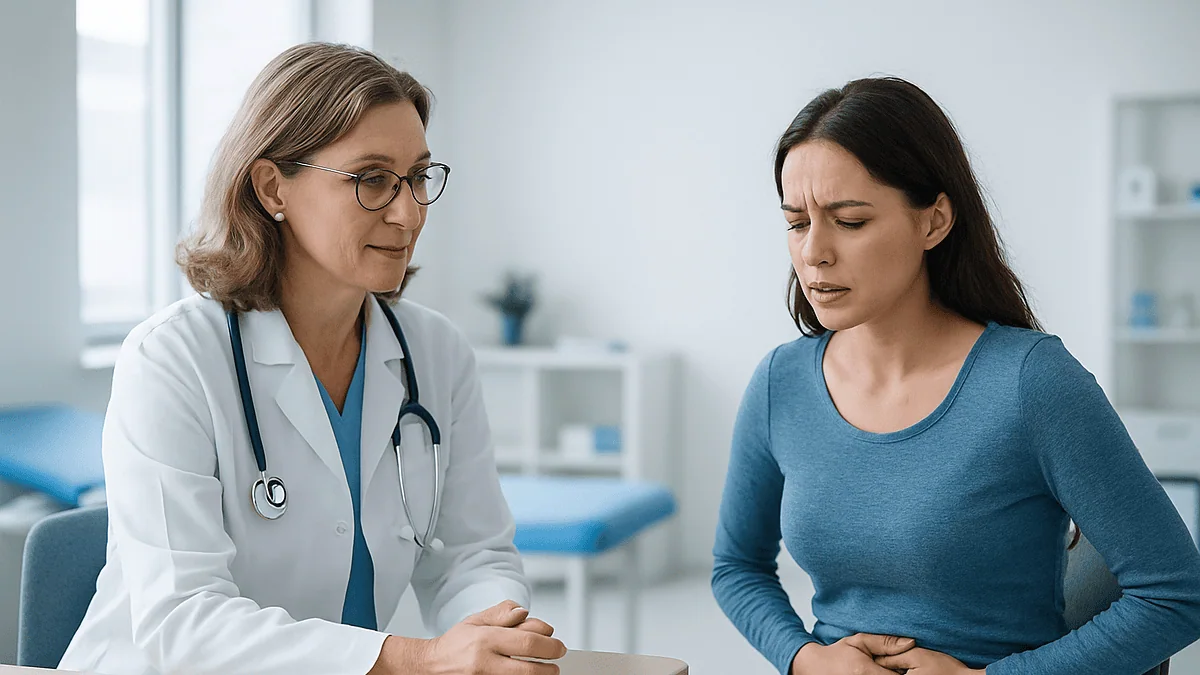
Key Takeaways
- Endometriosis affects roughly 10% of women and girls of reproductive age, about 190 million people worldwide, per the WHO.
- Pain severity does not correlate with disease stage: stage 1 disease can hurt more than stage 4, which is sometimes found only during fertility workups.
- Painful bowel movements or urination that cluster around your period are classic endometriosis signs frequently misdiagnosed as digestive or bladder problems.
- Studies across several countries report average diagnostic delays of roughly four to eleven years, largely because period pain is culturally normalized.
- There is no self-test for endometriosis, but a dated symptom diary covering two to three cycles is the single most useful thing to bring to an appointment.
- Normal ultrasound results do not rule out endometriosis, small, superficial lesions that cause severe pain often don't appear on any scan.
Endometriosis symptoms most often include pelvic pain that worsens around periods, pain during or after sex, painful bowel movements or urination during menstruation, heavy bleeding, bloating, fatigue, and difficulty getting pregnant. Symptom severity does not reliably reflect how extensive the disease is, and there is no self-test. Persistent pelvic pain that disrupts work, school, or sleep warrants a medical evaluation rather than reassurance that it's normal.
There’s a heating pad in her desk drawer at work. She’s learned which meetings she can survive and which ones she’ll need to reschedule, because week three of her cycle is coming and week three is always bad. When she mentioned it once, years ago, someone told her that painful periods just run in the family. So she stopped mentioning it.
That story, with small variations, is told in exam rooms every day. Endometriosis affects roughly 10 percent of women and girls of reproductive age, about 190 million people worldwide, according to the World Health Organization, yet many spend years being told their pain is ordinary before anyone says the word out loud.
The signs are real, they follow recognizable patterns, and medical evidence has plenty to say about them. What follows is an honest map: what the symptoms actually look like, why they get missed, and what genuinely helps you get answers.
What Are the Most Common Endometriosis Symptoms?
Endometriosis happens when tissue similar to the lining of the uterus grows where it shouldn’t, most often on the ovaries, fallopian tubes, and the tissue lining the pelvis. That tissue responds to the menstrual cycle the way the uterine lining does: it thickens, breaks down, and bleeds. But it has nowhere to go, so it triggers inflammation, scarring, and pain.
The classic signs, drawn from sources like Mayo Clinic and the NHS, cluster around the pelvis and the cycle:
- Pelvic pain and cramping that begins before a period and lasts longer than typical cramps
- Pain during or after sex, often felt deep inside
- Pain with bowel movements or urination, especially during menstruation
- Heavy periods or bleeding between periods
- Bloating, nausea, and fatigue, particularly around menstruation
- Difficulty getting pregnant, sometimes the first and only sign
Notice what’s not on that list: a single defining symptom. Endometriosis is a shape-shifter. One person has crushing period pain and nothing else. Another has bowel symptoms that were chased as digestive trouble for a decade. A third feels almost nothing and learns about the condition during a fertility workup. That variability is one reason the average road to diagnosis stretches across years, and it’s why patterns, not any single bad day, matter most when you’re deciding whether to seek care.
What Does Endometriosis Pain Feel Like?
People describe it in strikingly physical language: stabbing, twisting, dragging, burning. A common thread is that the pain feels deeper and more consuming than ordinary cramps, less like a muscle tightening and more like something pulling inside the pelvis. It can radiate into the lower back, down the legs, or up toward the ribs.
The mechanism explains a lot. Endometriosis lesions bleed on a hormonal schedule, and each small bleed provokes inflammation. Over time, that inflammation can create adhesions, bands of scar tissue that tether organs together, so the bowel, ovaries, or uterus tug against each other with movement. Lesions can also grow on or near pelvic nerves, which is why some people feel shooting pain into a hip or thigh.
Timing offers clues, though it isn’t foolproof. Pain often flares in the days before and during a period, and may spike again around ovulation. For some, especially after years of disease, pain becomes chronic, present most days, worse at predictable points in the cycle.
Here’s a fact worth holding onto, confirmed repeatedly in the medical literature and highlighted by Mayo Clinic: the intensity of pain does not track with the extent of disease. Small, scattered lesions can produce severe pain; extensive disease can be nearly silent. If a scan looks unremarkable but the pain is real, that is not a contradiction. It’s a known feature of this condition, and it’s exactly why symptoms deserve to be taken seriously on their own terms.
Is My Period Pain Normal, or Something More?
Mild cramping during a period is common; the uterus contracts to shed its lining, and prostaglandins, the chemicals driving those contractions, cause genuine discomfort. The question is where discomfort ends and a warning sign begins. The honest answer: pain that regularly disrupts your life is not something to normalize, whatever the cause turns out to be.
| Feature | Typical period cramps | Pain worth evaluating |
|---|---|---|
| Timing | First 1–2 days of bleeding | Starts days before the period, lasts throughout or beyond |
| Response to standard pain relief | Usually eases noticeably | Barely touched, or relief is brief |
| Impact on daily life | Uncomfortable but functional | Missed work or school, canceled plans, days in bed |
| Location | Lower abdomen | Radiates to back, legs, rectum, or with bowel movements |
| Trend over time | Stable year to year | Gradually worsening with each year |
| Other symptoms | Mild bloating | Pain with sex, painful urination or stools during periods, heavy bleeding |
No table can diagnose you, and painful periods have other possible causes, fibroids, adenomyosis, and pelvic inflammatory disease among them. But if you’re reading the right-hand column and nodding, that’s a pattern, and patterns are what clinicians need to hear about. Vomiting from period pain, fainting, or building your calendar around your cycle are not rites of passage. They’re reasons for an appointment.
The Symptoms Almost No One Connects to Endometriosis
Some of the most telling signs live far from anyone’s mental picture of a “period problem,” which is exactly why they get chased down other diagnostic paths for years.
Bowel symptoms. Lesions on or near the bowel can cause painful bowel movements, diarrhea or constipation that worsens during periods, and cramping easily mistaken for irritable bowel syndrome. The cyclical pattern, symptoms flaring with menstruation, is the clue that often goes unnoticed.
Bladder symptoms. Painful urination during periods, urgency, or a bladder that aches when full can point to endometriosis involving the bladder or the tissue near it.
“Endo belly.” Many patients describe dramatic, painful abdominal bloating, going from flat to looking several months pregnant within hours. Inflammation and altered gut function likely both contribute; the research here is still developing, but the experience is widely reported and recognized by clinicians.
Fatigue. Chronic inflammation, disrupted sleep from pain, and heavy bleeding (which can lower iron stores) combine into an exhaustion that patients consistently rank among their most disabling symptoms.
Pain far from the pelvis. Rarely, endometriosis tissue reaches the diaphragm or chest, producing shoulder or chest pain that cycles with menstruation. Nerve involvement can send pain down a leg. These presentations are uncommon, but they exist in the medical literature and deserve mention because they’re so easily misattributed.
If any of these ring true and they follow your cycle, write that down. Cyclical timing is one of the strongest signals you can offer a clinician, and it’s the detail most often lost when symptoms are considered one specialist at a time.
Why Does Sex Hurt with Endometriosis?
Pain during or after sex, clinicians call it dyspareunia, may be the most underreported endometriosis symptom of all, and the silence around it costs people years.
The pain is typically deep rather than at the entrance, often sharp or aching, and frequently positional: certain angles hurt, others don’t. It can linger for hours or into the next day. Anatomically, this makes sense. Endometriosis commonly settles on the uterosacral ligaments and in the space behind the uterus, tissue that gets stretched or pressed during deep penetration. Adhesions that fix the uterus or ovaries in place amplify the effect.
Two things are worth saying plainly. First, this is a physical symptom with a physical mechanism, not a problem of desire, effort, or relationship health, though it understandably strains all three. Studies and clinical reviews consistently link dyspareunia from endometriosis to avoidance, anxiety around intimacy, and relationship stress, which is all the more reason to name it in a medical setting rather than quietly endure it.
Second, clinicians ask about pain with sex because it’s diagnostically useful, not to pry. Deep dyspareunia that cycles with menstruation meaningfully raises suspicion for endometriosis, according to sources including the NHS and Cleveland Clinic. If saying it out loud feels impossible, write it down and hand the note over. The information matters that much.
How Do I Check Myself for Endometriosis?
The direct answer: you can’t. There is no reliable self-exam, no home test, and no symptom checklist that confirms endometriosis. Anyone selling a self-diagnosis shortcut is selling something the evidence doesn’t support.
But there is something powerful you can do at home, and it changes the quality of the medical conversation entirely: track your symptoms systematically for two to three full cycles. Not vague impressions, data.
- Pain: where it is, what it feels like, a 0–10 score, and which cycle day it occurs on
- Bleeding: how heavy (pads or tampons per day, clots, flooding), how long, any spotting between periods
- Bowel and bladder: pain with stools or urination, and whether it clusters around your period
- Sex: pain during or after, and whether position matters
- Function: days you missed work or school, canceled plans, or couldn’t get out of bed
That last category is the one people skip and clinicians value most. “My pain is bad” is subjective; “I missed four workdays in the last three months” is evidence of impact that’s hard to wave away.
Notice what you’re doing when you track: you’re converting a story that has been dismissed into a pattern that can’t be. You’re also giving yourself a baseline, so if a clinician suggests watching and waiting, you’ll know precisely whether things are stable or worsening. A notebook or a period-tracking app both work. Consistency matters more than format.
What Is the Root Cause of Endometriosis?
Here’s the honest answer that top-ranking articles often soften: nobody knows for certain. Several theories have real evidence behind them, and the truth is probably a combination.
Retrograde menstruation is the oldest and best-known idea: during a period, some menstrual blood flows backward through the fallopian tubes into the pelvis, carrying cells that implant and grow. The problem with this as a complete explanation is that most menstruating people experience some retrograde flow, yet only about one in ten develops endometriosis. Something else, likely immune or genetic, determines who does.
Cellular transformation theories propose that cells lining the pelvis, or embryonic cells left over from development, can change into endometrial-like tissue under hormonal or inflammatory influence. This helps explain rare cases found in unusual locations, and even the very rare cases reported in people assigned male at birth undergoing certain hormone treatments.
Lymphatic and blood vessel spread may explain how endometriosis tissue occasionally reaches distant sites like the lungs or diaphragm.
Immune system differences appear to allow misplaced tissue to survive and establish itself when the body might otherwise clear it.
Genetics clearly plays a role: the condition runs in families, and having a mother or sister with endometriosis raises your risk, according to Johns Hopkins Medicine and others.
Why does this uncertainty matter to you? Because it means no one caused their own endometriosis, not through diet, stress, exercise habits, or delayed childbearing. The self-blame many patients carry has no basis in the evidence.
What Are the Symptoms of Stage 4 Endometriosis?
Endometriosis is commonly graded in four stages, minimal, mild, moderate, and severe, based on how much tissue is present, how deep it goes, and how much scar tissue has formed. Stage 4 means extensive disease: deep implants, large cysts on one or both ovaries (endometriomas, sometimes called “chocolate cysts” for their dark fluid), and dense adhesions that can bind the uterus, ovaries, bowel, and bladder together.
Symptoms that may accompany stage 4 disease include:
- Severe, often chronic pelvic pain, not limited to periods
- Deep pain with sex
- Significant bowel symptoms, painful stools, constipation, or in some cases partial bowel obstruction
- Bladder pain or urinary symptoms
- Marked difficulty conceiving, since adhesions can distort or block the fallopian tubes
- Ovarian cysts large enough to cause pressure, swelling, or sudden pain if they rupture
Now the counterintuitive part, and it’s important: staging measures anatomy, not suffering. A person with stage 1 disease can be in worse daily pain than someone with stage 4, and some people with stage 4 disease discover it only when they struggle to conceive. Mayo Clinic and other major sources state this plainly. The staging system was designed largely with fertility prognosis in mind, not pain.
So if you’ve been told your disease is “only” minimal, that word says nothing about how much pain you’re entitled to report, and if you’ve been diagnosed at stage 4, it doesn’t automatically predict a life of severe symptoms. Anatomy and experience are two different measurements.
What Is It Like Having Endometriosis Day to Day?
Ask patients, and the answer is rarely just “pain.” It’s logistics. It’s the mental arithmetic of planning a vacation, a presentation, or a wedding around a cycle. It’s carrying a change of clothes because of heavy bleeding, or knowing exactly which restroom is closest at work.
The rhythm varies. Many people have a week or two of feeling mostly fine, then a stretch where pain, bloating, and exhaustion take over. Others live with daily symptoms that ebb and spike. Fatigue deserves special mention: in patient surveys it ranks among the most burdensome symptoms, yet it’s rarely what brings someone to a doctor, because who reports being tired?
The invisible weight is real, too. Research consistently links endometriosis with higher rates of anxiety and depression, unsurprising for a condition that combines chronic pain, disrupted intimacy, fertility worries, and, for many, years of being disbelieved. The WHO explicitly names reduced quality of life, missed work and school, and social impact as consequences of the disease.
And yet the picture isn’t uniformly grim, and honesty requires saying that as well. Many people, once diagnosed, find combinations of medical management, surgery, physical therapy, and lifestyle adjustments that meaningfully reduce symptoms. Endometriosis is a chronic condition, but a diagnosis is the beginning of managing it, not a sentence. The people who describe the biggest turning point usually point to the same moment: the first appointment where someone believed them.
Why Is Endometriosis So Often Dismissed?
The delay between first symptoms and diagnosis is one of the most studied failures in women’s health. Research across multiple countries has commonly reported averages between four and eleven years. That’s not a gap; it’s a chasm. Several forces dig it.
Period pain is culturally normalized. Generations have been told that suffering through menstruation is simply part of it. When pain is expected, reporting it feels like complaining, and hearing about it invites reassurance instead of investigation.
The symptoms impersonate other conditions. Bowel symptoms get worked up as irritable bowel syndrome. Bladder pain gets treated as recurrent infection. Fatigue gets attributed to stress. Each specialist sees one puzzle piece; nobody assembles the box.
The disease hides from standard tests. A pelvic exam can be normal. A routine ultrasound can be normal. Historically, definitive diagnosis required surgery, which raised the bar for pursuing an answer, and made “let’s wait and see” the path of least resistance.
Pain reporting is filtered through bias. Studies of pain treatment have documented that women’s pain is more likely to be attributed to emotional causes and less likely to be treated aggressively than men’s. That’s not an accusation against any individual clinician; it’s a pattern in the data that both patients and doctors benefit from knowing about.
None of this is a reason for cynicism. It’s a reason for preparation. Understanding why the system misses this disease is the first step to making sure it doesn’t miss yours.
Can Endometriosis Affect Fertility?
Yes, it can, and for some people, trouble conceiving is the symptom that finally leads to a diagnosis. Endometriosis is one of the most common conditions identified during fertility evaluations, and estimates cited by major medical centers suggest that roughly one third to one half of people with endometriosis experience some difficulty getting pregnant.
The mechanisms are partly anatomical and partly biochemical. Adhesions and scar tissue can distort the pelvis, block or kink the fallopian tubes, or encase the ovaries, physically interfering with the egg’s journey. Endometriomas can damage ovarian tissue. Beyond structure, the chronic inflammation of endometriosis appears to create a pelvic environment less hospitable to eggs, sperm, and embryos, though researchers are still working out the details.
Two balancing truths deserve equal billing. First, endometriosis is not sterility: many people with the condition, including some with advanced disease, conceive without any intervention. Second, when help is needed, options exist, from surgery that restores anatomy to assisted reproduction, and outcomes vary by individual, which is a conversation for a specialist rather than a promise any article can make.
One myth needs retiring on the way out: pregnancy does not cure endometriosis. Symptoms often ease during pregnancy because ovulation and menstruation pause, but they frequently return afterward. Advising someone to “just have a baby” as treatment is not supported by evidence, and reputable sources have said so for years.
How Is Endometriosis Actually Diagnosed?
The path usually starts with a detailed conversation: your symptom history, its timing against your cycle, and its impact on daily life, followed by a pelvic exam, during which a clinician may feel cysts or tender areas. A normal exam, importantly, rules nothing out.
Imaging comes next. A transvaginal ultrasound can detect endometriomas on the ovaries and, in experienced hands, some deep disease involving the bowel or bladder. MRI provides a more detailed map, particularly when surgery is being planned. But here’s the caveat that saves people years of confusion: small, superficial lesions, the kind that can still cause severe pain, often don’t show up on any scan. Normal imaging does not mean no endometriosis.
The historical gold standard is laparoscopy: keyhole surgery in which a surgeon looks inside the pelvis, confirms lesions visually, and typically takes tissue samples for confirmation. It remains the only way to be certain.
That said, practice has shifted. Because surgery carries costs and risks, many guidelines now support starting treatment based on a clinical diagnosis, a characteristic symptom pattern, exam findings, and imaging, without requiring surgical proof first. If symptoms respond, that itself is informative.
What this means practically: you don’t need to “earn” an operation to have your symptoms addressed. Ask your clinician whether your pattern fits endometriosis, what a working diagnosis would mean for next steps, and under what circumstances they’d recommend imaging or surgical evaluation. Those are reasonable questions, and good clinicians welcome them.
When Should You See a Doctor About Pelvic Pain?
Make an appointment if any of the following describes you:
- Period pain that regularly keeps you home from work or school, or that standard pain relief barely touches
- Pelvic pain outside your period, present most days or worsening over months
- Pain during or after sex that recurs
- Painful bowel movements or urination, especially clustering around menstruation
- Heavy bleeding, soaking through protection hourly, passing large clots, or bleeding longer than seven days
- Bleeding between periods
- Trying to conceive for 12 months without success (or 6 months if you’re over 35)
- Painful bloating or fatigue that tracks with your cycle and disrupts your life
Seek urgent care, same day, for sudden, severe pelvic or abdominal pain, especially with fever, vomiting, fainting, or dizziness. A ruptured ovarian cyst, ovarian torsion, appendicitis, and ectopic pregnancy can all present this way, and none of them waits politely for a scheduled appointment.
A gentler point, often overlooked: teenagers count. Endometriosis can begin with the very first periods, and studies of adults with the disease frequently find symptoms started in adolescence. A teen who misses school monthly because of period pain deserves an evaluation, not a lecture on toughness.
You do not need to be certain something is wrong to justify an appointment. Uncertainty is precisely what appointments are for, and “my pain is interfering with my life” is a complete and sufficient reason to be seen.
How to Talk to Your Doctor So Your Pain Is Taken Seriously
Given the well-documented diagnostic delays, a little preparation shifts the odds meaningfully in your favor.
Bring your tracking data. Two or three cycles of dated notes turn an impression into a pattern. Lead with function: days missed, plans canceled, sleep lost. Impact is harder to dismiss than adjectives.
Use the word. Saying “I’m concerned this could be endometriosis, and here’s why” is not self-diagnosing; it’s directing the conversation. It obliges a clinician to either evaluate for it or explain their reasoning against it, and either response gives you information.
Ask questions that require specific answers. “What conditions could explain this combination of symptoms?” “What would we look for on imaging?” “At what point would you refer me to a gynecologist?” Specific questions produce specific plans.
Name the pattern if you feel dismissed. A calm “I hear that this could be normal, but it’s a significant change for me and it’s affecting my daily life: I’d like it documented and investigated” is both polite and effective. Asking for symptoms to be recorded in your chart creates a paper trail that matters if you need a referral later.
Know that second opinions are normal. If your concerns are repeatedly waved off without evaluation, seeing another clinician isn’t disloyalty. It’s how a great many endometriosis diagnoses have actually happened.
The evidence on this disease says one thing above all: the patient’s account is the most important diagnostic instrument available. Prepare yours like it matters, because it does.
Frequently asked questions
How do I check myself for endometriosis?
You can’t self-diagnose endometriosis, no home test or self-exam exists. What you can do is track symptoms for two to three cycles: pain location and intensity by cycle day, bleeding heaviness, pain with sex, bowel or bladder symptoms, and days of missed work or school. That record gives a clinician the pattern they need. Diagnosis requires medical evaluation, usually including a pelvic exam and imaging, and sometimes laparoscopic surgery.
What is the root cause of endometriosis?
No single root cause has been proven. Leading theories include retrograde menstruation (menstrual blood flowing backward into the pelvis), transformation of pelvic cells into endometrial-like tissue, spread through blood or lymph vessels, immune system differences that let misplaced tissue survive, and genetics, risk rises if a close relative has it. Most researchers believe several factors combine. Importantly, nothing in the evidence suggests patients cause their own endometriosis through lifestyle choices.
What are the symptoms of stage 4 endometriosis?
Stage 4 means extensive disease: deep implants, large ovarian cysts called endometriomas, and dense scar tissue binding pelvic organs. Symptoms may include severe chronic pelvic pain, deep pain with sex, painful bowel movements or bowel obstruction symptoms, bladder pain, and significant difficulty conceiving. However, stage measures anatomy, not pain, some people with stage 4 disease have few symptoms, while stage 1 disease can cause severe daily pain.
What is it like having endometriosis?
Most patients describe a life planned around the cycle: predictable stretches of pain, heavy bleeding, bloating, and deep fatigue, alternating with better weeks. Pain with sex and bowel symptoms are common but often unspoken. Surveys consistently show impacts on work, school, relationships, and mental health, and many people report years of being disbelieved before diagnosis. With diagnosis and management, many find their symptoms become substantially more controllable.
Can teenagers have endometriosis?
Yes. Endometriosis can begin with the first menstrual periods, and studies of adults with the disease frequently find symptoms started in adolescence. A teenager who regularly misses school because of period pain, vomits from cramps, or has pain that standard relief doesn’t touch deserves a medical evaluation. Early recognition matters, because normalizing severe pain in teens is one of the main drivers of the long diagnostic delays seen in adults.
Does endometriosis go away after menopause?
Symptoms often improve after menopause because estrogen, which fuels endometriosis tissue, declines sharply. But improvement isn’t guaranteed: existing scar tissue and adhesions can continue causing pain, and a small number of people have active symptoms after menopause, particularly with hormone therapy. Endometriosis is best understood as a chronic condition that typically quiets with menopause rather than one that reliably disappears. New or persistent postmenopausal pelvic pain always warrants evaluation.
Does endometriosis show up on an ultrasound?
Sometimes, but a normal ultrasound does not rule it out. Transvaginal ultrasound reliably detects endometriomas, cysts on the ovaries, and, with a skilled operator, some deep disease near the bowel or bladder. Small, superficial lesions, which can still cause severe pain, usually don’t appear on any scan. That’s why symptoms and history carry so much diagnostic weight, and why laparoscopy remains the only way to confirm the disease definitively.
What is 'endo belly'?
“Endo belly” is the patient-coined term for the severe, often painful abdominal bloating many people with endometriosis experience, sometimes swelling dramatically within hours, especially around menstruation. Inflammation from endometriosis lesions and changes in gut function are thought to contribute, though research is still developing. It differs from ordinary bloating in its intensity and cyclical pattern. Tracking when it occurs relative to your period gives clinicians useful diagnostic information.
Does pregnancy cure endometriosis?
No. Symptoms often ease during pregnancy because ovulation and menstruation pause, but they commonly return afterward, and the underlying disease remains. Major medical sources are clear that pregnancy is not a treatment, and advising someone to conceive for symptom relief isn’t supported by evidence. If you want children, endometriosis is worth discussing with a clinician early, since the condition can affect fertility, but pregnancy decisions should never be framed as therapy.
Is heavy bleeding a symptom of endometriosis?
It can be. Heavy periods and bleeding between periods appear on the symptom lists of major medical sources, though pain remains the more characteristic sign. Practically, heavy bleeding means soaking through a pad or tampon every hour for several hours, passing clots larger than a coin, or bleeding beyond seven days. Because heavy bleeding also occurs with fibroids, adenomyosis, and other conditions, and can cause iron deficiency, it deserves evaluation regardless of the cause.
References
- Endometriosis Fact Sheet (World Health Organization)
- Endometriosis (NHS)
- Endometriosis (MedlinePlus)
- Endometriosis: Causes, Symptoms, Diagnosis & Treatment (Cleveland Clinic)
This article is for general information only and is not a substitute for professional medical advice. Please consult a qualified doctor about your individual situation.

More from the Blog
What Size of Ovarian Cyst Is Dangerous? Centimetres, Millimetres and What They Mean
There is no single size at which an ovarian cyst becomes dangerous. Most cysts are small, fluid-filled and disappear on their own within a…
Pelvic Ultrasound vs Hormone Tests in PCOS: Why Diagnosis Needs More Than One Finding
Neither a pelvic ultrasound nor a blood test can diagnose PCOS on its own. Clinicians use the Rotterdam approach, which requires at least two…
Endometriosis Treatment in Steps: Hormonal Medicine, Pain Care and When Surgery Is Added
Endometriosis treatment options are usually built in steps. Most people start with pain care, often anti-inflammatory medicines, and hormonal medicine that lowers estrogen's effect…
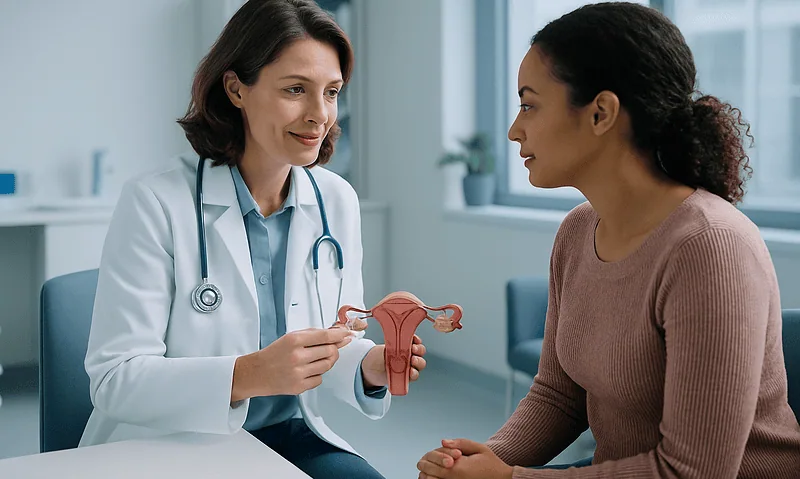
How Fast Ovarian Cysts Grow: Typical Timelines, Warning Signs and When to Treat
Most ovarian cysts are functional cysts that form during a normal menstrual cycle, reach roughly 2 to 5 centimeters, and shrink or disappear within…
What the Robot Actually Changes in a Robotic Hysterectomy: Precision, Incisions and Recovery
In a robotic hysterectomy the robot does not operate on its own. The surgeon sits at a console a few feet from the patient…
Cystectomy vs Oophorectomy: Removing the Cyst or the Ovary and How Surgeons Decide
A cystectomy removes only the cyst and leaves the ovary in place; an oophorectomy removes the whole ovary, sometimes with the fallopian tube. Surgeons…