

Fat Transfer for International Patients: Stay Length, the Flight Home and Protecting the Graft

Key Takeaways
- Fat transfer leaves two surgical sites, a liposuction donor area and a grafted area, and the donor site usually sets the flight timeline while the graft sets the sitting and sleeping rules.
- CDC medical tourism guidance describes waiting on the order of seven to ten days after chest or abdominal surgery before flying, and abdominal liposuction counts as abdominal surgery.
- Travel lasting more than about four hours roughly doubles the baseline risk of a blood clot, and recent surgery is one of the strongest added risk factors, according to CDC travel guidance.
- Transferred fat survives by growing a new blood supply over the first one to two weeks, which is why pressure, heat, dehydration and nicotine in that window can cost volume.
- A portion of grafted fat always fails to survive and is reabsorbed, so the volume seen in week one is not the final result, and the settled shape typically takes several months to judge.
- The most dangerous complication of buttock fat transfer is fat entering large veins and reaching the lungs, which is why professional bodies emphasize placement only into the fatty layer under the skin.
People having fat transfer abroad are usually asked to stay near the operating team until the main early risks have passed, often around one to two weeks depending on the body area and how much fat was moved, and to avoid long flights sooner because recent surgery raises blood clot risk. The exact stay, flight date and aftercare plan should come from the treating surgeon, not a travel itinerary.
The return ticket is already booked. That is the detail that keeps coming up when someone describes planning fat transfer abroad: the surgery date is fixed, the flight home is fixed, and the recovery has to fit into whatever gap sits between the two. The body, unfortunately, does not read itineraries.
Fat transfer is a two-part operation. Fat is removed from one area by liposuction and placed into another, so the patient is recovering from two sets of wounds at once, and the newly placed fat is fragile for weeks. Add a long-haul flight, with its cramped seat and dry cabin air, and ordinary recovery questions become travel questions.
This explainer walks through what actually happens in the procedure, how long people are typically asked to stay, what the flight does to a healing body, and how to protect the graft once you are home. Every number here is tied to a mainstream source, and every decision belongs to the treating team.
What is fat transfer abroad, and why does the trip itself change the plan?
Fat transfer, also called fat grafting or autologous fat transfer, means moving a person’s own fat from one part of the body to another. Autologous simply means the tissue comes from the same person, so there is no donor and nothing synthetic is implanted. It is used to add volume to the face, breasts, buttocks, hands or areas left hollow by injury or earlier surgery.
Having it done in another country does not change the biology. What it changes is the logistics around the biology. At home, a swollen week three or a stubborn area of bruising means a short drive to the surgeon who did the work. Abroad, that same question lands on a video call across time zones, or on a local doctor who did not see the operation and may be unfamiliar with it.
Guidance from the NHS on cosmetic surgery abroad makes the same point in plain terms: complications can happen with any surgery, and being far from the operating team makes them harder to manage. The CDC’s medical tourism guidance adds that flying soon after surgery raises the risk of blood clots, and that travelers should arrange follow-up before leaving, carry copies of records, and know who will handle problems once they are home.
So the realistic framing for fat transfer abroad is not whether the surgery can be done well elsewhere. It is whether the whole arc, from consultation to final healing, has been planned with the same care as the operation itself. The stay length, the flight date and the aftercare contacts are clinical decisions, not travel conveniences, and they should be set by the surgeon before anything is booked.
How fat transfer actually works: harvest, process, place
The operation has three stages, and each one affects how the recovery feels.
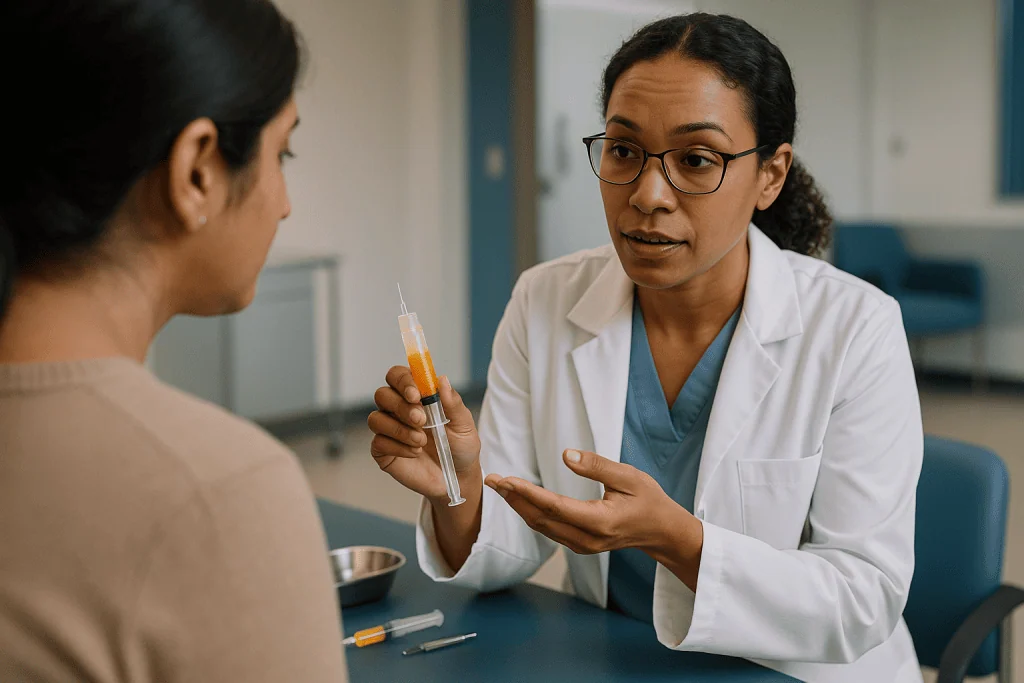
First comes the harvest. The surgeon uses liposuction, a technique in which a thin hollow tube called a cannula is passed under the skin to suction out fat, usually from the abdomen, flanks or thighs. A fluid containing a local anesthetic and a medicine that narrows blood vessels is typically infused first to reduce bleeding and bruising. The NHS describes liposuction as leaving small incisions, with swelling and bruising that can last for weeks.
Second, the fat is processed. The harvested material is a mix of fat cells, blood, fluid and oil from damaged cells. It is separated, by settling, spinning or filtering, so that mostly intact fat cells remain. The method varies between surgeons, and no single technique has been proven superior in a way that mainstream guidance endorses.
Third, the fat is placed. Rather than injecting one large pool, the surgeon lays down many small threads of fat through tiny entry points. Each strand needs to sit close to existing blood vessels so that it can pick up a blood supply over the following days. Fat placed in large clumps is more likely to die in the center, forming oil cysts or firm lumps.
This last point is the reason the graft is fragile. For roughly the first week or two, the transferred fat survives by absorbing nutrients from surrounding tissue while new capillaries grow into it. Pressure, heat, poor circulation or infection during that window can cost volume. It is also why surgeons routinely explain that a portion of the transferred fat will not survive and that the final result is visible only once swelling settles, which Mayo Clinic’s liposuction guidance places at several months.
Who fat transfer is usually for, and who is usually asked to wait
Fat transfer suits people who want modest, natural-feeling volume and who have enough fat elsewhere to donate. Very lean patients may not have a usable donor site, and the operation cannot create fat that is not there.
Typical reasons for considering it include hollowing of the cheeks or temples with age, asymmetry after breast surgery, modest breast enlargement without an implant, contour irregularities after earlier liposuction, and buttock shaping. The NHS lists fat transfer among cosmetic procedures that should be discussed with a surgeon who can explain limits and risks honestly, including the fact that results are variable and often need more than one session.
Surgeons commonly ask certain people to wait or to reconsider:
- Current smokers, because nicotine narrows small blood vessels and the graft depends on new capillaries growing into it.
- People whose weight is still changing, since transferred fat behaves like fat elsewhere and will grow or shrink with the rest of the body.
- Anyone with an uncontrolled medical condition such as diabetes or high blood pressure, poorly controlled clotting disorders, or a recent blood clot.
- People taking blood-thinning medicines, who need a plan agreed with the prescribing doctor rather than stopping on their own.
- Anyone with an active infection, or unrealistic expectations about size or permanence.
Travel adds a further group: people who cannot stay long enough for safe early follow-up, or who have no clinician at home willing to see them afterwards. The CDC’s medical tourism page specifically advises identifying who will provide follow-up care before leaving. If that question has no answer, most surgeons would consider the plan incomplete.
None of these are absolute rules. They are the usual reasons a careful team pauses, and the final call sits with the surgeon and anesthetist who assess the individual patient.
How safe is a fat transfer? What the evidence actually shows
Because the material is the patient’s own tissue, fat transfer avoids the implant-specific problems of rejection or device failure. That does not make it risk-free. It is surgery under anesthesia with two operative sites, and the risks fall into three groups.
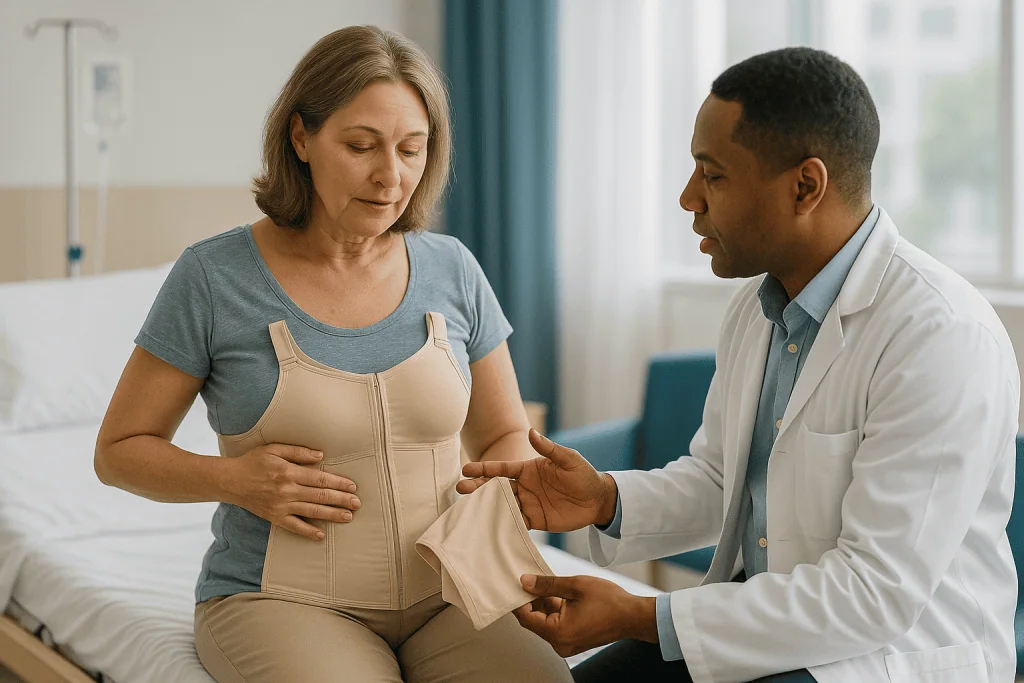
The first group is shared with liposuction. The NHS and Mayo Clinic both list bruising, swelling, numbness, fluid collection under the skin (a seroma), contour irregularities, infection, and, rarely, injury to deeper structures. Anesthesia carries its own small risks, which the anesthetist assesses beforehand.
The second group belongs to the graft itself. Some transferred fat dies, a process called fat necrosis, which can leave firm lumps, oil-filled cysts or small areas of calcification. In the breast, these can show up on later imaging and need to be distinguished from other findings, which is why patients are advised to tell future radiologists that they have had fat grafting.
The third group is specific to large-volume buttock grafting. If fat is injected into or beneath the gluteal muscle, it can enter large veins and travel to the lungs, a fat embolism. Professional surgical bodies in several countries have issued safety statements emphasizing placement only into the fatty layer under the skin and the use of larger, blunt cannulas. This is the single risk that most shapes how carefully buttock fat transfer should be planned, and it is a reasonable topic to raise directly with any surgeon.
What the evidence does not support is a single safety percentage that applies to every patient and every technique. Published figures vary with body area, volume, surgeon approach and how complications are counted. The honest answer to the question is that fat transfer is generally considered a lower-risk option than some implant-based alternatives for modest volume, with a serious but uncommon risk profile that climbs with larger volumes and deeper placement.
How long should you stay after fat transfer abroad?
There is no universal number, and anyone quoting one without examining you is guessing. What exists is a logic that surgeons apply, and it rests on three questions: when do the early complications tend to appear, when is the graft stable enough to tolerate travel, and when is a long flight no longer an unreasonable clot risk?
Early complications cluster in the first week. Bleeding, hematoma, wound problems and most surgical-site infections tend to declare themselves within the first several days, which is why most teams want to see the patient at least once in that window. Sutures, if non-dissolving, are commonly removed around the one-week mark.
The graft needs time too. Over the first one to two weeks the transferred fat is establishing its blood supply, and swelling is at its peak. Sitting still for hours, dehydration from cabin air and the lifting of luggage all work against it.
Flight timing follows the surgery type. The CDC’s medical tourism guidance describes waiting on the order of seven to ten days after chest or abdominal surgery before flying, mainly because of clot risk, and fat harvested from the abdomen counts. The NHS cosmetic surgery abroad guidance advises against flying for some weeks after cosmetic surgery and building in enough time for complications to be managed where the operation was done.
Putting these together, many surgeons ask fat transfer patients to remain nearby for roughly one to two weeks, longer after large-volume buttock grafting or when both the donor site and the recipient site are extensive. Some ask for less after a small facial graft under local anesthesia. The figure that matters is the one the operating surgeon writes in the discharge plan. Booking a flexible return, or no fixed return at all, removes the pressure to leave before the team is comfortable.
Flying after fat transfer: what the pressure, the seat and the hours do
A commercial cabin is pressurized to the equivalent of roughly 1,800 to 2,400 meters of altitude, humidity is low, and the seat pitch is designed for cost, not circulation. Each of those facts interacts with a body that is healing from two surgical sites.
Lower cabin pressure causes gases in the body to expand slightly. This matters most after surgery involving air-filled spaces, such as some abdominal or eye operations, which is part of the reasoning behind the chest and abdominal waiting periods the CDC describes. Fat transfer does not usually leave trapped gas, but the harvest incisions and any drains need to be settled before a flight.
Low humidity pulls fluid from the body through breathing and skin. Mild dehydration thickens the blood, which adds to clot risk, and the graft depends on good circulation during its first weeks.
The seat is the real problem. Sitting for hours compresses the back of the thighs and the buttocks, slows blood flow in the calves, and, for buttock fat transfer specifically, puts direct pressure on the grafted area. Surgeons commonly ask buttock graft patients to avoid sitting directly on the graft for the first couple of weeks, which is close to impossible on an aircraft. Some use pressure-relieving cushions that shift weight to the thighs; whether that is adequate for a given flight length is a question for the surgeon.
Compression garments, which are worn over donor areas to reduce swelling, remain appropriate during travel if the surgeon has asked for them. What should not be worn is anything that squeezes the grafted area itself, unless specifically prescribed.
None of this makes flying forbidden. It makes the date, the flight length and the seating plan clinical details that deserve the same attention as the operation.
Blood clots and the flight home: the risk that outranks the graft
If one risk deserves the top spot in planning the journey home, it is a deep vein thrombosis, a clot forming in a deep vein of the leg, and its complication, pulmonary embolism, where part of that clot travels to the lungs. Together these are called venous thromboembolism.
The CDC’s travel guidance notes that any travel lasting more than about four hours roughly doubles the baseline risk of a clot, and that recent surgery is one of the strongest additional risk factors, alongside older age, obesity, hormone therapy, pregnancy, a previous clot and cancer. Surgery and a long flight stacked within days of each other are exactly the combination the guidance warns about.
The mechanics are simple. Immobility lets blood pool in the calves, surgery makes blood more prone to clotting for days to weeks, and dehydration thickens it further. Liposuction over a large area adds tissue injury across a wide surface, which also nudges clotting upward.
Basic prevention, as described by both the CDC and the NHS, is not complicated:
- Stand and walk the aisle regularly, ideally every hour or so when the seatbelt sign allows.
- Pump the calves while seated: raise and lower the heels, rotate the ankles, tighten and release the thigh muscles.
- Drink water steadily and keep alcohol and heavy sedation to a minimum, since both reduce movement and fluid.
- Avoid crossing the legs for long stretches and choose an aisle seat where possible.
- Wear properly fitted graduated compression stockings if the surgeon advises them.
Some surgeons prescribe a short course of a blood-thinning medicine for higher-risk patients around surgery and travel. These medicines reduce the blood’s clotting tendency for a defined period and carry a bleeding trade-off, so whether one is appropriate is a decision for the operating team and the prescribing clinician, never something to arrange independently.
Protecting the graft: pressure, position and the first weeks
The transferred fat is living tissue that has been cut off from its original blood supply and asked to find a new one. Everything about early aftercare is designed to help that process and avoid interrupting it.
Pressure is the first concern. Fat cells that are compressed lose contact with the tiny new vessels growing into them. For facial grafts this means no massaging, no sleeping face-down, and no tight glasses or masks resting on grafted areas for the period the surgeon specifies. For breast grafts it means a soft, non-compressive bra rather than an underwired or push-up style. For buttock grafts it means avoiding sitting directly on the area in the early weeks, and lying on the front or side to sleep.
Temperature is the second. Heat, from saunas, hot baths or direct sun, dilates vessels and increases swelling; cold packs applied directly can damage fragile tissue. Most teams ask patients to avoid both extremes and to keep the grafted area at ordinary room temperature.
Circulation is the third. Gentle walking from the first day improves blood flow everywhere, including into the graft, and is also the cornerstone of clot prevention. Strenuous exercise, which the NHS liposuction guidance suggests holding off for several weeks, is different: it raises blood pressure and swelling and can disturb the donor site.
Nicotine deserves its own line. It constricts small vessels, exactly the ones the graft is waiting for, and surgeons routinely ask patients to avoid smoking and vaping before and after the procedure. Weight stability matters as well, because transferred fat responds to weight change like any other fat.
A healthy graft does not announce itself. What patients usually notice instead is steady reduction in swelling, bruising fading from purple to yellow, and a slow settling of shape over months rather than days.
Fat grafting recovery time: what the following days and weeks usually look like
Recovery runs on two clocks: the donor site, which heals like any liposuction, and the recipient site, which heals like a graft. The timelines below are typical ranges drawn from NHS and Mayo Clinic guidance on liposuction and cosmetic surgery, not promises, and an individual plan can differ.
Days one to three are the heaviest. Donor areas ache like a deep bruise and leak thin, pink fluid for a day or two. Compression garments go on at the donor site. Grafted areas look overfilled and feel tight. Walking short distances is encouraged; stairs and lifting are not.
By the end of week one, most people are moving comfortably around the house. Bruising is at its most colorful. A first review usually falls here, with wound checks and suture removal where needed. The NHS suggests many people can return to desk-based work within one to two weeks after liposuction, depending on the extent.
Weeks two to four bring visible deflation as swelling drops. The grafted area may look smaller than it did in week one, which can alarm people who were not warned. This is the expected loss of fluid, not the loss of all the graft. Compression at the donor site often continues through this period.
Weeks four to six are when surgeons commonly clear a gradual return to exercise, with strenuous activity still built up slowly.
Months three to six are when the shape settles enough to judge. Mayo Clinic notes that final liposuction contours can take several months to emerge, and the same is broadly true of the grafted area. Only now does a surgeon usually assess whether a second session might be considered.
For someone planning fat transfer abroad, the practical implication is that the early reviews happen in the operating country and the later ones at home. Both need a named clinician.
Face, breast or buttocks: how the body area changes the travel timeline
Fat transfer is one name covering operations that differ enormously in scale. A facial graft may involve a small volume placed under local anesthesia, while large-volume buttock grafting is a general anesthetic procedure with extensive liposuction. The travel implications differ accordingly.
| Area grafted | Typical scale | Main early concerns | Travel and sitting implications |
|---|---|---|---|
| Face and hands | Small volume; often local or light sedation | Bruising, swelling, asymmetry while settling; pressure on grafted areas | Shortest stay typically requested; avoid face-down sleeping; glasses and masks can press on grafts |
| Breast | Moderate volume; usually general anesthetic; abdominal or thigh donor sites | Fat necrosis and lumps; donor-site swelling; later imaging considerations | Abdominal liposuction brings the chest and abdominal surgery flight guidance into play; soft, non-compressive support only |
| Buttocks | Often large volume; general anesthetic; wide liposuction | Fat embolism risk with deep placement; large donor-site healing; clot risk from extensive surgery | Longest stay typically requested; sitting on the graft limited for weeks, which conflicts directly with aircraft seating |
| Scars and contour defects | Variable, usually small | Partial take in scarred tissue; may need repeat sessions | Depends on donor site extent more than the graft itself |
Two threads run through the table. The donor site, not the graft, often sets the flight timeline, because that is where the larger wound and the clot risk sit. And the grafted area sets the seating and sleeping rules. A buttock graft patient facing a twelve-hour flight has a genuine problem that a cushion may or may not solve; a facial graft patient on the same flight mainly needs to protect the cheeks from the headrest and keep walking the aisle.
The CDC’s medical tourism guidance is clear that the surgeon who performed the operation is the right person to set the flight date, and it is worth asking that question in the consultation rather than after the surgery.
Arranging follow-up before you leave: records, sutures and who to call
The most useful hour in a fat transfer abroad plan is the one spent, before departure, deciding what happens if something goes wrong at week three. The CDC’s medical tourism guidance and the NHS guidance on cosmetic surgery abroad converge on the same checklist, and it is short.
Get the records in writing. That means an operative note describing the donor sites, the volume harvested, the volume placed and the technique, plus the anesthetic record and a list of every medicine given or prescribed. Ask for these in a language a home clinician can read.
Know the aftercare contact. A named person, a phone number that works across time zones, and a stated response time. Ask what happens outside office hours and whether the surgeon or a colleague answers.
Settle the suture and drain plan. If anything needs removing, it should either be done before travel or arranged with a clinician at home who has agreed to it in advance.
Line up a home clinician. Many primary care doctors will see a returning patient for wound checks, but they may be reluctant to manage complications of surgery they did not perform. A frank conversation before the trip avoids a frustrating one afterwards. The NHS notes that complications arising from private surgery abroad may need to be treated at home, and that this can be complicated when the operating team is thousands of miles away.
Plan for a delay. If the surgeon is not comfortable discharging on the planned date, staying longer should be financially and practically possible. A return ticket with no flexibility quietly pushes people to travel before they should.
Finally, keep a simple record of the grafted area during healing: symmetrical photographs in the same light every few days. They help any clinician judge change over time, and they reassure the patient that week-three deflation is swelling settling, not the graft vanishing.
What people often get wrong about fat transfer abroad
Myths around fat transfer tend to be optimistic in one direction and fearful in the other. The evidence sits in between.
The first mistake is believing that all the fat survives. It does not. A proportion of transferred fat always fails to establish a blood supply and is reabsorbed, which is why surgeons slightly overfill and why a second session is sometimes discussed. The exact proportion varies widely with technique and area, and anyone quoting a precise survival figure as a guarantee is overstating what the evidence supports.
The second is the opposite belief: that the graft simply disappears over time. Fat that survives the first few months behaves like native fat. It stays, and it changes with the body’s weight.
The third is treating fat transfer as a minor procedure because it uses the patient’s own tissue. The donor site is a real liposuction wound, the anesthetic is real, and the clot and embolism risks are real. Natural material does not mean negligible surgery.
The fourth is thinking the flight home is harmless once the wounds are closed. Closed skin says nothing about the clotting tendency of the blood, which stays elevated for days to weeks, or about the fragility of a graft still growing its blood supply.
The fifth is assuming a cushion makes early sitting safe after buttock grafting. A pressure-relieving cushion shifts weight to the thighs; it does not remove the fact that a long flight involves hours of near-immobility, which raises clot risk regardless of where the weight lands.
The sixth is that any lump after breast fat transfer is a sign of something sinister. Most are areas of fat necrosis or oil cysts, which are benign. They still need assessment, and future imaging reports should always note the history of grafting so that radiologists interpret findings correctly.
Questions to ask your care team
The consultation is the place where travel planning and clinical planning meet. These questions help, and the answers deserve to be in writing.
- Which areas will be used as donor sites, and roughly how much fat will be removed from each?
- How will the fat be processed and placed, and for buttock grafting, how do you avoid injecting into or beneath the muscle?
- How many days do you want me to remain nearby after the operation, and what are you checking for in that period?
- When do you consider it reasonable for me to take a flight of this length, and does that change if my flight has a long connection?
- Do you assess my personal blood clot risk before surgery, and what prevention do you use during the operation and after?
- Will I need compression garments, for which areas, and for how long?
- For buttock or breast grafting, what are your sitting, sleeping and bra instructions, and for how many weeks?
- What proportion of the graft do you expect not to survive, and what is your approach if a second session is discussed later?
- Who do I contact with a concern after I am home, how quickly do you respond, and what can you actually do from a distance?
- Will I receive my full operative and anesthetic records before I leave, in a language my home doctor can read?
- If I need treatment for a complication after returning, how does that work, and who pays?
- What would make you postpone my surgery or my flight on the day?
A team that welcomes these questions, and answers the last one without hesitation, is showing something worth noticing. The NHS guidance on cosmetic surgery abroad encourages exactly this kind of scrutiny, including checking the surgeon’s qualifications and the facility’s standards independently rather than relying on marketing material.
When to call your doctor
Most recovery after fat transfer is uncomfortable rather than dangerous. A small number of signs mean the operating team, or if abroad and unreachable, the nearest emergency service, should be contacted without waiting.
Seek emergency care immediately for:
- Sudden shortness of breath, chest pain, coughing up blood, or a racing heartbeat. These can indicate a pulmonary embolism or, after buttock grafting, a fat embolism.
- Swelling, pain, warmth or redness in one calf or thigh, especially if it is clearly different from the other leg. This can indicate a deep vein thrombosis.
- Confusion, drowsiness, a rash of small purple spots, or difficulty breathing in the first days after buttock grafting, which can be signs of fat reaching the lungs or brain.
- Heavy bleeding from an incision that does not stop with firm pressure, or rapidly increasing swelling with severe pain in one area.
- Fever with chills, spreading redness around a wound, foul-smelling discharge, or skin over a donor or grafted area turning dark or blistered.
- Fainting, severe dizziness on standing, or very little urine, which can indicate blood loss or dehydration.
Contact the care team the same day, without emergency services, for persistent fever, a wound that opens, increasing rather than decreasing pain after the first few days, a hard and tender lump that is growing, numbness that is spreading, or any new symptom that worries you.
If you are already home, tell whichever clinician you see that you recently had fat transfer with liposuction, where the donor and recipient sites were, and when you flew. Those three facts change how symptoms are interpreted. The CDC specifically advises returning medical travelers to share this history with their home doctor.
The threshold for calling should be low. Surgeons would far rather hear about a symptom that turns out to be ordinary swelling than learn about a clot after the fact.
Frequently asked questions
Is fat transfer safe?
Fat transfer is generally regarded as a lower-risk option than some implant-based procedures for modest volume, but it is still surgery with real risks. These include bleeding, infection, fluid collections, lumps from fat that does not survive, blood clots, and, with large-volume buttock grafting, fat embolism. Risk rises with larger volumes and deeper placement. A surgeon should assess your individual health, clot risk and goals before confirming it is suitable.
How long should I stay abroad after fat transfer?
Many surgeons ask fat transfer patients to remain nearby for roughly one to two weeks, longer after large-volume buttock grafting, because early complications tend to appear in the first week, the graft is establishing its blood supply, and flying soon after surgery raises clot risk. The exact figure depends on the areas treated and your health, and it should be written into your discharge plan by the operating surgeon.
How soon can I fly after fat transfer?
The CDC’s medical tourism guidance describes waiting on the order of seven to ten days after chest or abdominal surgery before flying, mainly because of blood clot risk, and liposuction of the abdomen falls into that category. Your surgeon may ask for longer after extensive liposuction or buttock grafting. Flight length, your personal clot risk and how the wounds are healing all feed into the date, so ask for it in writing before you book.
How soon can I fly after a tummy tuck?
A tummy tuck is abdominal surgery, so the same CDC guidance applies: a waiting period on the order of seven to ten days, and often longer at the surgeon’s discretion, because it involves a larger wound and higher clot risk than liposuction alone. Drains, if used, usually need to be out first. Only the operating surgeon, who knows how the wound is healing and your clot risk, should set the actual flight date.
How long is fat grafting recovery time?
Most people are moving comfortably within a week and, per NHS liposuction guidance, back to desk work in around one to two weeks. Bruising and the heaviest swelling settle over two to four weeks, strenuous exercise is often cleared gradually around four to six weeks, and the final contour of both donor and grafted areas can take several months to emerge, according to Mayo Clinic guidance on liposuction. Larger procedures take longer.
Can I sit on a plane after a buttock fat transfer?
Sitting directly on a fresh buttock graft is usually restricted for the first couple of weeks, which conflicts with aircraft seating. Some surgeons permit limited sitting on a pressure-relieving cushion that shifts weight to the thighs, but a long flight also means hours of near-immobility, which raises clot risk regardless of the cushion. Whether and when a specific flight is reasonable is a decision for the surgeon who placed the graft.
Does all the transferred fat survive?
No. A portion of the transferred fat always fails to establish a blood supply and is reabsorbed over the first few months, which is why surgeons slightly overfill and sometimes discuss a second session. The proportion that survives varies with technique, body area and individual healing, and no reliable single figure applies to everyone. Fat that does survive behaves like native fat and changes with your weight.
What are the signs of a blood clot after surgery and flying?
A deep vein thrombosis usually causes swelling, pain, warmth or redness in one leg, often the calf, that differs from the other leg. If part of the clot reaches the lungs, it can cause sudden breathlessness, chest pain, coughing up blood or a racing heartbeat. Any of these after surgery or a long flight needs emergency assessment. Walking regularly, calf exercises and staying hydrated during travel reduce the risk.
How much does a fat transfer cost, and which country is cheapest?
This article does not discuss prices or compare countries, because cost figures vary enormously with the areas treated, the volume moved, the anesthetic used and what aftercare is included, and because price is not a measure of safety. The NHS guidance on cosmetic surgery abroad encourages people to weigh surgeon qualifications, facility standards, follow-up arrangements and the cost of managing complications at home rather than headline figures.
Will fat transfer to the breast affect mammograms later?
It can. Areas of fat that do not survive may form oil cysts or small calcifications that appear on later breast imaging and need to be distinguished from other findings. These are usually benign, but anyone who has had breast fat grafting should tell future radiologists and keep a record of the date and surgeon, so that images are interpreted with the correct history.
References
This article is for general information only and is not a substitute for professional medical advice. Please consult a qualified doctor about your individual situation.
Add us as a Preferred Source to see more of our trusted health content across Google Search, AI Overviews and Discover.

More from the Blog
Fat Grafting Myths Corrected: Transferred Fat Is Living Tissue, Not a Filler That Wears Off
Fat grafting moves a person's own fat from one body area to another, where the fat cells that survive gain a blood supply and…
When Do Laser Liposuction Results Show? Swelling, Skin Retraction and Final Contour Timing
Laser liposuction results usually appear in stages rather than all at once. Swelling and bruising are most noticeable in the first one to two…
Can You Have Arm Liposuction Before Reaching Your Goal Weight? How Surgeons Time It
Arm liposuction can sometimes be done before you reach your goal weight, but most surgeons prefer a weight that has been stable for several…

Lifting Your Toddler After a Mommy Makeover: A Realistic Return-to-Childcare Plan
Most people are asked to avoid lifting a toddler for several weeks after a mommy makeover, because a tummy tuck tightens the abdominal wall…

Brazilian Tummy Tuck Recovery: Compression, Early Walking and Protecting the Repaired Muscles
Brazilian tummy tuck is a marketing name for abdominoplasty, often combined with liposuction, so recovery follows the same pattern as any tummy tuck. Most…
When Do CoolSculpting Results Appear? Why Fat Freezing Takes Weeks to Show a Change
CoolSculpting is a brand name for cryolipolysis, a procedure that cools fat cells until they are damaged and gradually cleared by the body. Because…