

Fibroid Surgery Recovery: Bleeding Checks, Early Walking and Lifting Limits Week by Week

Key Takeaways
- Mayo Clinic gives typical recovery as a few days after hysteroscopic myomectomy, two to four weeks after laparoscopic or robotic myomectomy, and four to six weeks after open abdominal myomectomy.
- Excessive blood loss is the leading risk of myomectomy, which is why blood counts are checked before surgery and some women are treated for anemia first.
- Early walking within the first day lowers the risk of leg and lung blood clots and wakes up a bowel slowed by anesthesia.
- Lifting limits protect the stitched uterine wall, not the skin, so they apply almost as strictly after keyhole surgery as after an open incision.
- Spotting or brownish discharge can last from a few days up to six weeks; the warning signs are soaking a pad an hour, golf-ball clots, or a foul smell.
- Surgeons commonly advise waiting three to six months after myomectomy before trying to conceive so the uterine wall can heal fully.
Fibroid surgery recovery time depends mainly on the route the surgeon used. Hysteroscopic removal through the cervix usually needs a few days; laparoscopic or robotic myomectomy typically two to four weeks; open abdominal myomectomy or abdominal hysterectomy about four to eight weeks. Light vaginal bleeding, early short walks and a temporary ban on heavy lifting are normal parts of the plan, and your surgical team sets the exact limits.
The discharge nurse hands over a folded sheet of instructions, and somewhere between the car park and the kitchen table the questions begin. How much bleeding is too much? Is walking to the mailbox brave or foolish on day two? Can a grocery bag really be too heavy? For many women, the operation itself was the easy part: someone else was in charge. Recovery is the part you run yourself.
Fibroid surgery recovery time is not one number. A woman who had a small fibroid shaved away through the cervix may be back at her desk within the week, while her neighbor recovering from an open abdominal myomectomy is still counting weeks. Both are recovering normally. The difference is the route the surgeon took to the uterus, not how tough either woman is.
This guide walks through what usually happens, week by week, with the evidence behind each milestone, so the folded sheet makes more sense.
What actually decides fibroid surgery recovery time?
Three things shape how long recovery takes, and only one of them is about the fibroid. The first is the surgical route. A hysteroscopic myomectomy, where the surgeon passes a thin telescope through the vagina and cervix and removes fibroids from inside the uterine cavity, leaves no external wound at all. A laparoscopic or robotic myomectomy uses a few keyhole incisions in the abdomen. An open abdominal myomectomy or an abdominal hysterectomy uses a single longer incision, often low across the bikini line. Mayo Clinic gives typical recovery as a few days for hysteroscopic surgery, two to four weeks for laparoscopic or robotic approaches, and four to six weeks for open abdominal myomectomy.
The second factor is what was done inside. Removing a single fibroid from the surface of the uterus is a smaller job than taking out eight deep ones and stitching the muscle wall in several layers. Larger or more numerous fibroids mean more bleeding during surgery and more internal healing afterward, even when the incision on the skin looks identical.
The third factor is you: age, anemia before surgery, other health conditions, and how much rest and movement you can actually arrange at home. A woman who arrives at surgery already iron-deficient from years of heavy periods often feels tired for longer, because her body is rebuilding blood as well as tissue.
Put those together and the honest answer to how long fibroid surgery recovery takes is a range, not a date. The timelines below are typical ranges drawn from major clinical sources. Your surgeon will narrow them for your operation, and their instructions override anything general.
How fibroid surgery works: what actually happens in the operating room
Fibroids are non-cancerous growths of muscle and fibrous tissue in the wall of the uterus. Surgery either removes the fibroids and keeps the uterus, called myomectomy, or removes the uterus itself, called hysterectomy. Which one is chosen depends on symptoms, fibroid location, and whether future pregnancy matters, and that decision belongs to you and your surgical team.
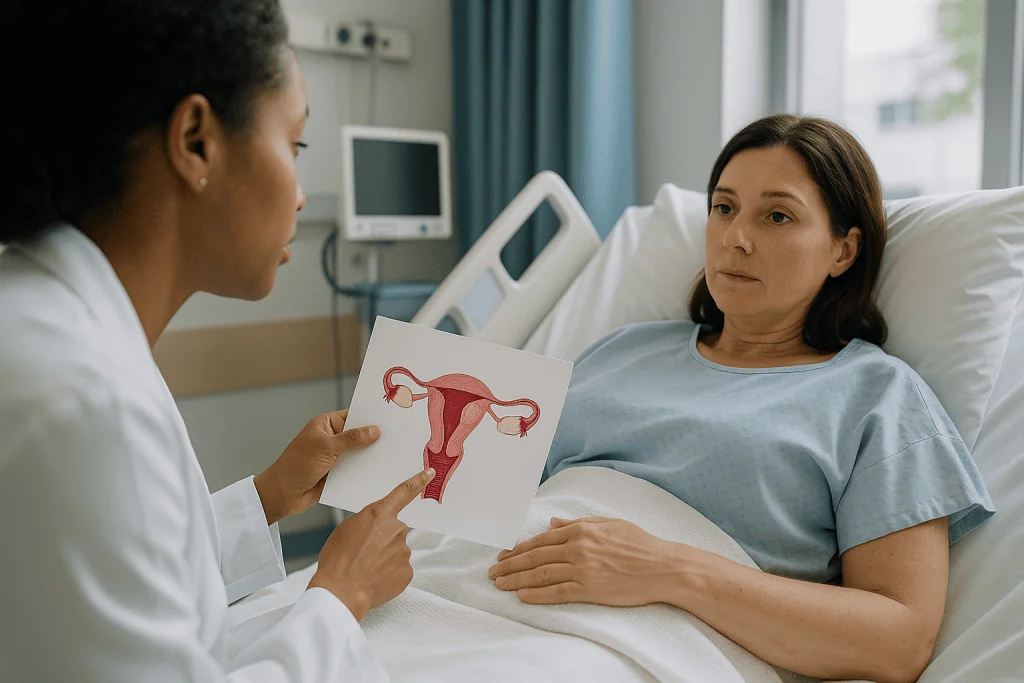
In a hysteroscopic myomectomy the surgeon fills the uterus with fluid, looks through a slender camera passed via the cervix, and uses an instrument to shave or cut away fibroids that bulge into the cavity. No incision is made in the skin, which is why the NHS describes this as a procedure many women go home from the same day.
Laparoscopic myomectomy means a few small incisions in the abdomen, a camera, and long instruments. The surgeon cuts into the uterine wall, frees the fibroid, removes it, and closes the muscle with stitches. Larger fibroids are cut into smaller pieces to remove them through the small openings, sometimes inside a containment bag; your surgeon will explain how this is done in your case.
Open abdominal myomectomy uses a single incision so the surgeon can feel the uterus directly and remove many or very large fibroids. Hysterectomy for fibroids can also be done abdominally, vaginally, or laparoscopically.
Whatever the route, the uterus is a muscular organ with a rich blood supply, so controlling bleeding is a central part of every fibroid operation. Surgeons may use medicines that constrict blood vessels, tourniquets around the uterus, or careful layered stitching. This is why the amount of internal work, not just the size of the scar, sets the pace of recovery.
Who is usually offered fibroid removal, and who is asked to wait
Surgery is not the starting point for most fibroids. The NHS and MedlinePlus both describe fibroids that cause no symptoms as needing no treatment at all, only monitoring. Women are typically offered surgery when fibroids cause heavy or prolonged bleeding that has not responded to medicines, pressure symptoms such as frequent urination or pelvic heaviness, pain, or difficulty conceiving that the care team thinks the fibroid location explains.
Myomectomy is generally the operation of choice when a woman wants to keep her uterus, most often because she hopes to become pregnant. Hysterectomy is more often discussed when childbearing is complete and fibroids are many, large, or likely to recur. Mayo Clinic notes that fibroids can grow back after myomectomy and some women eventually need a second procedure, which is one reason the two operations are weighed side by side.
Being asked to wait is common and is usually about safety rather than reluctance. Women with significant anemia are often treated first with iron or with medicines that shrink fibroids and reduce bleeding, so they arrive at surgery with better blood counts. Those with uncontrolled blood pressure or diabetes, active infection, or recent blood clots may be asked to optimize those conditions first. Women close to menopause are sometimes offered watchful waiting, because fibroids often shrink as estrogen levels fall.
Alternatives include hormonal medicines, an intrauterine hormonal device for bleeding, uterine artery embolization, in which a radiologist blocks the fibroid blood supply, and focused ultrasound. Each has its own recovery profile and its own limits. Your team can lay out which options fit your fibroids and your plans; none of this is a decision to make from a magazine article.
Is fibroid surgery a major surgery?
It depends on the route, and the honest answer for abdominal operations is yes. Open abdominal myomectomy and abdominal hysterectomy are performed under general anesthesia, involve an incision through the abdominal wall, and usually mean one to a few nights in the hospital. Cleveland Clinic and Mayo Clinic both classify these as major operations with the risks that accompany any major surgery: bleeding, infection, blood clots, and injury to nearby organs such as the bladder or bowel.
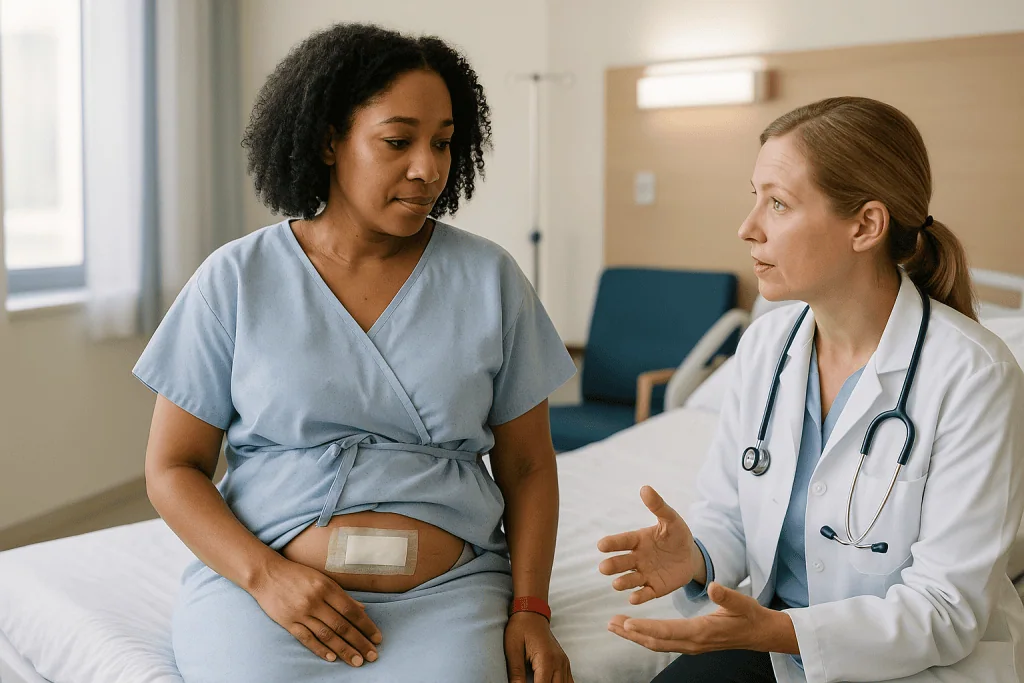
Bleeding deserves a specific mention because fibroid surgery is unusually bloody. Mayo Clinic lists excessive blood loss as the leading risk of myomectomy, and some women need a blood transfusion during or after the operation. Surgeons plan for this, which is why blood counts are checked beforehand and why iron treatment before surgery is so common. In rare cases, uncontrollable bleeding during a myomectomy can lead to an unplanned hysterectomy, a possibility that should be discussed in your consent conversation.
Laparoscopic and robotic myomectomies are still major surgery in terms of what happens inside the body. The uterus is cut and stitched just as in the open operation; only the skin wound is smaller. That is why the internal lifting limits are similar even though the bruising and scar pain are less.
Hysteroscopic myomectomy sits at the other end. There is no skin incision, most women go home the same day, and complications are less common, though fluid overload during the procedure and perforation of the uterine wall are recognized risks that the surgical team watches for.
None of this is meant to alarm. It is meant to explain why recovery is measured in weeks for some women and days for others, and why the instructions differ so sharply.
The first 48 hours: bleeding checks and the first walk
The two things nurses do most in the first two days are look at your pad and get you upright. Both matter more than they appear.
Bleeding checks begin in the recovery room. Staff watch blood pressure and pulse, which rise or fall when someone is losing blood internally, and they inspect vaginal bleeding and the wound dressing. Light to moderate vaginal bleeding is expected after myomectomy or hysterectomy because the uterus or the top of the vagina has been stitched. What they are watching for is a change: soaking through a pad in an hour, a sudden increase, or large clots. Blood counts are often rechecked the morning after surgery to make sure the level has settled.
Early walking is the other pillar, and it is not about toughness. Lying still after pelvic surgery raises the risk of a blood clot forming in a leg vein, which can travel to the lungs. Walking, even a shuffle to the bathroom with support, pumps blood through the calves. The NHS advises women after hysterectomy to start moving as soon as they can, and most hospitals aim for a first short walk within the first day. You will likely also wear compression stockings and may be given a blood-thinning injection while in hospital; that is a clinical decision made for you, not something to start or stop yourself.
Walking also wakes up the bowel, which anesthesia and pain medicines slow down. Passing wind is celebrated on surgical wards for good reason. Small sips of fluid, then light food, and getting up for meals rather than eating in bed all help.
Expect to feel wiped out. Anesthesia, blood loss, and the body’s healing response together produce a fatigue that surprises many women. It is normal, and it lifts.
Week one of recovery after fibroid removal: what it usually looks like
Most women recovering from hysteroscopic surgery are largely back to normal within this week; Cleveland Clinic gives two to three days as typical. For everyone else, week one is about rest, small walks, and watching the body settle.
Pain is usually at its worst on days one to three and eases steadily. After abdominal surgery, the incision pulls when you cough, laugh, or get out of bed; hugging a pillow against the belly before coughing takes the sting out. After laparoscopy, a strange aching under the ribs or in the shoulders is common. It comes from the gas used to inflate the abdomen irritating the diaphragm, and it fades within a few days as the gas is absorbed.
Vaginal bleeding during week one is typically like a light to moderate period and often turns brownish. Mayo Clinic notes that spotting or staining may continue for anywhere from a few days up to six weeks depending on the procedure, so a small amount of ongoing discharge is not a sign of trouble.
Walking should happen several times a day, indoors at first. Aim to add a little distance each day rather than setting records. Stairs are usually fine, taken slowly. Showering is generally permitted once the surgeon clears it, with the incision patted dry; baths usually wait until the wound has sealed.
Lifting limits are strict now. Nothing heavier than a kettle or a small bag is the rule most teams give, and no vacuuming, laundry baskets, or toddlers on the hip. The internal stitches in the uterine wall are what these limits protect.
Constipation is the most common annoyance of week one. Fluids, fruit, fiber, and walking help; your team may suggest a stool softener. Straining is worth avoiding while the abdomen is healing.
Weeks two to four: lifting limits and the return of ordinary life
This is when laparoscopic myomectomy recovery typically wraps up and open-surgery recovery turns a corner. Mayo Clinic and Cleveland Clinic both give two to four weeks as the usual range for returning to normal activity after keyhole fibroid removal.
Fatigue eases but rarely disappears. A common pattern is a good morning followed by an afternoon that demands a nap. Planning around that, rather than fighting it, tends to make the weeks pass faster.
Lifting limits stay in place, and this is where people slip. The skin has closed and the pain is manageable, so the ten-pound bag of dog food seems reasonable. Inside, the uterine muscle and the abdominal wall are still knitting. Surgeons commonly advise avoiding heavy lifting, straining, and vigorous exercise for several weeks after abdominal surgery, and the NHS recovery guidance for hysterectomy warns against heavy lifting until the wound has healed. The safe habit is to lift nothing that makes you hold your breath or brace your belly.
Walking can lengthen to twenty or thirty minutes outdoors. Gentle stretching is usually fine. Running, core work, and anything with impact wait for the surgeon’s clearance.
Driving usually returns in this window. The NHS advises not driving until you can comfortably wear a seat belt, twist to look behind you, and perform an emergency stop without pain, which after hysterectomy is often somewhere between three and eight weeks depending on the route. Check your insurer’s terms as well.
Bleeding is often down to light spotting by now. A brief return of bleeding around the two-week mark is a familiar event after hysteroscopic surgery and some myomectomies as internal scabs separate. Heavy, bright red bleeding is different and needs a call.
Sex, tampons, and douching are usually deferred until the surgeon confirms internal healing, typically around six weeks after abdominal or vaginal operations.
How long is fibroid surgery recovery time by procedure? A side-by-side guide
Different sources phrase timelines slightly differently, but they agree remarkably well. The table gathers typical ranges from Mayo Clinic, Cleveland Clinic, and the NHS. Treat every figure as a range for an uncomplicated recovery, not a promise, and let your own surgeon adjust it.
| Procedure | Typical hospital stay | Typical return to normal activity | Usual pattern of bleeding |
|---|---|---|---|
| Hysteroscopic myomectomy | Same day | A few days (Cleveland Clinic: 2 to 3 days) | Light spotting or watery discharge for days to a few weeks |
| Laparoscopic or robotic myomectomy | Same day to 1 night | 2 to 4 weeks (Mayo Clinic) | Light bleeding easing to spotting over 1 to 3 weeks |
| Open abdominal myomectomy | 1 to 3 nights | 4 to 6 weeks (Mayo Clinic) | Period-like bleeding for about a week, then spotting for several weeks |
| Laparoscopic or vaginal hysterectomy | 1 to 2 nights | Shorter than abdominal, often 4 to 6 weeks (NHS) | Bleeding and discharge for up to 6 weeks |
| Abdominal hysterectomy | 2 to 4 nights | 6 to 8 weeks (NHS) | Bleeding and discharge for up to 6 weeks |
Two things stand out. First, the internal timeline matters more than the scar. A woman with three neat keyhole marks and a woman with a bikini-line incision both have a stitched uterus, which is why their lifting rules overlap even when their return-to-work dates do not. Second, the phrase normal activity is elastic. It usually means daily tasks, driving, and a desk job. Heavy manual work, contact sport, and intense core training generally sit at the far end of each range or beyond it.
For women planning pregnancy after myomectomy, Mayo Clinic notes that surgeons commonly advise waiting three to six months before trying to conceive, to allow the uterine wall to heal fully. That is a separate timeline from recovery of daily life and is worth asking about specifically.
How painful is fibroid surgery recovery, and how is pain usually managed?
Pain is real but predictable, and for most women it peaks early and fades within the first week. Descriptions vary: a deep menstrual-type cramp from the uterus, a sharp pull at the incision with movement, gas discomfort in the shoulders after laparoscopy, and a heavy ache in the lower belly after open surgery.
Hospitals usually approach pain in layers. During surgery the anesthesia team may inject local anesthetic into the incision or perform a nerve block that numbs part of the abdominal wall for several hours. Afterward, most protocols combine a simple pain reliever such as acetaminophen with an anti-inflammatory medicine, which reduces the swelling and cramping that drive much of post-operative pain. Stronger opioid medicines are reserved for breakthrough pain in the first few days and are tapered off quickly because they slow the bowel and cloud thinking. Which medicines you receive, and for how long, is decided by your prescribing clinician based on your kidneys, stomach, allergies, and other medicines.
Non-medicine measures do more than people expect. A pillow braced against the belly for coughing, a heating pad on the low back, changing position every hour, and those short walks all reduce the total amount of pain relief needed. Constipation makes everything hurt more, so keeping the bowel moving is a form of pain control.
A useful marker is direction of travel. Pain that is a little better each day is healing. Pain that plateaus and then climbs, especially with fever, a hard swollen belly, or foul discharge, is a signal to call, because it can point to infection or bleeding inside.
Most women recovering from laparoscopic surgery are off all pain medicines within a week or two; after open surgery it is often two to three weeks. If you are still relying heavily on pain relief at your follow-up visit, say so plainly. It changes what the surgeon looks for.
How long should I take off work for a fibroid removal?
The answer sits on two axes: how the surgery was done and what your job asks of your body.
After hysteroscopic myomectomy, many women return to a desk job within a few days, sometimes after a long weekend. After laparoscopic or robotic myomectomy, two to four weeks is the range Mayo Clinic gives for returning to normal activity, and most office workers land near the earlier end, particularly if they can start part-time or from home. Open abdominal myomectomy usually means four to six weeks, and the NHS advises six to eight weeks after abdominal hysterectomy before returning to most work.
Physical jobs change the calculation. Nursing, warehouse work, hairdressing, teaching small children, and anything involving lifting, long standing, or bending typically require the full range or a phased return with lighter duties. Employers can often accommodate a temporary desk role or reduced hours; a letter from the surgical team describing limits, without medical detail, is usually enough.
Fatigue is the reason many women extend their leave. Concentration for a full working day tends to return later than the ability to walk around the block, and a first week back that ends in exhaustion is a common story. Where possible, plan a soft landing: half days, no travel, no early meetings.
Driving to work is its own hurdle. Until the emergency-stop test the NHS describes is comfortable, commuting may need a lift or public transport.
A final practical point: sick notes from surgical teams are usually written for a standard period and can be extended if recovery is slower. Asking for a realistic estimate at the pre-operative visit, and telling your employer it may shift, saves stress later.
Bleeding after fibroid surgery: what is expected and what is not
Vaginal bleeding after fibroid surgery unsettles women more than any other symptom, partly because heavy bleeding was often the reason for the operation. Some perspective helps.
After myomectomy, the uterus has been cut and stitched, and after hysterectomy the top of the vagina has been closed. Both heal from the inside out, shedding a little blood and tissue as they go. Mayo Clinic describes spotting or staining that can last from a few days up to six weeks depending on the procedure. The color typically moves from red to pink to brown to yellowish discharge over that period, though it may briefly turn red again after a longer walk or around the two-week mark when internal scabs lift.
What is expected: a flow no heavier than a normal period in the first days, tapering to spotting; small clots; brownish discharge that comes and goes for weeks.
What is not: soaking a regular pad in an hour or less, clots larger than a golf ball, a flow that is heavier than your usual period after the first few days, bleeding that suddenly increases after it had settled, or discharge that smells foul. Any of these warrants a same-day call to the surgical team, because they can signal a bleeding vessel or infection at the stitch line.
Bleeding from the abdominal incision is a separate matter. A little oozing onto a dressing in the first day or two is common; a dressing that keeps soaking through, or a wound that opens, is not.
Periods return on their own schedule after myomectomy, often within four to eight weeks, and the first one may be heavier or crampier than usual. After hysterectomy, periods stop permanently. Track what you see with dates and pad counts; it makes the follow-up conversation far more precise.
Will I lose weight after fibroid removal?
Probably a little, possibly none, and the reasons deserve unpacking because this question hides some misunderstanding.
Fibroids themselves have weight. A large fibroid uterus can weigh several pounds, and removing it removes that mass. Women with very large fibroids often notice a flatter lower abdomen and looser waistbands, which feels like weight loss and technically is. Mayo Clinic notes that fibroids can enlarge the uterus enough to be noticeable as abdominal swelling, so removing them can change the shape of the belly.
Beyond that, surgery does not change body fat, appetite regulation, or metabolism in any durable way. Some women lose a few pounds in the weeks after surgery from reduced appetite, but this usually returns once eating normalizes. Others gain weight during recovery because activity falls sharply while eating continues. Neither is a sign that anything went wrong.
Where fibroid removal genuinely helps with weight is indirect. Heavy bleeding causes anemia, anemia causes fatigue, and fatigue makes exercise feel impossible. When bleeding settles and iron stores rebuild over the following months, many women find they have the energy to move again. Pelvic pressure and pain that limited walking or exercise may also ease.
Hysterectomy does not by itself cause weight gain, though if the ovaries are also removed before natural menopause the resulting hormone changes can affect where fat is stored. Whether ovaries are removed is a separate decision discussed before surgery; for fibroids alone, ovaries are usually kept.
The realistic framing is this: fibroid surgery treats bleeding, pressure, and pain. It is not a weight-loss procedure, and anyone who frames it that way is selling something. Energy, not the scale, is where most women notice the difference.
What people often get wrong about myomectomy recovery time
Several beliefs circulate widely enough to be worth correcting.
Small scars mean small surgery. Keyhole incisions reduce wound pain and shorten the return to desk work, but the uterus was cut and stitched exactly as in an open operation. Lifting limits protect the inside, so they are similar across routes even when outward recovery looks very different.
Bed rest speeds healing. The opposite is closer to the truth. Prolonged lying still raises the risk of blood clots and pneumonia and slows the bowel. Every major source, including the NHS, urges early gentle movement with rest in between, not rest instead of movement.
Bleeding after surgery means something went wrong. Light bleeding and discharge for days to weeks is expected, as Mayo Clinic notes. The signal to act is a change toward heavier flow, large clots, or a foul smell, not the presence of spotting itself.
Fibroids are gone for good after myomectomy. New fibroids can form, and Mayo Clinic notes that some women need further treatment years later. Younger women with many fibroids face a higher chance of recurrence, which is one reason the surgical choice is discussed so carefully.
Feeling fine at two weeks means the lifting rule is over. Feeling fine is the skin and the pain nerves reporting; the uterine wall and abdominal fascia heal more slowly. The rule ends when the surgeon says so, not when it stops hurting.
Recovery time is a fixed number. Anemia, fibroid number and size, other conditions, and how much help is available at home all shift it. A woman who is slower than the brochure is usually not doing anything wrong.
Hormones will be disrupted. Myomectomy leaves the ovaries untouched, and hysterectomy for fibroids usually does too, so hormone levels are unchanged. Surgical menopause only follows if the ovaries are removed, which is a separate, discussed decision.
Questions to ask your care team before and after surgery
Recovery goes more smoothly when expectations are set in the consulting room rather than assembled from the internet afterward. These questions tend to produce the most useful answers.
- Which route are you planning for my operation, and what would make you change to a different one during surgery?
- How many fibroids do you expect to remove, and how deep are they in the uterine wall? Does that change my lifting limits or my recovery timeline?
- What is my blood count now, and is there anything we should do before surgery to reduce the chance of needing a transfusion?
- Will I need a blood-thinning injection or compression stockings, and for how long?
- How much vaginal bleeding should I expect, and at what point should I call you rather than wait for the follow-up?
- What exactly counts as heavy lifting for me, and when will that limit be lifted?
- When can I drive, bathe, have sex, use tampons, and return to exercise?
- If I hope to become pregnant, how long should I wait, and will this operation affect how I deliver?
- How likely is it that fibroids will come back in my case, and how would we monitor for that?
- Who do I call out of hours, and what number?
After surgery, the follow-up visit is the moment to be specific. Bring a written note of pad counts, pain levels by day, fever readings, and anything that changed direction. Ask what the surgeon found, whether the pathology was as expected, and whether your recovery is tracking where they anticipated. If fatigue or pain is lingering longer than the ranges in this article, say so; blood tests for anemia or a check of the wound are simple and often reassuring.
Write the answers down. Post-anesthesia memory is unreliable, and having the plan on paper turns weeks of second-guessing into a checklist.
When to call your doctor: red-flag signs after fibroid surgery
Most recoveries are uneventful, but a few signs mean the surgical team needs to hear from you the same day, or that you should go to an emergency department if you cannot reach them. The NHS, Mayo Clinic, and MedlinePlus list closely matching warning signs.
Call urgently or seek emergency care for chest pain, sudden shortness of breath, coughing up blood, or a fast heartbeat; these can indicate a blood clot in the lungs. The same applies to pain, swelling, warmth, or redness in one calf or thigh, which can be a clot in the leg. Fainting, feeling faint on standing, or a racing pulse with heavy bleeding can signal significant blood loss.
Contact the surgical team the same day for any of the following:
- Vaginal bleeding that soaks a pad in an hour or less, clots larger than a golf ball, or bleeding that suddenly increases after settling.
- Fever, chills, or a general feeling of being unwell after the first day or two.
- Pain that is getting worse rather than better, or a belly that is becoming hard, swollen, or very tender.
- An incision that is spreading redness, leaking pus or fluid, opening up, or smelling unpleasant.
- Foul-smelling vaginal discharge.
- Difficulty passing urine, burning, or blood in the urine; inability to pass urine at all needs same-day attention.
- Persistent vomiting, or no bowel movement with a swollen belly several days after surgery.
- New confusion or drowsiness in an older adult.
Trust the sense that something is off. Surgical teams would far rather take a call about a symptom that turns out to be nothing than miss a bleed or infection that was brewing. Keep the ward or clinic number where you can find it, know what your baseline bleeding and temperature look like, and never hesitate because it feels like a small thing.
Frequently asked questions
Is fibroid surgery a major surgery?
Abdominal myomectomy and abdominal hysterectomy are major operations under general anesthesia with a hospital stay and risks including bleeding, infection, and blood clots. Laparoscopic myomectomy involves the same internal work through smaller incisions, so it is still significant surgery with a shorter outward recovery. Hysteroscopic myomectomy, done through the cervix with no incision, is a minor procedure most women go home from the same day.
How long is myomectomy recovery time?
Mayo Clinic gives a few days for hysteroscopic myomectomy, two to four weeks for laparoscopic or robotic myomectomy, and four to six weeks for open abdominal myomectomy. These are typical ranges for uncomplicated recoveries. Anemia, the number and depth of fibroids removed, other health conditions, and the physical demands of your job can all shift the timeline, and your surgeon’s instructions take priority over any general figure.
How long should I take off work after fibroid removal?
For desk work, a few days after hysteroscopic surgery, roughly two to four weeks after laparoscopic myomectomy, and four to six weeks after open myomectomy are common; the NHS advises six to eight weeks after abdominal hysterectomy. Physically demanding jobs usually need the full range or a phased return with lighter duties. Fatigue and the ability to drive safely often determine the real date more than the wound does.
How painful is fibroid surgery recovery?
Pain is usually worst in the first three days and eases steadily after that. Women describe deep cramping from the uterus, a pull at the incision when moving, and shoulder or rib ache after laparoscopy from the gas used. Most people are off all pain medicines within one to three weeks depending on the route. Pain that climbs after improving, especially with fever or a hard swollen belly, should prompt a call to the surgical team.
Will I lose weight after fibroid removal?
Usually only the weight of the fibroids themselves, which for very large fibroids can be noticeable as a flatter lower abdomen. Surgery does not change metabolism or body fat, and some women gain a little during recovery because activity drops. The genuine benefit is indirect: as heavy bleeding stops and iron stores rebuild over the following months, energy often returns, making regular exercise possible again.
How long after fibroid surgery can I drive?
The NHS advises not driving until you can comfortably wear a seat belt, twist to check behind you, and perform an emergency stop without pain, which after hysterectomy usually falls somewhere between three and eight weeks depending on the route. After laparoscopic myomectomy it is often sooner, after hysteroscopic surgery a matter of days once you are off sedating medicines. Check your insurer’s terms as well.
What does laparoscopic myomectomy recovery involve day to day?
Expect one night or less in hospital, gas-related shoulder ache for a few days, and small incisions that heal within about two weeks. Short walks several times a day start immediately, lengthening each day. Light vaginal bleeding tapers to spotting over one to three weeks. Heavy lifting, core exercise, and sex generally wait for the surgeon’s clearance, and most women return to normal daily activity within two to four weeks according to Mayo Clinic.
How much bleeding is normal after fibroid surgery?
A flow no heavier than a normal period in the first days, tapering to spotting or brownish discharge that Mayo Clinic notes can last from a few days up to six weeks, is expected. Small clots and a brief return of red bleeding around two weeks are common. Soaking a pad in an hour or less, clots larger than a golf ball, or foul-smelling discharge are not normal and need a same-day call.
When can I try to get pregnant after myomectomy?
Mayo Clinic notes that surgeons commonly advise waiting three to six months after myomectomy before trying to conceive so the uterine wall can heal completely. The exact interval depends on how deep the incisions in the uterus were. Some women who have had the uterine cavity opened are advised to plan a cesarean delivery; this is a conversation to have with your surgeon and obstetric team before you conceive.
Can fibroids come back after surgery?
After myomectomy, yes. The removed fibroids do not regrow, but new ones can form, and Mayo Clinic notes that some women eventually need a second procedure. The likelihood is higher in younger women and in those who had many fibroids. After hysterectomy, fibroids cannot recur because the uterus has been removed. Your team can discuss how to monitor symptoms and what your individual recurrence risk looks like.
References
This article is for general information only and is not a substitute for professional medical advice. Please consult a qualified doctor about your individual situation.

More from the Blog

How Often You Need a Smear Test (UK, EU and US Intervals)
In the UK, cervical screening (a smear test) is offered every five years between ages 25 and 64, with earlier recall if HPV is…
Myomectomy vs Hysterectomy for Fibroids: How Pregnancy Plans Shape the Choice
Myomectomy removes fibroids while keeping the uterus, so it is usually the surgical option for people who may want a future pregnancy, though fibroids…
Smear Tests During Pregnancy: Are They Safe, and When Should You Have One?
Yes, a smear test (Pap smear) can be done safely at any stage of pregnancy. The sample is taken from the surface of the…

Normal Period Cycle Length: What Counts as Regular (It’s a Range)
A normal menstrual cycle typically ranges from 21 to 35 days in adults, counted from the first day of one period to the first…

Hysterectomy Myths: Does It Always Bring On Menopause, and Is Recovery Always Long?
A hysterectomy does not always bring on menopause. Menopause follows immediately only when both ovaries are removed during the same operation; if the ovaries…

Transvaginal Ultrasound: What It Shows and Whether It Hurts
A transvaginal ultrasound shows the uterus, its inner lining (the endometrium), the cervix, both ovaries and the space around them in close detail, using…