

Healing After Skin Cancer Surgery: Dressings, Scars and When Normal Activity Resumes
Key Takeaways
- Stitched skin cancer wounds typically have sutures removed within one to three weeks, while Mohs wounds generally take around four to six weeks to close at the surface.
- A covered, slightly moist wound heals faster and scars less than one left to dry and scab, which is why plain petroleum jelly and a non-stick dressing are standard advice.
- Scars usually look their worst at four to eight weeks and keep fading for a year or longer, so judgment about appearance should wait until at least twelve months.
- Over-the-counter antibiotic ointments are not better than plain petroleum jelly for clean surgical wounds and can cause an allergic rash that mimics infection.
- Lower-leg wounds heal noticeably slower than facial wounds because blood supply is poorer and gravity pools fluid, so elevation matters most there.
- Basal cell carcinoma very rarely spreads, but having had one raises the likelihood of another, which is why lifelong sun protection and skin checks follow the surgery.
Skin cancer surgery healing usually takes several weeks, with most stitched wounds closing within one to three weeks and Mohs wounds settling over roughly four to six weeks, according to MedlinePlus and Cleveland Clinic. Scars keep fading for a year or longer. Light activity often resumes within days, strenuous exercise after stitches are out, but your surgical team sets the exact timing for your wound.
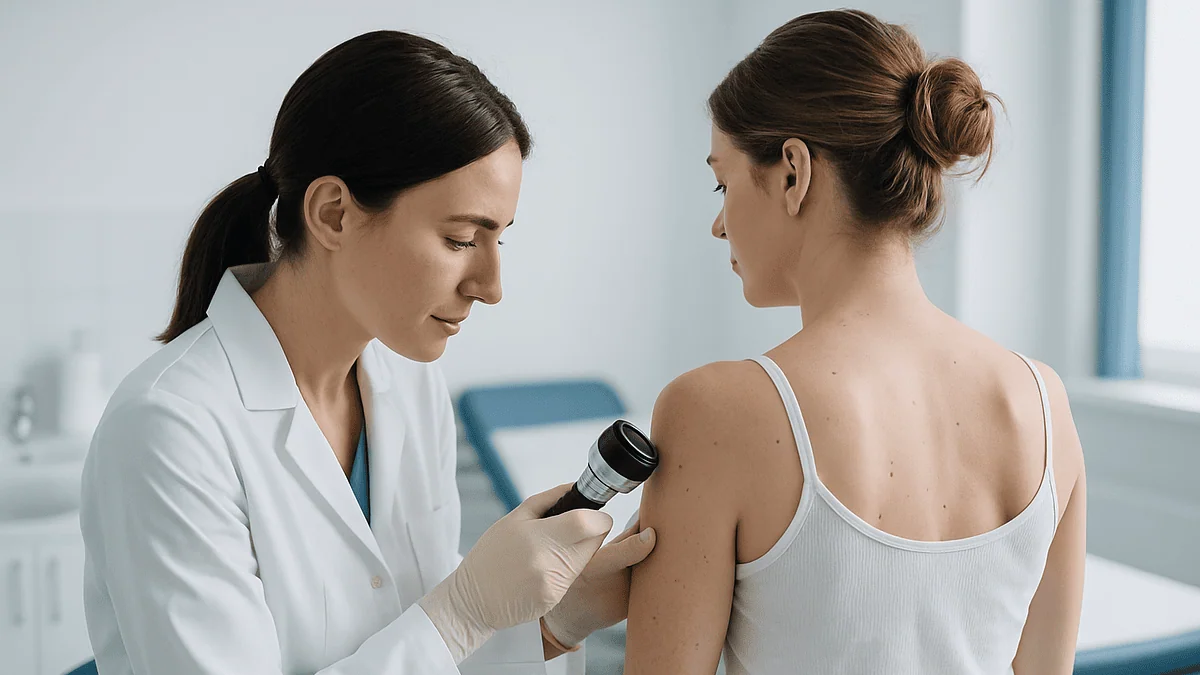
The mirror is the hard part. A woman leaves the clinic with a neat pressure bandage on the side of her nose, feeling relieved that the biopsy chapter is finished, and then spends the drive home wondering what is underneath it. Two days later she peels back the gauze and sees something raw, a little swollen, edged in purple. Nobody told her it would look like that.
Skin cancer surgery healing is one of those subjects where the medicine is reassuring and the appearance, for a while, is not. The wound looks worst in the first week, when it is doing exactly what it should. Dressings matter more than most people expect; the scar matters less than most people fear, at least by the time a year has passed.
This explainer walks through what happens under the bandage, how the type of surgery changes the timeline, which habits genuinely slow things down, and when a slightly angry-looking wound has crossed into something your surgeon should see.
How skin cancer surgery healing actually works under the dressing
Every surgical wound, whether it is a straight line closed with sutures or a small open circle left to fill in, moves through the same three overlapping stages. Knowing them turns an alarming sight into an expected one.
The first stage is inflammation. Blood vessels at the edges clamp down and then leak, bringing white blood cells that clear bacteria and damaged tissue. This is why a wound looks red, feels warm and swells in the first few days. Redness that stays within a finger-width of the incision and slowly settles is part of the design, not a sign of trouble.
The second stage is rebuilding, which clinicians call proliferation. Cells called fibroblasts lay down collagen, the protein scaffolding of skin, while tiny new blood vessels grow into the gap. On an open wound this shows up as a moist, pink-red, slightly bumpy surface known as granulation tissue. It bleeds easily if knocked and it is exactly what you want to see. Skin cells then creep in from the edges to cover it.
The third stage is remodeling, and it is the slow one. The hastily built collagen is gradually broken down and relaid in a more organized pattern. A scar that is thick, pink and raised at six weeks is usually flatter and paler at six months, and Cleveland Clinic notes that scars can keep changing for a year or longer. Mature scar tissue never regains the full strength of unwounded skin, which is why surgeons remain cautious about heavy strain even after the surface looks closed.
The practical lesson is that healing is not finished when the dressing comes off. It is roughly a third of the way through.
Excision, Mohs or scraping: why the type of surgery changes recovery
Three techniques cover most non-melanoma skin cancer surgery, and each leaves a different kind of wound.
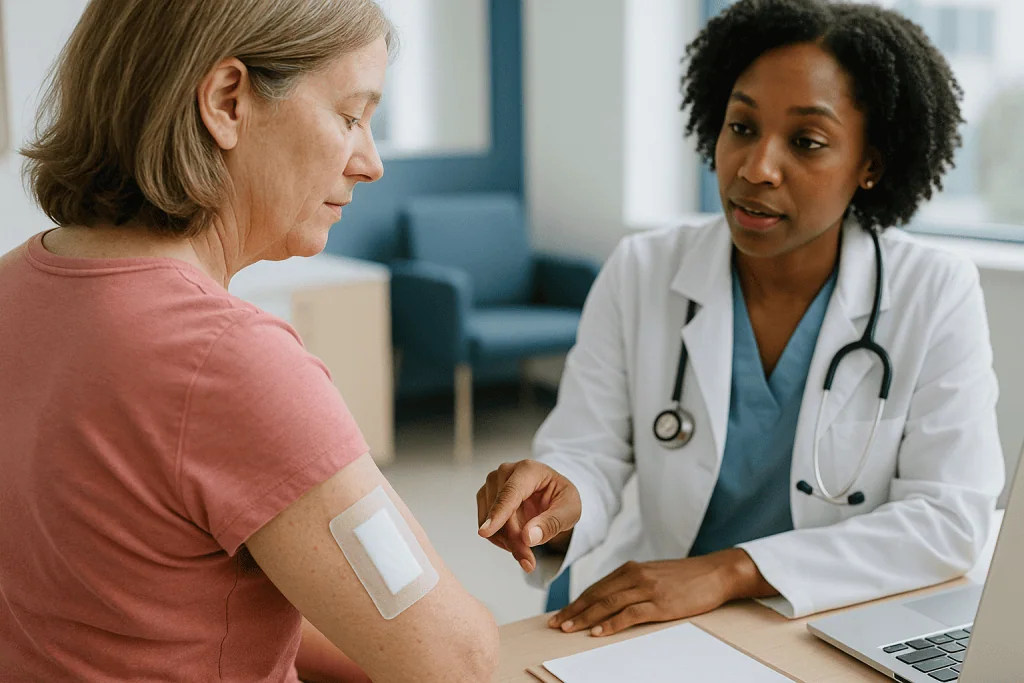
Standard excision means the surgeon cuts out the visible cancer plus a rim of normal-looking skin, called a margin, and sends the whole piece to a pathology laboratory. The wound is usually closed in a line with stitches the same day. Recovery follows the pattern of any sutured incision: the line is tender for a week or two, the stitches come out, and the scar matures over months. NHS guidance describes this as the most common approach for basal cell and squamous cell carcinomas.
Mohs surgery, named after the surgeon who developed it, removes the cancer in thin layers that are examined under a microscope while you wait. Mayo Clinic describes the process taking several hours because each layer is checked before the next is removed. The advantage is that healthy skin is spared, which is why it is often chosen for the face, ears and hands. The wound size is only known at the end, so the repair, whether stitches, a flap of neighboring skin, a graft, or leaving it to heal open, is decided then.
Scraping and cautery, in which the surgeon scrapes the tumor away and seals the base with heat, is reserved for certain small, superficial cancers. It leaves a round, open wound that heals from the bottom up over a few weeks and usually results in a flat, pale, slightly shiny mark.
The takeaway for healing is simple. A stitched line generally closes fastest and looks tidiest early on; an open wound looks dramatic for longer but often ends up remarkably discreet. Neither is better in every case, and the choice sits with the surgeon who can see the tissue.
How long does it take for skin cancer surgery to heal?
The honest answer has three parts, because healing means different things at different points. The surface closes first, the wound regains strength next, and the scar matures last.
For a sutured excision, MedlinePlus advises that stitches are typically removed within one to three weeks, sooner on the face where blood supply is rich and skin is thin, later on the back or legs where tension is higher. Cleveland Clinic notes that Mohs wounds generally take around four to six weeks to heal at the surface, with open wounds taking toward the longer end. Scar maturation, per Cleveland Clinic, runs a year or longer.
| Stage | Typical range | What you usually see |
|---|---|---|
| Initial healing, sutured wound | 1 to 3 weeks to suture removal | Swelling and bruising ease; edges knit together |
| Initial healing, Mohs or open wound | About 4 to 6 weeks | Pink granulation tissue fills in, then skins over |
| Strength returning | Roughly 6 to 8 weeks | Firm ridge under scar softens; less risk of splitting |
| Scar maturation | 12 months or longer | Red fades to pink, then closer to skin tone; flattens |
Location shifts all of these. Wounds on the lower leg are notorious for slowness because gravity pools fluid and blood flow is poorest there; a shin wound that takes twice as long as a cheek wound is not unusual. Wounds under tension, on the shoulder or upper back for instance, are more likely to spread into a wider scar.
Treat these ranges as a map, not a schedule. Your surgeon may adjust dressing changes and follow-up based on how your tissue is actually behaving.
Who tends to heal smoothly, and who is usually asked to wait
Most people who have skin cancer surgery are in later life, often with other medical conditions, and the majority heal without incident. Still, some circumstances reliably slow things down, and surgical teams plan around them rather than pretending they do not exist.
Smoking is the clearest. Nicotine narrows small blood vessels and carbon monoxide reduces oxygen delivery, both of which starve the wound edge. Surgeons commonly ask people to stop or reduce before and after a repair, especially when a flap or graft is planned, because those repairs depend entirely on blood supply from their borders.
Diabetes, particularly when blood glucose runs high, impairs white cell function and small-vessel circulation. It does not rule out surgery, but expect closer follow-up and a longer timeline for lower-leg wounds.
Blood-thinning medicines, whether prescription anticoagulants or antiplatelet drugs, raise the chance of bleeding and bruising under the wound. Surgeons rarely ask people to stop them for skin surgery because the clotting risk of stopping often outweighs the bleeding risk of continuing; instead they apply firmer pressure dressings and give clearer bleeding instructions. Never adjust these medicines on your own; that decision belongs to the prescriber who knows why you take them.
Immune suppression, whether from transplant medicines or certain long-term steroid use, slows every stage of healing and increases infection risk. Skin that has previously received radiation therapy heals poorly because its blood supply is permanently reduced.
Who is asked to wait? Someone with an active skin infection near the site, uncontrolled blood pressure that would make bleeding hard to manage, or a wound elsewhere that has not yet healed. Occasionally a surgeon delays a complex reconstruction until a person can arrange help at home for the first days. Waiting a few weeks for a slow-growing basal cell carcinoma is usually medically reasonable; the surgeon will say if it is not.
The first 48 hours: pressure dressings, oozing and keeping still
The bulky bandage you leave with is doing a specific job. A pressure dressing compresses the wound bed so that small vessels seal rather than seep, and most surgeons ask that it stay untouched for 24 to 48 hours, a window MedlinePlus wound guidance echoes for fresh surgical incisions. Resist the urge to peek. Each lift of the gauze disturbs the fragile clot underneath.
Some oozing is expected. A coin-sized pink stain on the outer layer is ordinary; a dressing that soaks through and keeps soaking is not. If bleeding appears, the standard first step is firm, steady pressure with a clean cloth for a full 20 minutes by the clock, without lifting to check. Most bleeding stops. If it does not, that is a call to the clinic, covered in the red-flag section below.
Elevation matters more than most people realize. A head wound heals better if you sleep with an extra pillow for the first few nights; a leg wound does better raised on a stool rather than dangling. Gravity is either your ally or your opponent, and you get to choose.
Pain is typically modest and peaks on the first evening. Many surgeons suggest a plain over-the-counter pain reliever and specifically advise avoiding the type that thins blood unless you already take it for a medical reason. Follow the written instructions you were given rather than a general rule; they were tailored to your wound and your medication list.
Bruising often spreads in surprising directions. A wound on the forehead can produce a black eye two days later as blood tracks downward under the skin. It looks alarming, it is usually harmless, and it fades over a week or two.
Wound care after skin cancer removal: cleaning, ointment and dressings
Once the pressure dressing comes off, the daily routine begins, and the guiding principle is one that surprises people raised on the idea that wounds should be left to dry out. Modern evidence, reflected in MedlinePlus and Cleveland Clinic wound advice, favors a clean, slightly moist environment. Scabs are not a badge of healing; they are a barrier that new skin cells have to tunnel beneath, and a thick scab tends to leave a wider mark.
A typical routine, always subordinate to your own written instructions, runs like this. Wash your hands. Gently cleanse the wound with lukewarm water and mild soap, or a saline solution if that is what you were given, using a soft cloth or gauze and no scrubbing. Pat dry around the wound. Apply a thin layer of plain petroleum jelly or the ointment your team specified. Cover with a fresh non-stick dressing and tape. Repeat once or twice a day as directed.
Hydrogen peroxide and rubbing alcohol belong in the medicine cabinet, not on the wound. Both damage the very cells trying to rebuild the surface. Antibiotic ointments are not automatically better than plain petroleum jelly for clean surgical wounds, and a meaningful number of people develop an itchy contact allergy to certain over-the-counter antibiotic ingredients that is easily mistaken for infection. Use one only if your surgeon prescribed it.
Showering is usually permitted after the first dressing comes off, letting water run over the area briefly and patting rather than rubbing. Baths, pools, hot tubs and open water are a different matter because soaking softens the wound edges and introduces bacteria; most teams ask you to wait until the wound is fully closed.
If a dressing sticks, dampen it with water rather than pulling. A stuck dressing ripped away can undo three days of progress in one second.
Stitches, flaps, grafts and wounds left to close on their own
The kind of repair you had determines what the next month looks like, so it is worth knowing which one is under your dressing.
A simple linear closure uses stitches to bring the edges together. Some are removed at a follow-up visit, usually within one to three weeks per MedlinePlus, while others are dissolvable and disappear on their own over several weeks. A firm ridge along the line, sometimes with small bumps where deeper sutures sit, is normal and softens over a couple of months. Occasionally a dissolvable stitch works its way to the surface as a tiny white thread; your team can trim it.
A flap means the surgeon loosened a neighboring piece of skin, still attached by its own blood supply, and rotated or slid it into the gap. Flaps often look bulky and puffy at first because they carry their own fat and swell with fluid. Colors can worry people: a flap may look pale, then dusky purple at its far tip in the first days. Mild discoloration frequently settles; a tip that turns black and hard is something the surgeon needs to see, though even then the rest of the flap usually survives.
A skin graft is a piece of skin taken from elsewhere, often behind the ear or the collarbone, and laid onto the wound bed, where it must grow new blood vessels from below to survive. Grafts are typically stitched and covered with a bolster dressing that stays undisturbed for about a week. They frequently look shiny, slightly sunken and a different tone from surrounding skin for many months. The donor site needs its own care and can be more uncomfortable than the graft itself.
Leaving a wound open, called healing by secondary intention, sounds primitive but on concave surfaces such as the inner corner of the eye or the temple it often produces excellent results. The wound fills from the bottom with granulation tissue and then skins over. Cleveland Clinic places most Mohs wound healing in the four to six week range, and open wounds sit toward the longer end.
What not to do after skin cancer surgery
People ask this question more than any other, and the answer is less about rigid prohibitions than about understanding what each activity does to a wound.
Do not strain the site. Bending, lifting anything heavier than a full kettle, and exercise that raises your heart rate all push blood pressure up and can restart bleeding under a fresh wound in the first 48 hours. After that, the concern shifts to tension: a wound on the shoulder pulled by a gym session in week two can split or stretch into a wide scar. Most surgeons ask for a rest from vigorous activity until stitches are out and often a week or two beyond.
Do not soak it. Baths, swimming and hot tubs wait until the wound has fully closed, for reasons covered above.
Do not pick, scratch or trim. Itching is a normal signal of nerve regrowth in week two or three and is not a reason to interfere. Crusts should be softened by cleansing, never lifted.
Do not smoke, and be cautious with alcohol in the first days. Alcohol dilates blood vessels and can prolong oozing; it also interacts unpredictably with pain relievers.
Do not apply anything you were not told to apply. That includes essential oils, vitamin E capsules, herbal salves and, unless prescribed, antibiotic creams. None has robust evidence for improving surgical scars, and several cause contact dermatitis.
Do not expose the fresh wound or young scar to sun. Ultraviolet light drives pigment into healing skin and can leave a permanently darker mark. The CDC recommends broad-spectrum sunscreen of SPF 15 or higher plus shade and clothing for skin cancer prevention generally; for a new scar, physical covering is the safest choice until the surface is fully closed and sunscreen can be applied.
Finally, do not skip the follow-up because the wound looks fine. The visit checks pathology results and margins as well as healing.
Is it normal to have scars after Mohs surgery?
Yes. Any procedure that cuts through the full thickness of skin leaves a scar, and Mohs surgery is no exception. The purpose of Mohs, as Mayo Clinic explains it, is to remove all of the cancer while sparing as much healthy tissue as possible, which usually means a smaller scar than a conventional excision of the same tumor. It does not mean no scar.
What surprises people is the trajectory. A Mohs scar frequently looks worse at four to eight weeks than it did at ten days. The line or patch turns pinker, firmer and more raised as collagen piles in during the rebuilding phase. Then, over months, the remodeling phase thins and pales it. Cleveland Clinic describes scars continuing to change for a year or longer, and on the face that final version is often a faint line that others do not notice.
Certain features are worth understanding rather than fearing. A raised, red scar that stays within the original wound boundary is called a hypertrophic scar and often settles with time or simple measures. A scar that grows beyond the boundary of the original wound is a keloid, more common in people with darker skin tones and on the chest, shoulders and earlobes; it needs a clinician’s attention rather than home remedies. A depressed or sunken scar can follow a graft or a large open wound. Numbness or altered sensation near the scar is common and often improves over a year as small nerves regrow, though some patches stay permanently altered.
Skin type, age and location matter as much as the surgeon’s technique. Older, sun-damaged skin with fine wrinkles hides scars remarkably well. Tight, young, oily skin over the chest does not. Your surgeon can tell you what is realistic for your particular wound, and it is a fair question to ask.
Scar after Mohs surgery: what genuinely helps it fade
The market for scar remedies is enormous and the evidence base is small. Here is what the mainstream sources actually support.
Sun protection has the strongest case. Ultraviolet exposure stimulates pigment cells in healing skin and can turn a pink scar into a brown one that lingers for years. Once the wound is fully closed, daily broad-spectrum sunscreen over the scar, plus a hat for facial scars, is the single most effective thing most people can do. Before closure, physical covering is safer.
Silicone gel sheets or gels are the best-studied topical option and appear in Cleveland Clinic scar guidance. They are thought to work by keeping the scar hydrated and reducing collagen overproduction. Evidence is moderate rather than strong, the sheets need to be worn many hours a day for weeks to months, and they are for closed wounds only. Ask your team whether your scar is a candidate.
Gentle massage of a closed scar, using a plain moisturizer, is widely recommended by surgical teams to soften firmness and help it flatten. The evidence is mostly experience-based rather than trial-based, but it is low-risk once your surgeon confirms the wound is strong enough.
Vitamin E, onion extract creams, honey and cocoa butter are popular and largely unproven for surgical scars in controlled studies; vitamin E in particular has been associated with contact dermatitis in some users. Treat them as harmless-at-best rather than helpful.
For scars that remain thick, red or tethered after several months, clinicians have procedural options: steroid injections into a hypertrophic scar, laser treatment to reduce redness, or a surgical revision once the scar has fully matured. None of these is considered before the scar has had many months to settle on its own, because a scar that looks troubling at three months often looks acceptable at twelve. Patience, in this case, is evidence-based.
Mohs surgery recovery time and when normal activity resumes
The question behind the question is usually practical: when can I go back to work, lift my grandchild, get in the pool, get on a plane? The answers depend on wound size and location, so what follows is the typical shape, not a promise.
Desk work and light household tasks often resume within a day or two, once the pressure dressing is off and any grogginess from a long morning in clinic has passed. People with facial wounds sometimes choose to work from home for a week because of bruising and the visibility of the dressing, which is a social decision rather than a medical one.
Driving is generally fine once you are not taking sedating medication and the dressing does not obstruct your vision or restrict turning your neck. A wound near the eye or on the side of the neck deserves a day or two of caution.
Walking is encouraged from day one and helps prevent blood clots, especially in older adults who have spent a long procedure day sitting. Brisk exercise, weights, running, yoga positions that put tension on the site and contact sports typically wait until stitches are out and the surgeon is satisfied with wound strength, which for many wounds is roughly two to four weeks and longer for larger repairs, grafts or leg wounds.
Swimming and bathing wait until the surface is fully closed, which for Mohs wounds Cleveland Clinic places at around four to six weeks.
Air travel after minor skin surgery is usually not restricted for medical reasons, but consider timing. You want to be near your surgical team when stitches are due out and during the first week when bleeding or infection would show up. Cabin dryness and pressure changes do not harm the wound, but a long flight without moving raises clot risk, so walk the aisle and stay hydrated. Arrange who will check your wound if you will be away at follow-up time.
What people often get wrong about skin cancer surgery healing
Some misconceptions come from old advice, some from the internet, and a few from well-meaning relatives. They are worth correcting because several actively slow healing.
Wounds need air to heal. The opposite is closer to the truth. A covered, slightly moist wound heals faster and scars less than one left to dry and crust. Uncover it only for cleaning and the brief moments your team specifies.
A scab means it is healing well. A scab means the surface dried out. New skin cells have to migrate underneath it, which takes longer and often leaves a wider or more textured mark. Keep the wound moist so a thick scab does not form.
Redness equals infection. Early redness is inflammation doing its job. Infection is suggested by redness that spreads beyond a finger-width from the wound, increasing rather than easing pain after day three, warmth, swelling, pus, or fever. The direction of travel matters more than a snapshot.
Antibiotic ointment prevents infection. For clean surgical wounds, plain petroleum jelly performs comparably in studies cited by mainstream sources, and over-the-counter antibiotic ointments carry a real risk of allergic contact dermatitis that mimics infection. Use one only if prescribed.
The scar you see at six weeks is the scar you will keep. Six weeks is close to the peak of redness and firmness. Judge a scar at a year.
If the wound looks fine, the cancer is gone. Wound appearance tells you nothing about margins. That information comes from the pathology report, which is one reason the follow-up visit matters even when everything looks perfect.
Basal cell carcinoma is not real cancer. It is a real cancer that, as NHS guidance notes, very rarely spreads to other parts of the body. Both halves of that sentence are true, and holding them together is the mature position.
Can you live with basal cell carcinoma? Follow-up after the wound closes
People sometimes ask this in two different senses. One is whether the disease is life-threatening; the other is whether a small, slow-growing lesion could simply be left alone. Both deserve a straight answer.
Basal cell carcinoma is the most common skin cancer and, according to NHS guidance, it very rarely spreads to other parts of the body. Most people who have one removed go on to live entirely ordinary lives, and the surgery described in this article is usually the whole of the treatment. In that sense, yes, living with a history of basal cell carcinoma is unremarkable.
Leaving one untreated is a different proposition. Basal cell carcinomas grow slowly but they do grow, and they grow into surrounding tissue rather than away from it. A lesion that could be closed with a few stitches this year may need a flap or graft in a few years, and on the nose, ear or eyelid that difference matters for both function and appearance. Occasionally, in someone who is very frail or has a limited life expectancy, a clinician may reasonably discuss watchful waiting or non-surgical options, but that is a shared decision with the treating team, not a default.
Follow-up after surgery has two purposes. The first is to confirm that the pathology showed clear margins and to watch the site for recurrence, which most often appears within the first few years as a new bump, non-healing spot or change within or beside the scar. The second is surveillance of the rest of your skin. NHS guidance is explicit that having had one non-melanoma skin cancer raises the likelihood of developing another, because the same sun-damaged skin is still there.
Monthly self-checks, an annual or more frequent skin examination as your team advises, and consistent sun protection per CDC guidance are the practical shape of living well after the wound has closed.
Questions to ask your care team before you leave
The best moment to ask is while the surgeon or nurse is in front of you, and the second-best is the phone number on your discharge sheet. Written instructions vary in detail, so fill the gaps with these.
About the repair itself: What kind of closure did I have, stitches, a flap, a graft, or left open? Are the stitches dissolvable or do they need removal, and when? Should I expect a bolster dressing to stay on, and for how long?
About daily care: When should I first remove the pressure dressing? How often do I clean and re-dress, and with what? Is there anything I have been given that I should stop, and anything I should not put on the wound? Can I shower tomorrow?
About medicines: Do I continue my blood thinner exactly as usual? Which pain reliever do you suggest given what I already take? Have I been prescribed an antibiotic, and if not, is that intentional?
About activity: When can I exercise, lift, bend, swim and travel? Is there a specific movement that would stress this particular wound?
About results: When and how will I hear the pathology result? What happens if the margins are not clear? Who do I contact if the wound bleeds tonight, and what is the after-hours route?
About the longer term: What should this scar realistically look like at three months and at a year? Is silicone or massage appropriate for me, and from when? How often should my skin be checked from now on, and by whom?
Writing the answers down, or bringing someone who will, is not fussiness. A long morning in clinic followed by the relief of being finished is a poor environment for memory, and the details of wound care are exactly the kind of thing that slips.
When to call your doctor
Most wounds heal quietly. The point of knowing the red flags is not to watch for disaster but to recognize the handful of situations where an early phone call changes the outcome.
Call your surgical team, or seek urgent care if you cannot reach them, for bleeding that does not stop after 20 minutes of firm, continuous pressure, or bleeding that soaks through the dressing repeatedly. Call for pain that increases after the third day rather than easing, or pain out of proportion to what you were told to expect, since this can signal blood collecting under the wound or early infection.
Signs that suggest infection include redness spreading outward from the wound edge, especially if it advances over hours; increasing swelling, warmth or firmness; thick yellow, green or foul-smelling discharge; a fever or chills; or red streaks tracking away from the site. Any of these warrants a same-day conversation.
Call if the wound edges pull apart, if stitches come out early, or if a flap or graft turns dark purple or black across a large area. Call if a wound that was healing stops progressing for more than a week or two, or if a healed site later develops a new lump, ulcer or spot that bleeds without reason, since that pattern needs assessment for recurrence.
Seek emergency care immediately, rather than waiting for a callback, for heavy bleeding you cannot control, difficulty breathing or swallowing after neck or facial surgery, a spreading rash with hives or facial swelling after a new medicine, or chest pain, breathlessness or a hot swollen calf after a long period of immobility, which can indicate a blood clot.
When in doubt, call. Surgical teams would far rather look at a wound that turns out to be fine than hear about one three days late.
Frequently asked questions
How long does it take for skin cancer surgery to heal?
Surface healing usually takes one to six weeks depending on the repair. MedlinePlus notes that stitches are typically removed within one to three weeks, and Cleveland Clinic places most Mohs wound healing at around four to six weeks. Full strength returns over roughly two months and the scar keeps maturing for a year or longer. Wounds on the legs or under tension take longer than those on the face.
What not to do after skin cancer surgery?
Avoid straining the wound with heavy lifting, bending or vigorous exercise in the first days, and do not soak it in baths, pools or hot tubs until it has fully closed. Do not pick crusts, apply unprescribed creams or oils, use hydrogen peroxide or alcohol on it, smoke, or expose the fresh wound to sun. Never adjust blood thinners without the prescriber’s guidance.
Is it normal to have scars after Mohs surgery?
Yes, every full-thickness skin surgery leaves a scar, and Mohs aims to keep it as small as the cancer allows rather than to eliminate it. Mohs scars commonly look pinker and firmer at one to two months than at ten days, then flatten and fade over the following year. Raised, itchy or spreading scars, or scars that trouble you after several months, are worth discussing with your team.
What is the typical Mohs surgery recovery time before exercise?
Most surgeons ask people to avoid strenuous exercise until stitches are out and the wound has regained strength, often two to four weeks, longer for grafts, flaps or leg wounds. Walking is encouraged from the first day. The exact timing depends on wound size and location and should come from your surgical team rather than a general rule.
What does good wound care after skin cancer removal look like?
Leave the pressure dressing in place for the period you were told, usually 24 to 48 hours. Then, once or twice daily, wash your hands, gently cleanse with lukewarm water and mild soap or saline, pat dry, apply a thin layer of plain petroleum jelly or your prescribed ointment, and cover with a non-stick dressing. Keep it moist, covered and out of the sun until fully closed.
Can you live with basal cell carcinoma?
Basal cell carcinoma very rarely spreads to other parts of the body, according to NHS guidance, so people who have one treated generally live ordinary lives. Leaving one untreated is not usually advised because it continues to grow into surrounding tissue and becomes harder to remove. Any decision about watchful waiting belongs to a conversation with your treating team.
Why does my scar after Mohs surgery look worse at six weeks than at two?
Six weeks sits near the peak of the rebuilding phase, when new collagen is laid down quickly and the scar becomes pink, firm and slightly raised. Over the following months the collagen is remodeled into a flatter, paler structure. Cleveland Clinic describes scars continuing to change for a year or longer, so the six-week appearance is a midpoint, not the result.
Should I put antibiotic ointment on the wound?
Only if your surgeon prescribed it. For clean surgical wounds, plain petroleum jelly performs comparably in the evidence cited by mainstream sources, and over-the-counter antibiotic ointments carry a meaningful risk of allergic contact dermatitis that looks like infection. Prescribed antibiotics have specific indications; the decision sits with your surgical team.
When can I swim or take a bath after skin cancer surgery?
Once the wound is fully closed and your team confirms it, which for Mohs wounds is often around four to six weeks per Cleveland Clinic and sooner for small stitched wounds after suture removal. Soaking softens wound edges and introduces bacteria. Brief showers are usually allowed earlier, letting water run over the area and patting it dry.
What are the signs a skin cancer surgery wound is infected?
Redness spreading outward from the edge, increasing pain after the third day, swelling and warmth that worsen rather than ease, thick yellow or green discharge, a foul smell, fever, or red streaks tracking away from the wound. Early inflammation that stays close to the incision and settles over days is normal. Any of the spreading or worsening signs justifies a same-day call to your team.
References
- MedlinePlus: Surgical wound care, closed
- Cleveland Clinic: Scars
- NHS: Non-melanoma skin cancer: treatment
- CDC: Skin cancer prevention
This article is for general information only and is not a substitute for professional medical advice. Please consult a qualified doctor about your individual situation.

More from the Blog

Targeted Therapy for Chronic Myeloid Leukemia: How Daily Treatment and Monitoring Work
Targeted therapy for chronic myeloid leukemia uses daily oral tyrosine kinase inhibitors (TKIs) that block BCR-ABL1, the abnormal enzyme driving the disease. Treatment is…
Why a Dental Assessment Comes Before Head Cancer Radiotherapy and What It Involves
A dental assessment before head and neck radiotherapy is a specialist check of the teeth, gums and jaw carried out before treatment starts. Radiation…

What Happens After TURBT? How Pathology Results and Follow-Up Cystoscopy Guide the Next Steps
After TURBT, the removed tissue goes to a pathologist, whose report on stage, grade and the presence of bladder muscle in the sample decides…
Bone Marrow Transplant in Older Adults: Reduced-Intensity Conditioning and What Age Changes
Older adults can and do receive bone marrow transplants; fitness, organ function and the specific blood cancer matter more than a birthday. Reduced-intensity conditioning…

Who May Be a Candidate for HIPEC? Peritoneal Spread, Imaging and the Surgical Evaluation
People considered for HIPEC usually have cancer confined to the lining of the abdomen, a primary tumor type where the approach is supported by…
Your First Chemotherapy Infusion Day: Check-In, Blood Work, Pre-Medication and the Infusion
On a first chemotherapy infusion day, most people check in, have weight and vital signs recorded, give a blood sample, and wait for results…