

How Is Tuberculosis Diagnosed? Skin and Blood Tests, Sputum Cultures and Chest Imaging
Key Takeaways
- Skin and blood tests detect only immune memory of TB; confirming active disease requires imaging plus sputum or tissue tests that look for the bacteria themselves.
- It can take two to eight weeks after exposure for a TB test to turn positive, so contacts are typically retested about eight to ten weeks after the last contact (CDC).
- The tuberculin skin test must be read 48 to 72 hours after placement by measuring firm swelling, not redness, with the positive threshold adjusted to personal risk.
- The IGRA blood test is not affected by prior BCG vaccination, needs only one visit, and is the CDC's preferred test for people who have had BCG.
- A TB culture can take up to eight weeks to give a final result, which is why rapid molecular tests that return in hours to days are used to guide early decisions (Mayo Clinic).
- About a quarter of the world's population carries latent TB infection, but only 5 to 10 percent ever develop active disease, and latent infection is not contagious (WHO).
Tuberculosis is diagnosed in two stages. A skin test or a blood test (interferon-gamma release assay) shows whether the immune system has ever met TB bacteria. If that result is positive, or symptoms point to disease, a chest X-ray and sputum tests, including microscopy, rapid molecular testing and culture, determine whether active, treatable TB disease is present. Only the treating clinician can confirm the diagnosis and decide what happens next.
The message arrives on a Tuesday evening. A coworker who sat two desks away has been diagnosed with tuberculosis, and the health department would like you to come in for a test. You feel fine. You have not coughed in months. And yet the word alone carries a century of old photographs and sanatorium beds.
Most people who ask how tuberculosis is diagnosed are standing exactly where you are: healthy, a little alarmed, and unsure what the tests can and cannot tell them. The honest answer is that no single test settles the matter. TB diagnosis is a sequence, and each step answers a different question.
This explainer walks through that sequence in order, from the small bump on a forearm to the culture plate that takes weeks to grow, so you know what each result means, what it does not mean, and which decisions belong to your care team.
How is tuberculosis diagnosed? The two questions every test is really asking
Every TB test belongs to one of two families, and confusing them is the root of most anxiety around results. The first family asks: has your immune system ever encountered the bacterium Mycobacterium tuberculosis? The second asks: are those bacteria active and multiplying in your body right now?
The distinction matters because TB has two faces. In latent TB infection, the bacteria sit walled off inside small immune-cell clusters, cause no symptoms, cannot be passed to others, and would never show up on a chest X-ray as active disease. In active TB disease, the bacteria have broken out of that containment, usually in the lungs, and the person is typically unwell and may be infectious. The CDC describes this split as the foundation of how clinicians approach testing.
Skin tests and blood tests belong to the first family. They detect the immune memory of TB, not the bacteria themselves, which is why a positive result on its own never means someone is sick or contagious. Chest imaging, sputum microscopy, rapid molecular tests and culture belong to the second family. They look for the bacteria, their genetic material, or the damage they leave behind.
One more piece of biology shapes the whole process. M. tuberculosis grows far more slowly than the bacteria behind most everyday infections. That slowness is why a definitive culture can take weeks, why clinicians lean on faster molecular tests in the meantime, and why a diagnosis is often made on the weight of several results together rather than one clean answer. Understanding that pace makes the waiting easier to bear.
Who is usually tested for TB, and who is usually asked to wait
TB testing is targeted, not universal. The CDC recommends testing people whose chance of having been infected, or of becoming ill if infected, is higher than average. Screening everyone would produce more false positives than true cases, which helps no one.
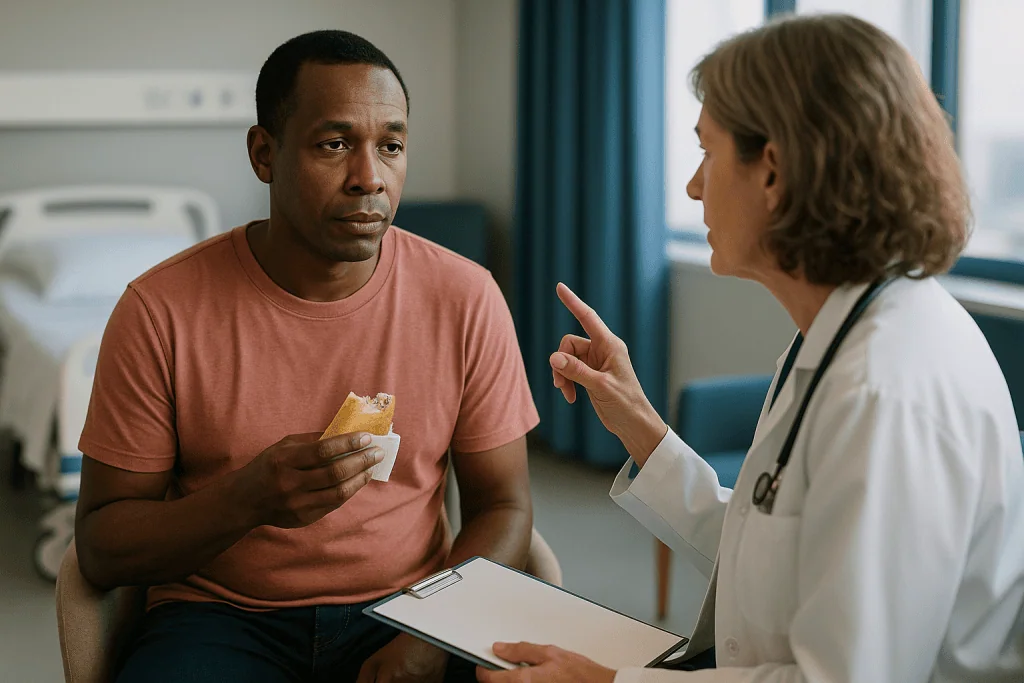
People commonly offered a test include recent close contacts of someone with active TB; people born in, or who have lived for long periods in, regions where TB is common; residents and staff of places where people live closely together, such as shelters, correctional facilities and some care settings; and people whose immune systems are weakened by HIV, organ transplantation, certain cancer treatments or medicines that suppress immunity. Some long-term conditions, including diabetes and advanced kidney disease, also raise the risk of latent infection progressing to disease, so clinicians may test earlier in these groups.
Who is asked to wait? Timing, not eligibility, is usually the reason. If your exposure was within the past few weeks, an immediate test may be too early to show anything, so the health team may test you now for a baseline and again after roughly eight to ten weeks, the window the CDC advises after the last contact. People who recently received certain live-virus vaccines may also have a skin test rescheduled, because the immune response to the vaccine can temporarily blunt the skin reaction.
People at genuinely low risk with no exposure and no symptoms are usually not tested at all, and that is appropriate care rather than neglect. If you are unsure which group you fall into, the person to ask is the clinician or public health nurse coordinating the contact investigation. They have the exposure details you may not.
What happens during a TB skin test
The tuberculin skin test, also called the Mantoux test or TST, has been in use for more than a century and is still the workhorse of TB screening in many settings. It is simple, but it demands two visits, and the second one is where the result actually lives.
At the first visit, a nurse injects a tiny amount of purified protein derived from TB bacteria just beneath the skin of the inner forearm. The protein contains no living bacteria and cannot cause TB. It raises a small pale bump that fades within minutes. You are then asked not to scratch or cover the site with a bandage.
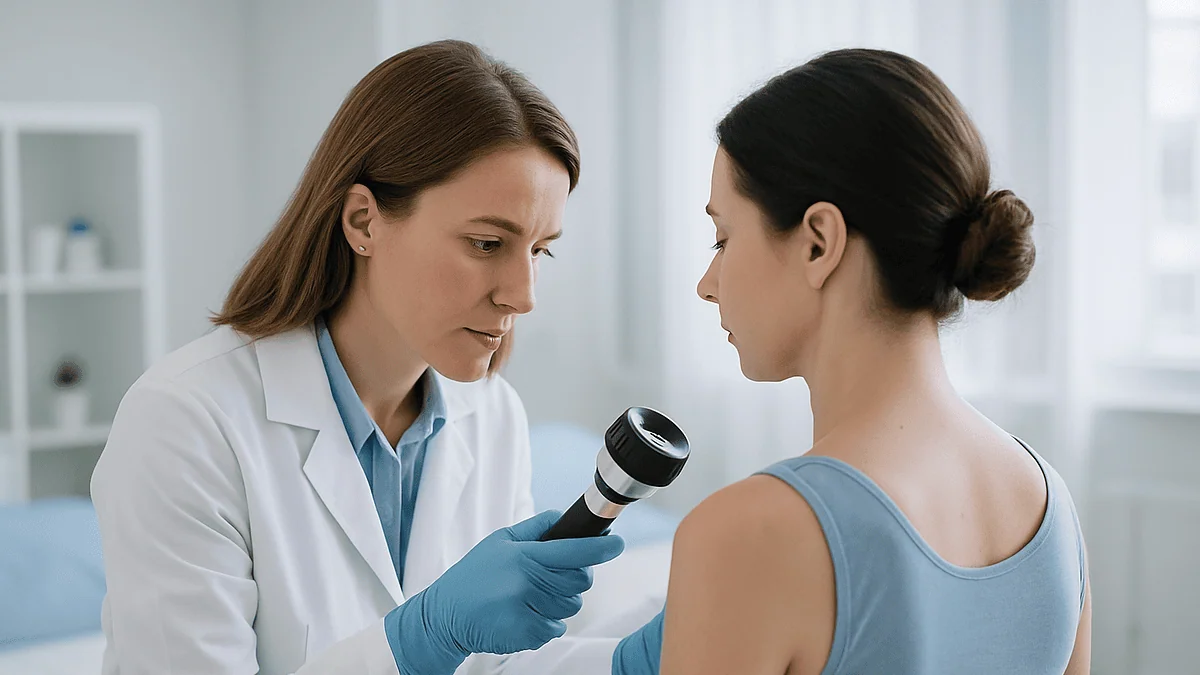
You return 48 to 72 hours later, the reading window the CDC and Mayo Clinic both specify. A trained reader looks for induration, a firm, raised swelling that can be felt under the skin. Redness alone does not count. The reader measures the induration across the forearm in millimeters and records the number.
What counts as positive depends on who you are. The CDC uses three thresholds: a smaller reaction is read as positive in people with HIV, recent close contacts and those with X-ray changes; a moderate reaction in people at intermediate risk, such as recent arrivals from high-incidence regions or healthcare workers; and only a larger reaction in people with no known risk factors. This risk-adjusted reading is deliberate and reflects how likely a reaction is to be true rather than incidental.
If you miss the 72-hour window, the test usually has to be repeated. If you have received the BCG vaccine or have been exposed to environmental mycobacteria, the skin test may react even without TB infection, which is one reason many clinicians now prefer the blood test described next.
TB skin test vs blood test: what the IGRA does differently
The TB blood test, known as an interferon-gamma release assay or IGRA, asks the same question as the skin test but in a laboratory tube rather than on your arm. A sample of blood is mixed with proteins specific to M. tuberculosis. If your immune cells recognize those proteins, they release a signaling chemical called interferon-gamma, which the lab measures.
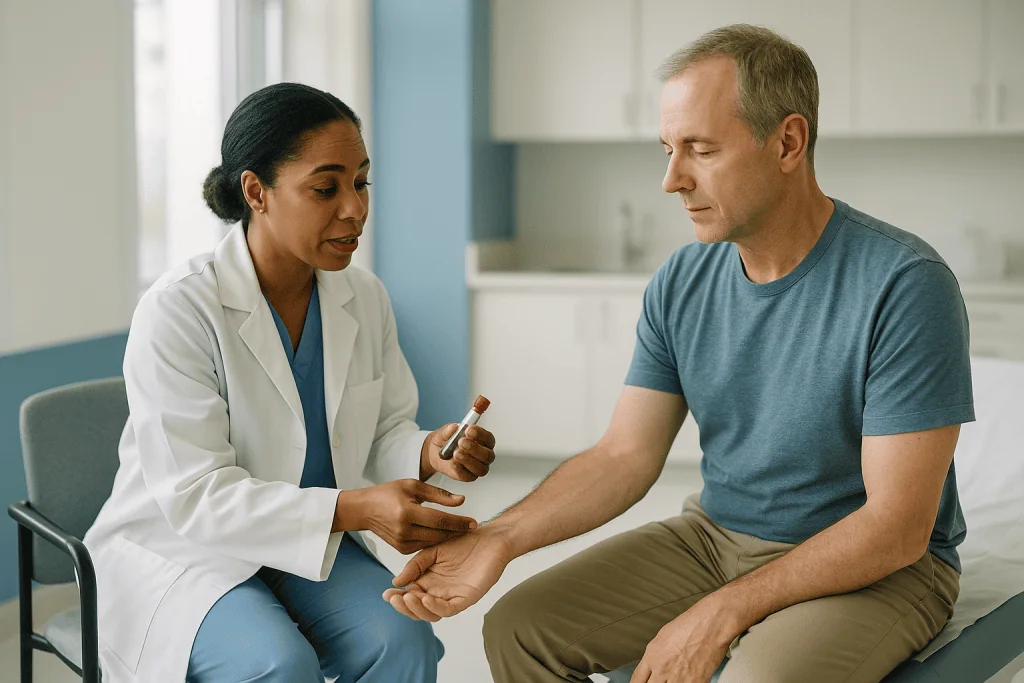
Three practical differences follow from that design. The first is convenience: one visit, no return trip for a reading, and no risk of missing the window. The CDC notes that results can be available in as little as a day, though a few days is common depending on the lab. The second is specificity: the proteins used in IGRAs are not found in the BCG vaccine strain or in most environmental mycobacteria, so prior vaccination does not trigger a false positive. For that reason the CDC prefers the blood test for people who have had BCG. The third is objectivity: the result is a machine reading, not a measurement by hand, so it does not depend on the skill of the person reading your arm.
The skin test keeps some advantages. It needs no blood draw or specialized lab, and for children under five many clinicians still favor it because experience with IGRAs in very young children is more limited.
What neither test can do deserves repeating. Both detect immune memory only. Neither distinguishes latent infection from active disease, neither says when infection happened, and neither predicts whether illness will ever develop. Both can also miss infection in people with weakened immunity. An IGRA can return an indeterminate result, meaning the internal controls did not behave as expected; that is a technical outcome, not a diagnosis, and the test is simply repeated.
How long after TB exposure to test: the window period explained
This is the question that keeps people awake, and it has a clear answer with an important caveat. The CDC states that it can take two to eight weeks after exposure for the immune system to develop a detectable reaction to TB bacteria. A test taken the day after exposure is measuring an immune response that has not had time to form.
Public health teams handle this in a standard way. Close contacts are often tested soon after the exposure is identified. A negative result at that point establishes a baseline. A second test is then scheduled about eight to ten weeks after the last contact with the infectious person. If the second test is also negative, infection is considered unlikely. If the first is negative and the second positive, the pattern strongly suggests infection occurred during the exposure, which shapes how the clinician talks with you about preventive treatment.
The caveat is that the window can behave differently in some people. Those with HIV, very young children, and people on immune-suppressing medicines may take longer to react or may never react despite true infection. For these groups, clinicians may rely more heavily on symptoms, imaging and clinical judgment rather than waiting for a test to turn positive, and may offer preventive treatment before results are final. That is a risk-based decision for the treating team, not a sign something has gone wrong.
One reassurance: the window period concerns detection, not danger. Being in the window does not make you infectious. Latent infection cannot be passed to others, and the overwhelming majority of exposed people who do become infected stay well during those weeks and long afterward. The wait is for a better answer, not a worsening situation.
What does a positive TB test mean?
A positive skin or blood test means your immune system has met TB bacteria at some point. That is all it means. It does not mean you are sick, it does not mean you are contagious, and it does not tell you when the encounter happened.
The scale of latent infection puts this in perspective. The WHO estimates that about a quarter of the world’s population has been infected with TB bacteria, and that only 5 to 10 percent of infected people go on to develop active disease during their lifetime. Most of those who do become ill do so within the first two years after infection, which is why recent contacts receive the most attention.
After a positive result, the next steps are consistent across guidelines. Your clinician will ask about symptoms and examine you. A chest X-ray is arranged to look for signs of active lung disease. If you have symptoms or the X-ray shows something, sputum tests follow. If you feel well, your X-ray is clear and your examination is normal, the working diagnosis is latent TB infection, and the conversation turns to whether preventive treatment makes sense for you.
False positives do occur, particularly with the skin test in people who have had BCG or who carry harmless environmental mycobacteria. False negatives occur too, mainly in people with weakened immunity, in very recent infection, and in some very ill people. Clinicians weigh the result against your history rather than reading it in isolation. If your result surprises your care team, they may repeat the test or switch to the other type. Ask them to explain what they think the result means in your specific situation; the answer is rarely a simple yes or no.
Chest X-ray and CT scan for TB: what imaging can and cannot show
Imaging is where the search shifts from immune memory to the lungs themselves. A chest X-ray is quick, widely available and involves a very small radiation dose. It is almost always the first image requested after a positive screening test or when someone has a cough that will not settle.
Radiologists look for patterns TB tends to leave. Active pulmonary TB often produces patchy shadows in the upper parts of the lungs, sometimes with cavities, which are hollow spaces where lung tissue has broken down. Enlarged lymph nodes at the center of the chest are common, especially in children. Fluid around the lung can point to pleural TB. Older, healed infection may appear as small, dense, calcified nodules or scarring at the top of the lungs.
Here is the limit that matters most: an X-ray cannot tell whether shadows are active or long-healed, and it cannot tell TB from several other lung conditions that look similar, including pneumonia, fungal infection and some cancers. Imaging raises suspicion; it does not prove TB. Confirmation needs the bacteria to be found. The reverse limitation also applies. People with HIV or other immune suppression can have active TB with a normal or unusual-looking X-ray, so a clear film does not close the door in every case.
A CT scan gives a far more detailed, three-dimensional picture and can reveal small cavities, subtle nodules or lymph node changes that an X-ray misses. Clinicians turn to CT when the X-ray is ambiguous, when symptoms persist despite a normal X-ray, or when TB outside the lungs is suspected. It carries a higher radiation dose, so it is used selectively rather than routinely. Whether you need one is a judgment for the team reading your case.
Sputum test for TB: smear, rapid molecular tests and culture
Sputum is the thick material coughed up from deep in the lungs, and it is the single most valuable sample in TB diagnosis. Mayo Clinic and the CDC describe a typical request for three samples, often including an early-morning one, since bacteria concentrate overnight. If you cannot produce sputum, a nurse may have you inhale a salty mist to trigger a productive cough, a technique called sputum induction. When that fails, a bronchoscopy, in which a thin tube samples the airways directly, may be offered.
Three tests run on those samples, and they operate at different speeds. Smear microscopy stains the sample so that acid-fast bacilli, the TB family of bacteria, show up under the microscope. Results come back within a day. Its weakness is sensitivity: it needs a large number of bacteria to be visible, so many true cases produce a negative smear.
Rapid molecular tests, sometimes called nucleic acid amplification tests or PCR tests, detect TB genetic material directly. Mayo Clinic notes results are typically available within hours to a day or two. Many versions also detect the genetic changes that make bacteria resistant to rifampicin, one of the core TB medicines, which lets the team plan appropriate treatment early rather than waiting weeks.
Culture remains the reference standard. The sample is placed in a nutrient medium and watched for growth. Because TB grows so slowly, Mayo Clinic advises that a culture can take up to eight weeks to give a final result, though modern liquid systems often flag growth sooner. Culture confirms the diagnosis, allows full drug-susceptibility testing, and later serves as the marker that treatment is working when repeat samples turn negative. A negative culture after eight weeks is strong evidence against active pulmonary TB.
TB tests at a glance: what each one detects, how long it takes, and its blind spots
Laid side by side, the tests stop looking like a confusing menu and start looking like a relay. Each hands the question to the next.
| Test | What it detects | Sample | Typical time to result | Main limitation |
|---|---|---|---|---|
| Tuberculin skin test | Immune memory of TB | Skin reaction on forearm | Read at 48–72 hours (CDC) | False positives after BCG; needs return visit |
| IGRA blood test | Immune memory of TB | Blood draw | As little as 1 day; often a few days (CDC) | Cannot separate latent from active; indeterminate results possible |
| Chest X-ray | Lung changes suggestive of TB | Image | Same day | Cannot distinguish active from healed disease |
| Sputum smear | Visible acid-fast bacteria | Coughed sputum | About 1 day (Mayo Clinic) | Misses cases with few bacteria |
| Rapid molecular test | TB DNA; some detect rifampicin resistance | Sputum or tissue | Hours to 1–2 days (Mayo Clinic) | Not available everywhere; does not replace culture |
| Culture | Living TB bacteria; full drug susceptibility | Sputum, fluid or tissue | Up to 8 weeks (Mayo Clinic) | Slow |
Two readings of this table deserve emphasis. First, no row answers both questions at once; a positive IGRA plus a normal X-ray and negative sputum tests is the everyday picture of latent infection, not a contradiction. Second, the slow tests are the definitive ones. When a team starts treatment before culture results return, they are acting on the faster tests and clinical judgment, and they revisit the plan when culture and susceptibility data arrive. That is standard practice, not guesswork, and it is a good moment to ask what each pending result might change.
Diagnosing TB outside the lungs and in children
Roughly one in five TB cases in many settings occurs outside the lungs, according to CDC surveillance, and these extrapulmonary forms test a clinician’s patience because sputum is often useless. The bacteria may settle in lymph nodes in the neck, the lining of the lung, the spine, the kidneys, the abdomen or, most seriously, the membranes around the brain.
Diagnosis follows the same logic but changes the sample. A swollen lymph node may be sampled with a fine needle or removed for biopsy, and the tissue is sent for microscopy, molecular testing and culture. Fluid around the lung or in the abdomen can be drawn off and tested. Suspected TB meningitis requires a lumbar puncture to collect spinal fluid. Kidney or bladder TB is sought in early-morning urine samples. Imaging, including CT and MRI, guides where to sample. Because bacteria in these sites are often few, molecular tests and culture matter even more than microscopy, and the skin or blood test is frequently the only positive result for weeks.
Children present a different puzzle. They often cannot cough up sputum, they carry fewer bacteria, and their X-rays more often show enlarged lymph nodes than the classic cavities seen in adults. Clinicians lean heavily on exposure history, since most children with TB caught it from an adult at home. Samples may be taken by gastric aspiration, drawing stomach contents in the early morning to capture swallowed sputum, or by induced sputum. The WHO also endorses molecular testing of stool samples in children, which spares them a more invasive procedure. A child’s diagnosis is frequently a considered clinical judgment based on contact, symptoms, a positive skin or blood test and imaging, made by a team experienced with pediatric TB.
What the following days and weeks usually look like after TB testing
The waiting is structured, even if it does not feel that way. Here is the typical shape of it, with the understanding that your team may compress or extend any step.
In the first week, screening results arrive. A skin test is read within two to three days; a blood test usually within a few days. If the result is negative and you had no recent exposure, the process often ends there. If it is positive, a chest X-ray is arranged, frequently within days, and you are asked in detail about symptoms.
If your X-ray is clear and you feel well, the diagnosis of latent infection is usually settled at this point. Your clinician will discuss preventive treatment, which the CDC describes in regimens lasting three to four months for most people, with longer options in some circumstances. Whether to take it, and which regimen, depends on your risk of progression, other medicines and health conditions, and is a decision made with the prescribing clinician.
If active disease is suspected, sputum collection starts, often over one to three days. Smear and molecular results return within days; culture keeps working in the background for several weeks. Treatment for active TB is commonly started once molecular or smear results are positive, or on strong clinical grounds, and Mayo Clinic notes that courses generally run four to nine months depending on the drugs used and the site of disease. Susceptibility results, when they arrive, may prompt the team to adjust the plan.
Public health involvement is routine. A nurse may ask about household members and close contacts so they can be tested. If you are infectious, you may be asked to stay home and limit visitors for a period the team determines, usually until symptoms improve and repeat sputum tests turn negative.
Is tuberculosis contagious? What a diagnosis means for the people around you
Yes, but with more nuance than its reputation suggests. TB spreads through the air when someone with active TB in the lungs or throat coughs, speaks, sings or sneezes, releasing tiny particles that others inhale. The CDC is clear that it is not spread by shaking hands, sharing food or drink, touching bed linens or toilet seats, or kissing. It generally requires prolonged, close, indoor contact, which is why household members and people who share a workspace or classroom for hours are the priority in a contact investigation.
Three groups are not contagious at all. People with latent TB infection cannot pass it on, because the bacteria are contained and not being expelled. People with TB only outside the lungs, such as in a lymph node or the spine, are generally not infectious either. And people with active pulmonary TB who have been on effective treatment for some weeks, whose symptoms are improving and whose sputum tests have turned negative, are considered no longer infectious by their care team, though the exact timing is a clinical judgment made case by case.
For the person newly diagnosed, this reframes the guilt many feel. You may have exposed others without knowing you were ill, but the moment treatment begins, your infectiousness begins to fall, and the contact tracing that follows is what protects the people you care about. Contacts who test positive are usually offered preventive treatment before they ever become unwell, which is the system working as designed.
Practical steps while infectious include covering coughs, opening windows, sleeping in a separate room where possible, and following your team’s guidance on masks and returning to work or school. Ask them directly when they consider you safe to be around others; they will have a specific answer based on your results.
What people often get wrong about TB testing
Misunderstandings cluster around a handful of points, and correcting them removes most of the fear.
A positive test means I have TB disease. It means infection at some point, which is common worldwide and usually silent. Disease requires a positive test plus symptoms, imaging or bacteria found in a sample. The WHO’s estimate that a quarter of humanity carries latent infection, with only 5 to 10 percent ever becoming ill, is the number to hold onto.
A negative test the week after exposure means I am clear. It means the test was too early. The CDC’s two-to-eight-week window is why a second test is arranged after roughly eight to ten weeks.
I had the BCG vaccine, so I cannot get TB or be tested. BCG offers partial protection, mainly against severe TB in young children, and does not prevent infection in adults. It can cause a false-positive skin test, which is exactly why the blood test exists and is preferred after BCG.
A normal chest X-ray rules out TB. It makes active lung TB less likely in most people but does not exclude it in those with weakened immunity, and it says nothing about TB in other organs.
TB is a disease of the past. The WHO’s most recent estimate counts more than ten million people falling ill each year, and it remains among the leading infectious causes of death worldwide.
You can feel whether you have it. Latent infection has no symptoms by definition, and early active disease can be surprisingly mild. Weight loss and night sweats are easy to explain away for months.
Testing is only for people who look sick. Contact investigations deliberately test people who feel perfectly well, because that is when preventive treatment does the most good.
Questions to ask your care team about your TB diagnosis
A TB workup can involve a primary care clinician, a public health nurse, a radiologist, a laboratory and sometimes a lung or infectious disease specialist. Results arrive from several directions over several weeks, and it is easy to lose the thread. Writing down questions before each appointment keeps the conversation anchored to what matters to you. Consider asking:
- Which of my tests looked for immune memory, and which looked for active bacteria? What has each one shown so far?
- Do you think I have latent infection or active disease, and what would change that assessment?
- Am I contagious right now? If so, what should my household do, and when will you reassess?
- Which results are still pending, roughly when do you expect them, and could they alter the plan?
- If I had BCG as a child, has that been taken into account in reading my skin test?
- Was a rapid molecular test done, and did it check for drug resistance?
- If you are recommending preventive treatment, what is my personal risk of progressing to disease if I decline, and what are the alternatives?
- Which side effects should prompt me to call you the same day, and which can wait?
- Will public health contact my close contacts, or should I inform them myself?
- Who is my single point of contact if I have a question between appointments?
There is no wrong question here, and no expectation that you already understand the difference between a smear and a culture. Clinicians who treat TB regularly answer these questions many times a week and would rather you ask than worry. If an answer does not make sense, say so and ask for it in plainer words. The decisions ahead, about treatment, isolation and follow-up, are made together, but they rest with the treating team, and they rest more comfortably when you understand the reasoning.
When to call your doctor: red-flag signs during TB testing and treatment
Most of the TB diagnostic journey is unhurried, but a few situations should not wait for the next scheduled appointment.
Seek care promptly if you are being tested for TB, or have a known exposure, and you develop a cough that has lasted three weeks or longer, the duration the CDC uses as a marker of concern, particularly alongside unexplained weight loss, drenching night sweats, fever or unusual fatigue. These are the features clinicians weigh when deciding whether to move from screening tests to sputum tests and imaging. They do not diagnose TB on their own, but they should be assessed rather than watched.
Contact your doctor or emergency services the same day for any of the following: coughing up blood, even a small amount; new or worsening shortness of breath or chest pain; a severe headache with a stiff neck, confusion, drowsiness or sensitivity to light, which can signal TB affecting the membranes around the brain; sudden back pain with weakness or numbness in the legs; a high fever that will not settle; or being unable to keep down fluids.
If you have already started TB medicines, call before your next dose if you notice yellowing of the skin or eyes, dark urine, pale stools, persistent nausea, vomiting or abdominal pain, since these can indicate the liver is reacting to treatment. Also report any change in vision or color perception, tingling or numbness in the hands or feet, a spreading rash, or unexplained bruising. Do not stop or adjust any medicine on your own; interrupted TB treatment is one of the main routes to drug resistance, and your prescribing clinician can almost always find a safe path forward if you tell them early.
When in doubt, call. TB teams expect these calls, and a quick conversation is far better than a week of quiet worry.
Frequently asked questions
What are the early warning signs of tuberculosis?
Early active TB can be subtle, which is why clinicians pay attention to a cough lasting three weeks or longer, especially with unexplained weight loss, night sweats, fever, fatigue, chest pain or coughing up blood (CDC). None of these confirms TB, and latent infection causes no symptoms at all. Anyone with a persistent cough and a known exposure or risk factor should be assessed by a doctor rather than waiting.
How long after being exposed to TB will you test positive?
The CDC states it can take two to eight weeks after exposure for the immune system to react enough for a skin or blood test to turn positive. Health teams often test soon after exposure for a baseline and again about eight to ten weeks after the last contact. People with weakened immunity may take longer to react or may not react at all.
Is tuberculosis contagious?
Active TB in the lungs or throat is contagious through the air when the person coughs, speaks or sneezes, usually after prolonged close indoor contact. Latent TB infection is not contagious, and neither is TB confined to organs outside the lungs. TB does not spread through handshakes, shared food, clothing or surfaces (CDC). Infectiousness falls once effective treatment is under way.
What are four ways to prevent tuberculosis?
Guidelines point to four pillars: finding and treating latent infection in people at risk before it becomes disease; diagnosing and fully treating active TB promptly so it stops spreading; reducing exposure through ventilation, masks and temporary isolation while someone is infectious; and, in countries where TB is common, BCG vaccination of infants to protect against severe childhood forms (WHO, CDC).
What does a positive TB test mean if I feel fine?
A positive skin or blood test with no symptoms and a normal chest X-ray usually indicates latent TB infection: the bacteria are present but contained, you are not ill and cannot infect others. Your clinician will confirm this with an examination and imaging, then discuss whether preventive treatment is advisable given your risk of the infection becoming active later.
Can you have TB with a normal chest X-ray?
Yes. Latent TB infection has a normal X-ray by definition, and people with HIV or other immune suppression can have active lung TB with a normal or atypical film. TB outside the lungs, such as in lymph nodes or the spine, also does not show on a chest X-ray. Imaging supports the diagnosis but cannot rule TB in or out on its own.
Does the BCG vaccine affect TB test results?
It can cause a false-positive tuberculin skin test, because the skin test uses proteins shared with the vaccine strain. The IGRA blood test uses proteins absent from BCG, so vaccination does not affect it, which is why the CDC prefers the blood test for people who have been vaccinated. Tell your clinician if you had BCG so they read results correctly.
How long does a sputum test for TB take?
It depends on the test. Smear microscopy returns within about a day, rapid molecular tests within hours to a day or two, and culture, the reference standard, can take up to eight weeks for a final result (Mayo Clinic). Clinicians often begin treatment based on the faster tests and adjust once culture and drug-susceptibility results are available.
Can a TB blood test tell the difference between latent and active TB?
No. Both the IGRA blood test and the skin test detect only whether your immune system has encountered TB bacteria. Distinguishing latent infection from active disease requires a symptom review, a chest X-ray and, where disease is suspected, sputum or tissue tests that look for the bacteria directly. A positive blood test is the start of that process, not the end.
How is TB diagnosed differently in children?
Children often cannot produce sputum and carry fewer bacteria, so clinicians rely more on exposure history, a skin or blood test, and imaging that often shows enlarged lymph nodes rather than cavities. Samples may be obtained by gastric aspiration or induced sputum, and the WHO supports molecular testing of stool. The diagnosis is frequently a clinical judgment made by a team experienced in pediatric TB.
References
- CDC – Testing for Tuberculosis
- WHO – Tuberculosis fact sheet
- NHS – Tuberculosis (TB)
- Cleveland Clinic – Tuberculosis
This article is for general information only and is not a substitute for professional medical advice. Please consult a qualified doctor about your individual situation.

More from the Blog

Dengue Recovery Timeline: The Fever Phase, the Critical Window and When Strength Returns
Dengue usually follows three phases. A fever of 2 to 7 days comes first, then a critical window of roughly 24 to 48 hours…

Antibiotic Side Effects: The Common, the Rare and How to Protect Your Gut
Antibiotics side effects are usually mild and digestive: loose stools, nausea, bloating or a yeast infection, affecting roughly one in five people. Rarer problems…

Sun Poisoning: When Sunburn Becomes a Medical Problem
Sun poisoning is an informal name for a severe sunburn, or occasionally a sun-triggered rash, that produces whole-body symptoms: widespread blistering, fever, chills, headache,…
When a Household Member Is Treated for Tuberculosis: Contact Screening and Everyday Precautions
Living with someone with tuberculosis usually means the local health department or care team will offer you a TB skin or blood test, often…
Malaria Treatment During Pregnancy: Why the Plan Differs and How Mother and Baby Are Monitored
Malaria treatment in pregnancy differs because the parasite can lodge in the placenta, the mother is more prone to severe illness and low blood…

Pneumonia and Tdap Boosters: The Adult Vaccines Most People Forget
Adults need a Tdap booster, or a Td booster, every 10 years, with Tdap given during each pregnancy, ideally between 27 and 36 weeks.…