

Infection Risk During Multiple Myeloma Treatment: Vaccines, Precautions and Urgent Signs

Key Takeaways
- Population data show people with myeloma face roughly seven times the infection risk of the general population, with infections causing about 22 percent of deaths in the first year after diagnosis.
- Myeloma weakens immunity before treatment begins by crowding out the plasma cells that make normal antibodies, a state called immunoparesis.
- Inactivated vaccines such as influenza, pneumococcal, COVID-19 and recombinant shingles are generally recommended, while live vaccines are avoided during active treatment.
- Proteasome inhibitors carry a signature risk of shingles reactivation, which is why antiviral prophylaxis is commonly discussed for the full duration of that therapy.
- Corticosteroids can suppress fever entirely, so a normal thermometer reading during steroid days does not rule out serious infection.
- The 20/2/20 model stratifies smoldering myeloma progression risk and says nothing about infection risk, which depends on antibody levels, neutrophil counts and treatment type.
Multiple myeloma raises infection risk in two ways: the disease itself suppresses normal antibody production, and treatments such as steroids, proteasome inhibitors, anti-CD38 antibodies, transplant and T-cell therapies lower immune defenses further. Population data show roughly a sevenfold higher infection rate than the general population. Inactivated vaccines, preventive antivirals, hand hygiene and prompt reporting of fever are the mainstays; live vaccines are usually avoided.
The first thing Maria noticed after her diagnosis was not the back pain or the anemia. It was the small card the nurse handed her with a phone number to call, day or night, if her temperature crept past a certain line. “Even if it’s a Sunday,” the nurse said. “Especially if it’s a Sunday.”
That card captures something people rarely hear before they start treatment: multiple myeloma treatment infection risk is not a side note. Infections are the leading cause of early death in myeloma, ahead of the cancer’s direct effects on bone and kidney in the first year. The reasons are layered. The disease disables the very cells that make protective antibodies, and the treatments that control it borrow from the same immune system to do their work.
This explainer walks through why that happens, which vaccines and precautions have real evidence behind them, what the weeks after a treatment cycle tend to look like, and which signs should send you to the phone rather than the medicine cabinet. Every decision along the way belongs to you and your treating team; the goal here is to make those conversations sharper.
Why does myeloma cause infections in the first place?
Start with the cell at the center of the disease. A plasma cell is a mature white blood cell whose only job is to manufacture antibodies, the proteins that tag bacteria and viruses for destruction. In myeloma, one plasma cell line turns cancerous, multiplies inside the bone marrow, and churns out a single useless antibody (called a paraprotein or M-protein) in enormous quantities.
Two problems follow. The crowding pushes out healthy plasma cells, so the body’s library of useful antibodies thins. Clinicians call this immunoparesis: measurable drops in the normal immunoglobulin classes. Someone with immunoparesis may have met a pneumonia bacterium a dozen times in life yet no longer carry the antibodies that used to recognize it.
The same marrow crowding also squeezes production of neutrophils, the fast-response white cells that swarm a cut or a chest infection within hours. Fewer neutrophils means a slower, weaker first line of defense.
Then there is the collateral damage. High calcium and kidney injury, both common in myeloma, interfere with normal immune signaling. Bone lesions in the spine or ribs can make deep breathing painful, so the lungs clear mucus less efficiently and pneumonia finds a foothold. Fatigue and anemia reduce activity, and reduced activity favors chest and urinary infections.
So the infection risk begins before the first treatment. A Swedish population-based study of more than 9,000 people with myeloma found the overall risk of infection roughly seven times higher than in matched controls, with bacterial infections and viral infections both sharply elevated. The clinical picture is often ordinary at the start: a cough, a urinary ache, a cold sore that will not settle. What changes is how quickly ordinary can become serious.
How high is the multiple myeloma treatment infection risk, honestly?
Numbers help here, as long as they are read as averages rather than forecasts for any one person. In the Swedish cohort cited above, infections accounted for 22 percent of deaths in the first year after diagnosis, and the risk was highest in the first months, when disease burden is greatest and treatment has just begun. Bacterial infections, pneumonia and bloodstream infections (septicemia) led the list; among viral infections, influenza and herpes zoster, better known as shingles, stood out.
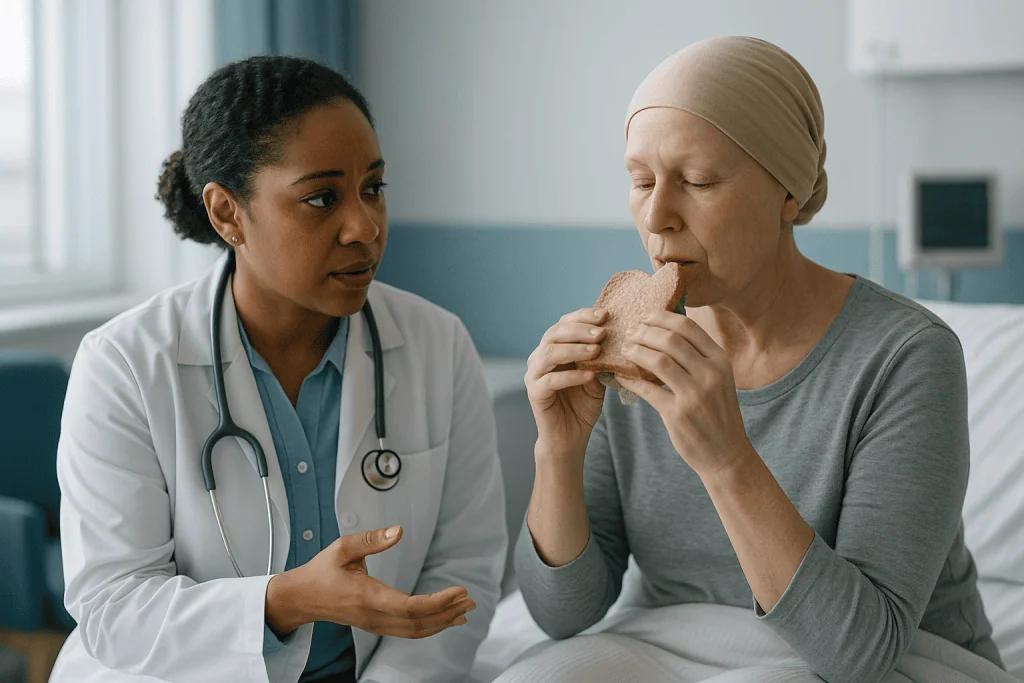
Why the first months? Three things overlap. The paraprotein load is at its peak, so normal antibody levels are at their lowest. Induction therapy, the first combination of medicines used to knock the disease back, usually includes a corticosteroid, and steroids blunt nearly every arm of immune response. And many people begin treatment already weakened by anemia, kidney strain or a recent fracture.
The risk does not vanish later. Every relapse and every new line of therapy resets some of that vulnerability, and more recent treatments that recruit or engineer T cells bring their own patterns, which we describe below. Yet the data also carry an encouraging message: the excess risk is concentrated, predictable and partly preventable. Vaccination, antiviral prophylaxis and fast response to fever target exactly the infections that cause most harm.
The honest framing, then, is neither fatalistic nor casual. Infection is the single most common serious complication of myeloma and its treatment, and it is also the complication where a well-prepared patient and a responsive team can change the trajectory most. That is why the phone card matters as much as the prescription.
What actually happens to your immune system during myeloma treatment
Different treatment classes weaken different parts of the immune system, and knowing which part explains why your team watches for particular infections. What follows describes mechanism only; whether any of these medicines suit you is a decision for your prescribing clinician.
Corticosteroids are in most myeloma regimens because they kill plasma cells directly. They also suppress inflammation, reduce neutrophil migration and, crucially, can lower or mask a fever. A person on high-dose steroids can have pneumonia without ever registering a temperature.
Proteasome inhibitors block the cell’s protein-recycling machinery, to which plasma cells are unusually sensitive. They also impair T cells that keep dormant varicella virus in check, which is why shingles reactivation is a signature risk and why antiviral prophylaxis is routinely discussed alongside them.
Immunomodulatory drugs act on the marrow microenvironment and can lower neutrophil counts, especially early in a cycle.
Anti-CD38 monoclonal antibodies bind a marker abundant on myeloma cells. The same marker sits on some normal immune cells, and these medicines are associated with more respiratory infections, particularly in the first months.
High-dose chemotherapy with stem cell transplant wipes out the marrow deliberately, creating a period of profound neutropenia lasting roughly one to two weeks before the transplanted cells engraft. Prior vaccine immunity is largely lost and must be rebuilt.
Bispecific antibodies and CAR T-cell therapy direct T cells against myeloma. They deplete normal plasma cells too, producing deep and sometimes prolonged antibody deficiency, and they can cause cytokine release syndrome, an inflammatory reaction whose fever can be hard to distinguish from infection.
Who is usually vaccinated straight away, and who is asked to wait
Vaccination in myeloma is a question of timing as much as choice. The immune system has to be capable of responding for a vaccine to do its job, so teams try to place shots in the windows when response is likeliest.

Most people are encouraged to receive inactivated vaccines as soon as practical after diagnosis, ideally before treatment starts or early in induction, because antibody production tends to decline as therapy deepens. Household members and close contacts are usually asked to keep their own vaccines current, since the people around you form a protective ring when your own response is weak.
Who is asked to wait? Anyone about to undergo stem cell transplant will typically have vaccination deferred until after engraftment, then restart a schedule from scratch several months later, because the transplant erases much of the immune memory built before it. People receiving anti-CD38 antibodies, bispecifics or CAR T-cell therapy may have specific vaccines timed around treatment cycles or after antibody levels begin to recover, and some teams check vaccine responses with blood tests rather than assuming protection.
Live vaccines, which contain a weakened but living virus, are a separate category. They include the measles-mumps-rubella vaccine, the older live shingles vaccine, nasal-spray influenza vaccine and yellow fever vaccine. These are generally avoided during active treatment because a weakened immune system may not contain even an attenuated virus. If a live vaccine is ever considered, it is a specialist decision made well away from active therapy.
None of this is a fixed rulebook. Your hematology team will set the order and timing based on your regimen, your blood counts and what is circulating in your community.
Myeloma infection risk vaccines: which ones are usually recommended?
The recommendations below reflect broad public-health guidance for adults with weakened immune systems, as described by the CDC and NHS. Your team may adjust them.
Inactivated influenza vaccine, every season. Influenza was one of the two viral infections most strongly associated with myeloma in population data, and the injected vaccine contains no live virus.
COVID-19 vaccines, kept current according to the schedule for immunocompromised adults, which often includes more doses than the general population because responses are weaker.
Pneumococcal vaccines, protecting against the bacterium behind many pneumonias and bloodstream infections. Immunocompromised adults are prioritized for pneumococcal vaccination regardless of age.
Recombinant zoster vaccine, the non-live shingles vaccine. It is recommended for immunocompromised adults from age 19 and is given as a two-dose series; it does not replace the antiviral prophylaxis your team may prescribe during proteasome inhibitor treatment.
RSV vaccine, for older adults and some younger adults with risk conditions, depending on current guidance.
Tetanus, diphtheria and pertussis boosters, and hepatitis B where indicated, follow adult schedules.
Two realistic expectations. First, vaccines in myeloma work less well than in healthy adults, sometimes substantially so; they lower risk rather than remove it, which is why precautions and prophylaxis run alongside. Second, a vaccine cannot cause the infection it protects against when it is inactivated or recombinant. Arm soreness, fatigue or a day of feeling off are immune responses, not illness.
Keep a written record. After transplant or T-cell therapy, your team will need to know exactly what was given and when.
The infections myeloma teams watch for most, at a glance
The pattern of infections in myeloma is not random. Certain organisms exploit certain gaps, and each gap has a matching countermeasure. The table summarizes the pairings that come up most often in guideline discussions.
| Infection | Why myeloma or treatment invites it | Usual preventive approach discussed |
|---|---|---|
| Bacterial pneumonia | Low normal antibodies; steroid effects; painful ribs limiting deep breaths | Pneumococcal and influenza vaccines; prompt fever reporting; sometimes antibiotic prophylaxis early in treatment |
| Bloodstream infection (sepsis) | Neutropenia after chemotherapy; central venous lines | Line care; neutropenic fever pathway; urgent antibiotics when fever occurs |
| Shingles (herpes zoster) | Proteasome inhibitors and transplant weaken T-cell control of dormant varicella | Antiviral prophylaxis during at-risk therapy; recombinant zoster vaccine |
| Influenza and COVID-19 | Weak antibody response; crowded settings | Annual inactivated flu vaccine; COVID schedule for immunocompromised adults; early antiviral treatment if infected |
| Urinary tract infection | Kidney involvement; reduced mobility; dehydration | Hydration; prompt urine testing for new symptoms |
| Fungal or opportunistic infection | Prolonged neutropenia or deep T-cell suppression after transplant or CAR T | Targeted prophylaxis in defined high-risk windows, decided by the team |
Notice how often “prompt” appears in the right-hand column. The preventive tools are real, but the single most powerful intervention across the whole table is speed: an infection identified in its first hours behaves very differently from one found after two days of hoping it would pass. That is the logic behind every fever instruction you will receive.
Neutropenia in multiple myeloma: what the numbers actually mean
Neutropenia is a shortage of neutrophils, the white blood cells that arrive first at any infection. Your blood test reports it as the absolute neutrophil count, usually written ANC. Laboratories set their own thresholds, but clinicians generally speak of mild, moderate and severe neutropenia as the count falls, and the risk of serious infection climbs steeply at the severe end.
Why does myeloma treatment cause it? Chemotherapy and several targeted medicines slow the marrow’s production of new cells. Because neutrophils live only a day or two in circulation, a pause in production shows up in the blood within days. The lowest point, called the nadir, typically arrives about a week to ten days after a treatment dose, and counts recover over the following week as the marrow rebounds. During transplant, the drop is far deeper and lasts until the new stem cells engraft.
The practical consequences are counterintuitive. With few neutrophils, the body cannot mount the usual signs of infection. There may be little redness around an infected line site, no pus, no productive cough. Fever may be the only clue, and sometimes not even that. This is why the term neutropenic fever carries such weight in hematology: a temperature of 100.4°F (38°C) or higher in someone with a low neutrophil count is treated as a medical emergency until proven otherwise.
You cannot feel your neutrophil count, which is why routine blood tests are scheduled around cycles. Ask your team where in the cycle your nadir is likely to fall. Knowing that a particular week is your low week lets you plan quieter days, skip the crowded event, and take any temperature reading more seriously than usual.
Myeloma fever: when to worry and why the threshold is so low
Healthy adults are often told that a mild fever can be watched at home. That advice does not transfer to myeloma. The threshold most cancer teams use, a single reading of 100.4°F (38°C) or higher, is deliberately low because early bloodstream infection in a neutropenic person can progress to sepsis within hours, and because the immune system may never produce a higher temperature even as infection spreads.
Steroids complicate matters further. They suppress fever, so a person mid-cycle on dexamethasone-containing regimens may have a serious chest infection with a normal thermometer reading. Teams therefore ask you to report not just numbers but feelings: shaking chills, sudden confusion, a new cough, breathlessness, pain on passing urine, or simply feeling much worse than an hour ago.
What happens when you call? Most myeloma services run a neutropenic fever pathway. You will be asked to come in, blood will be drawn for cultures and a count, and intravenous antibiotics are commonly started within the first hour, before results are back. That order is intentional: waiting for a culture to identify the organism costs time the body cannot afford. Once the results arrive, treatment is narrowed or stopped.
Two behaviors undermine this system. The first is taking a fever-reducing medicine before checking your temperature, which hides the signal; discuss with your team whether and when such medicines are appropriate for you. The second is waiting until morning. The data on early deaths from infection in myeloma are, in large part, a record of hours lost. A thermometer by the bed and the number on the fridge are not anxious habits. They are the treatment plan working as designed.
Everyday precautions that have evidence behind them
Advice on “boosting immunity” is everywhere, and most of it is noise. The measures below are the ones public-health bodies actually recommend for adults with weakened immunity.
Hand hygiene remains the single most effective habit. Soap and water for twenty seconds, or alcohol-based sanitizer, before eating, after the bathroom, after public surfaces and after handling pets.
Food safety matters more than food restriction. Cook meat, eggs and seafood thoroughly, wash produce, avoid unpasteurized dairy and juices, respect use-by dates and refrigerate leftovers quickly. Broad “neutropenic diets” that ban all raw fruit and vegetables have not shown clear benefit in studies and are used less than they once were; ask your team what they advise during your low-count weeks.
Crowds and sick contacts: avoid close contact with anyone who has a cold, flu, stomach bug or rash, and consider a well-fitting mask in crowded indoor spaces during respiratory virus season, particularly around your nadir.
Skin and mouth: treat small cuts promptly, keep skin moisturized to prevent cracks, use a soft toothbrush, and tell your team before any dental work so it can be timed around your counts.
Pets and soil: wear gloves for gardening and litter boxes, have someone else handle bird cages or reptile tanks, and keep pets’ vaccinations current.
Water and travel: drink safe water, avoid swimming in lakes or hot tubs during neutropenia, and talk to your team before any trip, since some destinations require live vaccines that are off the table.
What is not on the list: megadose vitamins, herbal immune formulas, colloidal silver. None has evidence of reducing infection in myeloma, and some interact with treatment.
Preventive medicines your team may discuss, and what they do
Beyond vaccines, myeloma teams use a small set of preventive medicines, known collectively as prophylaxis. Whether any of them belongs in your plan depends on your regimen, counts and history; what follows is mechanism and typical timing, not a recommendation.
Antiviral prophylaxis against herpes viruses is the most widely used. Medicines in the nucleoside analogue class block the viral enzyme that copies varicella and herpes simplex DNA. They are commonly prescribed for the entire duration of proteasome inhibitor therapy, through transplant and for a period after CAR T or bispecific treatment, because the reactivation risk persists as long as T-cell function is suppressed.
Antibiotic prophylaxis during the first months of treatment has been examined in randomized trials, which found fewer serious bacterial infections and fewer early deaths in some populations. Not every team uses it, partly because of concerns about resistance and side effects, and the decision is individualized.
Antifungal prophylaxis is generally reserved for defined high-risk windows such as prolonged severe neutropenia after transplant.
Prophylaxis against Pneumocystis, a lung infection that emerges when T-cell immunity is deeply suppressed, is often considered during high-dose steroid phases and after cellular therapies.
Immunoglobulin replacement is a transfusion of pooled antibodies from healthy donors. It is considered for people with very low antibody levels who keep getting serious bacterial infections despite other measures; it does not treat the myeloma, it temporarily fills the antibody gap.
Growth factors stimulate the marrow to produce neutrophils faster after chemotherapy and are used to shorten the neutropenic window in specific situations.
If you are already taking any of these, do not stop or pause them without talking to the prescriber, even when you feel entirely well. Their whole purpose is to work while nothing seems wrong.
What the days and weeks after a treatment cycle usually look like
Timelines vary by regimen, but a rough shape recurs, and knowing it turns vague worry into a plan.
Days one to three. Steroid days often bring restless energy, poor sleep and a flushed face. Fever is unlikely to show even if something is brewing, so pay attention to other signals such as cough, urinary discomfort or a new skin lesion.
Days four to seven. As steroid effects fade, fatigue arrives. Neutrophil counts begin to fall toward the nadir. This is the point to reduce crowd exposure and check your temperature if you feel unwell.
Days seven to fourteen. The typical nadir window for many chemotherapy-containing regimens. Infection risk is highest here. Your team may schedule a blood count around now. Any fever at or above 100.4°F (38°C) means a call, day or night.
Days fourteen to twenty-one. Counts recover for most people, and energy usually returns before the next cycle. Some continuous oral regimens flatten this curve, with steadier but persistent mild neutropenia.
After stem cell transplant, the arc stretches out. Severe neutropenia typically lasts around one to two weeks until engraftment, followed by months of gradually recovering T-cell and antibody function. Re-vaccination usually starts several months after transplant and continues for well over a year. Many teams describe the first hundred days as the highest-risk stretch.
After CAR T or bispecific therapy, the neutropenia may recover quickly, but antibody deficiency can persist for many months because normal plasma cells are depleted along with the cancer. Infections may occur late, long after the initial hospital stay, which is why follow-up and prophylaxis extend well beyond it.
These are typical ranges drawn from clinical descriptions, not promises. Your own cycle diary, kept over two or three rounds, will be more accurate for you than any general timeline.
Is massage safe with myeloma, and what about exercise and daily life?
People with myeloma are not asked to live in a bubble, and the evidence favors staying active. Regular gentle exercise supports lung clearance, mood, bone strength and sleep, all of which indirectly reduce infection risk. The adjustments are specific rather than sweeping.
Massage comes up often. It can be safe and comforting, with three caveats your team should confirm. Myeloma weakens bone, so deep pressure over the spine, ribs, pelvis or any known lesion is avoided, and gentle techniques are preferred. Low platelet counts raise bruising risk, so timing around your blood counts matters. And during neutropenic windows, any therapist should have clean hands, clean linens and no illness of their own. Tell the therapist about your diagnosis, ports or lines, and any bone pain before the session begins.
Exercise: walking, stationary cycling, swimming in chlorinated pools when counts are normal, and supervised resistance work are generally encouraged. High-impact or contact sports are usually discouraged because of fracture risk. A physical therapist familiar with bone disease can tailor a program.
Work and social life: many people continue working, with flexibility around cycle days and respiratory virus season. Ventilated spaces, masks in crowds and honest conversations with colleagues about staying home when sick are practical middle paths.
Sexual health: intimacy is not off limits, though barrier protection may be advised during neutropenia and some treatments require contraception for other reasons.
Travel: domestic trips are usually manageable with planning. International travel needs a conversation about vaccine requirements, access to care and timing relative to your cycle. Carry a treatment summary and your team’s contact details wherever you go.
What people often get wrong about myeloma and infection
“The 20/2/20 rule tells me my infection risk.” It does not. The 20/2/20 model is a way of stratifying smoldering myeloma, the early, symptom-free stage, using three markers: bone marrow plasma cells above 20 percent, M-protein above 2 grams per deciliter, and a free light chain ratio above 20. It estimates how likely progression to active myeloma is, which informs how closely someone is monitored. Infection risk is judged from different things: antibody levels, neutrophil counts, treatment type and history.
“Once treatment finishes, my immune system is back to normal.” Immune recovery lags treatment, sometimes by many months, especially after transplant or T-cell therapies. Prophylaxis and vaccination schedules extend past the last dose for that reason.
“Vaccines are pointless if my immune system is weak.” Responses are reduced, not absent, and partial protection against pneumonia or influenza still matters when those infections are among the most dangerous you face. Household vaccination adds another layer.
“A little fever can wait until morning.” In neutropenia, hours matter. The 100.4°F (38°C) threshold exists because the usual warning signs are muted.
“Antibiotics for every sniffle keep me safe.” Unnecessary antibiotics breed resistance and disrupt the gut bacteria that protect against harder-to-treat infections. Targeted prophylaxis chosen by your team is different from self-directed use.
“Supplements can replace precautions.” No vitamin or herbal product has been shown to reduce infections in myeloma, and several interfere with treatment metabolism.
“I should avoid everyone.” Isolation carries its own harms. The evidence supports specific, timed precautions, not withdrawal from life.
Questions to ask your care team about infection risk
Consultations are short and the topics many. Bringing written questions keeps infection prevention from slipping off the agenda. Consider asking:
- Which vaccines should I have now, which should wait, and which should my household members have?
- Where in my treatment cycle is my neutrophil count likely to be lowest, and will you check it then?
- What exact temperature should trigger a call, and what number do I use at night and on weekends?
- Am I taking any preventive antiviral, antibiotic or other prophylaxis, and for how long is it planned?
- Do my steroids mean I might not run a fever, and what other signs should I watch for instead?
- Have my normal antibody levels been measured, and would immunoglobulin replacement ever be considered for me?
- Are there foods, activities or places I should avoid during my low-count weeks specifically?
- I would like to have dental work, a massage or a trip; how should we time it?
- If I develop a cough, rash or urinary symptoms without fever, do I call the same number?
- After transplant or cellular therapy, when will my re-vaccination schedule begin, and who coordinates it with my primary care clinician?
Write down the answers, including names and dates. Infection plans often involve several clinicians, and the person most likely to notice a gap is you.
When to call your doctor: red-flag signs during myeloma treatment
Call your myeloma team or the emergency number they gave you immediately, at any hour, if you notice any of the following:
- A temperature of 100.4°F (38°C) or higher, even once, or a temperature below your normal with chills.
- Shaking, shivering or sweats, regardless of the thermometer reading.
- New confusion, drowsiness, slurred speech or difficulty rousing.
- Rapid breathing, breathlessness at rest, or chest pain.
- A racing heartbeat, dizziness on standing, or passing very little urine.
- Skin that is mottled, bluish, pale or cold, or a rash that does not fade when pressed.
- New cough with colored sputum, or pain on breathing in.
- Burning or pain on passing urine, or cloudy or bloody urine.
- Redness, swelling, pain or discharge around a central line, port or wound.
- A painful blistering rash in a band on one side of the body, which can signal shingles.
- Mouth ulcers or a sore throat that make swallowing difficult.
- Persistent vomiting or diarrhea, especially if you cannot keep fluids down.
Sepsis, the body’s overwhelming response to infection, can develop within hours in someone with low neutrophils. The NHS and Mayo Clinic both describe confusion, breathlessness, mottled skin and a non-fading rash as signs needing emergency care. If your team cannot be reached, go to the nearest emergency department and state clearly that you are a myeloma patient on treatment who may be neutropenic. Do not drive yourself if you feel faint or confused. Being wrong about a false alarm costs an evening; being late costs far more.
Frequently asked questions
What are the risks of infection in patients with multiple myeloma?
Infection is the most common serious complication of myeloma, with population studies showing about a sevenfold increase compared with the general population. Bacterial pneumonia, bloodstream infections, urinary infections, influenza and shingles are the most frequent. Risk is highest in the first months after diagnosis, during neutropenic windows after chemotherapy, and after transplant or T-cell therapies, when normal antibody production is deeply suppressed.
Why does myeloma cause infections even before treatment starts?
Because the cancer takes over the plasma cells that make protective antibodies. Malignant plasma cells produce one useless antibody in bulk while crowding out the healthy cells that make the full range, leaving the body with fewer defenses against bacteria it once handled easily. Marrow crowding also reduces neutrophil production, and bone pain, kidney strain and anemia further weaken the body’s ability to clear infections.
Which myeloma infection risk vaccines should I get, and which should I avoid?
Inactivated vaccines are generally recommended: seasonal influenza, COVID-19 on the immunocompromised schedule, pneumococcal vaccines, the recombinant (non-live) shingles vaccine, and routine tetanus and hepatitis B where indicated. Live vaccines, including MMR, the nasal flu spray, the older live shingles vaccine and yellow fever, are usually avoided during active treatment. Timing around transplant and cellular therapies is set by your team.
What is neutropenia in multiple myeloma and when is it most likely?
Neutropenia is a low count of neutrophils, the white blood cells that respond first to infection. Chemotherapy and several targeted medicines slow their production, and the lowest point usually falls about seven to fourteen days after a treatment dose, recovering over the following week. After stem cell transplant, severe neutropenia typically lasts one to two weeks until the new cells engraft.
Myeloma fever: when should I worry?
Any single temperature of 100.4°F (38°C) or higher warrants an immediate call to your team, at any hour, because infection in neutropenic people can progress to sepsis within hours. Also call for chills, confusion, breathlessness, rapid heartbeat, new cough or urinary pain, even with a normal temperature, since steroids can suppress fever entirely. Do not take fever-reducing medicine before checking your reading unless your team has advised it.
Is massage safe for people with multiple myeloma?
It can be, with adjustments confirmed by your team. Myeloma weakens bone, so deep pressure over the spine, ribs, pelvis or known lesions should be avoided in favor of gentle techniques. Low platelets increase bruising, so timing around blood counts matters, and during neutropenic weeks the therapist should be well and follow strict hygiene. Tell the therapist about your diagnosis, any lines or ports, and bone pain beforehand.
What is the 20/2/20 rule for myeloma?
It is a risk model for smoldering myeloma, the symptom-free early stage, not a rule about infection. It flags three markers: bone marrow plasma cells above 20 percent, M-protein above 2 grams per deciliter, and a serum free light chain ratio above 20. The more markers present, the higher the estimated chance of progressing to active myeloma, which guides how closely someone is monitored.
Can myeloma be treated so that it goes away for good?
Myeloma is generally managed as a long-term condition that can be controlled, often for years, and may return after periods of remission. Modern combination therapies, transplant and cellular treatments have lengthened those remissions considerably, and some people remain in deep remission for a long time. Outcomes vary widely with disease biology, age and response to treatment, and only your treating team can discuss what is realistic in your case.
Do I need to follow a special neutropenic diet during treatment?
Most teams now emphasize food safety rather than broad restriction. Studies of strict neutropenic diets that ban all raw fruit and vegetables have not shown a clear reduction in infections. The consistent advice is to cook meat, eggs and seafood thoroughly, wash produce, avoid unpasteurized products, refrigerate leftovers promptly and respect use-by dates. Ask your team whether any extra limits apply during your lowest-count week.
Should my family members change anything to protect me?
Yes, in modest ways. Household contacts are usually encouraged to keep their own influenza, COVID-19 and other routine vaccines current, since their immunity forms a protective ring when yours is weaker. Anyone with a cold, flu, stomach bug or rash should keep a distance during your neutropenic weeks. Good hand hygiene at home and careful food handling benefit everyone. Family members can safely receive most vaccines while living with you.
References
This article is for general information only and is not a substitute for professional medical advice. Please consult a qualified doctor about your individual situation.

More from the Blog

Infection Precautions During Acute Lymphocytic Leukemia Treatment and Why Fever Is Urgent
During acute lymphocytic leukemia treatment, chemotherapy lowers neutrophils, the white cells that fight bacteria, so ordinary germs can become serious within hours. Careful hand…

What a Skin Cancer Biopsy Report Tells Your Team and How It Shapes Treatment
A skin cancer biopsy report names the cancer type (most often basal cell carcinoma, squamous cell carcinoma or melanoma), describes how deeply it grows,…

The Low-Iodine Diet Before Radioiodine Treatment: What to Eat and What to Avoid
A low-iodine diet before radioiodine treatment lowers the iodine in your body so thyroid tissue takes up more of the radioactive iodine. It is…
Is a Second Opinion Worth Seeking for a Testicular Cancer Plan? What to Ask First
A second opinion is usually reasonable before a testicular cancer plan begins, and most care teams expect the request. It is most useful when…

Tingling and Dizziness After Therapeutic Apheresis: Why They Happen and What to Report
Tingling and dizziness after therapeutic apheresis are usually short-lived and traceable to two mechanisms: citrate, the anticoagulant that keeps blood from clotting in the…

Gastrectomy for Stomach Cancer: Partial or Total Removal and How Digestion Is Rerouted
A gastrectomy for stomach cancer removes part of the stomach (partial or subtotal gastrectomy) or all of it (total gastrectomy), together with nearby lymph…