

Laser Resurfacing Results: What Fine Lines and Acne Scars Realistically Look Like Afterward
Key Takeaways
- Mayo Clinic describes laser resurfacing as reducing fine wrinkles and acne scars, and the word to expect is 'softer,' not 'gone,' especially for deep ice-pick scars and structural folds.
- Ablative treatments typically leave skin raw for about one to two weeks and pink for several months, while the collagen-driven improvement keeps developing for months after the surface heals.
- Fractional lasers treat skin in a grid of tiny columns, which is why they recover faster than full-surface ablative treatment but produce a somewhat smaller change per session.
- Rolling and shallow boxcar acne scars respond best to resurfacing; narrow, deep ice-pick scars often need additional techniques such as subcision or punch excision.
- Hypopigmentation, a lasting lightening of treated skin, can appear months after aggressive ablative treatment and is a key reason skin tone shapes device choice.
- Results from ablative resurfacing can last for years, but ongoing sun exposure and normal aging add new lines, so daily SPF 30 or higher protection is part of the treatment, not an add-on.
Laser resurfacing results are usually a partial, gradual softening rather than a complete erasure. Fine lines around the eyes and mouth commonly look shallower, and acne scars typically appear less deep and less shadowed, with the full effect emerging over several months as collagen rebuilds. Deep scars and deep folds persist to some degree, and outcomes depend on laser type, skin tone, sun protection, and the treating team's assessment.
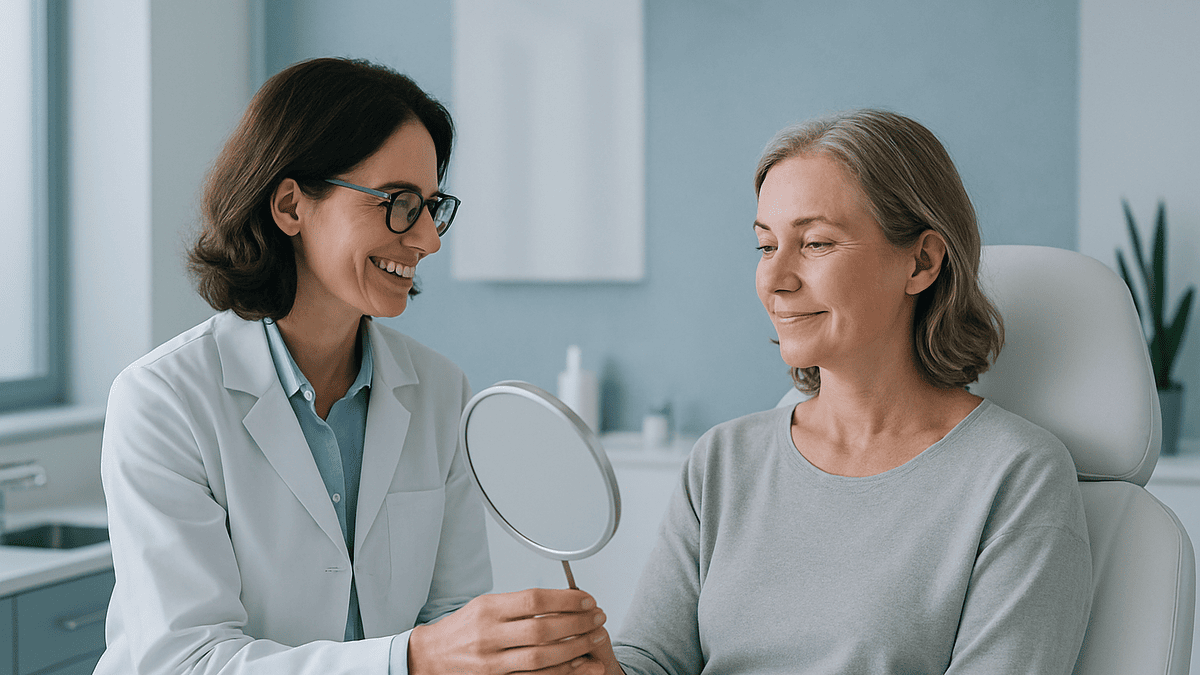
Someone leans toward the bathroom mirror, stretches the skin beside one eye with a fingertip, and watches the fine lines vanish. Let go, and they settle back. A little further down, on the cheek, the pitted marks left by teenage acne have stayed put for twenty years. The question forming is not really “should I have a laser treatment?” It is “what would my face actually look like afterward, and would I still recognize it?”
That is a fair question, and the honest answer is more textured than a side-by-side photo. Laser resurfacing results are real, measurable, and often welcome, but they are also gradual, partial, and shaped by things no laser controls: your skin tone, your history with acne, how carefully you avoid the sun, and the type of device your treating team judges appropriate.
What follows is the version of that conversation you would want a candid clinician to have with you before anything is switched on.
Laser resurfacing results: the honest one-paragraph summary
If you remember one thing, make it this: resurfacing softens, it does not erase. Mayo Clinic describes the goal of laser resurfacing as reducing facial wrinkles and irregularities such as blemishes or acne scars, and the word “reducing” is doing precise work in that sentence. Fine lines around the eyes, the upper lip, and the forehead typically look shallower and less crisp. Skin texture tends to look more even under overhead light. Acne scars usually appear less deep, and the little shadows that make them visible from across a room become less pronounced.
What does not happen is a return to the skin you had at nineteen. Deep folds that run from the nose to the mouth are driven by volume loss and muscle pull, not surface texture, so a laser leaves them largely as they were. Ice-pick scars, the narrow, deep puncture-like type, respond less than shallow rolling scars. Skin that is habitually sun-exposed will keep aging at the same pace afterward.
The evidence base here is reasonable rather than spectacular. A review of resurfacing technologies published through the NIH’s PubMed Central notes that ablative lasers produce the most pronounced improvement while carrying the longest recovery, and that gentler fractional and nonablative approaches trade some of that effect for safety and shorter downtime. Improvement is generally measured by clinicians on graded scales of wrinkle depth or scar severity, and the changes recorded are typically a step or two along those scales, not a jump to zero.
None of that is a reason to feel discouraged. A meaningful step toward smoother skin is exactly what many people are hoping for. It simply helps to know, before the appointment, that the word to expect is “better,” not “gone.”
How laser resurfacing actually works on skin
A resurfacing laser delivers a concentrated beam of light that skin absorbs as heat. What happens next depends entirely on how much heat, how deep, and in what pattern.
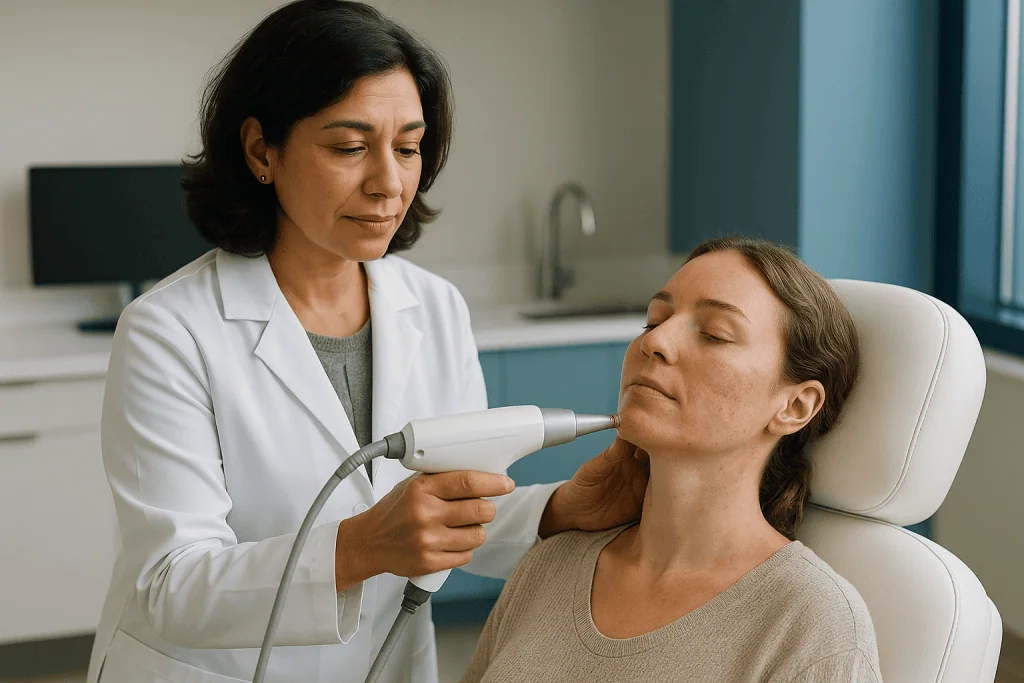
Two layers matter. The epidermis is the thin outer layer you can see and touch. Beneath it sits the dermis, the thicker layer that holds collagen, the protein scaffolding that keeps skin firm and springy. Fine lines and shallow scars are, in large part, a dermis problem: collagen has thinned with age, or was destroyed and replaced haphazardly when acne healed.
An ablative laser vaporizes the epidermis and heats the dermis underneath. Mayo Clinic explains that as the treated area heals, new skin forms that is tighter and smoother, because the heat prompts the dermis to produce fresh collagen. A nonablative laser, by contrast, leaves the surface intact and heats only the deeper layer, stimulating collagen with less injury. A fractional laser, which can be either ablative or nonablative, treats the skin in a grid of tiny columns and leaves the skin between them untouched. Those untouched bridges act like tiny islands of healing, which is why fractional treatments recover faster than a full-surface pass.
The practical consequence is a spectrum. At one end sits the traditional full-face ablative treatment, with the largest change and the longest recovery. At the other sits a light nonablative session, with subtle change, minimal downtime, and typically a series of visits. Fractional devices sit in the middle. Cleveland Clinic frames this as a trade between how dramatic the result is and how much healing you are willing to go through, and that trade is one your treating team will walk you through rather than a decision to make from an article.
Collagen remodeling is slow biology. That single fact explains most of the timeline in the sections that follow.
Ablative, nonablative, and fractional lasers compared
People often arrive at a consultation having heard three or four device names and assuming they are competing brands. They are better understood as categories, each with a characteristic result and recovery profile. The table draws on descriptions from Mayo Clinic, Cleveland Clinic, and the NIH-hosted review of resurfacing technologies; the ranges are typical, not promises, and your own team may quote different figures based on your skin and their settings.
| Approach | What it does | Typical visible result | Typical recovery (surface healing) | Usual number of sessions |
|---|---|---|---|---|
| Full ablative (carbon dioxide or erbium) | Removes the epidermis and heats the dermis across the whole treated area | Largest improvement in fine lines and texture; most noticeable change in acne scars | Raw, weeping skin for about 1 to 2 weeks; redness for weeks to months | Often one |
| Fractional ablative | Removes columns of skin in a grid, sparing the skin between | Meaningful improvement, somewhat less than full ablative | Roughly 4 to 7 days of visible healing; pinkness lingering longer | One to a few |
| Nonablative (fractional or full) | Heats the dermis without removing the surface | Subtle, cumulative improvement; gentle texture change | Redness and swelling for a few days | Usually a series |
Two things the table cannot show. First, more intense is not automatically better. Full ablative treatment carries a higher chance of lasting pigment change, especially in deeper skin tones, which is why Mayo Clinic notes that clinicians weigh skin color heavily when choosing an approach. Second, the “number of sessions” column is where expectations most often go astray: someone who has a single nonablative treatment and feels underwhelmed has often had exactly the result that approach is designed to give at that stage.
Erbium and carbon dioxide are simply two wavelengths of light; erbium tends to penetrate less deeply and is often chosen for finer lines, while carbon dioxide reaches deeper. Which fits you is a clinical judgment, not a consumer choice.
Does laser resurfacing really work for fine lines?
Yes, within limits that are worth spelling out. Fine lines are the indication where resurfacing has its longest track record and its most consistent results, and the mechanism is straightforward: thin, sun-weathered epidermis is replaced, and the dermis beneath it thickens with new collagen.
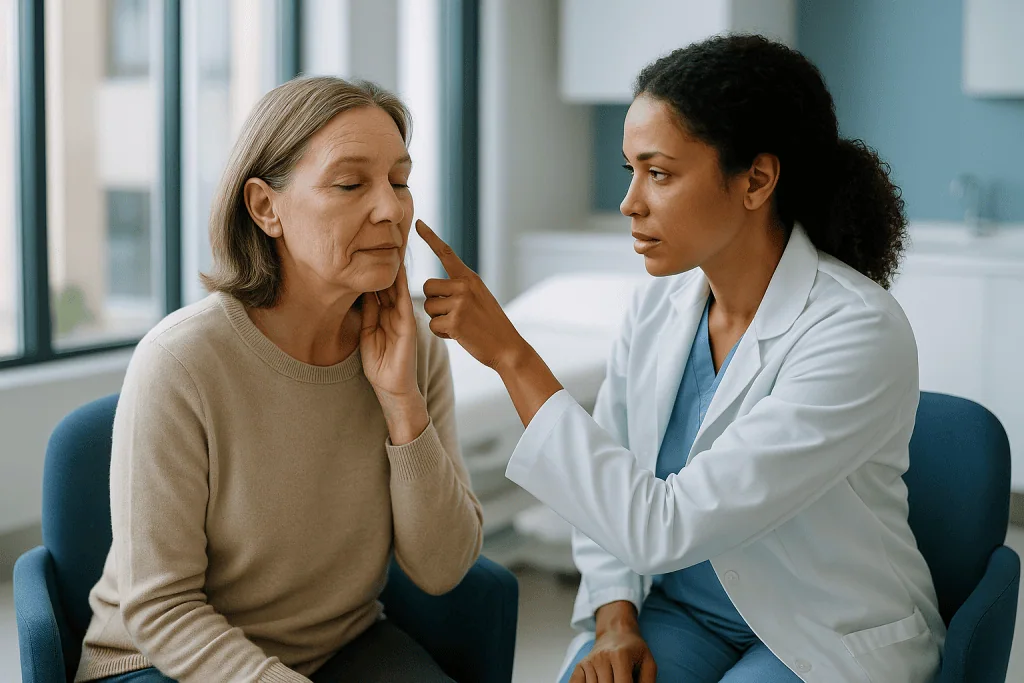
The lines that respond best share a feature. They are etched into the skin surface itself, visible even when the face is at rest and the underlying muscle is relaxed. Think of the vertical creases above the upper lip, the crosshatch at the outer corner of the eye, the fine crinkling on the cheeks that catches light in a certain way. Mayo Clinic lists fine wrinkles, uneven skin tone, sun-damaged skin and mild to moderate acne scars among the concerns resurfacing is used to treat, and that list is telling for what it leaves out.
Lines driven mainly by movement, such as the deep horizontal forehead furrows produced by repeatedly raising the eyebrows, are less responsive, because a smoother surface does not stop the muscle from folding it. Folds caused by loss of fat and bone support in the midface are a structural issue, and resurfacing addresses them only incidentally.
What the improvement looks like day to day is subtle and cumulative. Makeup tends to sit more smoothly. The skin looks less crepey in the harsh light of a car mirror. Photographs taken at the same angle a few months apart show lines that are still present but shallower, softer at the edges, and less shadowed. That gradual quality can be frustrating for people hoping for a single dramatic reveal, which is one reason clinicians often suggest baseline photographs: memory is a poor judge of texture.
The research summarized in the NIH-hosted review supports this picture. Ablative resurfacing consistently improves clinician-graded wrinkle scores; nonablative approaches produce smaller improvements per session that build over a series. Neither restores skin to a younger baseline, and neither prevents the next decade of aging.
Laser resurfacing for acne scars: what changes and what stays
Acne scars are where hopes run highest and where honesty matters most. The scar type determines the outcome far more than the device does.
Clinicians usually describe three shapes. Rolling scars are broad, shallow depressions with soft edges that give skin a wavy look; they respond well because a laser can smooth the transition between the dip and the surrounding skin. Boxcar scars are wider, with sharper vertical walls, and they improve moderately, particularly the shallower ones. Ice-pick scars are narrow, deep, and often reach well into the dermis; resurfacing softens their rims but frequently leaves the deep core, which is why treating teams may pair lasers with other techniques for that scar type.
MedlinePlus notes that scars are a normal part of healing and that treatments can make them less noticeable but generally do not make them disappear. That framing applies squarely here. After a fractional ablative series, a cheek with rolling and boxcar scarring commonly looks more even, with fewer shadows under overhead light and a texture that reads as “some old acne” rather than “heavily scarred.” Ice-pick scars usually remain visible on close inspection.
Color matters too. Many people call the flat red or brown marks left after a breakout “scars,” but those are pigment changes rather than true texture loss, and they follow a different course. Redness often fades with time on its own; brown marks may lighten with sun protection and topical care. A resurfacing laser is aimed at texture, and it can temporarily worsen pigment before things settle. Anyone with active acne is generally asked to wait until it is controlled, since fresh inflammation complicates healing and can seed new marks.
Photographs help here more than anywhere else. Ask that they be taken in consistent light, at consistent angles, and reviewed with you, so that a real but modest improvement is not lost to the daily habit of looking too closely.
When will I see results from laser resurfacing? A realistic timeline
There are really two answers, and conflating them causes a lot of disappointment. The first is when the skin looks healed; the second is when it looks improved. They are not the same date.
After an ablative treatment, Mayo Clinic describes the treated skin as raw, swollen and itchy at first, with new skin covering the area within about one to two weeks. During that time the face looks worse than before, sometimes alarmingly so, with crusting and weeping. Once the surface closes, the skin is pink to red. Mayo notes this redness can last for several months. Many people are struck, at around the two-week mark, by how smooth and tight the new skin already looks; that early smoothness is partly swelling and partly fresh epidermis, and some of it settles.
The deeper change arrives later. Collagen remodeling continues in the dermis for months after the light has stopped, and Mayo Clinic notes it may take several months to see the full effect. Cleveland Clinic gives a similar picture, describing gradual improvement in tone and texture over weeks to months after the visible healing has finished.
Nonablative treatments compress the front end and stretch the back end. Redness and swelling typically last only a few days, so there is little to hide. But because each session produces a smaller stimulus, the visible improvement builds across a series, and the final result is usually judged months after the last treatment rather than days after the first.
A useful way to hold this: the first two weeks tell you how you healed, the second month tells you how the surface looks, and the sixth month tells you what the laser actually accomplished. Judging the outcome at week three is like tasting bread when it comes out of the mixer.
Laser skin resurfacing recovery time: what the first days and weeks look like
Recovery is the part of this decision people most often underestimate, so it helps to picture it hour by hour rather than as a single word like “downtime.”
The first day after an ablative treatment usually feels like a significant sunburn. The face is swollen, warm, and tight. Some teams cover the skin with a dressing or ointment; Mayo Clinic describes keeping the area moist and following a specific cleansing routine to help healing and reduce infection risk. Sleeping with the head raised is commonly advised to limit swelling, which tends to peak around the second or third day and can be dramatic around the eyes.
Days three through seven are the messy stretch. Treated skin weeps, crusts, and begins to peel. Itching is common as new skin forms. This is the window in which people are most tempted to pick, and picking is the single most controllable way to turn a good result into a poor one. Cleveland Clinic notes that ablative recovery can take two to three weeks before the skin is fully covered and comfortable, while nonablative recovery is typically a matter of days.
Week two into week three brings closure of the surface and a distinctly pink, shiny look, the way skin under a healed scrape appears. Makeup is often permitted once the surface is intact, though your team will tell you when. Pinkness then fades over weeks to months; people with fair skin tend to stay pink longest.
Throughout every stage, sun is the enemy of a good outcome. Freshly resurfaced skin darkens easily, and the CDC’s general sun-safety advice, broad-spectrum sunscreen of SPF 30 or higher, shade, and a wide-brimmed hat, becomes non-negotiable rather than optional. Many teams also ask patients to avoid strenuous exercise, heat, and swimming until the skin has closed, because sweat and chlorine irritate an open surface.
How long do laser resurfacing results last?
The result lasts; the aging does not stop. Both halves of that sentence are true, and they explain nearly every confusing answer people get to this question.
Collagen built in response to an ablative treatment is genuinely new tissue, and it does not vanish on a schedule. Mayo Clinic notes that results after ablative laser resurfacing can last for years. Acne scars that have been smoothed generally stay smoother, because the underlying texture has actually been remodeled rather than temporarily plumped. In that sense, resurfacing behaves more like a renovation than a coat of paint.
What changes is everything around the renovation. The skin keeps aging at whatever rate genetics, sun exposure, and smoking dictate, so new fine lines appear over time, and existing ones gradually deepen again. Someone who spends summers outdoors without protection will lose ground faster than someone who does not. Mayo Clinic is explicit that as you age you will continue to get lines from squinting and smiling, and that new sun damage can reverse the improvement.
Nonablative results follow a shorter arc. The stimulus is gentler, the collagen gain smaller, and many clinicians describe maintenance sessions as part of the plan rather than a sign the first course failed. Whether and when to repeat is a judgment for your treating team, based on how your skin responded, not on a calendar.
Durability also depends on what was treated. Texture and scar improvements tend to be the most stable. Improvements in pigment and redness can be less durable, because those are influenced by ongoing sun exposure and, for redness, by underlying conditions like rosacea.
The honest summary: expect a step change that holds, followed by the ordinary slow drift of time. Good daily sun protection is the one variable you control, and the CDC’s guidance on it applies as much to protecting a result as to preventing skin cancer.
How much younger does laser resurfacing make you look?
Any specific number of years you have read online was invented, and it is worth understanding why the question resists a figure.
Perceived age is built from several signals at once: skin texture, skin color, facial volume, the position of soft tissue, hair, posture, and expression. Resurfacing acts on the first two. It smooths fine lines and evens tone, which are strong signals of skin age, but it leaves volume, sagging, and expression lines largely alone. A face can have beautifully smooth cheeks and still read as its actual age because of a softened jawline or hollows under the eyes.
Studies that ask observers to estimate age from before-and-after photographs exist for various procedures, but they measure a controlled, photographed moment under matched lighting, and the effect they find varies widely between individuals. None of the major public health sources in this article assign a “years younger” figure to laser resurfacing, and no responsible clinician should either. When someone quotes one, it usually comes from marketing rather than measurement.
A better way to frame the outcome is descriptive. After a well-matched ablative treatment and full healing, people commonly describe their skin as looking “rested,” “clearer,” or “like I’ve been on holiday,” phrases that point to texture and tone rather than age. Friends notice something without being able to name it. That is a realistic ambition.
There is also a version of this question hiding underneath: will I look like myself? With resurfacing, the answer is generally yes, because the shape of the face is unchanged. The risks to recognizability are not from too much smoothing but from pigment problems, discussed below, which can leave skin lighter or darker in patches and are the complication most people would least want.
If the goal is to look distinctly younger rather than distinctly fresher, that is a conversation to have plainly with the treating team, who may say that a different approach, or no procedure, is the more honest fit.
Who laser resurfacing is usually for, and who is usually asked to wait
The people who tend to do well share a profile that has less to do with age than with skin history and expectations.
Good candidates typically have fine to moderate lines, sun-damaged texture, or mild to moderate acne scarring, and they want improvement rather than transformation. They are able to stay out of the sun rigorously for months, can accept one to three weeks of visible healing if an ablative approach is chosen, and have skin that is not currently inflamed. Mayo Clinic notes that lighter skin tones carry a lower risk of pigment change and that clinicians take skin color into account when deciding whether and how to treat; deeper skin tones can be treated, but the choice of device and settings becomes more conservative, and the conversation about pigment risk becomes more central.
Several groups are commonly asked to wait or to consider alternatives. Active acne raises the chance of infection and new marks, so control comes first. Anyone who has taken oral isotretinoin, a retinoid used for severe acne, is often asked to wait; Mayo Clinic advises telling the clinician about isotretinoin use within roughly the past year, because of concern about wound healing and scarring. A history of cold sores matters, since the herpes virus can reactivate across freshly treated skin; clinicians often address this with an antiviral medicine, a decision that sits entirely with the prescriber. A tendency to form thick, raised scars, called hypertrophic or keloid scars, is a caution, as is a recent deep chemical peel or radiation to the area. Certain autoimmune conditions, immune-suppressing treatments, pregnancy, and current smoking also shift the risk-benefit balance, and a candid history helps the team advise you.
None of these are moral judgments about who “deserves” treatment. They are the ordinary variables of wound healing, and the point of the consultation is to place your particular skin honestly on that map.
Risks and side effects, including pigment change and scarring
Most side effects of resurfacing are expected and temporary. A smaller number are uncommon and lasting, and it is the latter that deserve the most attention before you decide.
Expected effects include redness, swelling, itching, and stinging in the days after treatment. Ablative redness, as noted, can persist for months. Acne-like breakouts and small white bumps called milia can appear during healing, often from the heavy ointments used to keep skin moist; they generally resolve. Mayo Clinic lists all of these as common, short-lived reactions.
Infection is the first serious risk. Freshly ablated skin is essentially a large superficial wound, and bacterial or viral infection can set in, most notably reactivation of the cold-sore virus, which can spread widely across treated skin. This is why your history of cold sores matters and why teams give precise aftercare instructions.
Pigment change is the complication people most often regret. Hyperpigmentation means the treated skin turns darker than its surroundings; it is more likely in deeper skin tones, after sun exposure during healing, and is often, though not always, temporary. Hypopigmentation means the skin turns lighter, and it can be permanent; it is associated more with aggressive ablative treatment and can leave a visible line where treated skin meets untreated skin, sometimes emerging months later. Mayo Clinic flags both, and the NIH-hosted review notes that delayed lightening was a recognized problem with older full-surface carbon dioxide devices, one reason fractional approaches gained ground.
Scarring is uncommon but possible, particularly if treatment is deep, healing is complicated by infection, or the skin is picked. Ectropion, an outward turning of the lower eyelid, is a rare risk when the skin just beneath the eye is treated aggressively.
A fair way to weigh all this: the temporary effects are the price of the result, while the lasting ones are the reason device choice, skin-tone assessment, and aftercare are not optional details.
What is better than laser resurfacing? Alternatives and combinations
“Better” depends entirely on what you are trying to change, so the more useful question is which tool fits which problem. Lasers are one option among several, and treating teams frequently combine them.
For fine lines and texture, chemical peels use an acid solution to remove outer skin layers and stimulate renewal; medium and deep peels overlap with ablative lasers in effect and recovery, while light peels are closer to nonablative treatments. Dermabrasion mechanically sands the surface and has a long history for scars and lines, though it has been used less as lasers became more controllable. Microneedling creates tiny controlled punctures to trigger collagen with minimal surface injury and is often used for rolling acne scars; radiofrequency microneedling adds heat. Topical retinoids, prescription creams derived from vitamin A, improve fine lines and pigment slowly over months and are frequently part of the picture before and after any procedure, on the prescriber’s advice.
For deep, sharply edged acne scars, procedures that lift the scar base can matter more than any surface treatment. Subcision releases the fibrous band tethering a scar downward; punch excision removes an ice-pick scar outright and closes the tiny wound; injectable fillers can raise depressed scars temporarily. These are often paired with resurfacing rather than replacing it.
For folds and sagging, the honest answer is that no resurfacing method is the right tool. Volume replacement, muscle-relaxing injections for expression lines, or surgical lifting address those concerns, and a good consultation will say so rather than sell a laser for a problem it cannot fix.
MedlinePlus lists several of these approaches under scar treatment and notes that results vary and scars are rarely removed completely. Cleveland Clinic makes the same point about resurfacing generally. Choosing among them is not a matter of ranking; it is a matter of matching, and that matching is the treating team’s job.
What people often get wrong about laser resurfacing results
A handful of misunderstandings account for most of the disappointment clinicians hear about, and each can be corrected before it costs anyone anything.
The first is judging too early. The face at two weeks is swollen, pink, and freshly surfaced; it is not the result. Collagen keeps remodeling for months, and the honest assessment point, per Mayo Clinic’s description of gradual improvement, is many weeks after healing, not days.
The second is expecting a photo-gallery outcome. Before-and-after images are chosen because they are striking, lit to flatter, and rarely include the ordinary results in the middle of the distribution. Your own outcome is far more likely to be a modest, real improvement than a transformation.
The third is believing more sessions or higher intensity always means more result. Beyond a point, aggression buys pigment change and scarring rather than smoother skin. The NIH-hosted review describes the shift toward fractional treatment as a deliberate trade of some effect for safety.
The fourth is treating sun protection as advice rather than as part of the procedure. Freshly resurfaced skin darkens easily, and sun during the pink phase is a common route to blotchy hyperpigmentation. The CDC’s sun-safety basics are the aftercare, not an accessory to it.
The fifth is assuming lasers are a one-size solution for scars. Ice-pick scars, folds, and volume loss respond poorly, and a clinician who recommends a different tool for them is being accurate, not evasive.
The sixth is thinking results are permanent in the sense of freezing time. The improvement holds; the clock keeps running.
The last is the quiet one: assuming that because a treatment is called cosmetic, it is trivial. Ablative resurfacing is a controlled injury to the whole face, with real wound care and real complications. Approaching it with the same seriousness you would bring to any procedure is not anxiety; it is the attitude most likely to produce a result you are glad of.
Questions to ask your care team before laser resurfacing
A good consultation is a two-way exchange, and the quality of your questions shapes the honesty of the answers. These are the ones experienced patients tend to wish they had asked.
- Which of my concerns, specifically, do you expect this treatment to improve, and which do you expect it to leave largely unchanged?
- Is the approach you are recommending ablative, nonablative, or fractional, and why is that the right match for my skin tone and my scar type?
- What will my face look like on day two, day seven, and day twenty-one, and how long do you expect me to stay pink?
- How many sessions do you anticipate, over what spacing, and how will we decide together whether more are worthwhile?
- What is my personal risk of pigment change, given my skin tone and history, and how would you manage it if it occurred?
- Do I have anything in my history, such as cold sores, isotretinoin use, keloid scarring, or autoimmune disease, that changes the plan?
- What exactly will I need to do, and avoid, in the weeks before and after, and what does my sun-protection routine need to look like afterward?
- What signs should prompt me to call you urgently, and how do I reach someone outside of clinic hours?
- Would another approach, or a combination, suit my concerns better than a laser alone?
- Can we take standardized photographs before treatment and review them together at follow-up?
Notice what is missing from that list: anything about which device is newest or which clinic is best. Those questions invite marketing. The ones above invite clinical judgment, and they make it easy for an honest clinician to tell you if resurfacing is not the right choice for you. That answer, when it comes, is worth as much as any result.
Bring a list of every medicine, supplement, and topical product you use, including skin creams containing retinoids or acids, since several of these affect healing and your team may ask you to pause or continue them on a schedule they set.
When to call your doctor after laser resurfacing
Most of the discomfort after resurfacing is expected and settles on its own. A few signs are not part of normal healing and should prompt a same-day call to the treating team, or urgent care if you cannot reach them.
Infection is the main concern in the first two weeks, while the surface is open. Contact your team promptly if you notice increasing rather than decreasing pain after the first few days, spreading redness beyond the treated area, thick yellow or green discharge, a foul odor, or a fever. Clusters of small fluid-filled blisters, especially around the mouth or in a spreading pattern, can signal reactivation of the cold-sore virus across treated skin and warrant a call the same day, because early treatment matters and only the prescriber can decide on it.
Seek urgent help for any sign of an allergic reaction to ointments or dressings, such as sudden widespread swelling, hives, or difficulty breathing, and for eye symptoms after treatment near the eyelids, including significant pain, changes in vision, or a lower lid that appears to be pulling away from the eye.
Later in healing, call if areas of skin are turning noticeably darker or lighter than their surroundings, if any area is becoming raised, thick, or hard, or if a spot that had closed reopens. Pigment change and early scarring are easier to address when reported promptly.
It is also entirely reasonable to call simply because you are worried. Teams that perform resurfacing expect these calls in the first weeks and would far rather hear from you about something that turns out to be normal than miss something that was not. Keep the after-hours number somewhere you can find it before the procedure, not after.
None of the above replaces the individual instructions your treating team gives you, which take precedence over any general list.
Frequently asked questions
Does laser resurfacing really work?
It does for the concerns it is designed to treat: fine lines, uneven texture, sun damage, and mild to moderate acne scars. Mayo Clinic and Cleveland Clinic both describe measurable improvement in these areas, with the largest changes after ablative treatment. It works less well for deep folds, volume loss, and narrow ice-pick scars, and it does not stop future aging, so outcomes are best described as a real but partial improvement.
How long do laser skin resurfacing results last?
Improvements from ablative resurfacing can last for years, according to Mayo Clinic, because the new collagen is genuine remodeled tissue. Smoothed acne scars generally stay smoother. Skin keeps aging at its usual pace, however, so new fine lines appear over time and sun exposure can reverse gains. Nonablative results are subtler and are often maintained with periodic sessions, a decision your treating team makes based on how your skin responded.
How long is laser skin resurfacing recovery time?
It depends on the approach. Cleveland Clinic describes ablative recovery as roughly two to three weeks before the skin is fully covered and comfortable, with pinkness that can linger for months. Fractional ablative healing is often quoted at around a week of visible peeling. Nonablative treatments usually cause only a few days of redness and swelling. Your team will give you a personal timeline based on the device and settings used.
What is better than laser resurfacing?
Nothing is universally better; different tools suit different problems. Chemical peels and dermabrasion overlap with lasers for texture and fine lines. Microneedling is often used for rolling acne scars, while subcision, punch excision, or fillers address deep scars that lasers reach poorly. Folds and sagging respond to volume replacement or surgical lifting rather than any resurfacing. The right choice, or combination, is a matching decision made with your treating team.
How much younger does laser resurfacing make you look?
No credible source assigns a number of years, and any figure you see online is marketing rather than measurement. Resurfacing smooths texture and evens tone, which are strong signals of skin age, but it leaves facial volume, sagging, and expression lines largely unchanged. People more often describe the result as looking rested or clearer than looking a specific age younger. Your face shape stays the same, so you will still look like yourself.
Is laser resurfacing for acne scars worth it?
For rolling and shallow boxcar scars, many people find the improvement in texture and shadowing meaningful, and it tends to be durable. For deep ice-pick scars, lasers alone often disappoint, and MedlinePlus notes that scar treatments make scars less noticeable rather than removing them. Whether it is worth it for you depends on your scar types, skin tone, tolerance for recovery, and the honest prediction your treating team gives at consultation.
When will I see results from laser skin resurfacing?
The skin surface typically heals within one to two weeks after ablative treatment, but the visible improvement continues for months as collagen remodels. Mayo Clinic notes it may take several months to see the full effect. Early smoothness at two weeks is partly swelling and fresh epidermis. Nonablative results build gradually across a series and are best judged months after the final session, so baseline photographs help you see the change.
Can people with darker skin have laser resurfacing?
Yes, but with a more conservative approach. Mayo Clinic notes that deeper skin tones carry a higher risk of pigment change, particularly hyperpigmentation after treatment and, less commonly, lasting lightening after aggressive ablative treatment. Clinicians often favor fractional or nonablative devices, gentler settings, and a longer preparation and sun-protection plan. A frank discussion of your skin tone and history should be the centerpiece of the consultation.
Does laser resurfacing hurt?
Ablative treatment is typically performed with numbing medicine, sometimes combined with sedation, and afterward the face feels like a strong sunburn for several days with tightness, itching, and stinging. Nonablative treatments usually feel like snapping heat during the session and cause milder soreness afterward. Your treating team decides on comfort measures and pain management; increasing pain after the first few days is not expected and should prompt a call.
Why do clinicians ask about isotretinoin or cold sores before laser resurfacing?
Both affect healing. Isotretinoin, an oral retinoid used for severe acne, has been associated with concerns about wound healing and scarring, and Mayo Clinic advises disclosing use within roughly the past year so the team can decide on timing. A history of cold sores matters because the herpes virus can reactivate across freshly treated skin and spread widely. The prescriber may choose preventive measures; that decision rests entirely with them.
References
- Cleveland Clinic: Laser Skin Resurfacing
- NIH / PubMed Central: Current Laser Resurfacing Technologies: A Review that Delves Beneath the Surface
- MedlinePlus: Scars
- CDC: Sun Safety
This article is for general information only and is not a substitute for professional medical advice. Please consult a qualified doctor about your individual situation.

More from the Blog
Dermabrasion Recovery: The Raw Days, Ointments and When Redness Finally Fades
Dermabrasion recovery time typically runs in stages: the treated skin is raw, red and weeping for the first days, new skin usually covers the…
Sun Protection After Dermabrasion: Why Strict Cover Matters for Months, Not Days
Sun protection after dermabrasion needs to continue for months, not days, because the newly grown skin is thin and its pigment cells are easily…
What Happens During an IPL Photorejuvenation Session: Cooling Gel, Flashes and Timing
During an IPL photorejuvenation session, a clinician cleanses the skin, applies a cool clear gel, gives you protective eyewear, and passes a handpiece across…

Why Your Cold Sore History Matters Before Laser Resurfacing and How Doctors Prepare for It
Your cold sore history matters before laser resurfacing because the herpes simplex virus that causes cold sores stays dormant in facial nerves and can…

What to Stop Before a Chemical Peel: Retinoids, Scrubs, Waxing and Sun Exposure
Before a chemical peel, people are usually asked to pause topical retinoids and exfoliating acids, stop facial scrubs, masks and exfoliating devices, avoid waxing,…
Blood Thinners, Anti-Inflammatories and Mesotherapy: What Your Doctor Checks First
Blood thinners and anti-inflammatory medicines matter for mesotherapy because the treatment relies on many shallow needle punctures, and anything that slows clotting raises the…