

Limb-Sparing Surgery for Sarcoma: How the Tumor Is Removed and Function Is Preserved

Key Takeaways
- Sarcomas account for about 1 percent of adult cancers, and most limb sarcomas today are treated with limb-sparing surgery rather than amputation, according to the National Cancer Institute and the NHS.
- The operation's cancer goal is a wide margin, a cuff of healthy tissue on every side of the tumor, and the biopsy needle track is removed with it because it is considered contaminated.
- Reconstruction options include a metal endoprosthesis, donor bone allograft, the patient's own bone with its blood supply, expandable implants for children, rotationplasty and soft-tissue flaps.
- Studies comparing limb salvage with amputation show similar cancer control when margins are clear, and long-term quality of life is often comparable between the two.
- Sarcomas spread mainly through the bloodstream to the lungs rather than to lymph nodes, which is why follow-up centers on chest imaging for years after surgery.
- Full recovery from major bone sarcoma surgery commonly takes several months, and implants carry a lifelong possibility of revision for infection, loosening or wear.
Limb-sparing surgery for sarcoma removes a bone or soft-tissue tumor together with a rim of healthy tissue around it, then rebuilds what was taken out with a metal implant, donor bone, or moved muscle and skin so the arm or leg can keep working. It is the standard approach for most limb sarcomas today, with amputation reserved for tumors that cannot be safely removed any other way.
The scan is up on the screen, and the surgeon is tracing the pale shadow along the thigh bone with a pen. The patient is not really listening to the anatomy. The only question in the room is the one nobody has said aloud yet: will I keep my leg?
For most people with a sarcoma in an arm or leg, the answer today is yes. Limb sparing surgery for sarcoma, also called limb salvage, has replaced amputation as the usual operation over the past few decades, as imaging improved, chemotherapy and radiation matured, and reconstruction techniques caught up with what surgeons could safely remove.
That reassurance comes with a lot of detail attached, and the detail matters. How much tissue comes out, what goes back in, why radiation sometimes comes first, how long the walking takes, and what the numbers in the research actually mean. This explainer walks through all of it, in plain language, so the next conversation with your team starts from solid ground.
What limb sparing surgery for sarcoma actually means
A sarcoma is a cancer that begins in the body’s connective tissues: bone, cartilage, muscle, fat, blood vessels or the fibrous tissue that holds everything together. Sarcomas are rare, making up about 1 percent of adult cancers according to the National Cancer Institute, and they most often appear in the arms and legs.
Limb-sparing surgery, or limb salvage, is an operation that removes the tumor while keeping the limb attached and, as far as possible, useful. The word “salvage” sounds dramatic, but the goal is ordinary: a leg that bears weight, an arm that reaches and grips.
Two jobs happen in the same operation. The first is cancer surgery, which is about taking the tumor out completely so it does not grow back at that spot. The second is reconstruction, which is about rebuilding the bone, joint, muscle or skin that had to go. The cancer part always takes priority. Surgeons will not shave a margin thin to save a tendon, because a tumor left behind defeats the purpose of the whole exercise.
The approach applies to two broad families of tumor. Bone sarcomas, such as osteosarcoma, Ewing sarcoma and chondrosarcoma, start inside the skeleton. Soft tissue sarcomas start in the muscle, fat or fibrous layers around it. Both can be treated with limb-sparing surgery, but the planning differs: bone tumors usually need a structural replacement, while soft-tissue tumors more often need radiation and careful closure of the wound.
According to the NHS, limb-sparing surgery is now possible for most people with bone cancer in a limb, and amputation is reserved for situations where a safe removal simply cannot be achieved any other way.
How the tumor is removed: margins, planes and why the biopsy scar matters
Everything in sarcoma surgery turns on one idea: the margin. A margin is the cuff of normal-looking tissue the surgeon deliberately removes around the tumor. Sarcomas do not sit in a neat capsule; they push out microscopic fingers of cells into the surrounding muscle or bone. Cutting exactly along the visible edge risks leaving those fingers behind.
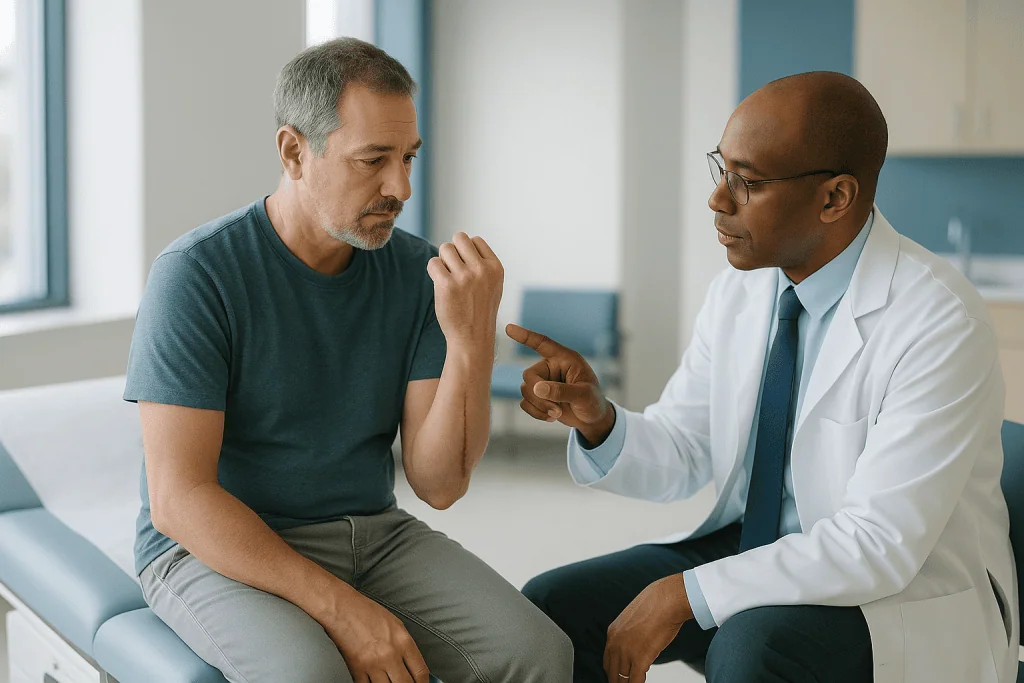
Surgeons describe the result in three ways. A wide margin means the tumor came out surrounded on all sides by healthy tissue. A marginal excision means the cut ran along the tumor’s outer reactive zone. An intralesional removal means the tumor was cut into. For sarcoma, the aim is a wide margin, and the National Cancer Institute’s treatment summary notes that the width of clear tissue is one of the strongest predictors of whether the tumor returns locally.
Planning starts with MRI, which shows how far the tumor extends inside the bone marrow or along muscle planes, and with the biopsy. Here is a detail patients rarely hear: the needle track from the biopsy is considered contaminated with tumor cells, so the surgeon removes that skin scar and its path as part of the operation. It is one reason sarcoma biopsies are ideally done by, or in consultation with, the team that will perform the surgery.
In the operating room, the surgeon works along anatomical boundaries, lifting whole muscle compartments rather than carving through them, and protecting the major nerves and blood vessels wherever the tumor allows. Where a bone is involved, the cut is made a measured distance above and below the tumor as mapped on MRI. Some teams check the bone marrow at the cut edge under the microscope during surgery, a rapid test called a frozen section, before committing to the reconstruction.
How function is preserved: the main ways surgeons rebuild a limb
Once the tumor is out, the second half of the operation begins. What goes back in depends on what came out, the patient’s age and activity, and how much bone is left to anchor a repair.
| Reconstruction | What it is | Usually chosen when | Trade-offs to discuss |
|---|---|---|---|
| Endoprosthesis | A custom or modular metal implant that replaces the removed bone and often the neighboring joint | Large bone segments near the knee, hip or shoulder in adults | Immediate stability; long-term wear, loosening and infection risk |
| Allograft | Sterilized donor bone shaped to fill the gap and fixed with plates | Segments away from a joint, or combined with an implant | Becomes living bone slowly; can fracture or fail to unite |
| Vascularized bone flap | The patient’s own bone, often from the lower leg, moved with its blood supply | Forearm or mid-shaft defects | Longer surgery; heals as living bone |
| Expandable prosthesis | An implant that can be lengthened as a child grows | Children with growing bones | Repeat lengthening procedures |
| Rotationplasty | The knee region is removed and the ankle is turned to act as a new knee joint | Selected children with tumors around the knee | Unusual appearance; very durable function with a prosthesis |
| Soft-tissue flap | Muscle or skin moved from nearby or elsewhere to cover the site | Soft tissue sarcomas, especially after radiation | Donor-site scar; better wound healing |
An endoprosthesis is essentially a joint replacement stretched to cover missing bone, and the Mayo Clinic describes it as the most common way to rebuild after a bone sarcoma is removed. Muscles are reattached to the metal or to a fabric sleeve around it so they can pull on the new joint. For soft tissue sarcomas, the reconstruction is often about coverage rather than structure: a healthy muscle flap over the wound reduces the chance of a breakdown in skin that has been irradiated.
Who limb sparing surgery for sarcoma is usually for, and who is asked to wait
The decision is made by a tumor board, a meeting where surgeons, oncologists, radiologists and pathologists review the case together. They are weighing one thing above all: can the tumor be removed with a clear margin while leaving a limb that works better than a prosthetic one would?
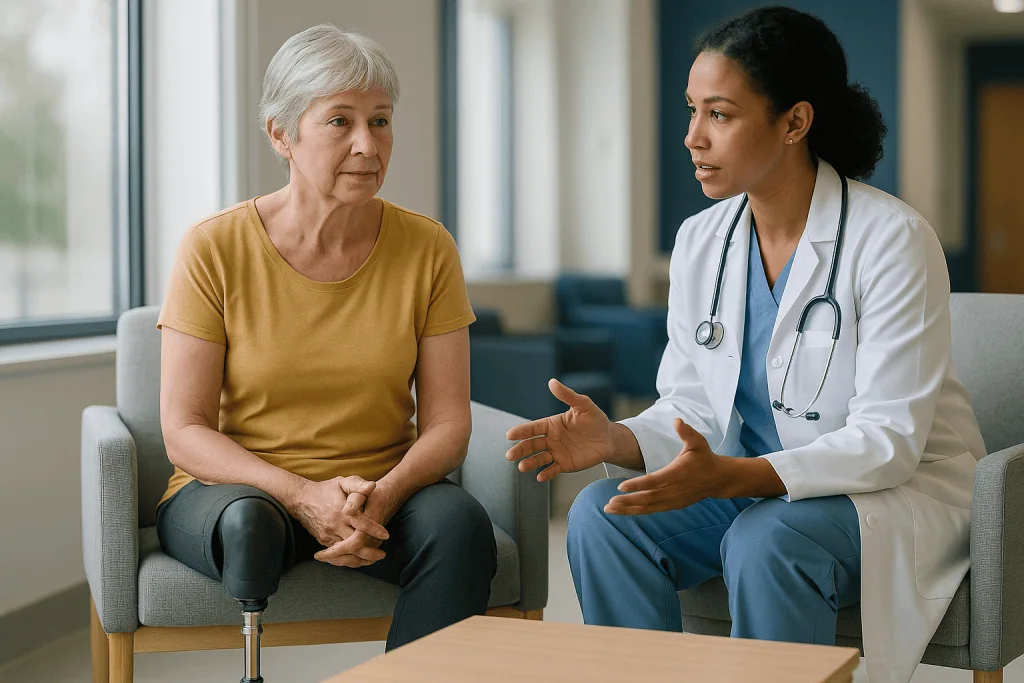
Limb-sparing surgery is usually offered when imaging shows the tumor can be separated from the main nerve and blood vessel bundle, when enough healthy bone remains to anchor an implant or graft, and when the skin and muscle left behind can cover the reconstruction. Age is not a barrier in itself; children and older adults are both routinely treated this way.
Amputation is more likely to be recommended, according to the NHS, when the tumor wraps around the major nerves or vessels, when it has broken through into surrounding tissues so widely that a clear margin is impossible, when the tumor sits in a spot where the leftover limb would be less useful than an artificial one, or when the wound would not heal because of infection or a pathological fracture, meaning the bone has already cracked through weakened tumor tissue.
Some patients are asked to wait rather than being turned down. Chemotherapy given before surgery, called neoadjuvant treatment, can shrink a bone sarcoma and firm up its edges, turning a borderline case into a feasible one. For high-grade soft tissue sarcomas, radiation before surgery can do similar work. A delay of several weeks for this reason is planned, not a sign the team is stalling.
The final call belongs to the treating team with the patient, and a good team will explain not just the recommendation but the specific anatomical reasons behind it.
Where chemotherapy and radiation fit around the operation
Surgery is rarely the only treatment, and the order of events confuses many patients. The logic differs between bone and soft-tissue tumors.
For osteosarcoma and Ewing sarcoma, chemotherapy usually comes first. The Mayo Clinic explains that it is typically given for a period before surgery to shrink the tumor and treat any microscopic cells that may have spread, then continued afterward. When the removed tumor is examined, the pathologist reports how much of it the chemotherapy killed. That response guides what follows. Radiation is not usually part of osteosarcoma treatment because the tumor responds poorly to it, though it plays a larger role in Ewing sarcoma.
For soft tissue sarcomas the pattern reverses. Chemotherapy is used selectively, mainly for certain high-grade or larger tumors, while radiation is central. The National Cancer Institute’s summary describes radiation either before or after surgery as a way to lower the risk of the tumor returning at the site, and it is what allows a surgeon to take a narrower margin near a nerve without accepting a higher recurrence risk.
Before or after? Radiation before surgery uses a lower total dose to a smaller area and makes the tumor easier to handle, but it raises the chance of wound-healing problems in the weeks after the operation. Radiation afterward spares the wound during healing but treats a larger field for longer. Neither is universally better; the team chooses based on tumor location, size and how much skin will be under strain.
Timelines for these treatments are set by protocol and adjusted to the individual, and any question about drugs, sequencing or side effects belongs with the prescribing oncologist rather than a general article.
What happens in the days before the operation
The final stretch before surgery is busy, and much of it happens away from the surgeon. Expect a fresh MRI of the limb and a CT scan of the chest, because the lungs are where sarcomas most often spread and the plan changes if something is found there. A bone scan or PET scan may be added for bone tumors.
Blood tests check kidney and liver function, clotting and blood count, especially important if chemotherapy has just finished. An anesthetist will review heart and lung health and ask about previous anesthetics. If an endoprosthesis is planned, engineers may need measurements from the imaging to manufacture or select components, which is one of the less obvious reasons a surgery date can sit a few weeks out.
Physical therapists often meet patients before the operation. They measure strength and range of motion as a baseline, fit crutches or a walker, and teach the exercises that will start within a day or two of surgery. Learning to use crutches while both legs still work is far easier than learning afterward.
Practical preparation counts too. Nutrition supports wound healing; smoking impairs it, and the NHS advises stopping before any major operation. The home may need a temporary bed downstairs, a shower chair or a raised toilet seat. Someone should be lined up to drive and to help for the first week or two.
The consent conversation is the moment to ask for specifics: which reconstruction is planned, what the backup plan is if the surgeon finds more tumor than expected, and how likely a change to amputation is once the operation is under way. That possibility is small in well-planned cases, but patients deserve to hear it before, not after.
What the first days and weeks after surgery usually look like
The operation itself commonly lasts several hours, longer when a flap or complex implant is involved. Patients wake with a bulky dressing, a drain to remove fluid from the wound, and often a nerve block or epidural for pain. Blood thinners, compression stockings or calf pumps are used to prevent clots in the legs, a standard precaution after any major limb surgery.
Movement starts early. Physical therapists typically have patients sitting up, then standing with support, within the first day or two, depending on the reconstruction. An endoprosthesis is stable from the moment it is fixed, so partial or full weight-bearing may be allowed quickly. An allograft or bone flap needs time to knit to living bone, so weight is restricted for weeks to months and checked with X-rays.
Hospital stays vary with the operation. The NHS describes a stay of several days to a week or more for major bone cancer surgery, with longer stays when wound care or rehabilitation needs are greater. Discharge comes when pain is controlled by tablets, the wound is settled and the patient can safely move between bed, chair and bathroom.
The wound needs watching over the following weeks. Stitches or staples come out at a follow-up visit, and any area that was irradiated before surgery is checked closely because it heals more slowly. Drains usually come out before discharge.
Chemotherapy, if part of the plan, generally resumes once the wound is healing well. Radiation after surgery typically begins after a few weeks of healing. The exact timing sits with the oncology team and depends on how the tissues look, not the calendar.
How long does it take to recover from sarcoma removal surgery?
Sarcoma surgery recovery time is the question patients most want answered and the one with the widest honest range. It depends on whether bone was removed, which joint was involved, whether radiation was given and how much muscle had to go.
For a soft tissue sarcoma removed from a muscle compartment without touching bone, many people are walking unaided within a few weeks and back to desk work within a similar span, though heavy lifting and sport wait longer. For a bone sarcoma with an endoprosthesis around the knee or hip, the NHS notes that full recovery can take several months, with strength and confidence continuing to improve for a year or more.
Rehabilitation runs in stages. The first weeks focus on wound protection, gentle range of motion and safe mobility with aids. The middle phase, often months two through six, rebuilds the muscles that were cut or reattached. A quadriceps reattached to a metal knee needs time to learn its new anchor. The late phase works on endurance, balance and the specific demands of a job or hobby.
Some limitations are permanent by design. Implants are not built for running or contact sport, and surgeons commonly advise low-impact activities such as swimming, cycling and walking to extend the life of the reconstruction. When a nerve had to be sacrificed, a brace may be needed long term for foot drop or wrist drop.
Recovery is rarely a straight line. Fatigue from chemotherapy overlaps with surgical healing, and a setback such as a wound infection can add weeks. Patients who ask their therapist for milestones rather than dates tend to find the process less discouraging.
Limb salvage vs amputation: what the evidence actually shows
It seems obvious that keeping a limb must be better than losing one. The research is more nuanced, and patients deserve the nuance.
Studies comparing limb salvage vs amputation for sarcoma have repeatedly found that when the tumor is removed with a clear margin, the risk of the cancer returning elsewhere in the body is similar between the two operations. The National Cancer Institute’s treatment summary reflects this: limb-sparing surgery is preferred because it can achieve the same cancer control with a functioning limb, not because it controls the cancer better.
On quality of life, the picture surprises people. Several studies, including those summarized in mainstream reviews, have found that people who had amputations often report quality of life and psychological adjustment comparable to those who kept their limbs, particularly years later. Modern prosthetic legs are light and reliable, and an amputation heals once, whereas an endoprosthesis carries a lifelong chance of further operations for loosening, infection or wear.
Function is where limb salvage usually wins, especially in the upper limb, where no prosthetic hand matches a preserved one, and around the hip, where above-knee prostheses demand far more energy to walk. Around the knee, results depend heavily on how much muscle the surgeon could keep.
None of this means amputation should be chosen freely. It means the recommendation should rest on the specific tumor, not on an assumption that one operation is always superior. A patient whose team recommends amputation is not receiving second-best care; they are receiving the operation most likely to remove the tumor cleanly and leave a limb, natural or prosthetic, that they can actually use.
What is the limb salvage surgery success rate, really?
Search for a limb salvage surgery success rate and you will find confident percentages that mean very different things. Before trusting any number, ask what it measures.
Some figures describe the share of limb sarcoma patients who are offered limb-sparing surgery rather than amputation. The NHS states this is now the majority of bone cancer cases, and that is a statement about surgical feasibility, not about outcomes. Other figures describe local control, meaning the tumor did not return at the operation site, which depends heavily on margin status and whether radiation was used. Still others describe implant survival, meaning how long the metal or graft lasted before needing revision, which says nothing about the cancer at all.
Survival statistics are the most misleading of all when quoted without context. They are pooled across tumor types with very different behavior, across grades from slow-growing to aggressive, and across stages from localized to already spread. A figure that blends a low-grade chondrosarcoma with a metastatic osteosarcoma describes nobody.
The honest answer is that outcomes are driven mainly by the tumor’s type, grade and stage, by whether it was removed with a clear margin, and by how well it responded to chemotherapy where that applies. The operation chosen, salvage or amputation, ranks below those factors. The National Cancer Institute’s summaries break outcomes down by these variables, and that is the level of detail a patient should ask their oncologist to apply to their own case.
Questions phrased as “for my tumor type, grade and stage, what does the evidence show?” get useful answers. Questions phrased as “what’s the success rate?” usually get a number that does not fit.
Risks and complications of limb-sparing sarcoma surgery
Every major operation carries the general risks of bleeding, infection, blood clots and reaction to anesthesia. Limb-sparing sarcoma surgery adds a specific list, and knowing it helps patients spot problems early.
Wound complications sit at the top for soft tissue sarcomas, particularly when radiation was given beforehand. Irradiated skin heals slowly, and a wound may open or leak weeks after it seemed settled. This is why surgeons often bring in a healthy muscle flap to cover the site, and why wound checks continue for longer than after other operations.
Deep infection around an endoprosthesis is the complication surgeons fear most. Metal has no blood supply, so bacteria that settle on it are hard to clear with antibiotics alone, and a serious infection can require removing the implant, a period with a temporary spacer, and further reconstruction. Chemotherapy lowers the body’s defenses during the same window, which compounds the risk.
Mechanical problems accumulate over years rather than weeks. Implants can loosen from the bone, wear at the joint surfaces or, rarely, fracture. Allografts can crack or fail to fuse. Revision operations are a realistic possibility over a lifetime with a reconstruction, and the Mayo Clinic notes that people with an endoprosthesis should expect ongoing orthopedic follow-up.
Nerve and vessel injury can leave numbness, weakness or a limb that swells. Lymphedema, a persistent swelling from disrupted lymph drainage, is more common after radiation. Stiffness of the neighboring joint is frequent and is the main reason early physiotherapy is pushed so hard.
Local recurrence, the tumor returning at the site, remains possible even after a clean operation and is why imaging of the limb continues for years.
How fast does sarcoma spread, and why follow-up watches the lungs
There is no single speed. How fast a sarcoma spreads depends mostly on its grade, a pathologist’s assessment of how abnormal the cells look and how quickly they are dividing. Low-grade sarcomas can enlarge slowly over years and rarely travel. High-grade sarcomas grow over months and carry a real chance of seeding elsewhere, sometimes before the original lump is noticed.
Sarcomas spread differently from most common cancers. Carcinomas such as breast or colon cancer tend to travel first to nearby lymph nodes. Sarcomas usually bypass the nodes and move through the bloodstream, and MedlinePlus and the National Cancer Institute both identify the lungs as by far the most common destination. This single fact explains the shape of follow-up: a chest CT before surgery, then chest imaging at regular intervals for years afterward.
Follow-up schedules vary by tumor type and stage, but the pattern described in the NCI summary is frequent visits in the first two to three years, when recurrence is most likely, then gradually spacing out. Each visit typically includes an examination of the operated limb, imaging of the chest, and periodic MRI or X-ray of the reconstruction to check the implant and look for local regrowth.
Lung metastases from sarcoma are sometimes treated with further surgery when they are few and slow to appear, which is another reason early detection through scheduled imaging matters.
Patients often ask whether waiting a few weeks for chemotherapy or implant manufacture lets the tumor spread. Treatment sequencing is designed around this concern; the neoadjuvant period treats circulating cells while the surgery is arranged, and the team will bring surgery forward if imaging shows a tumor behaving unexpectedly.
What people often get wrong about limb-sparing surgery
“Keeping the limb means the surgeon left some tumor to do it.” The opposite is true. A surgeon who cannot achieve a clear margin recommends amputation. Limb salvage is offered only when the tumor can be removed as completely as it would be by amputation.
“An implant means I’ll be back to normal in a few weeks.” The implant is stable quickly, but the muscles attached to it need months to recover, and the NHS describes full recovery from major bone cancer surgery as taking several months. Expect a long rehabilitation, not a short one.
“Amputation is always the worse outcome.” Research comparing the two finds similar cancer control and, in many studies, similar long-term quality of life. For some tumor locations, an amputation with a modern prosthesis functions better than a heavily compromised salvaged limb.
“Sarcoma is the deadliest cancer.” Sarcoma is a group of dozens of different tumors, not one disease. Some are slow-growing and treated with surgery alone; others are aggressive. Outcomes depend on type, grade and stage, and no honest single ranking exists.
“Radiation before surgery is a sign the cancer is worse.” Preoperative radiation for soft tissue sarcoma is a strategic choice about wound healing and margin width, not a marker of severity.
“Once the surgery is done, the follow-up is a formality.” Scheduled chest imaging in the years after surgery is where lung metastases are found early enough to treat, and implant checks catch loosening before a fracture.
“Children can’t have limb salvage because they’re still growing.” Expandable implants and rotationplasty were designed precisely for growing skeletons, and pediatric sarcoma teams use limb-sparing approaches routinely.
Questions to ask your care team before limb-sparing surgery
A first consultation moves quickly, and the most useful questions are often the ones patients think of on the drive home. Bringing a written list changes that. These are the questions surgeons and oncologists say they wish more patients asked.
- What type and grade is my sarcoma, and how does that shape the plan?
- Why is limb-sparing surgery being recommended for me rather than amputation, and how confident are you that a clear margin can be achieved?
- Which reconstruction is planned, and what is the backup if the operation reveals more tumor than the scans showed?
- Will I have chemotherapy or radiation, and in what order relative to the surgery? What does each stage add?
- Which muscles, nerves or vessels might need to be removed, and what would that mean for how the limb works afterward?
- What activities will be permanently restricted with this reconstruction, and what will be possible?
- What complications are most likely in my case, and what should I watch for at home?
- How often will I need chest imaging and limb imaging afterward, and for how many years?
- How likely is a further operation on the implant over my lifetime?
- Who do I contact, day or night, if something worries me during recovery?
Consider asking whether the case has been reviewed by a multidisciplinary sarcoma tumor board, which the NHS and the National Cancer Institute both describe as the standard way sarcoma treatment decisions are made. Asking for the pathology report and imaging summaries in writing helps at second opinions, which are reasonable to seek for a rare cancer and rarely resented by an experienced team.
None of these questions second-guesses the team. They give the team the chance to explain, and patients who understand the reasoning tend to manage the long road afterward with more steadiness.
When to call your doctor after limb-sparing sarcoma surgery
Most recovery days are uneventful, and the job at home is simply to notice change. Certain signs, however, should prompt a call to the surgical team the same day, and a few warrant emergency care.
Call the team promptly for a fever or chills, which can signal infection around the wound or implant; increasing redness, warmth, swelling or a foul smell at the incision; any opening of the wound or fluid leaking from it more than a few days after discharge; pain that is escalating rather than settling, particularly deep pain in a limb with an implant; new numbness, tingling or weakness in the hand or foot beyond what was explained before surgery; or a sudden inability to bear weight or move the joint that had been working.
Seek emergency care immediately for a swollen, painful calf or thigh, which may indicate a blood clot; sudden shortness of breath, chest pain or coughing up blood, which can signal a clot that has traveled to the lungs; a limb that turns pale, cold or blue, suggesting a blood supply problem; heavy bleeding through the dressing; or a fall onto the operated limb followed by deformity or severe pain.
Patients receiving chemotherapy should follow their oncology team’s specific rules about fever, since infection during periods of low blood counts is treated as an emergency regardless of how well the person feels.
Months and years later, a new lump near the scar, a persistent new ache in the reconstructed limb, or a cough that will not settle deserve a call rather than waiting for the next scheduled visit. Treating teams would far rather hear about a false alarm than miss a real one, and the decision about what any sign means always rests with them.
Frequently asked questions
Is sarcoma the deadliest cancer?
No. Sarcoma is a family of more than fifty different tumors, and their behavior ranges from slow-growing types treated with surgery alone to aggressive high-grade tumors. Outcomes depend on the specific type, its grade, its size and whether it has spread, according to the National Cancer Institute. A single ranking for “sarcoma” does not reflect how differently these tumors act.
How long does it take to recover from sarcoma removal surgery?
It varies widely with the operation. Removing a soft tissue sarcoma without bone involvement may allow walking and desk work within a few weeks. Bone sarcoma surgery with an endoprosthesis around a major joint commonly takes several months for full recovery, per the NHS, with strength improving for a year or more. Radiation and chemotherapy can lengthen the timeline.
What is the limb salvage surgery success rate?
It depends entirely on what is being measured: how many patients can be offered limb salvage, how often the tumor stays away locally, or how long the implant lasts. Cancer outcomes are driven mainly by tumor type, grade, stage and margin status rather than by the choice of operation. Ask your oncologist for figures specific to your tumor rather than a pooled percentage.
How fast does sarcoma spread?
There is no single speed. Low-grade sarcomas can grow slowly over years and seldom spread, while high-grade tumors can enlarge over months and seed the bloodstream earlier. Sarcomas typically travel to the lungs rather than lymph nodes, per MedlinePlus, which is why a chest CT is done before surgery and repeated at intervals afterward.
Limb salvage vs amputation: which gives better quality of life?
Research has not found a clear winner. When margins are clear, cancer control is similar, and several studies report comparable long-term quality of life between the two groups. Limb salvage usually preserves better function in the arm and around the hip, while amputation heals once and avoids lifelong implant revisions. The right choice depends on the tumor’s location and what tissue can be kept.
Will I definitely keep my limb if limb-sparing surgery is planned?
Almost always, but not with absolute certainty. Surgeons plan from detailed MRI, yet occasionally find during the operation that the tumor involves nerves or vessels more than expected. The consent discussion should cover how likely a change to amputation is in your specific case, and what the surgeon would do if the planned margin cannot be achieved.
Why is radiation sometimes given before sarcoma surgery instead of after?
Preoperative radiation for soft tissue sarcoma treats a smaller area with a lower total dose and can make the tumor easier to remove with a safe margin, according to the National Cancer Institute. Its drawback is a higher rate of wound-healing problems. Radiation afterward spares the wound but treats a larger field. The team chooses based on tumor size, site and skin condition.
Can children have limb-sparing surgery for bone sarcoma?
Yes. Pediatric sarcoma teams use expandable implants that can be lengthened as the child grows, bone grafts, and in selected cases rotationplasty, where the ankle is repositioned to work as a knee. The choice depends on the child’s age, remaining growth and tumor location, and it is made by a specialist multidisciplinary team together with the family.
Will I need more operations on the implant later in life?
Possibly. An endoprosthesis can loosen, wear or become infected over years, and the Mayo Clinic notes that people with these implants need ongoing orthopedic follow-up. Bone grafts can fracture or fail to unite. Revision surgery is a realistic lifetime possibility, which is one reason low-impact activity is usually advised to extend the reconstruction’s lifespan.
How often will I have scans after limb-sparing sarcoma surgery?
Follow-up is most frequent in the first two to three years, when recurrence is most likely, then spaces out, following the pattern described in National Cancer Institute treatment summaries. Visits usually include examination of the limb, chest imaging to check the lungs, and periodic X-ray or MRI of the reconstruction. Your oncology team sets the exact schedule for your tumor type and stage.
References
This article is for general information only and is not a substitute for professional medical advice. Please consult a qualified doctor about your individual situation.

More from the Blog
Follow-Up After Kidney Cancer Treatment: Why Imaging and Lab Tests Continue
Follow-up after kidney cancer treatment continues because the disease can return in the kidney bed, the remaining kidney, the lungs, bones or elsewhere, usually…
Swallowing Trouble During Esophageal Cancer Treatment: What to Report and When
Swallowing problems during esophageal cancer treatment are common and usually come from the tumor narrowing the esophagus, from radiation-related soreness and swelling, or from…
Immunotherapy Infusion Day: Blood Work, the Infusion and the Monitoring Afterward
On an immunotherapy infusion day, most people have blood drawn first, then wait while the team reviews results and the pharmacy prepares the drug.…
How Targeted Therapy Is Given: Daily Tablets, Infusions and the Routine Between Visits
Targeted therapy is given in one of several ways, depending on the medicine: as daily tablets or capsules taken at home, as infusions through…

Does External Radiation Therapy Make You Radioactive? Myths About Hugging and Contact
External beam radiation therapy does not make you radioactive. The machine delivers a beam only while it is switched on, and nothing radioactive is…
Radioactive Iodine After Thyroid Cancer Surgery: How the Treatment Day Unfolds
Radioactive iodine treatment after thyroid cancer surgery usually means swallowing a single capsule or liquid in a nuclear medicine unit, after one to two…