

Neuromuscular Disease Care: How Diagnosis, Rehabilitation and Breathing Support Fit Together

Key Takeaways
- Neuromuscular diseases are classified by where the fault sits, nerve cell, nerve fiber, nerve-muscle junction or muscle, and that location predicts both the pattern of weakness and the shape of the care plan.
- Breathing muscle weakness often announces itself as morning headaches, poor sleep and a weak cough rather than breathlessness, which is why lung function is measured on a schedule from diagnosis onward.
- In Guillain-Barré syndrome most people reach their weakest point within two weeks and about 90 percent by the third week, after which a recovery phase lasting weeks to years follows (NINDS).
- Myasthenia gravis most often begins in women under 40 and men over 60, fluctuates through the day, and can be worsened by several common antibiotics and heart medicines (NHS).
- Exercise to exhaustion can damage diseased muscle or deepen myasthenic weakness; moderate, non-fatiguing activity prescribed with the diagnosis in hand is the evidence-based approach.
- Feeding tubes and non-invasive ventilation are discussed early in progressive conditions because both are safer and more useful when introduced before a crisis, and the choice always remains the patient's.
A neuromuscular disease care plan brings three strands together: a careful diagnosis that names which part of the nerve-to-muscle pathway is failing, rehabilitation that protects strength, movement and independence, and breathing support introduced before the respiratory muscles reach crisis. The plan is written by a multidisciplinary team, reviewed at set intervals, and adjusted as the condition changes, with every decision resting with the treating clinicians.
The first sign was small. Maria noticed her eyelid sagging in photos taken late in the day, and that her fork felt heavy by the end of dinner. Her sister thought it was tiredness. Her family doctor listened, tested her reflexes, and did something Maria had not expected: he picked up the phone to a neurologist rather than reaching for a prescription pad.
That call is where a neuromuscular disease care plan really begins. Not with a treatment, but with a question about which link in the chain between brain and muscle has stopped working properly. Nerves, the junction where nerve meets muscle, and muscle fibers themselves can each fail in different ways, and the answer changes almost everything that follows.
This article walks through how diagnosis, rehabilitation and breathing support fit together, in the order a patient usually meets them, and with honesty about what current evidence can and cannot promise.
What a neuromuscular disease care plan is, and why one plan beats many appointments
A neuromuscular disease is any condition that damages the nerves controlling voluntary muscles, the junction where those nerves signal muscle, or the muscle tissue itself. MedlinePlus groups dozens of conditions under that heading, from muscular dystrophy to myasthenia gravis to motor neuron disease. What they share is a practical consequence: weakness that spreads, fluctuates or slowly deepens, touching walking, swallowing, speech and breathing in ways that no single specialist can manage alone.
A neuromuscular disease care plan is the written agreement that holds those specialists together. It names the diagnosis and how confident the team is in it, lists the medicines and their purpose, sets the rehabilitation goals for the next few months, and records breathing measurements so that a downward trend is caught early rather than discovered in an emergency department at two in the morning.
Why does the format matter? Because fragmentation is the quiet hazard in these conditions. A physiotherapist who does not know the patient’s lung capacity may push an exercise program too hard. An anesthetist who has not seen the neurology letter may choose a muscle relaxant that is unsafe in that specific disorder. A dietitian may miss that chewing fatigue, not appetite, explains the weight loss. When the plan travels with the patient, each professional starts from the same page.
The best plans are short enough to read in a waiting room and specific enough to act on. They also carry a review date, because the one certainty in neuromuscular medicine is that the picture in six months will not be the picture today.
What are some common neuromuscular diseases?
Ask a neurologist to name the conditions that fill a typical neuromuscular clinic and a familiar list emerges. Each sits at a different point on the pathway from spinal cord to muscle fiber.

Myasthenia gravis is an autoimmune condition in which antibodies block or damage the receptors that receive the nerve’s chemical signal at the muscle. The NHS notes that it can occur at any age but is most often diagnosed in women under 40 and men over 60. Weakness that worsens with use and improves with rest, often starting in the eyes, is its calling card.
Motor neuron disease, called amyotrophic lateral sclerosis or ALS in the United States, destroys the nerve cells that drive voluntary movement. According to the NHS it is uncommon and most often begins in the 60s and 70s, though adults of any age can be affected.
Muscular dystrophies are inherited conditions in which a faulty gene leaves muscle fibers structurally weak and prone to breakdown. Mayo Clinic describes many distinct types; Duchenne muscular dystrophy usually shows its first signs in early childhood.
Guillain-Barré syndrome is an acute immune attack on the peripheral nerves, often following an infection. The National Institute of Neurological Disorders and Stroke reports that most people reach their weakest point within the first two weeks, and about 90 percent by the third week.
Peripheral neuropathies, including the inherited Charcot-Marie-Tooth group and nerve damage from diabetes, and spinal muscular atrophy, a genetic loss of motor neurons, round out the list most teams see week to week. Each of these needs a differently weighted care plan, which is exactly why diagnosis comes first.
Muscular system diseases examples: where the fault actually sits
A useful way to understand this field is to follow a single command, say, lifting a cup, from the brain to the hand and ask where it could be interrupted.
The signal leaves the motor cortex, travels down the spinal cord, and reaches a motor neuron, the nerve cell whose long fiber runs out to the muscle. Motor neuron disease and spinal muscular atrophy attack this cell body. Guillain-Barré syndrome and most neuropathies damage the fiber itself or its insulating sheath, slowing or scrambling the message.
At the end of the fiber the nerve releases acetylcholine, a chemical messenger, across a microscopic gap onto receptors on the muscle. Myasthenia gravis blocks those receptors. Lambert-Eaton syndrome, a rarer autoimmune condition, interferes with the release side instead. Botulism toxin also acts here, which is why it belongs in the same textbook chapter.
Finally, the muscle fiber must contract. The muscular dystrophies weaken its structural scaffolding; inflammatory myopathies such as polymyositis see the immune system attacking muscle directly; metabolic myopathies starve the fiber of energy during exertion.
Why labor the anatomy? Because the location predicts the pattern. Junction disorders fluctuate through the day. Muscle diseases tend to affect the shoulders and hips first. Nerve disorders often bring numbness alongside weakness and start in the feet. A skilled examiner reads these patterns before any scan is ordered, and the pattern shapes which tests are worth doing.
It also predicts what the care plan must emphasize. A disorder that spares sensation but attacks the diaphragm demands early lung monitoring. One that leaves breathing untouched but destroys hip strength calls for falls prevention and joint protection from day one.
How diagnosis actually happens, step by step
Diagnosis in neuromuscular medicine is a process of narrowing, not a single test. Most patients travel through four stages, and understanding them takes some of the anxiety out of the wait between appointments.
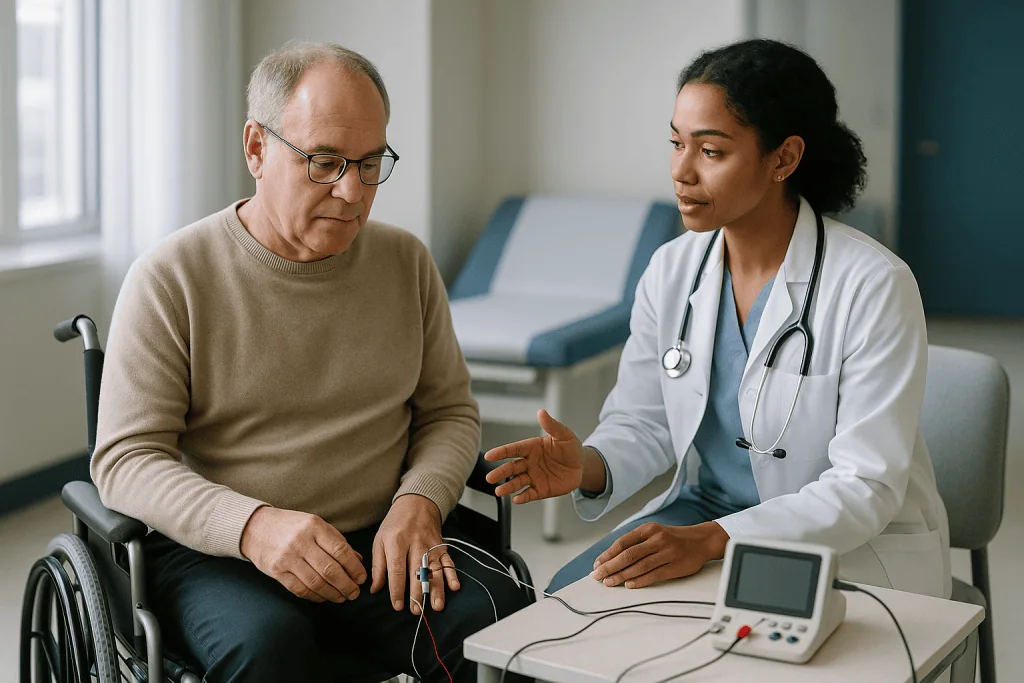
History and examination. The neurologist maps the weakness: which muscles, how it behaves with use, whether sensation, reflexes or coordination are also affected, and whether relatives have had anything similar. Family history matters more here than in most of medicine.
Electrodiagnostic testing. Nerve conduction studies measure how fast and how strongly an electrical signal travels along a nerve. Electromyography, usually shortened to EMG, uses a fine needle electrode to record the electrical activity inside a muscle at rest and during contraction. Together they tell the team whether the problem lies in nerve, junction or muscle, and can often distinguish damage to the fiber from damage to its insulation.
Blood tests and imaging. Muscle enzymes released from damaged fibers, specific antibodies in autoimmune conditions, and genetic panels for inherited disorders are ordered according to the pattern found above. MRI of muscle or spine helps exclude other causes and can target a biopsy.
Tissue or genetic confirmation. A muscle biopsy, removing a small sample under local anesthetic for examination under the microscope, is now needed less often because genetic testing has become more precise, but it still settles some cases.
Not every patient finishes with a neat label. A proportion are told they have a probable diagnosis or an unclassified myopathy, and the plan is built around what is known while surveillance continues. That honesty is a strength of the process, not a failure of it, and the team should say plainly how confident they are.
How are neuromuscular diseases treated? The main approaches explained
Treatment divides broadly into therapies aimed at the disease mechanism and therapies aimed at its consequences. Almost every care plan contains both, and the balance shifts over time.
Where the immune system is the culprit, as in myasthenia gravis, Guillain-Barré syndrome and the inflammatory myopathies, treatment tries to calm or redirect it. Corticosteroids and steroid-sparing immunosuppressants dampen the overall response. Intravenous immunoglobulin floods the bloodstream with pooled antibodies that dilute the harmful ones, while plasma exchange filters the harmful antibodies out of the blood directly; both are used for acute deterioration and typically act over days rather than hours. Newer targeted biologic drugs block specific parts of the immune cascade. In myasthenia, a cholinesterase inhibitor slows the breakdown of acetylcholine so more of it reaches the surviving receptors, which improves function but does not alter the underlying disease.
For genetic disorders, treatment has changed markedly. Spinal muscular atrophy now has therapies that increase production of the missing protein, and certain forms of Duchenne muscular dystrophy have gene-targeted approaches under study or in use for defined mutations. The eligibility rules are narrow and the long-term evidence is still maturing, so these decisions sit firmly with specialist centers.
For motor neuron disease, the medicines available modestly slow progression rather than stop it; the NHS describes their role as extending life by a matter of months for some people, alongside symptom-focused care.
Around all of this sits the second layer: rehabilitation, breathing support, nutrition, pain control and mood care. None of it is a footnote. For many patients it is where most of the day-to-day benefit comes from, and it applies regardless of whether a disease-modifying drug exists.
Any change to a prescribed medicine, up, down or off, belongs with the prescribing clinician. Several of these conditions can worsen sharply if a drug is stopped abruptly.
Can neuromuscular diseases go away completely? What the evidence shows
This is the question behind most first appointments, and it deserves a straight answer: it depends entirely on which condition is present, and for many the truthful answer is that they can be controlled and their effects reduced rather than removed.
Guillain-Barré syndrome sits at the more hopeful end. The National Institute of Neurological Disorders and Stroke notes that most people recover, with a recovery period ranging from a few weeks to a few years, although around 30 percent still have some residual weakness three years on. Myasthenia gravis is a long-term condition, but the NHS describes it as usually controllable with treatment, and some people enter remission where symptoms fade for extended periods. Inflammatory myopathies often respond substantially to immune treatment, though relapses occur.
Inherited muscular dystrophies and motor neuron disease are progressive. Treatment slows, supports and compensates; it does not yet restore lost muscle. The pace varies enormously between individuals, and the care plan’s job is to stay ahead of each stage.
What the evidence does show clearly is that coordinated multidisciplinary care improves quality of life and helps people maintain function longer, which is why guideline bodies in several countries recommend it for motor neuron disease and the dystrophies. That is a meaningful outcome even where the underlying process cannot be halted.
Be wary of anyone offering more than this. Unregulated stem cell clinics, high-dose supplement protocols and electrical stimulation devices marketed online have not demonstrated benefit in properly controlled trials for these conditions, and some carry real risk. If a claim sounds like a promise, the responsible next step is to bring it to the neurology team and ask what the published data show.
Who a neuromuscular disease care plan is usually for, and who is asked to wait
Formal, multidisciplinary planning is offered to almost everyone with a confirmed progressive or fluctuating neuromuscular condition. The question of timing is more nuanced, and patients sometimes feel dismissed when they are asked to return in three months rather than being launched into a full program. Usually there is a reason.
People who move quickly into a full plan include those with a confirmed diagnosis of motor neuron disease, a muscular dystrophy that is already affecting walking or breathing, generalized myasthenia gravis, or an acute illness such as Guillain-Barré syndrome that requires hospital monitoring. Children with Duchenne muscular dystrophy are typically brought into structured care from diagnosis, because early management of joint contractures and heart and lung function shapes the years ahead.
People who may be asked to wait, in the sense of monitoring before a full program is set up, include those with mild or purely eye-related myasthenia that is stable on treatment, those with a slowly progressive neuropathy causing minimal disability, and those still in the diagnostic phase where the label is not yet clear. Waiting here means watchful follow-up with clear instructions about what should trigger an earlier review, not silence.
Surgery is a specific trigger for an updated plan regardless of stage. Several neuromuscular disorders react unpredictably to general anesthesia and to certain muscle relaxants, and some carry a risk of a dangerous rise in body temperature with particular anesthetic agents. Anyone with a neuromuscular diagnosis facing an operation, even a minor one, should make sure the anesthetist has the neurology letter well before the day.
The decision about when to step up care belongs to the treating team, but patients are entitled to ask what would change the timing.
How rehabilitation fits into the neuromuscular disease care plan
Rehabilitation in these conditions has a different aim from rehabilitation after a broken leg. The goal is not to rebuild what was lost but to protect what remains, prevent secondary problems, and keep daily life workable as the ground shifts.
Physiotherapists focus first on range of motion. Muscles that weaken tend to shorten, and joints that are not moved through their full arc stiffen into contractures, fixed positions that make dressing, sitting and transfers harder. Daily stretching, night splints and positioning advice are unglamorous but among the highest-value interventions in progressive disease. Exercise prescription is individualized and cautious: moderate, non-fatiguing activity is generally encouraged to maintain cardiovascular fitness and mood, while heavy resistance training or exercise to exhaustion can accelerate damage in some muscle disorders and worsen fatigue in myasthenia. This is precisely why the physiotherapist needs the diagnosis in hand.
Occupational therapists look at the tasks rather than the muscles. Adapted cutlery, raised seating, voice-controlled devices and home layout changes are introduced ahead of need where possible, because adopting an aid before a crisis feels like a choice rather than a defeat.
Speech and language therapists assess swallowing and speech. Weakness of the tongue, palate and throat is common across many of these conditions and can lead to food entering the airway. Early assessment allows texture changes, swallowing techniques and, where appropriate, voice banking, recording a person’s own voice for later use with communication devices, while speech is still clear.
Orthotists provide braces and supports; wheelchair services fit seating that protects the spine and skin. The rehabilitation section of a good plan lists who is doing what, how often, and what would prompt a change, so that these threads do not fray between appointments.
Breathing support for neuromuscular disease: why it starts before breathlessness
Here is the fact that most surprises families: in many neuromuscular conditions, breathing muscles weaken quietly, and the person does not feel short of breath in the way someone with lung disease does. The diaphragm tires at night first, carbon dioxide builds up during sleep, and the early clues are morning headaches, unrefreshing sleep, daytime drowsiness and a weaker cough rather than gasping.
That is why breathing support is planned rather than reacted to. Specialist teams measure forced vital capacity, the total amount of air a person can blow out after a full breath, at regular intervals and often in both sitting and lying positions, because a drop when lying flat points specifically at diaphragm weakness. They may also measure peak cough flow, how forcefully someone can cough, and check overnight oxygen and carbon dioxide levels. Trends over time matter more than any single number, and the thresholds that trigger action are set by the respiratory team according to the specific condition and the individual.
When support is needed, the first step for most people is non-invasive ventilation, a small machine delivering air through a mask, typically used at night to rest the breathing muscles and clear carbon dioxide. The NHS describes it as a standard part of motor neuron disease care that can ease symptoms and, for some, extend life. Cough-assist devices help clear secretions when the natural cough is too weak, reducing chest infections.
Some people later consider invasive ventilation through a tracheostomy, an opening in the windpipe. This is a major decision with implications for care needs and quality of life, and good plans open the conversation early, when there is time to think, rather than in an intensive care unit.
In myasthenia gravis and Guillain-Barré syndrome the picture is different: breathing failure can arrive within hours or days as a crisis, which is why those conditions have their own red-flag rules, covered below.
How the three pillars fit together at each stage
The strands rarely run in sequence. A patient may be starting a new immune therapy, attending physiotherapy and having a first breathing assessment in the same fortnight. The table below shows how the emphasis typically shifts; the specifics for any individual come from their own team.
| Stage | Diagnosis and medical treatment | Rehabilitation | Breathing and swallowing |
|---|---|---|---|
| Investigation | Examination, nerve and muscle tests, blood and genetic work; provisional label | Baseline strength and function recorded; safety advice on falls and exertion | Baseline lung function and swallow screen, especially if bulbar or diaphragm muscles could be involved |
| Stable phase | Disease-directed therapy where one exists; routine monitoring for side effects | Stretching program, graded activity, aids introduced before they are urgently needed | Lung function every few months; cough assessment; vaccination against respiratory infections as advised |
| Progression or flare | Treatment intensified or changed; triggers such as infection or new drugs reviewed | Goals reset toward energy conservation and transfers; equipment upgraded | Overnight studies; non-invasive ventilation considered; swallow reassessed, feeding tube discussed early |
| Crisis | Hospital care; rapid immune therapy in autoimmune conditions | Positioning, chest physiotherapy, prevention of pressure injury | Close monitoring of breathing; ventilator support according to the person’s stated wishes |
| Long-term planning | Advance care planning, review of goals, genetic counseling for relatives where relevant | Carer training, home adaptation, community services | Documented preferences on ventilation and feeding, reviewed as circumstances change |
Two features of this table are worth noticing. First, breathing and swallowing appear in every row, including the first, because baseline measurements are what make later trends interpretable. Second, planning for the long term is not a final stage but a parallel track that starts early and is revisited, ideally while the person can still speak easily for themselves.
What the weeks after diagnosis usually look like
The period after a name is finally attached to the symptoms can feel oddly empty. The urgent investigations are done, the letters are being written, and the patient is left wondering what happens next. In practice, several things are usually moving at once.
Within the first few weeks most services arrange a first contact with a specialist nurse or care coordinator, the person whose job is to hold the plan together and to be reachable between appointments. Referrals to physiotherapy, occupational therapy, speech therapy and dietetics go out in parallel, though waiting times vary by service. Baseline breathing tests, if not already done, are booked. For autoimmune conditions, medicines are started and the first blood monitoring dates are set; corticosteroids and immunosuppressants take weeks to reach their effect, and the team will explain the expected timeline for the specific drug.
For inherited conditions, genetic counseling is offered so that relatives understand what the result means for them, and so the patient can decide who, if anyone, they want to tell.
Guillain-Barré syndrome follows its own arc. After the peak of weakness, which the National Institute of Neurological Disorders and Stroke places within two to four weeks of onset for most people, a plateau follows and then a recovery phase that may last months. Much of that time is spent in rehabilitation rather than with neurologists.
Across all conditions, the first review, commonly within a few months, is where the plan is tested against reality. Did the aids arrive? Is the stretching program realistic? Has anything changed in breathing, swallowing or mood? Patients who keep a simple diary of good and bad days, falls, chest infections and sleep quality arrive at that review with far more useful information than memory alone provides.
The parts people forget: swallowing, weight and mood
Ask experienced neuromuscular nurses what most often derails a care plan and they seldom mention the disease itself. They mention weight loss, chest infections from food going the wrong way, and depression that nobody asked about.
Unintended weight loss is common and is rarely just about appetite. Chewing and swallowing become effortful, meals take longer and go cold, breathing muscles burn more energy, and the fear of choking makes eating stressful. Loss of muscle mass then worsens weakness in a cycle. Dietitians address this with energy-dense foods, textures that are easier to manage, and timing meals around energy peaks. Where swallowing becomes unsafe or intake cannot keep pace, a feeding tube placed through the abdominal wall into the stomach is discussed. The NHS notes that in motor neuron disease this conversation is best had before breathing is significantly weakened, because the procedure is safer at that point. A tube does not necessarily end eating by mouth; many people continue to enjoy small tastes.
Mood is the other silent variable. Living with progressive weakness, uncertainty and shifting roles within a family carries a heavy emotional load, and some conditions and some treatments, corticosteroids among them, directly affect mood and sleep. Screening for low mood and anxiety should be a routine part of review, and psychological support, peer groups and, where appropriate, medication are all legitimate parts of the plan. Carers need the same attention; their exhaustion shows up eventually as gaps in the patient’s care.
Pain, often from joint strain and immobility rather than from nerves, and fatigue that is out of proportion to effort both respond to targeted attention. None of these problems will fix themselves, and all of them are more manageable when raised early rather than endured.
What people often get wrong about neuromuscular disease care
Some misunderstandings recur so reliably in clinic that they are worth naming outright.
Working the muscle harder will strengthen it. In healthy muscle, yes. In several muscle diseases, exercise to exhaustion damages fibers that cannot repair normally, and in myasthenia it simply produces more weakness. Moderate, regular, non-fatiguing activity is the evidence-based middle path, prescribed by someone who knows the diagnosis.
No breathlessness means the lungs are fine. Respiratory muscle weakness often shows itself first as disturbed sleep and morning headaches, not shortness of breath. This is why lung function is measured on a schedule rather than when symptoms appear.
A feeding tube or ventilator means giving up. Both are tools that reduce infections, preserve energy and, for many, improve day-to-day comfort. Deciding against them is a legitimate choice; deciding late, in a crisis, is the outcome good planning tries to avoid.
Genetic means untreatable. Several inherited conditions now have disease-modifying therapies, and even where none exists, treating heart involvement, contractures, breathing and nutrition changes the course of daily life substantially.
If one specialist is excellent, the rest are optional. The evidence for multidisciplinary care is strongest precisely in progressive neuromuscular disease. Skipping the dietitian or the respiratory review is where preventable problems begin.
Online testimonials count as evidence. Fluctuating conditions such as myasthenia improve and worsen on their own, which makes individual stories about supplements or devices unreliable. Controlled trials exist for a reason.
Any doctor can safely prescribe for me. A number of common medicines, including some antibiotics and heart drugs, can worsen myasthenia gravis, and some anesthetics are hazardous in certain muscle disorders. Carrying a written list of the diagnosis and cautions, and showing it at every new encounter, prevents avoidable harm.
Questions to ask your care team
A first specialist appointment passes quickly, and the questions that matter most often surface on the drive home. Writing them down in advance, and bringing someone to take notes, changes the quality of the conversation. These are the ones experienced patients wish they had asked sooner.
- How confident are you in this diagnosis, and what would change your mind?
- Which part of the pathway, nerve, junction or muscle, is affected, and what pattern of progression does that usually mean?
- Is there a treatment aimed at the disease itself? If so, how does it work, how long before we would expect to see any effect, and how will you monitor for side effects?
- Who is my single point of contact between appointments, and how do I reach them?
- When will my breathing and swallowing be assessed, and how often after that?
- What type and amount of exercise is safe for my specific condition, and what should I avoid?
- Which everyday medicines, anesthetics or infections could make my condition worse, and how do I make sure other doctors know?
- Should my relatives be offered genetic counseling or testing?
- What signs should make me seek urgent help, and where should I go?
- Are there clinical trials relevant to my condition, and would I be eligible?
- When is the right time to talk about future decisions such as ventilation or feeding, and who will help me think them through?
- What support exists for the people caring for me?
None of these questions is presumptuous. A team that welcomes them is a team that understands what a care plan is for, and the answers, written into the plan, become the reference point for every later review.
When to call your doctor: red-flag signs in neuromuscular disease
Most of neuromuscular care is measured and unhurried. A small number of situations are not, and the plan should make them unmistakable to the patient and everyone in the household.
Call emergency services or go to the nearest emergency department immediately if there is:
- New or rapidly worsening difficulty breathing, breathlessness when lying flat, or an inability to complete a sentence in one breath.
- Difficulty swallowing saliva, choking on liquids, or a voice that has become nasal or very weak over hours to days.
- Weakness that is spreading upward quickly, particularly after a recent infection, which can signal Guillain-Barré syndrome or a myasthenic crisis.
- Confusion, unusual drowsiness or a severe morning headache in someone known to have weak breathing muscles, which can indicate carbon dioxide building up.
- Chest pain, palpitations or fainting in a muscular dystrophy that can involve the heart.
- Dark, cola-colored urine after exertion, which may indicate muscle breakdown severe enough to threaten the kidneys.
Contact the neurology team or family doctor the same day if there is: a chest infection or fever in someone with weak cough or breathing muscles; a new medicine prescribed elsewhere in myasthenia gravis; a fall causing injury; a sudden step down in walking or hand function; or new, persistent low mood or thoughts of self-harm.
People with myasthenia gravis and their families should know that a crisis can develop within hours and that infections, surgery and certain drugs are common triggers. People with Guillain-Barré syndrome in the first weeks should be in hospital where breathing can be monitored continuously.
When in doubt, the guidance is simple: it is always acceptable to call. Clinicians would far rather hear about a false alarm than meet a preventable emergency, and the plan should list the numbers to use in and out of hours.
Frequently asked questions
What are some common neuromuscular diseases?
The conditions seen most often in neuromuscular clinics are myasthenia gravis, motor neuron disease (ALS), the muscular dystrophies including Duchenne, Guillain-Barré syndrome, peripheral neuropathies such as Charcot-Marie-Tooth disease and diabetic neuropathy, spinal muscular atrophy, and inflammatory muscle diseases like polymyositis. Each affects a different point between the spinal cord and the muscle fiber, which is why their symptoms and their care plans differ.
How are neuromuscular diseases treated?
Treatment combines therapies aimed at the disease mechanism with therapies aimed at its consequences. Autoimmune conditions are treated by calming the immune system with corticosteroids, immunosuppressants, immunoglobulin or plasma exchange. Some genetic conditions now have targeted therapies. For all of them, rehabilitation, breathing support, nutrition and mood care form the second layer, and for many people these deliver most of the day-to-day benefit. Decisions rest with the treating team.
Can neuromuscular diseases go away completely?
It depends on the condition. Guillain-Barré syndrome usually improves substantially, though NINDS notes around 30 percent have residual weakness three years later. Myasthenia gravis is long-term but often well controlled, sometimes with periods of remission. Inherited dystrophies and motor neuron disease are progressive; treatment slows and compensates rather than reverses. Coordinated multidisciplinary care is the approach with the strongest evidence for preserving function and quality of life.
What are some examples of muscular system diseases?
Diseases that attack muscle tissue directly include the muscular dystrophies (Duchenne, Becker, facioscapulohumeral, limb-girdle and myotonic types), inflammatory myopathies such as polymyositis and dermatomyositis, metabolic myopathies where muscle cannot generate energy properly, and myopathies caused by thyroid disease or certain medicines. They typically weaken the shoulders and hips first and are diagnosed with blood enzyme tests, electromyography, genetic testing and occasionally biopsy.
What is a neuromuscular disease care plan?
It is a written, regularly reviewed document that records the diagnosis and its certainty, the medicines and their purpose, rehabilitation goals, baseline and follow-up breathing and swallowing measurements, cautions such as drugs to avoid, emergency instructions and the person’s preferences about future care. Its value lies in giving every professional the same starting point so that physiotherapy, anesthesia, nutrition and respiratory decisions are made with full knowledge of the condition.
Why is breathing support for neuromuscular disease started before someone feels breathless?
Because weakening breathing muscles usually fail first during sleep, when carbon dioxide builds up quietly. The early signs are morning headaches, unrefreshing sleep, daytime drowsiness and a weaker cough rather than gasping for air. Regular lung function tests catch the downward trend, allowing non-invasive ventilation and cough-assist devices to be introduced in a planned way rather than during an emergency admission.
What kind of exercise is safe with a neuromuscular disease?
Moderate, regular activity that does not cause lasting fatigue or next-day weakness is generally encouraged to maintain heart fitness, joint mobility and mood. Heavy resistance training or exercising to exhaustion can damage fibers in some muscle diseases and worsens weakness in myasthenia gravis. Daily stretching to prevent contractures is one of the most valuable habits. A physiotherapist who knows the exact diagnosis should set the program.
How long does recovery from Guillain-Barré syndrome take?
According to the National Institute of Neurological Disorders and Stroke, most people reach their weakest point within two weeks of symptom onset and about 90 percent by the third week. A plateau follows, then a recovery phase that may last from a few weeks to a few years. Around 30 percent still have some residual weakness after three years. The early weeks are spent in hospital so breathing can be monitored.
Why do I need to tell an anesthetist about my neuromuscular condition?
Several neuromuscular disorders react unpredictably to general anesthesia and to certain muscle relaxants, and some muscle diseases carry a risk of a dangerous rise in body temperature with particular anesthetic agents. Myasthenia gravis can also be worsened by a number of drugs used around surgery. Sharing the neurology letter well before any operation, however minor, lets the anesthetic team choose safer options and plan breathing support.
Should my family be tested if I have an inherited neuromuscular disease?
Often it is offered, but it is a personal choice. Genetic counseling helps relatives understand the inheritance pattern, what a positive or negative result would mean for them, and the implications for their own children. For some conditions, early identification allows monitoring of the heart or lungs before symptoms appear. Counselors also help with how and when to share information within the family.
References
- MedlinePlus: Neuromuscular Disorders
- NHS: Myasthenia gravis
- NHS: Motor neurone disease
- NIH NINDS: Guillain-Barré Syndrome
This article is for general information only and is not a substitute for professional medical advice. Please consult a qualified doctor about your individual situation.

More from the Blog

Can a Brain Tumor Be Monitored Rather Than Treated Right Away? When Surveillance Is Chosen
Yes. Many brain tumors, especially small, slow-growing, benign types such as meningiomas, acoustic neuromas and some pituitary tumors, can be monitored with repeat MRI…

Who Is a Candidate for Selective Dorsal Rhizotomy? What the Multidisciplinary Team Assesses
Selective dorsal rhizotomy is usually considered for children with spastic cerebral palsy, most often the diplegic pattern affecting both legs, who walk independently or…

When Do Memory or Behavior Changes Call for a Dementia Assessment Rather Than Waiting?
Book a dementia assessment when memory or behavior changes are new, have persisted for weeks to months, and are starting to affect everyday tasks…

Second Opinions in Neurodegenerative Diseases: When a Diagnosis Deserves Another Look
A neurodegenerative disease second opinion is a fresh review of your history, examination and test results by another neurologist, often one who focuses on…

Neuroinfectious Diseases Treatment: How Meningitis and Encephalitis Care Is Planned
A meningitis encephalitis treatment plan starts within minutes of suspicion, usually before tests confirm the cause. Doctors give intravenous antibiotics, and often an antiviral,…

Who May Be a Candidate for Peripheral Nerve Surgery? Injury, Compression and Tumor Cases
Peripheral nerve surgery is considered for three groups: people with a nerve that has been cut, torn or crushed and shows no sign of…