

Nipple Reconstruction Results: Why Projection Softens Over Time and What Can Be Adjusted

Key Takeaways
- A reconstructed nipple is a folded flap of skin with no ducts, muscle or fibrous core, so scar contraction and fat resorption pull it down as it heals.
- Surgeons deliberately build the new nipple taller than the intended final height because settling is expected, not because something has gone wrong.
- Most of the height loss happens during the first year while scar tissue matures, which is why revisions are usually judged only after the result has stabilized.
- Radiation-treated skin, thin implant-covered skin, nicotine use and early pressure from bras or sleeping position all increase the likelihood of flattening.
- Options for a flattened nipple include a repeat flap, an inserted cartilage or dermal support, fat grafting, temporary filler or base tightening, each supported mainly by small surgical series.
- 3D tattooing creates the visual impression of projection with no incision and can be layered over a low surgical nipple or used instead of one.
Reconstructed nipples almost always lose some height in the first year because the small skin flap or graft has no ducts, muscle or firm core to hold its shape, and healing scar tissue contracts and pulls it down. Surgeons build it taller than the final target for this reason. If it flattens more than expected, options include a repeat flap, a supporting graft, fat or filler, or 3D tattooing.
She had been through the mastectomy, the tissue expander, the exchange, months of appointments where the conversation was about margins and drains. The nipple was supposed to be the easy part, the finishing touch. And for a few weeks it was: a neat little peak, taped under a protective shield, higher than she expected. Then, quietly, it began to settle. By the time of her next follow-up it looked more like a soft bump than the crisp shape in the photographs.
That story is common enough that surgeons warn about it before the first incision. Nipple reconstruction projection loss is not a complication in the usual sense; it is the expected behavior of a tiny flap of skin asked to stand up on its own without the structures a natural nipple has. Understanding why it happens changes how the result looks to you, and it clarifies which adjustments are realistic and which are wishful thinking.
What follows is the long version of the conversation many people wish they had had earlier.
How nipple reconstruction actually works, in plain language
A reconstructed nipple is not transplanted from anywhere. In the most common approach, the surgeon draws a small pattern on the skin of the reconstructed breast mound, lifts those skin tongues while keeping them attached at a base, and folds them up into a cylinder that is stitched to itself. The donor area beside it is closed directly. The pattern names you may hear, C-V flap, skate flap or star flap, describe different shapes of that drawing, not different materials. A flap is simply skin and underlying fat moved while still connected to its own blood supply.
Less often, a graft is used: a piece of tissue detached completely and placed onto the site, where it must pick up a new blood supply. Nipple sharing, taking a portion of the opposite natural nipple, is one example. Grafts of skin from the inner thigh or groin are sometimes used for the areola, the darker circle of skin around the nipple, because that skin is naturally more pigmented.
The areola itself is usually recreated by tattooing rather than surgery, either at the same stage or a few months later once swelling has gone. Mayo Clinic and the NHS both describe nipple and areola work as a separate, smaller procedure carried out after the breast mound has healed and settled, typically several months later, often under local anesthesia as a day case.
What the procedure cannot do is give the new nipple the internal architecture of the original: no milk ducts, no ring of smooth muscle that contracts with cold or touch, no dense fibrous core. It is a shape made of skin, and that single fact explains most of what happens next.
Why nipple reconstruction projection loss happens: the biology of a flap that shrinks
Projection is the word surgeons use for how far the nipple stands out from the surrounding skin. Nipple reconstruction projection loss is the predictable drop in that height between the operating table and the settled long-term result.

Several forces act at once. The first is wound contraction. Every healing wound pulls inward as cells called myofibroblasts tighten the new scar tissue, and a folded flap has raw surfaces inside it as well as around its base, so the scar shortens it from within. The second is fat resorption: the flap carries a small plug of fat that was never designed to sit in a vertical column, and some of it is reabsorbed as the blood supply reorganizes. The third is the absence of a skeleton. A natural nipple keeps its shape partly because of dense connective tissue and smooth muscle; the reconstructed version has only skin tension holding it up.
Then there is the surrounding skin. On an implant-based breast the mound is often covered by a thin, previously stretched envelope that offers little to push against. Skin that has been irradiated is stiffer and less elastic, and heals with more contraction. Gravity and clothing add constant low pressure from above.
Surgeons anticipate all of this by deliberately building the nipple taller than the intended final height, expecting it to settle. Rather than a sign of poor technique, the early drop is built into the plan. The clinically important question is not whether projection falls, but how much of the loss occurs in the first months, when it usually stabilizes, and whether what remains is still visible through clothing, which is the outcome most people actually care about.
Do reconstructed nipples flatten? What long-term follow-up shows
Yes, to a degree, and the honest answer about how much depends on the technique, the tissue and the person measuring. Published long-term series in the peer-reviewed surgical literature consistently report that reconstructed nipples lose a substantial share of their starting height, with the steepest decline in the early months and a slower drift afterwards. Exact figures vary widely between reports because researchers measure at different time points, with different instruments, on breasts rebuilt in different ways, and many series are small and from single centers. That heterogeneity is itself a finding: nobody can promise you a number.
What the evidence supports with more confidence is the shape of the curve. Most of the flattening happens while scar tissue matures. Scar maturation, the process by which new collagen is remodeled and softens, continues for many months after any surgery; Mayo Clinic notes that reconstructed breasts keep changing for a year or more as swelling resolves and tissues settle, and the nipple follows the same timeline. After that first year, further change tends to be modest unless a new pressure is introduced, such as weight change or additional surgery on the mound.
It also helps to distinguish two different disappointments. One is loss of projection: the peak simply gets shorter. The other is loss of definition: the base widens and blends into the areola so the nipple looks like a gentle hill rather than a peak. Both are described in follow-up studies, and they respond to different adjustments, which is why the surgeon will want to examine you rather than rely on your description.
Finally, flattening is not the same as failure. A low but well-positioned, well-pigmented nipple often reads as natural under clothing and in a mirror, which is the standard most people set for themselves.
What the first days and weeks usually look like
The procedure is short and recovery is gentle compared with the earlier stages of reconstruction. Because the breast mound after mastectomy usually has little or no sensation, many people report surprisingly little pain, though the donor site and stitches can feel tight. Cleveland Clinic and Mayo Clinic describe nipple reconstruction as a minor, often outpatient step at the end of the reconstructive sequence.
In the first week the new nipple looks alarming to most people: swollen, taller than they expected, sometimes bruised or dusky at the tip. A small protective shield or a doughnut-shaped dressing is often placed over it so that bras and seat belts cannot press it flat while the flap is fragile. The team will tell you how long to keep that in place; the instruction varies with technique and is not something to improvise.
Over the following two to three weeks the swelling drops, stitches dissolve or are removed, and the color evens out. Scabbing at the tip is common and usually superficial. Firmness around the base reflects early scar and typically softens over subsequent months.
The early height you see is not the result. Surgeons expect settling through the first year, and the appearance at six weeks, six months and twelve months can differ noticeably. Photographs taken at each visit are useful precisely because memory exaggerates the early peak.
Tattooing of the areola, if planned, is usually scheduled once the nipple has healed fully, commonly a few months later, so that pigment is placed on stable skin. The NHS describes this staged approach as routine. Between stages you can generally return to normal activity, with the team’s guidance on bras, swimming and exercise once the wound is closed.
What makes nipple reconstruction projection loss more likely
Not every reconstructed nipple settles the same way, and some of the differences are predictable before surgery.
- Radiation therapy. Irradiated skin has fewer small blood vessels, more fibrosis and less stretch. Flaps raised on it heal with more contraction and carry a higher risk of partial loss at the tip. Mayo Clinic notes that radiation affects healing and the long-term appearance of any reconstruction.
- Implant-based reconstruction. The skin over an implant is often thin and under tension, giving the flap a shallow bed of fat to draw on and little resistance to pressure from above. Nipples built on autologous mounds, meaning breasts rebuilt from the person’s own tissue, have more underlying bulk to work with.
- Thin skin and prior surgery. Scars from mastectomy incisions or earlier revisions can limit the blood supply to a flap and dictate where it can be placed.
- Smoking and nicotine. Nicotine narrows small blood vessels; a flap that is already living on a slim blood supply tolerates this poorly. Surgeons routinely ask people to stop before any flap procedure.
- Diabetes and poor glucose control. Slower wound healing increases both contraction and tip loss.
- Pressure. Tight bras, prone sleeping and seat belts in the early weeks are mechanical forces the healing flap cannot resist.
Technique matters too, but perhaps less than the marketing around individual flap designs suggests. Comparative studies tend to show differences between named flaps that are smaller than the differences between people, and no design has abolished settling. Where the underlying bed is poor, surgeons may plan from the outset to add a supporting graft or to rely more heavily on tattooing for the visual result rather than expecting height to survive.
Nipple reconstruction techniques compared
The table summarizes the main approaches in neutral terms. It is a map for your conversation with the surgeon, not a ranking; the right choice depends on your skin, prior treatment and priorities.
| Approach | What it is | Typical strengths | Typical limitations |
|---|---|---|---|
| Local skin flap (C-V, skate, star and variants) | Skin on the mound is lifted and folded into a cylinder on its own blood supply | Single site, day-case procedure, adjustable design | Settles over time; depends on skin quality and thickness |
| Nipple sharing graft | Part of the opposite natural nipple is transferred | Natural color and texture; keeps its own firmness well | Requires a suitable opposite nipple; alters its sensation and height |
| Flap plus inserted support | A local flap wrapped around a small graft of the person’s cartilage, dermis or a processed tissue matrix | Aims to reduce settling by adding a core | Extra donor site or material; risk of exposure or infection; evidence mostly from small series |
| Fat grafting or injectable filler | Volume added beneath or into an existing flat nipple | Minor procedure; can be repeated | Fat is partly reabsorbed; fillers are temporary |
| 3D areola and nipple tattoo | Pigment shaded to create the illusion of a raised nipple | No surgery; can be used alone or over a flattened flap | No physical projection; fades and may need touch-up |
| External prosthetic nipple | A silicone nipple attached with adhesive | Reversible; useful while deciding or for people declining surgery | Daily application; not a permanent solution |
Several of these are combined in practice. A common sequence is a local flap, tattooing some months later, and a small revision or fat graft if the height settles further than hoped. Cleveland Clinic and Johns Hopkins both list tattooing and prosthetic options alongside surgery as legitimate paths, and choosing not to reconstruct the nipple at all is equally legitimate.
Who is usually offered nipple reconstruction, and who is asked to wait
Nipple reconstruction is typically the final stage of breast reconstruction, offered once the mound has reached a stable shape and position. The reason for the order is practical: the nipple’s position is chosen to match the opposite side or to sit at the natural apex of the new breast, and that apex moves as swelling resolves and implants or flaps settle. Placing the nipple too early risks a well-made nipple in the wrong spot, which is harder to fix than a flat one. Mayo Clinic and the NHS describe waiting several months after the mound is complete before this step.
People are commonly asked to wait, or to defer the decision, in these situations:
- Radiation therapy is still planned or was recently completed; irradiated skin needs time to recover its blood supply, and surgeons often prefer a longer interval before raising a flap on it.
- Further surgery on the mound is expected, such as an implant exchange, fat grafting for contour or symmetry surgery on the other breast, since any of these can shift the nipple’s ideal position.
- Active smoking or nicotine use, until it has stopped.
- Poorly controlled diabetes or other conditions that impair wound healing.
- Ongoing cancer treatment where the oncology team wants to avoid any elective wound.
- Uncertainty about wanting a nipple at all; tattooing or a prosthesis can be tried first without closing off later options.
None of these is a permanent no. They are timing decisions, and the treating team weighs them against your own priorities. Some people, particularly after bilateral mastectomy, decide that a smooth mound suits them; others want the nipple because it is what they see in the mirror each morning. Both are reasonable, and the surgeon’s role is to lay out what is achievable on your particular tissue, not to steer the decision.
What can be adjusted when nipple reconstruction projection loss becomes noticeable
The first adjustment is patience, and that is not a brush-off. Because most settling happens during scar maturation, surgeons generally prefer to assess the result after the tissues have stabilized, commonly around a year, before offering revision. Revising a nipple that is still changing invites a second round of unpredictable contraction.
When revision is appropriate, several options exist, and the choice depends on what exactly has happened:
- Repeat local flap. If the nipple has flattened but the surrounding skin is healthy, a new flap can be raised, sometimes incorporating the old nipple tissue as a core. Series describing repeat C-V flaps report that the second attempt also settles, so the same expectation management applies.
- Inserted support. A small graft of the person’s own cartilage, a strip of dermis (the deeper layer of skin) from a scar revision elsewhere, or a piece of processed tissue matrix can be placed inside the flap to act as a scaffold. Evidence comes mainly from small comparative series; the aim is to slow settling rather than prevent it.
- Base tightening. When the problem is definition rather than height, a purse-string stitch around the base can narrow it so the nipple reads as a distinct shape again.
- Fat grafting or filler. Discussed in the next section.
- Tattooing. Shading around a low nipple can restore the visual impression of projection without further surgery.
Surgeons will also ask what bothers you. Visibility through a T-shirt, symmetry with the other side, and how the nipple looks unclothed are different goals; a low nipple may be entirely adequate for one and not another. A candid conversation about which goal matters most often narrows the options quickly. And any revision carries the ordinary risks of a small procedure: wound breakdown, infection, partial flap loss and a new scar. The decision remains with you and the treating team, weighed against how much the current result affects daily life.
Fat grafting, fillers and inserted supports: what the evidence actually shows
These are the adjustments people most often ask about, partly because they sound minor. Each deserves an honest evidence grade.
Fat grafting means harvesting a small amount of the person’s fat by liposuction, processing it, and injecting it beneath or into the nipple. Fat grafting to the breast mound for contour is well established and described by Mayo Clinic and Cleveland Clinic as a routine refinement. Its use specifically to add nipple projection rests on small case series. The known behavior of grafted fat applies: a proportion is reabsorbed over the first months, the amount varies between people, and repeat sessions are sometimes planned. It adds bulk more reliably than height.
Injectable fillers, most often hyaluronic acid gels, can plump a flat nipple temporarily. Hyaluronic acid is a sugar molecule the body breaks down over months, so the effect fades and would need repeating. Reports are small, and use in this location is off-label in many jurisdictions; whether it is offered, and with what material, is a decision for the treating team.
Inserted supports include autologous cartilage (usually a sliver from the rib or ear), dermal grafts, and processed acellular dermal matrix, a sheet of donated or animal-derived tissue with the cells removed so that it acts as a collagen scaffold. Studies comparing flaps with and without an inserted core generally report better maintained height in the supported group at follow-up, but the studies are small, follow-up is often short, and the trade-offs include a donor site, the possibility of the support pushing through thin skin, and infection. External scaffolds worn over the healing nipple have also been described in the literature, with early data only.
The summary is that these approaches are plausible, are used by experienced reconstructive surgeons, and have not been tested in large randomized trials. Presenting any of them as a guaranteed fix would overstate what is known.
3D nipple tattoo after mastectomy: depth without height
Tattooing has quietly changed the conversation about projection. A skilled medical tattoo artist uses layered shades of pigment, highlights and shadow to create the appearance of a nipple standing out from the areola, in the same way a painter suggests a sphere on a flat canvas. From a few feet away, and under clothing, the effect can be convincing. The NHS, Cleveland Clinic and Johns Hopkins all describe tattooing as a standard part of nipple and areola reconstruction, either alongside a surgical nipple or instead of one.
For someone whose reconstructed nipple has settled lower than they hoped, a 3D tattoo has practical appeal: no incision, no risk of flap loss, no new scar, and no change to the tissue that would complicate later surgery. Shading placed around the base of a low flap can exaggerate the little height that remains. For someone who never wanted more surgery, the tattoo alone offers a symmetrical, pigmented result on a smooth mound.
The limits are equally clear. A tattoo has no physical projection; it does not show through a thin shirt, and it feels flat to the touch. Pigment fades over years, more quickly on irradiated skin and in people who tan, and touch-up sessions are commonly needed. Tattooing on skin that has been irradiated or is very thin carries a small risk of poor healing and is usually timed by the surgical team rather than booked independently.
Choosing between more height and better illusion is a personal calculation. Many people combine both, accepting a modest surgical nipple and letting pigment do the rest of the visual work. It is a reasonable place to land, and it has the advantage of being adjustable.
How to protect projection after surgery: what you can influence
Most of the settling is biology you cannot control, but a few behaviors in the first weeks and months do matter, and they are within reach.
- Keep the pressure off. Follow the team’s instructions on the protective shield or dressing, and for how long. This is the single most cited practical measure in surgical guidance, because a healing flap compressed flat by a bra or a seat belt tends to stay flat.
- Choose soft, loose bras. Underwire and compression styles concentrate force exactly where you do not want it while scar is forming. The team will say when to return to them.
- Sleep on your back if you can. Prone sleeping presses the nipple into the mattress for hours at a time.
- Do not smoke or use nicotine. The flap’s blood supply is narrow; nicotine narrows it further. This applies before surgery and throughout healing.
- Keep the wound clean and dry as instructed. Infection or wound breakdown at the tip is one of the ways height is lost early.
- Manage blood sugar and nutrition. Ordinary advice, but wound healing depends on it.
- Protect from sun. Scar and tattoo pigment both fare better without ultraviolet exposure.
What is not supported by evidence: massaging or manipulating the new nipple to keep it up, taping it into position after the shield period, or over-the-counter creams promising to firm tissue. None of these has been shown to preserve projection, and handling a fragile flap can do harm. Silicone scar products are sometimes suggested for the surrounding scar once the wound is fully closed; ask before using anything on the site.
Beyond the healing period, weight stability helps, because significant weight change alters the mound beneath the nipple. And keep the follow-up appointments, even when things look fine; the photographs taken at each visit are how you and the surgeon will judge whether the settling has stopped.
What people often get wrong about nipple reconstruction results
Myth: the height on day one is the result. It is the starting point. Surgeons build tall on purpose, and the first weeks are the least representative moment to judge.
Myth: a flattened nipple means the surgeon used the wrong technique. Every technique settles. Differences between named flaps exist in the literature but are smaller and less consistent than the differences created by radiation, skin thickness and the type of mound.
Myth: before-and-after photos show what you will get. Published or online photos are usually taken at the flattering moment, weeks after surgery, on someone with favorable tissue. Ask to see results at a year or more, and on breasts reconstructed the way yours was. What the honest comparison shows is a mound with a scar pattern, a nipple that is present but softer and lower than the natural side, and pigment that reads well from a distance.
Myth: there is a known regret rate you can look up. Studies of decisional regret after breast reconstruction use different questionnaires, populations and time points, and their findings vary widely; no single figure applies to nipple reconstruction specifically. What the research does consistently show is that regret is linked to unmet expectations and to feeling uninformed beforehand, which is an argument for the kind of conversation this article is trying to prompt.
Myth: a reconstructed nipple will feel and react like the original. It has no erectile tissue and usually little sensation. It is a shape, not a functioning nipple, and people who know that in advance tend to be more content with it.
Myth: revision is quick and guaranteed. Revisions settle too, carry their own risks and are best judged after the first result has stabilized.
Myth: if you skip it, you have failed to finish reconstruction. A smooth mound, a tattoo alone or a prosthesis are complete choices, not incomplete ones.
Questions to ask your care team before and after nipple reconstruction
A good consultation about projection is specific. These questions tend to produce useful answers rather than reassurance.
- Given my skin, my type of reconstruction and any radiation, how much settling do you expect, and when do you expect it to stop?
- Which technique are you planning, and why that one for my tissue rather than the alternatives?
- Are you planning to add an internal support? If so, what material, what are its specific risks, and what does the evidence show for it?
- Can I see long-term photographs of people whose reconstruction resembled mine, not just early results?
- Where will the nipple be positioned, and how did you decide? Will anything else on the mound change after this that could shift it?
- What will the protective dressing be, how long will I wear it, and what bras are acceptable at each stage?
- How will you and I measure the result over time? Will you photograph it at each visit?
- If it settles further than we both hoped, what are my options, and when is the earliest you would consider a revision?
- Is tattooing part of the plan, who performs it, and how is it timed relative to the surgery?
- What are the signs that the flap is struggling in the first week, and who do I contact if I see them?
- What happens to the opposite nipple if we consider nipple sharing, in terms of sensation and height?
- If I decide against a surgical nipple, what would you suggest instead, and does waiting close off any options?
Write the answers down. Expectations formed in a consultation have a way of drifting upward in memory, and a note of what was actually said about likely height and timeline is a fair reference for both sides later. If the answers are vaguer than you would like, it is reasonable to ask for a second consultation or to take more time; the procedure is elective and the timing is yours.
When to call your doctor
Settling is slow and painless. Problems with a healing nipple flap are neither, and they announce themselves in the first days to weeks rather than months. Contact the surgical team the same day if you notice any of the following:
- The tip or the whole nipple turning dark purple, gray or black, or becoming cold and hard, which can indicate that the flap’s blood supply is failing.
- Spreading redness, warmth or swelling around the site, increasing pain rather than easing pain, or pus-like discharge; signs of infection in a wound with a narrow blood supply need prompt assessment.
- Fever or chills after the procedure.
- The wound edges separating, the flap unrolling, or stitches pulling through.
- Persistent bleeding that does not settle with gentle pressure.
- A foul smell from under the dressing.
- Any new lump, skin change or thickening in the reconstructed breast at any stage, which should always be reviewed regardless of the nipple; the oncology team will want to know.
Seek urgent care through emergency services if you develop chest pain, difficulty breathing, or a swollen, painful calf after any surgery, since these can indicate a blood clot, which is rare after a minor procedure but serious.
Later concerns are worth raising at a routine visit rather than urgently: a nipple that seems to be flattening faster than the team predicted, asymmetry that bothers you, pigment fading, or a base that has widened. Bring your own photographs if you have them. Surgeons want to see how their work behaves over time, and an early conversation about a disappointing result is usually more productive than a late one. Whatever the concern, the assessment, the timing of any revision and the choice between options rest with you and your treating team, informed by your particular tissue and history rather than by averages.
Frequently asked questions
Do reconstructed nipples flatten over time?
Yes, some flattening is expected in nearly every case. The flap has no internal structure to hold its shape, healing scar contracts and pulls it down, and a little of the fat inside is reabsorbed. Most of the change happens in the first year, after which it tends to stabilize. Surgeons plan for this by making the nipple taller at surgery than the height they intend to end with.
Why does nipple reconstruction projection loss happen even with a good surgeon?
Because the causes are biological rather than technical. Every healing wound contracts, a folded skin flap has raw surfaces inside it that scar and shorten, and the flap lacks the smooth muscle and dense tissue that keep a natural nipple upright. Skin quality, radiation history and the type of breast mound influence how much settling occurs more than the specific flap pattern chosen.
When is the reconstructed nipple's final height reached?
Typically after the scar has matured, which for most people means around a year after surgery, in line with the broader timeline Mayo Clinic describes for reconstructed breasts to settle. Change is fastest in the first weeks and months and then slows. Later shifts can still occur with significant weight change or further surgery on the mound beneath it.
What is involved in a nipple reconstruction revision?
It depends on what has happened. A flattened nipple on healthy skin may be rebuilt with a repeat local flap, sometimes wrapped around a small cartilage or dermal graft for support. A widened base may be tightened with a purse-string stitch. Fat grafting or temporary filler can add bulk, and tattooing can restore the appearance of height. Revisions also settle, so the same expectations apply.
Can a C-V flap nipple reconstruction be repeated if it flattens?
Yes, repeat C-V flaps have been described in the surgical literature for loss of projection, often using the remaining tissue of the first nipple as a core inside the new flap. The published series are small and report that the second flap also loses some height over time. Whether a repeat is sensible depends on skin quality, scarring and radiation history, which the surgeon assesses in person.
Is a 3D nipple tattoo after mastectomy a good alternative to surgery?
For many people it is a complete solution, and for others it is a complement to a surgical nipple that has settled. Skilled shading creates a convincing impression of projection from a few feet away and under clothing, with no incision or flap risk. It cannot provide physical height or texture, and pigment fades over years, particularly on irradiated skin, so touch-ups are common.
Is breast reconstruction worth it?
There is no universal answer, because the value is personal. Reconstruction, including the nipple stage, aims to restore a shape you recognize, and many people describe that as meaningful; others prefer no reconstruction and are equally content. Research on satisfaction is mixed and depends heavily on expectations set beforehand. The most useful question is what a realistic result would mean for you, discussed openly with the treating team.
What is the regret rate for breast reconstruction?
No single reliable figure exists. Studies of decisional regret use different questionnaires, populations and follow-up periods, and results vary widely, so quoting one number would be misleading. What the research does consistently find is that regret is more common when people felt uninformed or when results fell short of expectations, which is why frank conversations about settling, scars and sensation matter so much.
What are the changes between before-and-after photos of breast reconstruction after mastectomy?
Honest photographs show a rebuilt mound with a visible scar pattern, differences in shape and position compared with a natural breast, and a nipple that is present but lower, softer and less defined than the original, often with tattooed pigment doing much of the visual work. Early photos flatter; ask to see results at a year or more, on someone whose reconstruction type and radiation history match yours.
Does a reconstructed nipple have sensation or react to cold?
Usually not. The mastectomy removes most of the nerves supplying the skin, and the reconstructed nipple has no erectile tissue or smooth muscle, so it does not tighten or stand up in response to cold or touch. Some people regain patchy sensation in the surrounding skin over time. Knowing this in advance tends to make the result easier to live with.
References
- NHS: Mastectomy, including breast reconstruction
- Cleveland Clinic: Breast reconstruction
- MedlinePlus: Breast reconstruction, natural tissue
This article is for general information only and is not a substitute for professional medical advice. Please consult a qualified doctor about your individual situation.

More from the Blog

Gummy Bear Implants: What Form-Stable Silicone Really Means (and Who They Suit)
Gummy bear implants are breast implants filled with highly cohesive, form-stable silicone gel that holds its shape even if the outer shell tears, much…
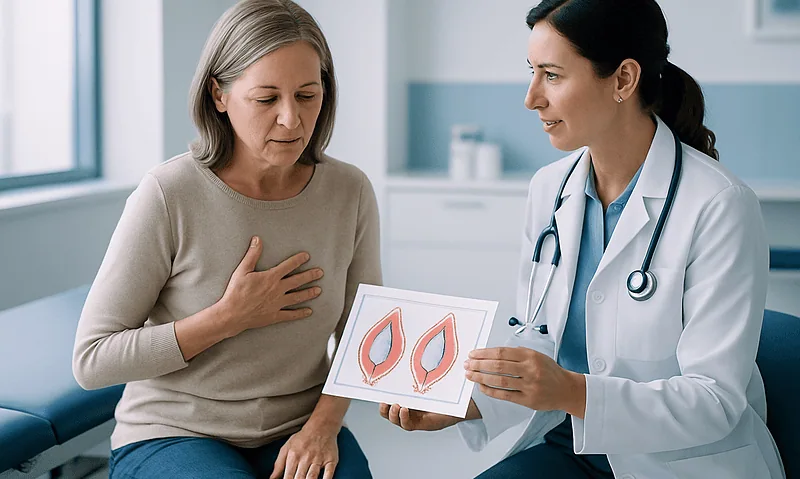
Capsular Contracture: Why It Happens, the Four Grades, and When to See Your Surgeon
Capsular contracture occurs when the scar tissue that naturally forms around a breast implant tightens and squeezes it, making the breast feel firm, look…
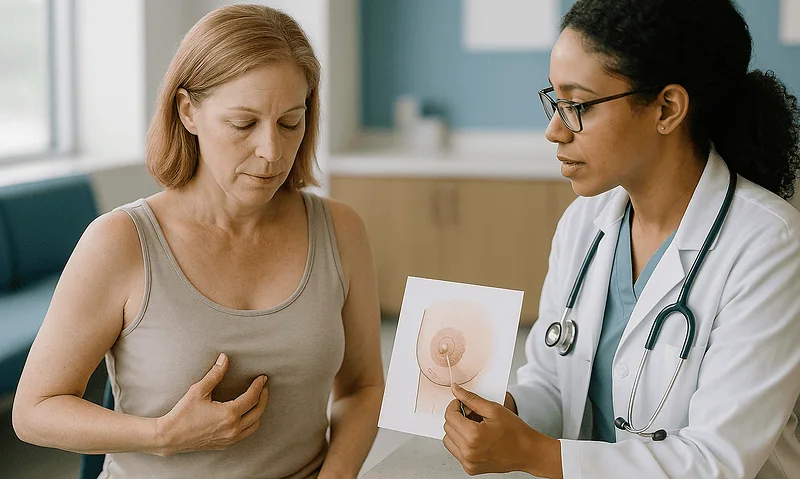
Nipple Reconstruction Surgery vs 3D Nipple Tattooing: What Each Option Restores
Nipple reconstruction surgery rebuilds a raised nipple from the skin of the reconstructed breast, restoring shape and some projection but not sensation. 3D nipple…

The Two Weeks Before Breast Reduction: Imaging, Medication Review and Practical Planning
Preparing for breast reduction surgery in the final two weeks usually means completing any imaging your surgeon has requested, reviewing every prescription, over-the-counter medicine…

Breast Lift Scars and Daily Life After Mastopexy: Sleeping, Sports Bras and Sun Protection
Breast lift scars are permanent, but they usually change a great deal. Most fade from raised and pink to flat, pale lines over roughly…

Healing After Nipple Reconstruction: Protective Dressings, Bras to Avoid and the First Weeks
Nipple reconstruction recovery is usually gentler than earlier breast surgery. Most people wear a protective dressing or shield for the first weeks, choose soft…