

Nipple Reconstruction Surgery vs 3D Nipple Tattooing: What Each Option Restores

Key Takeaways
- Neither nipple reconstruction surgery nor 3D tattooing restores sensation, because the nerves were removed with the breast tissue.
- A 3D nipple tattoo is completely flat; the depth is an optical effect created with highlight and shadow, not a raised structure.
- Surgical nipples are deliberately built taller than the target because scar contraction reduces their height as they heal.
- Tattooing over a surgical nipple is usually deferred until the flap has fully settled, so the color is applied to the final shape.
- Irradiated skin raises the risk of flap tip loss and can hold tattoo pigment less evenly, which changes the plan but does not rule either option out.
- There is no clinical deadline for either procedure, and mature skin can be tattooed years after the original reconstruction.
Nipple reconstruction surgery rebuilds a raised nipple from the skin of the reconstructed breast, restoring shape and some projection but not sensation. 3D nipple tattooing uses layered pigment and shading to create the illusion of a nipple and areola on a flat surface, with no surgery and no raised bump. Many people combine both: surgery for shape, tattooing for color. The choice sits with you and your reconstructive team.
The last appointment is often the quietest one. The mastectomy is behind you, the breast mound has settled, and the surgeon slides a hand mirror across the desk and says something like, “So, shall we talk about the nipple?” For a lot of people that question lands harder than expected. It is not medically urgent. Nobody’s survival depends on it. And yet it is the detail the eye goes to first in the shower.
The nipple reconstruction vs 3D tattoo decision is really two questions folded into one: do you want something you can feel with your fingertips, or something that reads as a nipple from across the room? Surgery gives you a shape. Tattooing gives you a picture. Some people want both, some want one, and a meaningful number decide they are done and want neither.
This explainer walks through what each option genuinely restores, what it cannot, and how to have a clear-eyed conversation with your care team before you decide.
Nipple reconstruction vs 3D tattoo: what each one actually restores
Start with the honest inventory of what a mastectomy removes. A mastectomy is surgery that takes away the breast tissue, and in most cases the nipple and the areola, the darker circle of skin around it, go with it. Breast reconstruction rebuilds the mound with an implant or your own tissue, but the surface is usually a smooth expanse of skin with a scar. That is the canvas both options work on.
Nipple reconstruction surgery restores three-dimensional form. A surgeon lifts and folds small flaps of the breast skin into a raised bump, so there is a physical nipple you can feel under clothing and see in profile. What it does not restore is function or sensation. The nerves that gave the original nipple its sensitivity were removed with the breast tissue, and no fold of skin brings them back. The reconstructed nipple also will not respond to cold or touch by becoming erect.
3D nipple tattooing, sometimes called micropigmentation, deposits pigment into the skin using shading, highlights and shadow so that a flat area appears to have a raised nipple and a textured areola. It restores color, the visual boundary of an areola, and a convincing illusion of depth when viewed straight on. It restores nothing you can feel. Run a finger across a purely tattooed nipple and the skin is flat.
Put plainly: surgery restores form, tattooing restores color and the impression of form. Neither restores sensation, and neither is required for the reconstruction to be considered complete. Health sources such as MedlinePlus describe nipple and areola work as an optional final stage that many, but not all, people choose.
How nipple reconstruction surgery works, step by step
The most common technique today is a local flap. A flap, in surgical language, is a piece of skin and the tissue just beneath it that stays attached at one edge so it keeps its blood supply. The surgeon draws a small pattern on the reconstructed breast, often shaped like a star, an arrow or a pair of wings, then lifts the arms of that pattern, folds them toward the center and stitches them into a small cylinder. The donor sites close directly, leaving fine scars that fan out from the base of the new nipple.
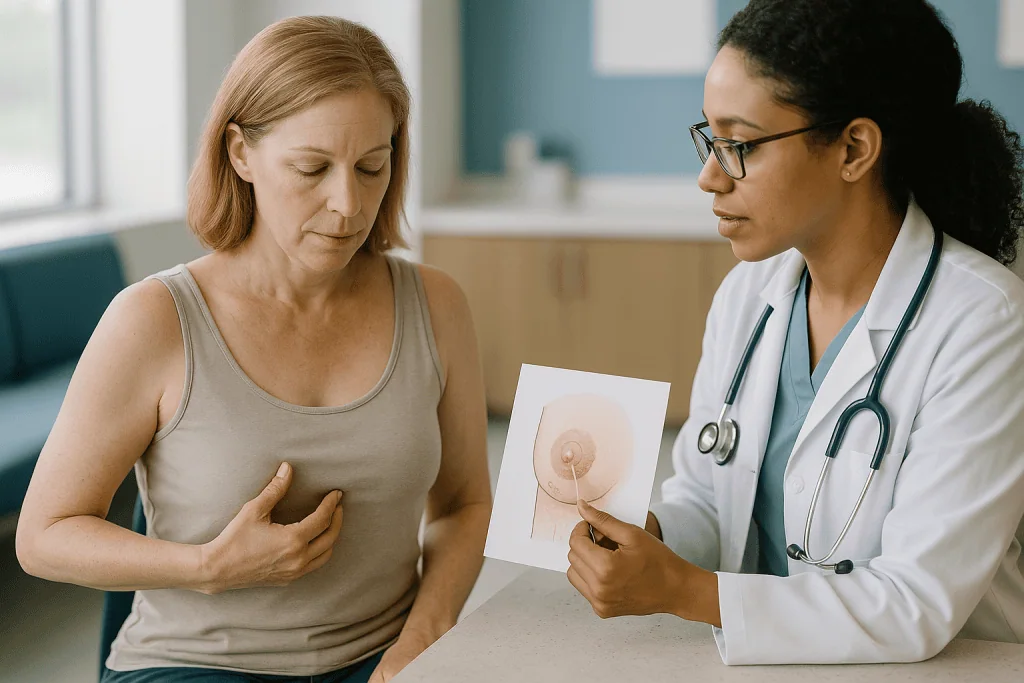
Because the flap is built from the breast’s own skin, there is no separate wound elsewhere on the body. An older approach, still used in some situations, borrows tissue from the opposite nipple when it is large enough to share, or takes a small skin graft, a piece of skin fully detached from another site, to create the areola. Grafts are less common now because tattooing can produce the areola without another scar.
The procedure is usually short and, according to Mayo Clinic’s overview of breast reconstruction, typically happens as a separate, later stage once the breast mound has healed and settled into its final position. Timing matters because the surgeon needs to know where the nipple should sit, and a mound that is still swelling or dropping would put the new nipple in the wrong place.
Local anesthetic with or without sedation is common, though your team decides based on your history and whether other revisions are being done at the same time. Most people go home the same day with a small protective dressing designed to keep pressure off the fresh flap while its blood supply establishes.
Are 3D nipple tattoos actually 3D? How the technique works
No. A 3D nipple tattoo is entirely flat. The “3D” describes the visual effect, not the anatomy. Think of the way a painter renders a sphere on canvas: a highlight on one side, a soft shadow on the other, and the brain reads depth that is not there. Tattoo artists trained in this work use the same principles, placing lighter pigment where a real nipple would catch light and darker tones underneath where it would cast a shadow.
The process itself is standard tattooing. A handheld machine drives fine needles into the dermis, the middle layer of skin beneath the surface, depositing pigment that the body then holds in place. The artist first maps the position, matching the opposite side if you have one, or working with you on placement and size if both breasts were reconstructed. Multiple pigment shades are layered: a base areola tone, deeper color for the nipple, tiny irregular marks to suggest the small bumps found on a natural areola, and highlights last.
A session is often measured in hours rather than minutes, though the length depends on whether one or both sides are done and how much detail is wanted. Many practitioners work in medical settings, and some plastic surgery services offer it as part of the reconstruction pathway. Nurses, physician assistants and specialist medical tattoo artists all perform it in different systems.
Sensation during the procedure is usually minimal because mastectomy skin has reduced or absent feeling. That same numbness means you cannot rely on pain to tell you if the needle is going too deep, so experience with reconstructed, scarred or irradiated skin matters more here than in ordinary tattooing.
Who is usually a candidate for each option, and who is asked to wait
Most people who have completed breast reconstruction are eligible for one or both options, but the sequencing and the skin’s condition drive the recommendation.

Surgical nipple reconstruction generally suits people whose breast mound has fully healed, who have enough healthy skin over the mound to fold into a flap, and who want a shape that can be felt. Surgeons tend to ask people to wait when the mound is still changing, when swelling has not resolved, or when further revision surgery is planned. Skin that has been irradiated is thinner and heals less predictably, so a surgeon may be cautious about building a flap on a radiated breast, or may propose a smaller nipple to reduce the risk of the tip losing its blood supply.
Tattooing suits almost anyone with intact, healed skin, including people who chose not to have a surgical nipple and people who had one built and now want color. It is also the usual route for someone whose original nipple was preserved in a nipple-sparing mastectomy but whose areola color has faded or been partly removed. People are typically asked to wait until scars are mature, which health sources generally describe as several months after the last surgery, because fresh scar tissue takes pigment unevenly.
Both options are usually deferred during active cancer treatment. Chemotherapy lowers the body’s ability to fight infection, and any deliberate break in the skin, whether a scalpel or a needle, carries infection risk. People on anticoagulants, people with poorly controlled diabetes, and people who smoke are commonly asked to optimize those factors first, because all three slow wound healing. None of this is a permanent no; it is a question of when.
Nipple reconstruction vs 3D tattoo at a glance
The table below is a neutral summary of what the two approaches involve. Individual experiences vary, and your team may recommend a combination.
| Feature | Nipple reconstruction surgery | 3D nipple tattoo |
|---|---|---|
| What it restores | Raised shape you can see and feel | Color and the visual impression of a nipple and areola |
| Sensation | None restored | None restored |
| Anesthesia | Usually local, sometimes with sedation | Usually none needed on numb skin |
| Number of appointments | One procedure plus wound checks | One or two sessions, plus later touch-ups |
| New scars | Small scars at the flap base | None |
| Main risks | Flap tip loss, infection, flattening over time | Fading, color shift, infection, uneven uptake |
| Reversible | No | Not easily; pigment can be lightened but not erased |
| Typical timing | After the breast mound has settled | After scars are mature; after surgical nipple has healed if both are done |
Two things jump out. First, neither option gives back what many people miss most, which is feeling. Second, they are not competitors so much as layers. A surgical nipple without color reads as a pale bump; a tattoo without a surgical nipple reads as a flat picture. Together they come closest to the original.
The row on reversibility deserves a second look. If you are unsure, tattooing alone is the lower-commitment choice because it changes nothing structural. A surgical nipple, once built, can be reduced or removed, but that is another operation and another scar.
Do reconstructed nipples look real?
Up close, in good light, a trained eye can usually tell. From ordinary distance, under a shirt or in a mirror, most people find the result convincing, and the addition of tattooed color is what usually tips it from “clearly reconstructed” to “looks like a nipple.”
The honest caveat is projection. Projection means how far the nipple stands out from the breast surface. Freshly built nipples are deliberately made taller than the final target because they settle. Scar tissue contracts as it matures and the folded flap loses some of its early swelling, so the nipple you see at the first dressing change is not the nipple you will have a year later. Surgeons account for this by over-building, but how much height is retained varies from person to person, and the medical literature on this is made up mostly of single-center case series rather than large trials. Anyone quoting you a precise percentage of retained projection is quoting a small study, not a settled fact.
Symmetry is the second variable. If you have one natural nipple, the surgeon uses it as the template for position, diameter and height. If both breasts were reconstructed, you and the surgeon agree on placement together, and there is more freedom but also more judgement involved.
Texture is the third. A folded skin flap is smooth. The small bumps on a natural areola, called Montgomery glands, cannot be surgically recreated, which is exactly why tattoo artists paint them in. A surgical nipple with no tattoo tends to look like a pale button; the same nipple with tattooed areola and shading looks lived-in. That combination, not either option alone, is what most people mean when they say the result “looks real.”
How long do 3D nipple tattoos last?
Years, but not forever, and not unchanged. The pigment sits in the dermis, where the body’s immune cells slowly break it down and carry small amounts away over time. Sun exposure speeds this up. So does skin that has been irradiated, which can hold pigment less reliably and sometimes fades faster or more patchily than untreated skin.
Fading is not usually dramatic. What people notice first is softening: the highlights lose their punch, the areola edge blurs, and the whole image looks a shade lighter. Color shift is the other change. Depending on the pigment used and how your skin ages, warm tones can cool toward pink or grey, or darker tones can lift toward a lighter brown. This is why practitioners often build in a planned touch-up rather than treating the first session as final.
There is no single agreed number of years. Tattoo longevity depends on the depth the pigment was placed, the pigment chemistry, your skin type, sun habits, and whether the area was radiated, and no major health body publishes a standard figure for areola tattoos specifically. The realistic framing is this: expect a strong result for several years, expect gradual fading rather than sudden loss, and expect that a refresh session at some point will restore the original depth.
You can slow fading with the same habits that protect any tattoo. Keep the area covered from the sun or use sunscreen once the skin is fully healed. Avoid harsh exfoliants over the tattoo. And if you notice color changing in a way that looks uneven, particularly darker patches or a raised texture, that is worth a check rather than a shrug, because it is not the pattern of normal fading.
What the days and weeks after nipple reconstruction usually look like
The first thing most people say after surgery is that the nipple looks too big. That is intentional. The surgeon has built it taller than the target because it will shrink as it heals, and a nipple that looks alarmingly prominent under the dressing on day one often looks about right by the end of the first month.
In the first week, the priority is protecting the flap’s blood supply. You will usually be sent home with a small protective cover, sometimes a modified plastic cap or a rolled dressing, that stops clothing and bras from pressing the nipple flat. Your team will tell you how long to keep that on and when to start gently washing the area. Mastectomy skin is often numb, so the site is not usually painful, though the surrounding area can feel tight.
The tip of the flap is the most vulnerable part because it is furthest from the blood supply. A darker or dusky tip in the first days can be a sign the blood flow is marginal; some tips heal fine despite this, and some lose a small amount of skin at the very top and heal from underneath with a slightly shorter result. This is the complication surgeons watch for most closely, and it is the reason for the early wound check.
Stitches, if not dissolvable, are typically removed at the first or second follow-up. By the second to third week most people are back to ordinary clothing with a soft, non-compressive bra. Scars at the flap base go through the usual arc, red and firm first, then softening and fading over many months. Tattooing, if planned, is deferred until the nipple has fully settled so the artist is working on a stable shape.
What healing after a 3D areola tattoo usually looks like
A fresh areola tattoo behaves like any fresh tattoo, with two differences: the skin is often numb, and it may be scarred or irradiated. Both change what you should expect.
Immediately afterward the area looks darker and more saturated than the final result. This is normal. Over the first few days a thin layer of surface skin containing excess pigment flakes away, and the color underneath softens to its true tone. Some redness and mild swelling around the tattooed area is expected for the first couple of days. A clear or slightly colored ooze on the dressing in the first day is common and is plasma, not infection.
Aftercare is simple and your practitioner will give specific instructions. In general terms: keep the area clean with mild soap and water, pat dry rather than rub, apply a thin layer of the recommended ointment, and avoid soaking in baths, pools or hot tubs until the surface has fully healed. Do not pick at flaking skin, because lifting it early pulls pigment out with it and leaves pale patches.
The numbness cuts both ways. You are unlikely to feel much discomfort, which is a relief. But you also cannot feel the early warning that most people get when a tattoo is becoming infected, so you need to look rather than feel. A brief daily glance in the mirror for spreading redness, heat, swelling that increases after day three, or any yellow or green discharge is sensible.
Once the surface has healed, the pigment continues to settle for several more weeks. Practitioners typically schedule the follow-up or touch-up after this settling period so they can see the true final color and fill in any areas where the skin did not hold pigment evenly, which happens more often over scar lines.
Can I get a 3D areola tattoo after breast reconstruction, or after a surgical nipple?
Yes to both, and the combination is one of the most common pathways. The order matters, though, and the skin needs to be ready.
After implant or flap reconstruction with no surgical nipple, tattooing is done directly onto the healed mound. The artist creates the entire nipple-areola complex from pigment alone, using shading for the illusion of projection. This is the route for people who want to avoid another operation, people with irradiated skin where a flap is riskier, and people who tried a surgical nipple that flattened and would rather not repeat surgery.
After a surgical nipple, tattooing adds what the flap cannot: color. The artist tattoos the raised nipple to a darker tone and creates the areola around its base, often using shading at the junction to enhance the sense of depth. Because the shape already exists, the tattoo work here is more about color matching than about creating an illusion. Teams usually wait until the surgical nipple has completely healed and stopped changing, because tattooing a nipple that is still shrinking can leave the color misaligned with the final shape.
There are situations where tattooing is used on a preserved natural nipple too. After a nipple-sparing mastectomy, the areola sometimes loses pigment or a portion is removed for safety margins, and tattooing can restore the color boundary.
A practical point that catches people out: if you have further revision surgery planned, such as fat grafting to smooth the mound or an implant exchange, tattoo after, not before. Surgery on a tattooed area can distort or partly remove the design. Ask your surgeon whether anything else is still on the plan before booking the artist.
Risks and complications of nipple reconstruction and nipple tattooing
Both procedures are low-risk in the sense that they rarely threaten health, but both can disappoint, and it is worth knowing how.
For surgical nipple reconstruction, the main risks are partial or complete loss of the flap when its blood supply fails, infection, wound breakdown, and loss of projection over time. Flap loss is more likely on thin, scarred or irradiated skin. When it happens, the nipple may end up shorter than planned or, uncommonly, may need to be rebuilt later. Asymmetry with the opposite side, or a nipple that ends up sitting slightly off-center as the breast continues to settle, is a cosmetic rather than medical complication but is a real source of frustration. Scars at the flap base occasionally thicken, particularly in people prone to raised scarring.
For tattooing, the risks are infection, allergic reaction to pigment, uneven pigment uptake over scars, color that heals differently from what was expected, and fading that needs correction. Infection is uncommon in clean, medical settings but is the risk that turns a cosmetic procedure into a medical one, especially over an implant, where a deep infection can be serious. This is why practitioners ask about recent chemotherapy, uncontrolled diabetes and steroid use before working.
People with implants sometimes worry that a needle could puncture the implant. In practice, tattoo needles reach the dermis, a fraction of a millimeter deep, while the implant sits beneath skin, fat and often muscle or a supporting layer. Standard tattooing does not reach it.
Finally, the risk that is rarely listed: regret. Some people build a nipple and later wish they had left the mound smooth; others tattoo and wish they had a shape. Taking time with the decision, and starting with the less permanent option if genuinely torn, reduces that risk more than any surgical detail.
2D vs 3D areola tattoo: what is the difference and does it matter?
The distinction is about technique, not anatomy. Both are flat tattoos. The difference is how much visual depth the artist builds in.
A 2D areola tattoo is a flat circle of pigment, often a single tone or a simple two-tone with a darker center for the nipple. It was the standard approach for many years and is still used, especially when the goal is simply to give a surgical nipple its color, because the raised flap supplies the depth and the tattoo only needs to supply the tone. It is quicker and involves fewer pigment shades.
A 3D areola tattoo uses light and shadow. The artist places a highlight where a nipple would catch light, a shadow beneath where it would block it, and irregular small marks to mimic the natural texture of an areola. The aim is for a flat surface to be read by the eye as raised. On a breast with no surgical nipple, this is the technique that makes the difference between a colored disc and something that looks like a nipple.
Which is right depends on what is underneath. If you have a surgical nipple, a well-done 2D tattoo can look excellent because the shape is real and the color just needs to match. If you have no surgical nipple, 3D shading is what creates the impression of one. Many artists blend the approaches, using 3D shading even over a surgical nipple to soften the junction where flap meets breast.
The terms are not regulated, so ask to see healed photographs, not fresh ones, of the specific technique the practitioner proposes for your situation. Fresh tattoos always look more saturated and defined than healed ones, and the healed result is the one you live with.
Choosing neither: leaving the reconstructed breast without a nipple
Some people reach the end of reconstruction and stop. The breast mound gives them the silhouette they wanted in clothing, and a nipple, surgical or tattooed, does not feel worth another appointment. Others who chose to go flat, without reconstruction at all, sometimes choose decorative tattooing across the chest instead of anything that resembles a nipple. Both are legitimate endpoints, and neither is a failure to finish.
Health sources such as the NHS are explicit that reconstruction, and each of its stages, is a personal choice rather than a medical requirement. The nipple stage in particular has no bearing on cancer outcomes, surveillance or physical function. It is entirely about how you want to look and feel, and “I am done” is a complete answer.
There are also practical reasons to pause. Someone facing further treatment, someone who has had multiple wound complications, or someone who simply feels operated-on enough may prefer to leave the surface smooth for a year or two and revisit. Tattooing in particular has no deadline; healed, mature skin can be tattooed years after the original surgery.
Removable options exist for people who want the appearance sometimes but not permanently. Adhesive silicone prosthetic nipples, which stick to the skin and come off, let someone see how a nipple changes the look under clothing before committing to anything permanent. Temporary tattoos designed for this purpose serve a similar trial function. Neither is a medical treatment and neither is required, but as a way of testing your own reaction before booking a surgeon or an artist, they are underused.
Whatever you decide, the decision is yours to make on your own timeline, and a good care team will say so.
What people often get wrong about nipple reconstruction and 3D tattoos
“The nipple will have feeling again.” It will not. Neither surgery nor tattooing reconnects the nerves removed with the breast tissue. Any sensation you have on the mound is from the skin flap or surrounding chest wall, and a rebuilt nipple does not change that.
“3D means it sticks out.” A 3D tattoo is flat. The depth is an optical effect. If you want something you can feel, that requires surgery or a prosthetic.
“Tattooing is the cheap, lesser version.” They restore different things. Tattooing is the only way to restore areola color and texture, and it is essential to making a surgical nipple look natural. Framing it as a fallback misses what it does.
“The tattoo is permanent.” It is long-lasting, but it fades and can shift in tone, and touch-ups are a normal part of the plan rather than a sign it was done badly.
“The surgical nipple will stay the size it is on day one.” It is built oversized on purpose and shrinks as it heals. Judging the result in the first month is judging the wrong nipple.
“Radiation makes it impossible.” Irradiated skin raises the risk of flap problems and can take pigment less evenly, but both procedures are still done on radiated breasts with appropriate caution. It changes the conversation, not the answer.
“Any tattoo artist can do it.” Technically any licensed artist can tattoo skin, but reconstructed, scarred and numb skin behaves differently, and experience with it affects both safety and the result. Ask about that experience specifically.
“You have to decide now.” There is no clinical deadline for either option. Waiting a year to be sure is a reasonable choice, not a missed window.
Questions to ask your care team about nipple reconstruction vs 3D tattoo
Bring these to your next appointment. The point is not to test your team but to make sure the plan reflects what you actually want.
- Given my skin, my scars and whether I had radiation, which option do you think carries less risk of a poor result, and why?
- If I have a surgical nipple built, how much height do you expect it to lose as it heals, and what is your experience on skin like mine?
- Are there any further revision procedures still on my plan that should happen before tattooing?
- Who performs the tattooing in your service, what is their background, and can I see healed rather than fresh photographs of their work?
- If the tip of the flap does not survive, what happens next?
- How will you decide where the nipple sits if both breasts were reconstructed?
- What signs after the procedure should make me call you the same day?
- If I try tattooing alone and later want a surgical nipple, does the existing tattoo complicate that?
- What is the typical interval before a tattoo touch-up, and is that part of the plan or a separate request?
- If I decide I want neither, does that affect anything about my follow-up or surveillance?
One more, for yourself rather than the team: what is the thing I most want back? If the answer is “to look normal in the mirror,” tattooing may do most of the work. If it is “to feel a shape under my shirt,” surgery is doing the work and tattooing finishes it. If the honest answer is “I am not sure,” a prosthetic trial and a few more months are a perfectly good next step.
When to call your doctor after nipple reconstruction or nipple tattooing
Both procedures are usually uneventful, but because mastectomy skin is often numb, you cannot rely on pain to warn you. Look at the area once a day during healing and call your surgical team the same day, or seek urgent care out of hours, if you notice any of the following.
After surgical nipple reconstruction: a tip that turns black or dark purple rather than pink; spreading redness or warmth around the nipple that is getting larger rather than smaller after the first two days; yellow or green discharge or a foul smell from the wound; a wound edge that has opened; bleeding that does not stop with gentle pressure; a fever or feeling unwell; or new swelling, firmness or pain in the reconstructed breast, which can signal a fluid collection or a problem with an underlying implant.
After tattooing: redness that spreads beyond the tattooed area or worsens after day three; increasing swelling, heat or throbbing; pus or cloudy discharge; blistering or a raised, itchy rash over the pigment, which can indicate an allergic reaction; red streaks tracking away from the area; or fever and chills. Over an implant, any sign of deep infection matters more than it would on ordinary skin, because infection can spread to the implant pocket and may need prompt treatment.
Seek emergency care immediately for high fever with a rapidly spreading red area, confusion, difficulty breathing, or a rash spreading across the body, which can be signs of a severe infection or a serious allergic reaction.
Later on, call if a healed tattoo develops a darker patch, a raised area or a lump beneath it, or if a healed nipple changes shape or develops a sore that does not heal. These are unlikely to be sinister, but they are not normal fading or settling, and your team would rather look than have you wonder.
Frequently asked questions
How long do 3D nipple tattoos last?
Several years is the realistic expectation, but the pigment fades gradually and can shift in tone. No major health body publishes a standard lifespan for areola tattoos, because longevity depends on pigment depth, skin type, sun exposure and whether the skin was irradiated. Most practitioners plan a touch-up rather than treating the first session as permanent. Sun protection and gentle skin care slow fading.
Are 3D nipple tattoos actually 3D?
No. A 3D nipple tattoo is flat. The name refers to the shading technique, which uses highlights and shadows to trick the eye into seeing a raised nipple on a flat surface, in the same way a painter creates depth on canvas. If you want a shape you can feel through clothing, that requires surgical nipple reconstruction or a removable prosthetic nipple.
Do reconstructed nipples look real?
From normal viewing distance, most people find a surgical nipple combined with tattooed color convincing. Up close, a trained eye can usually tell. The main limitations are loss of height as the flap heals, smooth texture where a natural areola has small bumps, and slight asymmetry. Adding a tattoo for color and texture is what most often moves the result from “reconstructed” to “natural-looking.”
Can I get a 3D areola tattoo after mastectomy and breast reconstruction?
Yes. Tattooing is done directly onto a healed reconstructed breast, with or without a surgical nipple. Teams generally wait until scars are mature and no further revision surgery is planned, because operating on a tattooed area can distort the design. If you had radiation, the artist should have experience with irradiated skin, which can take pigment unevenly. Your surgeon can confirm when the skin is ready.
What is the difference between a 2D vs 3D areola tattoo?
Both are flat tattoos. A 2D areola tattoo is a simple circle of color, often used to tint a surgical nipple that already provides the shape. A 3D tattoo adds highlights, shadows and texture marks so a flat surface appears raised, which matters most when there is no surgical nipple underneath. Many artists blend the two, and the terms are not regulated, so ask to see healed photographs.
Does nipple reconstruction restore any feeling?
No. The nerves that supplied the original nipple were removed with the breast tissue during mastectomy, and folding skin into a new nipple does not reconnect them. The reconstructed nipple will not respond to touch or cold. Any sensation on the reconstructed breast comes from the surrounding skin or chest wall and is not changed by nipple surgery or tattooing.
Will a surgical nipple flatten over time?
Some loss of height is expected and surgeons build the nipple oversized to allow for it. Scar tissue contracts as it matures and early swelling settles, so the nipple looks smaller after the first weeks. How much projection is retained varies between people, and published figures come from small case series rather than large trials, so no precise percentage can be promised. Irradiated skin tends to retain less.
Can a tattoo needle damage a breast implant?
Standard tattooing does not reach an implant. The needle deposits pigment in the dermis, a fraction of a millimeter below the surface, while the implant sits beneath skin, fat and usually muscle or a supporting layer. The real implant-related concern is infection, because a deep infection over an implant can be serious. That is why practitioners screen for recent chemotherapy, diabetes and other factors that impair healing.
Which should come first, the surgical nipple or the tattoo?
If you plan both, surgery comes first. The tattoo is applied once the surgical nipple has fully healed and stopped shrinking, so the color matches the final shape and the areola is positioned correctly around its base. Tattooing first and building a nipple afterward can misalign the design. Any other revision surgery on the breast should also be finished before tattooing.
Is there a deadline for deciding on nipple reconstruction or tattooing?
No clinical deadline exists for either option. Nipple reconstruction and tattooing are optional final stages with no effect on cancer surveillance or physical function, and healed, mature skin can be tattooed or operated on years after the original reconstruction. Taking time, or trialing a removable prosthetic nipple to see how you feel, is a reasonable approach and one many care teams encourage.
References
- MedlinePlus: Breast Reconstruction
- MedlinePlus Medical Encyclopedia: Breast reconstruction – natural tissue
- NHS: Mastectomy
This article is for general information only and is not a substitute for professional medical advice. Please consult a qualified doctor about your individual situation.

More from the Blog
Capsular Contracture: Why It Happens, the Four Grades, and When to See Your Surgeon
Capsular contracture occurs when the scar tissue that naturally forms around a breast implant tightens and squeezes it, making the breast feel firm, look…

The Two Weeks Before Breast Reduction: Imaging, Medication Review and Practical Planning
Preparing for breast reduction surgery in the final two weeks usually means completing any imaging your surgeon has requested, reviewing every prescription, over-the-counter medicine…

Breast Lift Scars and Daily Life After Mastopexy: Sleeping, Sports Bras and Sun Protection
Breast lift scars are permanent, but they usually change a great deal. Most fade from raised and pink to flat, pale lines over roughly…

Healing After Nipple Reconstruction: Protective Dressings, Bras to Avoid and the First Weeks
Nipple reconstruction recovery is usually gentler than earlier breast surgery. Most people wear a protective dressing or shield for the first weeks, choose soft…

Breast Fat Transfer vs Implants: Volume, Feel, Scars and Which Goals Each Option Suits
Fat transfer moves your own fat, taken by liposuction, into the breast for a modest, soft increase with only tiny needle-entry scars, but part…

Why Ultrasound or Mammography Comes Before Accessory Breast Surgery: Confirming the Tissue
Ultrasound, and sometimes mammography, comes before accessory breast surgery because a lump in the armpit or along the chest wall is not always breast…