

Ovary Pain: Left, Right, Cysts and Back Pain
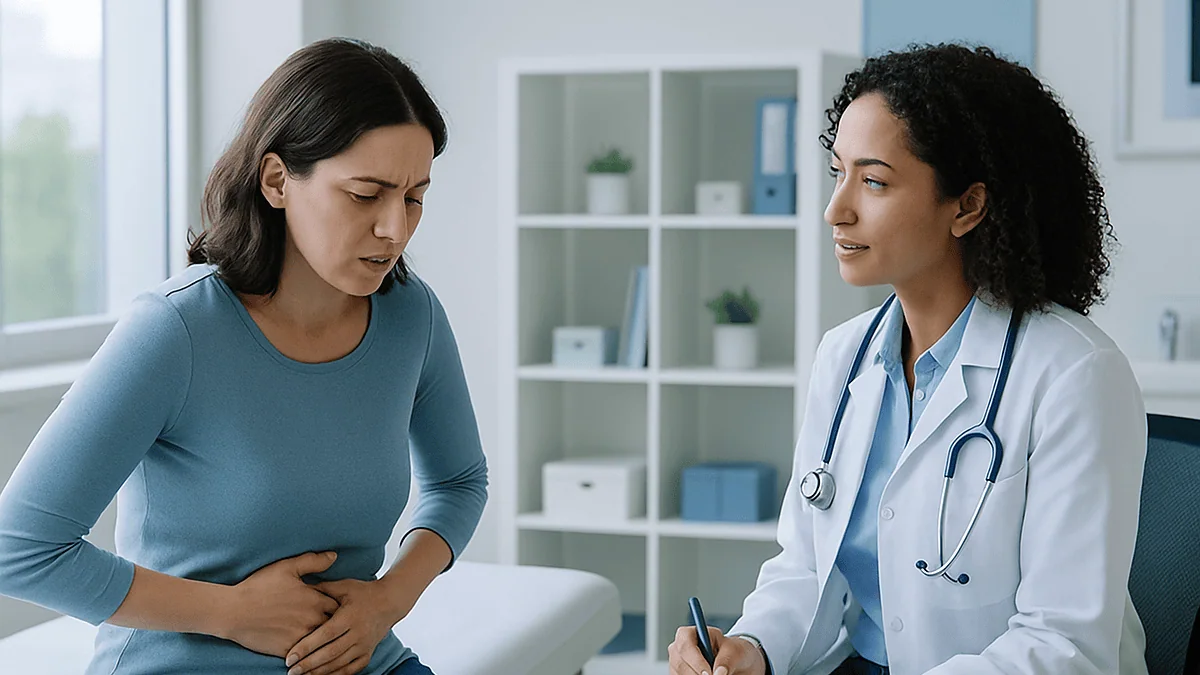
Key Takeaways
- Ovulation pain typically arrives about 14 days before the next period and lasts from a few minutes to a day or two, switching sides depending on which ovary released the egg.
- Most ovarian cysts cause no symptoms and disappear on their own within a few months, with functional cysts usually resolving within two to three menstrual cycles.
- Sudden severe one-sided pain with vomiting or faintness can signal a ruptured cyst or ovarian torsion, and torsion needs prompt surgical assessment to save the ovary.
- The left ovary sits beside the sigmoid colon, so constipation and trapped gas are frequent impostors for left-sided ovary pain and often ease after a bowel movement.
- Endometriosis affects around 1 in 10 women of reproductive age and produces pelvic and lower back pain that predictably worsens in the days before and during a period.
- Around 1 in 90 pregnancies in the UK is ectopic, and one-sided pelvic pain with bleeding or shoulder-tip pain in early pregnancy needs same-day medical assessment.
Pain felt over the left ovary most often comes from a normal monthly event such as ovulation or a small functional cyst, both of which usually settle on their own within days to a few months. Endometriosis, infection, or nearby organs like the bowel can also cause it. Sudden severe pain, fever, fainting, or pain in pregnancy needs urgent medical assessment.
It arrives mid-morning, low on the left, somewhere below the hip bone and inside the pelvis. A dull, pulling ache that makes you shift in your chair. You press the spot with two fingers, decide it is probably nothing, and then spend the next twenty minutes typing symptoms into a search bar.
Here is the awkward truth about that spot: the ovary is roughly the size of an almond and shares its corner of the pelvis with a loop of bowel, the end of the ureter, ligaments, and a wall of muscle. Pain that feels like it is coming from the ovary is a location, not a diagnosis. The ovary is often the culprit, but not always, and the calendar usually tells you more than the side does.
This piece walks through what actually causes left-sided and right-sided ovary pain, why cysts are usually less alarming than they sound, how back pain gets pulled into the story, and the handful of signs that should send you to a clinician the same day.
Why do I have pain in my left ovary?
Start with anatomy, because it explains most of the confusion. Each ovary sits low in the pelvis, tethered by ligaments beside the uterus, and according to the Mayo Clinic each one is about the size and shape of an almond. Small organs, big monthly workload: every cycle one of them grows a fluid-filled follicle, releases an egg, and reshapes the leftover tissue into a hormone-producing structure that later shrinks away.
Each of those steps can hurt a little. The follicle stretches the surface of the ovary as it grows. Release of the egg spills a small amount of fluid and sometimes blood into the pelvis, which irritates the lining. The left ovary does this roughly half the time, and on those months the ache lands on the left.
So the most common honest answer to the question is unglamorous: the left ovary is doing its job, and you happen to notice it this cycle. Functional cysts, which are simply follicles that overstayed their welcome, are the next most frequent explanation. The NHS notes that most ovarian cysts are harmless, cause no symptoms, and disappear within a few months without treatment.
What deserves attention is not the fact of pain on the left but its behavior. Does it follow your cycle? Does it stay mild and fade within a day or two? Or is it constant, worsening, or joined by fever, vomiting, or unusual bleeding? Those distinctions, not the side, are what separate an ordinary month from a problem that needs a scan.
Is the pain really coming from the ovary?
The pelvis is a crowded neighborhood, and nerves there are poor at giving precise addresses. Pain from several organs is felt in the same broad patch of lower abdomen, which is why the NHS treats pelvic pain as a single symptom with many possible sources rather than as an ovary problem by default.
On the left specifically, the nearest neighbor is the sigmoid colon, the S-shaped final stretch of large bowel before the rectum. Gas trapped there, constipation, or a bout of irritable bowel can produce a cramping, shifting ache that sits almost exactly where the left ovary lives. A useful clue: bowel pain tends to change with eating, passing wind, or having a bowel movement. Ovary pain usually does not.
The ureter, the tube carrying urine from the kidney to the bladder, also runs past the ovary. A stone moving down it causes pain that starts in the flank and travels forward and downward, often in waves, frequently with blood in the urine.
Then there is the muscular wall of the pelvis and the ligaments that hold the uterus in place. Strain from lifting, a new exercise routine, or simply sitting badly for a week can leave a tender point that mimics an ovarian ache but reproduces when you press it or twist.
None of this means you should talk yourself out of an ovarian cause. It means a clinician will ask about your bowels, your bladder, and your posture for good reason, and you can shorten the visit by noticing those patterns before you arrive.
Ovulation pain: why it flips from left to right
Some people can name the day they ovulate by a small twinge on one side. There is a word for it, mittelschmerz, German for middle pain, and it is one of the most common reasons for one-sided ovary pain in people who menstruate.
The Mayo Clinic describes it as occurring about 14 days before the next period, roughly midway through a typical cycle, and lasting anywhere from a few minutes to a day or two. The sensation ranges from a dull ache to a sharper, more sudden cramp, and it appears on whichever side is releasing the egg that month. That is why the pain seems to wander: left this month, right the next, occasionally the same side twice in a row, since the ovaries do not take strict turns.
Two mechanisms are thought to be responsible. Before release, the growing follicle stretches the ovary’s surface. At release, follicular fluid and a little blood escape into the pelvis and irritate the sensitive lining there. Some people also notice a small amount of spotting or a change in cervical mucus around the same time.
The reassuring features are consistency and brevity. If the ache reliably shows up mid-cycle, stays mild, and is gone within a day or so, ovulation is the likeliest explanation and no investigation is usually needed. If it lasts longer, arrives at unpredictable times, or grows more intense over successive cycles, that pattern has stopped behaving like mittelschmerz and deserves a proper look.
What does an ovarian cyst feel like?
Most of the time, nothing at all. That is the single most useful fact about ovarian cysts and the one most often lost in anxious late-night reading. The NHS states plainly that most cysts cause no symptoms and are discovered by chance during a scan for something else.
The everyday variety is the functional cyst. Every cycle, a follicle swells to release an egg; if it fails to release, or seals over afterwards and keeps filling with fluid, it becomes a small sac on the ovary. According to the Mayo Clinic, these functional cysts are usually harmless, rarely cause pain, and generally disappear on their own within two to three menstrual cycles.
When a cyst does announce itself, the sensation is typically a pressure or dull ache on one side of the lower abdomen. People describe a feeling of fullness, heaviness, or bloating on that side. The pain may be more noticeable during sex, during a bowel movement, or in the days around a period. Some cysts irritate the bladder enough to bring on a more frequent urge to urinate.
Less common cyst types behave differently. Endometriomas, sometimes called chocolate cysts, form when endometriosis tissue grows on the ovary and tend to produce pain that tracks with the menstrual cycle. Dermoid cysts and cystadenomas can grow larger and heavier, making the ovary more prone to twisting, which is covered in the next section.
The practical point: a mild one-sided ache that comes and goes over a few weeks is far more likely to be a small functional cyst quietly resolving than anything that will require intervention.
Ruptured cyst or ovarian torsion: the sudden, severe kind
Two events turn a quiet cyst into an emergency, and both share a signature: pain that begins abruptly and is hard to ignore.
Rupture happens when a cyst bursts and releases its contents into the pelvis. The Mayo Clinic describes the result as sudden, severe abdominal pain. A small functional cyst rupturing may produce a sharp pain that eases over hours as the fluid is reabsorbed. A larger cyst, or one containing blood, can cause internal bleeding, and that is when pain is joined by lightheadedness, a racing pulse, or fainting.
Torsion is the more dangerous cousin. A cyst adds weight to the ovary, and a heavier ovary can twist on the ligaments and blood vessels that anchor it, cutting off its own blood supply. The pain is typically sudden, intense, and one-sided, and the NHS lists nausea and vomiting alongside it. Torsion needs prompt surgical assessment because an ovary deprived of blood for too long can be lost. This is why clinicians take severe one-sided pain with vomiting seriously even in someone who is otherwise young and healthy.
How do you tell either apart from ordinary ovulation pain? Intensity and trajectory. Mittelschmerz is a twinge that peaks and fades within a day. Rupture and torsion produce pain that makes you stop what you are doing, often worsens rather than eases, and frequently comes with a feeling of being unwell throughout your body. Trust that difference. A cyst that ruptures quietly will usually settle, but you cannot know from the sofa which kind you are dealing with, and an ultrasound can.
Right ovary pain vs left ovary pain: does the side matter?
Ovaries are symmetrical in their behavior. Ovulation, functional cysts, endometriosis, infection, and torsion can all affect either side, and none of them prefers the left or the right. The side tells you which ovary was active this month, nothing more.
What changes with the side is the list of neighbors that can impersonate the ovary. On the right, that neighbor is the appendix. Appendicitis classically begins as a vague ache near the navel that migrates over hours to the lower right abdomen, becoming sharper and more constant, often with loss of appetite, nausea, and a low fever. A right-sided ovarian cyst can feel remarkably similar in the early hours, which is one reason emergency teams routinely scan the pelvis when a young woman presents with right lower abdominal pain.
On the left, as described earlier, the bowel is the usual impostor. Diverticulitis, inflammation of small pouches in the colon wall, is more common in people over 40 and tends to produce left lower abdominal pain with fever and a change in bowel habit. Constipation and trapped gas are far more frequent and far less worrying, but they sit in exactly the same place.
A useful habit is to notice what else the pain does. Pain that migrates, sharpens, and brings a fever points away from the ovary. Pain that tracks your cycle points toward it. Pain that eases after a bowel movement points at the colon. None of these clues is definitive, but together they help you describe the problem in a way that speeds up the right investigation.
Why does ovary pain spread to my lower back?
Ask a room of people with pelvic pain where they feel it and a surprising number will reach around to the small of their back. This is not imagination, and it is not a separate problem. It is how pelvic nerves are wired.
The uterus, ovaries, and surrounding ligaments share nerve pathways with the lower spine and sacrum. When pelvic tissue is irritated, whether by a cyst, by menstrual cramping, or by endometriosis, the brain often interprets part of that signal as coming from the lower back. Clinicians call this referred pain. It is the same phenomenon that makes a heart problem ache in the jaw or arm.
Certain conditions are particularly likely to pull the back into the picture. The NHS lists lower back pain among the symptoms of endometriosis, where misplaced tissue can settle deep behind the uterus near the ligaments that attach to the sacrum, generating pain that worsens during periods and sometimes with bowel movements. A larger ovarian cyst pressing backward can do something similar, producing a heavy ache across the lower back and the top of the buttocks on the affected side.
Back pain that arrives with ovary pain is not automatically a red flag, but two patterns deserve attention. Pain starting high in the flank, below the ribs, and traveling forward and down suggests the kidney or ureter rather than the ovary. And back pain with fever, difficulty passing urine, or numbness in the legs is not a pelvic story at all and needs same-day assessment.
Endometriosis: pain that keeps a calendar
Endometriosis is the diagnosis that many people with recurring left- or right-sided ovary pain eventually receive, and it is far more common than its long road to diagnosis suggests. The NHS estimates it affects around 1 in 10 women of reproductive age.
The mechanism is straightforward to describe and difficult to live with. Tissue similar to the lining of the uterus grows outside it, on the ovaries, the ligaments behind the uterus, the bowel surface, or the lining of the pelvis. Each month that tissue responds to hormones just as the uterine lining does: it thickens, breaks down, and bleeds. Unlike a period, that blood has nowhere to go. It causes inflammation, scarring, and sometimes adhesions that bind organs together.
When endometriosis involves an ovary, it can form an endometrioma, a cyst filled with old blood. These do not resolve the way functional cysts do, which is one reason a cyst that persists across several cycles prompts closer evaluation.
The symptom pattern the NHS describes is distinctive: pelvic pain that is usually worse during a period, period pain severe enough to interfere with normal activities, pain during or after sex, pain when using the toilet during a period, and sometimes heavy bleeding or difficulty getting pregnant. Fatigue is common. So is a sense of not being believed, because the pain is invisible on routine tests.
If your ovary pain reliably intensifies in the days before and during your period, has done so for months, and pain relief that dampens inflammation barely touches it, that calendar-shaped pattern is worth naming aloud at your appointment. It changes what your clinician looks for.
Pelvic inflammatory disease and infection
Infection is the cause of ovary pain that people least like to consider, which is exactly why it deserves a clear explanation. Pelvic inflammatory disease, or PID, is an infection of the upper reproductive tract, including the uterus, fallopian tubes, and ovaries. It most often develops when bacteria travel upward from the vagina or cervix, and sexually transmitted infections are a frequent starting point, although PID can also follow childbirth, miscarriage, or a procedure involving the cervix.
The pain of PID is usually felt low in the abdomen, often on both sides but sometimes more on one. What sets it apart from ovulation or a cyst are the companions: fever, unusual vaginal discharge that may have an odor, pain during sex, pain when urinating, and bleeding between periods or after sex. Symptoms can be mild and easy to dismiss, which is part of the danger, because untreated infection can scar the fallopian tubes and affect future fertility.
A tubo-ovarian abscess, a pocket of infection involving the tube and ovary, is a more serious complication and typically causes more intense one-sided pain with high fever and a general feeling of being very unwell.
The encouraging part is that PID is treatable, and the earlier it is recognized the less likely it is to leave lasting damage. If one-sided pelvic pain arrives with fever or a new discharge, or if you have had a new sexual partner or unprotected sex recently, say so at the appointment. Clinicians ask about these things routinely and without judgment, and the answer directly shapes which tests are done that day.
Could left ovary pain be an early pregnancy sign?
Yes, in two very different ways, and telling them apart matters more than almost anything else in this article.
The benign version involves the corpus luteum. After ovulation, the emptied follicle becomes a temporary hormone factory that supports an early pregnancy. Sometimes it fills with fluid and forms a cyst, which can ache on one side during the first weeks of pregnancy. These corpus luteum cysts generally shrink away as the placenta takes over hormone production.
The dangerous version is ectopic pregnancy, where a fertilized egg implants outside the uterus, most often in a fallopian tube. The NHS reports that in the UK around 1 in every 90 pregnancies is ectopic, and that symptoms usually develop between the 4th and 12th week. The pattern to know: pain low on one side of the abdomen, vaginal bleeding or a brown watery discharge, pain in the tip of the shoulder, and discomfort when passing urine or stool. Shoulder-tip pain is an odd but important clue, because it signals internal bleeding irritating the diaphragm.
A growing ectopic pregnancy can rupture the tube and cause life-threatening bleeding, which is why the NHS advises urgent assessment for anyone who could be pregnant and has one-sided pain with bleeding, and emergency care for sharp sudden pain, dizziness, fainting, or looking very pale.
The practical rule is simple. If there is any possibility you are pregnant and you have new one-sided pelvic pain, do a pregnancy test and seek same-day advice rather than waiting to see if it settles. Most such pains turn out to be nothing serious. The small fraction that are ectopic cannot afford the delay.
How to read your pain pattern
Clinicians think in patterns, and you can too. The table below is not a diagnostic tool, and several causes overlap, but it captures the features that typically distinguish the common explanations for one-sided ovary pain. Notice how much weight timing carries compared with which side hurts.
| Likely source | Timing | Character | Typical companions |
|---|---|---|---|
| Ovulation (mittelschmerz) | Mid-cycle, about 14 days before period; minutes to a day or two | Twinge or dull ache, one side, may alternate monthly | Light spotting, mucus change; otherwise well |
| Functional cyst | Any point in cycle; comes and goes over weeks, usually gone within a few months | Pressure, heaviness, bloating on one side | Pain with sex or bowel movements; urinary frequency |
| Cyst rupture or torsion | Sudden onset, any time | Severe, sharp, often worsening | Nausea, vomiting, faintness, rapid pulse |
| Endometriosis | Worst in days before and during period, recurring for months | Deep, cramping, may reach lower back | Heavy periods, pain with sex or toilet use, fatigue |
| Pelvic infection (PID) | Gradual over days | Aching, often both sides, tender to touch | Fever, unusual discharge, bleeding between periods |
| Ectopic pregnancy | Weeks 4 to 12 of pregnancy | One-sided, may be sharp | Bleeding, shoulder-tip pain, dizziness |
| Bowel (gas, constipation, diverticulitis) | Related to meals and bowel habit | Cramping, shifting, left side common | Bloating, changed stools; fever if diverticulitis |
Keeping a simple note of dates, intensity, and what else was happening for two or three cycles turns a vague complaint into a pattern a clinician can act on. It is the single most useful thing you can bring to an appointment.
What will the doctor do about ovary pain?
Knowing what an appointment involves takes some of the dread out of booking it. For pelvic pain, the process is methodical and mostly painless.
It starts with questions, and they will be detailed: when the pain began, where exactly it sits, whether it follows your cycle, what your periods are like, whether sex or bowel movements or urination change it, and whether pregnancy is possible. The NHS guidance on pelvic pain reflects this history-first approach, because the pattern narrows the field faster than any single test.
A physical examination usually follows, pressing gently on the abdomen to find tender points and check for guarding. A pelvic examination may be offered to assess the uterus and ovaries and to take swabs if infection is a possibility. You can ask for a chaperone, and you can ask for anything to stop.
Tests are chosen to match the story. A urine test screens for pregnancy and infection. Blood tests can look for signs of inflammation or, in some cases, markers that help assess a cyst. The workhorse investigation is ultrasound, most often performed transvaginally because the probe sits closer to the ovaries and produces clearer images. The Mayo Clinic notes that ultrasound can show whether a cyst is present, its size, and whether it is filled with fluid, solid, or mixed, which guides everything that follows.
For a small, simple, fluid-filled cyst in someone who is otherwise well, the most common plan is watchful waiting with a repeat scan in a few months to confirm it has gone. Larger, persistent, or complex cysts, or a pattern suggesting endometriosis, may lead to referral to a gynecologist and, in some cases, a keyhole procedure called laparoscopy to look directly inside the pelvis. Decisions about medication, including hormonal options that suppress ovulation to prevent new functional cysts, belong with the prescribing clinician and depend on your circumstances.
When to see a doctor about ovary pain
Most one-sided pelvic aches resolve on their own and never need a clinician. The skill is recognizing the minority that do, and it helps to sort them into two tiers.
Book a routine appointment if pain has recurred over several cycles, if it regularly disrupts work, sleep, or sex, if your periods have become heavier or more painful, if you notice pain during or after sex, or if a one-sided ache has lingered for more than a few weeks. None of these is an emergency, but each is a pattern worth investigating rather than tolerating.
Seek same-day or emergency care for the following red flags: sudden severe pain in the lower abdomen; pain accompanied by vomiting or fever; pain with dizziness, fainting, a rapid heartbeat, or cold clammy skin; any one-sided pelvic pain with vaginal bleeding if you could be pregnant; shoulder-tip pain alongside pelvic pain; or pain so intense you cannot stand upright. The NHS advises urgent assessment for sudden severe pain and for pain with fever or vomiting because these can signal a ruptured or twisted cyst, ectopic pregnancy, appendicitis, or serious infection, all of which are time-sensitive.
A word about a third category that often gets skipped. Bloating that persists most days for several weeks, feeling full quickly when eating, a need to urinate more often, and a persistent ache in the pelvis or side together warrant a visit even without dramatic pain, particularly after menopause. These are usually explained by something benign, and checking is the way to confirm that.
If you are unsure which tier you belong in, that uncertainty is itself a reason to call. Triage nurses and clinicians answer this exact question many times a day.
What actually helps between appointments
Once the alarming causes have been ruled out, or while you are waiting for a scan, a few measures have reasonable evidence behind them and none of them involve a prescription.
Heat is the old remedy that holds up. A warm compress or a hot bath relaxes the pelvic floor and uterine muscle and improves local blood flow, which is why the NHS lists it among self-care options for period pain and pelvic discomfort. Gentle movement helps for the same reason; a walk often eases the kind of ache that sitting makes worse.
Over-the-counter pain relief that reduces prostaglandins, the chemical messengers that drive cramping and inflammation, is commonly suggested for menstrual and ovulation pain. It tends to work best taken as the pain begins rather than at its peak. Which product, whether it suits your stomach and kidneys, and how long to use it are questions for a pharmacist or your clinician, not a magazine, and this article deliberately names none.
Bowel care is underrated. Because the left ovary shares its corner with the sigmoid colon, constipation can amplify or entirely mimic ovarian pain. Adequate fluid, fiber, and regular movement address a surprising share of left-sided complaints.
Tracking matters most of all. Two or three cycles of dates, intensity scores, and companions such as bleeding, bowel changes, or pain with sex convert a fuzzy story into evidence. People who arrive with that record tend to leave with clearer answers, and clearer answers are the point. The ovary is a small organ with a loud voice some months. Most of what it says is routine. Learning its patterns is how you recognize the rare occasion when it is not.
Frequently asked questions
Why does my left ovary hurt but not my right?
Usually because the left ovary is the one that released an egg or grew a small cyst this month. Ovaries do not take strict turns, so pain can stay on one side for two or three cycles by chance. Nearby structures also matter: the sigmoid colon sits beside the left ovary, so constipation or gas can produce a very similar ache. Pain that stays on the left for more than a few weeks is worth a scan.
Can ovulation cause pain in the left ovary?
Yes. Ovulation pain, known as mittelschmerz, is one of the most common causes of one-sided pelvic pain. It occurs about 14 days before the next period and lasts from a few minutes to a day or two. The growing follicle stretches the ovary and the released fluid irritates the pelvic lining. It appears on whichever side is ovulating, so a left-sided twinge simply means the left ovary was active that month.
What does an ovarian cyst feel like on the left side?
Most ovarian cysts cause no symptoms at all. When they do, the sensation is typically a dull ache, pressure, or heaviness low on one side of the abdomen, sometimes with bloating, pain during sex, or discomfort during bowel movements. Functional cysts, the most common type, usually resolve within a few months. Sudden severe pain with nausea or faintness suggests a cyst has ruptured or twisted and needs urgent assessment.
Can an ovarian cyst cause lower back pain?
It can. Pelvic organs share nerve pathways with the lower spine, so irritation from a cyst is sometimes felt as a heavy ache across the small of the back, a phenomenon called referred pain. A larger cyst pressing backward makes this more likely. Endometriosis is another frequent cause of combined pelvic and lower back pain that worsens around periods. Back pain with fever, urinary symptoms, or leg numbness has other causes and needs prompt assessment.
How long does ovarian cyst pain last?
It depends on the cyst. Functional cysts usually cause intermittent mild discomfort that comes and goes over weeks and settles as the cyst shrinks, typically within two to three menstrual cycles. Pain from a small ruptured cyst often peaks sharply then eases over hours to a couple of days. Persistent pain lasting beyond a few months, or pain that intensifies each cycle, suggests a different type of cyst or endometriosis and warrants an ultrasound.
Is left ovary pain a sign of pregnancy?
It can be, in two very different ways. A corpus luteum cyst, which supports early pregnancy hormonally, can ache on one side and usually resolves on its own. An ectopic pregnancy, where the embryo implants outside the uterus, also causes one-sided pain, typically between the 4th and 12th week, often with bleeding, shoulder-tip pain, or dizziness. If pregnancy is possible and you have new one-sided pain, test and seek same-day advice.
How do I know if ovary pain is my appendix instead?
Appendicitis is a right-sided impostor. It usually begins as a vague ache around the navel that migrates over hours to the lower right abdomen, becoming sharper and constant, often with loss of appetite, nausea, and a mild fever. Ovarian pain tends to start where it stays and follows the menstrual cycle. Because the two can overlap early on, right lower abdominal pain that worsens over hours should be assessed the same day rather than watched at home.
What is ovarian torsion and how serious is it?
Ovarian torsion is when an ovary, often weighed down by a cyst, twists on the ligaments and blood vessels that anchor it, cutting off its blood supply. It causes sudden, severe, one-sided pelvic pain, frequently with nausea and vomiting. It is a surgical emergency because an ovary deprived of blood for too long can be permanently damaged. Anyone with abrupt intense pelvic pain and vomiting should seek emergency care rather than waiting for it to pass.
Does endometriosis cause pain in one ovary?
It often does. Endometriosis tissue can grow on an ovary and form an endometrioma, a cyst filled with old blood, producing one-sided pain that predictably worsens before and during periods. The condition affects around 1 in 10 women of reproductive age and also causes painful periods, pain with sex, pain when using the toilet during periods, lower back pain, and fatigue. A calendar-shaped pattern recurring over months is the clue worth raising with a clinician.
When should I worry about pain near my ovary?
Seek same-day or emergency care for sudden severe pain, pain with fever or vomiting, pain with dizziness, fainting, or a rapid pulse, any one-sided pain with bleeding if you could be pregnant, or shoulder-tip pain alongside pelvic pain. Book a routine appointment for pain recurring over several cycles, pain during sex, heavier or more painful periods, or a one-sided ache lasting more than a few weeks. Persistent bloating and early fullness also merit a check.
References
This article is for general information only and is not a substitute for professional medical advice. Please consult a qualified doctor about your individual situation.

More from the Blog

Prolapse Surgery Recovery: Lifting, Constipation Prevention and When Intercourse Resumes
Prolapse surgery recovery usually unfolds over about six weeks, though heavy lifting is often restricted longer. Most surgeons advise avoiding lifting anything heavier than…

After Hysteroscopy: Heavy Bleeding, Fever or Severe Pain and When to Call Your Gynecologist
After a hysteroscopy, light spotting and period-like cramping for a few days are expected. Warning signs that need a same-day call to your gynecologist…
Why Do Pelvic Floor Assessment and Urodynamic Testing Come Before Prolapse Surgery?
Pelvic floor assessment and urodynamic testing come before prolapse surgery because a dropped bladder, uterus or vaginal wall can disguise how the bladder actually…

Is PCOS a Chronic Illness? Pain, Periods and Weight Explained
Yes. PCOS is widely classified as a chronic, lifelong hormonal and metabolic condition rather than a passing illness. It cannot be cured, but its…

Hysteroscopy Recovery: Cramping, Watery Discharge and When Normal Activity Resumes
Hysteroscopy recovery time is usually short. Most people go home the same day, and many feel able to return to ordinary activities within one…

Questions to Ask Your Gynecologist Before a Hysteroscopy: Purpose, Findings and Next Steps
Before a hysteroscopy, ask your gynecologist why it is being done, whether it is diagnostic or will also treat something, whether it will be…