

Preparing a Child for Wilms Tumor Surgery: Comfort, Explanations and the Day Before

Key Takeaways
- Wilms tumor is the most common kidney cancer in children and is usually diagnosed around ages three to four, according to Mayo Clinic.
- Surgeons remove the whole affected kidney rather than cutting into the tumor because spillage of tumor cells raises the stage and changes treatment, per the National Cancer Institute.
- Two established pathways exist, surgery first or chemotherapy first, and both are supported by large cooperative trials rather than one being clearly superior.
- Preschoolers need brief preparation two or three days before surgery, while school-age children and teens benefit from about a week of honest, step-by-step explanation.
- A single healthy kidney can do the work of two, but blood pressure and kidney function checks continue into adulthood because that kidney is now irreplaceable.
- Late effects depend on the treatment received, not the diagnosis, so children treated without radiation or anthracycline chemotherapy face a lighter long-term follow-up burden.
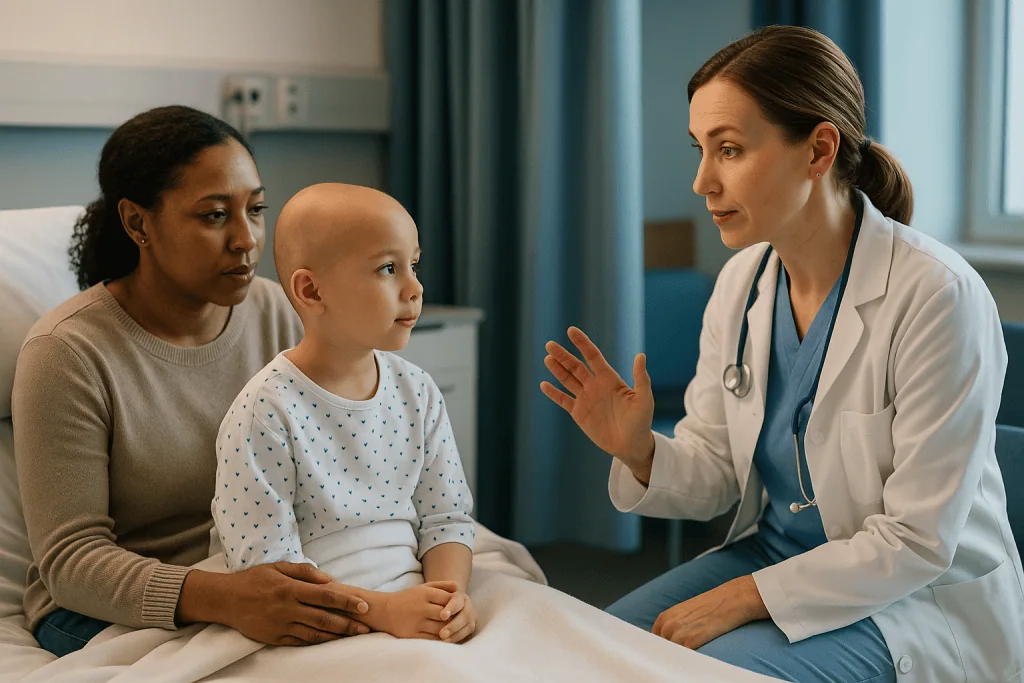
Preparing a child for Wilms tumor surgery works best when explanations are short, honest and matched to the child's age, when familiar comfort items and routines travel to the hospital, and when parents follow the surgical team's exact instructions on fasting, bathing and medicines the day before. Children cope better when they know what will happen, who will be there and that the operation removes the tumor, not a punishment for anything they did.
The night before, a four-year-old lines up her stuffed animals on the bed and asks whether the rabbit can come too. Her mother says yes, then wonders what else she should be saying. That small, ordinary question is often where preparing a child for Wilms tumor surgery really begins: not with medical detail, but with a child trying to make an unfamiliar tomorrow feel safe.
Wilms tumor, also called nephroblastoma, is the most common kidney cancer in children, and it is usually found in children around three to four years old, according to Mayo Clinic. Surgery to remove the affected kidney is a central part of treatment for most children. For parents, the medical plan is one thing; the emotional plan is another.
This explainer covers both. It walks through what the operation involves, how to talk about it with a toddler, a preschooler or a school-age child, what the day before typically looks like, and what recovery and long-term follow-up usually mean. The decisions stay with your child’s treating team. The words, the rabbit and the calm belong to you.
What actually happens during Wilms tumor surgery?
For most children, the operation is a nephrectomy: the surgical removal of the whole kidney that contains the tumor. Surgeons remove the entire kidney rather than cutting into it because Wilms tumors are soft and can spill cells if the capsule around them breaks, which can change the stage of the disease, as the National Cancer Institute (NCI) explains in its Wilms tumor treatment summary.
The child is asleep under general anesthesia, which is medicine that keeps a person fully unconscious and pain-free during an operation. The surgeon usually makes an incision across the belly rather than the side, so the team can look at the other kidney, check nearby lymph nodes (small filters of the immune system that cancer can travel to) and inspect the liver and the abdominal lining. Samples of lymph nodes are sent to a pathologist, a doctor who examines tissue under a microscope, because their result helps decide what treatment comes next.
The kidney itself, once removed, is also examined for its cell pattern. Wilms tumors are described as having either favorable or anaplastic histology; anaplastic means the cells look highly abnormal, and it makes treatment more intensive, according to the NCI.
In children whose tumor affects both kidneys, or who have a single kidney, surgeons aim for nephron-sparing surgery, which means removing the tumor while keeping as much working kidney tissue as possible. That approach almost always follows chemotherapy given first to shrink the tumor.
How long the operation takes varies with the size of the tumor and what the surgeon finds. Your team will give you an estimate, but the waiting room clock rarely matches it exactly, and a longer wait is not by itself a bad sign.
Who has surgery first, and who is usually asked to wait?
Two well-established pathways exist, and the difference between them confuses many families reading online. In the approach followed by the Children’s Oncology Group in North America, surgery is usually the first step when the tumor is confined to one kidney and looks removable on scans, with chemotherapy following once the exact stage is known, as the NCI treatment summary describes. In the approach used across much of Europe, children often receive several weeks of chemotherapy before surgery so the tumor shrinks and firms up first.
Neither pathway is ‘better’ in a way a parent needs to weigh; both are supported by large cooperative trials, and the choice usually depends on where a child is treated and the protocol the team follows. The NCI notes that children in both systems have similar long-term outcomes, though this explainer deliberately avoids quoting figures that vary by stage and histology.
Children are more likely to be asked to wait for surgery when:
- the tumor is in both kidneys, where the goal is to save kidney tissue on each side;
- the tumor has grown into major blood vessels such as the vena cava, the large vein returning blood to the heart;
- the tumor is so large that removing it immediately carries a high risk of rupture;
- the child is too unwell from anemia, high blood pressure or another problem for a long anesthetic.
Waiting in these situations is a safety decision, not a delay in care. Chemotherapy given first is active treatment, and the team keeps re-scanning to choose the moment when surgery is most likely to be clean and complete. If your child has been asked to wait, it is entirely reasonable to ask the team to explain, in plain words, what they hope the waiting will achieve.
Preparing a child for Wilms tumor surgery: start with what they already know
Children pick up more than adults expect. A three-year-old who has had scans, blood draws and whispered phone calls in the kitchen already knows something is different. Preparing a child for Wilms tumor surgery starts by finding out what they think is happening, because the fear they hold is often not the one you would guess.
Ask open questions in a quiet moment: ‘What do you think the doctors are going to do?’ Some children believe a body part will be removed as a punishment. Some think they will wake up during the operation. Some worry about who will feed the dog. Each fear has a plain answer, and correcting a misunderstanding early prevents it from growing.
MedlinePlus, in its guidance on preparing school-age children for procedures, recommends honest, simple explanations given in advance, because unexpected events feel frightening even when they are painless. The timing matters too: very young children do better with preparation close to the day, while older children benefit from more notice so they can ask questions over several conversations.
Use the real words for the real things. ‘You have a lump in your kidney called a Wilms tumor. The doctors are going to take out the kidney with the lump in it. You have two kidneys, and one healthy kidney can do the job.’ Avoid saying the tumor is ‘bad,’ since children can hear that as being bad themselves. ‘Not supposed to be there’ works well.
Repeat the three anchors children need most: what will happen, that you will be there when they wake up, and that the operation is to help them get well. You do not have to explain staging or histology. You have to be the steady voice they trust.
How to explain kidney surgery by age
A toddler and a ten-year-old need entirely different conversations. The table below summarizes what tends to help, drawing on MedlinePlus guidance on age-appropriate preparation.

| Age | Main worry | What helps | When to start |
|---|---|---|---|
| Under 3 | Separation from parents; strange places | Your presence, comfort object, calm routine, brief words like ‘the doctor will fix your tummy’ | The day before or the day itself |
| 3 to 6 | Body damage; punishment; magical thinking | Medical play with a doll or teddy, picture books about hospitals, clear statement that nothing they did caused this | Two or three days before |
| 7 to 12 | Pain, waking up during surgery, missing school and friends | Honest step-by-step walk-through, chance to ask questions, hospital tour or photos if offered | About a week before |
| Teens | Loss of control, privacy, body image, fertility and future | Direct involvement in conversations with the team, time alone with clinicians, respect for their questions | As soon as the plan is known |
Preschoolers are especially prone to what psychologists call magical thinking, the belief that thoughts or misbehavior can cause events. Say out loud, more than once, that the tumor is nobody’s fault.
Medical play is more than a distraction. Letting a child give a teddy an anesthesia mask, put a bandage on its belly and ‘wake it up’ rehearses the sequence in a form the child controls. Many pediatric hospitals have child life specialists, trained professionals who help children cope with medical experiences; ask whether one is available and whether a pre-surgery visit can be arranged.
For older children and teens, honesty about the scar matters. An abdominal incision leaves a visible line that fades over months. Framing it in advance as a mark of something they got through tends to land better than pretending it will not be there.
Comfort items, routines and the words that help
Hospitals are full of things a child cannot control. Comfort comes from the things they can. A well-worn blanket, a specific cup, the same bedtime song sung in a hospital room at the usual time: these small continuities tell a young nervous system that the world still has rules.
Pack the comfort object early and label it. Ask the nursing team whether it can go into the anesthesia room; many units allow a small toy to stay with the child until they are asleep and to be waiting when they wake. If your child uses a pacifier or a bottle, ask about the fasting rules, since even comfort sucking on liquid counts as intake before anesthesia.
Word choice shapes how children interpret sensations. Cleveland Clinic and other pediatric sources encourage neutral, specific language: ‘the medicine will make you feel sleepy’ rather than ‘they will put you to sleep,’ which some children associate with a pet that never came home. Say ‘the doctor will make a small opening’ rather than ‘cut.’ Describe what the child will notice, such as a cool feeling when the numbing cream goes on or the funny smell of the mask, so nothing arrives as a surprise.
Give the child jobs. Choosing which pajamas to pack, deciding whether the rabbit or the bear comes, holding the wristband while the nurse checks it: each is a decision they own. Children who feel they have a role usually cooperate more and cry less.
Keep your own promises small and keepable. ‘I will be there when you wake up’ is possible. ‘It won’t hurt at all’ is not, and a broken promise costs more trust than an honest ‘it might feel sore, and the nurses have medicine to help.’
The day before surgery: fasting, baths and packing
The day before is mostly logistics wrapped around one central rule: follow the fasting instructions exactly. Fasting before anesthesia reduces the risk of stomach contents entering the lungs while a child is unconscious. Cutoff times differ for solid food, formula, breast milk and clear fluids, and they are set by the anesthesia team for your child specifically. Write them on paper, set phone alarms and tell every adult in the house, because a well-meaning grandparent with a cookie at breakfast can postpone the operation.
A bath or shower the evening before, using the soap your team specifies if they specify one, lowers skin bacteria near the incision site. Skip lotions, nail polish and jewelry unless told otherwise; nail polish can interfere with the finger clip that measures oxygen levels.
Medicines deserve their own checklist. Some regular medicines should be taken the morning of surgery with a sip of water and others should be paused; the anesthesia team makes that call for each child, and this is not a decision to make from a general article. Bring a list of everything your child takes, including vitamins and herbal products, since some affect bleeding or anesthesia.
Pack for the child and for yourself. For the child: two sets of loose, front-opening pajamas that will not press on a belly incision, the comfort object, a tablet with downloaded favorites and headphones. For you: a phone charger, snacks you can eat in a waiting room, a notebook for questions and a list of who to call.
Aim for an ordinary evening. A normal dinner before the fasting cutoff, the usual story, the usual bedtime. Children read your face far more than your words, so if you need to fall apart, do it after they are asleep.
The morning of surgery and the anesthesia room
Mornings of surgery move in stages, and knowing the stages steadies everyone. At check-in, nurses confirm identity, weight and allergies, apply a wristband and often place numbing cream on the back of a hand for the intravenous (IV) line, a thin tube into a vein that delivers fluids and medicine. Many children already have a central line, a longer-term tube placed for chemotherapy, and that may be used instead.
The anesthesiologist, a doctor who manages sleep and pain during surgery, will meet you. This is the moment to mention loose teeth, recent coughs or colds, past reactions to anesthesia in the family, and what usually calms your child. A runny nose is not automatically a reason to cancel, but the team needs to know.
How children fall asleep varies. Young children often breathe an anesthetic gas through a mask that smells faintly of plastic and may be scented; older children usually have medicine through the IV. Some units give a small dose of a calming medicine beforehand, a decision the anesthesiologist makes case by case. Many hospitals let one parent accompany the child into the anesthesia room until they are asleep, though policies differ, so ask the day before rather than assume.
The separation is the hardest thirty seconds of the day for most parents. Children who cry as they drift off do not remember it; parents do. Plan what you will do in the waiting time. A walk outside, a phone call to someone steady, a task with a beginning and an end.
Once the child is asleep, the team places a breathing tube and often a catheter to drain urine, both removed before the child is fully awake. You will be told where to wait and how updates will reach you.
What happens after surgery for Wilms tumor?
Children wake in a recovery area where nurses monitor breathing, heart rate and pain. Coming round from anesthesia can involve confusion, tears or nausea for a short while; this settles as the medicine clears. Parents are usually called in once the child is stable enough to be comforted.
The belly will be sore. Pain is managed with a combination of approaches, often including medicine given through the IV in the first day or two and then by mouth, along with the older tools of position, distraction and a parent’s hand. Ask how the team assesses pain in a child too young to describe it; standard pediatric scales use facial expression and behavior, and nurses will tell you what they are watching for.
Bowels are slow to restart after abdominal surgery. Children often begin with clear fluids and progress to normal food as the gut wakes, judged by gas, appetite and the absence of vomiting. Getting out of bed early, even to a chair, helps the lungs and the gut recover.
The pathology report on the kidney and lymph nodes typically takes several days. It determines the tumor’s stage, from I (confined to the kidney and fully removed) through IV (spread to distant organs, most often the lungs), with stage V describing tumors in both kidneys, as the NCI treatment summary outlines. That result sets the plan for chemotherapy, and whether radiation is needed.
Length of stay varies with how quickly a child eats, moves and manages pain by mouth, and the team will give you their expected range rather than a promise. Before discharge you will learn how to care for the incision, what activity is allowed, and when chemotherapy is scheduled to start or resume.
Wilms tumor surgery recovery: the first days and weeks at home
Home recovery has a rhythm. The first few days are mostly rest, gentle walking around the house, and small frequent meals. Appetite returns before energy does. A child who wants to lie on the couch watching the same film four times is behaving normally after major abdominal surgery.
The incision needs to stay clean and dry according to the instructions you were given. Most surgeons use dissolving stitches under the skin with glue or tape strips on top, which peel away on their own. Mild redness along the line and a firm ridge of healing tissue underneath are expected; spreading redness, warmth, swelling or discharge are not, and belong in the ‘call’ list below.
Activity limits protect the healing abdominal wall. Teams commonly ask families to avoid rough play, climbing, bike riding and anything that strains the stomach muscles for a number of weeks, with the exact timing set by the surgeon. Lifting a toddler, if the patient is an older sibling, counts as lifting. School or preschool return depends on energy and on the chemotherapy schedule, since treatment lowers infection defenses.
Chemotherapy, medicines that kill fast-dividing cells, usually begins or resumes within a week or two of surgery depending on the protocol, and radiation to the abdomen or lungs is added for some stages and histologies, according to the NCI. Your oncology team, not the surgeon, leads this phase.
Emotionally, children may regress for a while: clinginess, bedwetting, nightmares or anger about hospital visits. These are normal responses to a hard experience, not signs of lasting damage. Consistent routines, honest answers and, where available, a child psychologist or child life specialist help most children settle within weeks.
Nephrectomy in children: living well with one kidney
One of the first questions children and parents ask is whether a person can live normally with one kidney. The answer, from MedlinePlus and Mayo Clinic, is yes: a single healthy kidney can filter blood, balance fluids and salts and make urine well enough for a normal life, and the remaining kidney typically grows somewhat larger over time to take on the extra work.
Because that kidney is now irreplaceable, long-term care focuses on protecting it. Follow-up visits usually include blood pressure checks, urine tests for protein and blood tests of kidney function. The NCI notes that children who have had a nephrectomy, and especially those who also received abdominal radiation, are at increased long-term risk of high blood pressure and reduced kidney function, which is why these checks continue into adulthood.
Families often ask about sports. There is no single rule. Many teams discuss protective equipment or caution around high-contact activities, while others emphasize that the benefits of activity are substantial and injuries to a kidney are rare. This is a conversation for your child’s own team, and the advice may change as the child grows.
Hydration, a balanced diet and avoiding tobacco in adolescence protect any kidney, and the child with one kidney simply has more reason to follow ordinary healthy habits. Some over-the-counter pain relievers can stress kidneys with heavy or prolonged use; your team will tell you which they prefer your child to avoid and why, and that guidance should travel with the child to every future clinician.
A simple way to explain it to a child: ‘Your kidney is a filter. You had two and now you have one strong one, and we are going to take extra good care of it.’
Wilms tumor late effects: what long-term follow-up looks for
Because most children treated for Wilms tumor grow up, long-term follow-up is part of the plan from the beginning. Late effects are health problems that appear months or years after treatment ends, and they depend on what treatment a child received rather than on the diagnosis alone.
The NCI’s treatment summary describes the main areas that survivorship clinics monitor:
- Kidney function and blood pressure, discussed above, particularly after nephrectomy plus radiation.
- Heart health in children who received anthracycline chemotherapy, a class of medicine used for higher-stage disease that can weaken heart muscle years later; periodic heart ultrasound scans are typical.
- Growth and bone development after radiation to the abdomen or spine, which can affect how bones in the treated area grow.
- Fertility and pregnancy, mainly in girls who received radiation to the abdomen, where the uterus or ovaries were in the treatment field.
- Second cancers, a small but real long-term risk after chemotherapy and radiation.
Children treated with surgery and less intensive chemotherapy alone face a considerably lighter follow-up burden than those who needed radiation and anthracyclines, which is one reason modern protocols try to give each child no more treatment than their stage requires.
Most survivorship programs provide a written treatment summary listing every medicine, dose of radiation and surgery a child received, along with a personalized screening schedule. Ask for this document and keep it. It becomes the key that unlocks appropriate care from adult doctors decades later, when the child is a grown-up who barely remembers the hospital.
What people often get wrong about Wilms tumor and surgery
‘The rule of 10 means every tenth child has it in both kidneys.’ The ‘rule of 10’ is a teaching mnemonic sometimes used in medical training, listing features of Wilms tumor that occur in roughly a tenth of cases: tumors in both kidneys, associated birth differences or genetic syndromes, and so on. It is a memory aid, not a guideline. The NCI reports that bilateral disease occurs in about 5 to 10 percent of children, and the precise figures for other features differ across studies.
‘Wilms tumor and kidney cancer in adults are the same disease.’ They are not. Nephroblastoma arises from immature kidney cells left over from development, which is why it appears in young children. Adult kidney cancer is a different disease with different treatment.
‘Something the parents did caused it.’ Most Wilms tumors occur without any known cause. A minority are linked to genetic changes or syndromes present from birth, according to Mayo Clinic. Diet, pregnancy behavior and vaccines are not causes.
‘If the whole tumor is removed, no other treatment is needed.’ Surgery is one part of a plan. Chemotherapy follows for nearly all children, because microscopic cells can remain even after a complete-looking removal.
‘Chemotherapy before surgery means the doctors are giving up on operating.’ The opposite is true. Pre-surgery chemotherapy is designed to make the operation safer and more complete.
‘A child is too young to understand, so it is kinder not to explain.’ Children who are not told fill the gap with imagination, and imagination is usually worse than reality. Age-appropriate honesty, as MedlinePlus advises, reduces anxiety rather than creating it.
‘Keeping the child inside for months protects them.’ Isolation harms development and mood. Your team will tell you when infection risk from chemotherapy is highest; outside those windows, ordinary childhood is part of recovery.
Questions to ask your care team
Write questions down before appointments, because the moment a surgeon sits across from you, the list in your head tends to evaporate. Bring a second adult if you can; two people remember more than one. Questions families find useful include the following.
- Which pathway is my child on: surgery first or chemotherapy first, and why was that chosen?
- Will the whole kidney be removed, or is nephron-sparing surgery planned? What would change that plan during the operation?
- What exactly are the fasting times for food, milk and clear fluids, and which regular medicines should be given or held on the morning of surgery?
- Can a parent be present in the anesthesia room, and can our child’s comfort object stay with them?
- Is there a child life specialist, and can we arrange a pre-surgery visit or medical play session?
- How will pain be assessed and managed, and how will we know if it is not controlled well enough?
- What is the expected range for the hospital stay, and what needs to happen before discharge?
- When will the pathology results be ready, who will explain them to us, and how will they change the treatment plan?
- What activity restrictions apply at home, and for roughly how long?
- What signs after discharge should prompt a call, and what number do we call at night or on weekends?
- What long-term follow-up will our child need, and will we receive a written treatment summary?
- Who can help our other children understand what is happening?
You are allowed to ask the same question twice, and to ask for an answer in plainer words. A team that treats children expects to explain things more than once.
When to call your doctor
After discharge, most days will be quiet and unremarkable, and most worries will turn out to be normal healing. A short list of signs, drawn from general post-operative guidance published by MedlinePlus and Mayo Clinic, should prompt a call to your child’s team or the after-hours number they gave you, without waiting for the next appointment.
Call promptly if your child has a fever, especially once chemotherapy has started, because treatment lowers the white blood cells that fight infection and a fever can signal a serious infection that needs same-day assessment. Your team will give you the specific temperature threshold they use; treat it as a hard line, not a judgment call.
Call the same day for redness spreading away from the incision, warmth, swelling, pus or an opening in the wound; for repeated vomiting or refusal of all fluids; for a belly that becomes swollen, hard or increasingly painful; for no bowel movement together with a distended abdomen and vomiting; or for pain that is not controlled by the medicine the team prescribed.
Seek emergency care immediately for difficulty breathing or fast breathing at rest, blue or gray lips, a child who is unusually drowsy and hard to wake, blood in vomit or stool, very little urine over many hours, or a sudden change in behavior that frightens you.
Trust the instinct that something is off. Parents of children with cancer are generally very good at noticing change, and pediatric oncology teams would far rather field a call that turns out to be nothing than miss one that mattered. Keep the after-hours number on the refrigerator and in your phone, and make sure every caregiver knows where it is.
Frequently asked questions
What is the most common cancerous kidney tumor in children, also known as nephroblastoma?
Wilms tumor, also called nephroblastoma, is the most common cancerous kidney tumor in children. It develops from immature kidney cells left over from development before birth, which is why it appears mainly in young children, most often around ages three to four according to Mayo Clinic. It is a different disease from the kidney cancers seen in adults, with its own staging system and treatment plans.
What is the 'rule of 10' for Wilms tumors?
The ‘rule of 10’ is a memory aid used in medical teaching, listing features of Wilms tumor that appear in roughly one in ten cases, such as tumors in both kidneys or an associated genetic syndrome. It is not a clinical guideline. The National Cancer Institute reports bilateral disease in about 5 to 10 percent of children, and the exact figures for other features vary between studies, so treat the rule as an approximation.
What happens after surgery for Wilms tumor?
After surgery, children recover from anesthesia under monitoring, receive pain management, and gradually restart fluids and food as the bowel wakes up. The removed kidney and lymph nodes go to pathology, and that report, usually available within several days, sets the tumor’s stage and determines the chemotherapy plan and whether radiation is needed. Families receive incision care and activity instructions before discharge, and oncology follow-up begins soon after.
How long does Wilms tumor surgery recovery take in children?
Recovery from a nephrectomy varies by child and by what other treatment follows. The hospital stay depends on how quickly a child eats, moves and manages pain with medicine by mouth, and your team will give an expected range rather than a fixed number. At home, teams usually restrict rough play and lifting for a period of weeks set by the surgeon, while chemotherapy typically begins or resumes within a week or two, according to the National Cancer Institute.
What are the potential late effects of Wilms tumor treatment?
Late effects depend on the treatment given. The National Cancer Institute lists reduced kidney function and high blood pressure after nephrectomy and abdominal radiation, heart muscle weakening after anthracycline chemotherapy, altered bone growth after radiation, fertility and pregnancy effects after radiation to the abdomen in girls, and a small long-term risk of second cancers. Children treated with surgery and less intensive chemotherapy alone have fewer of these risks and a lighter monitoring schedule.
Is nephrectomy in children safe, and can my child live with one kidney?
Yes, children can live a normal life with one healthy kidney, which typically grows somewhat to take on the extra work, according to MedlinePlus and Mayo Clinic. Nephrectomy is a major operation with the usual surgical risks of bleeding, infection and anesthesia complications, which the surgical team will discuss with you. Afterward, follow-up focuses on protecting the remaining kidney with regular blood pressure, urine and blood tests into adulthood.
How do I explain Wilms tumor surgery to a preschooler?
Use short, concrete, honest sentences two or three days before surgery. Explain that a lump called a Wilms tumor is in one kidney, that the doctors will take that kidney out while the child is in a special sleep, and that the other kidney can do the job. Say clearly that nothing the child did caused it. Medical play with a doll or teddy lets a preschooler rehearse the sequence in a form they control.
What should my child eat and drink the day before Wilms tumor surgery?
Follow the anesthesia team’s fasting instructions exactly, because cutoff times differ for solid food, formula, breast milk and clear fluids and are set for your child specifically. A normal dinner before the food cutoff and the usual bedtime routine are ideal. Write the times down, set alarms and tell every adult in the household, since an accidental snack in the morning can mean the operation has to be postponed.
Can a parent stay with the child during anesthesia?
Many pediatric units allow one parent to accompany the child into the anesthesia room until they are asleep, and to be present in recovery once the child is stable, but policies differ between hospitals and can depend on the child’s age and medical situation. Ask the day before rather than assuming, and ask whether a comfort object can stay with the child. Knowing the answer in advance avoids a difficult surprise on the morning.
Why does my child need chemotherapy if the surgeon removed the whole tumor?
Surgery removes the visible tumor, but microscopic cancer cells can remain in lymph nodes or elsewhere even after a complete-looking operation. Chemotherapy, which uses medicines that kill fast-dividing cells, targets those remaining cells, and the National Cancer Institute notes it is part of treatment for nearly all children with Wilms tumor. The exact regimen depends on the tumor’s stage and cell pattern, and the oncology team decides it after the pathology report.
References
This article is for general information only and is not a substitute for professional medical advice. Please consult a qualified doctor about your individual situation.

More from the Blog

Bladder Removal or Bladder Preservation? How Specialists Compare the Two Approaches
For muscle-invasive bladder cancer, specialists compare radical cystectomy (removing the bladder, usually after chemotherapy) with bladder preservation, most often trimodality therapy combining tumor resection,…

Induction Chemotherapy for Acute Myeloid Leukemia: What the First Hospital Weeks Involve
AML induction chemotherapy is an intensive first treatment given in hospital, usually as a continuous course lasting about a week, followed by several weeks…
Surgical Oncology Explained: How a Cancer Operation Is Planned Within a Multidisciplinary Team
Cancer surgery is planned by a multidisciplinary team rather than a single surgeon. Pathologists confirm the diagnosis from a biopsy, radiologists stage the cancer…
Speech and Swallowing Therapy After Head Cancer Treatment: How Rehabilitation Works
Swallowing therapy after head and neck cancer is a rehabilitation program led by a speech-language pathologist. It combines a formal swallow assessment, targeted exercises…

Life After Endometrial Cancer Treatment: Surgical Menopause, Energy and Long-Term Care
Menopause after endometrial cancer surgery happens when both ovaries are removed along with the uterus, so estrogen falls within days rather than over years.…

When Does a Parotid Gland Tumor Need Parotidectomy Surgery Rather Than Monitoring?
A parotid gland tumor usually needs parotidectomy surgery when biopsy or imaging suggests cancer, when a benign tumor such as a pleomorphic adenoma is…