

Preparing for a Female Hair Transplant: Scalp Analysis, What to Pause and the Days Before
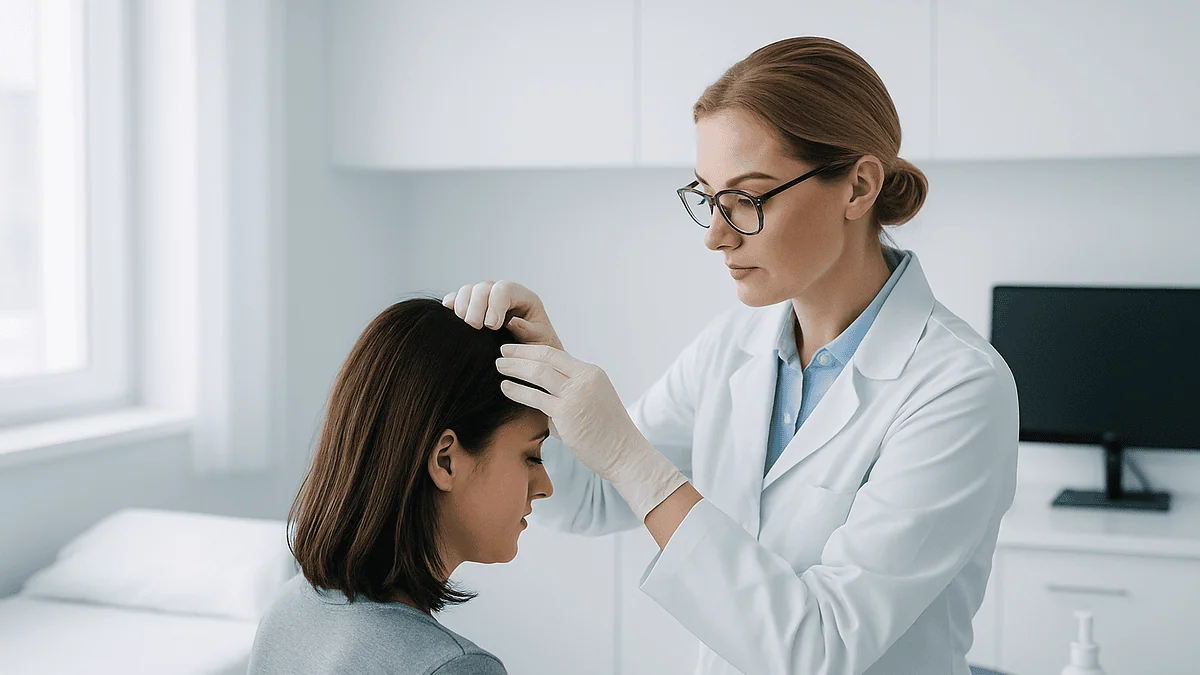
Key Takeaways
- Harvard Health estimates about one-third of women experience noticeable hair loss at some point, and because the causes are more varied than in men, preparation begins with a firm diagnosis rather than a surgery date.
- A scalp analysis uses a magnifier called a dermatoscope to measure how many hairs have miniaturised, compares hair diameter at the crown with the back of the head, and counts follicular units per square centimetre in the donor zone.
- Iron stores and thyroid function are routinely checked because NHS and Mayo Clinic both list iron deficiency and thyroid disease among treatable causes of hair loss that can add shedding on top of pattern thinning.
- Aspirin, non-steroidal anti-inflammatories and supplements such as fish oil, vitamin E and ginkgo increase bleeding, but any pause in a prescribed medicine must be agreed with the prescriber, never decided alone.
- Women usually keep their length; for FUE only a concealable section of the donor area is typically shaved, and non-shaven techniques exist at the cost of longer sessions and fewer grafts.
- MedlinePlus notes transplanted hairs commonly shed within two to three weeks as follicles reset, and with scalp hair growing about half an inch a month, the visible result builds over many months, not weeks.
Preparing for a female hair transplant usually begins weeks ahead with a scalp analysis to confirm the cause of thinning and check the donor area, then blood tests, a medicine and supplement review with the surgical team, and pausing smoking and alcohol as advised. In the final days, people are typically asked to stop hair colour and styling products, arrange transport, and follow the team's specific written instructions.
The appointment card sits under a magnet on the fridge. She keeps walking past it, then stopping, then walking on again. Somewhere between the third and fourth pass she realises the question is no longer whether to have the procedure. It is what she is supposed to do with the next six weeks.
That gap between decision and surgery day is where female hair transplant preparation actually lives, and it is longer and quieter than most people expect. It involves a magnified look at the scalp, a blood test or two, a candid conversation about every tablet and supplement in the bathroom cabinet, and a run of small, practical choices about hair colour, coffee and who is driving.
None of it is dramatic. Most of it is about making sure the thinning has the right name, the donor hair is sound, and the body arrives calm, well fed and free of anything that makes bleeding or healing harder than it needs to be.
Why female hair transplant preparation starts with a diagnosis, not a date
Women lose hair for more reasons than men do, and that single fact shapes the whole preparation period. Harvard Health estimates that about one-third of women experience noticeable hair loss at some point, rising to as many as two-thirds after menopause. Some of that is female pattern hair loss, a gradual, hormone-influenced thinning across the crown and parting. Some is telogen effluvium, a temporary shed triggered by illness, childbirth, surgery or crash dieting, in which large numbers of hairs enter the resting phase at once. Some is alopecia areata, an autoimmune condition in which the immune system attacks follicles in patches.
A transplant moves living follicles from one place to another. It does not change the underlying process. That is fine when the process is stable pattern thinning with a healthy back-of-head donor zone. It is a poor fit when the shedding is diffuse and temporary, because the hair may recover on its own, or when the condition is autoimmune and active, because transplanted follicles can be attacked just like the originals. NIH’s NIAMS describes alopecia areata as unpredictable, with hair that may regrow and fall out again.
So the first real step is a proper diagnosis. Your dermatologist or surgeon will want to know when the thinning began, whether it came on suddenly or over years, whether your parting has widened, and what else changed around that time: a pregnancy, a new medicine, a thyroid problem, a heavy period pattern. Bring photographs from earlier years if you have them. A dated series of holiday snaps often tells the story more honestly than memory does.
Only once the cause is named does the calendar matter.
How a hair transplant for women actually works
The principle is borrowed from gardening. Hair on the back and sides of the scalp is usually genetically resistant to the hormonal signal that shrinks follicles at the crown, so when it is moved to a thinning area it tends to keep behaving as it did in its original home. Surgeons call the resistant zone the donor area and the thinning zone the recipient area.

Follicles are moved in follicular units, the natural clusters of one to four hairs that grow together from a single opening. There are two main harvesting methods. Follicular unit extraction, usually shortened to FUE, removes units one at a time with a tiny circular punch. Follicular unit transplantation, or FUT, removes a narrow strip of scalp that is then divided into units under magnification, leaving a linear scar hidden by surrounding hair. Both are performed under local anesthetic, meaning the scalp is numbed while you stay awake, and MedlinePlus notes a session typically lasts several hours.
The units are placed into small incisions in the recipient area, angled to match how your existing hair lies. For women, who usually keep their surrounding hair long, the recipient area is often worked through parted rows rather than a fully shaved scalp.
Then comes the part that surprises people. MedlinePlus explains that the transplanted hairs commonly fall out within two to three weeks, because the follicles enter a resting phase after the shock of being moved. New growth appears over the following months. Mayo Clinic cautions that results take time, that more than one session is sometimes needed, and that no surgeon can guarantee perfectly even growth.
Who a hair transplant is usually for, and who is usually asked to wait
The clearest candidates are women with stable female pattern hair loss, a dense and healthy donor area at the back of the head, realistic expectations about density, and no active scalp disease. Women with a high hairline from birth, or with thinning after a facelift or brow lift, are also commonly assessed, because the loss in those cases is localised and the donor zone is untouched.
Several groups are usually asked to wait, and the reasons are medical rather than cosmetic.
- Diffuse thinning across the whole scalp, including the back, leaves no reliable donor zone. Moving hair from a thinning area to another thinning area achieves little.
- Recent telogen effluvium, whether after childbirth, a fever, weight loss or a stressful period, often reverses on its own within months. Cleveland Clinic describes this kind of shedding as typically temporary. Operating during the shed risks transplanting into hair that would have returned anyway.
- Active alopecia areata, scarring alopecias such as lichen planopilaris or frontal fibrosing alopecia, and untreated scalp inflammation are usually treated and quietened first, often for a year or more, because grafts placed into inflamed skin can be lost.
- Untreated iron deficiency, thyroid disease or other reversible causes are addressed before surgery, since correcting them may improve the hair and changes the baseline the surgeon is planning against.
- Pregnancy and breastfeeding are generally reasons to postpone, both because of the anesthetic and medicines involved and because postpartum shedding muddies the picture.
Being asked to wait is not a refusal. In many of these cases it is the more careful path, and the interval is used for treatment that may leave you needing fewer grafts, or none, later on.
What a scalp analysis before hair transplant looks for
A scalp analysis is closer to a dermatology consultation than a beauty consultation, and it is worth knowing what is happening while someone peers at your parting through a lens.
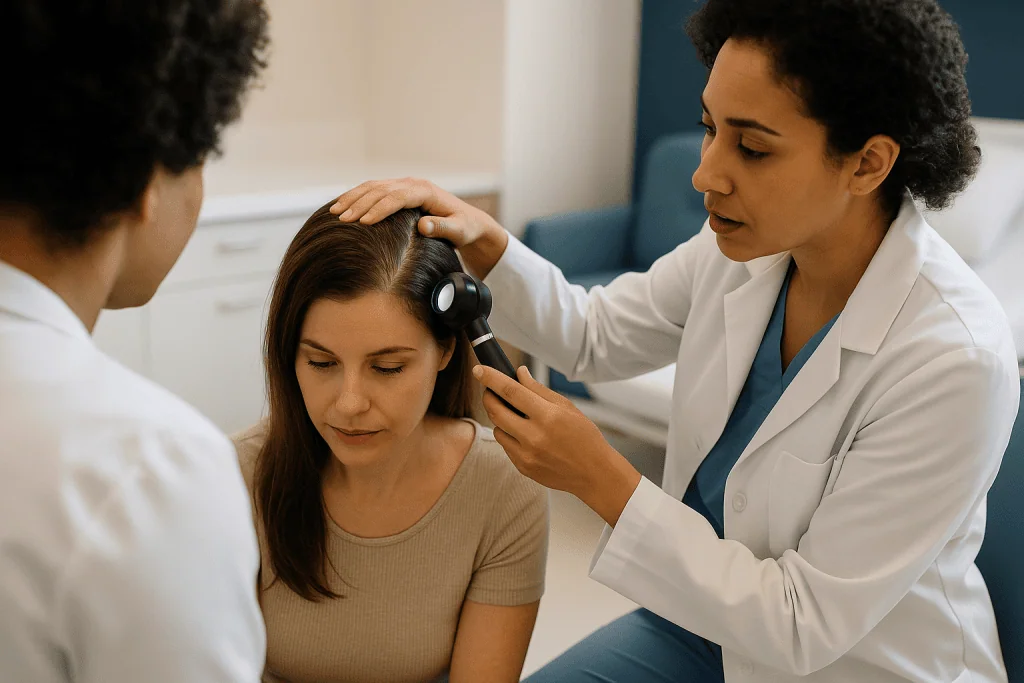
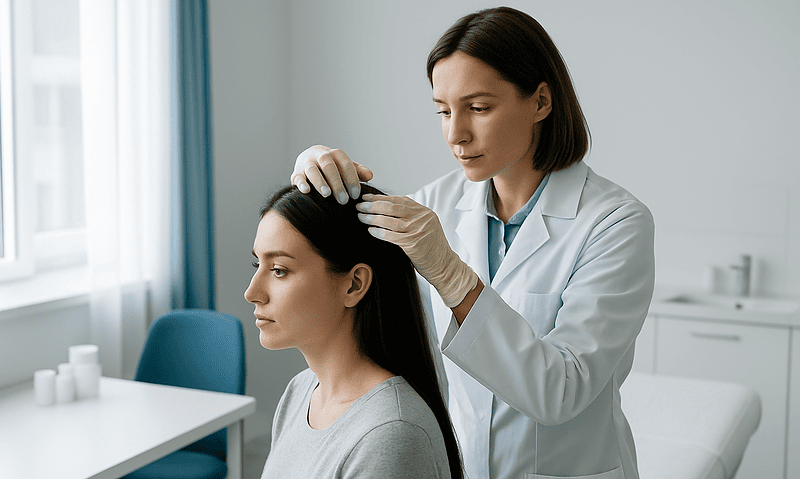
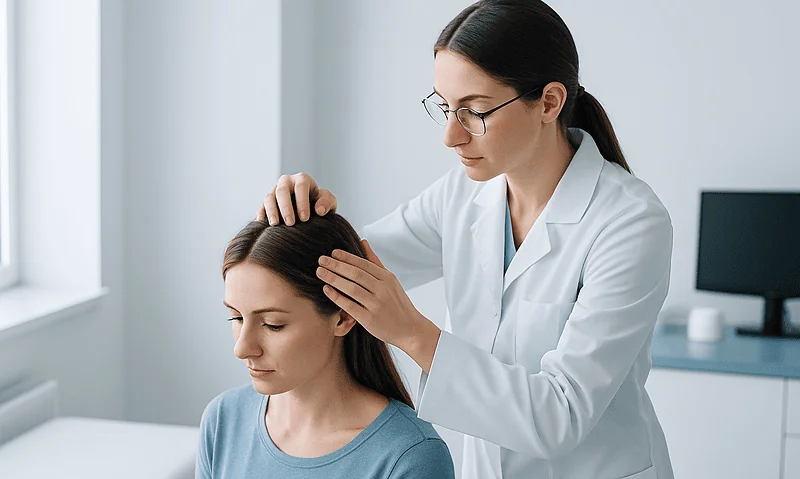
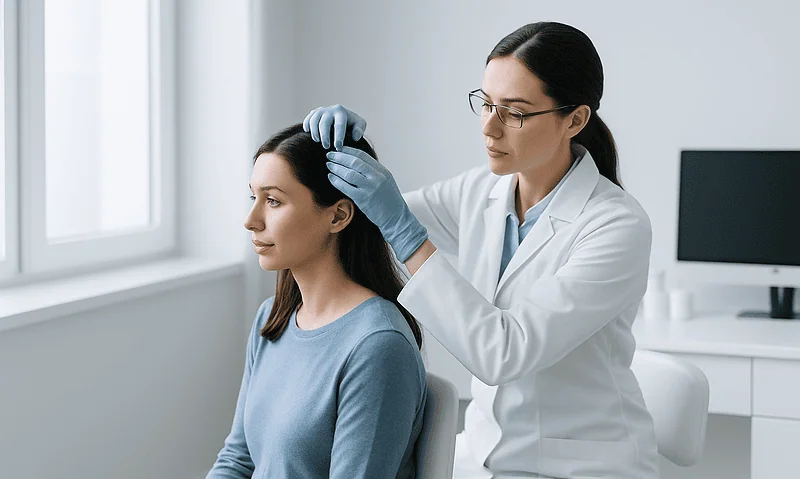
The central tool is a dermatoscope, a handheld magnifier with polarised light, sometimes attached to a camera and software. Looking at hair this way is called trichoscopy. Under magnification the clinician is checking a handful of specific things. The first is miniaturization: the proportion of hairs that have become finer and shorter than their neighbours, which is the signature of pattern hair loss. The second is hair diameter variation across the crown compared with the back of the head; a marked difference supports pattern thinning, while uniform thinning everywhere points elsewhere. The third is the number of hairs emerging from each follicular opening, since healthy scalp shows many two- and three-hair units and a sparse scalp shows more singles.
The team will also look for signs that change the plan entirely: redness or scaling around follicles, loss of the follicular openings themselves (a sign of scarring), broken hairs and yellow dots typical of alopecia areata, or exclamation-mark hairs. Any of these can lead to a biopsy, a small sample of scalp removed under local anesthetic for examination, before anything else is scheduled.
Photographs are taken under standardised lighting from set angles. Donor density is measured, often as follicular units per square centimetre, to estimate how many grafts can be safely harvested without visibly thinning the back. A gentle pull test, in which a small bundle of hairs is tugged to see how many release, gives a rough sense of whether shedding is active.
Arrive with clean, product-free hair for this visit unless told otherwise. Dry shampoo, sprays and root-touch-up powders obscure exactly what the lens needs to see.
Which blood tests are usually asked for, and why
Blood tests before a hair transplant serve two purposes: finding treatable causes of thinning that the scalp analysis cannot see, and checking that surgery under local anesthetic is safe for you.
On the first front, iron status leads the list. NHS guidance notes that iron deficiency anaemia is common in women with heavy periods and can be associated with hair loss, and ferritin, the stored form of iron, is often checked alongside a full blood count. Thyroid function matters because both an underactive and an overactive thyroid can thin hair, and Mayo Clinic lists thyroid problems among the medical conditions that cause hair loss. Depending on the history, a clinician may add vitamin D, vitamin B12, zinc, or hormone tests if there are signs of excess androgen such as irregular periods or acne, which can point to polycystic ovary syndrome. Correcting a deficiency does not reverse pattern hair loss, but it can stop an avoidable extra layer of shedding and it changes what the surgeon is planning against.
On the second front, the team is screening for anything that raises surgical risk: a clotting profile if you have a bleeding history or take medicines that affect clotting, blood glucose if diabetes is known or suspected because it slows wound healing, and infection screening as part of routine surgical safety policy in many settings.
Results can take a week or two, and an abnormal result may push the surgery back while it is addressed. That delay can feel frustrating after months of deliberation. Treat it as the point of the exercise. A transplant into a scalp that is also shedding from untreated anaemia or thyroid disease is a transplant working against the tide.
Medicines and supplements: what your team may ask you to pause
Here is the rule that overrides everything else in this section: never stop, start or change a prescribed medicine on your own before surgery. The surgical team and, where relevant, the clinician who prescribed the medicine make that call together, and they write it down.
What they are weighing is bleeding and healing. Thousands of small incisions are made in the scalp during a transplant, and anything that thins the blood makes the field harder to see and grafts harder to seat. MedlinePlus notes that people preparing for hair transplant surgery are commonly told about medicines that increase bleeding, including aspirin, non-steroidal anti-inflammatory drugs such as ibuprofen, and prescription anticoagulants. For someone taking a blood thinner after a clot, a stent or for atrial fibrillation, the risk of pausing may be far greater than the risk of a bloodier scalp, and the answer may be to proceed with the medicine continued, or to postpone. That is precisely why the decision belongs with the treating team.
Supplements deserve the same honesty. Fish oil, vitamin E, ginkgo, garlic and high-dose ginger are all associated with increased bleeding tendency, and many surgical teams ask for them to be paused in the run-up. Biotin does not affect bleeding but can interfere with certain laboratory tests, so mention it before your blood is drawn.
Topical minoxidil, which works by widening scalp blood vessels and prolonging the growth phase of follicles, is sometimes paused for a few days around surgery because it can increase scalp bleeding, then resumed once the grafts have settled; Harvard Health notes it takes months to show any effect either way. Oral treatments for female pattern hair loss, such as anti-androgens, are usually continued but must be declared.
Write a complete list, including herbal teas and “hair vitamins”, and hand it over. Omissions, not the medicines themselves, cause the problems.
Smoking, alcohol and caffeine: what to avoid before hair transplant surgery
The three habits that come up at every pre-operative consultation are smoking, alcohol and, less often, caffeine. They are asked about for different reasons, and the honest evidence behind each differs too.
Smoking is the clearest case. Nicotine narrows small blood vessels and carbon monoxide reduces the oxygen the blood can carry. Transplanted follicles have no blood supply of their own for the first days; they survive by soaking up oxygen and nutrients from the surrounding tissue until new vessels grow in. A scalp with constricted vessels is a harder place to survive. Surgical teams across specialties ask people to stop smoking, including vaping nicotine, for a period before and after any procedure, and MedlinePlus lists stopping smoking among the standard instructions before hair transplant surgery. The exact interval is set by your team. If you have struggled to stop before, say so; there is support available through your own doctor, and the surgery date can be a useful anchor.
Alcohol is asked about because it dilates blood vessels, which increases bleeding, and because it dehydrates. Most teams ask for it to be avoided for at least several days before surgery. Alcohol also interacts with the sedatives sometimes offered alongside local anesthetic.
Caffeine is the softest of the three. Some surgeons ask for it to be skipped on the morning of the procedure because it can raise heart rate and blood pressure and make people jittery during a long day sitting still. Others do not mind a small cup. If you drink a lot of coffee daily, going abruptly to none can bring on a withdrawal headache, so ask rather than assume.
Recreational drugs, particularly cocaine, should be raised without embarrassment; they interact dangerously with the adrenaline used in local anesthetic solutions.
A typical female hair transplant preparation timeline, at a glance
Every team has its own written protocol, and that document beats anything printed here. The table below simply shows how the usual asks tend to cluster by phase, so the sequence feels less like a scatter of instructions and more like a shape.
| Phase | What usually happens | Why it matters |
|---|---|---|
| Weeks ahead | Scalp analysis with trichoscopy, photographs, donor density measurement; blood tests; full medicine and supplement review; smoking cessation begins | Confirms the diagnosis, rules out reversible causes, estimates safe graft numbers, allows time for results and for vessels to recover from nicotine |
| Around two weeks out | Team confirms which supplements and over-the-counter medicines to pause, and whether any prescribed medicine needs adjustment with the prescriber’s agreement | Most bleeding-related supplements need time to clear; prescribed changes need coordination, not improvisation |
| The final week | Avoid hair colour, bleach, chemical relaxers and hair extensions; keep alcohol out; arrange transport and a few days of light duties | Chemical treatments irritate the scalp the surgeon needs intact; alcohol raises bleeding; you will not drive yourself home |
| The night before | Wash hair with the shampoo you are given or a plain one; no sprays, oils or dry shampoo; early night; lay out a loose button-front top | A clean, product-free scalp reduces infection risk and lets grafts sit; pulling a tight top over your head afterwards is exactly what you must not do |
| The morning | Light breakfast unless told otherwise; take the regular medicines your team has approved; no caffeine if asked; arrive with unstyled hair | Low blood sugar during a long procedure causes faintness; approved medicines protect your general health |
Notice how much of the work sits in the earliest phase. The final days are mostly about not undoing it.
Hair colour, styling and the shaving question women ask most
Do you have to shave your head for a hair transplant as a woman? Usually not the whole head, and for many women not visibly at all, though the answer depends on the technique and the size of the area being treated.
For FUT strip harvesting, only the strip itself is trimmed short, and the hair above it is left long enough to fall over the site. For FUE, a small section of the donor area at the back is often shaved so the punch can see each follicular unit, and the surrounding hair is clipped up and released afterwards to hide it. Some surgeons offer non-shaven FUE, in which individual hairs are trimmed as they are harvested, which takes longer and may limit the number of grafts per session. In the recipient area, most women keep their length and the grafts are placed between existing hairs.
Ask specifically what your surgeon plans, and ask to see how the donor shave will be concealed. This is one of the questions where a vague answer is a reason to press.
Colour is the other big one. Permanent and semi-permanent dyes, bleach and chemical relaxers irritate the scalp and can cause low-grade inflammation that lingers for days. Most teams ask for none in the final week or two before surgery, and none afterwards until the scalp has fully healed, which is typically several weeks. If roots are a worry, colour early in the preparation window rather than late. Root-cover powders and sprays should also stop in the last days because they coat the skin the surgeon needs to see.
Extensions, weaves and tight braids need to come out well beforehand. They obscure the donor area, and tension on follicles is itself a cause of thinning, known as traction alopecia, that the analysis needs to identify.
The days before: sleep, food, logistics and the small things
With the medical groundwork done, the last few days become oddly domestic.
Sleep first. The procedure is long, you will be lying or sitting still for hours, and local anesthetic injections are easier to tolerate when you are rested rather than wired. Two or three unremarkable early nights do more for the day than any special ritual.
Eat normally. Unless your team has planned sedation and asked you to fast, a proper breakfast on the morning matters because low blood sugar during a long procedure is a common reason people feel faint. Bring a snack if the team allows eating during breaks. Hydrate well the day before; well-hydrated skin is easier to work with and you will feel better afterwards.
Clothing seems trivial until the evening of surgery. You will not be able to pull anything over your head for a while, so a shirt or blouse that buttons or zips at the front is the single most useful thing to lay out. Avoid wool or anything that sheds fibres onto a healing scalp.
Transport is non-negotiable. You may have been given a sedative, your scalp will be numb and possibly bandaged, and you should not drive. Arrange a lift and, ideally, someone to stay with you the first night.
Work and life. Most teams suggest a few days of light activity with no bending forward, heavy lifting, hot baths or vigorous exercise, since all of these raise blood pressure in the scalp and can dislodge grafts in the first days. Reschedule the gym, the school run that involves lifting a toddler, and the big presentation. Sort out a way to sleep semi-upright, with an extra pillow or a travel neck pillow, to reduce swelling.
Finally, read the written instructions twice and phone with any question, however small. Teams would far rather answer it than fix it.
What the first days and weeks after a hair transplant usually look like
Knowing the shape of the recovery helps you plan the preparation, so here is the usual arc in neutral terms, with the caveat that your team’s aftercare sheet governs the details.
The first two to three days are about protecting the grafts. Small scabs form around each one within a day. Swelling of the forehead, sometimes drifting down to the eyelids, is common on the second to fourth day and settles on its own; sleeping semi-upright reduces it. Mild soreness and tightness at the donor site are expected, and your team will tell you which pain relief is compatible with healing. Mayo Clinic lists bleeding, bruising, swelling and infection among the recognised risks, along with the possibility of unnatural-looking tufts if grafts are poorly placed.
Washing usually starts gently after the first day or two, with a specific technique of pouring rather than spraying, and no rubbing. The scabs lift over roughly a week to ten days.
Then the phase that unsettles people: shedding. MedlinePlus notes that the transplanted hairs typically fall out within two to three weeks. This is expected. The follicle has survived; the hair shaft it arrived with has been shed as the follicle resets. Some people also notice temporary shedding of their own surrounding hair, known as shock loss, which usually recovers.
New growth is slow because hair itself is slow. Cleveland Clinic gives normal growth as about half an inch a month, so the early months look much as they did before, and the visible result builds gradually across the year. Mayo Clinic notes that results take several months and that a second session is sometimes recommended.
Hair colour, tight styles and heat tools return only when the team says the scalp is ready.
What people often get wrong about female hair transplant preparation
A handful of misunderstandings surface again and again in consultations. Correcting them early saves disappointment later.
The first is that a transplant treats the hair loss. It does not. It relocates hair that is resistant to the process, but female pattern hair loss continues in the surrounding native hair. That is why many surgeons ask women to be on, or at least to have discussed, medical treatment for female pattern hair loss before and after surgery, and why they plan grafts with future thinning in mind. Harvard Health is blunt that topical minoxidil is the only widely approved topical treatment for the condition and that it slows loss rather than restoring a full head.
The second is that more grafts is always better. The donor area is finite. Harvesting too densely leaves the back of the head visibly thin, and for women who wear their hair up or short that is a real cost. A conservative number that respects the donor zone is a sign of good planning, not timidity.
The third is that supplements are harmless because they are “natural”. Several increase bleeding. Declare all of them.
The fourth is that stopping a prescribed blood thinner for a week is a small thing. For someone with a clotting history it may be the most dangerous part of the whole undertaking. Only the prescribing clinician can weigh that.
The fifth is that shedding at week two means failure. It is expected physiology.
The sixth is that a striking online photograph tells you what your result will look like. Density, hair calibre, colour contrast with skin and curl all change how much coverage a given number of grafts provides. Fine, straight, dark hair on pale skin shows scalp more readily than coarse, wavy, lighter hair. Your analysis, not someone else’s, predicts your outcome, and even then only as a range.
Questions to ask your care team before you commit
A good consultation leaves room for questions and answers them without flinching. These are the ones that tend to matter most for women, grouped loosely by theme.
On diagnosis: What type of hair loss do you believe I have, and how confident are you? Did the trichoscopy show anything that suggests inflammation, scarring or active shedding? Would a biopsy change the plan? Should any blood results be treated first, and would treating them change how many grafts I need?
On candidacy and timing: Is my donor area dense enough, measured how? Is now the right time, or would waiting six to twelve months on medical treatment give a clearer picture? How will you plan for thinning that continues around the grafts?
On technique: FUE or FUT for me, and why? How much of the donor area will be shaved, and how will it be concealed? How many grafts do you propose, and what is the ceiling for my donor zone over a lifetime?
On preparation: Which of my medicines and supplements should be paused, from when, and who is coordinating that with my other doctors? What exactly should I do about smoking, alcohol, hair colour and washing in the final week? Will I be sedated, and should I fast?
On safety: Who performs the extraction and placement, and what are their qualifications? What is the plan if I have a reaction to the local anesthetic? Who do I call at midnight if something worries me?
On afterwards: What is the realistic range of density I might expect, and when? What would make you recommend a second session? What complications have you seen, and how were they managed?
Write the answers down or bring someone who will.
When to call your doctor
Most of the preparation period passes without any medical drama, and most recoveries are uneventful. A few situations, though, need a call to the surgical team or your own doctor rather than a wait-and-see approach.
Before surgery, contact the team if you develop a fever, a cold sore, a skin infection, folliculitis or any new rash on the scalp; if you start a new medicine, particularly one that affects bleeding; if you find you are pregnant; or if you have been unable to stop smoking as agreed. Any of these may change the plan, and the team would rather postpone than proceed into avoidable risk.
After surgery, seek prompt advice for bleeding that soaks through a dressing and does not settle with gentle pressure, spreading redness, warmth or pus around grafts or the donor site, a fever, pain that worsens rather than eases after the first two days, or swelling that is one-sided, rapidly enlarging or affecting your vision.
Seek emergency care immediately, without waiting to reach the surgical team, for signs that suggest a severe allergic reaction to anesthetic or medicines: swelling of the lips, tongue or throat, difficulty breathing, widespread hives, dizziness or collapse. If a prescribed blood thinner was paused for surgery, treat sudden chest pain, breathlessness, a swollen painful calf, facial drooping, arm weakness or slurred speech as emergencies too.
Every one of these decisions, from whether to pause a medicine to whether a scab looks normal, sits with the treating team who know your scalp and your history. Their phone number belongs on the fridge next to the appointment card.
Frequently asked questions
What does female hair transplant preparation involve?
It usually involves a scalp analysis to confirm the type of hair loss and measure donor density, blood tests for reversible causes such as iron deficiency or thyroid disease, a full review of medicines and supplements with the surgical team, stopping smoking and alcohol as advised, and avoiding hair colour and styling products in the final week. The team provides written instructions, and those override any general guide.
Is a hair transplant for women different from one for men?
The surgical technique is the same, but the assessment is more involved because women lose hair for a wider range of reasons, many of them temporary or medical. Women also more often have diffuse thinning that includes the donor area, which may make a transplant unsuitable. Most women keep their hair length during the procedure, with only a concealable part of the donor area trimmed.
What is checked during a scalp analysis before hair transplant?
The clinician uses a magnifying dermatoscope to look for miniaturised hairs, differences in hair thickness between the crown and the back of the head, the number of hairs per follicular opening, and signs of inflammation or scarring. Donor density is measured, standardised photographs are taken, and a gentle pull test may indicate whether shedding is active. A biopsy is sometimes arranged if the picture is unclear.
What should I avoid before hair transplant surgery?
Teams commonly ask people to stop smoking and nicotine vaping well ahead, avoid alcohol for several days, pause supplements that increase bleeding such as fish oil, vitamin E and ginkgo, and skip hair dye, bleach, relaxers and extensions in the final week or two. Prescribed medicines are never stopped without the prescriber’s agreement. Your own team’s written list is the one to follow.
Do I have to stop my blood thinner before a hair transplant?
Not necessarily, and never on your own. Anticoagulants raise bleeding during surgery, but stopping them can carry a far greater risk for someone with a history of clots, a stent or atrial fibrillation. The surgeon and the prescribing clinician decide together whether to continue, adjust or postpone, and they document the plan. Any change made without them is the most dangerous part of preparation.
Can I colour my hair before a hair transplant?
Colour is generally fine early in the preparation window but is usually avoided in the final one to two weeks, because dyes, bleach and relaxers irritate the scalp the surgeon needs to be calm and intact. Root-cover sprays and powders should also stop in the last days. After surgery, colour waits until the team confirms the scalp has healed, typically several weeks.
Do women have to shave their head for a hair transplant?
Usually not the whole head. For FUE a small section of the donor area at the back is often shaved and then hidden by the hair above it; non-shaven FUE trims individual hairs instead but takes longer. For FUT only the strip is trimmed. In the recipient area most women keep their length. Ask your surgeon exactly what they plan and how the shave will be concealed.
Should female pattern hair loss treatment start before a transplant?
Many surgeons recommend discussing medical treatment first, because a transplant moves resistant hair but does not stop thinning in the surrounding native hair. Harvard Health notes topical minoxidil, which prolongs the follicle’s growth phase, is the main approved topical option and takes months to show effect. Whether to start, continue or pause any treatment around surgery is a decision for the prescribing clinician.
Why do transplanted hairs fall out after a few weeks?
The follicles react to being moved by entering a resting phase and shedding the hair shaft they arrived with. MedlinePlus notes this typically happens within two to three weeks. The follicle itself survives and begins producing new hair over the following months, at the normal rate of roughly half an inch a month. Some temporary shedding of surrounding native hair, called shock loss, can also occur and usually recovers.
When should I postpone a hair transplant?
Postponement is usually advised during pregnancy or breastfeeding, within months of a temporary shed such as postpartum or post-illness telogen effluvium, while alopecia areata or a scarring alopecia is active, and until treatable causes like iron deficiency or thyroid disease have been addressed. Any new scalp infection, fever or cold sore close to the date is also a reason to call the team and reschedule.
References
- MedlinePlus Medical Encyclopedia: Hair transplant
- Cleveland Clinic: Hair Loss in Women
- NHS: Hair loss
- NIH NIAMS: Alopecia Areata
This article is for general information only and is not a substitute for professional medical advice. Please consult a qualified doctor about your individual situation.

Planning This Treatment in Turkey
Our full guide for international patients: techniques, hospital stay, recovery and cost.
More from the Blog

When Can Makeup, Threading and Tinting Restart After an Eyebrow Transplant?
Most surgeons ask patients to keep makeup off a freshly transplanted eyebrow until the grafts have anchored and the small crusts have shed, which…
Preparing for Scalp Micropigmentation: Skin Type Review, Tanning, Alcohol and What to Pause
Scalp micropigmentation preparation usually starts with a skin type review covering tone, scarring tendency and any active scalp condition, followed by a few weeks…
How an Afro Hair Transplant Is Performed: Curved Punches, Curl-Aware Extraction and Placement
An afro hair transplant uses the same follicular unit extraction or strip principles as any hair transplant, adapted to hair that curves beneath the…
Crown Hair Transplant: Why the Vertex Is the Hardest Zone to Restore
A crown hair transplant is considered the most technically demanding restoration because hair at the vertex grows in a spiral whorl that requires a…
What Donor Assessment Before Hair Transplant Repair Reveals: Remaining Capacity and the Plan
Donor area assessment before hair transplant repair is a structured examination of the scalp, beard and sometimes body hair that remains available after earlier…
3,000-Graft Hair Transplants: What That Session Actually Covers
A 3,000-graft session is a large hair transplant, delivering roughly 6,000 to 7,500 individual hairs, since each graft contains one to four. It can…