

Preparing for Skin Graft Surgery: Wound Assessment, Infection Control and Stopping Smoking
Key Takeaways
- A skin graft has no blood supply of its own and survives its first roughly 36 hours by soaking up fluid from the wound bed before new vessels grow in, which is why the wound beneath it must be clean and well perfused.
- WHO-summarized evidence shows people who stop smoking at least four weeks before surgery have fewer complications, and each additional smoke-free week after that improves outcomes by about 19 percent.
- Nicotine constricts the smallest skin vessels within minutes and carbon monoxide displaces oxygen from hemoglobin, so cutting down rather than stopping does not protect a graft.
- Full-thickness grafts, favored on the face for color match, are more demanding of the wound bed than split-thickness grafts, which heal faster but can look shinier and contract.
- The donor site of a split-thickness graft is often the more painful wound in the first week and needs its own dressing plan and infection precautions.
- Blood-thinning medicines, including over-the-counter anti-inflammatory painkillers, can allow blood to collect under a graft, but any change to them must come from the prescribing clinician, never from the patient alone.
Preparing for skin graft surgery centers on three things the evidence consistently supports: a wound bed that is clean, well supplied with blood and free of infection; careful infection control before and after the operation; and stopping smoking as early as possible, since nicotine and carbon monoxide starve a new graft of oxygen. Your surgical team assesses the wound, reviews your medicines and health conditions, and sets the timing.
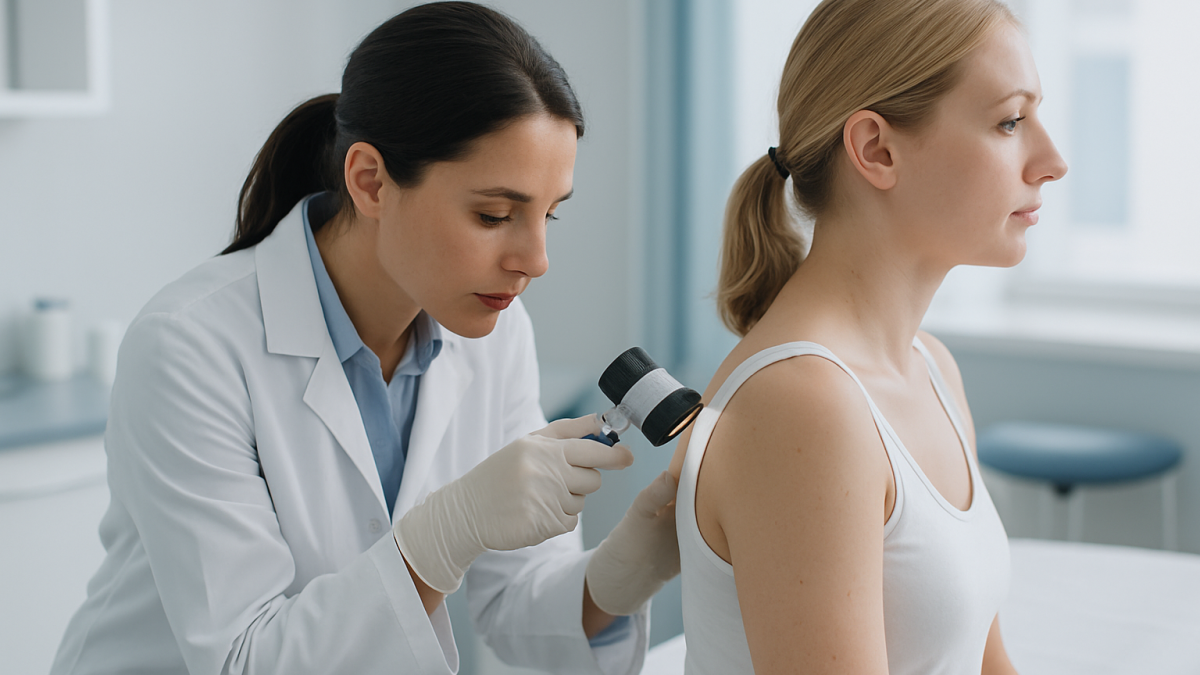
The dressing comes off in the clinic and there it is: a patch of skin on the side of the nose that the surgeon removed last week, along with a small cancer, now an open area about the size of a thumbnail. The nurse photographs it, measures it, presses the edge gently with a cotton bud, and says the words that bring most people to this article: we are thinking about a graft.
Preparing for skin graft surgery feels different from preparing for most operations, because the result depends less on what happens in the operating room and more on what the wound and the body are doing in the days around it. A graft has no blood supply of its own. For the first few days it survives on fluid soaking up from the wound beneath, then on tiny new vessels growing in from below. Anything that disturbs that fragile handshake, infection, smoking, movement, poor nutrition, can undo careful surgical work.
This guide walks through what surgeons actually look for in a wound, how infection is kept out, why cigarettes matter more here than almost anywhere else in surgery, and what the days afterward tend to look like.
What is a skin graft and how does it actually work?
A skin graft is a piece of healthy skin taken from one part of the body, called the donor site, and placed over a wound somewhere else, called the recipient site. Unlike a flap, which is moved with its own blood vessels still attached, a graft is completely detached. It arrives at its new home with no circulation at all.
What happens next is a quiet biological race. In the first roughly 24 to 48 hours the graft stays alive by absorbing plasma from the wound bed, a process sometimes called plasmatic imbibition. According to MedlinePlus, new blood vessels should begin growing into the graft and connecting it to the surrounding skin within about 36 hours. Over the following days those vessels mature, the graft firms up, and it stops being a transplanted layer and becomes part of you.
Three things can interrupt the race. Fluid or blood collecting under the graft lifts it off the bed before vessels can bridge the gap. Shearing, where the graft slides even a millimeter, snaps those first threads. Infection digests the fragile connection and floods the area with inflammatory chemicals. Every item on a pre-operative checklist, from wound swabs to nicotine advice to the padded dressing taped on at the end, exists to protect one of those three vulnerabilities.
On the face, where this category of surgery often sits, grafts are commonly used after skin cancer removal, burns, or trauma when the gap is too wide to close directly. Surgeons weigh color, thickness and texture carefully, because a graft on the cheek is judged in daylight every day for the rest of a person’s life.
Who is usually offered a skin graft, and who is asked to wait?
Grafting is usually considered when a wound cannot be closed by simply bringing the edges together and when leaving it to heal on its own would take too long, scar too tightly, or distort a nearby structure such as an eyelid or nostril. MedlinePlus lists common reasons: burns, skin loss after infection, surgery for skin cancer, large or deep wounds, and ulcers that have not closed with other care.
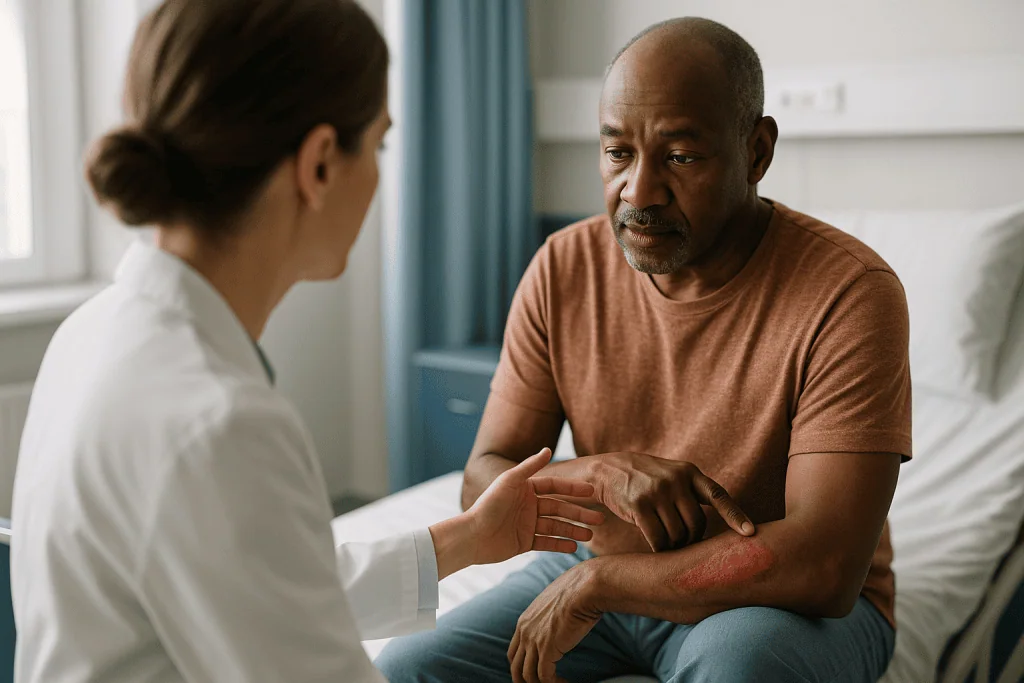
Timing is the part people underestimate. A graft placed on an unready wound tends to fail, so surgeons often ask patients to wait, and the wait is not a delay for its own sake. You may be asked to wait if:
- the wound bed still contains dead or sloughy tissue that needs cleaning or surgical debridement first;
- there are signs of infection, or a swab has grown bacteria the team wants to treat before operating;
- blood supply to the area is poor, for example from diabetes-related vessel disease or recent radiotherapy, and the wound bed looks pale rather than healthy and granular;
- you are still smoking or using nicotine and the surgery is not urgent;
- blood sugar, nutrition or a blood-thinning medicine needs adjusting under the prescribing clinician’s direction.
Some people are offered an alternative instead. Small facial wounds sometimes heal remarkably well by secondary intention, which simply means the body fills the gap from the bottom and edges without surgery. Others are better served by a local flap, which borrows nearby skin with its circulation intact and often matches color more closely. None of these choices is universally superior. The decision rests on the wound’s depth, location, size and your overall health, and it belongs to you and your treating team together.
Preparing for skin graft surgery starts with the wound bed
Surgeons have a saying that a graft is only as good as the bed it lands on. A healthy recipient site looks beefy red, slightly bumpy from new capillary buds, moist but not soaking, and bleeds a little when touched. That texture is granulation tissue, the body’s scaffold of new vessels and collagen, and it is the ideal surface for a graft to drink from.
Compare that with the surfaces that worry a surgeon. Yellow or gray slough is a layer of dead cells and protein that bacteria love; a graft placed on it has nothing living to connect with. Black eschar is dried dead tissue, essentially a lid, and must be removed. Exposed bone, tendon or cartilage without a covering of soft tissue will not nourish a graft at all, which is one reason the nose and ear sometimes need a flap rather than a graft.
Preparing for skin graft surgery, then, often means preparing the wound rather than the person. In the weeks beforehand your team may use dressings that keep the bed moist and draw out slough, may trim dead tissue in clinic, or may schedule a separate debridement under anesthesia. People with chronic ulcers are sometimes asked to keep a leg elevated or wear compression to reduce swelling, because a swollen, waterlogged bed does not hold a graft well.
Your part is practical and matters more than it sounds: keep dressings on as instructed, keep the area dry when told to, avoid picking at edges, eat enough protein, and keep blood sugar in the range your clinician has set. A graft is biology, not carpentry, and the biology is being set up long before the operating list.
What does a pre-operative wound assessment involve?
The assessment visit tends to be undramatic, which can make it feel unimportant. It is not. Most of what decides whether a graft takes is written down at this appointment.
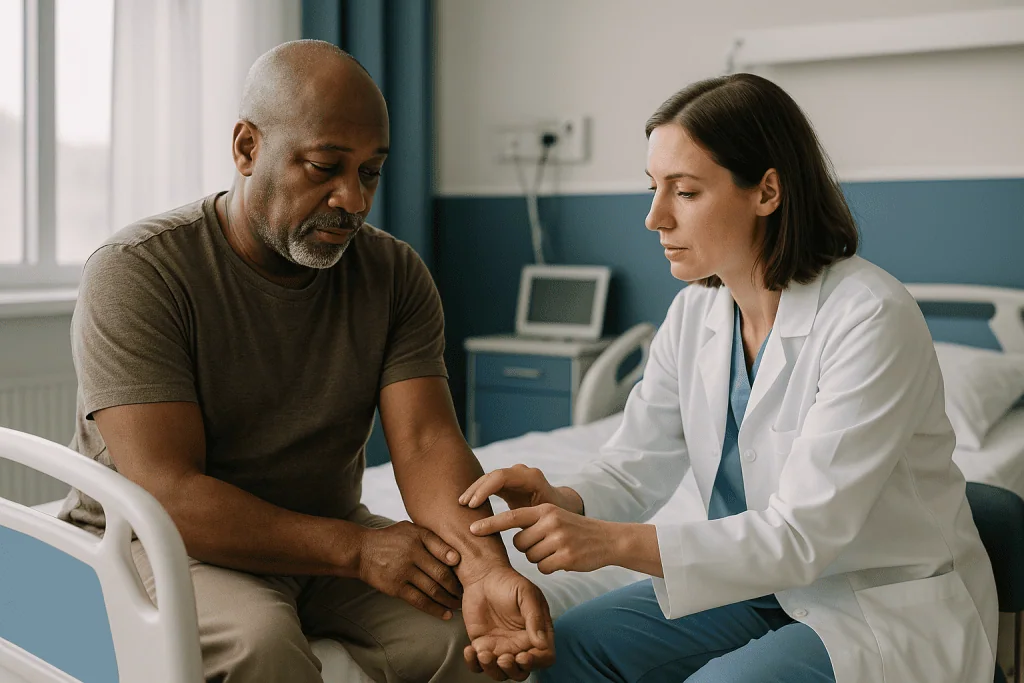
Expect the clinician to measure the wound in at least two dimensions and record its depth, often with photographs so progress can be compared honestly rather than from memory. They will look at the color and texture of the base, the state of the surrounding skin, whether the edges are rolled or flat, and how much fluid the wound produces. Odor is noted without embarrassment; it is a clinical sign, not a judgment.
If there is any suspicion of infection, a swab may be sent to the laboratory, both to confirm bacteria are present in meaningful numbers and to learn which antibiotics they are sensitive to, should treatment be needed. Blood tests are sometimes requested to check hemoglobin, blood sugar control, kidney function or nutritional markers, depending on your history.
The donor site is examined too. For a facial graft, surgeons often look behind the ear, at the upper eyelid, the neck or the collarbone area, because skin there is similar in thickness and tone to facial skin. They check that this skin is healthy, not sun-damaged in a way that would transplant a different texture, and that the resulting scar can be hidden.
Finally there is a conversation about you: medicines, allergies, previous anesthetics, smoking and vaping, alcohol, how you will get home, and who will help in the first days. Bring a written list. The clinician is building a risk picture, and nothing on it is too small to mention.
How do surgeons control infection before and after a skin graft?
Surgical site infection is an infection that develops in the part of the body where surgery took place. The CDC describes it as one of the more common complications of surgery and one that is partly preventable through measures taken before, during and after the operation. For grafts the stakes are higher than for a stitched incision, because infection does not just delay healing; it can lift and dissolve the graft entirely.
Before surgery, control starts with the wound itself: clearing dead tissue, treating any established infection, and sometimes using antimicrobial dressings on chronic wounds. You may be asked to shower with ordinary soap or a prescribed antiseptic wash the night before or the morning of surgery, and to avoid shaving the area yourself, since razor nicks give bacteria a doorway. If hair must be removed, teams use clippers in the operating room.
During the operation, standard measures apply: skin antisepsis, sterile instruments and drapes, and in selected cases a single pre-operative antibiotic given through a vein, chosen by the surgical team according to the wound type and your allergies. Whether you need one is a clinical decision, not a routine for every graft.
Afterward, the biggest contribution comes from leaving the dressing alone. The first dressing is often bulky, sometimes tied over the graft as a bolster to hold it still, and MedlinePlus notes it is typically kept in place for several days before the first inspection. Hand hygiene for anyone touching the area, keeping the site dry until told otherwise, and not swimming or soaking are the everyday forms of infection control. Antibiotics after surgery are not given to everyone; they are prescribed when there is a specific reason, and the prescribing clinician decides.
Why does stopping smoking matter so much before a skin graft?
If one factor in this whole article deserves an opinion, it is this one. Smoking is uniquely harmful to a graft because it attacks the exact mechanism the graft depends on.
Consider what a cigarette does to small blood vessels. Nicotine triggers vasoconstriction, a narrowing of the tiny arteries in the skin, within minutes of a puff. The new capillaries trying to grow into a graft are among the smallest vessels in the body, and they are the first to close down. Carbon monoxide in smoke binds to hemoglobin more tightly than oxygen does, so the blood that reaches the wound carries less oxygen than it should. Hydrogen cyanide and other combustion products impair the enzymes cells use to produce energy. Smoking also increases platelet stickiness, raising the chance of micro-clots in vessels the graft is counting on.
The downstream effects are well described in general surgical evidence. MedlinePlus notes that smokers have higher rates of wound infection, slower healing, more breathing problems under anesthesia, and more heart and blood clot complications after surgery. The WHO states plainly that tobacco users face a significantly higher risk of post-surgical complications, including impaired wound healing and infection.
Vaping is not a loophole. Most e-cigarette liquids contain nicotine, and the vasoconstriction is driven by nicotine itself rather than by smoke. Nicotine replacement products are a separate question, because they remove carbon monoxide and the thousands of combustion chemicals even though nicotine remains; whether to use them around surgery is a conversation for your surgeon and prescribing clinician, not a decision to make alone. What the evidence does not support is the idea that cutting down from twenty cigarettes to five protects a graft. The vessels respond to each cigarette.
How long before skin graft surgery should you stop smoking?
People searching for a precise number are usually hoping for a small one. The honest answer is: the earlier the better, and the benefit keeps growing.
The WHO, summarizing the evidence on tobacco and surgical outcomes, reports that people who stop smoking at least four weeks before an operation have a lower risk of complications, and that after those four weeks each additional tobacco-free week improves health outcomes by about 19 percent. MedlinePlus advises stopping as early as possible and emphasizes that quitting even shortly before surgery still helps the lungs and circulation, though longer abstinence delivers more.
Why four weeks? Within hours of the last cigarette carbon monoxide levels fall and oxygen delivery improves, but the deeper changes take time. The lining of the airways begins to recover its clearance of mucus over a few weeks, lowering the chance of chest infection under general anesthesia. Immune cells regain function. Skin microcirculation improves. For a graft, the relevant question is what your blood vessels are doing on the day of surgery and in the two weeks after, and four weeks gives them a genuine head start.
Timing also runs forward. Surgeons generally ask people to remain smoke-free throughout the healing period, because the graft is most vulnerable in the first one to two weeks while new vessels are forming. Starting again on day three undoes the preparation.
The practical reality is that many skin grafts, particularly after cancer removal, cannot wait a month. In that situation stopping for whatever time is available still matters, and your team may weigh the urgency of the wound against the benefit of delay. Free quit-smoking support, behavioral and pharmacological, exists through national health services; the NHS quit-smoking pages are one example of what such programs offer. Ask your team to connect you.
Do they put you under for skin graft surgery?
This is among the most common questions typed into a search bar before a graft, and the answer is: it depends on the size and site of the wound, where the donor skin is coming from, and your health.
MedlinePlus notes that skin graft surgery is often performed under general anesthesia, meaning you are fully asleep and unaware. That is typical for large grafts, for burns, for children, and when the donor site is a broad area such as the thigh, where harvesting with a dermatome, a specialized blade that shaves a uniform thin layer of skin, would be uncomfortable awake.
Many small facial grafts, however, are done under local anesthesia, where numbing medicine is injected around both the wound and the donor site and you remain awake. Some teams add sedation through a vein so you are relaxed and drowsy but breathing on your own. A full-thickness graft taken from behind the ear to repair a nose after skin cancer surgery is often done this way in a day-case setting.
Which approach is used is decided by the surgeon and anesthesiologist together, taking into account your heart and lung health, previous reactions to anesthesia, medicines, and your own preference where there is a genuine choice. If general anesthesia or sedation is planned, you will be given fasting instructions, and following them precisely is a safety matter rather than a formality.
Whichever route is chosen, you will not feel the graft being harvested or placed. Afterward the donor site frequently stings more than the graft site, because it is a fresh superficial wound with exposed nerve endings, similar to a deep scrape. Your team will discuss pain relief; the choice and amount of any medicine belong to the prescribing clinician.
Split-thickness vs full-thickness grafts: what the differences mean for preparation
The two main types of graft differ in how much of the skin’s depth is taken, and that single variable changes the donor site, the healing timeline and the cosmetic result. On the face, full-thickness grafts are favored where color and texture matter; split-thickness grafts cover large areas elsewhere.
| Feature | Split-thickness graft | Full-thickness graft |
|---|---|---|
| What is taken | Epidermis plus part of the dermis, shaved thinly | Epidermis and the entire dermis |
| Typical donor sites | Thigh, buttock, upper arm, back | Behind the ear, upper eyelid, neck, collarbone area, groin crease |
| How the donor site heals | Heals on its own from remaining skin cells; MedlinePlus describes it as a quicker recovery | Closed with stitches, leaving a line scar |
| How well it ‘takes’ | Generally more reliable because it is thin and easily nourished | Needs an excellent wound bed; more demanding |
| Appearance over time | Can be shinier, paler or darker than surrounding skin; may contract | Better color and texture match; less contraction |
| Common uses | Burns, large wounds, leg ulcers | Face, hands, areas where appearance or flexibility matters |
For preparation, the differences are concrete. A split-thickness donor site is a large raw area that weeps for days and needs its own dressing plan, so you may need help at home reaching and changing it. A full-thickness donor site is a stitched incision, simpler to look after, but the graft itself is thicker and more oxygen-hungry, which is why surgeons are particularly insistent about smoking, blood sugar and immobilization when a full-thickness graft is planned for the face.
Neither type is better in the abstract. MedlinePlus observes that most grafts are successful but some do not heal well and may need repeating; the choice is a matter of matching graft to wound, and your surgeon will explain which is being proposed and why.
Medicines, supplements and health conditions to tell your surgical team about
Grafts bleed from two sites at once, rely on fragile new vessels, and heal slowly if the body’s chemistry is off. Several everyday medicines and conditions bear on all three, which is why the pre-operative conversation about them is detailed.
Blood-thinning medicines are the first topic. Anticoagulants and antiplatelet drugs, including common over-the-counter pain relievers of the non-steroidal anti-inflammatory class, reduce clotting and can allow blood to collect under a graft, lifting it off its bed. Whether any of these should be paused, continued or bridged is a decision for the prescribing clinician in discussion with the surgeon, weighing graft risk against the reason the medicine was started, such as a heart valve or a previous stroke. Never stop a prescribed medicine on your own because of an upcoming graft.
Several supplements also affect bleeding or healing, among them fish oil, vitamin E, ginkgo, garlic preparations and high-dose herbal products. Bring the bottles or a list. Many teams ask people to stop non-essential supplements in the lead-up, but the instruction should come from them.
Diabetes deserves its own line. High blood sugar impairs white blood cell function and the growth of new vessels, both central to graft take, and MedlinePlus and CDC guidance on surgical infection both identify poor glucose control as a risk factor. Your diabetes team may adjust targets around surgery.
Also mention: steroid tablets or immunosuppressants, which slow healing; previous radiotherapy to the area, which scars small vessels; peripheral vascular disease; significant weight loss or poor appetite, since protein is the raw material of new dermis; and any allergy to dressings, adhesives or antiseptics. Mechanism, not blame, is the point of these questions. The team is mapping where the graft’s risks lie so they can plan around them.
The week before and the night before: practical steps that genuinely help
Much pre-surgery advice is generic. For a graft, a few specifics earn their place.
Arrange stillness in advance. A graft on the face needs you to avoid bending, straining, vigorous chewing or rubbing for the first days, and a graft on a leg often means keeping the limb elevated and off the ground for a period your team will specify. That changes what you can do at home. Stock the kitchen, move essentials to one level, and arrange someone to drive you and ideally stay the first night, especially after general anesthesia or sedation.
Protect the donor site before it exists. Skin behind the ear or on the thigh that is sunburned, inflamed or cut on the day will not be used. Keep it moisturized in the preceding week, avoid new skincare products there, and do not shave it.
Follow fasting instructions to the letter if anesthesia or sedation is planned. The instructions exist to keep the stomach empty and reduce the risk of inhaling contents while asleep; the timings vary by center and by what you are eating or drinking, so use the sheet you were given rather than general advice online.
Wash as directed, usually a shower the night before or the morning of surgery, and arrive in loose clothing that will not drag across a dressing on the way home. Leave jewelry and makeup off, particularly around a facial site.
Eat normally and well in the preceding week unless told otherwise. Protein, fruit and vegetables supply amino acids, vitamin C and zinc that collagen formation uses. Food is the evidence-based route; high-dose supplements have not been shown to improve graft take in people who are not deficient.
And the cigarettes: by this point, every smoke-free day counts, and day-of-surgery smoking measurably lowers oxygen delivery to the wound.
Skin graft recovery time: what the first days and weeks usually look like
Recovery from a graft runs on two clocks, one for each wound, and knowing the typical rhythm reduces alarm when the dressing finally comes off.
Days one to five. The graft is covered by a bulky dressing, sometimes stitched or tied down as a bolster, and is usually left completely undisturbed. MedlinePlus describes the first dressing staying in place for several days so that new blood vessels can connect without interference. You may be asked to keep the area elevated and still. Discomfort is often greater at the donor site, which feels like a large scrape. Some clear or pink-tinged fluid on the donor dressing is expected.
The first look. At the first clinic review the team lifts the dressing and checks the graft’s color. Pink or mottled purple-pink is normal at this stage; it reflects new blood flow. Small areas that look darker may still recover. Blisters or a spot of fluid under the graft may be drained in clinic.
Weeks one to three. The graft becomes firmer and more adherent. Stitches, if any, come out according to the site. A split-thickness donor site typically re-epithelializes, meaning new skin cells cover it from the base, over roughly one to two weeks, after which it remains pink and fragile. A full-thickness donor site is simply a healing incision. MedlinePlus notes that recovery after split-thickness grafting is generally quicker, while full-thickness grafts need a longer healing period.
Months. The graft gradually matures. Color evens, thickness changes, and sensation partially returns as nerve fibers grow in from the edges. Sun protection matters for a year or more, because a new graft pigments unpredictably with ultraviolet exposure. Massage and silicone-based scar care are commonly suggested once the surface is fully healed; your team will tell you when.
None of this is a schedule to hold yourself to. Age, blood supply, graft type and wound location all stretch or shorten the timeline.
What people often get wrong about skin grafts
Some misunderstandings make preparation harder than it needs to be. A few deserve direct correction.
The graft will look like the surrounding skin straight away. It will not. Early grafts are red, raised or sunken, and shiny. Color and texture settle over many months, and even a well-matched full-thickness facial graft may always be subtly different. Surgeons choose donor sites to minimize this, not eliminate it.
A graft that looks dark at the first check has failed. Not necessarily. Bruising within a graft and superficial blistering can look dramatic and still resolve. Full-thickness loss does occur, and MedlinePlus is honest that some grafts do not heal well and may need repeating, but the first appearance is not the verdict. Only the team’s examination over several visits is.
Cutting down smoking is enough. Vasoconstriction from nicotine occurs with each cigarette, and carbon monoxide builds with each one. The evidence summarized by WHO and MedlinePlus concerns stopping, not reducing.
The donor site is the easy part. For split-thickness grafts in particular, the donor site is frequently the more painful wound and the one more prone to infection in the first week, because it is a broad raw surface. Give it the same respect.
Antibiotic ointment, extra vitamins or a special diet will make a graft take. There is no good evidence that routine topical antibiotics improve graft survival in clean wounds, and high-dose supplements have not been shown to help people who are not deficient. Clean technique, immobilization, blood flow and oxygen do the work.
Once healed, the graft is finished. New skin needs sun protection for at least a year, continues to remodel, and can contract or thicken. Follow-up is part of the treatment, not an optional extra.
Questions to ask your care team before a skin graft
A good consultation is a conversation, and arriving with questions makes it one. These are the ones that tend to change what people understand and how they prepare.
- Is my wound ready for a graft now, or is there something you want to improve first, and how will you judge that it is ready?
- Which type of graft are you proposing, split-thickness or full-thickness, and why does that suit this wound and this location?
- Where will the donor skin come from, what will that scar look like, and how do I care for that site?
- Were the alternatives, such as letting the wound heal on its own, a local flap or direct closure, considered, and what tipped the balance?
- Will I be awake, sedated or under general anesthesia, and what does that mean for fasting and getting home?
- Which of my medicines and supplements should continue, pause or be reviewed, and who will give me that instruction in writing?
- How long do you want me smoke-free before surgery, and after it, and can you refer me to quit support?
- What exactly will I be allowed to do in the first week: bathing, bending, walking, driving, work?
- How will the dressing be managed, who changes it, and when is the first check?
- What would make you decide the graft has not taken, and what would happen next?
- How should I protect the graft from the sun, and for how long?
- Who do I contact out of hours if something worries me?
Write the answers down or ask for them in writing. People commonly remember a fraction of what is said in a surgical consultation, and the details about medicines, fasting and activity are the ones that matter on the day.
When to call your doctor: red-flag signs after skin graft surgery
Most recoveries are uneventful, but a graft is a wound that can turn quickly, and the team would always rather hear from you early than late. Contact your surgical team the same day if you notice any of the following:
- Spreading redness, warmth or swelling around the graft or the donor site, especially if the red area is growing hour by hour.
- Fever, chills, or feeling generally unwell in a way that is new since surgery.
- Pus, cloudy or foul-smelling fluid from either site, or a dressing that becomes soaked and smells.
- Bleeding that soaks through the dressing or does not settle with firm pressure.
- The graft lifting, sliding or peeling at an edge, or the bolster dressing coming loose before the planned check.
- The graft turning uniformly black or dark gray, or the area becoming numb and cold.
- Pain that increases rather than decreases after the first two or three days, or pain not controlled by what you were advised.
- Fluid or a soft swelling building up under the graft.
Seek emergency care without waiting if you develop chest pain, sudden breathlessness, a swollen or painful calf, confusion, or a rapid heartbeat with fever, particularly after general anesthesia or if you have been immobile. These can signal a blood clot or a serious infection spreading beyond the wound.
Minor signs, such as mild itching, slight pinkness at the edges, or a small amount of clear fluid on the donor dressing, are usually expected and can wait for your scheduled review, but if you are unsure, call. The clinician who placed the graft knows what it should look like today, and that judgment, not a search result, is the one to rely on.
Frequently asked questions
Do they put you under for skin graft surgery?
Not always. Large grafts, burns and grafts in children are usually done under general anesthesia, which MedlinePlus describes as common for this surgery. Many small facial grafts are performed under local anesthesia, sometimes with light sedation, as a day case. The anesthesiologist and surgeon decide together based on the size and site of the wound, the donor site and your health.
How long should I stop smoking before a skin graft?
As early as possible, and ideally at least four weeks. WHO reports that quitting four or more weeks before surgery lowers complication risk and that each extra tobacco-free week improves outcomes by about 19 percent. If the surgery cannot wait that long, stopping for whatever time is available still helps, and staying smoke-free through the healing weeks afterward matters just as much.
What is skin graft recovery time for a graft on the face?
The first dressing usually stays on for several days, the graft firms up over one to three weeks, and color and texture keep changing for many months, according to MedlinePlus descriptions of graft healing. Full-thickness grafts, common on the face, take longer to settle than split-thickness grafts. Your surgeon will give a timeline specific to your wound, and sun protection is advised for at least a year.
Does vaping count as smoking before skin graft surgery?
For the graft’s blood vessels, yes. Nicotine itself causes the narrowing of small skin arteries that starves a graft of oxygen, and most e-cigarette liquids contain nicotine. Vaping avoids carbon monoxide and combustion products, which is a real difference, but it is not a safe substitute in the weeks around a graft. Tell your team what you use so they can advise.
What does skin graft wound care at home involve?
Mostly leaving the dressing alone, keeping it dry, and protecting the area from pressure, rubbing and movement until the first clinic check. The donor site of a split-thickness graft needs its own dressing and may weep for several days. Wash hands before touching anything near either site. Your team will give written instructions, and those override anything general you read.
Why can't my wound be grafted straight away?
Because a graft only takes on a clean, well-supplied wound bed. If the base contains dead tissue, slough or signs of infection, or if blood supply is poor, the graft is likely to fail. Surgeons often spend weeks preparing the bed with dressings or debridement first. Waiting is part of the treatment rather than a delay in it.
Can I take my usual painkillers before a skin graft?
Ask before you do. Non-steroidal anti-inflammatory painkillers and other blood-thinning medicines increase the chance of blood collecting under a graft and lifting it. Whether to continue, pause or substitute any medicine is a decision for the prescribing clinician in discussion with the surgeon, because stopping some drugs carries its own risks. Bring a full list of everything you take to your assessment.
What are the signs that a skin graft is failing?
A graft that turns uniformly black or dark gray, lifts or slides at the edges, develops fluid or pus underneath, or is surrounded by spreading redness and increasing pain may be in trouble. Some darkening or blistering early on can still recover, so only the team’s examination over several visits can judge. Report any of these signs the same day rather than waiting.
Will the donor site hurt more than the graft?
Often, yes, particularly with split-thickness grafts. The donor site is a broad raw surface with exposed nerve endings, similar to a deep scrape, while the graft site is numb and padded. A full-thickness donor site is a stitched incision and tends to be more comfortable. Your team will discuss pain relief; the choice of medicine sits with the prescribing clinician.
What are the alternatives to a skin graft for a facial wound?
Small wounds can sometimes heal on their own from the base and edges, a process called healing by secondary intention. Others can be closed directly with stitches, or repaired with a local flap, which borrows adjacent skin with its blood supply intact and often matches color closely. Each option suits different depths, sizes and locations, and the choice belongs to you and your treating team.
References
- MedlinePlus: Skin graft
- MedlinePlus: Smoking and surgery
- WHO: Smoking greatly increases risk of complications after surgery
- CDC: About Surgical Site Infections
This article is for general information only and is not a substitute for professional medical advice. Please consult a qualified doctor about your individual situation.

More from the Blog
Fibroblast Treatment Risks Explained: Pigment Changes, Scarring and Skin Types at Higher Risk
Fibroblast treatment risks come mainly from the controlled burn the plasma pen creates on the skin surface. The most common problems are post-inflammatory dark…
Why Dermatologists Prescribe a Priming Cream Before Pigmentation Laser Treatment
Dermatologists often prescribe a priming cream before laser pigmentation treatment to quiet the pigment-producing cells in the skin, so the laser's heat is less…
Microsurgery Risks Explained: Why Blood Flow Is Watched Hourly in the First Days
Microsurgery complications most often involve the tiny reconnected blood vessels that feed transplanted tissue, called a flap. A clot in the artery or vein…
Scar Treatment Results: What Realistic Improvement Looks Like and Why Sessions Repeat
Realistic scar treatment results mean a scar that is flatter, softer, paler and less noticeable, not a scar that vanishes. Scar tissue is permanent,…
Neck Lift Recovery Time: Healing Stages, Scars and Results That Settle
Most people look socially presentable about two to three weeks after a neck lift, once visible bruising fades and swelling starts to settle. Full…
How to Prepare for Microneedling: Sun, Retinoids and the Two Weeks Before Your Session
Preparing for microneedling usually means keeping the skin out of strong sun and free of sunburn or tan for the two weeks beforehand, pausing…