

PRP After a Hair Transplant: What Combining Them May Add, Per the Literature
Key Takeaways
- PRP typically concentrates platelets to two to five times blood levels, delivering growth factors like PDGF and VEGF that plausibly support graft blood supply during the vulnerable first days.
- The strongest signals in transplant studies involve speed, earlier regrowth and faster crust clearance, not proven improvements in final graft survival at a year or beyond.
- Most trials showing benefit used three to four sessions spaced about a month apart, making three sessions a fair initial test judged at the three-to-six-month mark.
- Transplanted hairs normally shed between weeks two and eight and regrow around months three to four; PRP may soften that dip but does not eliminate it.
- PRP's best-supported role may be defending the native hair around grafts, since randomized half-head trials in pattern loss found measurable density gains versus placebo.
- Elon Musk has never disclosed a hair regimen; photo comparisons suggest surgical restoration, and every ad claiming to reveal his 'secret' is marketing, not evidence.
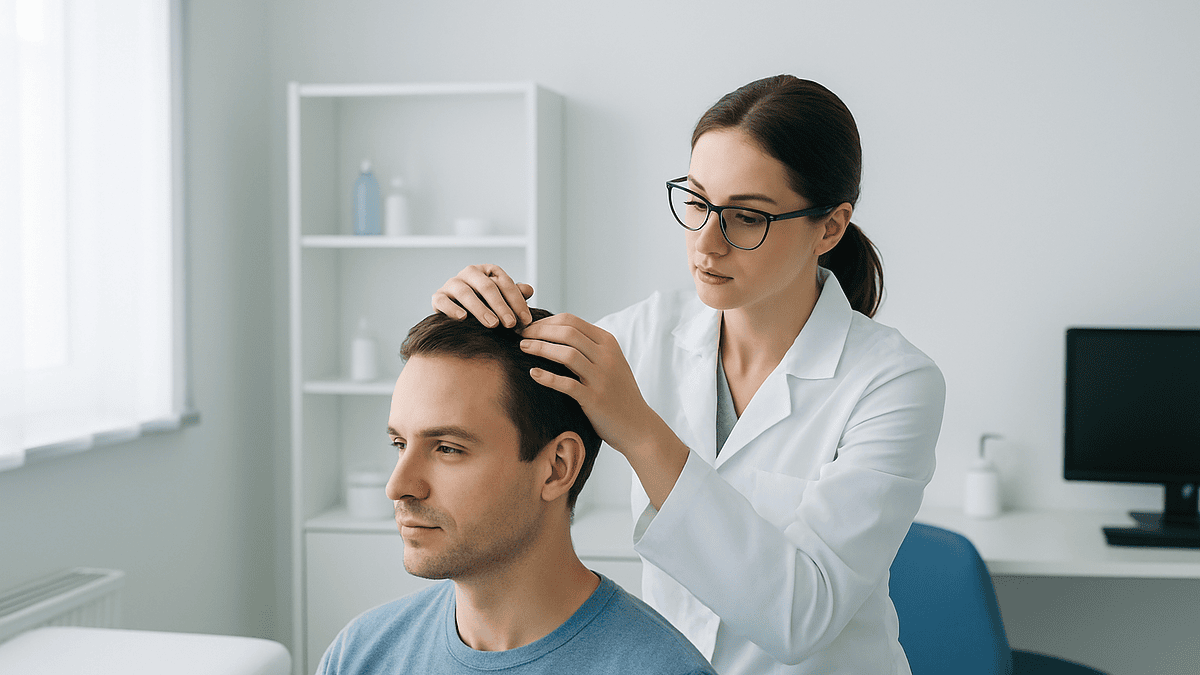
Small clinical studies suggest that adding platelet-rich plasma (PRP) to a hair transplant may modestly speed early regrowth, shorten the post-surgical shedding phase, and support the density of surrounding native hair. The evidence comes from small trials with varying protocols, so benefits are plausible but not guaranteed. Most published series use three to four sessions, starting anywhere from the day of surgery to about a month afterward.
Around week three after a hair transplant, almost everyone has the same bathroom-mirror moment. The tiny grafts that looked so promising are shedding, exactly as the surgeon warned they would, and the follow-up email from the clinic mentions an add-on package: a series of PRP injections, sold as insurance for everything you just invested.
It is a persuasive pitch at a vulnerable moment. Your scalp is healing, the final result is a year away, and here is a syringe of your own blood promising to tilt the odds. But does it?
The honest answer lives in a stack of small clinical trials, most involving a few dozen patients, published over the past decade. They are imperfect studies, and they do not all agree. Read together, though, they sketch a picture that is more interesting than either the marketing or the skeptics suggest, worth understanding before you sign up for anything.
What Is PRP, Exactly, and Why Do Surgeons Talk About It So Much?
Platelet-rich plasma starts as an ordinary blood draw, usually somewhere between 10 and 30 milliliters from your arm. That tube goes into a centrifuge, which spins fast enough to separate blood into layers: red cells at the bottom, plasma on top, and a thin platelet-rich band in between. The portion clinicians keep typically concentrates platelets to roughly two to five times their normal level in circulating blood, sometimes higher, depending on the system used.
Platelets are best known for clotting, but they are also tiny storage sacs of signaling proteins: platelet-derived growth factor, vascular endothelial growth factor, transforming growth factor beta, insulin-like growth factor 1, and others. When platelets are injected into tissue and activated, they release these proteins locally. That is the entire premise, deliver a concentrated dose of your body’s own repair signals to a spot that could use them.
Two clarifications save a lot of confusion later. First, PRP is not a stem cell therapy, whatever a brochure implies; it is an autologous blood product, meaning it comes from you and returns to you. Second, there is no single “PRP.” Clinics use different collection volumes, spin protocols, and activation methods, so the syringe injected in one office can be biologically quite different from the syringe in another. That variability, as we will see, is one of the main reasons the research is so hard to summarize cleanly.
Why Pair PRP With a Transplant? The Biology, in Plain English
Think of transplanted follicles as seedlings moved to new soil. During surgery, each graft spends time outside the body, cut off from blood supply. Once placed, it must survive on the oxygen that diffuses from surrounding tissue until new capillaries grow in: a vulnerable window lasting several days. Grafts that fail usually fail here.
The theoretical case for PRP maps directly onto that window. Vascular endothelial growth factor encourages new blood vessel formation, which could shorten the time grafts spend under-supplied. Platelet-derived growth factor and insulin-like growth factor 1 act on the dermal papilla, the cluster of cells at the follicle base that drives the hair growth cycle, and in laboratory studies they help keep follicles in anagen, the active growing phase, rather than slipping into the resting phase.
Some surgeons take the logic a step further and use PRP during the procedure itself, either bathing grafts in it while they wait for placement or injecting the recipient area before the grafts go in. Others reserve it for a series of postoperative sessions once the scalp has healed.
Here is the caveat that matters: a sound mechanism is a reason to run studies, not a substitute for them. Plenty of biologically plausible ideas in medicine have failed when tested carefully. So the real question is not whether PRP could help a transplant. It is whether measured results in actual patients show that it does.
What the Studies Actually Show (and Where They Fall Short)
The adjunct-to-transplant literature is genuinely encouraging in direction and genuinely modest in strength. A handful of randomized and split-scalp studies, most enrolling between 20 and 40 patients, have compared transplants with PRP against transplants without it. Several reported that the PRP groups showed new growth starting weeks earlier, a larger share of patients reaching high regrowth percentages by six months, and less shedding of surrounding hair in the early postoperative period.
The weaknesses are just as consistent. Sample sizes are small. Follow-up rarely extends past a year, which matters because early differences can narrow as the slower group catches up. Preparation methods differ from study to study, and few trials were blinded well. A fair reading looks like this:
| Claim | What published studies suggest | Confidence |
|---|---|---|
| Earlier onset of new growth | Several small trials report growth beginning weeks sooner with PRP | Low to moderate |
| Better density at 6 months | Some randomized data favor PRP at this checkpoint | Low to moderate |
| Higher final graft survival at 12+ months | Long-term comparisons are sparse; early gaps often shrink | Low |
| Less “shock loss” of native hair | Reported in small series; mechanism is plausible | Low |
| Thicker existing hair in pattern loss | The best-supported PRP finding overall, from non-surgical trials | Moderate |
Notice the pattern: the strongest signals involve speed and early density, not the final destination. That distinction should shape both your expectations and your budget.
Does PRP Speed Up Healing After a Hair Transplant?
Probably somewhat, and this is one of the more defensible claims. Recovery after a transplant follows a predictable script: pinpoint scabs form over each graft site within a day or two, crusting resolves over one to two weeks, and redness fades over the following weeks, faster in some skin types than others.
In small comparative studies, patients who received PRP around the time of surgery tended to move through that script faster, crusts clearing closer to the one-week mark, redness settling sooner, and donor areas looking calmer earlier. This tracks with the broader wound-healing literature, where platelet-derived growth factors have been studied for decades precisely because they coordinate the early stages of tissue repair.
Keep the size of the benefit in perspective. We are talking about trimming days off a process that resolves on its own within a couple of weeks for most people. If your priority is returning to work or a social event with less visible evidence of surgery, that acceleration has real value. If you are comfortable letting healing take its natural course, this benefit alone is a thin reason to purchase a full injection series.
One practical point: faster surface healing is not the same thing as better graft survival. A scalp can look pristine at day ten whether or not every follicle beneath it ultimately thrives. The two outcomes are related but separate, and studies measure them separately for good reason.
Can PRP Reduce “Shock Loss”?
Shock loss is the phase nobody enjoys and everybody experiences to some degree. Between roughly weeks two and eight after surgery, the transplanted hair shafts shed: the follicles beneath them survive, but the visible hairs fall out before regrowth begins around months three to four. Some native hairs near the surgical sites can shed too, pushed into the resting phase by the trauma of the procedure. It is temporary in the vast majority of cases, but it can be emotionally rough, because patients briefly look thinner than before surgery.
The theoretical argument for PRP here is straightforward: if growth factors help hold follicles in the active growing phase, fewer follicles should tip into resting-phase shedding after the stress of surgery. A few small series back this up, reporting noticeably less postoperative shedding in patients who received PRP during or shortly after their procedures compared with those who did not.
Treat that finding as a promising signal rather than a settled fact. Shedding is difficult to quantify precisely, the studies were small, and shock loss varies enormously between individuals for reasons unrelated to any injection, surgical technique, graft density, and individual follicle sensitivity all play roles.
If shock loss is your biggest fear, the more reliable levers are choosing an experienced surgical team and having realistic expectations about the timeline. PRP may soften the dip. It will not eliminate it, and no honest clinic should promise otherwise.
What About the Native Hair Around the Grafts?
Here is the part of this conversation that deserves more attention than it gets: a transplant relocates hair, but it does nothing to stop the underlying pattern loss that made surgery necessary. The native hairs surrounding your new grafts remain genetically programmed to miniaturize over time. Ignore them, and you can end up with a well-populated transplanted zone framed by ongoing thinning: an outcome that sometimes sends people back for a second procedure.
This is where PRP has its strongest evidence, and notably, it comes from studies that had nothing to do with surgery. Randomized trials in androgenetic alopeciaincluding a well-cited half-head trial in which each patient served as their own control, found meaningful increases in hair count and shaft thickness in PRP-treated areas compared with placebo injections after a series of sessions. Reviews of this literature generally conclude that PRP can improve density in pattern hair loss, while flagging the familiar problems of small samples and inconsistent preparation methods.
So one defensible way to think about PRP after a transplant is this: its clearest job may not be helping the grafts at all, but defending the territory around them. That reframing also clarifies where PRP fits in a bigger plan. Managing ongoing pattern loss is a long-term project, and there are established medical options a dermatologist can walk you through. PRP is one tool on that shelf, not the whole shelf.
How Soon Should You Start PRP After a Hair Transplant?
There is no consensus in the literature, which is itself useful to know when a clinic presents its schedule as the definitive one. In practice, published protocols cluster into three windows.
- During surgery. Some surgeons inject PRP into the recipient area before graft placement, or keep grafts in a PRP-enriched holding solution while they await placement. The randomized data on intraoperative use, though limited, are among the more encouraging in this field.
- Early recovery, around two weeks to one month out. Many clinics wait until the crusts have cleared and the grafts are anchored, grafts are mechanically secure within about ten to fourteen days, then begin a postoperative series. This avoids any needle work near freshly placed follicles during their most fragile days.
- The growth window, months one through four. Others time sessions to coincide with the period when shed grafts are restarting growth, reasoning that growth factors are most useful when follicles are re-entering the active phase.
No head-to-head trial has crowned a winner among these approaches. What the timing question really tests is coordination: PRP after a transplant should be planned with your surgeon, not bolted on by a separate provider who has never seen your operative details. The person who placed your grafts knows their density, depth, and location, and that knowledge should govern when, where, and whether anyone else puts a needle in that scalp.
How Many PRP Sessions Do You Need, and Is 3 Enough?
Three monthly sessions is the closest thing PRP has to a standard course, and it is not arbitrary. Most of the trials that found benefit, both in pattern hair loss and as a transplant adjunct, delivered three or four treatments spaced about a month apart, then measured outcomes around the six-month mark. When a clinic proposes three sessions, it is essentially proposing the dose the evidence was built on.
Is three enough? For an initial trial of whether PRP does anything for you, yes, and that framing matters. Hair responses are slow, so the fair checkpoint is roughly three to six months after your first session, ideally judged with standardized photographs or density measurements rather than memory and mirror lighting. If nothing measurable has changed by then, more sessions are unlikely to rescue the result, and the literature offers little support for pushing on.
What about maintenance? Many clinics recommend a booster every three to six months, on the logic that pattern loss is a chronic process and growth-factor effects fade. The logic is reasonable; the data are the weakest link in the whole PRP story. Long-term maintenance schedules have not been rigorously compared, so recommendations vary widely and reflect clinic custom as much as science.
A sensible structure: commit to three sessions, insist on baseline and follow-up photos taken under identical conditions, and make any maintenance decision based on what those photos actually show.
What Did Elon Musk Use to Regrow His Hair?
Nobody outside his medical team knows, and that is the complete, honest answer. Musk has never publicly detailed a hair regimen, endorsed a product, or confirmed a procedure. What exists is photographic: images from around 1999, when he had visibly receded temples and a thinning crown, versus his appearance in later years, with a dense, mature hairline. Hair restoration surgeons who have commented publicly on those photos generally agree the transformation looks consistent with one or more hair transplants, because pattern loss of that degree does not reverse to that extent on its own.
Whether PRP, prescription medicines, or anything else played a supporting role is pure speculation. No credible source ties him to any specific treatment, and the articles and ads claiming to reveal “Elon’s secret” are marketing, full stop.
The reason this question earns its own section is what it teaches about evaluating hair claims generally. Celebrity results are the worst possible evidence: single cases, unknown treatments, unlimited budgets, professional photography, and every incentive to stay quiet about the details. A famous head of hair tells you nothing about what a series of injections will do for yours.
If you want a trustworthy answer about what could work for your particular pattern of loss, the useful comparison is not a billionaire’s before-and-after. It is the published trial data, limitations and all, interpreted by a clinician who has examined your scalp.
Is PRP After a Transplant a Waste of Money?
Online forums split into two camps: patients convinced PRP made their result, and skeptics calling it an upsell. The evidence supports a position between them, and it is worth stating plainly.
PRP after a transplant is a reasonable, evidence-informed adjunct, not a requirement, and not a rescue. The studies suggest it may accelerate early growth, ease the shedding phase, and help defend surrounding native hair. They do not show that transplants fail without it, and thousands of excellent results happen every year with no PRP at all. Insurance rarely covers it, and a multi-session course commonly runs from several hundred to a few thousand dollars depending on where you live.
So the money question becomes a priorities question. The factors with the largest influence on your outcome are the skill and planning of the surgical team, faithful aftercare in the first two weeks, and a long-term plan for the pattern loss that is still progressing underneath. Those come first. If they are handled and the additional cost does not strain you, PRP is a defensible layer on top, particularly if protecting native hair is part of your goal, since that is where its evidence is strongest.
Where skepticism is fully earned: clinics that bundle PRP into every quote as if it were mandatory, promise specific survival percentages, or discourage you from asking what happens if you decline. Optional add-ons should be sold as optional.
Who Is (and Isn’t) a Good Candidate for PRP?
Because PRP borrows your own platelets, its effectiveness depends partly on the raw material and partly on the target. The likeliest responders, based on the trial populations studied, are people with androgenetic (pattern) hair loss in its earlier or middle stages, where follicles are miniaturized but still alive. PRP cannot resurrect a follicle that has fully scarred over; long-bald areas do not respond, which is precisely why transplantation exists for them.
Some people should pause or skip PRP altogether, and a responsible clinic will screen for this rather than treat everyone who can pay:
- Platelet or clotting disorders. Low platelet counts or platelet dysfunction undermine the whole premise and can raise bleeding risk.
- Blood-thinning medicines. These affect both platelet function and bleeding during injections; never adjust them on your own: the prescribing clinician decides.
- Active infection or skin disease at the scalp. Injections wait until the skin is healthy.
- Certain systemic conditions. Uncontrolled diabetes, active cancer treatment, and some chronic liver or blood diseases are common reasons clinics defer treatment.
Two lifestyle notes round this out. Smoking impairs the small-vessel circulation that both graft survival and wound healing depend on, so surgeons routinely advise stopping well before and after a transplant regardless of PRP plans. And realistic expectations are, in a sense, a candidacy criterion too: the person best positioned to be satisfied with PRP is the one who understands it as a modest, gradual assist.
What a Session Feels Like, and the Side Effects to Expect
A PRP appointment is closer to a long blood test than a procedure. The visit usually runs 45 to 60 minutes: a blood draw from your arm, a spin in the centrifuge for ten to fifteen minutes, and then a series of small injections across the treatment zone, typically spaced about a centimeter apart, delivered over fifteen to thirty minutes. Clinics vary in how they manage comfort; the injections sting, and most people describe the sensation as pressure and pinching rather than sharp pain, with the front hairline usually the most sensitive stretch.
Afterward, the common effects are exactly what you would expect from many small needle passes: scalp soreness and tightness for a day or two, mild swelling that can drift toward the forehead, pinpoint bleeding at injection sites, and occasionally a headache the first evening. Because PRP comes from your own blood, allergic reactions to the plasma itself are not a concern, though infection at injection sites, while rare with proper sterile technique, remains possible with any procedure that breaks the skin.
Downtime is minimal. Most people return to normal activity the same day; clinics typically suggest holding off on vigorous exercise, swimming, and harsh hair products for roughly 24 hours, and following whatever washing instructions your surgical team has already set for the post-transplant period. When PRP is scheduled soon after a transplant, the transplant aftercare rules always take precedence over generic PRP advice.
When to See a Doctor After a Transplant: With or Without PRP
Most recoveries are uneventful, but a healing scalp deserves the same vigilance as any surgical site, and adding injections into the mix creates a few more entry points for trouble. Contact your surgical team promptly, the same day, not at the next scheduled visit, if you notice any of the following:
- Fever of 100.4°F (38°C) or higher, or chills, at any point during recovery.
- Spreading redness, warmth, or swelling around graft sites, the donor area, or injection points, especially if it worsens after day three rather than fading.
- Pus or foul-smelling drainage from any site on the scalp.
- Pain that escalates instead of easing after the first 48 to 72 hours.
- Bleeding that does not stop with ten minutes of gentle, steady pressure.
- Sudden, dramatic shedding well beyond the expected shock-loss pattern, or shedding accompanied by scalp pain, burning, or pustules.
Two quieter scenarios also warrant a professional look. If numbness or altered sensation in the donor or recipient area persists beyond a few months, mention it at follow-up; it usually resolves but should be tracked. And if you are considering PRP from a provider other than your transplant surgeon, loop the surgeon in first, timing, injection depth, and site selection should reflect your operative details.
None of this is cause for alarm; complication rates for modern transplants are low. It is simply the difference between a normal recovery and one that needs a clinician’s eyes, and knowing the line lets you relax on the right side of it.
Questions Worth Asking Before You Book a PRP Package
The variability in PRP preparation is not a technicality: it is arguably the main reason study results and patient experiences diverge. A short list of direct questions will tell you a great deal about whether a clinic treats PRP as medicine or as merchandise.
- What system do you use, and what platelet concentration does it produce? A good clinic knows its numbers. Concentrations far below the two-to-five-times range studied in trials may be little more than plasma.
- Who performs the injections? A clinician familiar with your surgical map should handle a recently transplanted scalp.
- How will we measure whether it worked? Standardized photography or density counts at baseline and at three to six months should be part of the plan, not an afterthought.
- What is your protocol if I don’t respond? An honest answer acknowledges that some patients see little change and that continuing indefinitely is not the plan.
- How does this fit with managing my ongoing hair loss? If the answer never mentions the medical options a dermatologist would discuss, you are hearing a sales script, not a treatment plan.
Notice what is missing from that list: guarantees. Any promise of a specific graft survival percentage or a “30 percent better result” is invented, because no study supports numbers that precise. The clinics worth your trust are the ones comfortable saying what the evidence says: a likely modest assist, delivered honestly, measured properly.
Frequently asked questions
How soon should I start PRP after a hair transplant?
There is no single evidence-backed answer; published protocols range from injections during the surgery itself to a series beginning two weeks to one month afterward, once crusts have cleared and grafts are mechanically anchored. No trial has directly compared these timings. The practical rule is to let your transplant surgeon set the schedule, since injection timing and placement should reflect your specific graft density and locations.
How many PRP sessions do I need after a hair transplant?
Three to four sessions, spaced roughly a month apart, is the course used in most studies that found benefit, both as a transplant adjunct and for pattern hair loss generally. Results are then assessed around three to six months after the first session. Some clinics suggest maintenance boosters every three to six months afterward, but long-term maintenance schedules have not been rigorously studied and vary widely by clinic.
Is 3 sessions of PRP enough?
Three sessions is a reasonable initial course because it matches what most positive trials actually tested. Judge the response at three to six months using standardized photos or density measurements, not memory. If there is measurable improvement, continuing periodically may make sense; if nothing has changed by then, the evidence gives little reason to expect additional sessions to succeed, and it is fair to stop.
Does PRP improve graft survival after a transplant?
Possibly, but the honest answer is unproven. Small randomized studies report earlier growth and better density at six months in PRP groups, which suggests grafts get off to a stronger start. Whether that translates into more surviving hairs at twelve months and beyond is unclear, because long-term comparisons are sparse and early differences often narrow. Treat improved final survival as plausible, not demonstrated.
Is PRP necessary after a hair transplant?
No. Excellent transplant results happen routinely without any PRP, and no study shows transplants fail in its absence. PRP is an optional adjunct with modest supporting evidence for faster early regrowth, less shedding, and better density of surrounding native hair. Surgeon skill, careful aftercare in the first two weeks, and a long-term plan for ongoing pattern loss matter far more to your final outcome.
What did Elon Musk use to regrow his hair?
He has never said, and no credible source knows. Photos from around 1999 show significant recession, while later images show a dense hairline: a change hair surgeons who have commented publicly consider consistent with one or more transplants, since pattern loss does not reverse that dramatically on its own. Any article or ad claiming to reveal his specific regimen, PRP or otherwise, is speculation used for marketing.
Do PRP injections into the scalp hurt?
They sting, but most people find them tolerable, closer to repeated pinching and pressure than sharp pain, with the hairline usually the most sensitive area. Clinics vary in how they manage comfort, so ask beforehand. Afterward, expect scalp soreness and tightness for a day or two, possible mild swelling and pinpoint bleeding, and occasionally a headache the first evening. Most people resume normal activity the same day.
How long do PRP results last, and will I need maintenance?
PRP does not change the genetics driving pattern hair loss, so any gains are expected to fade gradually without continued treatment, often over months to a year, based on clinical observation. Many clinics recommend a maintenance session every three to six months. That interval is custom rather than settled science, since maintenance schedules have not been rigorously compared. Decide based on measured results, ideally standardized photographs over time.
Can PRP replace other hair loss treatments after my transplant?
The evidence does not support that. A transplant relocates hair but does nothing to slow the pattern loss still affecting your native hair, and PRP alone has not been shown to fully substitute for the established medical options a dermatologist can discuss with you. Most hair specialists frame PRP as one layer in a combined, long-term plan rather than a stand-alone solution or a replacement for prescribed care.
Who should avoid PRP after a hair transplant?
People with platelet or clotting disorders, active scalp infection or skin disease, and certain systemic conditions such as uncontrolled diabetes or active cancer treatment are commonly advised to defer or avoid PRP. Anyone taking blood-thinning medicines needs guidance from the prescribing clinician before any injections, never adjust these on your own. A responsible clinic screens for all of this before treating; if yours doesn’t ask, that itself is a warning sign.
References
This article is for general information only and is not a substitute for professional medical advice. Please consult a qualified doctor about your individual situation.

More from the Blog
Hair Loss Concealers and Fibres: What They Do Well, and What They Cannot
Hair loss concealers, keratin fibers, tinted powders, sprays, and cream sticks, genuinely improve the appearance of thinning hair by reducing the color contrast between…
Traction Alopecia: How Tight Hairstyles Cause Hair Loss and Whether It Grows Back
Traction alopecia is hair loss caused by repeated pulling on the hair roots from tight braids, buns, ponytails, extensions, weaves or locs. It usually…
Keratin Treatments and Hair Botox: What the Salon Treatments Do and the Formaldehyde Question
A keratin treatment coats hair with a protein-rich solution and seals it with a flat iron to reduce frizz for roughly 2–5 months; so-called…
Receding Hairline: The Norwood Stages, Temple Thinning and the Options at Each Stage
A receding hairline is the gradual backward movement of the front hairline, usually starting at the temples, and in most men it is the…
How to Stop Hair Loss: The Treatments With Evidence, Ranked
The best-supported ways to stop or slow hair loss depend on its cause. For male and female pattern hair loss, topical minoxidil and, in…
Oral Minoxidil: Why Dermatologists Now Prescribe the Blood-Pressure Pill for Hair
Oral minoxidil is a prescription tablet approved to treat severe high blood pressure that dermatologists increasingly prescribe off-label, in amounts far below the blood-pressure…