

Questions to Ask Your Gynecologic Oncologist Before Vulvar Cancer Treatment
Key Takeaways
- The depth of invasion on your pathology report, measured in millimeters, is one of the main factors deciding whether lymph nodes need to be sampled at all (NCI).
- Sentinel lymph node biopsy removes only the first draining groin node and has replaced full groin dissection for many early vulvar cancers, reducing the risk of lifelong lymphedema (NCI, Mayo Clinic).
- A large or awkwardly placed tumor is sometimes treated with radiation before surgery so that the eventual operation can spare the urethra or anus (NCI).
- Pap tests screen the cervix, not the vulva; vulvar cancer is found by examination and biopsy of persistent itching, sores, thickened patches or lumps (NHS, Mayo Clinic).
- A persistent Bartholin gland lump in someone past midlife should be biopsied rather than repeatedly drained, because a rare gland cancer can feel like a cyst (Mayo Clinic).
- Palliative care in modern oncology means expert symptom management delivered alongside active treatment at any stage, and asking for it early is good planning (NCI).
Before vulvar cancer treatment, ask your gynecologic oncologist what type and stage of cancer you have, whether surgery, radiation, chemotherapy or a combination is being proposed and why, how the lymph nodes will be assessed, what the realistic side effects and recovery timeline look like, which supportive services exist, and how follow-up will work. Write the answers down and bring someone with you.
The biopsy came back on a Tuesday. By Thursday, she had a referral to a gynecologic oncologist, a surgeon who specializes in cancers of the female reproductive organs, and a blank notebook she did not know how to fill. The appointment was forty minutes long. She left with three pages of notes and the uneasy sense that the most important questions had only occurred to her in the parking lot.
That gap is common, and it is fixable. Knowing the right questions to ask about vulvar cancer treatment turns a frightening consultation into a working conversation, one where you understand what is being proposed, what the alternatives are, and what the next few months may look like for your body and your daily life.
This guide walks through what vulvar cancer is, how the main treatments work, and the specific questions worth bringing to each stage. It does not make decisions for you; that stays with you and your treating team. It simply helps you arrive prepared.
Why questions to ask about vulvar cancer treatment start with the pathology report
Every treatment recommendation flows from a few sheets of paper you may never have read: the pathology report. Pathology is the microscopic examination of tissue removed at biopsy, and it tells your team three things that shape everything afterward. First, the cell type. The large majority of vulvar cancers are squamous cell carcinomas, which begin in the thin, flat cells lining the vulvar skin; rarer types include melanoma, adenocarcinoma arising in glands, basal cell carcinoma and sarcoma (NCI, Mayo Clinic). Second, how deeply the tumor has grown, measured in millimeters. Third, whether the cells look aggressive under the microscope, a feature called grade.
Ask for a copy. Then ask your oncologist to translate it line by line. Useful openers include: What exact type of vulvar cancer do I have? How deep is the invasion, and why does that number matter? Were the margins of the biopsy clear, or was the sample only a small piece of a larger area?
Depth matters because vulvar cancer that has grown only a short distance into the tissue carries a low chance of reaching the lymph nodes, which changes how much surgery is advised (NCI). A tumor that has grown deeper, or one that sits near the urethra, anus or vaginal opening, may call for a different plan. Imaging such as CT, MRI or PET scanning is used in some cases to look for spread, and your team may also examine the bladder or rectum with a small camera if the tumor is close to them (Mayo Clinic).
You are entitled to ask what stage has been assigned and what evidence supports it. Staging, the system that describes tumor size and spread, is not a verdict. It is a map, and you are allowed to see the map before the journey starts.
What vulvar cancer is, and what actually happens during treatment
The vulva is the external genital area: the labia, the clitoris, the opening of the vagina and the skin around it, including the small Bartholin glands that produce lubrication. Vulvar cancer is uncommon and is diagnosed most often in older adults, though it occurs at any age (Mayo Clinic). Two broad pathways lead to it. One is linked to persistent infection with human papillomavirus (HPV), the same virus behind most cervical cancers; the other is linked to long-standing inflammatory skin conditions of the vulva, especially lichen sclerosus, a chronic condition that thins and scars the skin (Mayo Clinic, NHS).

Treatment aims to remove or destroy the tumor while preserving as much normal tissue and function as possible. Surgery is the mainstay for most early cancers. Depending on the size and position of the tumor, the surgeon may remove the growth with a border of healthy skin (a wide local excision), part of the vulva (partial vulvectomy) or, less commonly now, the whole vulva (radical vulvectomy) (NCI, Mayo Clinic). Because vulvar cancer tends to spread first to the lymph nodes in the groin, the surgeon usually also samples or removes those nodes.
Radiation therapy uses high-energy beams to damage cancer cells’ DNA so they stop dividing. It may be given after surgery if nodes were involved, before surgery to shrink a large tumor, or as the main treatment when surgery would be too extensive (NCI). Chemotherapy, drugs that interfere with cell division, is sometimes paired with radiation to make the beams more effective, and is used on its own when cancer has spread beyond the pelvis (Mayo Clinic).
Ask your oncologist to sketch the sequence on paper: which step comes first, which depends on the results of the one before, and where the decision points are. A plan you can picture is a plan you can question.
Who is usually offered surgery first, and who is usually asked to wait
Surgery first is the usual path when the tumor is small, confined to the vulva and can be removed with a clear margin without taking the urethra, anus or a large part of the vagina (NCI). In those cases the operation is often done in a single stage, with lymph node assessment in the same session.
Some people are asked to wait, and the reasons are worth understanding rather than fearing. A large tumor that sits close to the anus or urethra may be treated with radiation, sometimes with chemotherapy, before surgery, so that the eventual operation can be smaller and spare continence (NCI). A person with a serious heart or lung condition may need medical optimization before anesthesia. Someone with an active infection in the vulvar skin may need it treated first, because surgery through infected tissue heals poorly. In pre-cancerous disease, called vulvar intraepithelial neoplasia or VIN, the team may recommend a watch-and-treat approach with topical medicine or laser rather than excision, because VIN has not invaded below the surface (Mayo Clinic).
Questions that clarify where you sit:
- Am I a candidate for surgery first, and what makes you say so?
- If you are recommending radiation before surgery, what are you hoping it will change?
- What health issues of mine need attention before any treatment begins?
- If we wait, how will you monitor the tumor during that time?
Waiting is not the same as doing nothing. Ask what the interval will be used for and when the plan will be reviewed. A good team can explain each pause in terms of a specific goal, and if an explanation feels vague, it is reasonable to ask for it again in plainer words.
Vulvar cancer treatment options compared
People often arrive believing there is one treatment for vulvar cancer. There are several, frequently combined, and the mix depends on stage, tumor location, your general health and your own priorities. The table below summarizes the main approaches as described by mainstream guidance (NCI, Mayo Clinic, NHS). It is a conversation aid, not a menu; your team will explain which rows apply to you.

| Approach | What it involves | Typically considered when | Questions it raises |
|---|---|---|---|
| Wide local excision | Removing the tumor with a border of healthy tissue | Small, early tumors | How wide a margin? Will the scar affect the clitoris or vaginal opening? |
| Partial or radical vulvectomy | Removing part or all of the vulva | Larger or multiple tumors | Will reconstruction be offered? What will sensation be like? |
| Sentinel node biopsy | Removing the first groin node(s) the tumor drains to | Early cancers with no suspicious nodes | What if the sentinel node is positive? |
| Groin node dissection | Removing many lymph nodes from one or both groins | Suspicious or positive nodes | What is my risk of lymphedema, and who manages it? |
| Radiation therapy | Daily external beams over several weeks | After surgery for involved nodes; before surgery for large tumors; as main treatment | Which organs are in the field? How will skin be protected? |
| Chemotherapy | Drugs that stop cell division, often alongside radiation | Locally advanced or spread disease | Which drug class, and what are its known effects? |
| Immunotherapy or targeted therapy | Drugs that help the immune system recognize cancer or block specific growth signals | Advanced disease, often within trials | Does my tumor have the markers these drugs need? |
Two honest observations about this table. Surgery has become more conservative over recent decades, with sentinel node sampling replacing full groin dissection for many early cancers precisely because the older approach caused lasting swelling in a large share of patients (NCI). And radiation is not a lesser option; for some tumors it is the main treatment, chosen to protect continence and sexual function. Ask why your recommended row was chosen over the others.
Questions to ask about the lymph nodes and sentinel node biopsy
If one topic deserves extra time in your consultation, it is the lymph nodes. Lymph nodes are small filters along the body’s drainage channels, and the groin nodes are the first place vulvar cancer tends to travel. Whether cancer has reached them is one of the strongest factors shaping treatment and follow-up (NCI).
A sentinel lymph node biopsy identifies the first node or nodes that drain the tumor. A small amount of tracer, a radioactive substance and often a blue dye, is injected near the tumor before surgery; the surgeon then finds and removes only the nodes that pick up the tracer (NCI, Mayo Clinic). If those nodes are free of cancer, the remaining nodes are very unlikely to be involved and can be left alone. If cancer is found, the team may recommend removing more nodes, radiation to the groin, or both.
This matters because full groin dissection, removing most of the nodes from one or both sides, carries a well-documented risk of lymphedema: chronic swelling of the leg or genital area caused by disrupted drainage. Lymphedema can be managed but not reversed, so avoiding unnecessary dissection is a genuine quality-of-life issue (Mayo Clinic).
Questions to bring:
- Is sentinel node biopsy an option for my tumor, and if not, why?
- Will you examine the sentinel node during the operation or afterward, and could I need a second surgery?
- If a node is positive, what are the options and how will we decide between them?
- What signs of lymphedema should I watch for, and is a lymphedema therapist part of my team?
Sentinel node mapping requires specific expertise and equipment. It is fair to ask how often your surgical team performs the procedure and how they handle a sentinel node that cannot be found, which occasionally happens.
What is Bartholin gland cancer, and what questions should I ask if I have it?
The Bartholin glands are two pea-sized glands, one on each side of the vaginal opening, that release fluid for lubrication. They are far better known for benign problems: a blocked duct forms a cyst, and an infected cyst becomes an abscess. Cancer of a Bartholin gland is rare. When it occurs it is more often an adenocarcinoma, a cancer of gland-forming cells, though squamous and other types are described (NCI, Mayo Clinic).
The practical lesson is about lumps. A Bartholin lump in a younger person is overwhelmingly likely to be a cyst. A new or persistent lump in that location in someone past midlife deserves a biopsy rather than repeated drainage, because a malignancy can sit deep in the gland and feel much like a cyst (Mayo Clinic). If you have been drained more than once for the same lump, that history is worth raising.
Because Bartholin gland tumors begin deeper than skin-surface cancers, the treatment conversation differs in a few respects. Questions to consider:
- What cell type was found, and does that change the plan compared with a typical squamous vulvar cancer?
- How close is the tumor to the vaginal wall and the rectum, and what does that mean for surgery?
- Will the lymph nodes be assessed the same way?
- Is radiation likely to be part of my plan because of the depth of the tumor?
Rare cancers raise a reasonable concern about experience. Ask whether your case has been discussed at a tumor board, a regular meeting where surgeons, radiation and medical oncologists, pathologists and radiologists review complex cases together. That is standard practice for uncommon diagnoses and a sign that several specialists have looked at your plan, not just one.
What do the days and weeks of vulvar cancer surgery recovery usually look like?
Vulvar surgery heals in a part of the body that is warm, moist and in constant motion, so wound care dominates the first weeks. Most people spend one or several nights in the hospital depending on the extent of the operation and whether groin nodes were removed; drains, thin tubes that carry fluid away from the groin, may stay in place for a time after discharge (Mayo Clinic, NHS).
In the first days, expect swelling, bruising and discomfort that is managed with prescribed pain relief; your team will explain their own approach. You will be shown how to keep the area clean, usually with gentle rinsing after using the toilet and careful patting dry. Sitting may be awkward for a while, and a cushion helps. Early walking is encouraged to lower the risk of blood clots, a general principle after pelvic surgery (NHS).
Over the following weeks, the wound edges close and the skin gradually softens. Separation of a wound edge, where the skin pulls apart slightly, is one of the more common complications after vulvar surgery and is usually managed with dressings rather than another operation (NCI). Your team will give a typical range for returning to work, driving and lifting; these vary with the procedure, so ask for your own expected timeline rather than relying on a general figure.
Questions that make recovery smoother:
- How should I clean and dress the wound, and who do I call if it looks different?
- When can I bathe, walk longer distances, drive and return to work?
- What is the plan for pain relief, and who adjusts it if it is not working?
- Will I need a lymphedema assessment, and when?
One honest note: the first look at the healed area can be emotionally hard. Ask in advance what the appearance may be, so the moment is less of a shock.
Vulvar cancer radiation side effects: what to ask before you start
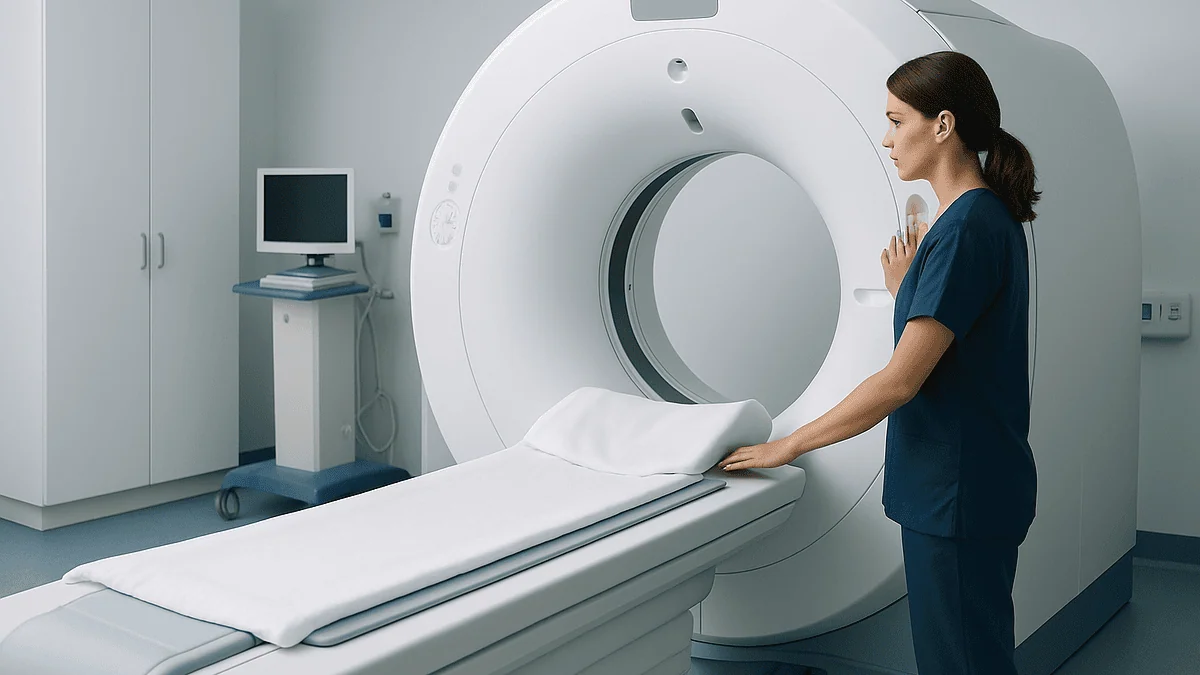
Radiation to the vulva and groin is given from outside the body, typically as short daily sessions, five days a week, over several weeks (Mayo Clinic). Before it begins, a planning scan maps the exact area and small skin marks are made so the beams land in the same place each day. The treatment itself is painless. The side effects build gradually and come mostly from the skin and the organs that share the beam path.
The skin of the vulva and groin is thin and folds on itself, so radiation dermatitis, redness and soreness that can progress to moist peeling, is expected toward the later weeks and usually heals in the weeks after treatment ends (NHS). The bladder and rectum often sit in or near the field, so some people experience urinary urgency, loose stools or rectal irritation during treatment. Fatigue is common and tends to accumulate. Longer-term effects can include vaginal narrowing and dryness, skin changes, and, if the groins are treated, an added risk of lymphedema (Mayo Clinic).
Questions worth asking at the planning visit:
- Exactly which structures are in the treatment field, and which are being spared?
- What skin care routine do you recommend, and which products should I avoid?
- Will chemotherapy be given alongside, and how does that change the side effects?
- What late effects should I know about, and what can be done to reduce them?
- Who do I contact if skin breakdown or diarrhea becomes severe between sessions?
Ask also about vaginal dilators, smooth cylinders used after pelvic radiation to help keep the vaginal canal open; many teams introduce them early. If sexual function matters to you, and there is no shame in that, say so plainly during planning rather than after treatment. The answers may shape how the fields are drawn.
Chemotherapy and immunotherapy: questions about drugs by class, not by brand
Drug treatment plays a smaller role in vulvar cancer than in many cancers, but it matters in two settings. The first is radiosensitization: chemotherapy given during radiation to make cancer cells more vulnerable to the beams, typically a platinum-based drug given on a weekly schedule set by the oncologist (NCI). The second is advanced or recurrent disease, where chemotherapy, and in some cases immunotherapy, may be used to control the cancer (Mayo Clinic).
Immunotherapy describes drugs that release a brake on the immune system so that T cells can attack cancer cells; the best-known class is immune checkpoint inhibitors. Whether they are an option can depend on laboratory markers in your tumor, so ask whether such testing has been or will be done (NCI). Targeted therapy describes drugs designed to block a specific molecule that the tumor relies on. Many of these treatments for vulvar cancer are still being studied, and participation in a clinical trial, a carefully monitored study comparing treatments, may be raised as an option.
Questions that keep the discussion concrete:
- What class of drug are you recommending, and what is it meant to do in my case?
- How will it be given, how often, and for roughly how long?
- What side effects are expected, which are serious, and which need an urgent call?
- How will you know whether it is working, and what happens if it is not?
- Are there trials I might be eligible for, and what would taking part involve?
Decisions about starting, pausing or stopping any medicine belong with your prescribing clinician, who knows your kidney function, blood counts and other conditions. Your job is to understand the reasoning well enough to consent with confidence, and to report side effects early and honestly.
What services are available for cancer patients during vulvar cancer treatment?
Supportive care, the services that address the physical, emotional and practical weight of cancer treatment, is not a luxury added at the end. Good oncology programs introduce it at diagnosis, and asking about it early is one of the most useful questions to ask about vulvar cancer treatment (NCI).
The services most relevant to vulvar cancer include:
- Oncology nursing and nurse navigation: a named contact who coordinates appointments and answers questions between visits.
- Wound and stoma care nursing: specialist support for healing after vulvar or groin surgery.
- Lymphedema therapy: physical therapists trained in compression, manual drainage and exercise for leg and genital swelling (Mayo Clinic).
- Pelvic floor physical therapy: for continence, pain and vaginal narrowing after surgery or radiation.
- Sexual health and psycho-oncology services: counselors who work with body image, intimacy and anxiety.
- Dietitian support: particularly during chemoradiation, when appetite and bowel habits change.
- Social work and financial counseling: help with employment, transport, caregiving and insurance paperwork.
- Palliative care: symptom-focused medicine that works alongside active treatment at any stage, not only at the end of life (NCI).
Palliative care deserves a specific word, because the term frightens people. In modern oncology it means expert management of pain, nausea, fatigue and distress, offered alongside treatment intended to control the cancer. Asking for it early is a sign of good planning, not of giving up.
Practical questions: Who is my point of contact, and how do I reach them after hours? Which of these services are referred automatically, and which must I request? Is there a support group for gynecologic cancers, in person or online? Many people find that a single conversation with a social worker in the first week removes half the logistical worry that was crowding out the medical questions.
Sex, body image and intimacy: questions people are embarrassed to ask
The vulva is tied to identity, pleasure and private self-image in ways that a kidney or a gallbladder is not. Treatment can change its appearance, its sensation and how it feels to be touched. Many patients never raise this because they assume it is trivial compared with the cancer, and many clinicians, pressed for time, wait to be asked. The result is silence on a topic that shapes life for years afterward (NCI).
Surgery near the clitoris can reduce or alter sensation; removal of part of the labia changes the look of the area and can make the vaginal opening feel tighter or more exposed. Radiation can cause vaginal dryness, narrowing and fragile skin that bleeds easily with friction. Groin surgery and lymphedema change how the thighs and lower abdomen feel. None of this is inevitable, and much of it can be anticipated or eased, but only if it is discussed before the plan is final (Mayo Clinic).
Questions that open the door:
- How will this surgery affect the clitoris and the vaginal opening?
- Are there reconstructive options, and would they change recovery?
- When is it safe to resume sexual activity, and what might feel different?
- What can help with dryness, narrowing or pain, and who manages that?
- Is there a counselor who works with partners as well as patients?
Bringing a partner to this conversation, if you have one and want them there, often helps; they are frequently more afraid of causing pain than you are of experiencing it. If you prefer to have the discussion alone, say so. A sentence as simple as “I want to talk about sex and how this will change it” is enough to shift the appointment. You are not being vain; you are planning your life.
What people often get wrong about vulvar cancer treatment
Myths cluster around rare diseases because few people know anyone who has had them. Several come up repeatedly in clinic.
“It is a sexually transmitted disease, so I must have done something wrong.” HPV is extremely common; most sexually active people acquire it at some point, and the great majority clear it without any disease (CDC). A sizeable share of vulvar cancers are not HPV-related at all and arise from chronic skin conditions such as lichen sclerosus in people who have had one lifelong partner or none (Mayo Clinic). Blame has no place in the diagnosis.
“Treatment always means removing the whole vulva.” Radical vulvectomy was once routine. Current practice favors removing the tumor with a safe margin and sampling nodes selectively, with radiation used to spare tissue where possible (NCI).
“If the Pap test was normal, it cannot be cancer.” Pap tests screen the cervix, not the vulva. Vulvar changes are found by looking and feeling, and by biopsy of anything persistent (NHS).
“A vulvar itch that has lasted years is just thrush or dryness.” Persistent itching, a thickened white patch, a sore that does not heal or a new lump should be examined, especially in someone past midlife (Mayo Clinic). Years of over-the-counter creams can delay diagnosis.
“Radiation means I am being given up on.” For some tumors radiation is the first-line choice precisely to preserve continence and sexual function. The reason for choosing it is worth asking, but the choice itself is not a signal of hopelessness.
“Once treatment ends, the risk is over.” Vulvar cancer can recur, sometimes years later, and the surrounding skin remains at risk if lichen sclerosus or HPV changes persist. Long-term follow-up and self-examination are part of the plan, not an afterthought (NCI).
Questions to ask your care team: the list to bring
Bring this list, cross off what no longer applies, and add your own. Record the appointment on your phone if the team agrees, because memory under stress is unreliable, and ask for the answers in writing when they involve dates or instructions.
About the diagnosis
- What type and stage of vulvar cancer do I have, and how certain are you?
- Has my case been reviewed at a tumor board?
- Do I need more tests before a final plan?
About the recommended treatment
- What are you recommending, and what are the alternatives, including doing less?
- What is the goal: removing all disease, controlling it, or relieving symptoms?
- What happens if we find more than expected during surgery?
- How will my lymph nodes be assessed?
About risks and recovery
- What are the most common complications, and the most serious?
- How long is the typical hospital stay and recovery for my specific operation?
- What changes to continence, sensation or sexual function should I prepare for?
- What is my risk of lymphedema, and how is it monitored?
About daily life
- Who is my contact person, and how do I reach the team urgently?
- Which support services will be arranged, and which should I ask for?
- What should my partner or family know?
About afterward
- How often will I be seen, and what will each visit involve?
- What symptoms would make you worry about recurrence?
A final question that many patients find clarifying: “If you were explaining my case to a colleague, what would you say are the two things that matter most?” The answer usually cuts through the detail and tells you where the real decision lies. Then ask for time to think. A day or two to reflect rarely changes the outcome and often changes how settled you feel about the choice.
When to call your doctor
Treatment for vulvar cancer comes with a written list of warning signs, and it is worth reading it before you need it. Contact your care team the same day, or use emergency services if the symptom is severe, for any of the following.
After surgery: a wound that becomes increasingly red, hot, swollen or foul-smelling; pus or a sudden increase in fluid from the wound or drain; bleeding that soaks a pad and does not slow with gentle pressure; a fever or shaking chills; a calf that is painful, swollen or warm, or sudden chest pain or breathlessness, which can signal a blood clot in the leg or lung and is an emergency (NHS, Mayo Clinic). Inability to pass urine, or urine leaking from somewhere other than the urethra, also needs prompt review.
During radiation or chemotherapy: skin in the treated area that has broken down and will not stop weeping; diarrhea or vomiting that stops you keeping fluids down for more than a day; a fever during chemotherapy, which can indicate a dangerously low white cell count and is treated as an emergency; new confusion, severe headache or a rash that spreads quickly (NCI).
At any stage: a new lump in the groin or vulva, a sore that reopens or will not heal, pain that is steadily increasing rather than easing, unexplained weight loss, or swelling of one leg that does not settle overnight. These do not always mean recurrence, but they always deserve a look.
The number to call after hours should be in your discharge paperwork. If it is not, ask for it before you leave the hospital. Calling early about something that turns out to be minor is never a mistake; waiting with something that was not minor can be.
More questions to ask about vulvar cancer treatment follow-up and recurrence
Finishing treatment is a milestone, not the end of care. Vulvar cancer can return in the vulvar skin, in the groin nodes or, less often, further away, and because the surrounding skin may carry the same HPV changes or lichen sclerosus that led to the first tumor, new cancers can also arise nearby (NCI). Follow-up is designed to catch both early, when options are widest.
A typical schedule involves examinations at set intervals that become less frequent over time, with imaging reserved for symptoms or specific findings; the exact rhythm is set by your team and depends on stage and treatment received (NCI). Each visit usually includes a careful look at the vulva, groin and vagina and a conversation about symptoms. Ask how long surveillance will continue, who will carry it out if care is shared with a local gynecologist, and whether you should keep treating an underlying skin condition such as lichen sclerosus between visits, since ongoing control of that condition is part of lowering future risk (Mayo Clinic).
Self-examination matters. Ask the team to show you what the healed area should look like, using a hand mirror, so you can recognize change. Questions to bring to a follow-up visit:
- What exactly are you checking for today, and what would concern you?
- Which of my current symptoms are expected healing, and which need investigation?
- Is HPV vaccination relevant for me now? The CDC recommends routine vaccination in early adolescence and through age 26, with shared decision-making for some adults aged 27 to 45 (CDC); your oncologist can say whether it applies after treatment.
- How do I manage lymphedema, vaginal dryness or scar discomfort long term?
Fear of recurrence is nearly universal and tends to spike before each visit. Naming it to your team, or to a psycho-oncology counselor, is as valid a reason for an appointment as any physical symptom. The goal of follow-up is not only to watch the cancer; it is to help you live well while it is watched.
Frequently asked questions
What are the most important questions to ask about vulvar cancer treatment at the first visit?
Ask what type and stage of cancer you have, what treatment is recommended and why, what the alternatives are, how the lymph nodes will be assessed, and what recovery will involve for your body and daily life. Request a copy of the pathology report and the name of a contact person. Then ask for a day or two to reflect before consenting, which teams generally welcome.
What is Bartholin's gland malignancy?
Bartholin’s gland malignancy is a rare cancer arising in one of the two small glands beside the vaginal opening that produce lubricating fluid. It is more often an adenocarcinoma, a cancer of gland-forming cells, though other types occur. It can feel like a harmless cyst, so a new or persistent lump in that area in someone past midlife should be biopsied rather than simply drained (Mayo Clinic, NCI).
What services are available for cancer patients having vulvar cancer treatment?
Most oncology programs offer nurse navigation, wound care nursing, lymphedema and pelvic floor physical therapy, dietitian support, social work, psycho-oncology and sexual health counseling, and palliative care for symptom control alongside active treatment. Some are referred automatically and others must be requested, so ask your team which applies and who your point of contact is between appointments (NCI).
What are the main vulvar cancer treatment options?
The main options are surgery, ranging from wide local excision to partial or radical vulvectomy, with sentinel node biopsy or groin node dissection; radiation therapy, given alone, before surgery or after it; and chemotherapy, often alongside radiation or for advanced disease. Immunotherapy and targeted drugs are used in some advanced cases, frequently within clinical trials. The combination depends on stage, tumor location and your overall health (NCI, Mayo Clinic).
How long does vulvar cancer surgery recovery usually take?
Recovery depends on the extent of surgery. Wound healing in the vulva and groin typically takes several weeks, and drains may stay in place for a time after discharge; minor separation of wound edges is a common complication managed with dressings (Mayo Clinic, NCI). Ask your surgeon for the expected timeline for your specific operation, including when you can drive, lift and return to work.
What are the common vulvar cancer radiation side effects?
Skin redness, soreness and moist peeling in the vulva and groin are expected toward the later weeks and usually settle after treatment ends. Bladder irritation, loose stools, rectal discomfort and fatigue are also common during treatment. Longer-term effects can include vaginal narrowing and dryness, skin changes and, if the groins are treated, an added risk of leg swelling called lymphedema (Mayo Clinic, NHS).
Will I need to have my lymph nodes removed?
Not always. If the tumor has invaded only a short distance, node sampling may not be needed. For most other early cancers, a sentinel node biopsy removes only the first draining node; a full groin dissection is reserved for suspicious or positive nodes. Ask your surgeon which approach applies to you, what happens if a sentinel node is positive, and how lymphedema risk will be monitored (NCI).
Is vulvar cancer caused by HPV?
Some vulvar cancers are linked to persistent HPV infection, the same virus behind most cervical cancers, while others arise from chronic inflammatory skin conditions such as lichen sclerosus, particularly in older adults. HPV is extremely common and most infections clear without causing disease, so a diagnosis is not a reflection of behavior. Ask your pathologist which pathway your tumor shows, as it can shape follow-up (Mayo Clinic, CDC).
Can vulvar cancer come back after treatment?
Yes, vulvar cancer can recur in the vulvar skin, the groin nodes or elsewhere, and new tumors can arise nearby if the underlying HPV changes or lichen sclerosus persist. That is why follow-up examinations continue for years and why your team may ask you to check the area yourself with a mirror. Report any new lump, non-healing sore or persistent pain promptly (NCI).
Should I ask for a second opinion before vulvar cancer treatment?
Seeking a second opinion for an uncommon cancer is reasonable and widely accepted, and most oncologists will support it, particularly when a large operation or a combined plan is proposed. Ask whether your case has already been reviewed at a multidisciplinary tumor board, which brings several specialists together. The final decision always remains between you and your treating team.
References
This article is for general information only and is not a substitute for professional medical advice. Please consult a qualified doctor about your individual situation.

More from the Blog
Your First Cancer Rehabilitation Visit: What to Bring and Which Daily Tasks to Write Down
For a first cancer rehab appointment, bring your treatment summary, a current list of medicines and supplements, any recent scan or lab reports, comfortable…
Inside a Breast Cancer Tumor Board: Who Sits at the Table and What Gets Decided
A breast cancer tumor board is a scheduled meeting where a surgeon, medical oncologist, radiation oncologist, radiologist and pathologist, often with a nurse navigator,…

Medicines After a Bone Marrow Transplant: Anti-Rejection, Antivirals and What Blood Tests Track
After a bone marrow (stem cell) transplant, most people take a combination of immunosuppressants to prevent graft-versus-host disease, plus preventive antiviral, antifungal and antibiotic…
Why Is a Fever During Chemotherapy Treated as Urgent? What to Do the Moment It Starts
A fever during chemotherapy is treated as an emergency because chemotherapy can lower neutrophils, the white blood cells that fight bacteria, so an ordinary…

What Molecular Response Means in Myeloid Leukemia and How Often It Is Measured
In chronic myeloid leukemia, molecular response describes how far the level of BCR-ABL1, the abnormal gene that drives the disease, has fallen in the…
Bleeding, Breathing Changes or Fever After Head Cancer Treatment: When to Call Your Team
After head and neck cancer treatment, call your care team the same day for any fever at or above the threshold they gave you…