

Radiation Precautions After Radioiodine Treatment: Distance, Sleeping Alone and Hygiene
Key Takeaways
- Iodine-131 has a physical half-life of about eight days, and most of the radioiodine your thyroid does not capture leaves in urine within the first few days, which is why the strictest precautions are short.
- Doubling your distance from another person cuts their radiation exposure to roughly a quarter, making distance more effective than any cleaning product.
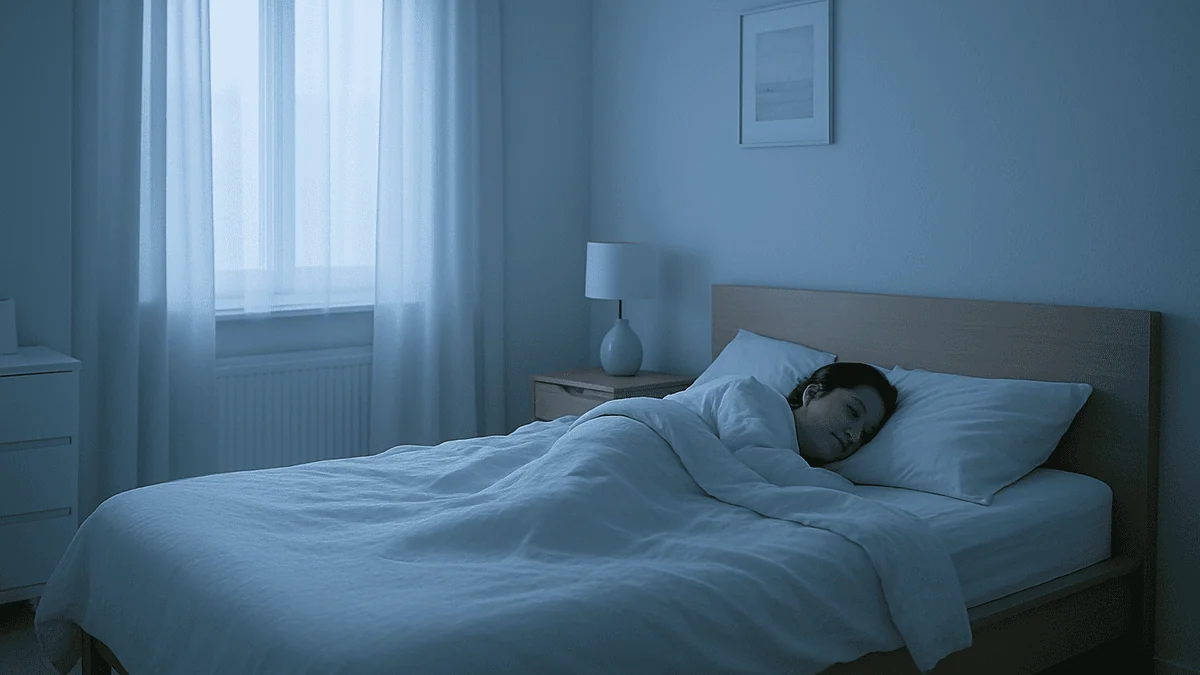
- Sleeping alone is the single most protective precaution because seven or eight hours side by side is the longest period of close contact in almost any household.
- Children and pregnant people warrant longer distance rules because small, growing thyroids and the fetal thyroid concentrate iodine far more intensely than an adult gland.
- The NHS advises avoiding pregnancy for at least six months and fathering a child for at least four months after treatment for an overactive thyroid; these intervals concern hormone stability, not lingering radioactivity.
- Airport and border radiation detectors can register iodine-131 for weeks to months after treatment, so a dated letter from your care team is worth carrying whenever you travel.
Radiation precautions after radioactive iodine usually mean keeping extra distance from other people, sleeping alone, and taking care with urine, saliva and sweat for a period that typically runs from a few days to about two weeks, depending on the amount given and who lives with you. Your nuclear medicine team sets the exact duration; longer limits apply to contact with children and pregnant people, and to conception.
The pharmacist slides a small lead-lined container across the counter, and inside sits a capsule that looks like any vitamin. You swallow it with a cup of water. Nothing happens. No warmth, no taste, no sensation at all. Then you are handed a printed sheet about staying away from the people you love, and the ordinary act of going home suddenly feels complicated.
That gap, between how uneventful the treatment feels and how strict the instructions sound, is where most anxiety about radiation precautions after radioactive iodine begins. People picture themselves as a hazard. In reality, the rules exist for a narrow and very manageable reason: for a while, your body carries a small amount of a substance that emits radiation, and some of it leaves through fluids you produce every day.
This guide walks through what the instructions mean, why distance and sleeping alone matter more than almost anything else, and how the first two weeks usually unfold, with the evidence behind each step.
What radioactive iodine actually does inside the body
The thyroid is the only organ in the body that actively hoards iodine. It uses the element to build thyroid hormone, and it does not distinguish between ordinary iodine from food and a radioactive form called iodine-131. Radioiodine treatment simply exploits that appetite. You swallow a capsule or liquid, the gut absorbs it, and within hours thyroid cells (or leftover thyroid cancer cells) pull it in and concentrate it.
Iodine-131 gives off two kinds of radiation. Beta particles travel only a millimeter or two in tissue, so they deliver almost all of their energy inside the cells that trapped the iodine, damaging those cells while sparing the neighbors. Gamma rays, a second and more penetrating type, pass out of the body and are what a detector picks up when you stand near it. The beta particles do the treating; the gamma rays are the reason for the precautions.
The radioactive form does not stay radioactive forever. Iodine-131 has a physical half-life of about eight days, meaning half of what remains decays every eight days regardless of what you do (Cleveland Clinic). More importantly for daily life, the iodine your thyroid does not capture is filtered by the kidneys and leaves in urine, with smaller amounts in saliva, sweat and stool, most of it in the first few days (Mayo Clinic). That combination of decay plus excretion is why the strictest rules cover a short window rather than months.
For thyroid cancer, the treatment is usually given after surgery to remove tissue the surgeon could not see, or to treat cancer that has spread. For an overactive thyroid, it is given to quiet or shrink an overproducing gland. The precautions are similar in kind but often differ in length, because the amount of radioiodine given for cancer is typically much larger (NHS).
Why radiation precautions after radioactive iodine exist: two routes of exposure
Every instruction on that printed sheet protects other people from one of two things. Understanding which is which makes the rules far easier to follow with good judgment rather than by rote.
The first route is external exposure. While iodine-131 sits in your thyroid tissue and bloodstream, gamma rays radiate outward through your body. Anyone standing close receives a small dose; someone across the room receives far less; someone in the next room receives almost nothing. This is the physics behind distance rules and sleeping alone, and it fades on its own as the iodine decays and clears.
The second route is contamination. Radioiodine that has not been captured by thyroid cells leaves in body fluids, and those fluids can transfer to surfaces, hands, a shared toothbrush or a partner’s mouth. If another person swallows or absorbs even a small amount, their own thyroid will hoard it just as yours did. This is why hygiene precautions focus so heavily on the bathroom, saliva and anything you put in your mouth.
Neither route makes you dangerous in the sense people fear. Regulators in most countries set the release threshold for patients so that a person living with you would receive, over the whole episode, an amount of radiation on the order of what everyone receives from natural background sources over a year or so. The precautions exist to keep exposure well within that ceiling, and they are more protective for the two groups whose thyroids are most vulnerable: young children and developing fetuses (NHS).
Put plainly, the goal is not zero exposure, which is impossible, but very low exposure, which is entirely achievable with distance, time and clean habits.
Who usually has radioiodine treatment, and who is usually asked to wait
Two quite different groups of patients receive the same substance. The first has an overactive thyroid, often from Graves disease (an autoimmune condition in which the immune system stimulates the gland) or from overactive nodules. Here radioiodine is one of three standard options alongside antithyroid medicines and surgery, and guidelines treat it as a reasonable first-line choice for many adults (NHS; ATA hyperthyroidism guideline, PubMed).
The second group has differentiated thyroid cancer, mainly papillary and follicular types, and has already had part or all of the gland removed. Radioiodine may be offered to destroy remaining thyroid tissue, to treat known spread, or to make future monitoring cleaner. Current guidelines do not recommend it for everyone; small, low-risk tumors are often followed without it, and the decision rests on tumor size, spread and surgical findings (ATA thyroid cancer guideline, PubMed).
Some people are asked to wait or to choose another route. Pregnancy is an absolute reason to postpone, because the fetal thyroid takes up iodine and can be permanently damaged. Breastfeeding must stop before treatment, and guidelines advise a gap of several weeks after weaning so that breast tissue, which also concentrates iodine, does not receive a large dose (ATA guidelines, PubMed). A pregnancy test is standard before treatment for anyone who could be pregnant.
Other reasons for delay include recent CT scans using iodine contrast, which floods the body with ordinary iodine and blocks uptake of the radioactive kind for weeks, and situations where a person cannot realistically follow precautions, such as sole care of an infant with no support. Severe eye involvement in Graves disease can also tilt the choice, since radioiodine may worsen it in some patients (ATA hyperthyroidism guideline). None of these are failures; they are timing and safety decisions for the treating team to weigh with you.
How long do you have to be in isolation after radioactive iodine?
The honest answer is that there is no single number, and any source giving you one without knowing your treatment is guessing. Two things drive the length: how much radioiodine you received, and who shares your home.
For an overactive thyroid, the amount is relatively small. The NHS describes precautions lasting a few days to a few weeks, mostly focused on avoiding prolonged close contact with children and pregnant women (NHS). Many people go home the same day and return to a modified normal life within about a week.
For thyroid cancer, the amount is typically much larger, and in some health systems, including the UK, patients stay in a shielded hospital room for a few days until measurements show their radiation level has dropped enough for release (NHS). In others, including much of the US, higher-amount treatment is given as an outpatient with detailed home instructions, and the release decision is based on a measurement taken before you leave.
Distance is the single most powerful tool in this window, and it follows a rule worth knowing: doubling your distance from someone cuts their exposure to roughly a quarter. Doubling it again cuts it to a sixteenth. That is why instructions often specify something like keeping about six feet (two meters) from others where possible and limiting time spent closer. Brief passing contact, a few seconds in a hallway, contributes almost nothing. Sitting side by side on a couch for a movie contributes far more.
The word isolation can mislead. Almost no one is asked to lock themselves away entirely. You can be in the same house, cook, work at a laptop, and talk across a room. What you are asked to avoid is sustained closeness, and the duration for that is set by your nuclear medicine physicist or physician based on your measured level, not by a blog.
Sleeping alone after radioactive iodine: why the bed matters most
Ask a nuclear medicine physicist which single precaution matters most and the answer is almost always the same: sleep alone. The reasoning is arithmetic. Seven or eight hours lying inches from another person, night after night, is by far the longest period of close contact in most households. Everything else, meals, conversation, a hug, adds up to minutes. Sleep adds up to a third of the day.
Instructions on sleeping separately typically run from several nights for an overactive thyroid to a week or more after treatment for cancer, with longer periods often advised when the bed partner is pregnant or trying to conceive (Cleveland Clinic; NHS). Your team will give you a number; treat it as a floor rather than a ceiling.
A separate bed in a separate room is the ideal, because walls add distance and the room’s air is yours alone. If space is tight, a bed on the other side of a shared room is far better than nothing, since a few meters of distance cuts exposure dramatically. Sleeping head to toe in the same bed is not an acceptable substitute; the distance is too small.
Sweat and saliva on bedding are the contamination side of this rule. Use your own pillowcases and sheets, change them at the end of the precaution period, and wash them separately from the household’s laundry that first time. Ordinary washing removes radioiodine; there is no need for special detergents or to discard linens.
Pets deserve a mention here. Cats and small dogs that sleep on the bed or on your lap should be gently kept at a distance during the precaution days. Their thyroids are small, and a cat curled on your neck for hours receives a meaningful dose. Larger dogs sleeping across the room are of little concern.
Bathroom, kitchen and laundry hygiene after radioiodine
The bathroom is where contamination precautions earn their keep, because most of the unabsorbed radioiodine leaves in urine during the first two or three days (Mayo Clinic). The steps are simple and quickly become habit.
Sit down to urinate, regardless of your usual habit, to avoid splashing. Flush twice with the lid closed. Wipe any drips from the seat or rim with toilet paper and flush it. Wash your hands thoroughly with soap afterward, every time, because hands are the bridge between fluids and shared surfaces. Men are often specifically asked to sit for this reason.
Drink plenty of fluids during those first days unless your team has said otherwise. More urine means faster clearance from the bladder and less time for radiation to sit in the pelvis. Empty the bladder often for the same reason.
Sharing a bathroom is fine if you keep it clean. Use your own towel and washcloth. A quick daily wipe of the sink, faucet handles and toilet with ordinary household cleaner is sensible. Shower daily; sweat carries a little radioiodine, and rinsing it away protects both you and anyone who touches your skin.
In the kitchen, the concern is saliva. Use your own cup, plate and cutlery, wash them normally with dish soap, and do not share food from your plate, a straw or a drink bottle. Do not prepare food for others with bare hands during the early days if you can avoid it; if you must cook, wash hands first and taste with a separate spoon. Disposable items are an option but not a requirement; a dishwasher or hot soapy water is sufficient.
Laundry follows the same logic: wash your clothes, underwear and towels separately for the first few days, then rejoin the household wash. Tissues used to blow your nose or wipe your mouth can be flushed or bagged and set aside for a week or so before going out with regular trash, a step some teams request because curbside detectors occasionally flag radioactive waste.
Children, pregnant partners and other people who need extra distance
Two groups justify longer and stricter distance rules, and the reason is biology rather than caution for its own sake. A developing fetus builds its thyroid from about the tenth week of pregnancy, and that tiny gland is exquisitely sensitive to radioiodine. Young children have small, actively growing thyroids that concentrate iodine more intensely per gram of tissue than an adult’s, and they have decades of life ahead in which any effect could surface.
For pregnant household members, instructions typically extend the distance and sleeping-alone rules well beyond what applies to other adults, and the NHS specifically flags avoiding prolonged close contact with pregnant women as a core precaution (NHS). If your partner is pregnant, tell your team before treatment; arrangements such as staying with a relative for the precaution period are common and sensible.
With children, the practical challenge is emotional. A toddler does not understand why a parent will not pick them up. Many families plan ahead: another adult takes over bedtime and bathing, the treated parent reads stories from across the room, and hugs are postponed with an explanation pitched to the child’s age. Brief contact is not catastrophic; the goal is to avoid the long, close cuddles and lap-sitting that dominate a young child’s day. Guidance for babies and toddlers usually runs longer than for school-age children, and your team’s written sheet should distinguish between them.
Elderly relatives and adults with their own thyroid conditions generally fall under the standard adult rules. There is no evidence that they need extra protection, though frail people who rely on you for close physical care may need alternative arrangements for a few days.
Visitors can come. Ask them to sit across the room, keep visits to under an hour or so in the first days, and skip the hugs. Most people are relieved to have a clear script.
How long after radioactive iodine can I kiss, have sex or try for a baby?
Kissing on the mouth transfers saliva, and saliva carries radioiodine for the first several days. Most instructions ask you to avoid mouth-to-mouth kissing for roughly the same period as the other close-contact rules, often about a week, longer after larger cancer treatments (Cleveland Clinic). A kiss on the cheek is a different matter: brief, no fluid exchange, and negligible risk after the first day or two. When in doubt, hold hands and wait.
Sexual contact combines the closest possible proximity with fluid exchange, so it sits under the same precaution window as sleeping together. Once your team has cleared close contact, there is no lingering restriction on intimacy itself.
Conception is the exception that stretches far beyond the precaution days. The reason is not that you remain radioactive; it is twofold. First, guidelines want any effect on eggs or sperm from the treatment period to have passed. Second, thyroid hormone levels need to be stable before a pregnancy, because both overactive and underactive states affect fetal development. The NHS advises women to avoid becoming pregnant for at least six months after treatment for an overactive thyroid, and men to avoid fathering a child for at least four months (NHS). Thyroid cancer guidelines give similar advice, generally six months to a year, partly to allow follow-up scans that could not be done during a pregnancy (ATA guideline, PubMed).
Breastfeeding cannot resume after treatment for the current child, because breast tissue concentrates iodine and milk would carry it directly to the baby. Future pregnancies and breastfeeding future children are not affected once the recommended interval has passed.
Reliable contraception during the waiting period is part of the treatment plan, not an afterthought. If a pregnancy does occur sooner than advised, contact your endocrinologist promptly rather than waiting for a routine appointment.
Radiation precautions after radioactive iodine at a glance: typical ranges
The table below summarizes the shape of typical instructions rather than a prescription. Actual durations come from your team’s measurement of your radiation level and your home situation, and they vary between health systems.
| Precaution | Overactive thyroid (smaller amount) | Thyroid cancer (larger amount) | Why it matters |
|---|---|---|---|
| Hospital stay | Usually none; same-day discharge | None to a few days in a shielded room, depending on system and amount | Release based on measured level |
| Sleep alone | Several nights | About a week, sometimes longer | Longest close contact of the day |
| Distance from adults | A few days | Up to about a week | Gamma exposure falls with distance |
| Distance from children and pregnant people | Up to a few weeks | Often two weeks or more | Small, sensitive thyroids |
| Bathroom hygiene | First few days | First week | Most excretion is early |
| Mouth kissing and shared utensils | A few days | About a week | Saliva carries iodine |
| Avoid pregnancy (women) | At least 6 months | 6–12 months | Hormone stability and follow-up |
| Avoid fathering a child | At least 4 months | About 4–6 months | Sperm turnover |
Sources for these ranges: NHS overactive thyroid and thyroid cancer treatment pages, Cleveland Clinic radioactive iodine therapy overview, and the ATA guidelines indexed on PubMed. Where your written sheet differs from this table, follow your sheet; it was written with your numbers in hand.
One pattern in the table deserves emphasis. The short rules (days) protect against gamma exposure and contamination while radioiodine is still in your body. The long rules (months) are about pregnancy planning and have nothing to do with you being radioactive. Mixing the two up is the most common source of unnecessary worry.
What the first two weeks after radioiodine usually look like
Day one is often anticlimactic. You swallow the capsule, wait a short time under observation, and leave. Fatigue is common but usually mild. Your team may ask you to drink freely and urinate often, and some suggest sucking sour candies or lemon drops starting a day or so after treatment to stimulate saliva flow and reduce the amount of radioiodine sitting in the salivary glands; the evidence on exact timing is mixed, so follow your team’s version (ATA guideline, PubMed).
Days two and three bring the most noticeable effects for many people. The neck may feel tender or swollen where remaining thyroid tissue is absorbing radiation. Mild nausea, a metallic taste, dry mouth and swollen salivary glands under the jaw are all recognized short-term effects (Mayo Clinic; Cleveland Clinic). These are usually manageable with fluids, rest and simple measures your team suggests. If you had thyroid hormone withheld before treatment to raise stimulating hormone levels, the sluggishness and cold intolerance of an underactive thyroid may linger until hormone replacement restarts on your team’s schedule.
By the end of the first week, most of the unabsorbed radioiodine has left, and many people are cleared for normal adult contact. Rules for children and pregnant people often run into the second week.
Around days three to ten after treatment for thyroid cancer, a whole-body scan is commonly performed to see where the radioiodine went, which doubles as a map of any remaining tissue. This scan uses the radiation already in you; it adds nothing.
Weeks later, follow-up blood tests check thyroid hormone levels. After treatment for an overactive thyroid, the gland typically slows over weeks to months, and a majority of people eventually need lifelong thyroid hormone replacement, a well-understood consequence rather than a complication (NHS). Your endocrinologist manages that transition; the timing varies widely between individuals.
Flying, work and airport detectors after radioactive iodine
Returning to work depends less on how you feel and more on who sits near you. An office where you can keep a desk’s width from colleagues and avoid shared cups is often fine after the initial precaution days. Jobs involving close contact with children, pregnant people or patients, such as teaching young children, childcare or nursing, usually require a longer break, and your team can write a letter with a specific date. Working from home for the first week sidesteps the question entirely.
Travel raises two separate issues. The first is exposure to fellow passengers. A long flight in a middle seat places strangers inches from you for hours, exactly the sustained closeness the precautions target. Most teams ask you to avoid extended travel on public transport, trains and planes for a period roughly matching your close-contact restriction, and prolonged flights for longer after cancer treatment. Driving yourself, or being driven while sitting in the back seat diagonal to the driver, is generally acceptable within days.
The second issue surprises people. Radiation detectors at airports, border crossings and some public buildings are sensitive enough to pick up iodine-131 for weeks, occasionally up to a few months, after treatment. Setting one off is not dangerous and not an offense, but it can mean a lengthy conversation with security. Ask your team for a letter on official paper stating the treatment, the date and a contact number, and carry it whenever you travel during the following months. Cleveland Clinic and other patient guides recommend exactly this step.
If you must travel medically soon after treatment, standard flight health basics apply: move about the cabin regularly, stay hydrated, and follow any clot-prevention advice your team gives, particularly if you have had recent surgery. Arrange follow-up blood tests and scans before you leave so that continuity is not lost.
What are the chances of getting cancer from radioactive iodine?
This question deserves a straight answer, and the evidence supports a measured one. Radiation can cause cancer; that is settled science. The question is whether the amounts used in thyroid treatment, concentrated so heavily in one organ, raise the risk enough to matter for an individual, and the data suggest the increase is small and mostly linked to large cumulative amounts.
For thyroid cancer treatment, the ATA guideline reviews studies showing a modest increase in the risk of a second primary cancer, including leukemia and some solid tumors, most apparent in people who received repeated, high cumulative treatments over years. It concludes that the absolute increase is small and should be weighed against the benefit of treating a known cancer, and it explicitly recommends against giving radioiodine when the expected benefit is low, partly for this reason (ATA thyroid cancer guideline, PubMed). Some population studies have since reported small associations even at lower cumulative amounts, while others have not; the guideline-level summary remains that the risk is real, small and dose-related.
For an overactive thyroid, where amounts are far smaller, the ATA hyperthyroidism guideline finds no consistent increase in overall cancer mortality attributable to the treatment, and it continues to endorse radioiodine as a standard option (PubMed). Individual studies have flagged possible small associations with specific cancers, and researchers continue to examine them, which is the appropriate scientific posture rather than a red flag.
Alternatives exist and are part of any honest conversation. For an overactive thyroid, antithyroid medicines (drugs that block hormone production) and surgery are established options with their own trade-offs. For low-risk thyroid cancer, surveillance without radioiodine is increasingly common. Whether the small long-term risk of radioiodine is worth accepting depends on what it is treating, and that judgment belongs with you and your treating team, ideally in a discussion where the numbers relevant to your case are laid out plainly.
What people often get wrong about radioiodine precautions
The most persistent myth is that you become dangerous to be near. You do not. The precautions keep other people’s exposure very low; they do not exist because a hug would harm anyone. Following them well is a courtesy scaled to risk, not an emergency response.
A second error runs the other way: assuming the rules are bureaucratic and can be skipped for adults who do not mind. The gamma exposure to a bed partner over a week of shared sleep is not trivial, and the point of the ceiling is that it is set low on purpose. The rules are not onerous; honoring them for the specified days is the reasonable middle path.
People often believe that showering, drinking lots of water or sweating it out can end the precautions early. Fluids do speed clearance of unabsorbed iodine, which is why teams encourage them, but the radioiodine already inside thyroid tissue decays on its own eight-day schedule and cannot be flushed. Precaution length is set by measurement, not effort.
Another misconception is that anything you touch becomes permanently contaminated. Radioiodine washes off with soap and water and decays away within weeks. Dishes, sheets and clothing return to normal use after an ordinary wash; nothing needs to be thrown out.
Many confuse the months-long advice about pregnancy with being radioactive for months. You are not. Those intervals are about stable hormones and completed follow-up, as explained earlier.
A quieter error is thinking the low-iodine diet continues afterward. It is a preparation step, usually one to two weeks before treatment, designed to make thyroid cells hungry for iodine (ATA guideline, PubMed). Once treatment is done, you can generally eat normally unless told otherwise.
Finally, some assume that feeling fine means precautions are finished. Symptoms and radiation level are unrelated. Keep to the dates on your sheet.
Questions to ask your care team before you go home
A ten-minute conversation before treatment prevents most of the guesswork afterward. Bring a written list; the day itself can be distracting.
- What was my measured radiation level at release, and what exact dates apply to each precaution: adults, children, pregnant people, sleeping alone, kissing and shared utensils?
- My household includes (describe: a pregnant partner, a toddler, an elderly parent, a cat that sleeps on the bed). What specifically changes for them?
- Should I stay somewhere else for the first days, and if so, for how long?
- How should I handle tissues, sanitary products and any vomit or incontinence during the first week?
- Do you want me to use sour candies or gum for saliva flow, and starting when?
- When do I restart or begin thyroid hormone replacement, and who arranges the follow-up blood test?
- Will I have a post-treatment scan, and on which day?
- Can I have a letter for airport security and my employer, with the treatment date and a contact number?
- When may I return to my particular job, given who I work with?
- How long should we use contraception, and whom do I call if pregnancy occurs sooner?
- What side effects should I expect in the first week, and which ones mean I should call?
- If I am hospitalized for another reason in the coming weeks, what should I tell that hospital?
Write the answers on the same sheet as your precaution dates and keep it on the refrigerator. Household members who read it themselves tend to feel calmer than those who hear it second hand, and a shared, visible plan reduces the small frictions of a week spent keeping distance from people you would normally sit beside.
When to call your doctor after radioactive iodine
Most people get through radioiodine treatment with nothing worse than tiredness, a tender neck and a dry mouth for a few days. A small number develop problems that need prompt attention, and knowing the difference matters more than any precaution on the sheet.
Call your treating team the same day, or seek urgent care, if you notice any of the following:
- Rapid swelling of the neck with difficulty breathing or swallowing, which can occur when a large amount of remaining thyroid tissue becomes inflamed.
- A racing or irregular heartbeat, marked tremor, high fever, confusion or severe agitation in the days after treatment for an overactive thyroid. These can signal a surge of thyroid hormone release from damaged cells, an uncommon but serious event that needs emergency assessment.
- Persistent vomiting that prevents you keeping fluids down, which risks dehydration and complicates hygiene precautions.
- Severe pain or swelling of the salivary glands under the jaw or in front of the ears that does not settle, or pus-like discharge in the mouth.
- Any positive pregnancy test, or a suspicion that you or your partner may have been pregnant at the time of treatment.
- An accident with body fluids, such as vomiting or incontinence, that a child or pregnant person may have been exposed to, so the team can advise on cleanup and any follow-up.
- Symptoms of a severely underactive thyroid in the following weeks: profound fatigue, feeling cold, marked weight gain, slowed thinking or swelling of the face, particularly if hormone replacement has not yet started.
For non-urgent concerns, such as uncertainty about a precaution date or mild persistent dry mouth, a routine call to the nuclear medicine or endocrinology clinic is appropriate. Keep the treatment date and the amount given, as written on your discharge paperwork, available for any clinician you speak to. Every decision about restarting medicines, extending precautions or investigating a symptom rests with your treating team, who know your numbers.
Frequently asked questions
What should you not do after radioactive iodine treatment?
Avoid prolonged close contact with others, especially children and pregnant people, for the period your team specifies. Do not share a bed, kiss on the mouth, share cups, utensils, towels or toothbrushes, or prepare food for others with bare hands during the early days. Sit to urinate, flush twice and wash hands well. Skip long journeys on public transport, and do not attempt pregnancy until the recommended interval has passed.
How long is the radioactive iodine isolation period?
It depends on the amount given and who lives with you. After treatment for an overactive thyroid, the NHS describes precautions lasting a few days to a few weeks, mainly around children and pregnant women. After larger treatments for thyroid cancer, some health systems keep patients in a shielded room for a few days, and home precautions often run about a week for adults and longer for children. Your team sets exact dates from your measured level.
How long after radioactive iodine can I kiss my partner?
Mouth-to-mouth kissing transfers saliva, which carries radioiodine for the first several days, so most instructions ask you to avoid it for roughly the same period as other close-contact rules, often about a week and longer after larger cancer treatments. A brief kiss on the cheek is a much lower concern after the first day or two. If your partner is pregnant, follow the longer restriction your team gives.
Is sleeping alone after radioactive iodine really necessary?
Yes, for the days your team specifies. Sleep is the longest stretch of close contact in most homes, so it accounts for the largest share of a partner’s exposure. A separate room is ideal, and a separate bed across the room is far better than sharing one. Sleeping head to toe in the same bed does not create enough distance. Use your own bedding and wash it separately once at the end of the period.
Can I share a bathroom after radioactive iodine?
Sharing is fine with clean habits. Most unabsorbed radioiodine leaves in urine during the first few days, so sit to urinate, flush twice with the lid down, wipe any splashes and wash hands thoroughly every time. Use your own towel, shower daily to rinse away sweat, and give the sink and toilet a quick daily wipe with ordinary cleaner. No special products are needed, and nothing has to be discarded.
What are the chances of getting cancer from radioactive iodine?
The increase in risk is small and mainly linked to large cumulative amounts. The ATA thyroid cancer guideline notes a modest rise in second primary cancers, including leukemia, most evident after repeated high-amount treatments, and recommends against radioiodine where expected benefit is low. For overactive thyroid, where amounts are far smaller, the guideline finds no consistent increase in overall cancer mortality. Your team can put the figures relevant to your case in context.
Is flying after radioactive iodine allowed?
Short flights are usually discouraged during the close-contact precaution period because a neighboring passenger sits inches away for hours, and longer flights are often deferred for somewhat longer after cancer treatment. Beyond exposure, airport detectors can register iodine-131 for weeks to months, so carry a dated letter from your team. If travel is unavoidable, follow standard flight health basics and arrange follow-up tests before leaving.
How long should I keep my distance from children after radioiodine?
Longer than from adults, because children’s small, growing thyroids concentrate iodine more intensely. Instructions commonly run into a second week after cancer treatment and up to a few weeks after treatment for an overactive thyroid, with the longest periods for babies and toddlers. Brief passing contact matters little; the aim is to avoid long cuddles, lap-sitting and shared beds. Ask your team for age-specific dates and plan another adult’s help for bedtime and bathing.
Does drinking lots of water make the radioactivity leave faster?
Partly. Fluids speed clearance of radioiodine that thyroid cells did not capture, which is why teams encourage drinking freely and urinating often in the first days. The radioiodine already inside thyroid tissue, however, decays on its own roughly eight-day half-life and cannot be flushed out. Precaution dates are based on your measured radiation level, so extra water helps your comfort and reduces bladder exposure but does not shorten the official window.
When can I try for a baby after radioactive iodine treatment?
The NHS advises women to avoid pregnancy for at least six months and men to avoid fathering a child for at least four months after treatment for an overactive thyroid; thyroid cancer guidelines suggest six to twelve months for women to allow hormone levels to stabilize and follow-up scans to be completed. These intervals are not about lingering radioactivity. Use reliable contraception meanwhile and contact your endocrinologist promptly if pregnancy occurs sooner.
References
This article is for general information only and is not a substitute for professional medical advice. Please consult a qualified doctor about your individual situation.

More from the Blog

When Targeted Therapy Stops Working: Resistance, Repeat Biopsies and the Next Options
When targeted therapy stops working, it usually means the cancer has found a way around the drug, a process called acquired resistance. The care…
Why Cystoscopy Surveillance Continues for Years After Bladder Cancer Treatment
Cystoscopy surveillance after bladder cancer continues for years because the disease has one of the highest recurrence rates of any solid tumor, and new…

How Acute Lymphocytic Leukemia Treatment Runs in Phases, From Induction to Maintenance
Acute lymphoblastic leukemia is treated in sequential phases rather than one course. Induction, usually about four weeks, aims to clear leukemia cells from the…

What Sarcoma Follow-Up Involves: Scheduled Imaging, Wound Review and Function Checks
Sarcoma follow-up combines scheduled imaging, wound checks and function assessments. Guideline consensus suggests chest imaging by CT or X-ray, plus MRI or ultrasound of…

Flying Home After Radioiodine Treatment: Airport Detectors, Timing and What to Carry
Flying after radioactive iodine treatment is usually possible once your treating team confirms your radiation level has fallen enough for close contact with other…
After Colon Cancer Surgery: How Bowel Function Returns and What the First Weeks Feel Like
After colon cancer surgery, the bowel usually pauses for a day or two, then gas and loose, frequent stools return over the following days.…