

Recovering After a Gastrointestinal Bleed: Anemia Checks, Diet Steps and Regaining Energy

Key Takeaways
- The body cannot make iron, only recycle it, so a bleed breaks that loop and leaves an iron deficit that lingers long after the bleeding stops.
- Symptoms lag the numbers: people often feel well while hemoglobin is still low, and feel tired after it recovers because ferritin stores refill last.
- The NHS notes that iron replacement usually continues for around three months after the blood count normalizes, precisely to rebuild reserves and prevent relapse.
- Tea, coffee and calcium taken with an iron-rich meal or iron tablet cut absorption, while vitamin C at the same sitting improves uptake of plant iron.
- Acid-suppressing treatment for a stomach ulcer is typically given for several weeks, often four to eight, because tissue repair is slower than symptom relief.
- Iron tablets darken stool, but stool that is tarry, sticky and foul-smelling, especially with dizziness or a racing pulse, is a red flag for re-bleeding.
Recovery after a GI bleed usually unfolds over weeks rather than days. The lining heals first, then the blood count and iron stores follow, often with the help of iron replacement and acid-reducing medicines prescribed by the treating team. Repeat blood tests, a gradual return to a normal diet, paced activity and prompt reporting of black stools, vomiting blood or dizziness are the core of a safe recovery.
The discharge paperwork fits in one hand. The fatigue does not. A week after leaving the hospital, many people who have had a gastrointestinal bleed find that the stairs feel taller than they remember, that a short walk to the mailbox needs a sit-down afterward, and that the follow-up lab slip on the fridge raises more questions than it answers.
Recovery after a GI bleed is quieter than the event itself. There is no bandage to change and nothing visible to heal, which is exactly why people underestimate it. The bleeding stopped, but the body is still running a deficit: fewer red blood cells, depleted iron, and a stomach or bowel lining that is knitting itself back together out of sight.
This explainer walks through what is happening inside, which blood tests matter and why, how to eat during the first weeks, and how energy typically returns. Every decision about medicines, timing and testing stays with your treating team; the goal here is to help you understand their reasoning.
What actually happens inside the body after a gastrointestinal bleed
A gastrointestinal bleed means blood has escaped from a damaged patch of the digestive tract, anywhere from the esophagus to the rectum. Common sources include a peptic ulcer (an open sore in the stomach or upper small intestine), inflamed or torn lining, diverticula (small pouches in the colon wall), polyps, and fragile clusters of blood vessels called angiodysplasia. Mayo Clinic lists peptic ulcers as the most frequent cause of upper GI bleeding, often linked to Helicobacter pylori infection or long-term use of anti-inflammatory painkillers.
When blood leaves the circulation, three things fall at once. The volume of fluid in the vessels drops, which is why people feel faint or notice a racing pulse. The hemoglobin level falls; hemoglobin is the iron-containing protein inside red blood cells that carries oxygen. And iron itself is lost, because roughly two-thirds of the body’s iron travels inside hemoglobin, according to the NIH Office of Dietary Supplements.
The body responds in stages. Within hours, the kidneys retain water and the vessels tighten to hold up blood pressure. Over days, the bone marrow steps up red cell production, but it can only build new hemoglobin as fast as iron is available. The body cannot manufacture iron; it recycles it from old cells and absorbs a small fraction from food. A bleed breaks that recycling loop, which is why the iron deficit lingers well after the bleeding stops.
If you had an endoscopy (a camera passed through the mouth or rectum to view the tract), the team may also have treated the source directly with a clip, heat, or an injection. Those sites need time to heal, and the medicines you were sent home with are usually aimed at protecting them while they do.
Why anemia checks are the backbone of recovery after a GI bleed
Anemia simply means the blood carries less hemoglobin than it should. After a bleed, anemia is expected, but its trajectory tells the care team two separate stories: whether the bleeding has truly stopped, and whether the body has the raw materials to rebuild.
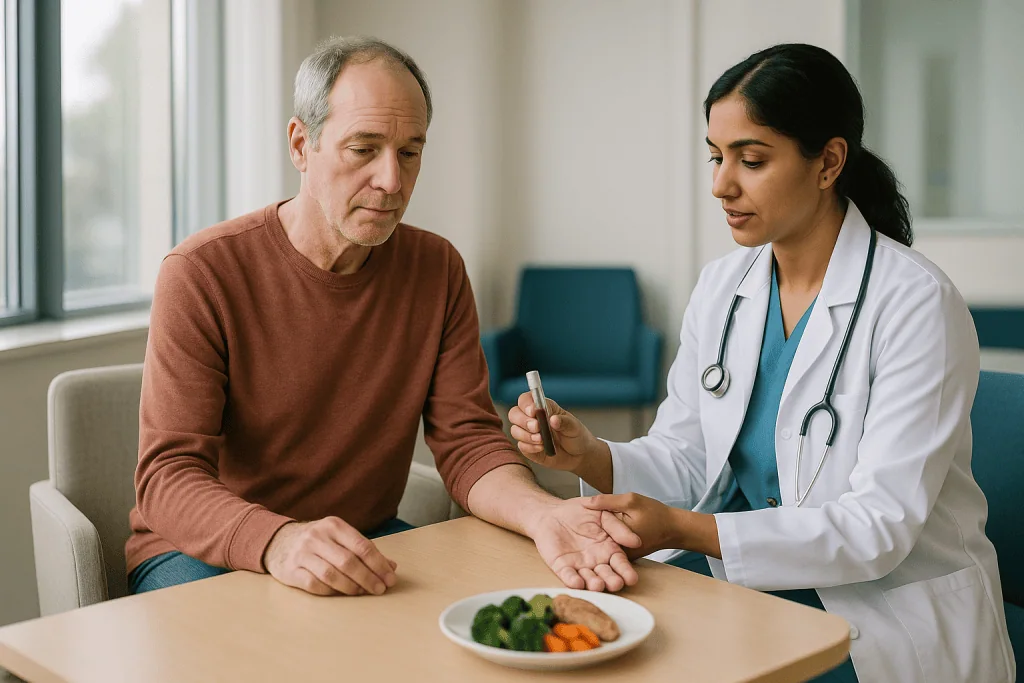
A hemoglobin level that keeps drifting down after discharge raises the question of slow, hidden bleeding. Some sources, especially small vessels in the bowel or a healing ulcer, can ooze without producing obvious black or red stool. A repeat blood count is the least invasive way to catch this early, which is why most people leave the hospital with a lab appointment already booked.
A hemoglobin level that rises steadily, on the other hand, confirms that the marrow is doing its job. If it stalls, the usual explanation is that iron stores have run dry, and the team may check ferritin (a protein that stores iron; its blood level mirrors how much iron is in reserve) alongside the count. The NHS describes iron deficiency anemia as the most common form of anemia, and blood loss from the gut as one of its leading causes in adults.
There is one more reason these checks matter. Many people feel dramatically better once they are home, and it is tempting to skip a blood draw when you are no longer dizzy. But symptoms lag behind the numbers in both directions: people can feel fine with a hemoglobin still well below their baseline, and they can feel wiped out for weeks after the count has recovered because iron stores are still refilling. The lab result is the only measure that separates the two.
How often you are tested is a clinical decision that depends on how low the count fell, what caused the bleed, and whether you take blood-thinning medicines. Ask at discharge exactly which tests are planned and when.
Hemoglobin, ferritin and the other numbers on your lab report
Lab reports after a bleed can look like a wall of abbreviations. Most of them come from a complete blood count (a routine test that counts and measures the cells in a blood sample) and an iron panel. Here is what the common ones mean in plain terms.
- Hemoglobin (Hb or Hgb): the oxygen-carrying protein. This is the headline number for anemia and the one your team will track most closely.
- Hematocrit (Hct): the proportion of blood made up of red cells. It generally moves in step with hemoglobin.
- MCV (mean corpuscular volume): the average size of red cells. Cells built under iron shortage tend to be small, so a falling MCV hints at iron deficiency even before ferritin is measured.
- Ferritin: the storage protein. Low ferritin is the clearest sign that reserves are depleted. Ferritin also rises with inflammation or infection, so a normal or high value does not always rule out deficiency; your clinician interprets it in context.
- Serum iron and transferrin saturation: how much iron is circulating and how full the transport protein is. These fluctuate with meals and time of day, which is why they are read alongside ferritin rather than alone.
- Reticulocyte count: newly released red cells. A rising number shows the marrow is responding.
You may also see kidney and liver values, and a clotting profile if you take anticoagulants. None of these numbers should be interpreted in isolation, and small day-to-day changes are normal. What matters is the direction of travel over successive tests, which is why MedlinePlus encourages patients to ask what their result means for them rather than comparing against a generic range.
If a number worries you, bring the printout to your follow-up rather than searching for it online. The same value can be reassuring in one person and a prompt for further tests in another.
What the first days at home usually look like
The first few days after discharge often feel like a strange mix of relief and heaviness. The acute danger has passed, yet ordinary tasks drain you. This is the phase when the body is most fluid-depleted and the hemoglobin is at or near its lowest point, so lightheadedness on standing, a fast pulse when climbing stairs, and an afternoon slump are common and expected.

Practical rhythms help. Stand up slowly, especially from bed or a warm shower, and sit back down if the room swims. Drink fluids regularly unless your team has told you otherwise, because restoring volume is part of what steadies the blood pressure. Eat small amounts often rather than large meals; a stomach recovering from an ulcer or a procedure tends to tolerate that better.
Watch your stool without becoming fixated on it. Blood that passed through the gut before the bleed was controlled can keep appearing as dark or tarry stool for a day or two, and iron tablets darken stool as well. What the team wants to hear about is a return of black, sticky, foul-smelling stool after it had normalized, bright red blood, or vomiting blood or material that looks like coffee grounds. Those signs are covered in detail in the final section.
Expect a phone call or an appointment for a repeat blood count within the first week or two in many cases; the exact timing is set by your team based on how low your count went and what caused the bleed. Keep the discharge summary handy so you can answer questions about which medicines were stopped or started.
Emotionally, a sudden bleed is frightening, and it is normal to feel anxious or low for a while afterward. Mention it at your follow-up; it is part of recovery, not a distraction from it.
How long to recover from a GI bleed: a typical timeline
People ask how long to recover from a GI bleed more than any other question, and the honest answer has three layers that move at different speeds.
The lining heals first. A treated ulcer or a small tear begins to close within days, and the NHS notes that acid-suppressing treatment for a stomach ulcer is typically given for several weeks, usually four to eight, to allow full healing. During this window the site is still fragile, which is why the medicines matter even when you feel fine.
The blood count recovers next. Once bleeding has stopped and iron is available, the marrow rebuilds hemoglobin over weeks. The NHS states that most people with iron deficiency anemia start to feel better within a few weeks of beginning iron replacement, though the count can take longer to return fully to baseline, particularly in older adults or people with kidney disease or ongoing inflammation.
Iron stores refill last. This is the slow layer. Ferritin lags behind hemoglobin because the body prioritizes making red cells over stocking the pantry. The NHS advises that iron replacement usually continues for a period after the blood count normalizes, commonly around three months, specifically so that reserves are rebuilt and the anemia does not return.
Put together, a realistic picture for many people is: feeling shaky for the first week, noticeably steadier by the second or third, back to most normal activities within a month or so, and still finishing iron treatment and having a final blood test some months later. Individual timelines vary widely with age, other health conditions, how much blood was lost, and whether the cause has been fully addressed. Your team’s estimate, based on your own numbers, will always be more reliable than any general range.
Diet after a GI bleed: what to eat in the first week
There is no single prescribed diet after a GI bleed, and the specific advice depends on where the bleeding came from and what was done to stop it. Some people are told to stay on clear fluids briefly after an endoscopic procedure; others go straight back to normal food. Follow the written instructions you were given, and when they run out, these general principles from mainstream sources apply.
Start soft and gentle. Foods that are easy to chew and digest, such as oatmeal, yogurt, scrambled eggs, well-cooked vegetables, bananas, rice and soups, put less mechanical and acid demand on a healing lining. This is less about strict rules and more about comfort: if a food causes pain, nausea or heartburn, set it aside for now and try again in a week or two.
Eat smaller meals more often. A very full stomach stretches the wall and stimulates acid; five or six modest meals are often tolerated better than three large ones during the first weeks.
Go easy on known irritants. Alcohol is the one most consistently flagged by the NHS and Mayo Clinic, because it directly irritates the lining and can interfere with healing and with some medicines. Very spicy or highly acidic foods bother some people and not others; there is no strong evidence they delay ulcer healing, so treat them as a comfort question rather than a safety one. Coffee and tea have their own issue, covered in the iron section, because they reduce iron absorption when taken with meals.
Do not skip protein. Rebuilding red cells and repairing tissue both need it. Eggs, fish, poultry, beans, lentils, tofu and dairy all contribute. Stay hydrated, and if appetite is poor, tell your team; unexplained loss of appetite can matter clinically.
Rebuilding iron through food: the plate that helps most
Food alone rarely refills iron stores quickly after a significant bleed, which is why iron replacement is often prescribed. But diet still matters, both to support recovery and to reduce the chance of slipping back into deficiency once treatment ends. The NIH Office of Dietary Supplements explains that iron in food comes in two forms: heme iron, found in meat, poultry and seafood, which the body absorbs efficiently; and non-heme iron, found in plants and fortified foods, which is absorbed less well and is more affected by what you eat alongside it.
| Iron source | Form | Absorption helpers | Absorption blockers |
|---|---|---|---|
| Lean red meat, liver, poultry, shellfish, oily fish | Heme | Absorbed well on its own; also boosts absorption of non-heme iron eaten in the same meal | Largely unaffected by other foods |
| Lentils, beans, tofu, fortified cereals, spinach, pumpkin seeds, dried apricots | Non-heme | Vitamin C from citrus, peppers, tomatoes, berries or a small glass of juice with the meal | Tea, coffee, calcium-rich foods and calcium supplements taken at the same time |
Two habits translate this into practice. First, pair plant iron with a vitamin C source at the same sitting: beans with salsa, lentils with tomato, fortified cereal with strawberries. Second, move tea and coffee away from iron-rich meals and from any iron tablets, leaving a gap of an hour or so, as the NIH ODS notes that compounds in these drinks bind iron and cut absorption.
Vegetarians and vegans can recover fully; it takes more attention to pairing and, when a clinician judges it necessary, replacement therapy. Cooking in a cast-iron pan adds a small amount of iron to acidic foods, a minor but real contribution. None of this replaces the iron treatment your team prescribes; think of it as the foundation that keeps stores steady once the course ends.
Iron tablets and iron infusions: how they work, and why patience matters
When a bleed has emptied the body’s iron reserves, clinicians usually offer replacement in one of two ways. Oral iron, taken as a tablet or liquid, is absorbed through the upper small intestine and used by the marrow to build hemoglobin. Intravenous iron, given as an infusion in a clinic setting, bypasses the gut and delivers iron directly to the bloodstream, where it is taken up by storage sites and released to the marrow over the following weeks.
Each has trade-offs, described neutrally by the NHS and NIH ODS. Oral iron is simple and widely used, but a proportion of people experience constipation, nausea, stomach upset or dark stools, and absorption is limited when the gut is inflamed or when the person takes acid-suppressing medicine, since acid helps release iron from food and tablets. Intravenous iron avoids these gut effects and raises stores faster, but it requires a clinic visit, carries a small risk of reactions during the infusion, and is generally reserved for people who cannot tolerate or absorb oral iron, need rapid correction, or have ongoing losses.
The decision between them, the timing, and how long to continue are clinical judgments that depend on your blood results and other conditions. What you can do is report side effects honestly rather than quietly stopping; there are often ways to adjust that keep the treatment on track, and stopping early is the commonest reason anemia returns.
Patience is the hard part. The NHS notes that people often feel better within a few weeks of starting iron, yet treatment typically continues for around three months after the count normalizes so that ferritin, the reserve, catches up. Finishing that phase is what protects you from feeling this way again in six months.
Acid-suppressing medicines and H. pylori: finishing the course
If the bleed came from an ulcer or an inflamed stomach lining, you were probably sent home with a proton pump inhibitor. This class of medicine switches off the acid-producing pumps in the stomach wall, lowering acid so the damaged lining can rebuild without being re-injured. The NHS describes a typical course for a stomach ulcer as several weeks, often four to eight, after which the prescribing clinician reviews whether to continue, taper or stop.
Many people feel completely well within days of starting and wonder whether the remaining weeks are necessary. They usually are. Symptom relief happens fast because acid drops quickly; tissue repair happens slowly. A healing ulcer that loses acid protection early can bleed again. Never stop, pause or change this medicine without speaking to the team that prescribed it.
If testing showed Helicobacter pylori, a bacterium that lives in the stomach lining and is a leading cause of ulcers, you were likely given a combination of antibiotics alongside the acid suppressant. Completing every day of that combination matters for a different reason: partial courses allow the bacterium to survive and develop resistance. The NHS advises that a repeat test to confirm the infection has cleared is usually done at least four weeks after finishing treatment, because testing earlier can give a false reassurance.
Two other medicine conversations are common. If an anti-inflammatory painkiller contributed to the bleed, your team will discuss whether it should be avoided and what alternatives suit you. If you take a blood thinner for a heart condition or a history of clots, restarting it is a careful balance between re-bleeding and clot risk, decided jointly by your gastroenterology and cardiology or hematology clinicians. Do not restart or withhold it on your own.
Who is usually cleared quickly, and who is asked to wait
Not everyone recovers on the same track, and clinicians sort patients broadly by how much reserve they have and how likely the source is to bleed again. Understanding which group you fall into explains a lot of the advice you receive.
People who tend to be cleared for normal activity relatively soon share a few features: a single, clearly identified source that was treated during endoscopy; a modest drop in hemoglobin that is already rising at the first follow-up; no blood-thinning medicines; and good heart, lung and kidney function. For them, recovery is mostly about finishing the medicines, refilling iron, and pacing activity for a few weeks.
People who are usually asked to wait, rest longer, or return for closer monitoring include those whose bleed required transfusion, whose hemoglobin was very low or is not yet climbing, who take anticoagulants or antiplatelet medicines, who are over 65, or who have heart disease, chronic kidney disease, liver disease or cancer. In these groups the same anemia places more strain on the heart, and a re-bleed carries more risk, so the threshold for repeat testing and delayed return to strenuous activity is lower. Mayo Clinic and MedlinePlus both flag older age and existing heart disease as factors that raise the stakes of GI bleeding.
A third group is asked to wait for a different reason: the source has not been found. If endoscopy and colonoscopy were unrevealing, the team may plan a capsule study (a swallowed camera that photographs the small intestine) or other imaging, and will want blood counts checked until the picture is clear.
None of these categories is a verdict. They are a way of matching the intensity of follow-up to individual risk, and your team will explain which applies to you.
Fatigue after a GI bleed: how to regain energy without overdoing it
Fatigue after a GI bleed has a mechanical explanation, which makes it easier to respect. Less hemoglobin means less oxygen delivered per heartbeat, so the heart compensates by beating faster and the muscles tire sooner. The NHS lists tiredness, breathlessness on exertion, palpitations and pale skin as the core symptoms of iron deficiency anemia, and they resolve only as the count and stores recover.
Pacing beats pushing. In the first week or two, aim for gentle daily movement, such as short walks around the home or block, rather than a return to your usual exercise. Increase gradually, adding a few minutes or a little distance every few days, and use breathlessness as your governor: if you cannot hold a conversation while moving, ease off. Stop and sit if you feel lightheaded or your heart pounds unusually.
Protect sleep. Anemia often disrupts it through restlessness or waking short of breath, and poor sleep compounds the exhaustion. A consistent bedtime, a cool room and limiting caffeine (which also interferes with iron absorption) help.
Return to work depends on the job. Desk-based roles are often possible within a week or two if energy allows, while physically demanding work, heavy lifting or safety-critical roles such as driving for a living may require clearance based on your blood count. Ask your team directly rather than guessing.
Travel and flying raise separate questions. Cabin air has lower oxygen pressure, which anemic blood copes with less well, and being far from care matters if the source could re-bleed. Most clinicians prefer the count to be stable and rising before longer trips; ask about your own situation, carry your discharge summary, keep moving on long journeys to reduce clot risk, and know where you would seek care at your destination.
What people often get wrong about recovery after a GI bleed
A few misunderstandings come up repeatedly in follow-up clinics. Correcting them prevents avoidable setbacks.
Feeling better means being better. Symptoms improve before hemoglobin normalizes and long before ferritin recovers. Skipping the follow-up blood test because you feel fine removes the one objective check that the bleeding has stopped and the marrow is rebuilding.
Iron tablets can be stopped once energy returns. The NHS is explicit that iron replacement typically continues for months after the count normalizes, because stores refill last. Stopping early is the most common route back to anemia.
Black stool on iron always means bleeding. Iron darkens stool as a matter of course. The distinguishing features of bleeding are stool that is tarry, sticky, unusually foul-smelling, or accompanied by dizziness, a racing pulse or vomiting. If you are unsure, call rather than assume either way.
Spicy food caused the ulcer. Mainstream sources including Mayo Clinic identify H. pylori infection and anti-inflammatory painkillers as the main drivers of peptic ulcers, not spicy food or stress on their own. Spice may irritate a healing lining and is worth moderating for comfort, but it is not the root cause.
Over-the-counter painkillers are all the same. Non-steroidal anti-inflammatory drugs, a class that includes several common pharmacy painkillers, reduce the stomach’s protective mucus and are a recognized cause of bleeding. Ask your team or pharmacist which options are appropriate for you before taking anything for aches or fever.
Eating red meat alone will fix it. Heme iron is well absorbed, but the quantities involved after a significant bleed usually exceed what diet can supply in a reasonable time, which is why replacement is prescribed. Food maintains; treatment restores.
Once healed, it cannot happen again. Recurrence is possible if the underlying cause is not addressed. Completing H. pylori treatment, reviewing painkiller use and attending planned repeat endoscopy where advised are what lower that risk.
Questions to ask your care team
Appointments after a bleed are often short and dense with information. Writing questions down beforehand turns a passive visit into a useful one. These are the ones most patients wish they had asked.
- What was the source of my bleeding, and has it been definitively treated or is further testing planned?
- Which blood tests are you tracking, when is the next one due, and what result would change the plan?
- What is my hemoglobin now compared with before the bleed, and roughly what trajectory would you expect for someone in my situation?
- Am I being treated for iron deficiency, and if so, by which route and for approximately how long?
- Which of my usual medicines were stopped, which were started, and who decides when the stopped ones restart?
- If I take a blood thinner or aspirin, which specialist is coordinating the decision about it?
- Was I tested for H. pylori? If it was found, when should I be retested to confirm it has cleared?
- Do I need a repeat endoscopy or colonoscopy, and why or why not?
- Which painkillers are safe for me to use for everyday aches, and which should I avoid?
- Are there foods or drinks you specifically want me to avoid for now, and for how long?
- When is it reasonable for me to return to work, drive, exercise, lift, or travel by air?
- What exact symptoms should prompt me to call the clinic, and which should send me to emergency care instead?
- Who do I contact outside office hours if I am worried?
It helps to bring someone with you, or to ask permission to record the key points on your phone. If an answer uses a term you do not understand, ask for it in plain language; clinicians expect that request and it saves confusion later. Keep a simple log of your test dates and results so you can see the trend yourself between visits.
When to call your doctor
Most people recover from a GI bleed without a second emergency, but re-bleeding does happen, and the window of highest risk is the first days to weeks while the lining heals. Knowing which signs matter, and acting on them early, is the single most protective habit you can build.
Seek emergency care immediately, by calling emergency services, if you notice:
- Vomiting blood, or vomit that looks like coffee grounds
- Black, tarry, sticky stool returning after it had normalized, or large amounts of bright red or maroon blood from the rectum
- Fainting, near-fainting, or severe dizziness on standing
- A racing or pounding heartbeat at rest, cold clammy skin, or confusion
- Chest pain or sudden shortness of breath, which can signal that the heart is struggling with low hemoglobin
- Severe, sudden or worsening abdominal pain, or a rigid, tender belly
Contact your care team the same day if you have:
- Fatigue or breathlessness that is getting worse rather than slowly better
- Persistent nausea, inability to keep fluids down, or inability to take prescribed medicines
- Ongoing side effects from iron that make you want to stop it
- New or worsening heartburn or upper abdominal pain despite acid-suppressing treatment
- Fever, or pain at an intravenous site after an iron infusion
- Any uncertainty about whether a symptom is a warning sign
Mayo Clinic and MedlinePlus both describe GI bleeding as a condition that can escalate quickly, so err on the side of calling. If you take a blood thinner and see any of the red flags above, treat it as an emergency regardless of how well you otherwise feel. Keep your discharge summary and medicine list where you can grab them, so that whoever sees you knows what was found and what has been done. Your treating team makes every decision about tests, medicines and next steps; your role is to make sure they have the information early.
Frequently asked questions
How long does anemia after a GI bleed last?
It depends on how much blood was lost and how quickly iron is replaced. The NHS reports that most people begin to feel better within a few weeks of starting iron treatment, but the blood count can take longer to reach baseline and iron stores refill over months. Your team’s repeat tests, not a calendar, will show where you are.
Is it normal to still feel exhausted weeks after a GI bleed?
Yes, within reason. Less hemoglobin means less oxygen delivered with each heartbeat, so fatigue and breathlessness on exertion persist until the count and stores recover. Fatigue that is slowly improving is expected; fatigue that is worsening, or comes with dizziness, palpitations or black stool, should be reported to your care team the same day.
Should I take iron tablets with food or on an empty stomach?
Follow the instructions from your prescriber or pharmacist, because they balance absorption against stomach upset for your situation. In general, the NIH ODS notes that iron is absorbed better away from tea, coffee and calcium, and that vitamin C improves uptake. If the tablets cause nausea or constipation, ask about adjustments rather than stopping.
Why are my stools black while I am on iron?
Unabsorbed iron darkens stool, which is harmless and expected. Bleeding produces stool that is not just dark but tarry, sticky and unusually foul-smelling, often with dizziness, weakness or a fast pulse. If you cannot tell the difference, or the color returns after having normalized, contact your team promptly rather than waiting.
Can I drink coffee or tea after a GI bleed?
Usually yes, with timing in mind. Compounds in tea and coffee bind iron and reduce absorption, so the NIH ODS suggests keeping them away from iron-rich meals and iron tablets by an hour or so. Some people also find caffeine worsens heartburn while the lining heals; if so, cut back for a few weeks and revisit.
When can I exercise again after a GI bleed?
Gentle walking is usually encouraged within days, increasing gradually as energy returns. Strenuous exercise, heavy lifting and contact sports are commonly delayed until the blood count is stable and rising, which your team judges from your results. Use breathlessness and dizziness as signals to ease off, and ask for specific clearance for your usual activities.
Do I need to avoid spicy food after a GI bleed?
Not for safety reasons. Mainstream sources identify H. pylori infection and anti-inflammatory painkillers as the main causes of ulcers, not spice. That said, spicy or acidic food can irritate a healing lining and provoke discomfort, so many people moderate it for a few weeks and reintroduce it gradually as symptoms settle.
Can I drink alcohol while recovering from a GI bleed?
Most clinicians advise avoiding it, at least while the lining heals and you are taking prescribed medicines. Alcohol directly irritates the stomach lining, can interfere with healing, and interacts with several medicines used after a bleed. Ask your team when, and whether, it is reasonable to reintroduce it in your particular case.
Will the bleeding happen again?
It can, particularly if the underlying cause is not addressed. The risk is lowered by completing H. pylori treatment where relevant, finishing the acid-suppressing course, reviewing painkiller use with your team, and attending any repeat endoscopy that is recommended. Knowing the red-flag signs and acting early is the safety net if it does recur.
Why do I need a repeat blood test if I feel fine?
Because feeling fine and being fine diverge after a bleed. A repeat count confirms the bleeding has stopped, shows whether hemoglobin is rising, and reveals whether iron stores are keeping pace. Slow hidden bleeding can occur without obvious symptoms, and the blood test is the least invasive way to catch it early.
References
This article is for general information only and is not a substitute for professional medical advice. Please consult a qualified doctor about your individual situation.

More from the Blog

Which Tests Come Before a GERD Treatment Plan? Endoscopy, pH Monitoring and Manometry
GERD testing before treatment usually starts with a history and physical exam; many people begin acid-suppressing therapy without any test. Doctors typically order an…

Lactose Intolerance Over the Years: What Improves, What Persists and How Care Adjusts
Lactose intolerance is usually long term when it comes from the normal, genetically programmed decline in the lactase enzyme after early childhood; that form…

Digestive Enzymes: Who Actually Needs Them and Who Is Wasting Money
Digestive enzyme supplements help a specific group of people: those with exocrine pancreatic insufficiency (from chronic pancreatitis, cystic fibrosis or pancreatic surgery), who need…

Silent Reflux: The Throat-Clearing, Hoarse-Voice Reflux Many People Never Suspect
Silent reflux, known clinically as laryngopharyngeal reflux (LPR), happens when stomach contents travel up past the esophagus and irritate the throat and voice box,…

When a PEG Tube Needs Replacing: Blockages, Wear and How the Exchange Is Done
A PEG tube usually needs replacing when it blocks and cannot be cleared by flushing, when the material cracks, kinks or discolors, when a…

What Hepatitis B Blood Tests Show: Markers, Viral Load and How They Shape Your Plan
A hepatitis B viral load test measures how much hepatitis B virus DNA is circulating in a set volume of blood, usually reported in…